
Hydroforming Sheet Metal Fabrication
The ability to produce lightweight, durable, and precise parts makes sheet metal forming one of the most important processes within the scope of contemporary manufacturing. The ability of sheet hydroforming to produce components of varying complexity while maintaining superior quality of the surface and precision of the dimensions makes it one of the most valuable sheet metal forming technologies. Compared to traditional deep draw metal stamping, sheet hydroforming offers greater operational flexibility, lower tooling costs, and reduced material waste, making it more economically sustainable.
Hydroforming is used within the engineering standards of the automotive, aerospace, and power generation industries to deliver lightweight components without sacrificing strength. The process not only advances fabrication processes but also allows the use of high-value advanced materials, including aluminum, steel, and titanium, and promotes the use of innovative designs.
For manufacturers with a focus on precision, sheet hydroforming takes a step forward in efficiency compared to conventional methods, primarily in the custom sheet metal fabrication industry, where the small-batch fabrication of uniquely designed parts requires precision, consistency, and a fine surface finish. Whether performing a prototype or complete production of a part, hydroforming provides a solution for industries that seek a balance between cost, production efficiency, and quality.
Let’s start reading!
What is Hydroforming Sheet Metal?
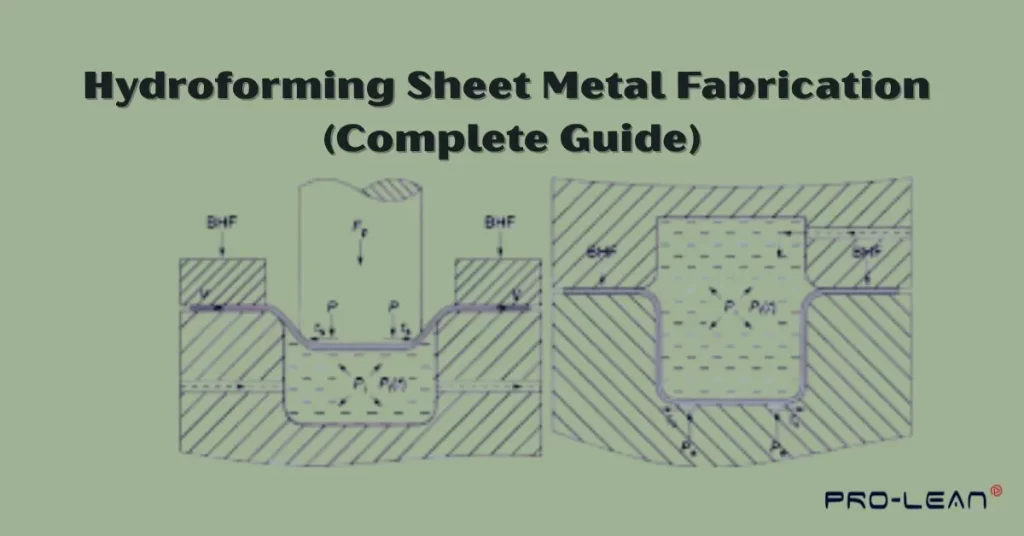
Hydroforming sheet metal is a relatively recent technology to shape metal by employing a high-pressure fluid stream that contacts one side of a sheet of metal and shapes it into complex forms of outstanding precision by forcing it against a die. It is possible to shape a metal sheet with a flexible diaphragm and a chamber containing hydraulic fluid, which substitutes the two rigid dies of traditional draw forming.
The fluid pressure, which can reach up to 100 MPa, evenly spreads the force over the sheet, which makes it possible to have tight tolerances and smooth surfaces. It is a versatile technology in the processing of several metals, particularly steel, aluminum, and titanium, and to produce lightweight and strong components that have applications in automobiles, aircraft, and manufacturing plants.
Historical Development of the Hydroforming Process
In the early 1950s, the patenting of the hydramolding technique by Fred Leuthesser Jr. and John Fox of the Schaible Company in Cincinnati, Ohio, marked the beginning of the hydroforming sheet metal process. This technique was initially applied for the production of kitchen spouts. The technique attracted attention because the sheet metal parts produced were of higher quality and finishing, and the improved manufacturing process rendered them stronger and smoother than those made using more traditional methods.
With time, the sheet hydroforming technique split into two dominant variants: the bladder and direct fluid contact hydroforming approaches. In the bladder approach, the flexible diaphragm containing the pressurized liquid prevents direct contact with the sheet. This variant, referred to as flexforming, is predominantly used for low production volumes in the aerospace sector. Conversely, in the method of direct fluid contact, hydraulic pressure is applied directly to the sheet, thereby increasing the precision of forming more than the series of uniform hydraulic presses used in traditional methods.
One notable progress in this segment is hydro-mechanical deep drawing, in which the workpiece is placed on a male punch, and the workpiece is pressed by hydraulic pressure that is controlled up to 100 MPa. With this, complex shapes can be formed with better precision. With the advancement of hydraulic bulge testing, material hardening and forming limits were enhanced, which assures better outcomes for contemporary industrial use.
Types of Sheet Hydroforming
Cavity and Punch Hydroforming
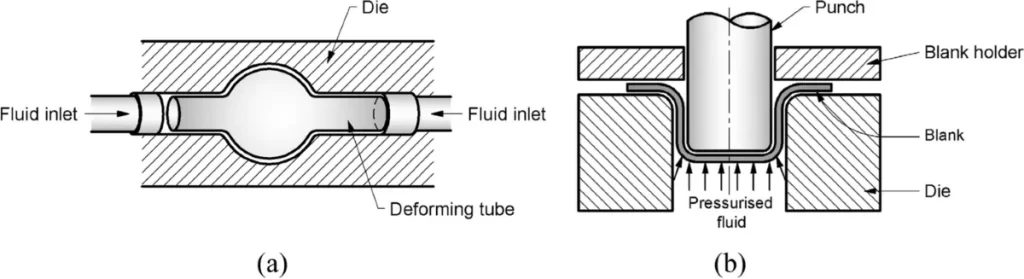
There are two main types of hydroforming for sheet metal fabrication.
Cavity
Cavity hydroforming is when a single flexible diaphragm or fluid pressure is used to contour the sheet metal to a rigid die cavity, thus forming the desired shape. This is ideal for forming complex shapes as well as those that have smooth finishes and uniform thickness.
Punch
In punch hydroforming, fluid pressure keeps the sheet in place while a punch is used to shape it. This technique is beneficial in applications that require precision due to its enhanced control over the depth of the workpiece and details.
Hydroforming Categories: Sheet vs Tube
There are two main types of hydroforming. One is hydroforming sheet metal, and the other is tube hydroforming. Let us see the main definition of both:
Sheet metal hydroforming
Using high-pressure hydraulic fluid, hydroforming turns flat metal sheets into complicated shapes and custom sheet metal fabrication. It gives a great surface finish, a consistent thickness, and cuts down on the number of dies needed. This method is very common in the automotive and aerospace industries for making lightweight structural parts.
Tube Hydroforming
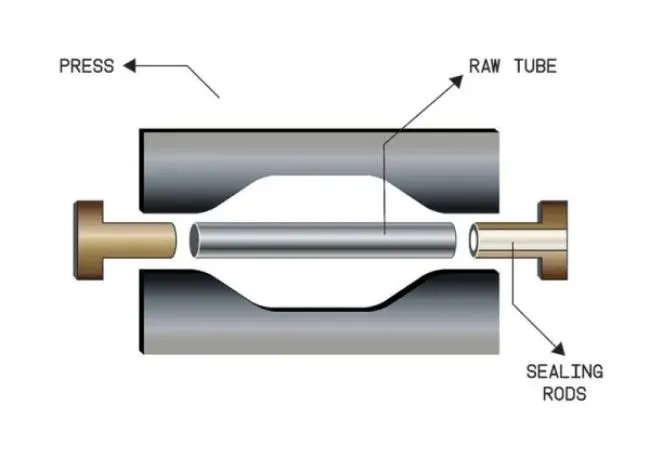
By using internal hydraulic pressure, tube hydroforming shapes hollow metal tubes into the shapes you want. It lets you make strong parts but light with fewer welds and joints. People often use this method to make frames for cars, exhaust systems, and bike parts.
How Sheet Hydroforming is Different from Tube Hydroforming
Tube Hydroforming Process
Although both sheet and tube hydroforming are advanced forming processes, they do so differently. In sheet hydroforming, a flat metal sheet is placed onto a die, and hydraulic pressure is applied to contour the sheet to the shape of the die or punch. This technique is excellent at producing simple parts, basic geometries, and parts that are closely fitted together, as well as being equally great for complex geometries.
The aforementioned capabilities are critical in the aerospace, medical, defense, and power generation industries. In tube hydroforming, a metal tube is expanded to fit the die surrounding it by inserting high-pressure hydraulic fluid, which is a fluid that transmits pressure and is used in hydraulic systems.
This technique is used extensively in the automotive and aerospace industries to manufacture tubular components of, for example, vehicle frames and exhaust systems that are lightweight, strong, and accurately formed. Thus, sheet hydroforming transforms flat sheets into complex
Step-by-Step Process of Hydroforming Sheet Metal
Sheet Metal Hydroforming Process
Here is a brief step-by-step hydroforming process :
Setting Up Metal Hydroforming Tooling System
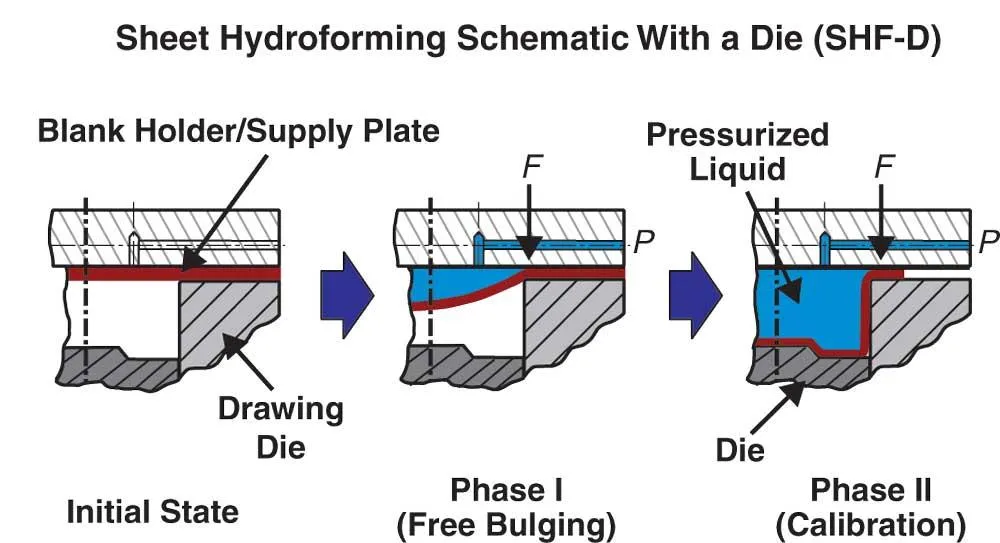
Start by assembling the hydroforming tooling system. This includes the upper die, wear pad, forming chamber, pressurized hydraulic oil system, and rubber diaphragm. The lower die elements may include a punch and ring, held by a hydraulic piston. A blank holder surrounds the punch to secure the metal sheet.
Sealing
To begin, place the metal blank onto the lower die and check that the hydroforming chamber is completely sealed. The rubber diaphragm will support the blank and prevent leakage during the pressurization phase.
Pressurization
Hydraulic oil in the upper die chamber will need to be pressurized slowly and in a controlled manner. The blank metal is shaped to the die and punch, ensuring the surface is smooth and free of blemishes.
Forming
As the hydraulic pressure is applied, the metal blank will continue to stretch and conform to the tooling system and the required die. The diaphragm will provide support, granting the part accurate dimensions and profiles.
Finalize Hydroforming Metal Process
Once the required hydroforming profile is achieved, the upper die chamber is to be deemphasized. The die is raised, and the punch is lowered to obtain the finished part. The final part is a perfect replica of the hydroforming tooling system.
Try Prolean Now!
Which Metals are Suitable for Hydroforming
Sheet hydroforming is most practical with metals that score high on cold-formation and do not fracture or lose strength.
- Hydroformed aluminum, brass, copper, carbon steel, and stainless steel are primary examples.
- This is ideal for lightweight, durable parts in automotive, aerospace, and industrial high-strength alloy applications.
- Patterns, and tube hydroforming transform hollow tubes into strong structural elements with exact measurements.
How Sheet Hydroforming is Different from Deep Draw Metal Stamping
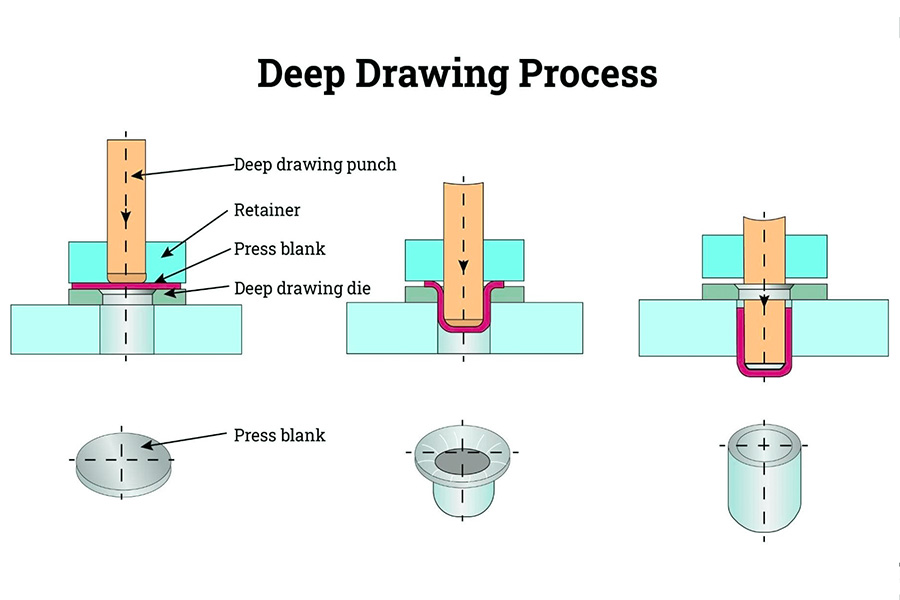
Deep Draw Stamping
While both sheet hydroforming and deep draw metal stamping are techniques used to shape metal, they differ in their techniques and costs. In sheet hydroforming, metal is shaped using basic tools such as a punch and locking rings, which are fabricated from one die. In this case, the process yields more refined parts that are stronger and more precise, but it is not expensive to produce, as it costs one-half the price of deep draw stamping because there are fewer press cycles and cheaper tools made of cast iron as compared to hardened steel.
Deep draw stamping is expensive to run because it employs mechanical presses, which require multiple cycles of drawing to shape the metal. This increases press time, material waste, and costs associated with process development. In addition, parts are more likely to incur scratches, which increases the finishing costs. Furthermore, there is a significant time and effort required to modify a design once tooling is complete.
Hydroforming not only reduces development, tooling, and setup costs by up to 70%, but also decreases material waste by 50% to 70%. In comparison to deep draw stamping, hydroforming has shorter lead times and rapid design modification, increasing process flexibility. These features are crucial for the production of intricate and precision components for the aerospace, medical, and automotive industries.
Advantages and Disadvantages of Sheet Hydroforming
Some pros and cons of the hydroforming metal sheet process are important to know.
Advantages
- It is important as sheet hydroforming has unique features such as the capacity to form irregular contours and intricate 3D shapes with close dimensional tolerances.
- In addition to providing accurate form dimensions, sheet hydroforming improves the form’s strength, microstructure (i.e., surface quality), and improves thickness distribution, reduces excessive thinning, and can enable lighter designs without sacrificing strength.
- Overcoming the spring-back effect, sheet hydroforming reduces work hardening, resulting in a superior surface finish.
Disadvantages
- Sheet hydroforming equipment requires high initial costs. In addition to this, slower production cycles are also a deciding issue in the choice to use sheet hydroforming.
- In terms of production, the expensive precision of hydraulic systems is not reasonable for productivity.
Try Prolean Now!
Applications of Hydroforming Sheet Metal
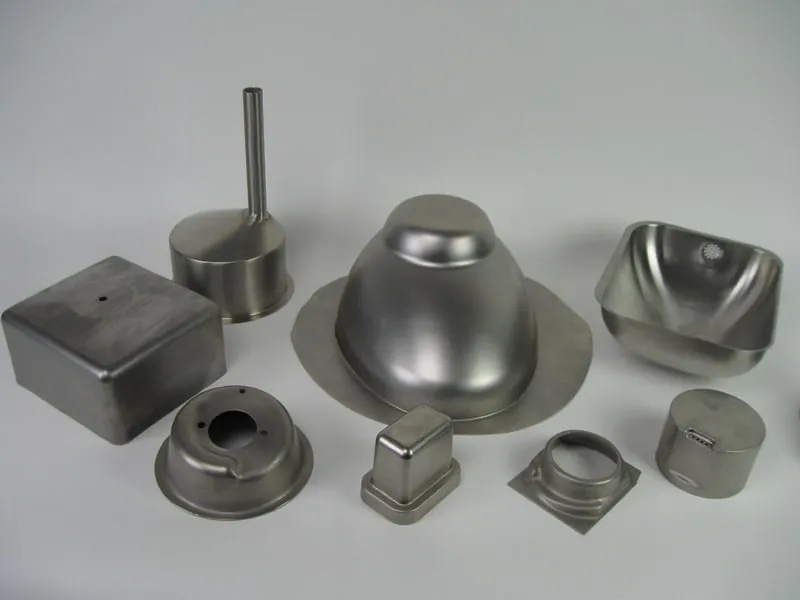
Hydroformed Metallic Parts
Sheet metal hydroforming is used in a wide variety of industries to prepare different products. Such as:
Aerospace
In the aerospace sector, hydroforming provides lightweight, accurately dimensioned parts for jet engines and aircraft structures. Aerospace sheet metal fabrication relies on hydroforming to fabricate brackets, frames, and panels that are intricately and precisely crafted to bear high stress and high tolerances.
Automotive
Automotive manufacturers hydroform roofs, hoods, and panels, as well as brake parts, manifolds, and gas tanks. With fewer welds and joints, the process facilitates the creation of lighter and safer automotive and parts more efficiently.
Defense Industry
Hydroforming provides the defense sector with the strength, durability, and reliability needed for mission-critical components, like military aircraft housings and engine covers, as well as exhausts and protective gear.
Power Generation
In power generation, components for turbines and heat exchangers are made using hydroforming with heat and corrosion-resistant materials such as Inconel and Haynes for hydroforming parts used in high-temperature applications.
Other uses
This process is utilized in several other industries too, such as water forming utensils like hydroforming aluminium water bottles, which are produced in major quantities.
Factors Determining Metal Hydroforming Cost
The tooling required for the hydroforming, development, and finishing costs and timing decides the cost of the whole process.
Tool Used
Hydroforming involves fewer and simpler tools, including a holding ring and punch. Moreover, the upper die chamber with a rubber diaphragm serves as the female die, further decreasing tooling costs by close to 50% relative to other forming techniques. Tools made from cast iron are cheaper and simpler to set up than the hardened steel used in deep draw stamping.
Development Cost
The ability to vary the material type and wall thickness without any additional tooling makes hydroforming development more flexible. This characteristic improves development turnaround times and decreases costs relative to traditional stamping processes.
Reduced Press Time
Hydroforming reduces the number of press cycles by as much as 60-70%, while the deep draw stamping process reduces the number of press cycles by 35-45%. This increased efficiency contributes to lower operational costs and faster production.
Finishing Cost
The process provides smooth and unblemished surfaces, resulting in less work required for post-finishing. Because hydroforming avoids the scratches and surface markings typical of deep draw stamping, it decreases polishing and finishing costs to a greater extent.
Summary
As new methods are made available, sheet hydroforming will provide improved precision, versatility, and durability in component manufacturing and will continue to transform sheet metal fabrication. Prolean Tech, a trusted provider of custom sheet metal hydroforming services in China, delivers hydroformed components that accommodate specific design and industry needs and industry design needs.
Prolean Tech serves a wide range of industries, including aerospace, automotive, electronics, and industrial equipment, with custom metal components. Our sheet metal service covers cutting, bending, forming, and fabrication to produce parts that meet your design and performance requirements. Request a quote today for cost-effective sheet metal manufacturing with reliable quality and lead times.
0 Comments