
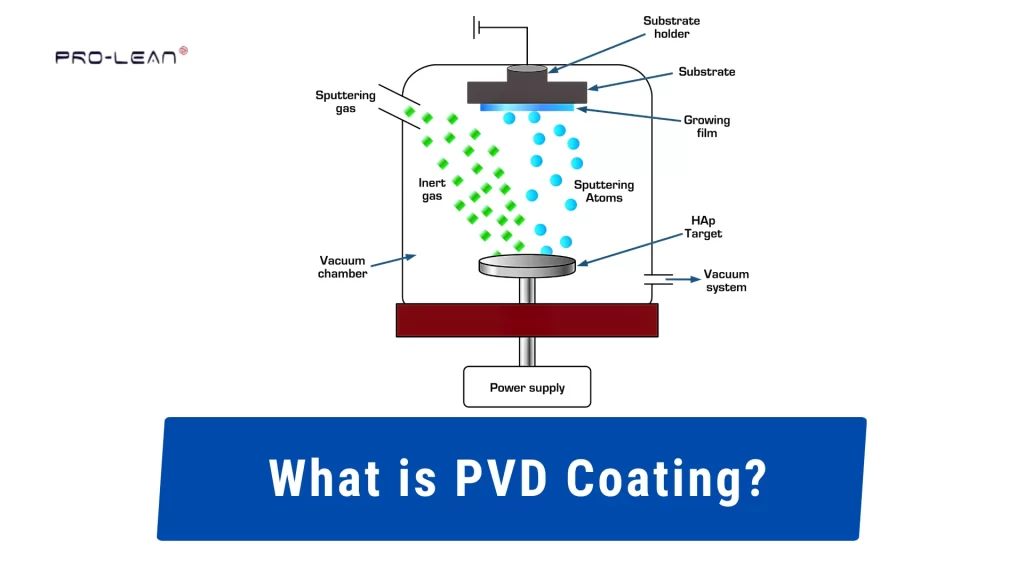
PVD coating process Illustration
PVD – Physical Vapor Deposition finish is a coating process. It is to apply a very thin solid layer on a part’s surface. The process runs inside a vacuum chamber. A solid material, such as titanium or chromium, is vaporized and then deposited onto the part.
The coating builds up at a very fine level. This provides a tight, stable layer that peels easily. It is mainly used to improve surface hardness, reduce wear, and control friction. In shop use, PVD is common on cutting tools, dies, molds, and precision components. It is also used where appearance matters, such as decorative metal parts.
Two common methods are used. In sputtering, material is knocked off a target using high-energy ions. In thermal evaporation, the material is heated until it vaporizes, then condenses onto the part. This article explains how the PVD color coating operates within the chamber and how it controls coating quality. It also covers common coating types, where they are used in machining, and how they perform in wear and contact conditions.
What is PVD Coating?
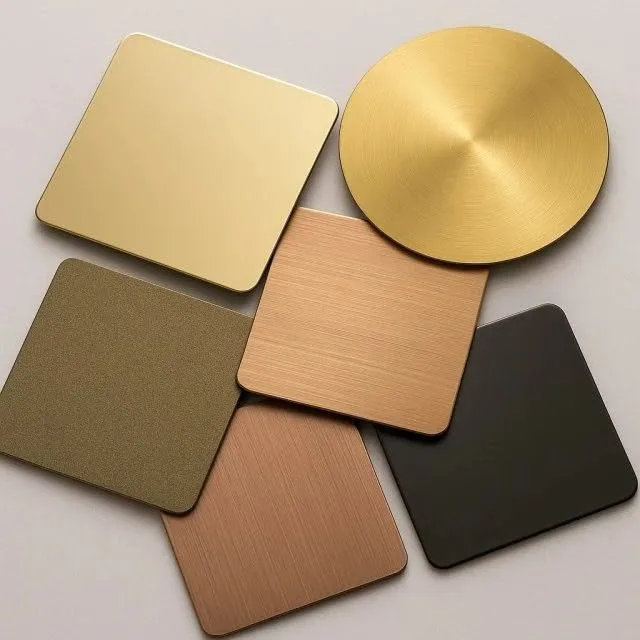
Colored stainless steel – PVD coatings
PVD – Physical vapor deposition finish, also known as “coating,” is an extremely thin, hard film applied in a vacuum. The film-forming materials are metals, such as titanium or chrome, that start as solids and are evaporated by heating them in a vacuum chamber. These vapors then form a strong metal film on the substrate surface.
PVD finish will not flake off like paint or electroplating; they bond directly to the underlying material. A polished surface will still be seen through the coating, and machining scratches will remain visible.
In machining, PVD films have primarily been used for tooling applications, including cutting tools, dies, molds, and wear parts.
How Does PVD Coating Work?
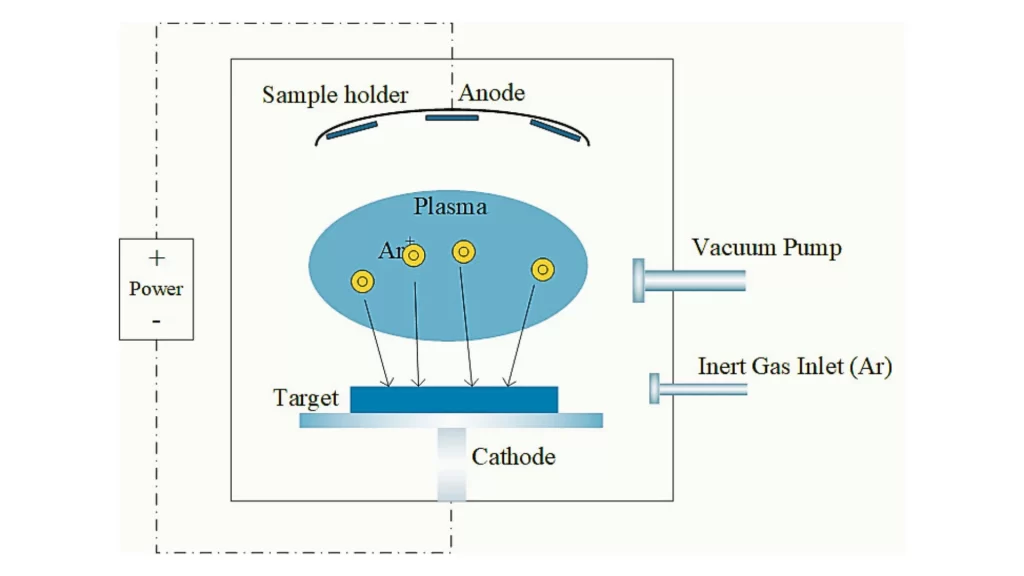
PVD coating process
To start the PVD finish process, you need to follow a series of steps. The entire operation must take place in a contamination-free environment. All stages need to work together in harmony so the coating is even and properly bonded.
Chamber Preparation and Vacuum Setup
You first put your components into a clean, hermetically sealed chamber. Next, you evacuate the chamber to eliminate any residual air and moisture. Then you wait until a steady vacuum develops.
Air trapped in the chamber will chemically interact with your deposited coating materials, degrading the film’s overall quality. Your components are typically attached to rotatable fixtures to ensure all sides are coated at the same rate.
Target Activation and Material Release
Your evaporated coating material is placed within the evacuated chamber as a solid target. Once energized through techniques such as Arc Discharge or Ion Bombardment, atomic bonds are broken from the surface of the target. There are two basic ways to break atomic bonds from the surface of the target.
Sputter deposition uses energetic particles that bombard the target, ejecting atoms from its surface. Arc-based coatings use an electrical arc to produce a stream of vaporizing atoms.
Controlled Movement of Coating Atoms
Now that the atoms are released from the target, they begin traveling towards your component(s). Because both the atoms and the area they move in are in a low-pressure environment, the friction and drag they experience are minimal.
As a result, the path traveled by these atoms is generally direct. It should also be noted that due to their line-of-sight travel pattern, deep holes or otherwise hidden surfaces may receive less than a complete coating.
Reaction with Process Gases
Gases are introduced into the chamber during the formation of composite films. Common gases include Nitrogen (N2) and Oxygen (O2). When combined with vaporized metal, they react to form harder compounds.
Examples:
Ti + N -> TiN; Wear and abrasion-resistant coating
Cr + N -> CrN; Corrosion and abrasion-resistant coating
Gas flow rates must be precisely regulated. Flow rates either too high or too low can alter the properties of the film formed.
Deposition on the Part Surface
Finally, the vapor reaches the component and deposits as a very thin film. Many components are given an electrical bias to enhance adhesion. This enhances adhesion because electrons repel one another, leading them to bond more strongly and thus adhere more strongly to the surface.
Film build-up occurs slowly over time. By controlling exposure time and energy input, you can adjust the thickness of your coating. Typically, PVD coatings range from 1 to 5 microns. However, this value depends on the specific application.
Coating Build and Final Condition
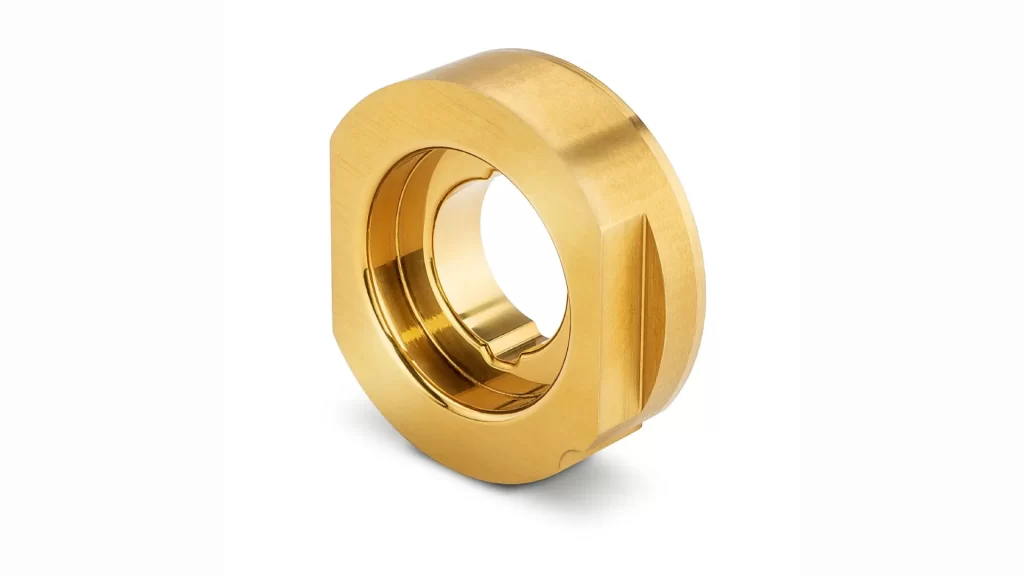
Custom PVD coated part
At the end of the process, the coating becomes very dense and uniform. The finished surface is now hard and highly wear-resistant. Because PVD coatings are very thin, most applications do not require adjustments to your components’ dimensions.
Why PVD Coatings Protect Parts from High Wear, Corrosion, and Scratches
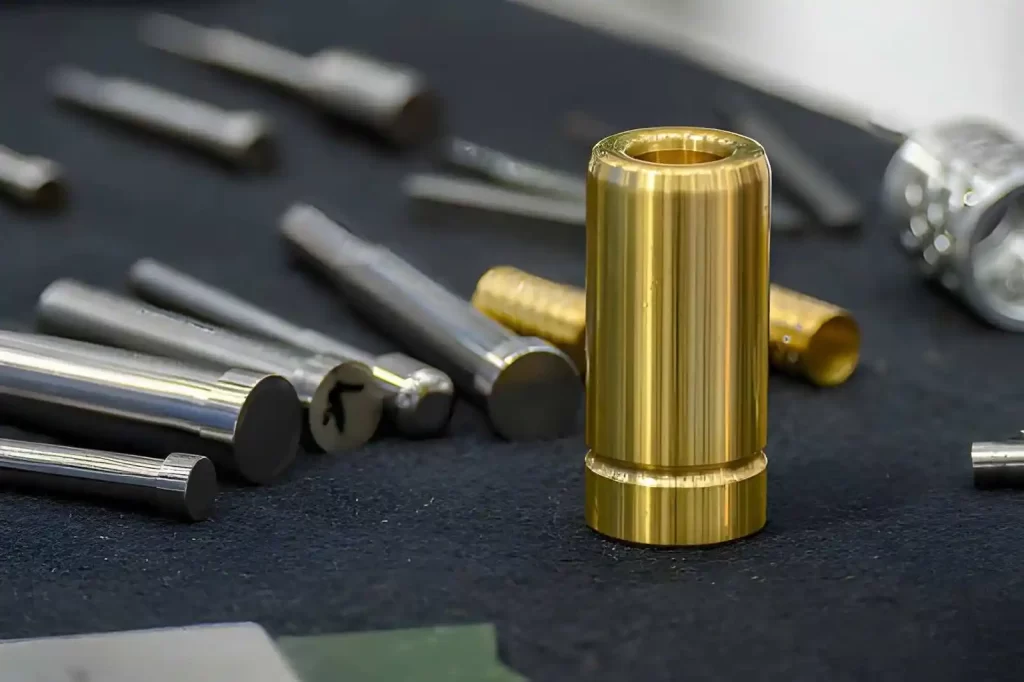
PVD coated guide bush
Vacuum-deposited PVD coatings have good properties because they are deposited in a vacuum chamber. A dense, tightly bonded layer is created under controlled conditions. These characteristics help create a stable response when the layer is in contact, sliding, or under environmental exposure.
Dense Layer Structure from Vacuum Deposition
In PVD coating, atoms are deposited onto the substrate in a vacuum. As a result, the coating has a relatively high density and very low porosity. In general, lower porosity means there are fewer paths for water and other substances to reach the substrate. Therefore, the corrosion resistance of PVD-coated substrates is typically higher than for loose or porous layers.
Strong Bonding with the Base Material
A PVD layer attaches directly to the substrate surface at an extremely small scale. The attachment is not merely mechanical. Rather, adhesion is produced during coating formation under specific energy-controlled conditions.
As a result, the risk of delamination (peel) or flaking of the layer is greatly reduced during normal use. Adhesion can also help maintain the coating’s stability under repetitive contact loads and stresses.
Hard Compound Coatings
Most PVD layers are not composed solely of metals. Instead, many are compound materials (such as nitrides or carbides) that form during processing. Examples of hard compound PVD layers include:
- Titanium Nitride (TiN)
- Chromium Nitride (CrN)
These compounds are generally significantly harder than common engineering metals (aluminum and steel). Therefore, these layers offer significant improvements in scratch resistance and surface wear resistance.
Low Friction Surface Behavior
Certain PVD layers provide lubricity (reduced friction) to mating surfaces.
For example, in machine tool applications, reduced friction minimizes heat generation and tool wear. For functional parts, improved sliding performance and reduced damage over time may occur.
Stable Performance in Corrosive Conditions
PVD layers serve as barriers between the substrate and the surrounding environment. Because they better protect against oxidation, moisture penetration, and chemical attack than uncoated surfaces, they are used in marine hardware, fixtures, and components exposed to the outdoors.
Consistent Surface for Decorative and Functional Use
Because PVD layers are deposited on a surface in a vacuum and are therefore resistant to degradation from temperature fluctuations, chemicals, or radiation, they exhibit long-term consistency in color and appearance.
Additionally, gold, black, and metallic colors retain their brightness over extended periods and are thus well-suited for both functional parts and visible components, such as handles and fixtures.
Try Prolean Now!
PVD Equipment and Process Control for Stable Coatings
The quality of a PVD-coated layer is largely dependent on the equipment and the degree of process control. Not just the materials used in the coating process are important, but also how consistently chamber conditions can be maintained throughout the run.
Vacuum Chamber and System Stability
All PVD systems start with a sealed vacuum chamber. The air and moisture must be evacuated from the chamber before coating begins. Stable vacuum levels will minimize the amount of contaminants that enter the system.
A stable chamber environment ensures a defect-free coating by maintaining an even finish and strong adhesion to the substrate. Most modern PVD systems provide constant pressure and temperatures throughout the entire process.
Coating Source and Energy Control
There are two primary methods of releasing a PVD coating material from its source:
- Arc Evaporation: For High-Energy Coating Streams
- Sputtering: To Provide Uniform Deposition
Each method is determined by the type of coating being applied and the specific requirements of the component. In addition to selecting which method to use, it is equally important to ensure that energy input remains constant so that the coating thickness and structure do not vary.
Part Handling and Rotation
The parts being coated are placed in a fixture inside the vacuum chamber. The fixtures typically rotate as they pass through the chamber. Rotating parts ensure that each side of the part receives an equal amount of coating material (PVD) or is otherwise exposed to it equally for uniform coating.
If the parts do not move during coating, it can result in a non-uniform PVD application due to limited visibility. Uniform placement and spacing of parts can also affect the evenness of the coating applied.
Process Monitoring and Repeatability
In addition to monitoring and controlling the process conditions throughout their entire cycle, industrial PVD chambers continuously measure important operating parameters:
- Vacuum Chamber Pressure
- Operating Temperature Range
- Current and voltage applied to parts being coated
- Flow Rates of Gases Used During Operation
All of these measurements must fall within predetermined limits to ensure a consistent coating on parts across all batches.
Are PVD Coatings Safe?
The PVD coating method is an environmentally friendly, well-controlled surface treatment used in modern manufacturing. Because it is performed within a closed or evacuated vacuum chamber, the PVD process does not require “open” chemistry, as in other surface treatments, such as wet plating methods.
The coating materials are deposited from a solid state and converted into gas/vapor states within the vacuum chamber. Therefore, unlike other surface treatments that involve liquid chemical baths, the PVD method eliminates the handling of hazardous chemicals and minimizes waste generation.
Because the PVD process is performed within a closed system, worker exposure is limited. While workers may be exposed to potential hazards arising from equipment operation, including high-voltage electrical systems and vacuum-related hazards. However, these hazards can be managed through established industrial safety controls.
From a product-use perspective, PVD coatings exhibit long-term environmental stability. Since they do not readily react with their environment, also do not release harmful substances under typical use conditions. Due to this, PVD has been widely adopted as a coating technique in medical tool applications and the manufacture of implantable devices.
What is Sputtering in the PVD Coating Process?
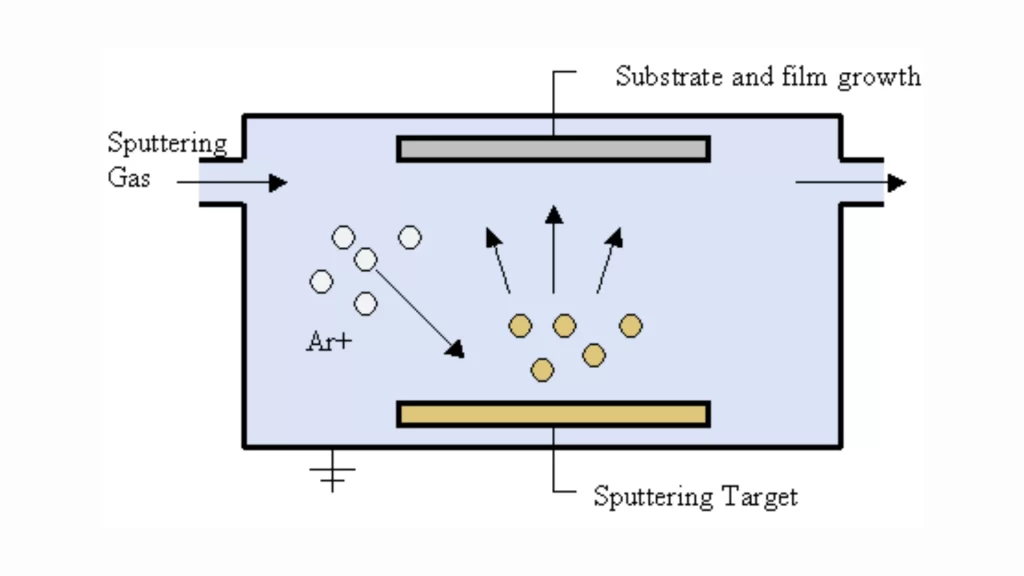
Sputter deposition in PVD coating
Sputtering is one type of physical vapor deposition (PVD) that uses controlled means to discharge an application-specific coating material. The primary reason for using sputtering for applications requiring high coating thickness uniformity and low friction coefficients (particularly on precision parts) is its ability to achieve these properties.
Plasma Formation Inside the Chamber
To begin the sputtering process, the system consists of a vacuum chamber containing a limited quantity of an inert gas (most commonly Argon).
Once a DC power supply provides a negative bias to the sputtered material (the target), free electrons within the chamber are accelerated toward the target, and subsequently collide with the Argon atoms.
These collisions cause the Argon atoms to become positively charged, forming a stable plasma within the chamber.
Material Ejection from the Target
As the positive Argon ions move towards the negatively biased target, they collide with the target material and eject target material atoms into the atmosphere above the target surface.
As previously described, this is an example of an impact-transfer mechanism in which energy is transferred by mechanical forces rather than thermal forces (i.e., melting).
Transport and Deposition on the Part
After being released, the sputter-deposited material travels randomly throughout the vacuum chamber until it reaches a workpiece. At this point, the material settles on the part’s surface and builds into a thin film, layer by layer.
If desired, reactive gases (such as Nitrogen) may also be introduced during this deposition phase. This enables the creation of composite films known as nitrides.
Coating Structure and Behavior
Due to the nature of the sputtering process, the resulting deposits tend to be relatively smooth and uniformly distributed over the surfaces of both simple and complex-shaped parts.
However, because most deposited material lacks significant kinetic energy (it is generally in a neutral state), the resulting deposit density tends to be lower than that obtained with arc vaporization techniques.
What is Arc Evaporation in PVD Coating?
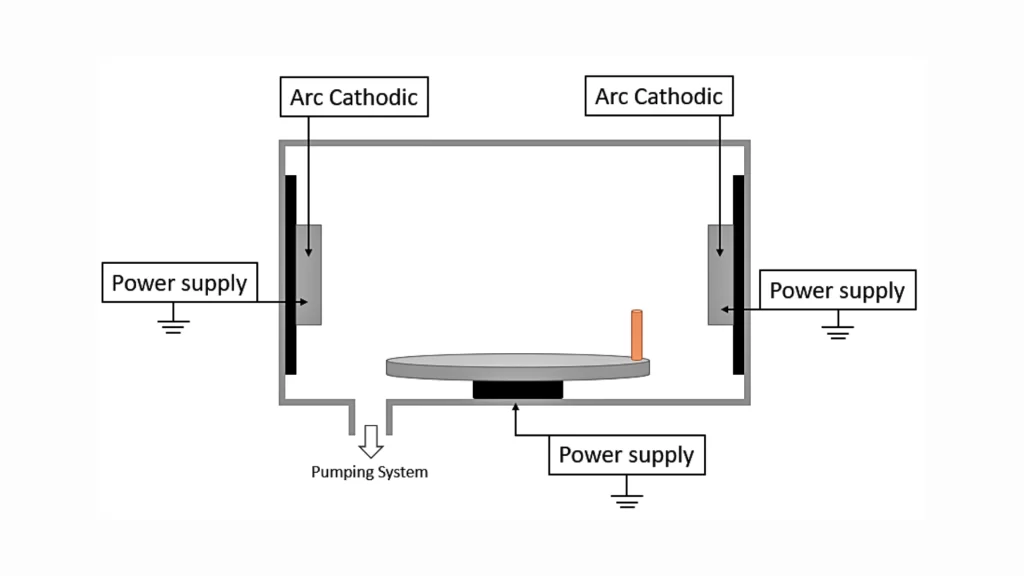
PVD Cathodic Arc Evaporation
Arc evaporation is a type of physical vapor deposition (PVD) coating process used to create hard, dense surface coatings on metal components. The process takes place within a vacuum chamber utilizing a high-current electric arc.
How the Arc Forms and Metal Vapor Is Created
The first step is to create a high-energy electrical arc on the surface of the coating material (the target). The arc focuses down onto tiny areas known as arc spots.
The temperature rises extremely fast and reaches several thousand degrees centigrade at these spots. This heat is enough to cause the solid material to vaporize directly.
Ionized Metal and Particle Acceleration
Most of this vapor will become positively charged metal ions. Inside the vacuum chamber, all parts are under negative electrical bias. The attraction force from the voltage causes the positively charged metal ions to move toward the negatively biased region.
Once at the surface, the ions gain sufficient energy to bond strongly with one another.
Coating Formation on the Part Surface
The ions striking the part’s surface do not simply settle there; the energy imparted during the collision also compacts the coating as it forms.
As a result, the final coating is highly compacted and exhibits excellent bonding to its substrate. Compared with most other coating processes, the porosity of this type of coating is generally low.
Use of Reactive Gases
Reactive Gases such as nitrogen (N2) and methane (CH4) are added to the chamber. Reaction of these gases with the metal ions produces hard compounds, e.g.,
- Titanium + Nitrogen = TiN (titanium nitride)
Chromium + Nitrogen = CrN (chromium nitride)
Control over the properties of the final coating layer. The properties of the final coating layer can be adjusted by varying both the gas flow rates and the arc operating conditions.
Try Prolean Now!
Common PVD Coating Target Materials
The target or source material that will be vaporized or sputtered to create the desired coating layer is referred to as the “target” or “source.” In this case, the solid coating material in the vacuum chamber deposits onto the substrate’s surface, forming a new thin film.
Choosing the right target material depends entirely on what the substrate requires in service. For example, if your substrate requires higher hardness, better wear resistance, reduced corrosion, improved appearance, etc., those attributes should drive your selection of the target material(s) that will ultimately coat the substrate in an industrial setting.
Metal-Based Target Materials
In industrial PVD applications, metal targets are among the most common. Examples include;
- Titanium
- Chromium
- Aluminum
- Nickel
When hard coatings are needed along with corrosion protection or some level of chemical inertness on a tool or component, these types of metallic targets typically serve well.
Alloy Targets
If multiple properties are required from a single target material, alloys provide a viable solution. As such, alloy combinations are often used in tooling. Some common examples of alloys include:
- Titanium-Aluminum (TiAl)
- Chromium-Aluminum (CrAl)
Both have seen widespread use in cutting tools due to their enhanced wear resistance, thermal stability, and hardness.
Ceramic and Compound Targets
Ceramic-based targets can produce harder, more thermally stable films than pure metals.
Some common ceramic compound targets include:
- Titanium Nitride (TiN)
- Chromium Nitride (CrN)
- Titanium Carbide (TiC)
- Borides & Silicides
These types of targets are generally chosen for applications requiring high levels of abrasion resistance, low frictional coefficients, and/or high thermal stability.
Carbon and Graphite-Based Targets
Low-friction, wear-reducing films are produced using carbon-based targets. Automotive and Aerospace components also benefit greatly from graphite as a target material because of its ability to withstand both high temperatures and sliding contact.
PVD System Solutions at Prolean Tech
At Prolean Tech, we support PVD coating through controlled vacuum-based systems designed for both sputtering and thermal evaporation. These systems are used when parts need consistent coating quality across batches, not just one-off finishes.
In production, the same system setup can be adjusted for different coating requirements. This helps when switching between wear-resistant coatings, low-friction layers, or decorative finishes without changing the full workflow.
Flexible Process Setup
Our PVD systems have been configured to produce various coatings using sputtering, thermal evaporation, and other available coating processes simultaneously.
These include:
- Sputtering for uniform, precise thin film coatings;
- Thermal Evaporation for fast metal depositions.
- The choice of process will be determined by the part function and required coating characteristics.
Batch Coating Capability
Our system was developed to provide repeatable batch processing. Components are placed in the coating chamber, processed through a series of controlled vacuum cycles, and removed from the chamber for quality control evaluation. The use of rotating fixturing, along with maintaining consistent operating parameters (chamber temperature, pressure), ensures that each component in a single run receives a consistent coating.
Applications of PVD Coating
Components subjected to PVD include:
- Cutting tools and inserts
- Dies and molds
- Precision mechanical components
- Functional or decorative metal components
In general, we focused on providing consistent coating results from one batch of components to another.
Contact Prolean Tech for PVD Coating Support
At Prolean Tech, we help you choose the right PVD coating based on part function, wear conditions, and surface requirements. Our team reviews your drawings and application before processing to ensure correct coating selection and stable results.
- Support for sputtering and evaporation-based coatings
- Guidance on coating type selection for wear, friction, or appearance
- Batch production with controlled coating consistency
- Engineering review before coating to avoid fit or surface issues
Send us your part details or drawings, and our team will recommend the most suitable PVD coating process for your application and get a quote!
0 Comments