
Powder coating vs paint
Powder coating and paint are two widely used finishing methods for metal parts. The main difference is that powder coating provides a tougher, longer-lasting finish, while paint is easier to repair and reapply when needed. However, the choice typically depends on the operating environment, required durability, and part function.
Paint is applied in liquid form using a spray process and then left to dry and cure. Powder coating uses dry particles. In the comparison of electrostatic painting vs powder coating, powder coating uses dry powder particles that are electrostatically applied and then heat-cured into a solid.
Both options protect the surface and improve appearance, but they behave differently in terms of strength, coating thickness, and long-term performance.
This article explains the differences between powder coating vs paint, helping you choose the right finishing method for sheet metal parts used in indoor and outdoor environments.
What Is Powder Coating?
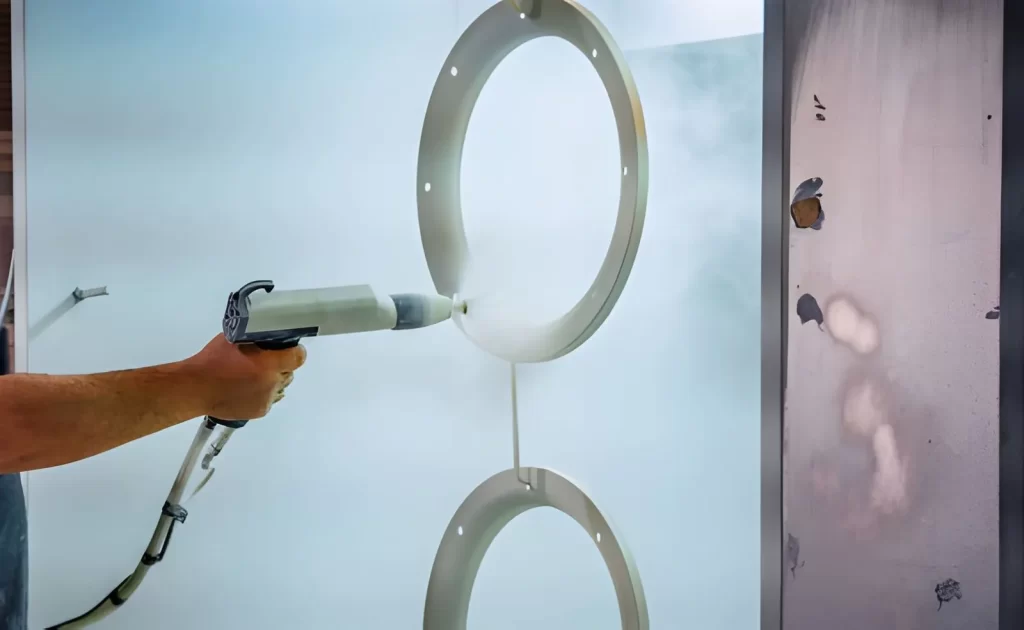
Powder coating – metal ring
Powder coatings are dry finishes applied to metals. It uses a powdered material instead of liquid paint. These include pigments, additives, and resin. When this powder heats up enough, it melts and forms a complete protective barrier over the metal.
During the application process, the powder is charged (by static electricity). This causes the powder to attract to the metal. When cured by heat, it changes from a soft powder into a rigid film that adheres completely to the metal and protects its surface.
How Powder Coating Works
Step 1: Clean the Metal Surface
Before applying a powder coat, the metal surface must be thoroughly cleaned. Removing dirt, oil and water will help prevent poor adhesion of the powder coat. The most common cleaning methods include degreasing, blasting, or chemically washing the surface. If you properly clean your metal surfaces before coating, the powder-coated finish should be free of imperfections.
Step 2: Spray the Powder Coat
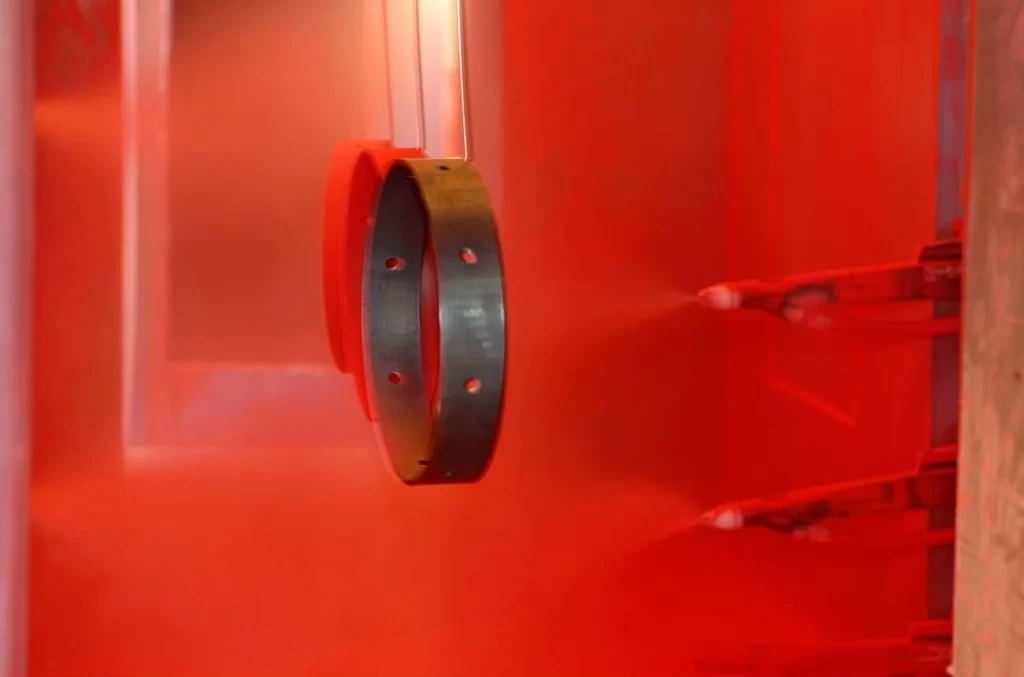
Dry powder coating is applied in an enclosed chamber
Spraying the powder onto a grounded object (the metal) provides the best coverage of all areas, including edges and curves. This is done by electrostatically charging the powder as it exits the sprayer nozzle. The powder is drawn to the grounding to the grounded metal surface and adheres uniformly to it.
Step 3: Cure the Powder Coat
Once you have finished spraying your powder coat onto your metal, place it in a curing oven to heat it. The powder will melt and form a continuous coating layer across the surface. Curing temperature and time depend on the powder type and part thickness.
Does Powder Coating Rust or Fail Over Time?
The powder coating itself will never rust because it is a non-metallic coating that prevents moisture and oxygen from reaching the metal below. Powder coatings effectively protect surfaces that have been cleaned and coated correctly from impacts, chemicals, and corrosion, provided there are no holes, cracks, etc. In the topcoat, then this process works very well.
When Corrosion Can Start Under the Coating
Rust can form when the topcoat layer is damaged (e.g., scraped, dented, or drilled) due to normal wear and tear. Moisture can now get into the area where the protective layer previously covered the metal. A poorly prepared surface before powder coating application can also contribute to premature coating failure. Over time, you may see delamination, bubbles forming within the coating, or other forms of adhesion issues with the surface being coated.
How Rust Spreads After Damage
As soon as corrosion begins under the topcoating, it will start to creep through the entire area once protected by the original protective coating. The corroded area will weaken the surrounding area and, eventually, cause additional portions of the original coating to separate.
Is Powder Coating Better Than Paint?
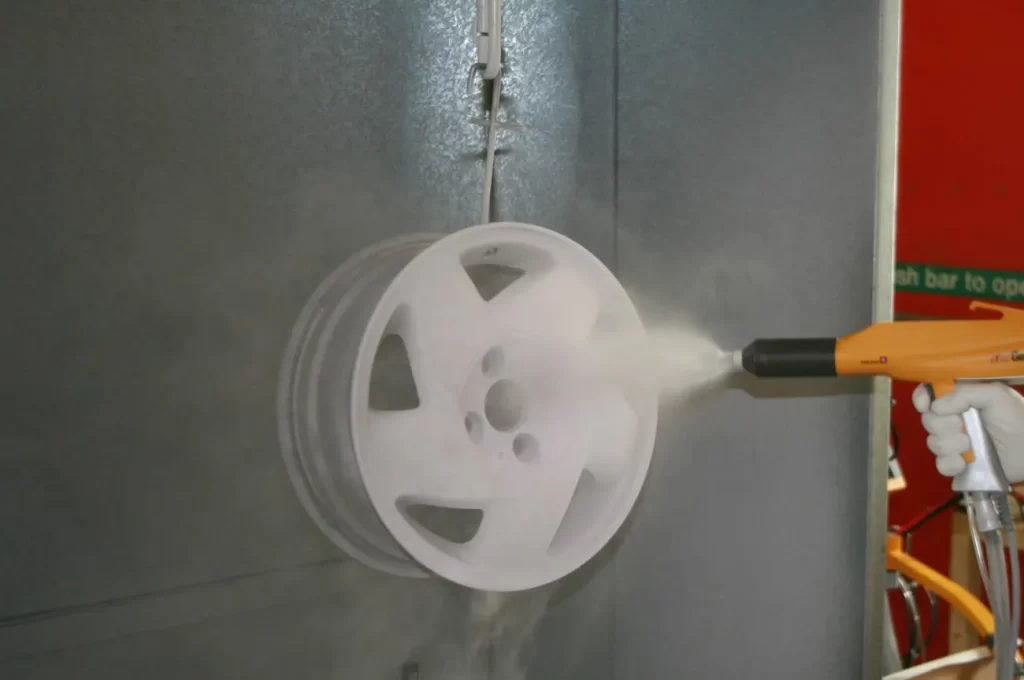
Alloy wheel being powder-coated
Powder coating and paint provide similar advantages as protective coatings for metal parts (i.e., protection from corrosion & surface damage) & enhance their appearance. Therefore, the decision on which process is most suitable will depend on the specific requirements of the part rather than on a single “best” method.
One of the advantages of powder coating is that it produces a larger, more consistent layer after being cured. As such, it provides better protection against wear, corrosion, and impact damage in demanding environments. However, excessive coating thickness can affect part fit, threads, and tight-tolerance features.
In addition, powder coating reduces the maintenance needs, as it typically lasts longer during its service life.
On the other side, paint produces a smaller protective layer but has fewer application and repair issues. It is used in situations requiring quick repair or field painting. The cost of using paint is significantly lower than that of powder coating.
The typical coating thickness varies greatly between these two processes. Powder coating can produce a layer ranging from 2.5 to 6 mils based on the desired performance level. In comparison, paint coats at approximately 1 to 2 mils per coat and the number of coats applied can vary.
In practical terms, powder coating material is best suited for applications that require a high degree of surface protection. On the other hand, paint is best used when cost control, flexibility and/or reworkability are concerns.
Major Types of Powder Coating
Powder coating has been developed in two primary categories based on its reaction to heat. The two categories behave very differently once cured, making them suitable for different uses.
Thermoset Powder Coating
During curing, a thermoset powder coating develops permanent chemical bonds. Once hardened, it cannot melt back into a liquid. The formation of a chemical bond provides excellent thermal stability and environmental stability over an extended period of time. Thermoset powders offer excellent corrosion and ultraviolet light resistance. These attributes make thermoset powders ideal for use in many products, such as automotive parts, exterior architectural features, and other industrial equipment that require long-term durability.
Thermoplastic Powder Coating
Unlike thermosets, thermoplastics do not develop permanent chemical bonds while curing. When heated, they soften and may be remelted or removed from a substrate. Since thermoplastics can be easily softened with heat and then remelted or removed, this feature is used for applications where some amount of surface protection is desired; however, the product requires periodic reworking or replacement.
Common uses for thermoplastic powders include decorative metal parts (aluminium), handrail systems, wire baskets, and other articles subject to repeated manual handling or replacement.
Limitations of Powder Coating
It is possible to achieve a good protective finish with powder coatings, but there are limitations to their use in production.
Limited Control on Very Thin Coatings
One limitation of powder coating is that it tends to build up a larger layer on the surface. Therefore, it will not produce an extremely thin (cosmetic) coating when desired. In situations where a part’s cosmetics or precision require a very thin coating, liquid paint is preferred.
Higher Setup and Equipment Requirement
To perform the powder coating process, you will need specialised equipment, such as an electrostatic powder paint spray gun, a curing oven, and a coating booth. The process also needs proper ventilation and control over your work area. All of the above increase the initial capital required to start a powder coating operation; therefore, powder coating is generally not recommended for small shops or low-volume operations.
Higher Initial Process Cost
Powder coating is generally most economical at high volumes; however, it has a higher setup cost than liquid painting for low-volume runs. Additionally, heating and curing add to energy costs. Therefore, if you plan to make prototypes or produce parts in low volume, the additional costs of using the powder coating process may exceed those of liquid paint.
Not Suitable for Heat-Sensitive Materials
Since the curing phase uses heat to melt and bond the powder layers, this method will not be effective for applications to parts made from materials that cannot withstand heat. Parts made from plastics, rubber, and other heat-sensitive type materials may distort or change shape during the curing phase of the powder coating process.
What Is Painting?
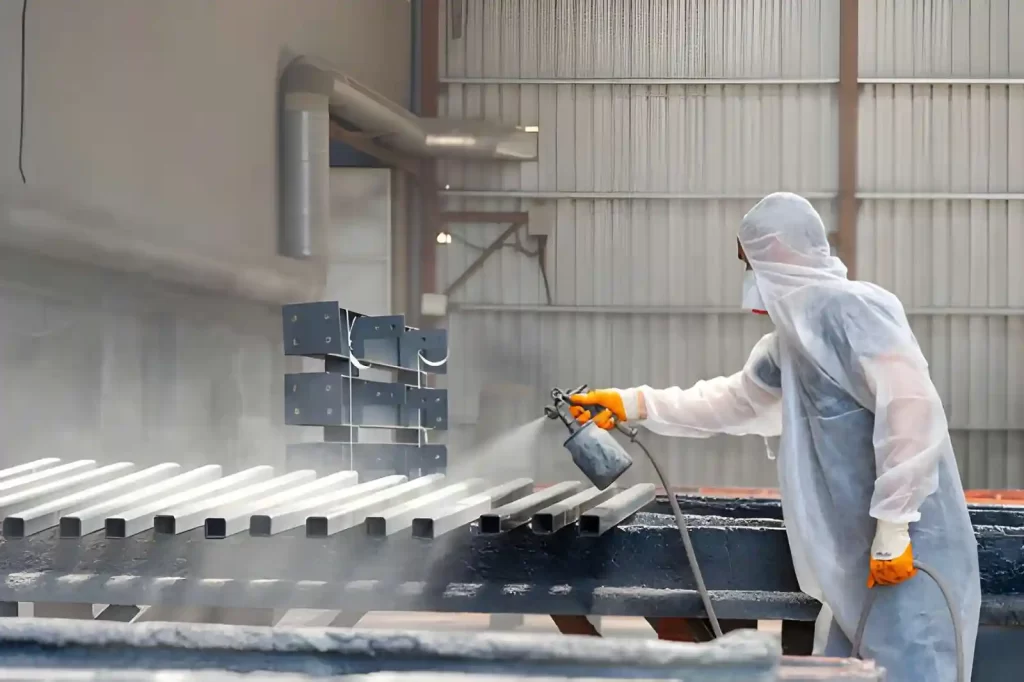
painting metal bars
Paint is an attractive finishing process for metal, plastic, wood, and many other types of materials. In addition to being protective, paint enhances the aesthetic appeal of the material’s surface through colour and finish.
A paint is formulated with pigments, a binder, and a solvent. Once applied, the paint flows as a liquid layer onto the object, drying at ambient temperatures to form a thin solid film on the surface.
Unlike powder coating (which requires high-temperature curing), paint coatings do not need to be cured at elevated temperatures. As such, they are very useful for protecting parts that have heat-sensitive surfaces or large assemblies.
In addition, paint coatings may be applied by either spraying or electrostatically, depending on the project’s needs. The amount of paint needed to achieve the desired thickness can vary widely depending on the number of coats.
Typically, the finish will range from a light coat to a thicker protective finish.
General Painting Process Steps
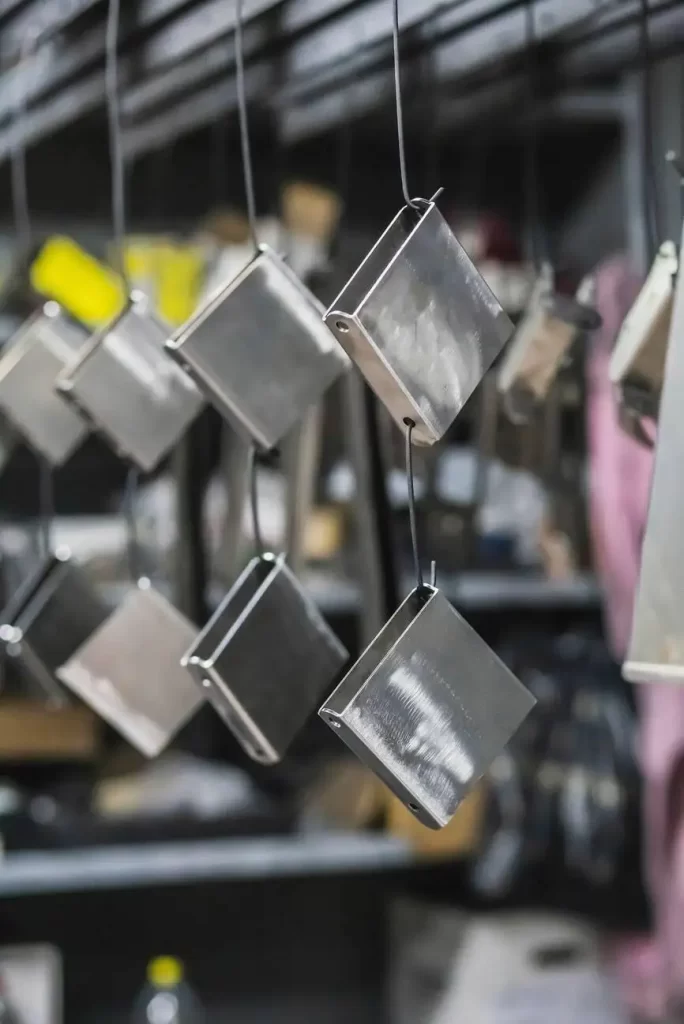
Metal parts awaiting painting
Painting on metal requires specific procedures to ensure a strong bond between the coating and the metal surface and to extend the serviceable life. Every step affects the coating’s durability and the overall quality of the finished product.
Step 1: Surface Cleaning
The metal surface must be clean before applying any coating. Removing dust, oil, rust, and grease ensures the best possible bonding between the two surfaces. Cleaning the surface with a variety of processes, including sandblasting, chemical washing, or mechanical removal of surface contaminants, helps ensure that the paint spreads evenly and reduces peeling.
Step 2: Primer Application
After cleaning, a primer coating should be applied. Primers improve bonding between the metal and paint layers. They also enhance corrosion resistance and promote even colouring. There are several types of primers available, including epoxy, zinc-rich, and general-purpose primers.
Step 3: Paint Application
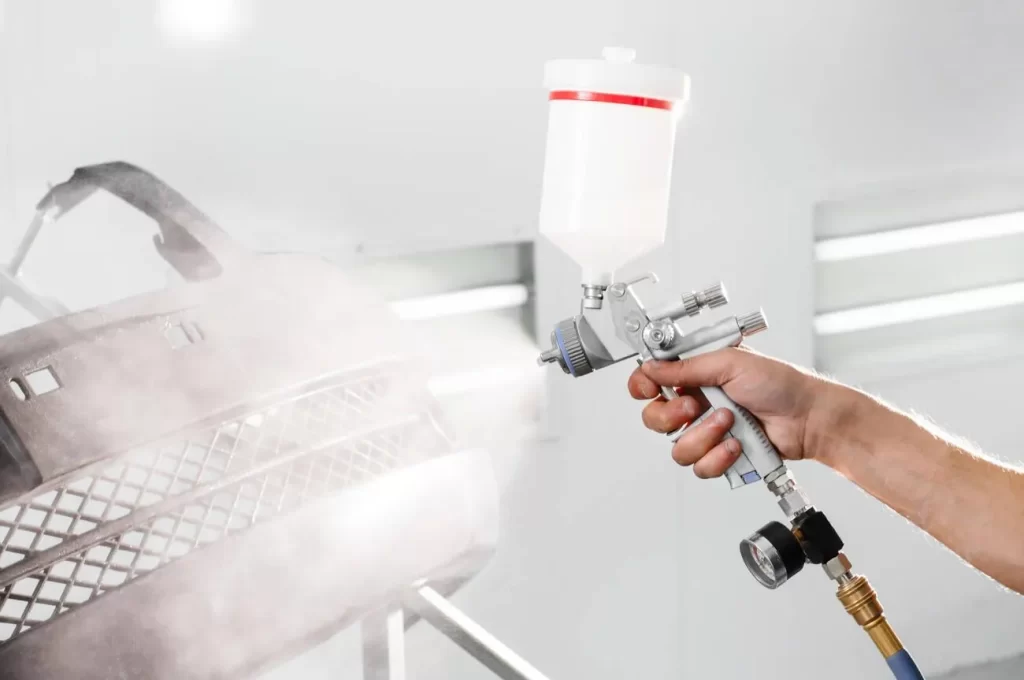
Painting car parts
Once the primer is completely dry, paint may be applied by using one of three basic methods: spraying, brushing, or rolling. Spraying is typically utilised in commercial applications because it provides an even layer of coverage over large areas. Multiple layers may be applied based on the desired thickness and protective properties. However, each additional layer must be painted consistently to achieve the same results.
Step 4: Drying or Curing
After applying multiple layers of paint, each layer must be allowed sufficient time to dry or cure. While some coatings may dry from solvents at room temperature, others need heated environments to harden the layers. The time required for complete drying depends on factors such as paint type, application thickness, and environmental conditions.
Try Prolean Now!
Common Types of Paint
The type of paint you choose will depend on the surface material (what your product or item is made of), the environment it will operate in, and how good the finished coat needs to look. Each paint has its own strengths and weaknesses, including how strong it is, how fast it dries, and how well it resists water, chemicals, etc.
Acrylic Paint
This paint is generally used when you want an average-quality coat. It dries quickly, applies smoothly, and covers most colours fairly evenly. This paint is suitable for both interior and exterior components that do not require high levels of protection. In addition, this paint can help with cost control.
Epoxy Paint
Once dried, epoxy paint forms a thicker protective barrier than other types of paint. This makes it much more resistant to moisture and chemicals. Because epoxy paint resists moisture and chemicals so well, it is ideal for industrial floors, pipelines, and machinery coatings that are subject to extreme weather conditions.
Polyurethane Paint
Polyurethane paint forms a harder, smoother protective coating. Due to its ability to withstand sunlight exposure and surface wear and tear better than regular paints, polyurethane paint is highly recommended for use on items such as automotive components, outdoor products, and handheld tools.
Enamel Paint
After application, enamel paint produces a hard, glossy protective layer. Enamel paint protects virtually all types of materials from environmental damage. As a result, it is widely used on metal, wood, and plastic components that require superior surface finishes and/or aesthetics.
Limitations of Paint
Paint offers an excellent method for surface treatment, but it has several drawbacks concerning long-term operation and longevity.
Lower Surface Durability
When it comes to powder coat vs paint durability, paint is much more susceptible to damage from scratching, chipping, and general wear. The paint coat will generally be damaged by impact or abrasion far more easily than other types of protective coatings. As a result, more maintenance (i.e., touch-ups) will be needed, especially where the part is frequently in contact.
Thin Protective Layer
The paint forms a very thin film on top of the base material. As a result, the paint provides little to no corrosion protection in harsh outdoor environments. For materials exposed to water vapour, dirt, or chemical substances, the paint’s thin layer will break down more quickly than usual.
Fading and Long-Term Wear
When exposed to light and atmospheric elements, paint will degrade. In time, paint will fade, peel, or break down on the surface. Parts exposed to the outdoors, such as cars and buildings, will normally need their paint reapplied after a long period of service.
Multiple Coats and Time Requirement
In most cases, multiple layers of paint will be needed to cover all surfaces properly. Each layer must dry completely before the next layer is applied. This extends the overall process time and increases material use, especially when producing in large quantities.
Powder Coating vs Paint: Which One Works Better?
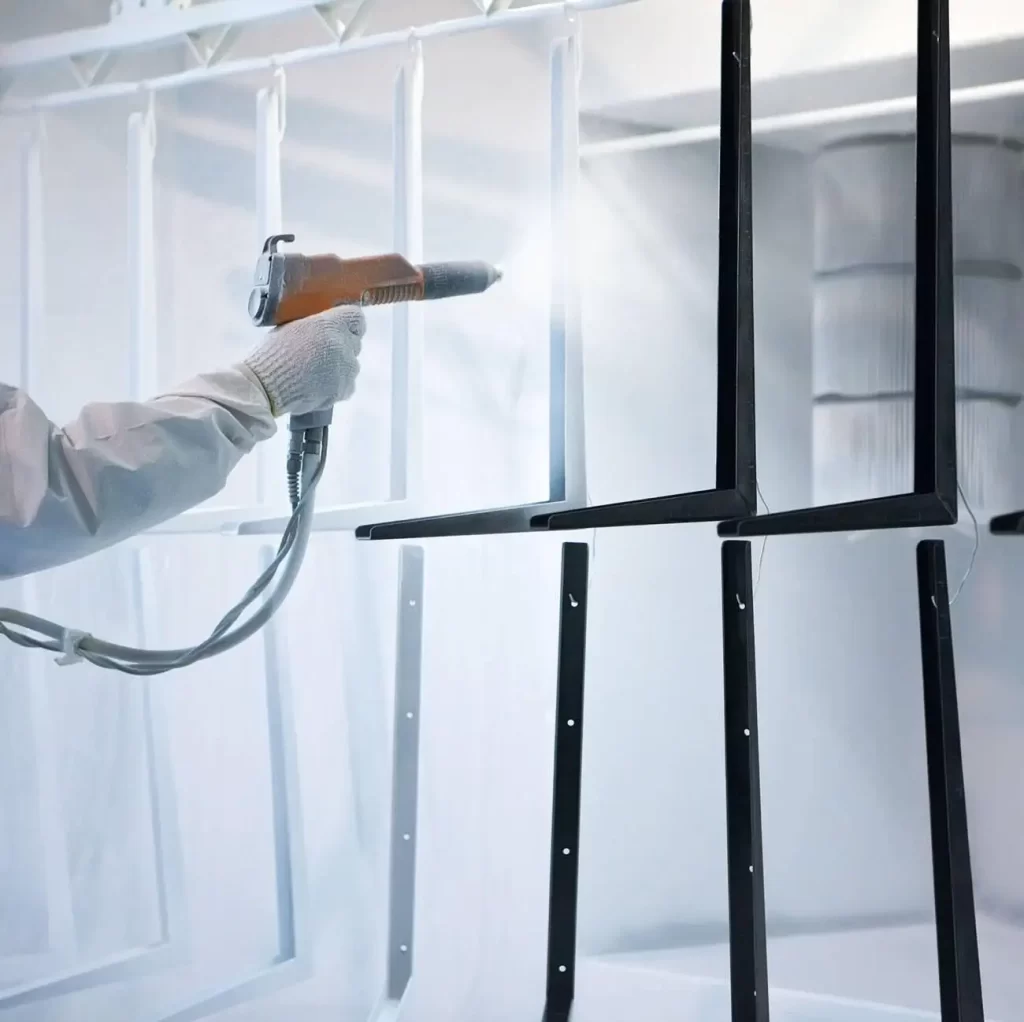
Powder coating metal parts hung at an angle
The two coatings will provide similar corrosion protection and create an attractive finish. Ultimately, your decision will depend on how the product will be utilised, what you expect from its lifespan, and the degree of finishing you desire.
Colour Options and Surface Finish
There are many colours available in paint. Paint is easily mixed, matched, and applied in various shades, allowing for a high degree of customisation. Therefore, it is ideal for applications where design flexibility is important.
While there are fewer colour options in powder coating, the finish produced by this coating process is very consistent. Furthermore, since the powder coating remains stable over time and resists UV light exposure and weathering, it will maintain its original shade longer than paint.
Durability in Service Conditions
Exposure to outdoor conditions can accelerate the degradation of painted surfaces. Over time, scratches, fading, and peeling can occur if the painted surface is exposed to UV light and water. Powder coating provides greater protection. This enhances the parts’ ability to withstand impacts, environmental exposure, and long-term use without excessive surface damage.
Surface Texture and Appearance Control
Depending upon the application technique and the type of paint selected for obtaining smooth, matte, and glossy finishes can be obtained. Powder coating produces a uniform finish after curing. Because it covers surface irregularities well, it produces a uniform coat across the entire surface of a product.
Cost and Long-Term Value
The initial cost of paint is low, and it is relatively inexpensive to apply for small projects. However, since the topcoat must be reapplied (and maintained) over time, there are additional maintenance expenses associated with painting.
In comparison, while powder coating is more expensive initially than painting, it eliminates the need to recoat and maintain products repeatedly, making it ultimately less expensive. When it comes to choosing between frequent rework and a long-lasting product with fewer maintenance requirements, powder coating is the preferred option.
Environmental and Safety Considerations
Paints contain solvents that evaporate into the air as the paint dries. As such, proper ventilation and safety precautions should be taken when applying paints. Since powder coating uses no liquid solvents, only the powdered material must be controlled as it becomes airborne during application. In general, powdered coatings are considered cleaner in terms of emissions and disposal.
Try Prolean Now!
Paint and Powder Coating: Which One Should You Choose?
Below is a simple side-by-side comparison to clearly understand both finishing methods.
|
Comparison Factor |
Powder Coating |
Painting |
|
Project Type Fit |
Used when parts go into long service use |
Used for small, quick, or flexible jobs |
|
Job Volume |
Works better for batch or repeat production |
Suitable for single pieces or low-quantity work |
|
Handling After Finish |
Needs careful handling after curing |
Easier to handle and rework if needed |
|
Rework Situation |
Not easy to fix once coated |
Can be repaired or repainted locally |
|
Lead Time |
Includes curing time in the oven |
Faster for urgent or simple delivery |
|
Surface Condition Need |
Requires proper preparation before coating |
Can be adjusted on less perfect surfaces |
|
Appearance Consistency |
Same finish across all parts in the batch |
Finish may vary slightly between applications |
|
Job Flexibility |
Less flexible once the process starts |
More flexible during the application |
|
Client Preference Case |
Chosen for long-term industrial use parts |
Chosen for prototypes and short-term projects |
|
Maintenance Expectation |
Low maintenance after application |
May need repainting over time |
Alternatives to Powder Coating Vs Paint
Powder coating and painting are both commonly used as protective finishes for metals. However, other finishing methods can be selected when specific requirements for corrosion resistance, electrical conductivity, coating thickness, substrate compatibility, and appearance cannot be met by powder coating and paint alone.
Each finish type has its own unique function, determined by the specific characteristics of the materials involved and the environmental conditions.
Zinc Coatings
Zinc-coated finishes provide a protective barrier on the steel to slow down the rate of corrosion. If the zinc finish is damaged or scratched, it will continue to protect the underlying steel from further corrosion.
The most common types of zinc coatings include:
- Hot-Dip Galvanized (HDG): The most popular method of providing a zinc finish. Steel is submerged in a bath of molten zinc, where it reacts chemically with the iron, forming a protective barrier.
- Zinc Electroplating: A zinc coating applied using electrochemical means. Mechanical Zinc Coating: Uses zinc powder and applies it mechanically (using heat) to the part.
These finishes are typically used for exterior steel parts, structural components, etc.
Conversion Coatings
Conversion finishes are very thin chemical layers deposited on the surface of the metal. Instead of depositing a large amount of material onto the surface, conversion coatings modify the surface’s physical and chemical properties.
Examples of conversion finishes include:
- Black Oxide Finish: Used primarily for decorative applications; blackens ferrous alloys.
- Phosphate Finish: Improves corrosion resistance and helps paint adhere.
- Chromate Finish: Provides corrosion resistance and inhibits hydrogen embrittlement. Conversion coatings are usually applied when paint or other coatings need to adhere better than they would without them.
Anodizing
Anodizing is exclusively used on aluminium parts. It involves passing an electrical current through an acid solution containing aluminium parts and initiates a controlled oxidation reaction at the surface, forming a porous oxide film. The anodized film improves corrosion resistance and surface hardness and is normally available in vibrant colour options.
Get Professional Surface Finishing for Your Metal Parts
At Prolean Tech, we provide Surface Finish Service, including powder coating service, for different manufacturing needs. Each part is handled with controlled preparation to ensure proper adhesion and consistent surface quality.
Our finishing services support parts produced through CNC machining, sheet metal fabrication, injection moulding, and 3D printing. From single prototypes to production batches, we help achieve clean, durable, and application-ready surfaces. If you need reliable finishing for functional or visual requirements, our team can support your project from start to finish.
FAQ’s
Is powder coating better than liquid paint?
Powder coating is considered more durable than paint. It resists chipping, scratching, and fading better. Paint, in comparison, is useful for small jobs as it is easier to apply and repair.
What are the main limitations of powder coating?
Powder coating is:
- Hard to repair once the surface layer gets damaged
- Not suitable for heat-sensitive materials
- Difficult to apply very thin coatings
What lasts longer, powder coat or paint?
Powder coating generally lasts longer than paint, depending on surface use conditions. Its lifespan depends on factors like exposure to moisture, UV light, abrasion, and operating environment.
0 Comments