
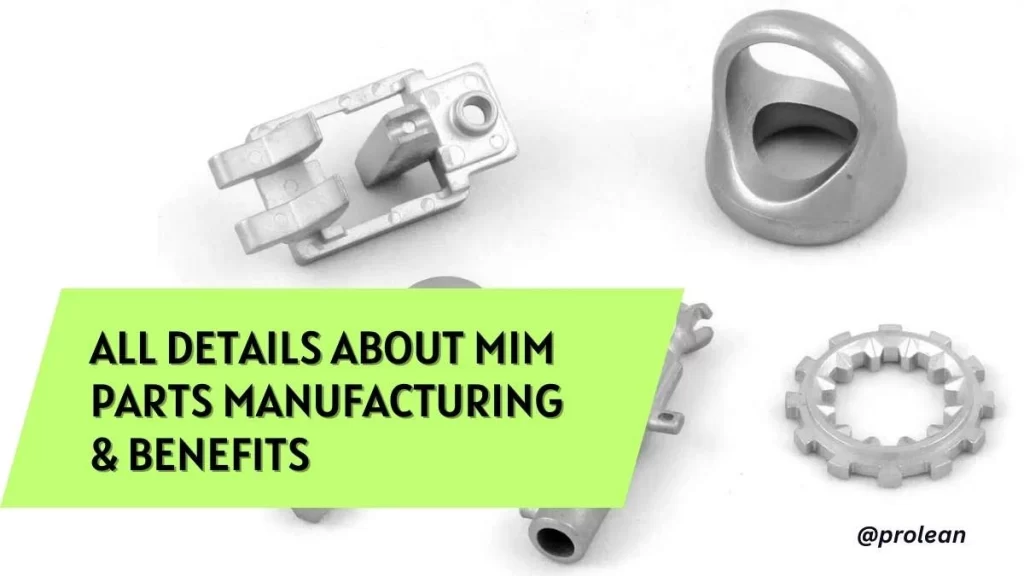
Metal Injection Molding(MIM) is a novel technique for making small, complex metal parts with accuracy and reliability. Especially, it’s profitable for parts below 100 grams in weight. Compared to PIM, MIM parts remain strong enough to endure tough conditions. MIM manufacturing has cross-industrial recognition and is widely used in aerospace, automotive, medical, and electronics industries for making fuel injector nozzles, medical instruments, watch parts, and cell phone covers. If you need to design the same parts in bulk, MIM can be a go-to choice.
Continue reading to know the MIM process, what are mim parts, and explore which areas of application are optimum for MIM processing.
Benefits of Adopting Metal Injection Molding(MIM)
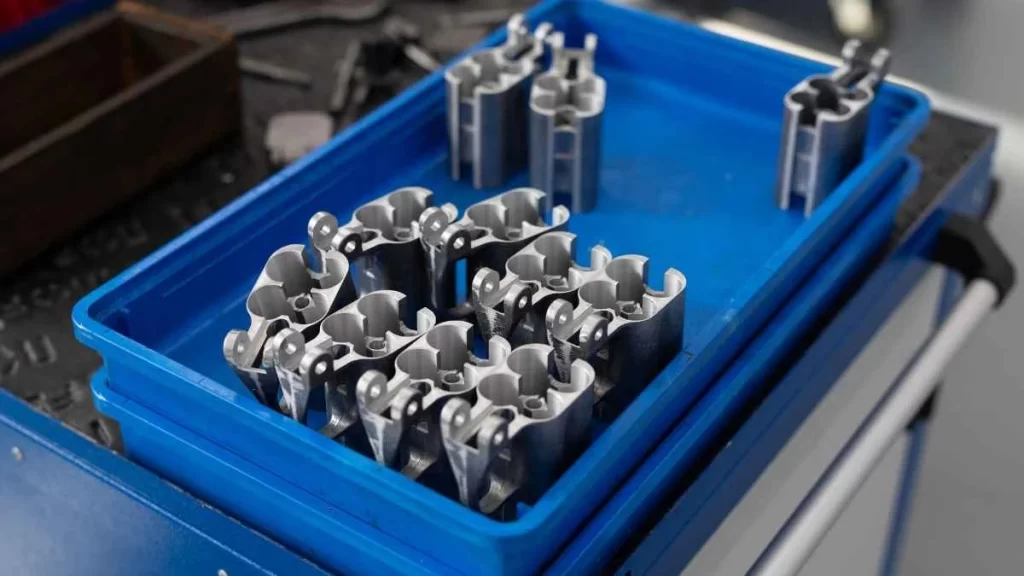
Image Name: MIM Parts
The following are the advantages of using MIM:
High-Volume Production of Complex Parts
MIM allows for the production of a large number of metal parts with a complex cross-sectional shape and thin walls. This capability is helpful for the generation of small parts with thin sections and a high degree of accuracy.
Superior Surface Finish
The MIM parts can be easily removed from the mold; in most cases, their surface finish could be better. Very little or no further finishing is needed. As for the images, post-processing options are given to make them even better.
Component Consolidation
The MIM process also helps the designers to join several parts or assemblies into one part to minimize a product. This type of consolidation can eliminate subsequent assembly processes and improve the stiffness of the products.
Excellent Mechanical Properties
MIM’s parts have acceptable mechanical characteristics, such as hardness and strength, for their intended use.
Material Efficiency
MIM is once more very material efficient. 95-98% of the raw material is recoverable in usable form as parts. This efficiency also helps to reduce the usage of the material to the barest minimum and, therefore, the cost of production, especially when manufacturing the parts from costly materials like superalloys or special metals.
Cost-Effectiveness at Scale
MIM can be cheaper than investment casting, machining, and stamping, especially in large-scale production of high-volume parts.
If your project could benefit from these advantages, you can contact our engineering team to discuss materials, design considerations, and production options.
Disadvantages of Metal Injection Molding
While MIM provides many benefits, there are also some drawbacks:
- High Initial Investment: The fixed costs of the MIM process are considerably high. It requires specialized tooling and equipment, making it more costly than other manufacturing processes.
- Higher Costs for Low-Volume Production: MIM can be less cost-effective for low-volume production since the cost per part is usually high compared to manufacturing a few parts.
- Size Limitations: It is usually ideal for manufacturing components of small to medium size. More extensive components are not easy to manufacture because they need more giant molds and furnaces, which can be very costly.
- Shrinkage During Sintering: Components manufactured through MIM undergo dimensional change during the sintering process, which must be controlled. Although manufacturers consider this factor during part design and tooling, it is still critical in determining the final part quality.
A Brief Overview of the MIM Manufacturing Process
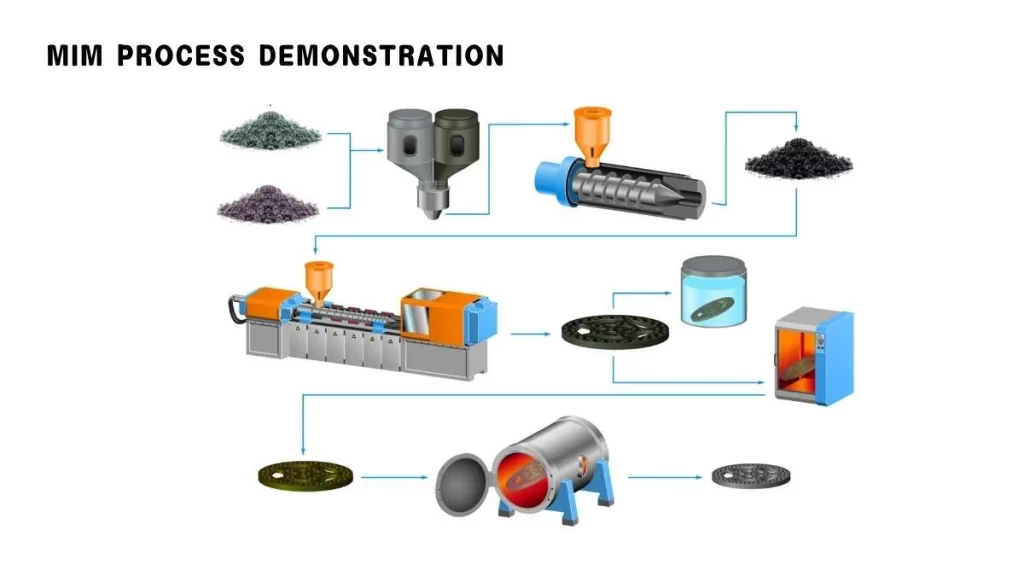
Image Name: MIM Process layout
Metal Injection Molding (MIM) involves blending pure metal powder with a binder to come up with a feedstock. This compound is then proportionately pulverized and executed like the way plastic injection molding(PIM) is done. The molded part, which is sometimes referred to as the “green” part is in turn cooled and extracted/ejected out of the mold.
The binder is then partially removed by techniques such as solvent extraction, heat treatment, and spurt catalysis in the next step. The part becomes a “brown” part in a porous state. During sintering, additional parts of the binder are eliminated by heat, which evaporates through the remaining pores.
Then, the given part is heated again to a high sintering temperature to solidify the metal powder particles. This stage gives the part a denser and mechanically superior microstructure than the metallic part produced through conventional techniques.
Similar to the Die Casting and plastic injection molding process, the MIM is ideal for creating delicate small feature parts that are challenging to shape using more traditional metal-forming practices. However, it may involve extra machining or assembling expenses.
Metal Injection Molding (MIM) Attributes and Capabilities
The following table outlines the key attributes and capabilities of the Metal Injection Molding (MIM) process, highlighting the typical and extreme ranges that can be achieved in MIM production.
| Factors | Minimum | Typical | Maximum |
| Component Mass (grams) | 0.03 g | 10 – 15 g | 300 g |
| Dimension (millimeters) | 2 mm (0.08 in) | 25 mm (1 in) | 150 mm (6 in) |
| Wall Thickness (mm) | 0.025 mm (0.001 in) | 5 mm (0.2 in) | 15 mm (0.6 in) |
| Dimensional Tolerance (%) | ±0.2% | ±0.5% | ±1% |
| Part Density | 93% | 98% | 100% |
| Production Quantity | 1,000 units | 100,000 units | 100,000,000 units |
If your component falls within these ranges, it may be a strong candidate for MIM manufacturing. Our engineering team can review part geometry, material selection, and production volume to determine feasibility through our metal injection molding and engineering capabilities.
Try Prolean Now!
Design Guidelines for MIM Tooling
When planning to manufacture parts through MIM, tooling design is one of the most critical aspects of the manufacturing process. This involves selecting the parting line, positioning the gate, locating the ejector pin marks, and using cam actions.
Parting Lines
In MIM, the parting line is the line across the mold where the two halves come together. While every MIM component will have this visible line, it is possible to reduce its thickness and, therefore, its visibility. If the parting line is established at the edge or step of a feature, this line can be made less conspicuous, thus improving the appearance of the part.
Gating
The gate is where the MIM feedstock enters the mold cavity, a critical area of concern. Four basic gates are used in MIM, including tab, tunnel, jump, and drop gates, and each leaves a small mark on the part. The location of the gate is a significant factor since it influences the flow of material and the quality of the part. In an ideal condition, the gate should be located in the most considerable cross-sectional thickness to enable the material to thicken from thin to thick sections. It is desirable to center the gate close to the cylinder’s axis for cylindrical parts to prevent distortion during sintering.
Ejector Pins
Ejector pins are crucial in removing the part from the mold cavity once it is formed. However, they do not leave a deep imprint on the part’s surface, but minor marks are left behind. These marks should not be allowed to mar the final product’s appearance; hence, the part must be designed so that ejector pin marks are located in areas that are not easily seen, especially after assembly.
Cam Actions
In MIM tooling, cam actions produce features such as undercuts, which may require additional operations. When creating undercuts on a designed part, the direction the cam will be moving must be considered. The design process gets more complicated when more than one cam action is needed because each cam occupies a lot of space inside the tool. All these issues must be carefully addressed during the tool’s planning and design while maintaining functionality.
MIM VS. Metal Casting? Which Technique Benefits More?
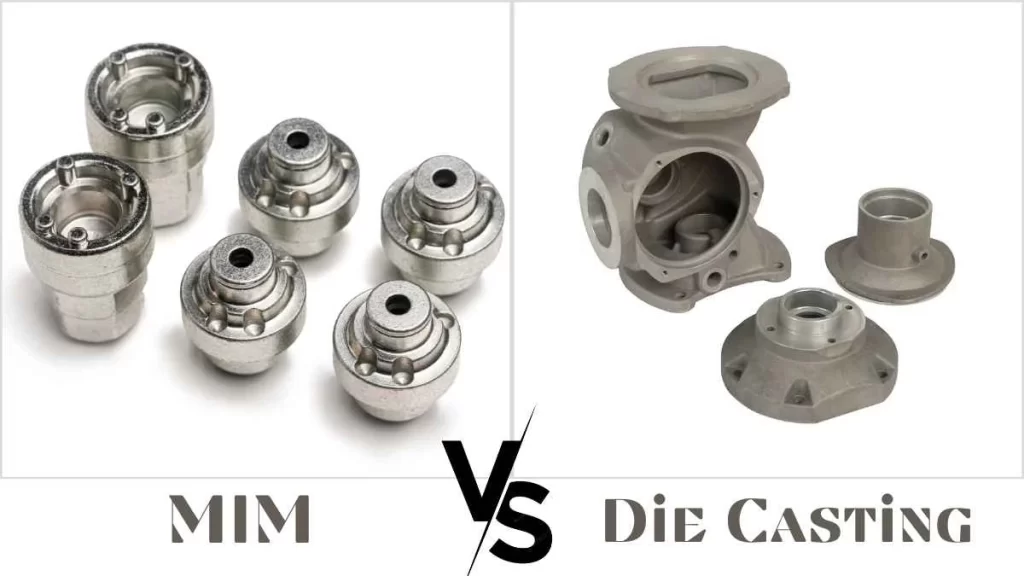
Image Name: MIM Vs Die Casting Parts
MIM is favored in the range of fields because it is possible to forge parts with complicated shapes and stable dimensions.
Compared to conventional techniques of metal casting, such as sand casting, die casting, or investment casting, MIM preserves both parallelism and mold tolerance throughout the process. The process stability minimizes the need for post-processing and provides a standard-quality surface finish.
On the other hand, metal casting requires heat treatment, and sometimes, it causes the formation of harsh stresses, more probably in thin sections.
Moreover, there are additional costs for post-processing, which radically decreases part geometry by trimming off sprues, gates, and risers. In addition, casting is unable to provide the feather-like surface finish of the small intricate mold of demands of the aerospace and medical.
Besides, machining provides almost accurate work, but it results in a huge waste of material particularly for the machining of complicated shapes. The nickel and stainless steel scrap, programming of CNC machines, and cost of machine tools make machining much costlier than MIM for numerous designs.
Despite the emergence of the newest technologies, such as 3D printing, and selective laser sintering, MIM remains a cheap process. By comparison with more novel forms of AM, MIM provides higher repeatability, faster processing and throughputs, and lower levels of maintenance/rework and scrap. (Read more about metal injection molding vs die casting)
Here is a comparison of Metal Injection Molding (MIM) and Die Casting.
| Attribute | Metal Injection Molding (MIM) | Die Casting |
| Material Compatibility | Capable of processing a wide range of ferrous and non-ferrous metals, including complex alloys. | Primarily processes non-ferrous metals like aluminum, zinc, and magnesium. |
| Wall Thickness Range | It is suitable for producing thin walls, typically ranging from 0.040” to 0.120” (1.0 mm to 3.0 mm). | Handles slightly thicker walls, ranging from 0.040” to 0.200” (1.0 mm to 5.0 mm). |
| MIM Material Options | Works with powdered forms of various metals, including Stainless steel, tool steel, tungsten alloys, nickel superalloys, specialty metals | Best suited for: Aluminum, zinc, magnesium, copper, lead, tin |
| Typical Applications | It is ideal for producing small, intricate, high-strength components with tight tolerances. | They are used for more significant parts where high volume and less intricate designs are standard. |
| Dimensional Tolerance | Achieves tight tolerances, often within ±0.3% of nominal dimensions. | Maintains tolerances within ±0.5% of nominal dimensions, suitable for less precision-intensive parts. |
What Are The Compatible Materials for MIM Parts?
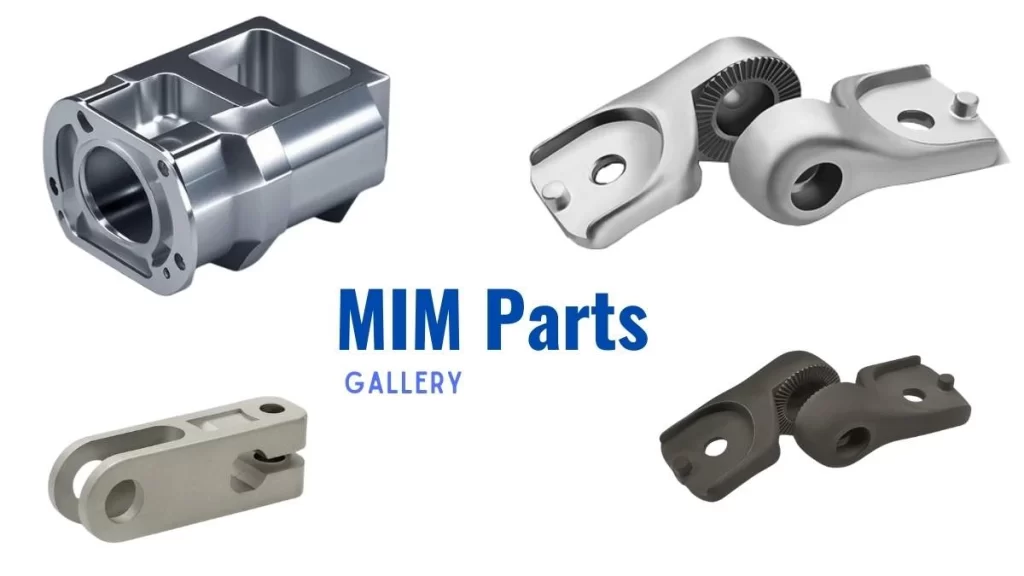
Image Name: MIM Parts Gallery
The MIM process supports a wide variety of metals, classified into four primary categories:
- Ferrous metals: Covers material such as stainless steel, tool steel, and nickel-irotypesspe like Invar and also Kovar.
- Hard metals: Including cobalt-chromium alloys, Cemented carbs, and ceramic-metal composites.
- Special metals: For instance, aluminum, titanium nickel, and molybdenum.
- Tungsten alloys: High-density packed and strong tungsten alloys.
If you’re looking to use any of these materials in MIM, Prolean Tech offers over 50+ material options and a range of services that are suitable for your needs. Below are the specific alloys and their characteristics:
| Alloy Group | Specific Alloys | Description |
| Stainless Steel |
316, 316L, 17-4 PH, 303, 304, 440C, 420P |
Corrosion- resistant |
| Low-Alloy Steel |
Fe-Ni (Iron-Nickel), FN02, FN08, 4140, 8620, 100Cr6 |
Cost-effective |
| Tool Steel | M2 |
Hardness & Abrasion |
|
Soft Magnetic Steel |
Fe-Ni50, Fe3Si, FeCo50, FeCoV |
Magnetic properties |
|
Tungsten Heavy Alloy |
W-Ni-Fe, W-Ni-Cu |
High density |
|
Tungsten Carbide-Cobalt |
WC-Co |
Wear- resistant |
Try Prolean Now!
Why Titanium Is Best For MIM Parts Manufacturing?
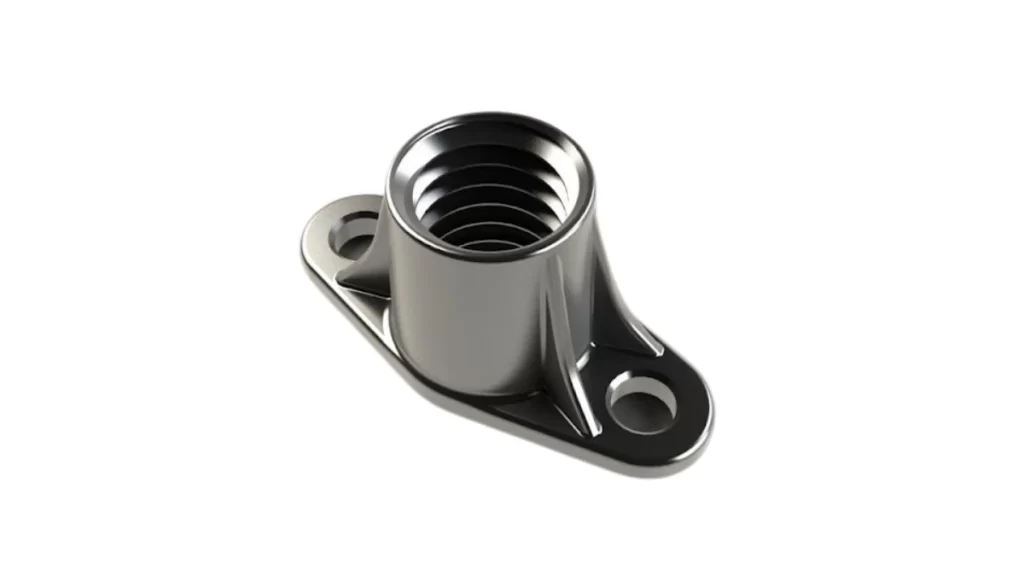
Image Name: Titanium MIM Part
Titanium Metal Injection Molding (TiMIM) is a consummate detailed and economical technique for fabricating small-dimensioned titanium components, minute grooves, threads, and certain contours with high detailing. In contrast to conventional casting, TiMIM is flexible in titanium alloys and notable for operations that need high levels of accuracy, prominently in the manufacturing of medical equipment and surgical implants.
Medical implants based on titanium alloys provide good compatibility with human tissues and do not corrode easily over time. Besides, their mechanical density is comparatively high. Such fabrication guarantees that these parts contain high tolerances to provide long-wearing components for use in the human body.
Read more: what are the 6 Injection Molding types
Common Alloys of Titanium Used In MIM Parts
- Crystal Phases: Alpha (α) Phase (Stabilized by Aluminum)
- Beta (β) Phase (Stabilized by Vanadium)
- Heat Treatment Alloys (Ti-6Al-4V): Solution aging which improves HIS toughness by distorting the crystal lattice.
Where Can You Find MIM Applications?
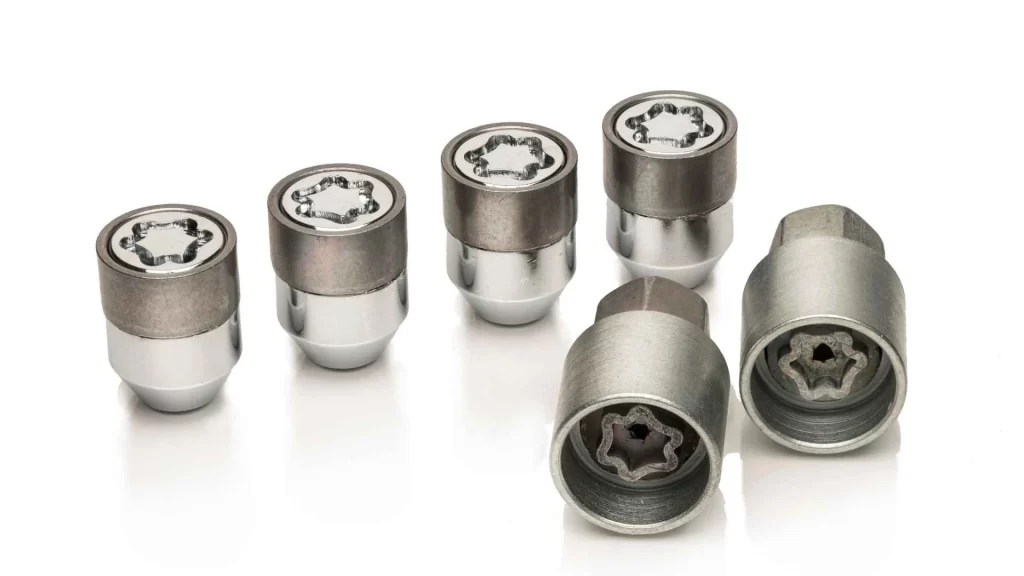
Image Name: MIM Automotive Parts
Metal injection molding is applied in many industries and can be found in products that you come across in routine. Common applications include:
- Medical and dental: Implants, instruments, screws, bolts, and other highly accurate parts.
- Automotive: Motors and engines, gearboxes, suspensions, and chassis accessories.
- Consumer Goods: Tobacco products: Cigars, cigarettes, pipes, and tobacco substitutes: Pipes and Tobacco, Firearms and other arms and frames or barrels for firearms.
- Aircraft Parts: Manufactured products such as engine components and mechanical appliance parts.
- Lawn and garden: Tools and equipment parts.
- Recreation and hand tools: Golf club and parts and accessories for golfing.
- Agricultural equipment: Stationary engines and their parts.
- Lifestyle products: The key accessory products include MIM Watches, eyewear, and Jewelry items.
- Biomedical Applications: For creating medical implants and disposable devices, the Ti-6Al-4V is used to meet such needs. Common TiMIM medical parts include:
Additional Applications
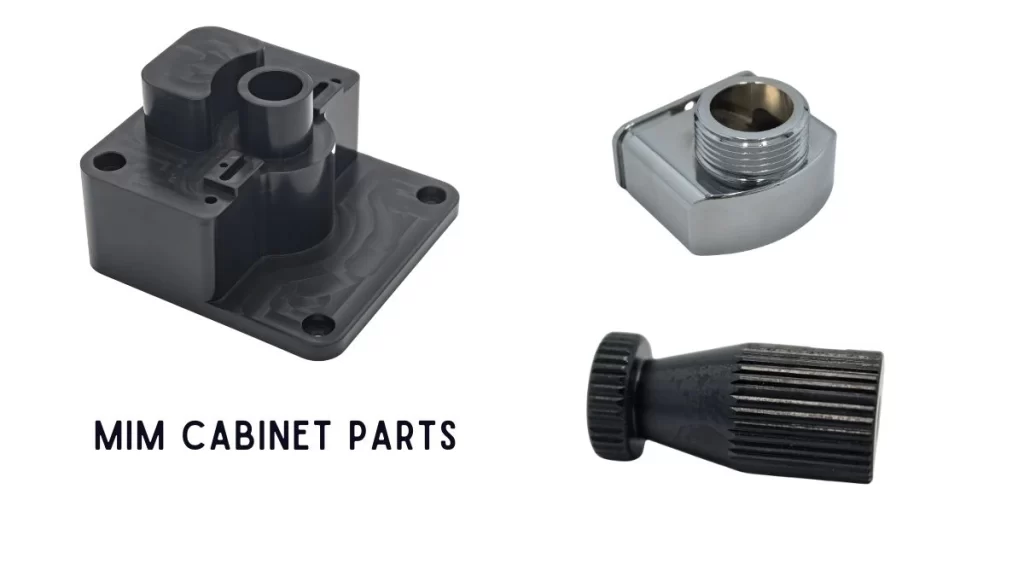
Image Name: MIM Cabinet Parts
Besides, MIM parts are used in areas of component manufacturing such as:
- Brackets
- Fasteners
- Fittings
- Watches
- Cabinet parts
Role of MIM in the Watch Part Manufacturing: Examples & Case Studies
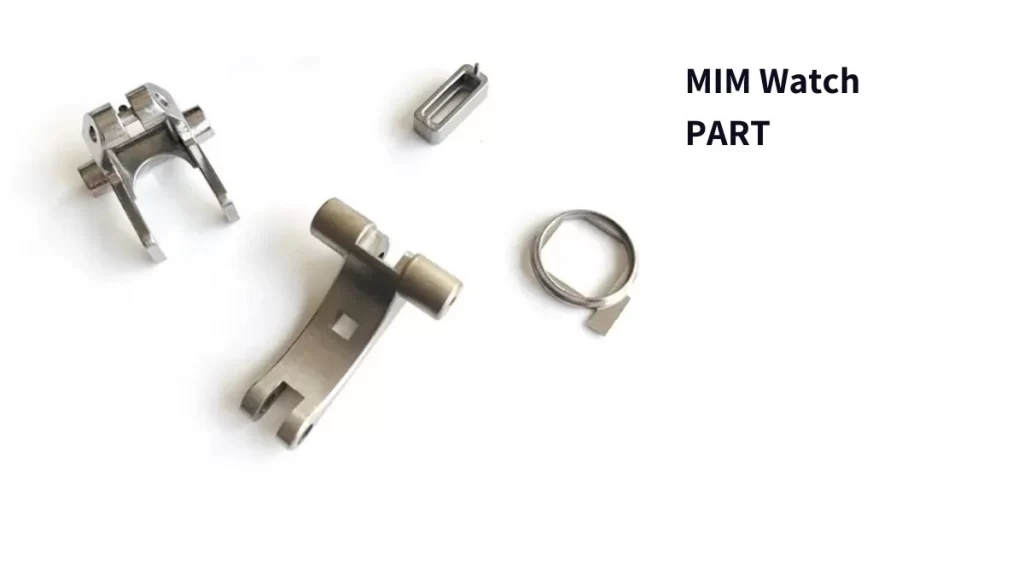
Image Name: MIM Watch Parts
In the luxury watch industry, the accessories are not only timekeeping but also inherent elements of personality and fashion, as well as high-quality manufacture. Parts, including the bezel, dial, clasp, and bracelet, are important elements in the aesthetic value and identity of the watch. As customer requirements increase for better quality and personalized products, watchmaking industries are increasingly adopting improved production MIM for watch methodologies for better standards, reliability, and appearance.
Ceramic Injection Molding (CIM) and Metal Injection Molding (MIM) have greatly changed the manufacturing of metal and ceramic watch parts. These technologies provide freedom in design, material choice, and manufacturing processes as no other technologies do. MIM and CIM use metal and ceramic materials. By combining the advantages of plastic injection molding, CIM, and MIM allow the production of elaborate and accurately detailed parts in bulk quantities. These make almost no wastage of materials, increase the mechanical strength of the final product, and deliver the accurate dimensional accuracy needed where luxury watch accessories are made both for looks and durability.
(Get more insights about which companies do metal injection molding?)
Let’s talk about examples and case studies of MIM’s role in manufacturing watch parts.
Bezels: MIM technology is applied in the manufacture of stainless steel bezels, which can have complex designs with such elements as rough surfaces and multiple case backs. In turn, MIM opens the possibility to produce ceramic bezels in various colors without compromising the hardness and scratch resistance. Both the appearance and performance of luxury timepieces are improved by this synergy.
Dials: Thanks to the CIM and MIM processes, you can precisely create watch dials with high detail, including secondary levels, patterns in the form of recesses, and built-in light-emitting components. These capabilities are highly desirable in the luxury watch market as they enable the application of high levels of customization combined with strict rules of acceptable tolerance and high-quality surface finishes.
Clasps and Bands: MIM technology is also used for manufacturing long-wearing clasps and bands. These are typically made of 316L stainless steel due to their high tensile strength and resistance to corrosion. For bands, MIM can make lightweight and hypoallergenic ceramic bands in variant colors to meet the comfort and style of modern premium timepieces.
Are You Looking For a Supplier or Fabricator of MIM Parts – Contact Prolean Tech
Checklist: Is Metal Injection Molding Suitable for Your Part?
To determine if Metal Injection Molding is the suitable manufacturing method for your needs, consider the following questions:
- High-Production Volumes: Are you planning to produce many parts for a particular product type?
- Small and Complex Parts: Is your part small and intricate in its design so that precision is an essential factor in fabrication?
- Strict Specifications: Does your application require that the components be produced at a high tolerance level and are very similar?
- Efficiency in Production: Is there a need to implement a method to minimize the utilization of materials in the production line?
- Complex Geometries: Do your parts have shapes and functional requirements that are impossible to implement with traditional manufacturing techniques?
If you answered ‘yes’ to these questions, you may wish to consider MIM for your project. However, there are some more things, one needs to consider:
- Design Flexibility: Do you own a business that requires many changes to the design? MIM may not be as effective due to the high costs incurred when changing molds after the start of production and, hence, may not be appropriate for prototyping.
- Lead Times: Is it essential that it be fast? MIM requires tools such as molds and binding fixtures, which often take longer to develop, mainly if the part is complicated. Therefore, the lead time may be weeks or even months.
Contact Prolean Tech
Image Name: Prolean Injection Molding Services
Whether you are looking for a fabricator of metal injection molded products or a CNC machining part manufacturer, our membership directory is extensive. Although MIM is a new addition to the latest technologies, developing MIM parts requires strong expertise and technicalities. But, Don’t worry, Prolean Tech having over decades of experience remains a go-to source of developed manufacturing techniques and quality MIM parts. Our staff and technocrates focus on designing and manufacturing high-quality, accurate, and economical parts/products for various uses.
So, feel free to reach out to us to learn more about our metal injection molding services and get a free online quote!
Final Thoughts
Conveying thin and extensive sections with intricate side outlines is challenging with utilizing conventional procedures. The parts being made by Metal Injection Molding (MIM) make it possible and cheaper to develop these particular parts. Moreover, It helps produce parts for medical equipment and aerospace, where accuracy and reliability are vital. MIM plays a role in providing high-quality components in the shortest time possible while the process has lower costs and high production efficiency.

0 Comments