
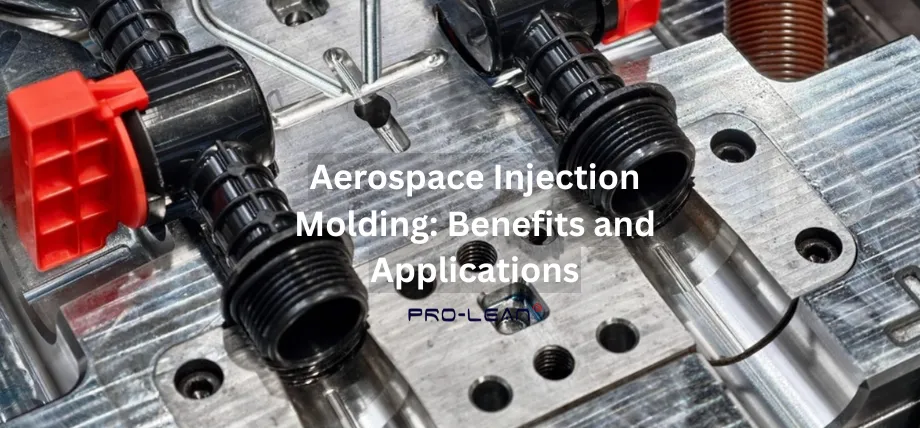
Aerospace injection molding components
Standard injection molding is a high-volume process for producing plastic parts. It works by injecting molten plastic into a mold cavity under high pressure so it sets into the crevices and perfectly forms the part. The material then cools and takes the shape of the mold. In aerospace injection molding, strict requirements are followed to meet the industry’s high-precision and tolerance demands.
Aerospace injection molding primarily uses plastics and is referred to as Plastic injection molding. Metal injection molding (MIM) is also used in aerospace applications, which uses metal powders and binders.
Aerospace injection molding is crucial for high-volume part manufacturing, as machining each part individually is time-consuming and expensive. Additionally, the aerospace industry uses specialized high-performance plastics and composites, which have made injection molding a preferred manufacturing process for aerospace plastic components.
Why Is Aerospace Plastic Injection Molding Different
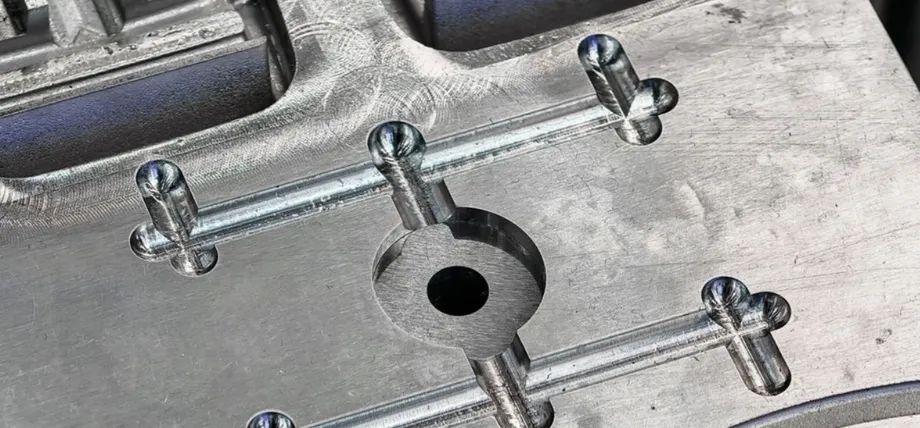
Precision steel mold cavity
Aerospace injection molding differs from standard injection molding due to the stringent requirements it must meet, including AS 9100 quality management compliance, AS 9102 first article inspection, precision, and quality in large-volume production of complex parts. These aspects of aerospace injection molding are explained briefly below.
High Precision And Tolerance of Aerospace Parts
Aerospace parts are designed to be precise and accurate to eliminate safety and performance concerns. Slight variations in a part can cause critical components to fail. This is why aerospace injection molding is used for parts that must have a precisely defined mold tolerance.
The tolerance of aerospace plastic components is really tight. The aerospace injection mold used for injection molding has a strict tolerance. Tolerance of aerospace injection molds can be as low as 0.025mm, achieved under stable material and strict molding conditions, and they are typically made of stainless steel, which costs more than aluminum molds. This is because steel molds can achieve tighter tolerances, which is ideal for the aerospace injection mold.
AS9100 certification
AS9100 is a quality management standard crucial to the aerospace industry. AS9100 certification ensures that the part meets regulatory and standard requirements. Compliance with AS9100 includes
- Quality management system
- Documentation and traceability
- Process control
- Supplier Management
Material Requirements
The aerospace industry requires high-strength materials with high strength-to-weight ratios. In the aerospace industry, special high-performance polymers such as PEEK and PEI are used, which can withstand temperatures up to 260–315°C.
Plastic Aerospace Injection Molding

Molded aircraft interior trims
Aerospace plastic injection molding is the most widely used injection molding in the industry. PIM is used for non-structural part manufacturing, such as fastener-capable clamps and mounts. Plastic parts help reduce aircraft weight.
Aircraft plastic molding starts by melting the pellets, then injecting the molten plastic into molds at high pressure. After injecting the plastic, the parts are allowed to cool and are then removed from the aerospace injection mold. Aircraft plastic molding requires minimal post-processing, primarily trimming excess edges.
Metal Injection Moulding In Aerospace
Metal injection molding uses the same injection molding principles as plastic injection molding, but with metal. It uses powdered metals, such as stainless steel and titanium, mixed with binders to form a feedstock that can be injected into moulds. The molded parts are then heated so that the metal particles bind together into a single piece.
Metal injection molding excels at small, complex, and high-strength parts where traditional machining or casting is inefficient. This is because metal and superalloys have excellent corrosion resistance and mechanical strength, which enable high performance. Small complex metal parts are made using MIM for the aerospace industry.
Materials Used In Aerospace Injection Molding
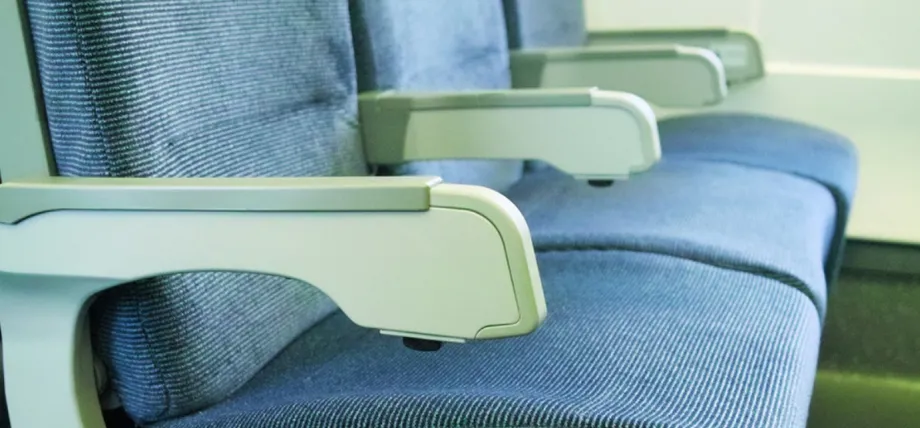
Injection-molded seat components
One of the most significant advantages of aerospace injection molding is the ability to work with a wide range of metallic alloys and different plastics to utilize aerospace plastic injection molding, including high-performance polymers and thermoplastics such as PEEK.
Injection-molded plastic components are the main applications of injection molding in the aerospace sector.
Plastic Materials
- PEEK (Polyether Ether Ketone)
- PEI (Polyetherimide)
- Polyimide
- Polycarbonate (PC)
- Nylon/PA
- PPS
Metal Materials (MIM)
- Stainless steel grades include 316L and 17-4 PH
- Superalloys such as Inconel 718, Hastelloy X
- Titanium alloys Ti-6Al-4V
Try Prolean Now!
Key Advantages of Injection Moulding

Micro injection molded part
Material Versatility
The injection molding process can handle both metals and plastics, increasing its versatility. Injection molding can process a wide range of materials, giving manufacturers greater leeway for experimentation and testing.
Additionally, using metals to make injection-molded parts enables manufacturers to meet specific requirements, such as flame resistance and conductivity.
Complex Geometries with Tight Tolerances
Using injection molding, you can create diverse designs and explore new possibilities that were previously limited by traditional methods. The ability to create different designs and implement features such as thin walls, and help to optimize your component for performance by reducing weight. The injection molding process can achieve extremely tight tolerances up to 0.025 mm.
Cost Effectiveness
Injection molding is cost-effective compared to other manufacturing techniques. Injection molding is less wasteful and requires minimal postprocessing, since parts are produced to their final dimensions.
Additionally, this manufacturing process combines multiple steps into a single process, reducing labor and overall costs, making injection molding an excellent option for aerospace manufacturing. Injection-molded plastic components are a cheaper alternative to machined components. This is a major driving factor that has helped injection molding become prominent in the aerospace sector.
Time Efficiency
The injection molding process improves manufacturing times through rapid cycle time and accelerated prototyping. Thermoplastic production cycles range from 10 to 60 seconds, and for high-performance plastics, they can reach up to 120 seconds.
70-80% of the cycle time is taken by cooling. The high cooling time can be reduced by creating cooling channels, improving it by 20-30%, allowing more parts to be produced.
Try Prolean Now!
Application of Injection Moulding: Metal Vs Plastic
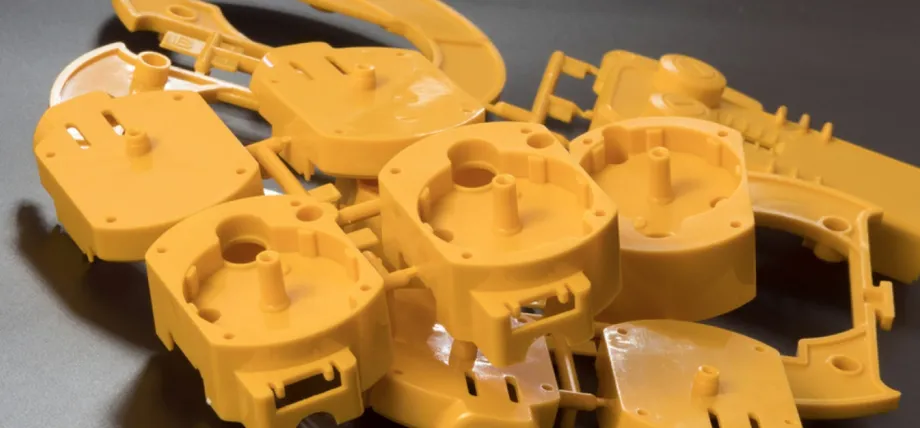
Molded parts with gates
Standard Plastic Injection-Moulded Parts.
Injection-molded plastic components are mainly used for non-critical parts, such as interior and secondary structural parts, that prioritize weight reduction and insulation. The following is a description of standard injection-molded plastics parts in the aerospace industry.
Interior Components
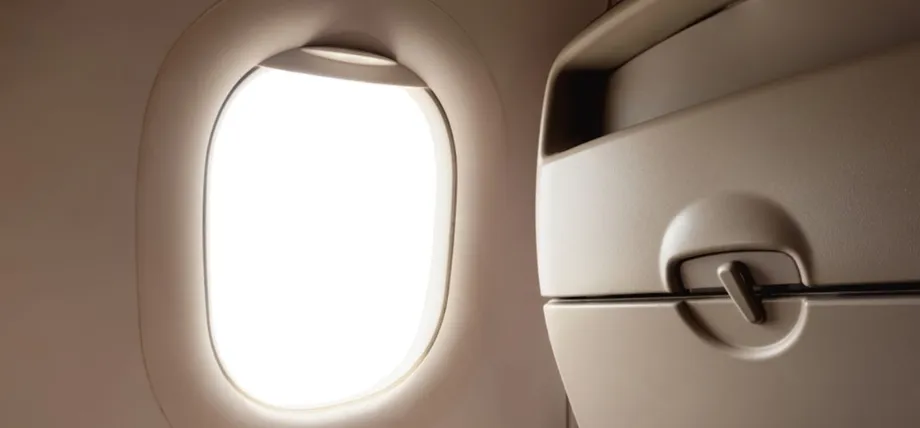
Molded airplane window frame
Interior components such as overhead panels, seats, and armrests are made of plastic. This is because these parts need to be both lightweight and thin while being strong, and thermoplastics fit these requirements perfectly. Other interior components, such as cockpit dashboards and control knobs, are all injection-molded products.
Bracket and Mounts
Brackets and mounts used in the aerospace industry are made from strong, lightweight plastic or other composite materials. They help reduce the aircraft’s weight and can withstand significant stress.
Cable Clamps And Fasteners
Injection molding is efficient for high-volume production of small, accurate parts such as clamps and fasteners. A lot of load is applied to fasteners, so they need to be robust and durable. The slight weight reduction adds up to a substantial amount, improving an aircraft’s overall performance.
Electronic Component Housings
Sensors, control systems, and other electronic modules have plastic housings, which are mainly produced through injection molding. The durable plastic housing helps protect the sensitive, delicate electrical components from moisture, pressure, and stress. These housings are also used for insulation.
Structural Components
Assemblies such as fuselage panels and wing parts are produced by a type of molding using composite materials called RTM. They are strong yet light, improving the aircraft’s fuel efficiency. Other structural supports, such as ribs, reinforcements, and supports, are also made using injection molding.
Fuel Systems Components
Fuel systems use injection-molded components, including fuel caps, seals, and fittings. These parts must be immune to fuel and designed to endure high pressure while providing a safe, seal-tight environment. Standard on metal injection mould parts.
Engine Components
Engine components, such as the amount nozzle and turbine fitting, are made from high-performance super alloys for extreme heat and stress, using metal injection molding.
Fasteners And Fittings
High-strength latches and internal metal assemblies of components are made by metal injection molding. For example, a seatbelt mechanism with latches is made via MIM.
Structural Components
Structural components such as hydraulic fitting connectors and structural fittings in fuel or actuation systems.
Other Specialized Items
Airliner flapscrew seals, connectors, and other non-critical load-bearing components are made via MIM.
Injection Molding Services at Proleantech
Proleantech is one of the top injection molding companies for custom aerospace components manufacturing, which delivers top injection molding services with great tolerances and precision. Our in-house injection molds have tight tolerances and great finishes, which result in injection molded parts that feature a nice finish and don’t require post-processing.
Our turnaround time is around 2-5 days, and we ensure superior quality parts. Contact us today to discuss your project requirements and receive an online quote.
Conclusion
Injection molding is critical for making aerospace parts due to their high accuracy, low weight, and complex forms. The method produces parts that meet industry performance and safety standards. Injection molding is highly versatile, allowing manufacturers to experiment with different materials and designs. The exceptional tolerance and accuracy of the process make it a preferred choice for high-volume, precision aerospace parts. Due to innovations in materials such as high-performance thermoplastic and composite reinforcements, the injection molding of aircraft parts has improved fuel efficiency and other aircraft performance.


0 Comments