
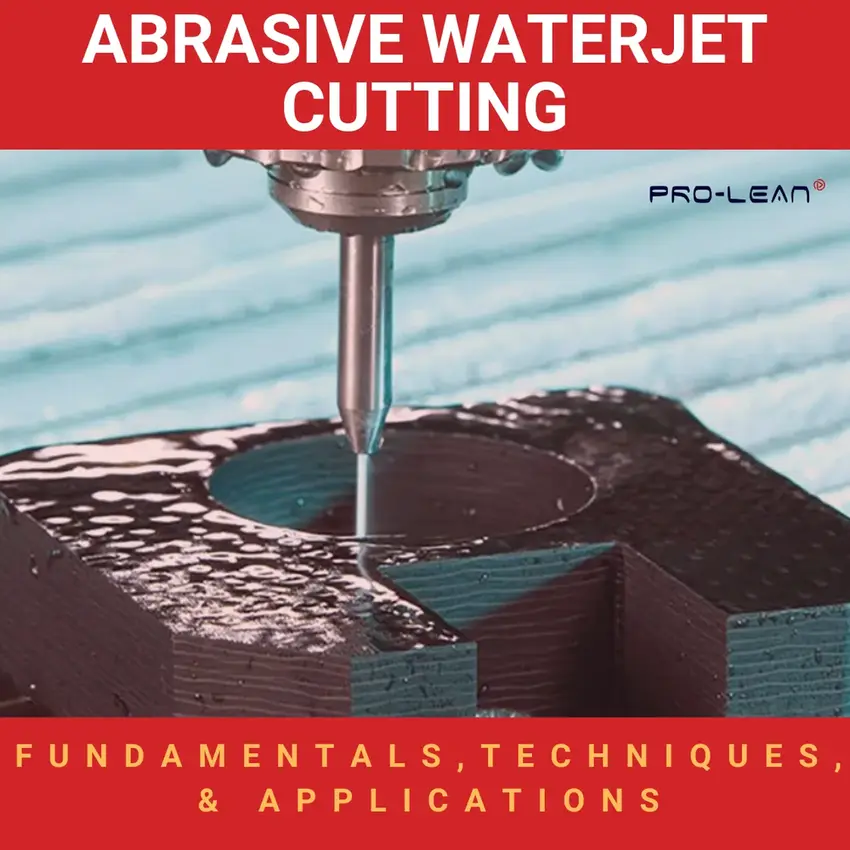
Abrasive waterjet cutting
The generation of thermal stress is a serious problem when cutting some materials, but that is solved through the use of abrasive waterjet technology. This cutting principle entails mixing water with garnet abrasive or any other type of abrasive material and spraying it at high speed on the workpiece.
Pressures as much as 4000 bar are generated to cut even the hardest materials without thermal stress. Manufacturers use the abrasive cutting system on metals, plastics, composites, ceramics – virtually every type of material.
The waterjet cutting process applies in architectural, aerospace, automotive, defense, and manufacturing, among many other industries.
Read on for more on the working principle, benefits, limitations, and applications of this exciting technology.
What is Abrasive Waterjet Cutting?
Abrasive waterjet cutting is a version of the umbrella waterjet cutting technology. Waterjet cutting is a cold cutting method based on a powerful water stream, creating a cut in a workpiece.
Water, alone, can cut some materials, but when the hardness or thickness increases, abrasives are added to the water. This addition of abrasives creates abrasive waterjet cutting.
The special abrasives add friction to the high-pressure water, thereby increasing the cutting capability of the system.
How Abrasive Waterjet Cutting Works
Typically, the abrasive waterjet cutting process starts in the intensifier pump, where the water is pressurized to as much as 6900 bar. The system then directs the water to an orifice for controlled flow.
A mixing tube introduces abrasives, which combine with the water. The resulting accelerated jet has a significant cutting capacity. It erodes the workpieces with tolerances of up to ±0.003 inches and 0.020 inches water jet kerf width.
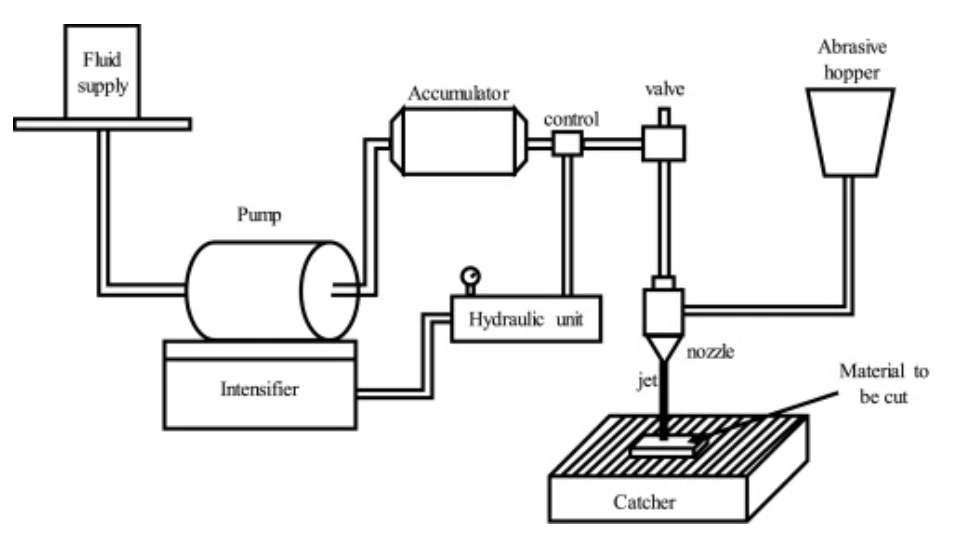
Abrasive waterjet cutting diagram
Different Types of Abrasive Waterjet Cutting
The main types of this technology are abrasive water injector jet (AWIJ) cutting and abrasive water suspension jet (AWSJ) cutting. These techniques differ in how high-pressure water and abrasives mix.
Abrasive Water Injector Jet (AWIJ) Cutting
The Abrasive Water Injector Jet (AWIJ) cutting mechanism is designed to mix water and abrasive between the cutting head and the nozzle. That is, after the water has exited the nozzle.
The abrasive stream that is formed cuts the material through air, abrasive particles, and the waterjet itself. This makes AWIJ cutting cost-effective for everyday shop cutting applications.
Abrasive Water Suspension Jet (AWSJ) Cutting
Abrasive Water Suspension Jet (AWSJ) cutting involves generating the abrasive mixture before pressurization. The suspension is then pressurized and directed to the cutting head to develop the cutting action.
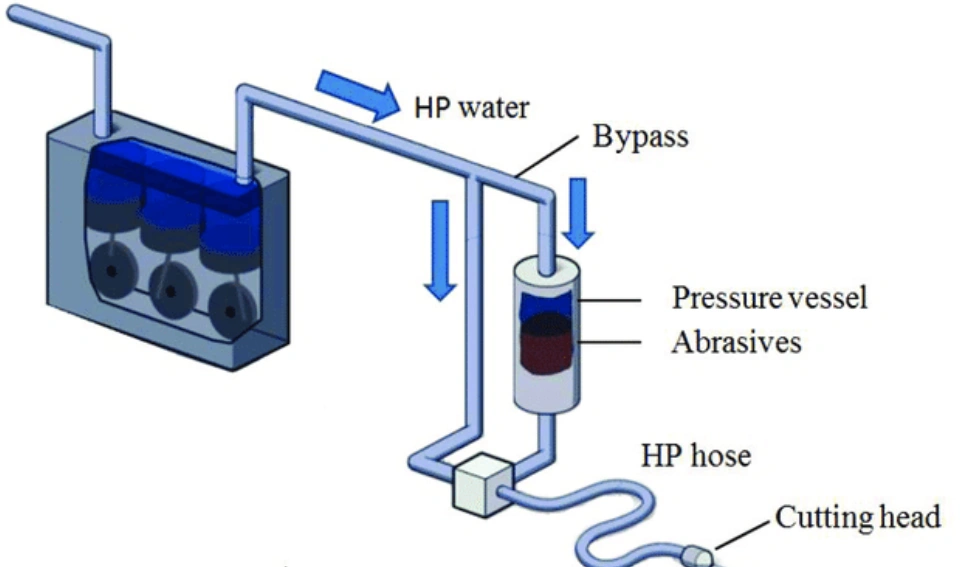
AWSJ cutting
Another difference is that AWSJ cutting doesn’t feature air, so its cuts are cleaner and more precise. The technique is preferred for cutting thicker materials and underwater cutting.
Unlike the three-element cutting stream in AWIJ cutting, AWSJ cutting features a two-element cutting stream comprising abrasive and water.
Try Prolean Now!
Considerations in Abrasive Waterjet Cutting
The relevance of abrasive waterjet cutting is pegged on several factors, including cutting speed, nozzle wear, pump maintenance requirements, and abrasive utilization rate.
The recurrent costs of the process depend on production volume, material hardness, and material thickness. The need for post-processing depends on the type of cut quality the waterjet cutting process produces.
The Benefits of Abrasive Waterjet Cutting
Friction material waterjet cutting presents the following benefits:
- No delamination when cutting composites
- No thermal distortion
- Cuts a wide variety of materials
- Low material wastage
These advantages of abrasive waterjet machining have a direct impact on secondary operations, job changeover speed, and tooling costs. The lower machining costs translate to more affordable parts. It is a cost-effective method for automotive and aerospace projects.
The Limitations of the Abrasive Cutting System
The main limitations of the abrasive cutting system are the high initial investment for the equipment, limitations on material thickness, and the relatively slower cutting speed.
Another concern with this technology is the taper shape of the kerf, which can affect precision cutting requirements. Advanced waterjet cutting technologies attempt to compensate for this taper, but a bending pattern is usually still visible on the part surface.
Abrasive Waterjet Cutting Compatible Materials
Abrasive cutting systems handle materials of various hardness ratings with no effect from reflective and conductive properties. This includes alloys such as titanium and steel, composites, stone, glass, and ceramics.
Manufacturers use the technology to concurrently cut dissimilar materials. Material versatility is one of the biggest indicators of the unmatched flexibility that waterjet cutting offers.
Here is a more detailed outline of the different compatible materials.
Metals – This technique can cut a wide range of metals, including aluminum, copper, carbon steel, and stainless steel. The cut parts have clean edges and tight tolerances if the process is performed by an experienced operator using advanced machinery.
Ceramics – Abrasive cutting is a perfect choice for avoiding cracking when cutting tiles and other ceramics. It can generate intricate shapes and geometries on these brittle materials.
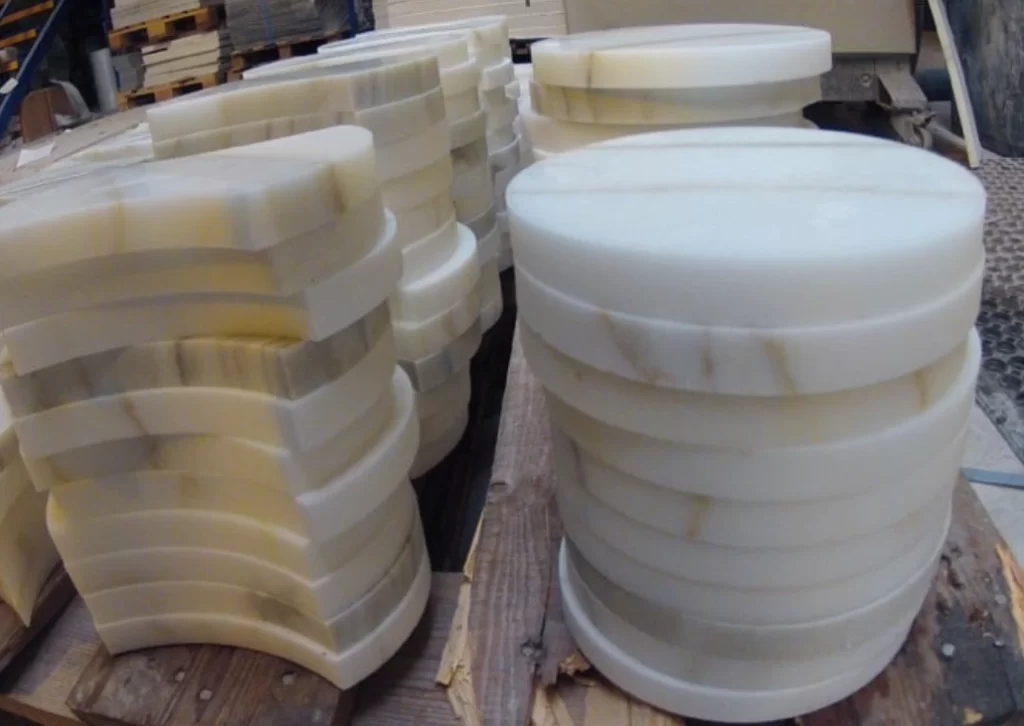
Abrasive waterjet cut ceramic products
Wood – Wood processors prefer the friction material waterjet cutting method for its capability to produce precise, complex patterns. It neither discolors nor burns the wood.
Glass – Under standard cutting circumstances, glass tends to fracture or produce edge chips. With the advantages of waterjet cutting for architectural and other applications, clients can easily get smooth, complex cuts.
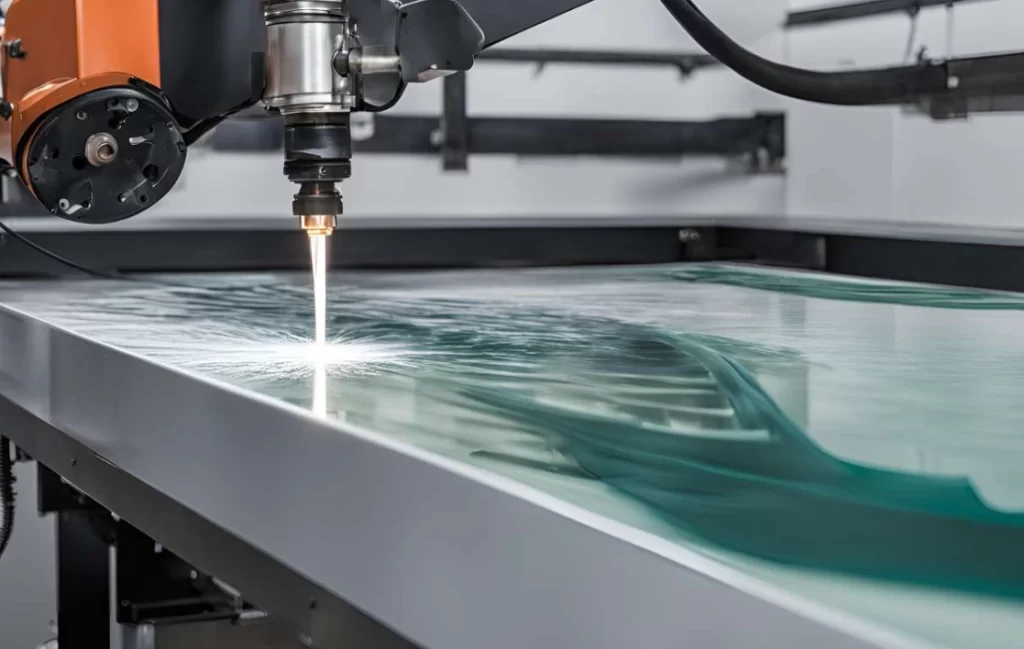
Abrasive waterjet glass cutting
Stone – Abrasive waterjet cutting is ideal for cutting granite, marble, and other types of stone with high accuracy and minimal material waste.
Note that abrasive waterjet machining can cut virtually any material, apart from tempered glass and diamond.
Try Prolean Now!
Abrasive waterjet cutting vs plasma cutting
When comparing Waterjet vs.Plasma Cutting, it is worthwhile to note that while the two cutting methods are popular in projects, they differ, first, in material compatibility. While abrasive waterjet cutting can cut almost any material, plasma cutting is limited to conductive materials.
Abrasive cutting has an advantage in edge quality and cut tolerance. Its cut parts don’t require secondary processing because the quality is already top-notch.
Abrasive waterjet cutting tolerances are also tighter at about ±0.003 inches compared to ±0.020 inches for plasma cutting.
Abrasive waterjet cutting vs. Pure Water Jet cutting
The biggest difference between pure vs. abrasive waterjet cutting is that pure waterjet cutting (without abrasives) has a shorter list of compatible materials. Adding abrasives makes the system more versatile and capable of cutting tougher materials.
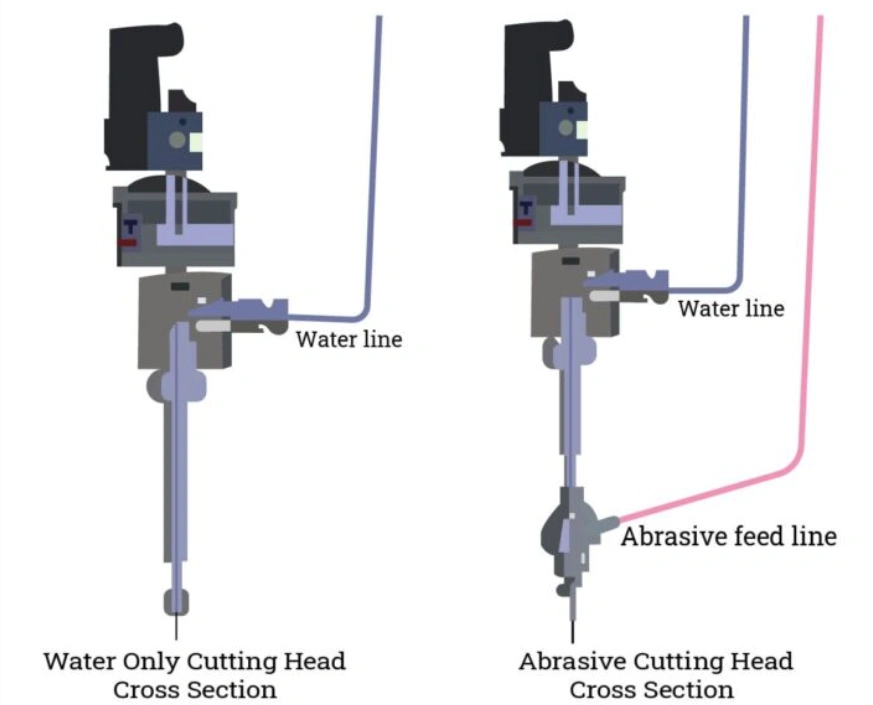
Pure water vs abrasive waterjet cutting
The abrasive-based system can cut up to 12 inches of tough materials, including stone, metals, and ceramics.
Applications of Abrasive Waterjet Cutting
A wide range of industries use parts made by friction material waterjet cutting. The list of these applications includes military, manufacturing, architecture, medical, and automotive industries.
This method is used when there are mixed materials, safety from thermal damage is valued, complex geometries are required, and minimizing material waste is critical.
Provided the user has met all the waterjet design requirements, these industries find the technology valuable.
Military
Cutting different materials for military parts is normal. Some specific application areas for the technology are vehicle frames, weapon systems, aircraft fuselages, aircraft frames, and missile guide systems.
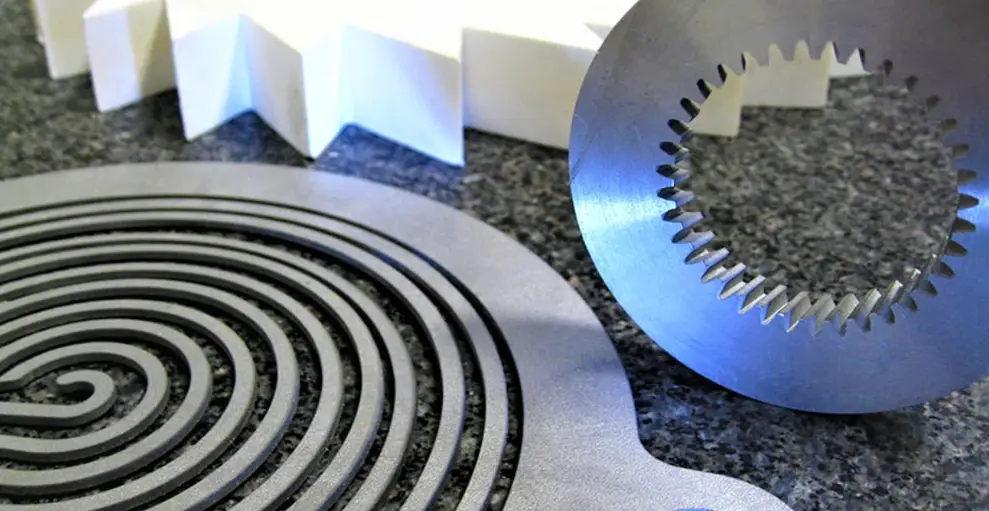
Military components
Manufacturing
A broad array of manufacturing process equipment is produced through abrasive waterjet machining. The waterjet cutter can process most of the materials used in this space, including ceramics, titanium, stainless steel, glass, and plastics.
Architecture
Architectural projects are constantly evolving, using unique products and materials. With waterjet cutting, project owners are confident of utilizing any type of metal, plastic, stone, or wood without processing issues.
Whether it is to fabricate stones, cut thicker pieces, craft artwork, or cut precise edges, waterjet cutting is a reliable method. The waterjet cutting cost is often manageable, and usage is not overly complex.
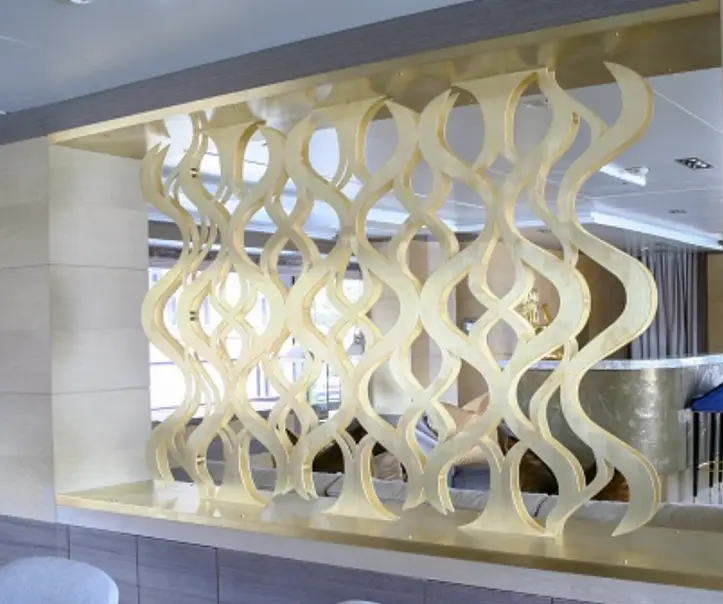
Architectural feature
Medical
The medical industry is synonymous with precise components made of different materials. Compared to conventional cutting methods, waterjet cutting is better in making surgical instruments and others.
Modern cutting capabilities can achieve the tight tolerances required in the industry. It is also relatively fast, so precise parts can be delivered promptly.
Automotive
The waterjet cutting process allows for the precise processing of various automotive components. Common automotive parts cut using the technique are panels, brackets, and custom parts.
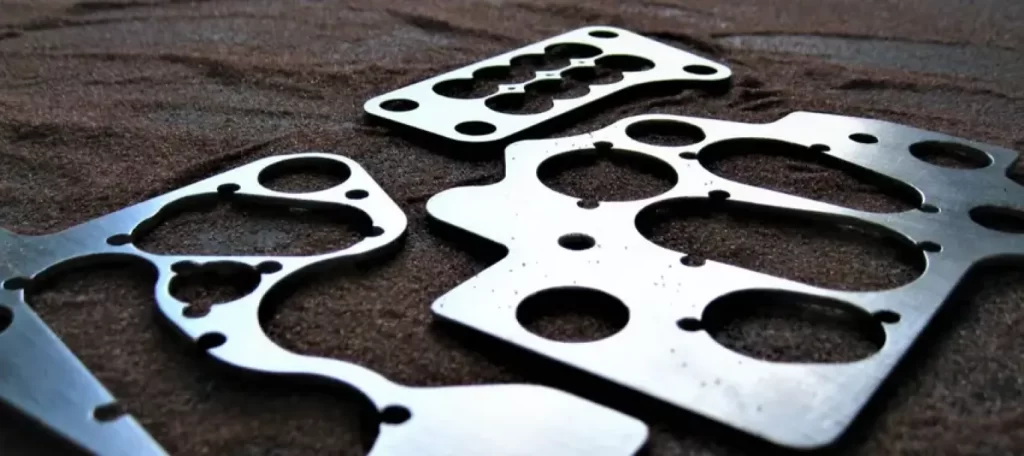
Automotive parts
The technology can handle a range of material types and sizes, so manufacturers can use it to achieve different levels of complexity and weight for car parts. Manufacturers also use waterjet cutting in prototyping, a key stage in the automotive manufacturing process.
In Conclusion
Versatile, cost-efficient, environmentally friendly, and open to automation, abrasive waterjet cutting is widely used across many industries.
Whether you are in aerospace, automotive, or defense, the high-performing technology can deliver the parts you need. With the right waterjet cutting services, you will never regret trying this option.
Contact ProleanTech today and request a free quote.

0 Comments