
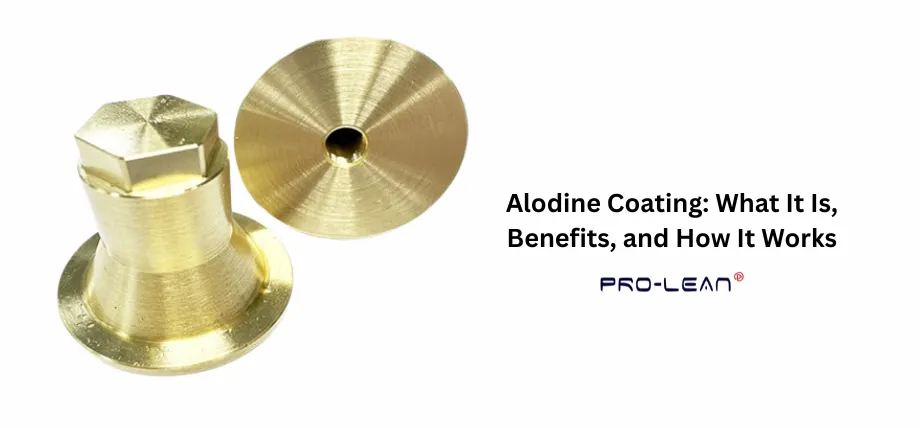
Alodine finished machined parts
Aluminum is a widely used metal in engineering because of its low density, high strength-to-weight ratio, and natural corrosion resistance. This metal reacts with oxygen in the air and forms a thin oxide layer on the metal surface, which protects it to some extent. But it is not always sufficient for industries. Therefore, many industries use surface treatment methods to improve the corrosion resistance of the metal surface without altering the dimensions of precision parts.
Alodine coating is one of the most widely used treatment methods for aluminum. This is a chemical conversion treatment that creates a thin protective layer on the surface of the metal. The thin film improves the corrosion resistance, enhances paint adhesion, and maintains electrical conductivity. It does not interfere with tight tolerances required in aerospace and electronics components, as the coating thickness is extremely small. The process is also valued for its simplicity and low processing temperature compared with other finishing methods.
This article explains what alodine coating is, how the chemical process works and why it remains a critical finishing method in modern manufacturing.
What Is Alodine? Understanding Chromate Conversion Coating
This is a chemical conversion treatment used primarily on aluminum and aluminum alloys. The metal surface reacts with a chemical solution containing chromium compounds during the treatment. This reaction forms a thin protective film tightly bonded to the base metal. This coating is not deposited as a separate layer unlike plating or painting. The metal surface itself is converted chemically into a protective structure. This protective film created through this reaction improves corrosion resistance while preserving the electrical conductivity. This characteristic makes alodine aluminum useful for electronic assemblies, grounding components and shielding enclosures.
The process is classified as a chromate conversion coating treatment. The resulting layer can be measured in fractions of micrometer. But, it significantly improves the durability of aluminum parts exposed to moisture, salt and industrial environments despite its minimal thickness. Surfaces treated with alodine coating provide strong adhesion for other finishing processes such as primers, paints and powder coatings as another advantage. Therefore, the coating serves as a pretreatment before painting.
Alodine, Chem Film, and Chromate Conversion: What’s the Difference?
Several terms are used interchangeably when referring to the same finishing process. These names create confusion among engineers and manufacturers. Alodine originally referred to a trademarked product developed by Henkel. But, the name became widely used to describe the general process of formine a coating with chromium compound for aluminum over time. Chromate conversion coating is the technical term for the chemical reaction that forms the protective layer.
Chem film is another common industry name applied to the alodine coating. It is widely used in aerospace manufacturing and military specifications. The finished surface is described as alodine aluminum referring to aluminum components that have undergone this conversion treatment.
How the Alodine Process Works
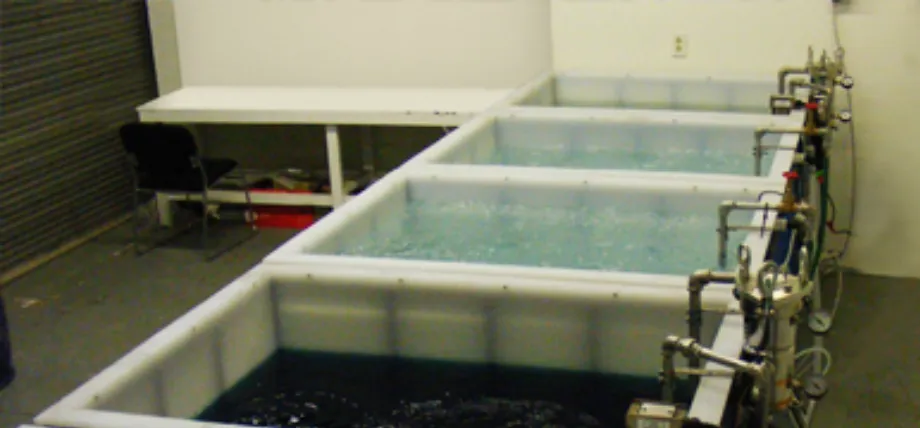
Chemical immersion dip tanks.
The alodine process is a multi step chemical treatment designed to prepare the metal surface and create the protective conversion layer. Proper preparation is necessary because contamination or oxidation can prevent the coating from forming correctly. Industrial production uses immersion tanks. But, spray and brush methods are also used for large structures or localized repairs.
Step 1: Cleaning and degreasing the aluminum surface
The process begins by removing oils, grease and machining residues from the aluminum part because clean surfaces are necessary for the formation of a uniform layer. Any contamination can result in uneven coating thickness or reduced corrosion resistance. Degreasing solutions or alkaline cleaners dissolve contaminants left from manufacturing operations.
Step 2: Etching to remove the native oxide layer
The aluminum is etched using a mild acidic or alkaline solution after the cleaning process. This step removes the naturally formed oxide layer and prepares the surface for coating formation. The etching stage also creates microscopic surface roughness, increasing the surface area. This improves the bonding of the conversion coating.
Step 3: Applying the chromate conversion coating chemical
This is the core step of the alodine process. The protective conversion film develops on the metal surface at this step. The aluminum part is exposed to a chemical solution containing chromium compounds during the chemical reaction. The solution reacts with the metal surface and produces the conversion layer. The coating forms through a controlled chemical reaction rather than deposition.
The film formed through the chemical reaction contains chromium compounds and aluminum oxides that provide corrosion protection. Manufacturers can apply the solution through immersion tanks, spraying equipment or brush treatments. Immersion is the most common approach for high volume production.
Step 4: Rinsing and drying
The aluminum part is rinsed thoroughly to remove residual chemicals once the coating is formed. The metal should rinse properly to stop the chemical reaction and prevent contamination. The component is then dried using warm air or ambient drying conditions. The metal becomes alodine aluminum after the drying step which has undergone the full conversion treatment.
What Does Alodine Look Like? Coating Color and Appearance
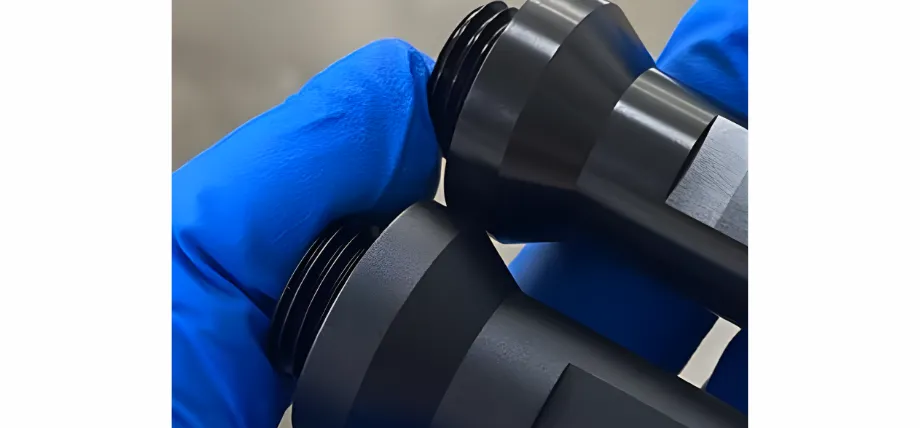
Black anodized component detail.
The appearance of alodine varies depending on the chemical formulation and processing conditions. The coating does not hide the underlying surface texture, as it is an extremely thin layer. Clear or transparent coating, light iridescent film, yellow or gold tint, and light brown coloration are some common visual appearances. Traditional hexavalent chromium coatings produce the yellow-gold appearance of the metal. Trivalent chromium coatings produce clear or slightly blue finishes.
Surface preparation also influences the final appearance. Polished aluminum produces a smoother finish while blasted surfaces appear matte after coating. The minimal thickness of the coating does not alter part geometry. Therefore, this is widely used for precision components that require tight tolerances.
Try Prolean Now!
MIL-DTL-5541 Types: Type 1 vs. Type 2 Chromate Conversion Coating
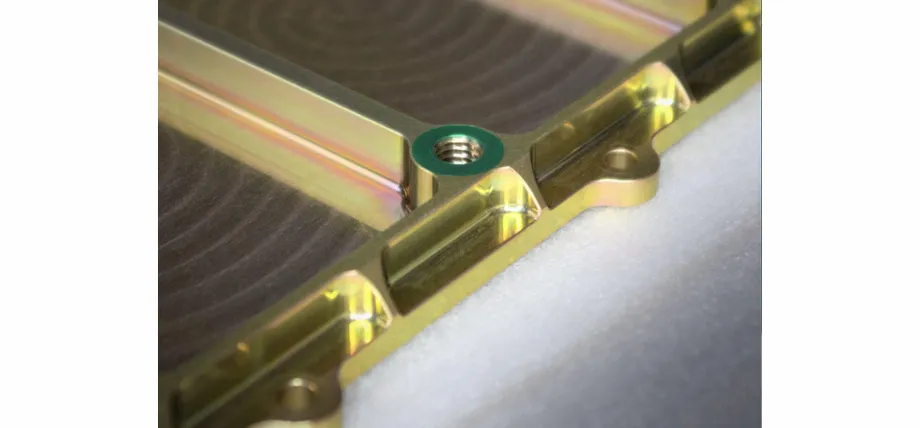
MIL-DTL specified Alodine coating
Military specification MIL-DTL-5541 defines two types of coatings used for aluminum parts. These two categories are based on the type of chromium used in the chemical formulation. Both coating types provide strong corrosion protection while maintaining electrical conductivity. But environmental regulations have pushed many industries to transition from hexavalent chromium coatings to trivalent alternatives.
The following table summarizes the properties of two types of coatings for MIL-DTL-5541.
|
Property |
Type 1 (Hexavalent Cr) |
Type 2 (Trivalent Cr) |
|
Chromium Type |
Hexavalent (Cr6+) |
Trivalent (Cr3+) |
|
Appearance |
||
|
Corrosion Resistance |
Excellent |
Excellent |
|
Electrical Conductivity |
High |
High |
|
RoHS / REACH Compliant |
No |
Yes |
|
Environmental Impact |
Higher environmental and health concerns |
Lower environmental impact |
|
Common Use |
Aerospace and military components |
Electronics, consumer products, and RoHS-compliant industries |
MIL-DTL-5541 Type 1 (Hexavalent Chromium)
Type 01 coatings use hexavalent chromium compounds in the conversion reaction. These coatings have been used for decades in aerospace and defense manufacturing. The main advantage of this type 01 coating is superior corrosion resistance in extreme environmental conditions such as salt spray environments. But hexavalent chromium compounds pose environmental and health concerns. Therefore, exposure to these chemicals is tightly regulated in many countries.
Many manufacturers are replacing hexavalent treatments with trivalent alternatives when possible because of these regulations. Type 01 coatings remain widely used despite these concerns, where maximum corrosion resistance is required.
MIL-DTL-5541 Type 2 (Trivalent Chromium)
Type 2 coatings use trivalent chromium chemistry and the appearance is clear or slightly blue. These coatings were developed to meet environmental regulations such as RoHS and REACH. They significantly reduce hazardous chemical exposure during manufacturing. Type 2 coatings provide strong corrosion resistance and electrical conductivity, although some aerospace applications continue to rely on Type 01 systems for maximum durability. Many electronics manufacturers now prefer these trivalent chromium coatings because they comply with modern environmental regulations.
Differences between MIL-DTL-5541 Type 1 and Type 2
Table of comparison of Mil-DTL-5541 Type 1 and Type 2
| Property |
Type 1 |
Type 2 |
|
Chemical Base |
Hexavalent Chromium Compounds |
Trivalent Chromium Chemistry |
|
Appearance |
Slightly Blue |
|
|
Corrosion Resistance |
Superior performance in corrosive environments; |
Strong corrosion resistance, less than type 1 |
|
Conductivity |
Strong conductivity |
Strong Conductivity |
|
Main Applications |
Aerospace and Defense for the best durability in parts exposed to the environment |
Electronics manufacturing and applications where type 1 is not a requirement |
|
Main Advantages |
Corrosion resistance in harsh conditions Specified military spec |
Compliant with environmental and health standards Reduced hazardous chemical exposure for workers Better alternative for environmental concerns. |
Try Prolean Now!
Advantages of Alodine Coating
This is widely used due to its unique combination of performance, simplicity, and compatibility with other finishing methods.
- Excellent Corrosion Resistance: The conversion layer protects aluminum by forming a barrier between the metal surface and corrosive environments. Chromium compounds within the film slow corrosion reactions and improve durability in humid or salt-rich conditions. Therefore, the coating is suitable for aerospace and marine environments.
- Preserves Electrical Conductivity: Alodine coating does not significantly interfere with electrical conductivity. This characteristic is critical for electronic housings, grounding surfaces, and electromagnetic shielding enclosures. The conductive properties of this treated metal allow electrical contact through the coating layer, which is not possible with thick paint or polymer coatings.
- Thin, Dimensionally Stable Coating: The coating thickness ranges from 0.00001 to 0.00004 inches. This minimal thickness of the coating does not change part dimensions or interfere with the precision assembly of the metal. Therefore, this coating is widely used as a machining surface finish for precision aerospace and electronic components.
- Excellent Paint and Primer Adhesion: Surfaces treated through alodine conversion coating provide strong adhesion for paints and primers. The microscopic structure created during the chemical reaction improves bonding between the metal surface and organic coatings. Therefore, many manufacturers apply the treatment before painting or powder coating aluminum parts.
- Room-Temperature Application: The alodine process operates at low temperatures compared with anodizing or plating. Therefore, the equipment requirement and the energy consumption are minimal. The process also minimizes thermal distortion of the metal component.
Disadvantages of Alodine Coating
There are several limitations to be considered during material selection, although alodine coating offers many advantages. The layer of the coating does not provide the same level of physical protection as thicker finishes, such as anodizing, although it improves corrosion resistance. The coating can be damaged by abrasion or mechanical wear. Scratches expose the underlying aluminum surface to the environment. Environmental regulations are another concern.
Hexavalent chromium compounds are such coatings that require careful handling and disposal due to its environmental and health concerns. The change of coating color is another disadvantage of Alodine coating. This depends on processing conditions. It can influence cosmetic appearance in consumer products, although it does not affect the performance.
How to Choose the Right Alodine Coating
Selecting the appropriate coating depends on several factors related to the application and operating environment. Engineers evaluate environmental exposure conditions, electrical conductivity requirements, environmental compliance regulations, compatibility with paints or primers, and industry standards or military specifications to choose the right alodine coating for their products.
Engineers use coatings that meet MIL-DTL-5541 requirements for aerospace applications. Trivalent chromium coatings are preferred for electronics manufacturing because they comply with modern environmental regulations. Parts exposed to severe environmental conditions may require coatings with the highest corrosion resistance. According to these examples, selecting the appropriate coating ensures optimal performance while meeting regulatory and design requirements.
Quick Selection Guide Table
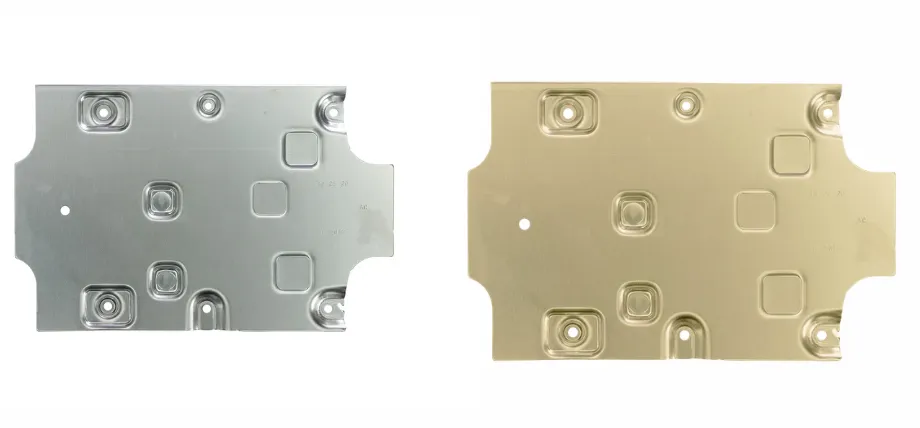
Raw versus Alodine-coated
|
Requirement |
Recommended Coating |
|
Maximum corrosion resistance |
Hexavalent chromium coating |
|
Environmental compliance (RoHS/ REACH) |
Trivalent chromium coating |
|
Electronic grounding surfaces |
Conductive conversion coating |
|
Pretreatment before painting |
Alodine conversion coating |
|
Precision components with tight tolerances |
Alodine coating |
Surface Finishing Service
Proleantech provides high-quality surface finishing for your metal parts. You can expect engineered surface finishing that matches your material and application, protects against corrosion, and provides the aesthetic finish you require.
Proleantech provides anodizing, powder coating, electroplating, polishing, and special coatings like MIL standards.
- Superior Quality: ISO-certified processes ensure adhesion and long-term durability.
- Faster turnaround times, cost-effective, and customizable finishes
- End-to-end reliability from prototype to high-volume production
- Product delivery to your doorstep
Request a free quote today!
Conclusion
Surface finishing is necessary for the protection of the aluminum components used in extreme environments. Professional alodine service delivers reliable alodine coating, one of the most widely adopted surface treatments featuring excellent corrosion resistance, stable electrical conductivity and ultra-thin coating thickness. The conversion process forms a chemically bonded protective film with minimal thickness. This property allows the coating to protect precision components while maintaining dimensional accuracy.
Industries such as aerospace, electronics, and defense rely on this treatment to protect critical components exposed to harsh operating conditions. Trivalent chromium chemistry has improved environmental compliance while maintaining strong corrosion protection.
0 Comments