
Laser Cut Polycarbonate
Laser cut polycarbonate combines strength, flexibility, and clarity. It is preferred by engineers and product designers who appreciate precision. But, it is also difficult to work with due to its high impact resistance and glass-like look, making it a favorite.
Nevertheless, the material is prone to heat. It produces fumes and may bend when the laser is not turned on. To learn it, one has to have good control over speed, power, and ventilation. The right settings provide even cuts, clean cuts with minimum wastage. One slip is enough to burn edges or bend a finish. Its secret lies in being aware of its limits, setting the machine settings correctly, and engaging in safe and controlled practices.
We discuss its challenges, safe cutting methods, and best practices in the subsequent sections. Read on.
Laser Cut Polycarbonate vs Acrylic: Which Material to Choose
What is Polycarbonate?
Polycarbonate Sheets
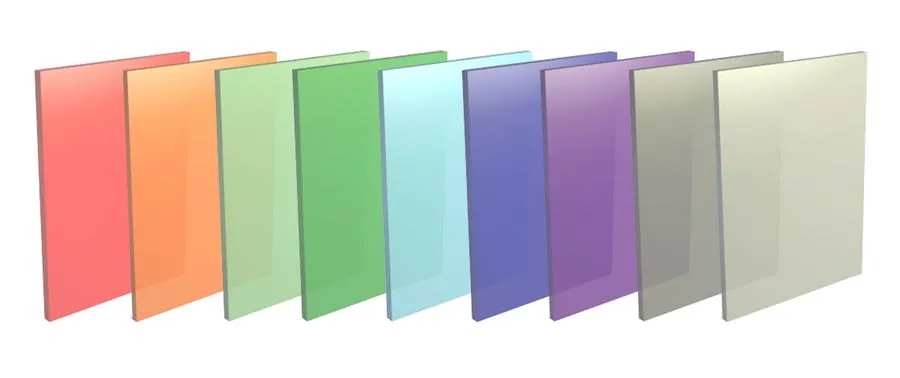
Polycarbonate (also referred to as PC) has been described as a group of high-performance thermoplastic polymers that have been utilized in applications due to their durability, clarity, and wide application. Chemically, it is defined as a polymer where bisphenol A (BPA) is joined with carbonate groups (-O-(C=O)-O-) involving phosgene, followed by condensation of the carbonate groups.
Laser Cut PC Key Characteristics
Due to excellent strength, transparency, and flexibility, PC stands out. It is famous because of its high impact resistance. It remains hard and does not crack even under cold conditions during stress. Its transparent grades enable it to allow as much as 90 percent of visible light to pass through it, which makes it house glass-like transparency with a significantly high level of durability. As it is a thermoplastic, it becomes soft with heating and can easily be moulded into different shapes without becoming unstable.
It is also very stable in its shape, even in cases of heat and humidity, due to its great dimensional stability. In addition to this, polycarbonate can be made flame-retardant or UV-resistant, thus being used indoors or outdoors, as well as providing dependable electrical insulation.
Can You Laser Cut Polycarbonate? A Reality Check
Laser Cut Polycarbonate
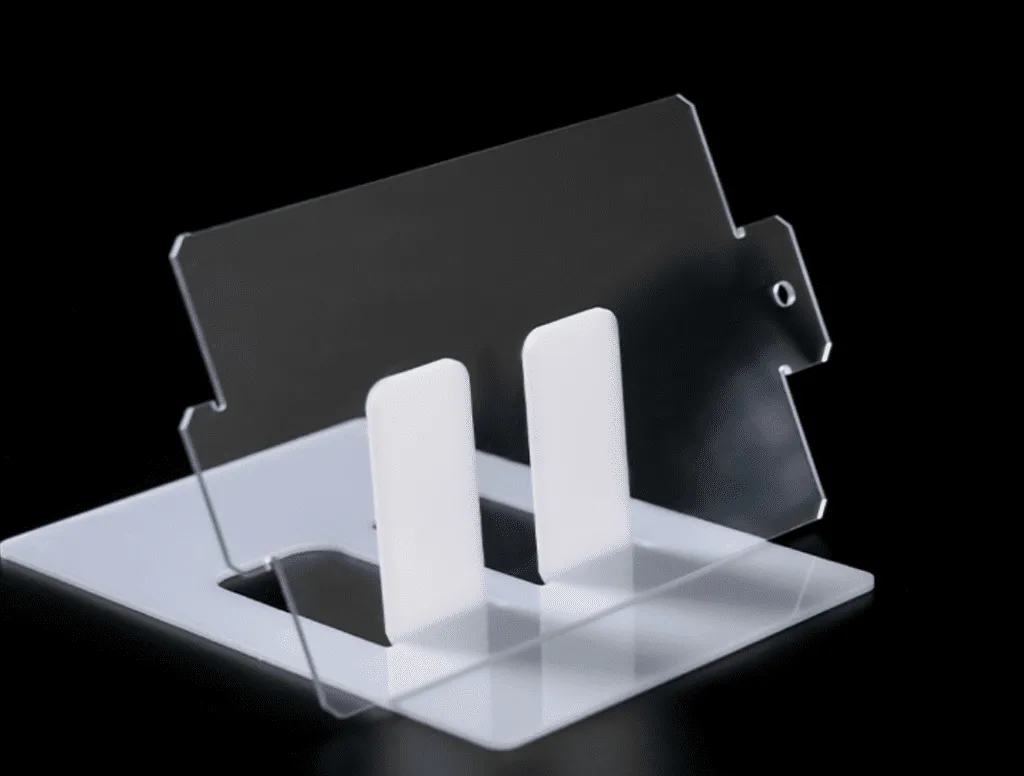
In the case of laser cutting plastic materials, such as Polycarbonate (PC), the answer is yes. However, under certain conditions, and only then, not always so good. Manufacturers and fabricators are divided. Others maintain that laser cutting of PC can be made to work, provided that limits are strictly followed.
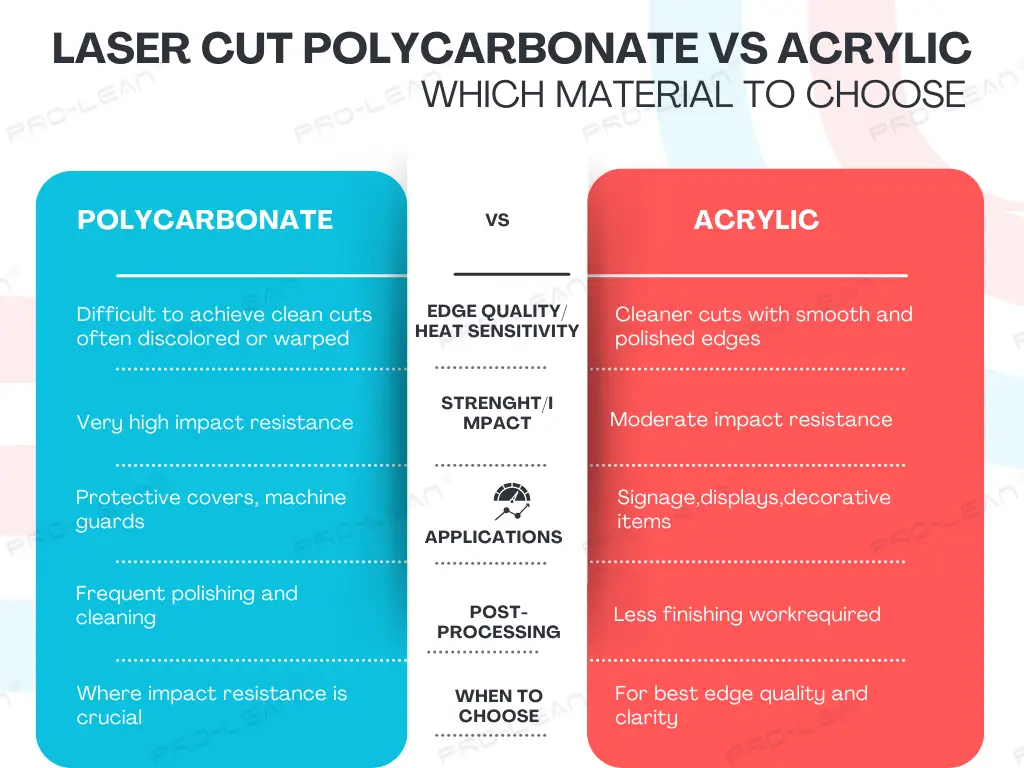
Although some recommend it as a last resort, it seems not to be required. It affects the edges, causing them to discolor and warp, and the quality of the finish is reduced. This disparity tends to drive up the polycarbonate vs acrylic debate. Polycarbonate has the advantage in terms of impact strength and durability, whereas acrylic is considered in terms of edge finish.
Industry Experts Viewpoints
Experts such as Xometry also include laser cutting of PC as an option, but it is explicitly stated that such cutting is limited by the depth of the cut, and the edges of cut components are not as good as those of other plastics. Their sophisticated systems, reminiscent of those of custom laser cutting, demonstrate that small adjustments of parameters can prove to be a significant difference between clean results.
Conversely, companies like Centurion Profile Cutting subordinate PC to the list of materials that must not be laser cut under normal conditions. It is because it is infrared-absorbing and can cause fire or overmelting. But the one consequence of it all is that you can only go on the understanding of what you are getting into.
Challenges and Key Factors for Successful Laser Cutting of Polycarbonate
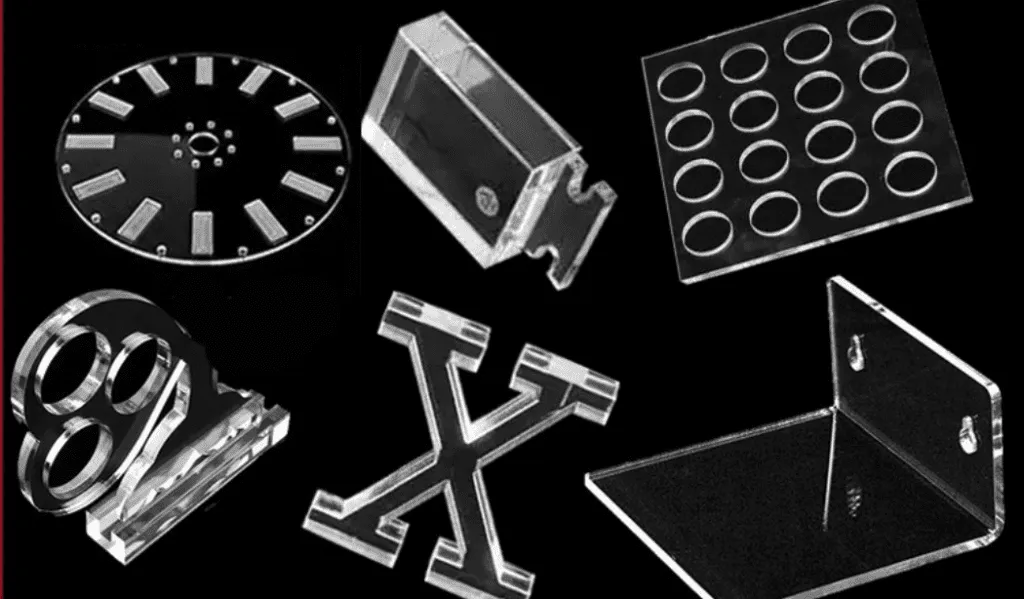
Polycarbonate sheet shapes
It is good to know why this plastic is so difficult to cut using the laser before going into how a laser cutter works with polycarbonate. Its heat sensitivity, fume generation, edge quality, and thickness limits are the main challenges, and all of them define whether a cut will be successful or problematic.
Heat Sensitivity
Polycarbonate is not a material that can be easily vaporized under a laser. Rather, it takes up the energy and converts it into excess heat, leading to melting, burning, or deformation. A minor change in power or even a reduced cutting speed can easily bend the material and cause loss of accuracy and difficulties in producing a clean edge or clear finish.
Equipment and Generation of Fume
The heat is also capable of making the PC emit toxic gases, including carbon monoxide and other volatile substances. These fumes are dangerous to the human body and may cause severe damage to the optics or internal parts of the laser without proper ventilation and extraction.
Edge Quality, Warping, and Dimensional Accuracy
An effective cut must leave smooth, clean edges with no burns or residue. The laser must cut and leave very little sanding or trimming. When the process is not successful, there is yellowing of overheating, sticky or rough edges, and melt lines are visible. Uneven thermal expansion usually leads to warping that results in non-conforming components or inadequate fits.
Thickness of Materials and Machine Parameter Restrictions
The best opportunity of success is afforded by thin sheets not more than 3mm thick. Thicker materials trap heat, resulting in a lack of penetration or bending edges. To eliminate these issues, one needs to discover the optimal balance of laser power, speed, focus, and assist gas.
Low calibration reduces throughput, wastes, and makes the process impractical in most cases. Machining polycarbonate is normally more controlled and efficient in such situations to obtain a better finish and to achieve dimensional accuracy.
Try Prolean Now!
Best Practices and Parameters for Laser Cutting Polycarbonate
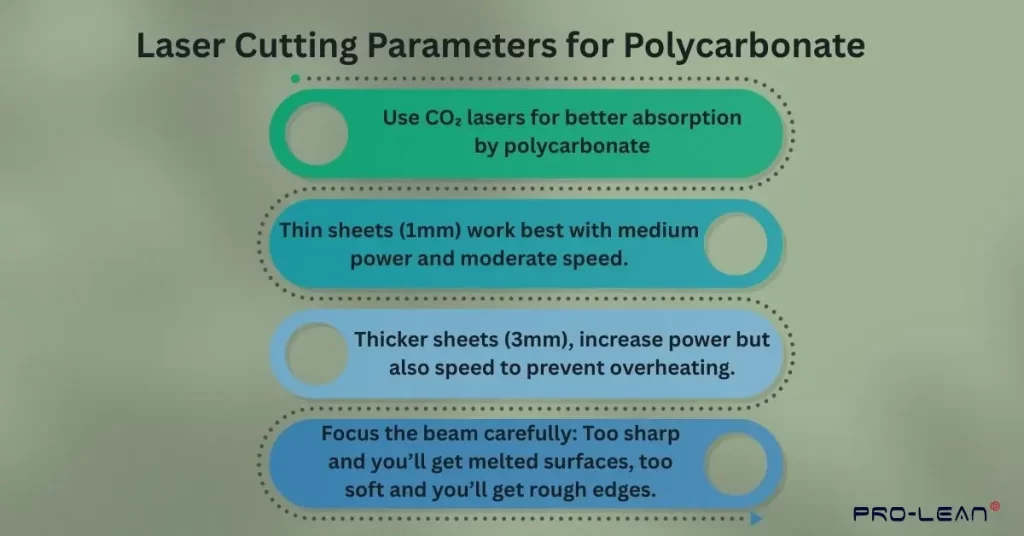
Laser Cutting Parameters for Polycarbonate
Cutting polycarbonates with a laser can be very challenging, yet given the correct approach, you can cut cleanly and precisely. Here’s how you can make the best of your setup and not fall into the usual traps.
Select the Right Laser Machine and Settings
CO2 laser is the most suitable type as its wavelength is highly absorbed by polycarbonate. With thin sheets (approximately 1 mm), medium power and speed are optimal. The thicker sheets that go up to 3 mm require greater power but more speed as well to avoid edge burn or deformation. The focus should be slightly adjusted on the beam. Too sharp and will melt the surface, whereas too soft will give rough edges.
Sheet Thickness, Masking, and Fixation
You have the opportunity to decide which sheet is the thinnest to use. It depends on how you want to use it because the thinner the sheet is, the easier it is to cut and the less heat distortion it experiences. Do not cut off the protective film until the time of the cut is needed, or use masking tape to minimize edge staining.
The sheet should be plain and held to the ground since even slight vibrations will displace the beam and destroy accuracy. This stage should be carefully prepared so as to bring about consistent and predictable results.
Ventilation and Safety Equipment
Polycarbonate cuts with a laser liberate fumes and minute particulates, which could be dangerous. Protective eyewear and gloves are required, and there should be no working environment that contains flammable materials. Also, the well-ventilated, clean arrangement not only protects the operator but also increases the life of the machine.
Test Runs and Calibration
Test the scrap material of the same thickness before cutting the final piece. Turn the power, speed, and focus until the cut edges appear smooth and without burn marks. Polycarbonate does not vaporize as easily as acrylic; thus, it tends to be more successful when using higher feed rates and a series of shallow passes. Calibration saves on wastage of materials and provides uniformity in production.
Post-processing Tips
The most important post-processing operations of laser-cut polycarbonate are polishing, cleaning, and edge finishing. Once the cutting is done, take off the masking films and dry the surface using a little detergent or isopropyl alcohol to remove residues.
In case the sides seem rough or even burnt, we will rub off with fine-grit sandpaper or a buffing wheel till they are clear again. Basic cut pieces can be made into a refined mirror-like finish with this polycarbonate polishing process to restore their appearance as well as their clarity.
Try Prolean Now!
Design Guidelines and When to Choose Alternatives
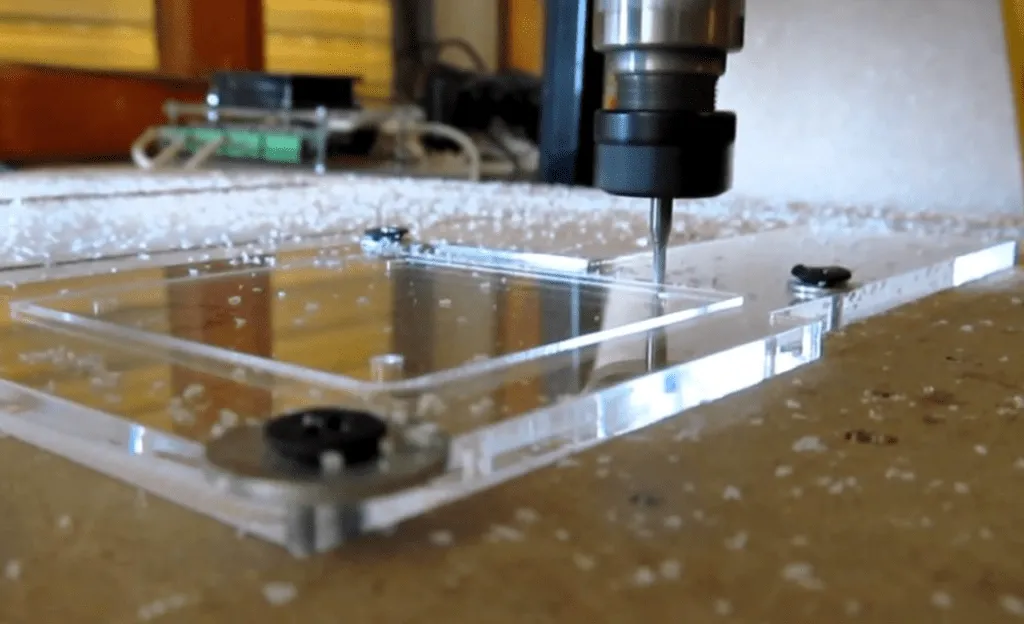
Cutting of a polycarbonate sheet
Entering the design stage, it should be noted that the general laser-cutting best practices will have to be combined with the specifics of the work with Polycarbonate (PC). There are also situations when one needs to use other materials.
Design Best Practices Adapted for PC
In the design of parts to be laser cut, you usually want clean edges, smooth corners, low internal stresses, and short optimal cut-paths. With PC, you tighten the rules. Sharp interior radii are to be avoided since heat concentration can cause the sheet to be warped or cracked.
Great fillets also minimize concentrations of stress. PC absorbs infrared well and melts or discolours readily in a laser beam, so you should prefer plain, simple shapes over complex, dense patterns. Plan for post-processing as well, although you might go to the trouble of laser cutting, edges will be rough or yellow, and require sanding or polishing.
Materials to Consider Instead of PC
Since polycarbonate tends to produce burnt or melted edges during laser-cutting, and the fume emissions during laser-cutting are troublesome, many fabricators have switched to other materials. As an illustration, Acrylic (cast PMMA) has clean and smooth edges and significantly improved laser-cut performance. Laser cutting acrylic is also used by many professionals in cases where clarity and finish are the most important factors. It provides seamless outputs with little after processing.
Another is PETG. It slices better than PC with reduced discoloration and smoke. Laser cutting PEEK is also viewed for high-performance use in industrial applications. It is applied where temperature resistance and mechanical strength are paramount, but it requires very accurate control, as in PC. Equally, laser cutting nylon is the best option where flexibility, durability, and wear resistance are vital. It is a realistic option for mechanical components and working prototypes.
When to Choose Alternatives
When it is desirable to have clean edges, minimal post-processing, and smooth edges are desired, choose another material. Polycarbonate is ideal in projects that need impact resistance and transparency, although it requires thin sheets and needs to be handled carefully to prevent warping or scalding.
In cases of greater importance of precision, fine surface finish, and easy cutting, such materials as acrylic or PETG may be used. They produce cleaner cuts, require less finishing, and they are easy to work with when cutting by laser.
Conclusion
If you’ve been wondering how to cut a polycarbonate sheet, you’ve likely found your answer by now. Laser cutting polycarbonate can be effective, but only when its challenges are fully respected. The material’s strength and optical clarity make it attractive for many technical uses, yet its heat sensitivity and emission of fumes require controlled conditions.
It requires thin sheets, optimization of laser parameters, and rigid ventilation to be successful. Even with caution, however, polycarbonate continues to provide durability in areas where impact resistance is the most important. Experimentation and reliable production are different because of knowing when and how to use them.
And when you’re ready for industrial-grade precision and expert support, trust Prolean to deliver high-standard laser cutting services. For this, you can reach out to discuss your project and receive an immediate quote.
0 Comments