
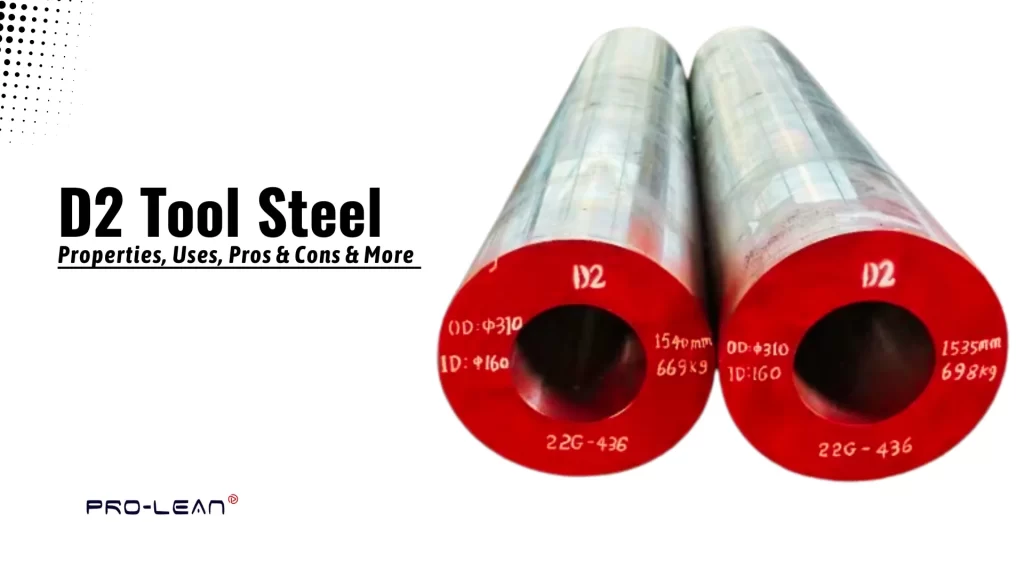
D2 Tool Steel
D2 tool steel is a high-carbon, high-chromium cold-work tool steel known for wear resistance and edge retention. D2 tool steel is primarily used in industrial knives, stamping dies, shear blades, punches, and precision cutting tools. It has high hardness and maintains sharp edges in tools for a longer time. This helps reduce downtime and ensure high production speeds.
However, D2 steel machining presents several challenges. For example, it wears down too quickly due to its high hardness. Thus, it requires precise/accurate cutting and special care during machining. If not properly managed, it often needs further finishing and rework later.
At Prolean Tech, we offer advanced CNC milling, CNC turning, CNC wire cutting, and CNC sheet metal services to make reliable D2 steel products. Our team facilitates rapid prototyping and large-scale production, delivering precision parts that meet your specific design specifications and tolerance.
This article will cover:
- Overview of D2 tool steel
- Its properties (Physical, Chemical, Thermal)
- Its applicability, Standards, Benefits & Limitations
- Comparison between D2 tool steel, stainless steel, and M2 steel
What Is D2 Tool Steel?
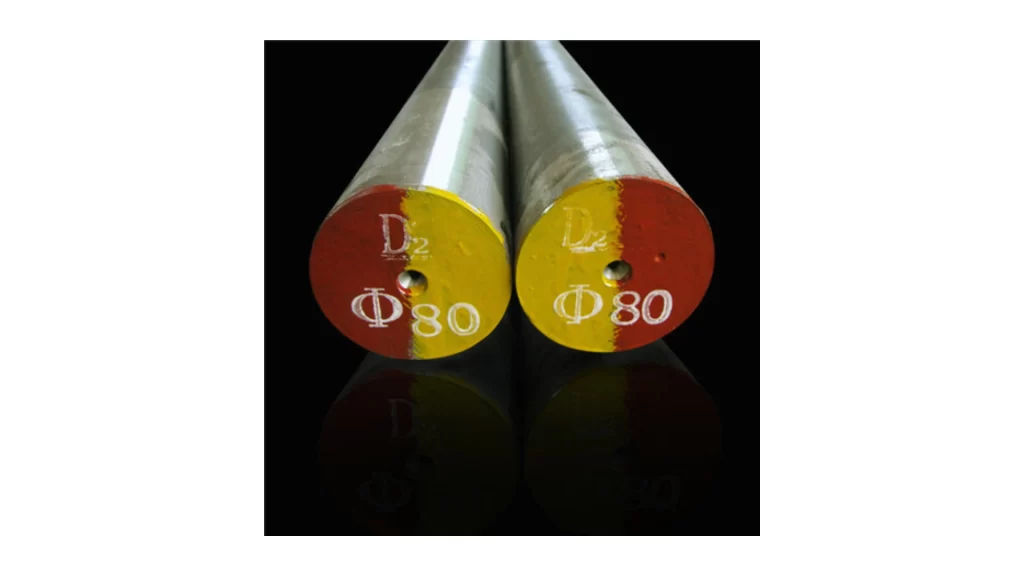
D2 Tool Steel Round Rods
D2 is one of the cold work tool steels among steel materials for general machining. It is composed of high carbon and chromium content. This makes it resistant to wear and abrasion, as well as corrosion-resistant. The “D” in D2 indicates that it’s a part of the D series cold work tool steel.
D2 can be heat-treated to achieve high hardness levels, but it can also be machined while in its annealed state. In the United States, it is known as D2, 1.2379 in Germany, and SKD11 in Japan.
D2 Vs A2 Tool Steel
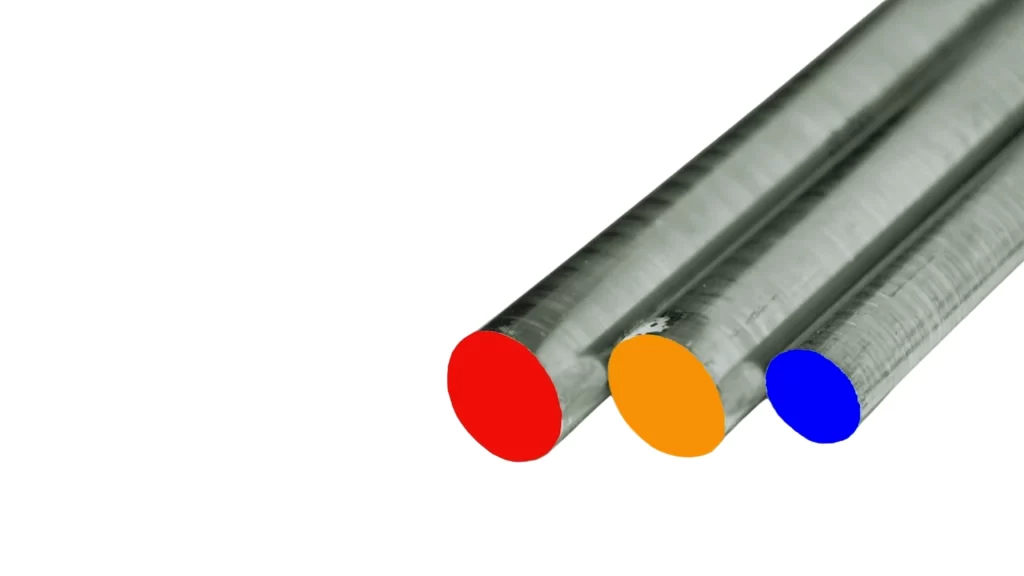
A2 Tool Steel Rods
A2 is an air-hardening tool steel used for cold work. It provides good hardness with better toughness than D2. It retains its size well during heat treatment and does not chip off easily like the D2 tool steel. Its machining is manageable in the annealed state.
What Is O2 Tool Steel?
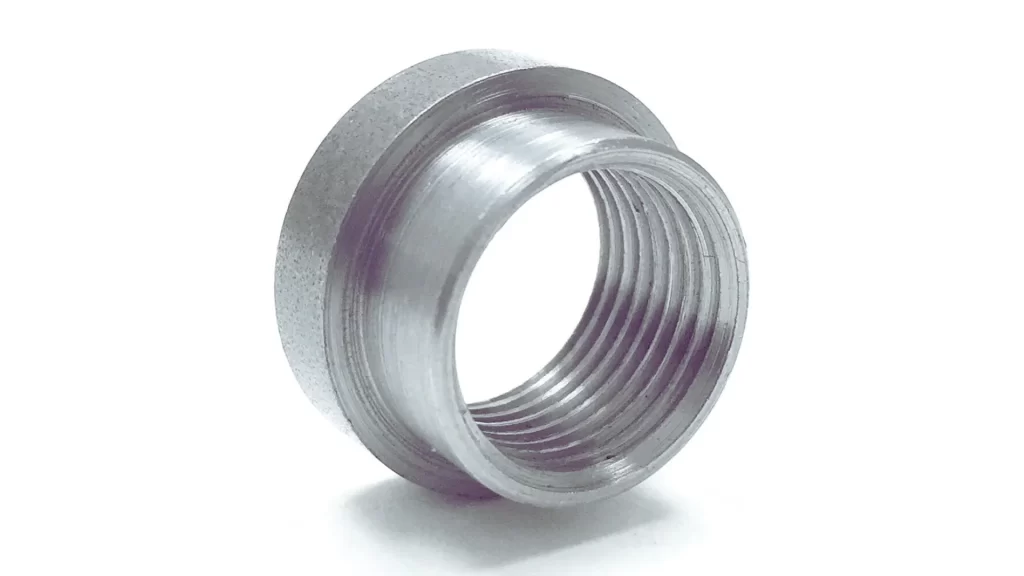
Tool O2 Steel Bung
O2 is an oil-hardening tool steel for cold work. It hardens well and takes a sharp cutting edge. It is less tough than A2 and can distort if heat control is poor. It machines easily before hardening.
How Is D2 Tool Steel Produced?
- Firstly, D2 tool steel is produced from scrap steel and swarf generated during machining processes, which are melted in an electric arc furnace (EAF).
- Next, additives are introduced into the molten steel to obtain the desired chemical composition.
- Then, the molten steel is cast into billets or ingots. This depends on the form that the final product will take.
- After casting, the steel is forged, hot rolled, or cold worked to produce the required shape.
- Then, the steel is subjected to quenching and tempering as part of the heat treatment process to produce the necessary hardness and toughness properties.
- Lastly, the D2 can be annealed to reduce its hardness, making it softer and more easily machined.
Chemical, Mechanical, and Thermal Properties of D2 Tool Steel
Here are the chemical, physical, and thermal properties of D2 tool steel.
Table 1: Key Properties of D2 Steel
| Property | Value |
| Chemical Composition | |
| Iron | 82.57% |
| Chromium | 12% |
| Carbon | 1.55% |
| Cobalt | 1% |
| Vanadium | 0.90% |
| Molybdenum | 0.80% |
| Manganese | 0.60% |
| Nickel | 0.30% |
| Copper | 0.25% |
| Sulfur | 0.03% |
| Mechanical Properties | |
| Density | 7,700 kg/m³ |
| Yield Strength | 1,300 MPa |
| Hardness of d2 steel | 62 HRC |
| Carbon Content | 1.5–1.6% |
| Magnetism | Curie point 767 ºC |
| Thermal Properties | |
| Melting Point | 1400–1500°C |
| Thermal Conductivity (20 ºC) | 20 W/m·K |
| Thermal Expansion (20 – 100 ºC) | 10.494 × 10⁻⁶ cm/cm·ºC |
Try Prolean Now!
Common Products/Applications of D2 Tool Steel
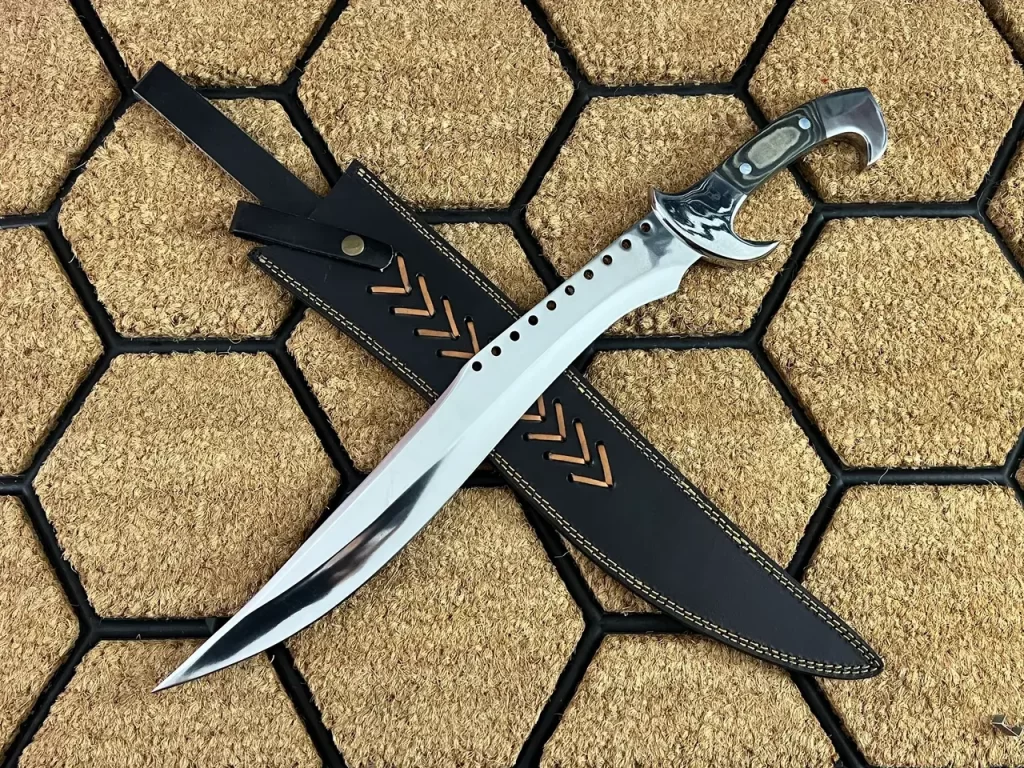
D2 Tool Steel Knife
Below are the common products made out of D2 tool steel machining.
- Stamping dies
- D2 steel for knives
- Punches
- Slitting blades
- Shear knives
- Forming rolls
- Tire shredders
- Scrap cutters
- Drill bits
- Wear-resistant parts
- Hand tools
- Nozzles
- Tooling inserts
Advantages and Disadvantages of D2 Tool Steel
Advantages
- D2 steel is tough and long-lasting for machining tools
- It has a higher abrasion resistance compared to other materials, making it useful for heavy-duty work
- It maintains a sharp edge longer compared to other materials
- Its high tensile strength provides an excellent base for tough parts
- It is best for small and tooling parts
Disadvantages
- It has moderate corrosion resistance
- Difficult to machine and requires meticulous care during machining
- If not handled properly, it is likely to chip off
- D2 tool steel has lower weldability
- It costs more due to the alloy composition
D2 Tool Steel vs Stainless Steel: What’s the Difference
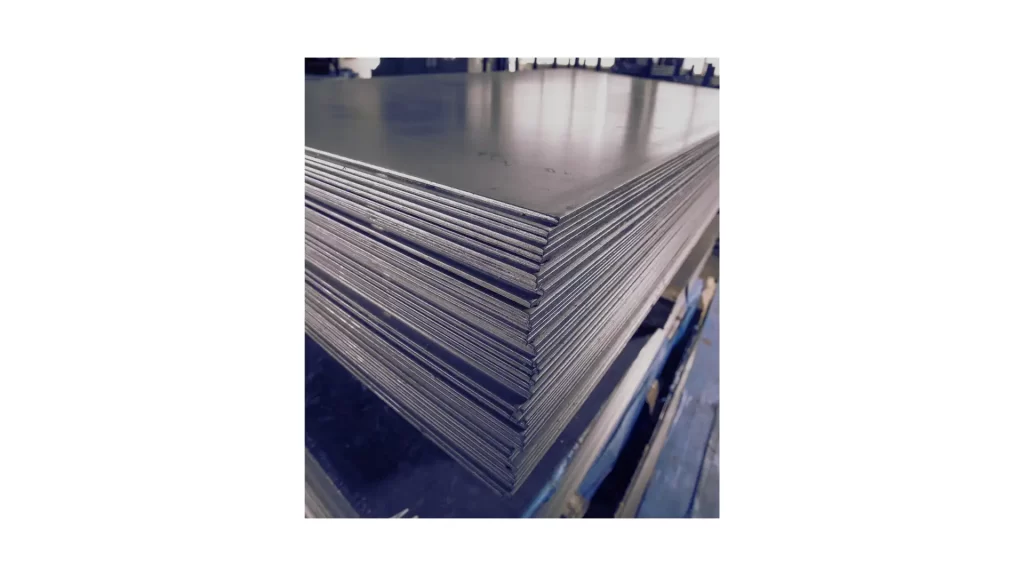
Stainless Steel Sheets
Both steel types contain chromium content. This adds to their corrosion resistance. D2 steel is harder and wear-resistant, making it better for cutting and tooling applications. On the other hand, stainless steel is more corrosion-resistant and is a go-to choice in environments exposed to moisture and chemicals.
Table 2: D2 tool steel vs Stainless Steel Comparison (Also read: alloy steel vs carbon steel)
| Feature | D2 Tool Steel | Stainless Steel |
| Chromium Content | ~12% | 10–20% |
| Hardness | High | Medium |
| Wear Resistance | High | Moderate |
| Corrosion Resistance | Moderate | High |
Available Forms of D2 Tool Steel for Manufacturing Industries
Below are some examples of different types of D2 steel material available for use in machining and sheet metal fabrication applications.
Sheets
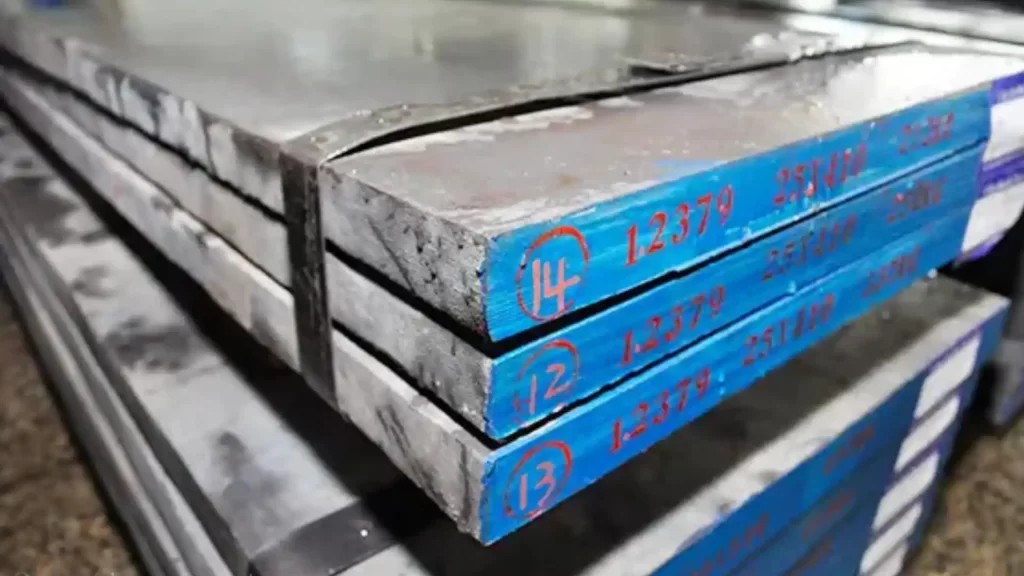
AISI D2 Steel Sheets
When thin, flat pieces of D2 steel are needed, they may be ordered in the form of D2 steel sheets. These are available in hot-worked and cold-worked conditions, with thicknesses ranging from 0.5mm to 6mm, and are used for dies for stamping and cutting blades.
Bars
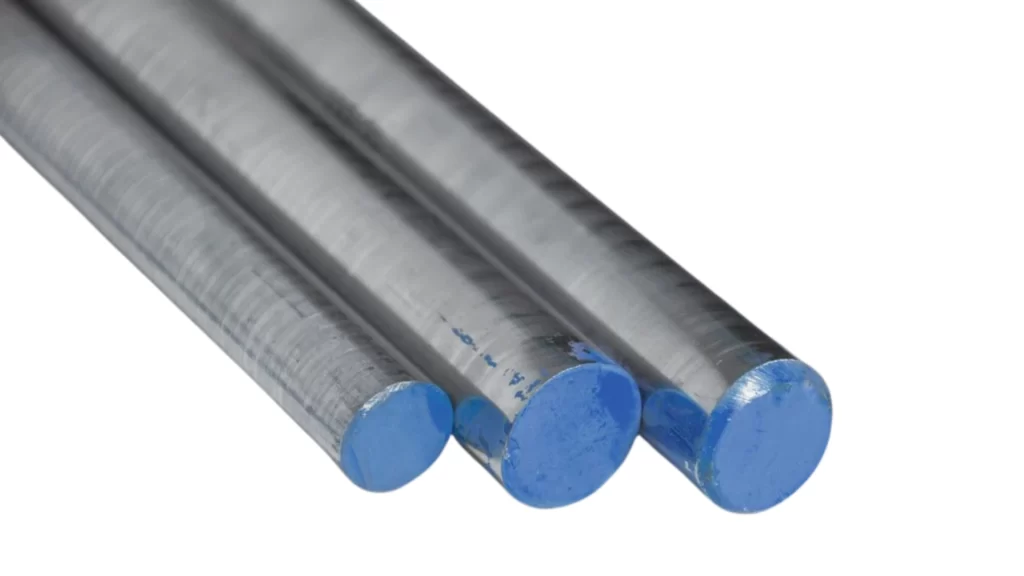
D2 Tool Steel Bars
D2 steel bars (round or tubular) are commonly available with diameters ranging from 10mm to 250mm. The most common uses for D2 steel bars are for punches, rollers, and shafts, where strength and hardness are critical.
Plates
D2 steel plates are thicker than D2 steel sheets and are used for larger tooling jobs, including heavy-duty cutters and die blocks.
Annealed D2
Annealed D2 is soft and easy to machine. Its hardness level is approximately 220 Brinell, which makes it ideal for prototype or custom part design. Annealing involves slowly heating D2 steel to a temperature of about 840 – 900°C and then cooling it in a furnace at a predetermined rate.
Cold-Worked D2
Cold-worked D2 is slowly preheated to 750–780 °C, austenitized at ~1010–1040°C, and then hardened by air quenching. The final product exhibits exceptionally high wear resistance and is ideal for creating parts that require toughness and durability; however, caution should be exercised to avoid overheating. (Read more: alloy steel grades list)
International Equivalents of D2 Tool Steel
D2 tool steel is known by various names worldwide. These names depend on the country and the applicable steel standard in that region. Some common equivalents include:
- UK: BD2
- USA: D2
- Germany: 1.2379
- France: Z160CDV12
- Japan: SKD11
- Russia: Ch12D1
- Spain: F5211
Above all, equivalents are helpful when sourcing or specifying D2 steel internationally.
Try Prolean Now!
D2 vs M2 Tool Steel: How They Differ
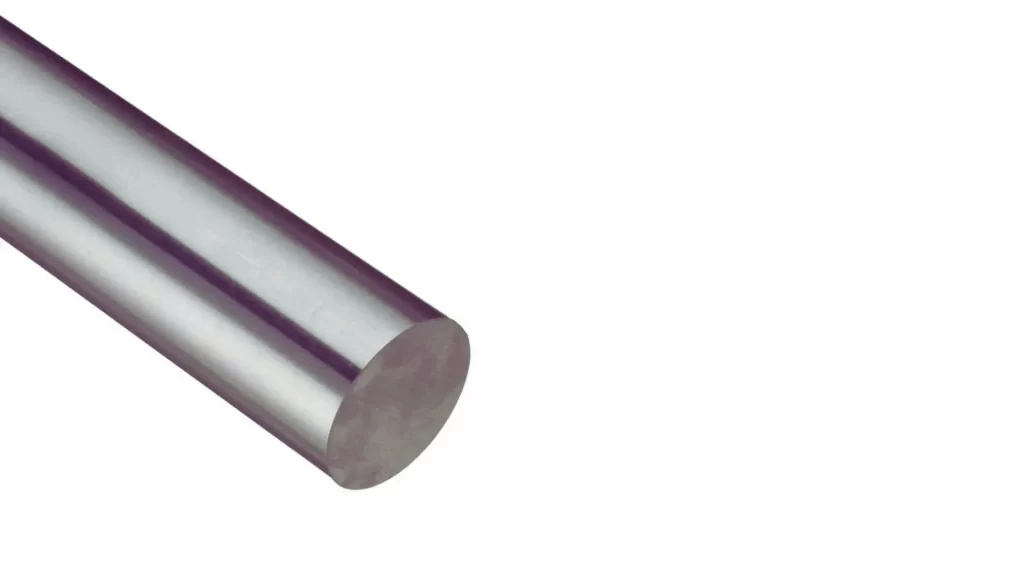
M2 High Speed Steel
D2 is a cold-work steel, while M2 is a high-speed steel. Both are hard, but M2 holds an edge longer due to its finer grain. D2 has better corrosion resistance, so it’s useful for parts exposed to moisture.
Table 3: Comparison between D2 vs M2 tool steel
|
Feature |
D2 Steel |
M2 Steel |
|
Type |
Cold-work |
High-speed |
|
Hardness |
High |
High |
|
Edge Retention |
Moderate |
High |
|
Corrosion Resistance |
Better |
Moderate |
Get Your Custom Parts D2 Steel Made Fast and Perfect
At Prolean, we understand every component carries great importance. That’s why we deliver reliable precision metal machining service alongside professional alloy steel service, prioritizing precision, speed, and consistent quality. Whether you only need a single prototype or full-volume mass production, our team transforms your designs into functional finished parts that perform perfectly on the first trial, cutting down your lead time and minimizing manufacturing errors.
We make the process transparent and straightforward. You can send your design and receive a quote in as little as one hour, then track your order in real-time. With Prolean, you get expert guidance, fast delivery, and parts built to last so that you can focus on your project instead of production problems.
FAQ’s
What is the machinability of D2 tool steel?
D2 tool steel has low machinability in the annealed condition and very poor machinability when hardened. So, it’s difficult to cut with standard tools when compared to other types of steels like AISI 1112. However, it is tough and contains a high amount of carbon and chrome.
What are the characteristics of D2 tool steel?
D2 steel is recognised by:
- Quite hard (up to 62 HRC)
- Good abrasion resistance
- High tensile strength
- Moderate corrosive resistance
- High density and hardness level
- Tough and durable
Is D2 tool steel resistant to rust?
No, D2 steel has moderate corrosion resistance due to its high chromium content. It usually is polished to improve its corrosion resistance, but it requires special care to prevent rusting in humid and wet environments.
Can you weld D2 tool steel?
Yes, but D2 tool steel welding is difficult. It is usually annealed before welding and preheated to 370-540°C, as the high carbon content in D2 causes it to crack or become brittle in the zone-affected area. Therefore, special techniques need to be applied during welding.
Can you forge D2 tool steel?
Yes, D2 can be forged similarly to that of high-speed steels. Small pieces are heated to a temperature where they cool slowly using an insulating material. Larger D2 steel parts are heated in a furnace to the desired forging temperature and then cooled slowly. D2 can be forged at temperatures between 954 °C and 1065 °C.
Is D2 tool steel expensive?
Yes, D2 is relatively expensive due to its high alloy content. The cost of D2 varies depending on the form, size, and supplier; typically higher than common tool steels due to alloy content.
0 Comments