
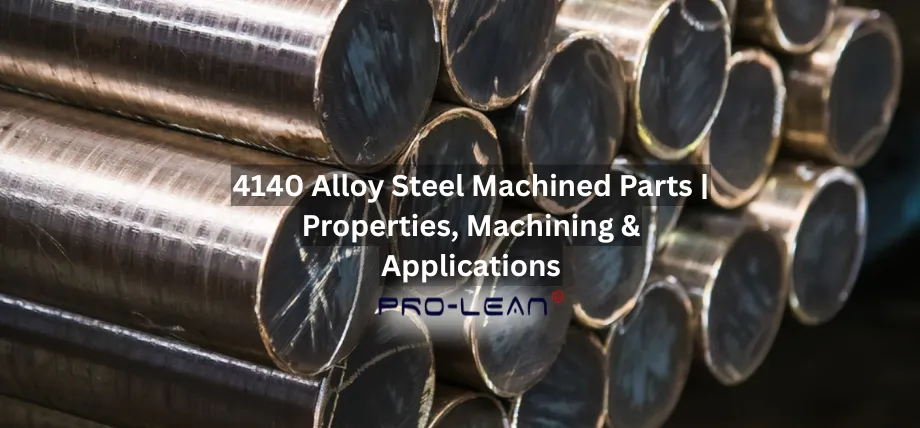
4140 Alloy Steel Rounds
The machining of 4140 alloy steel parts provides superior strength, durability, and versatility for demanding engineering applications. This article looks at the processing characteristics and the working properties of 4140 alloy steel machined parts, discussing 4140 steel machinability, applications, and comparisons with other materials used in steel CNC machining.
Proleantech provides precision 4140 alloy steel machined parts to your door using advanced steel CNC machining. We offer competitive pricing, tight tolerances, and surface finishes for steel parts that make them durable and reliable for applications.
What is 4140 Alloy Steel?
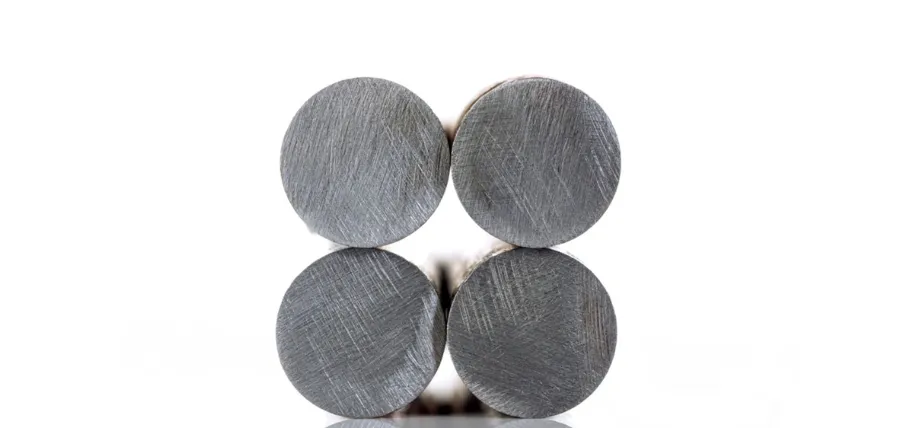
Four 4140 Steel Rounds
Grade 4140 alloy steel is a chromium-molybdenum steel. It has a low alloy content and is denoted by AISI/SAE as 4140. The alloying elements in this steel include chromium, molybdenum, and manganese. This inclusion improves the hardenability and mechanical properties required in alloy steel machined parts.
This material is available in the tempered, normalised, annealed, and quenched conditions following melting and a refining process, and then it is shaped. In its annealed state, the material exhibits good ductility that makes it very suitable for forming purposes. However, heat-treated variants have elevated strength, which makes them ideal for structural components.
This material is classified as UNS G41400 and meets or exceeds the ASTM A29 specification, also conforming to the AISI. Alloy steel machined parts often utilise this material due to its properties, providing a good balance between cost and performance across many alloy steel grades list selections.
Chemical Composition of 4140 Alloy Steel
|
Element |
Content (%) |
|
Carbon (C) |
0.38 – 0.43 |
|
Manganese (Mn) |
0.75 – 1.00 |
|
Chromium (Cr) |
0.80 – 1.10 |
|
Molybdenum (Mo) |
0.15 – 0.25 |
|
Silicon (Si) |
0.15 – 0.35 |
|
Phosphorus (P) |
≤ 0.035 |
|
Sulfur (S) |
≤ 0.040 |
|
Iron (Fe) |
Balance |
Mechanical Properties of 4140 Alloy Steel Machined Parts
Strength of 4140 Steel
The normalised strength of 4140 steel is approximately 655 MPa tensile strength and 410 MPa yield strength. When quenched and tempered, the tensile strength can rise to as high as 1480 MPa, depending on the tempering temperature.
Yield strength may increase to up to 1200 MPa. 4140 alloy steel machined parts have high-strength properties after heat treatment. This is a result of the formation of martensite within the metal. This gives machined components such as shafts and gears the capability to withstand high stresses.
Corrosion Resistance
4140 steel has slightly better corrosion resistance vs carbon steel, mainly due to the chromium content, which helps to form a passive oxide layer. While not as corrosion-resistant as stainless steel, this alloy will still require protective coatings, such as zinc phosphate or paint, in damp or corrosive environments.
Hardness
This material has a Brinell hardness rating of 197 to 229 in the annealed state (approximately 92-99 HRB). Following quenching and tempering, hardness may increase to 28-55 HRC, depending on the tempering temperature. This hardness level gives alloy steel machined parts wear resistance; however, it can reduce 4140 steel machinability unless properly managed.
Fatigue Strength
The fatigue limit of 4140 steel is approximately half its tensile strength in the quenched and tempered condition. Shot peening may increase this fatigue limit. It is crucial for fatigue conditions encountered in oscillating machinery, such as crankshafts and axles.
Impact Resistance and Toughness
Alloy 4140 exhibits excellent impact resistance. In a tempered condition, it can withstand up to 54 J in Charpy V-notch tests. This alloy has high strength due to the presence of molybdenum, carbon, and chromium, making it an ideal choice for use in heavy machine components.
What Is the 4140 Steel Machinability in CNC Applications?
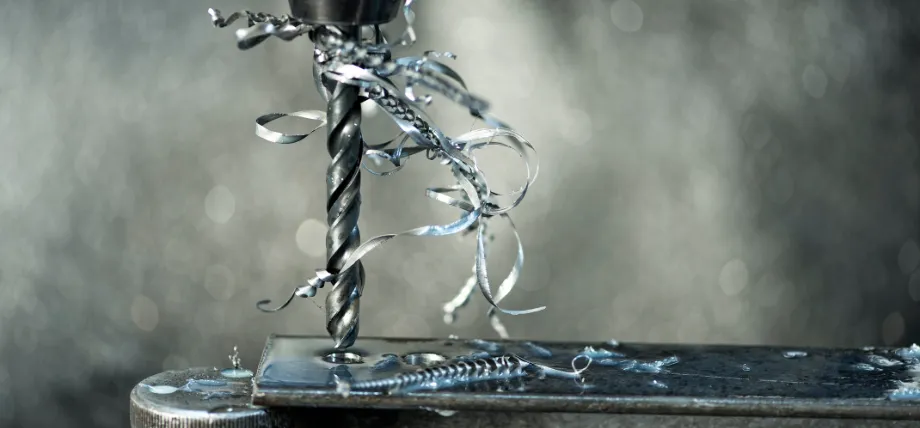
Drilling 4140 Alloy Steel
The 4140 steel machinability is rated at about 65 to 70% that of free-machining steels like 1215 steel, making it suitable for steel CNC machining. This is in terms of the steel that has been annealed. The assessment also takes into account tool wear, surface finish, and the chip formation process.
It machines to a high surface finish in the pre-hardened state (28-32 HRC) with carbide-tipped tools. Breakage of chips may occur if long, stringy chips become tangled, thus necessitating the use of chip breakers. In order to best machine 4140 steel, it is generally recommended that it be annealed before it is machined. This reduces the hardness of the steel.
However, in some cases, the part may require heat treatment after machining. In comparison to other alloys, the weldability of 4140 is moderate; the addition of sulfur in variants such as 4140S does improve machinability.
Roughing speeds of 400-800 sfm in annealed condition (or 200-400 sfm in pre-hardened) along with machining feeds of 0.010-0.020 in./rev are common for CNC machining, and coolant should be used to reduce heat buildup.
Try Prolean Now!
Applications of 4140 Alloy Steel in Machined Parts
Automotive Sector
Parts requiring high fatigue resistance, such as axles, suspension components, and crankshafts, commonly use 4140 alloy steel machined parts.
Aerospace Applications
A high-strength low-alloy steel, 4140, is used by the aerospace industry for non-critical or auxiliary structures. This is due to its strength when under duress.
Oil and Gas Industry
Items like drill collars, pump shafts, and valves in the oil and gas industry benefit from their resistance to corrosion and wear.
Heavy Machinery and Construction
Construction equipment makes use of alloy steel, 4140, in order to improve resistance to impacts.
Defense and Firearms
In the manufacture of guns, the material 4140 is used for firearms components. This is due to its ability to be strengthened and its suitability for precision-engineered items.
Types of 4140 Alloy Steel Parts
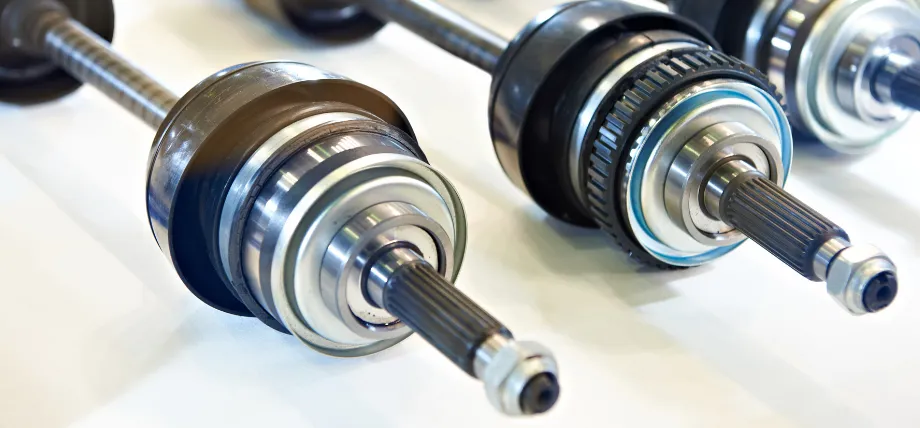
Precision Machined Drive Shafts
- Shafts and Axles: These are cylindrical components machined for rotational applications, offering high torsional strength in automotive and machinery.
- Gears and Sprockets: Precision-cut teeth provide efficient power transmission, with heat-treated surfaces resisting wear.
- Bolts and Fasteners: Threaded parts with high tensile strength secure assemblies in structural applications.
- Drill Collars and Tool Holders: Used in drilling operations, these withstand compressive forces and abrasion.
- Hydraulic Components: Pistons and cylinders benefit from strength and surface hardenability in fluid systems.
- Crankshafts and Connecting Rods: Engine parts machined for balance and fatigue resistance.
- Valves and Fittings: Precision-machined for flow control in pipelines, with tight tolerances.
Machining Considerations for 4140 Alloy Steel Machined Parts
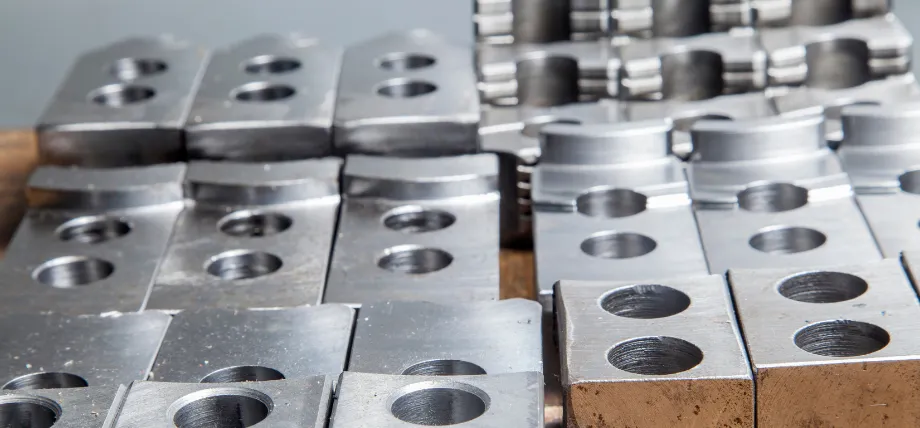
4140 Alloy Steel Blocks
Material Condition: 4140 steel machinability is best when in the annealed state (197–229 HB), improving efficiency when producing alloy steel machined parts. Pre-hardened materials with a hardness of 28-32 HRC can be machined, albeit with the need for heavy-duty tooling and slower cutting speeds. Parts must be rough-machined before the heat treatment operation. Then, after the heat treatment, finishing machining operations should be performed. Finally, stress relief to reduce distortion.
Tool Selection: For this process, use positive rake, coated carbide cutting tools with coatings. This coating (e.g., TiN, AlTiN) will help extend the life of the cutting tools. Cutting annealed metal requires less strength and is easier on cutting tools. High-speed steel will suffice in this case, but it wears away more quickly than if the steel were harder. Parts with stringy chips can be machined using a tool with a chip breaker. The chip breaker reduces the length of long stringy chips to shorter lengths.
Cutting Parameters: When cutting workpieces to prevent surface work hardening, use cutting parameters with high depths of cut (0.100-0.300 in.) and feeds (0.010-0.020 in./rev.). This material can be machined at speeds of between 400 and 800 sfm when in an annealed state, and the speed can be lowered to between 200 and 400 sfm when the material is pre-hardened. Cooling should be applied with a heat transfer fluid to remove heat and prevent heat checking.
Setting and Machining Techniques: Ensure that the machine is rigidly set to eliminate as much vibration and chatter as possible. When peck drilling deep holes, it is preferable to clear chips, rather than let them accumulate and cause the drill to bind.
Peck drilling also helps to prevent overheating of the drill and the workpiece. Regularly check the cutting tool’s condition to see if it’s worn out and make adjustments to the cutting data to prevent wear. Check the colour of the chips produced and the quality of the machined surface. Parts made from the alloy steel 4140 should be stress relieved after machining if the parts are critical and have to hold close tolerances.
Alternatives to 4140 Alloy Steel for Parts
4340 vs 4140 for Machined Parts
Containing a high proportion of nickel, this alloy exhibits high toughness and resistance to fatigue, especially when the component’s cross-section is large and requires through-hardening. 4340 alloy is particularly suited to applications involving heavy loading or cyclical loading, such as the landing gear in aerospace, heavy-duty crankshafts, or other components in extreme environments that need resistance to shocks and low-temperature brittleness.
In the 4340 vs 4140 comparison, 4140 offers sufficient machinability and hardenability for most general-purpose alloy steel machined parts, with better weldability. For cost-driven projects that involve complex fabrications, gear production, and shafts where moderate strength is adequate, 4140 would be a suitable choice
1018 vs 4140 Steel
A low-carbon steel alloy, such as 1018, with a composition of approximately 0.18% carbon, does not require heat treatment to obtain its basic properties. It is not a widely used material. It does not have a very high strength. It is used in those cases where other steels cannot be formed, machined, or welded. It rapidly machines with low tool wear, yielding good surface finishes, and allows for easy welding without preheating. Examples of parts manufactured with investment casting include fixtures, brackets, base plates, and low-stress shafts, where both low cost and ease of manufacture are of prime importance.
In 1018 vs 4140 steel, 4140 possesses increased strength and durability after heat treatment, making it suitable for demanding 4140 alloy steel machined parts. This material can function in demanding conditions and yet requires better manufacturing and additional processing.
7075 Aluminum
In 7075 billet aluminum vs 4140 steel, 7075 aluminum offers a higher strength-to-weight ratio and natural corrosion resistance. It is consequently suitable for weight-sensitive applications. High-speed machining can be performed by the equipment with minimal wear on the cutting tools, thereby allowing it to produce parts with complex geometries and fine finishes.
However, custom CNC machining can be performed at higher speeds. The use of this composite is common in aerospace structural components. Bicycle frames also utilise this product. Automotive parts are another area where it is applied. It offers the benefit of weight reduction and does not compromise on strength.
Try Prolean Now!
How To Improve the Strength of 4140 Alloy Steel Machined Parts
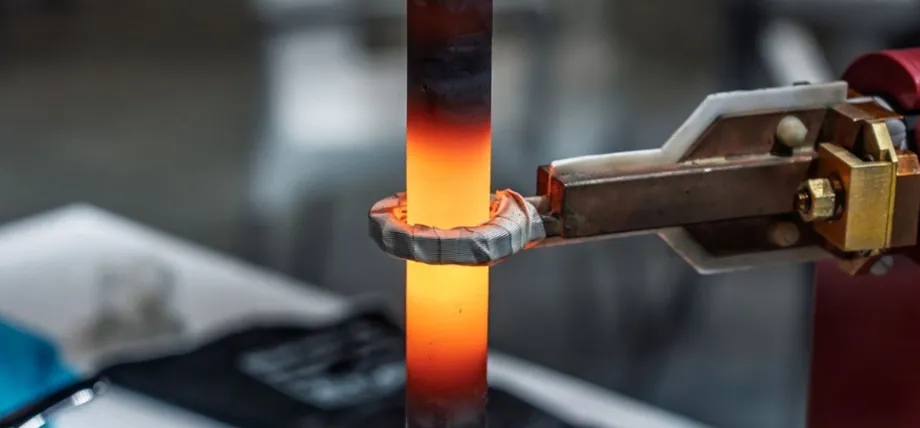
Induction Heating 4140 Steel
4140 alloy steel can be strengthened by heat treatment of machined parts. Heat treatment in the range of 800-870°C, followed by quenching in oil or water, results in the formation of martensite, which raises the hardness to approximately 50 HRC.
The mechanical properties of this alloy can be tailored through a process known as tempering, in which the temperature is raised to between 400 °C and 650 °C. The uniformity of the samples can be enhanced by normalizing at 870 °C. Induction hardening is used to increase the surface hardness of a part, thereby enhancing its resistance to wear and tear. Additionally, fatigue strengths can be increased by shot peening.
Custom CNC Machining at Proleantech
Proleantech provides high-quality custom machining for 4140 alloy steel machined parts. Proleantech machined parts support many demanding applications across various industries. Some of our post-machining services include heat treatment, surface finishing, coloring, polishing, and DFM support for scaling from prototyping.
Standard CNC machining tolerances for 4140 alloy steel parts are typically ±0.025 mm, depending on geometric complexity. Our engineering team also offers expert consultation and material selection support.
Request a free quote today!
Conclusion
Custom components processed via professional steel service using 4140 alloy steel machined parts are a critical choice when strength, toughness, and cost efficiency matter, making this material one of the best steels for machining in load-bearing applications. It can be heat-treated and has been tested in many load-bearing applications previously, making it suitable for structural and rotating applications.
0 Comments