
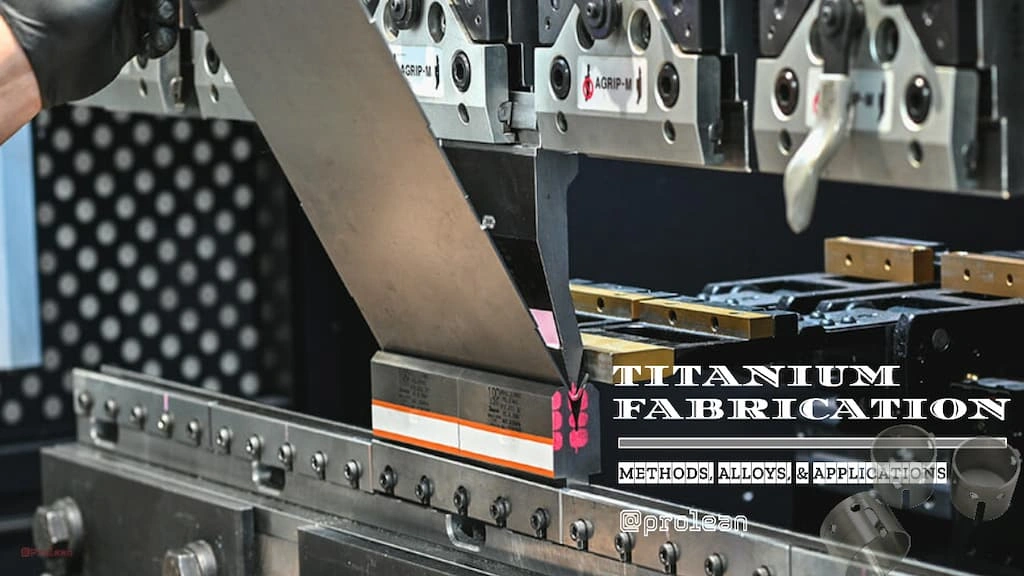
Titanium fabrication
Although titanium is a tough metal with lower machinability and formability, it can still be fabricated into desired parts and products. You can use sheets, strips, rods, and pipes with both automated and manual sheet metal processing techniques. They can be cut, bent, punched, forged, and machined into the designed form.
As producing titanium components is challenging and requires several considerations, this article will discuss their various aspects to guide you through the fabrication process.
Let’s get started.
What Are the Properties of Titanium?
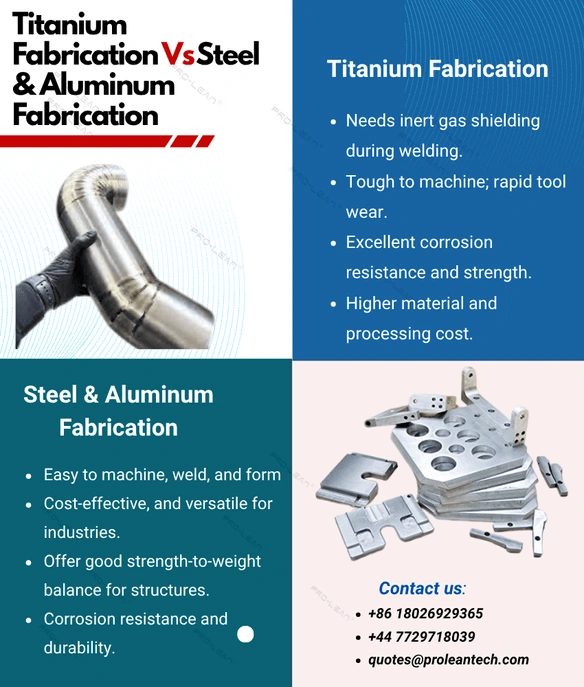
Titanium Vs Steel & Aluminum Fabrication
Titanium(Ti) is a ductile, corrosion-resistant, and biocompatible metal with an excellent strength-to-weight ratio. Additionally, titanium alloys perform well at elevated temperatures without losing their original properties.
When selecting titanium for your fabrication project, consider the following properties and ensure they align with your application requirements.
High Strength & Lightweight
Titanium exhibits high mechanical strength, almost twice that of steel for the same weight. So, it can be used for structural components in high-stress conditions.
Ductility
Titanium shows good ductility, and it can be further increased by heating. Being ductile, titanium metal can be formed into desired shapes with bending, stretching, drawing, and other techniques.
Corrosion Resistance
Titanium offers superior corrosion resistance compared to aluminium & steel. It produces a passive oxide film that reacts with moisture and protects the underlying structure from rust.
Thermal Stability
The melting point of titanium is above 1600°C, and its crystal structure shows the stable phases up to ~882°C, retaining the physical and mechanical properties.
Biocomptiability
Titanium is a bio-inert and non-allergenic metal, which remains stable in saline, blood plasma, and interstitial fluids. Thus, it is useful for various medical applications.
Types of Raw Titanium Materials for Fabrication
Mainly, three types of raw titanium materials are used for fabrication projects: flat sheets, tubes, and solid rods. Let’s further elaborate on them.
Flat Titanium Sheets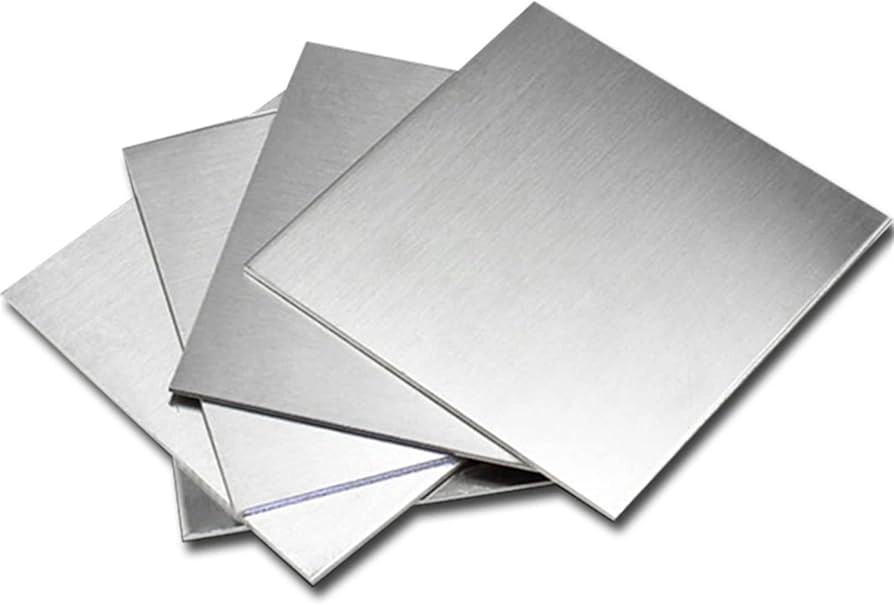
Flat titanium sheets
These are the most common types of raw titanium material used in fabrication. They can be processed with cutting, bending, punching, stamping, and other precision metal fabrication techniques. Moreover, titanium sheet metal fabrication is also suitable for large-volume production.
Titanium Tubes 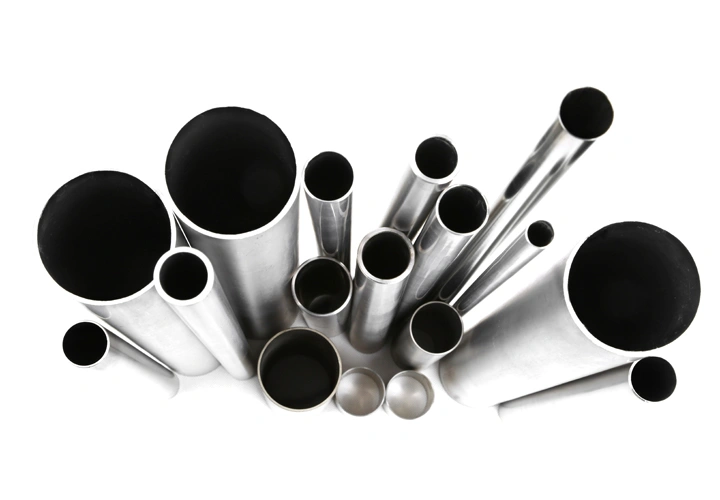
Titanium tubes
Typically, titanium tubes are used for bending parts like exhaust system components, structural frames, and chemical processing lines. They are bent with die-press, rotatory, or other bending methods. Then, some other forming techniques are applied to give the final shape.
Titanium Solid Rods
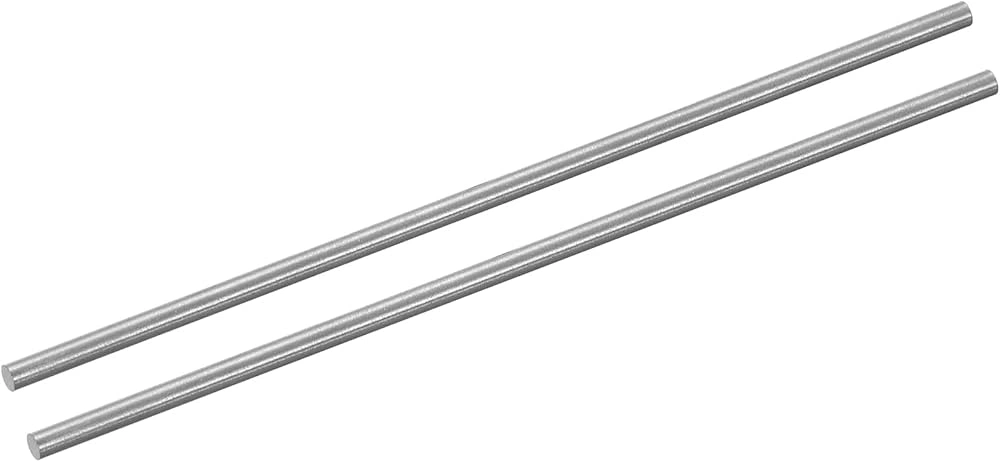
Titanium rods
Raw titanium rods are used to fabricate both large structural components and small industrial parts. They sustain high loads and extreme environmental conditions. For example, components of marine & offshore equipment, mounting features for aircraft parts, and chemical processing vessels.
Try Prolean Now!
Which Titanium Alloys are Used in Fabrication?
Alpha (α), beta(β), and alpha-beta(α+β) alloy grades of titanium are compatible for fabrication processes. They differ in alloying element and microstructure, thus providing slightly unique properties from each other.
The table below outlines various titanium alloys for fabrication.
| Alloy Type | Alloying Elements | Key Properties | Typical Uses |
| CP Ti (Pure) | — | Excellent corrosion resistance, ductile, easy to weld/form. | Chemical piping, marine, and medical parts. |
| Ti-5Al-2.5Sn (α) | Al, Sn | Stable at high temps, weldable, moderate strength. | Airframe skins, engine casings. |
| Ti-6Al-2Sn-4Zr-2Mo (Near-α) | Al, Sn, Zr, Mo | Creep/oxidation resistant, strong fatigue life. | Turbine discs, hot forgings. |
| Ti-6Al-4V (α+β) | Al, V | High strength, heat-treatable, versatile. | Aerospace structures, pressure vessels. |
| Ti-3Al-2.5V (α+β) | Al, V | Good formability, moderate strength, corrosion resistant. | Tubing, hydraulic lines. |
| Ti-5553 (β) | Al, Mo, Nb, V, Cr | Ultra-high strength, limited formability. | Landing gear, high-load fasteners. |
If you are interested in the fabrication of other metals besides titanium, read about the fabrication of steel, aluminium, and stainless steel by clicking on the corresponding links given below.
Read more:
Methods for Titanium Fabrication
There are several methods used by manufacturers for titanium sheet metal fabrication services; you can use one or multiple methods to fabricate the desired parts.
Let’s discuss titanium cutting, bending, forging, welding, and machining.
Titanium Cutting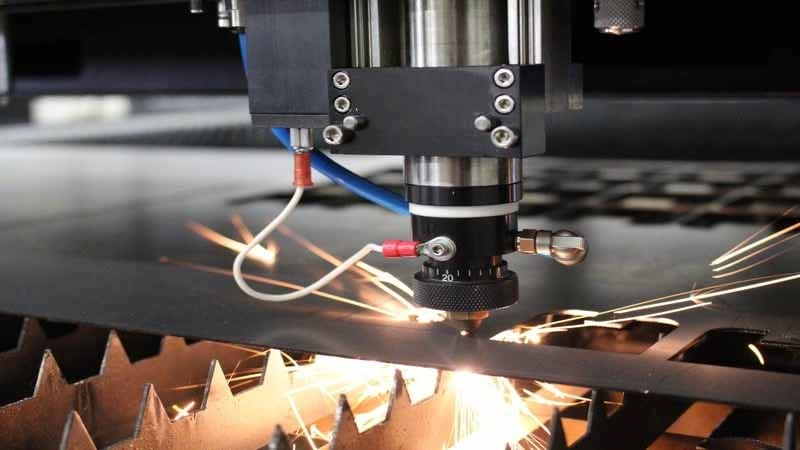
titanium laser cutting
It is the process of cutting, shaping, and sizing the titanium materials, often as a preparatory step for subsequent fabricating operations. Metal cutting methods you can use for titanium are laser cutting, waterjet cutting, and shear cutting.
Titanium Bending
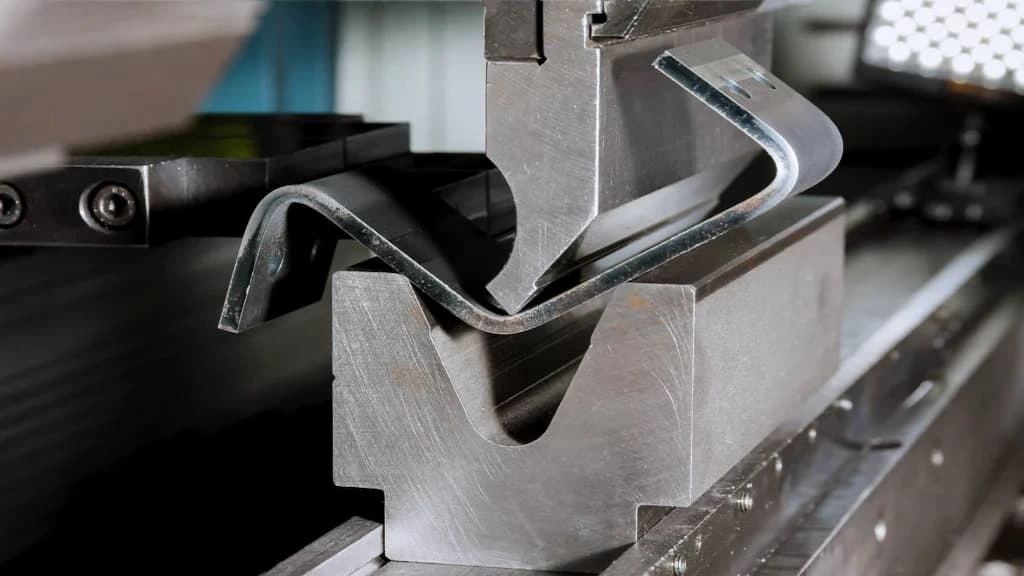
titanium bending
Bending is one of the fundamental forming methods in sheet metal fabrication, including titanium. The process of titanium bending uses dies, presses, mandrels, and other tooling based on whether the raw material is in sheet, tube, or rod form. Although titanium needs a high forming force, it can be bent into a specific angle or curvature without any damage.
Using the right bending force is critical; too high forces crack the titanium, whereas lower forces are not enough to deform.
- Cold Bending: It involves bending at room temperature and is suitable for thin titanium sheets, rods, and small tubes.
- Hot Bending: Thick and heavy titanium materials are heated before bending. It increases the ductility and makes the material easier to bend.
Titanium Welding 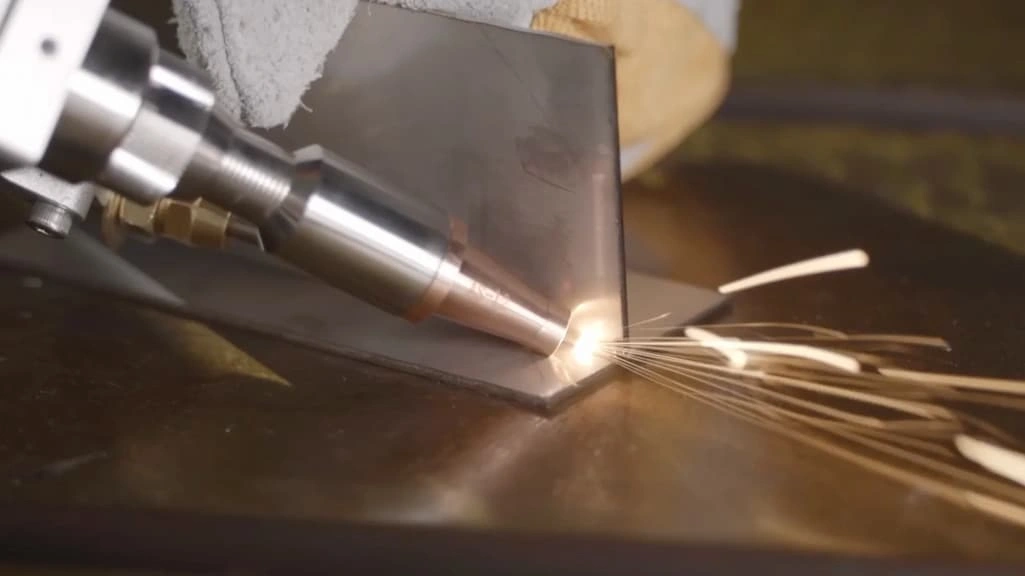
Titanium laser welding
Welding joins multiple titanium components by establishing a strong and permanent joint. Sheet metal companies use Electron beam welding(EBW), TIG welding, or any other suitable technique. However, it is critical to consider the shielding from the environment, welding atmosphere, heat control, and joint design compatibility.
Titanium Hot Forging 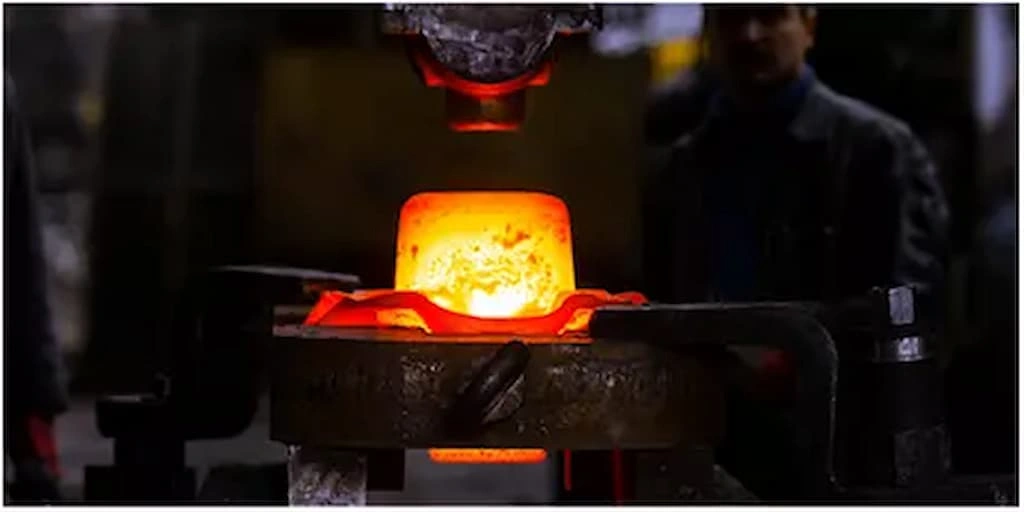
titanium forging
Hot forging involves the use of high compressive forces on heated titanium, so the material flows inside the die cavity and forms the desired shape. It is suitable for components with minimal internal features.
Titanium CNC Machining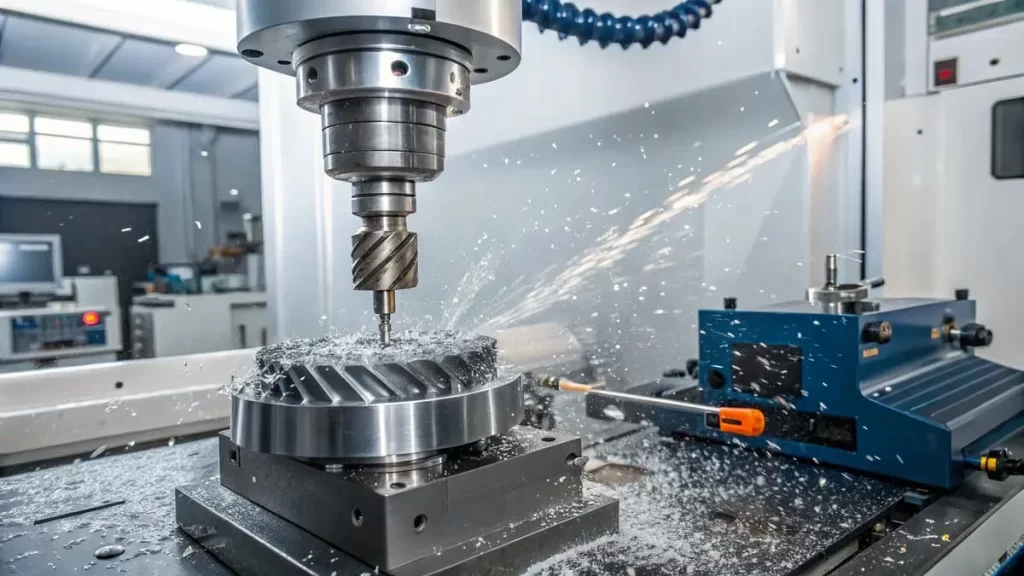
titanium machining
CNC machining is often combined with forming methods in the titanium fabrication process. Fabricators use milling, turning, drilling, and many other machining methods to add specific features and correct the dimensions of fabricated items. Meanwhile, this titanium manufacturing method can shape the workpieces without any forming techniques.
Work hardening and tool wear are two major issues in titanium machining, which can be addressed by the use of carbide tools and correct machining parameters.
Try Prolean Now!
What is Titanium Heat Treatment and Why is It Important in Fabrication?
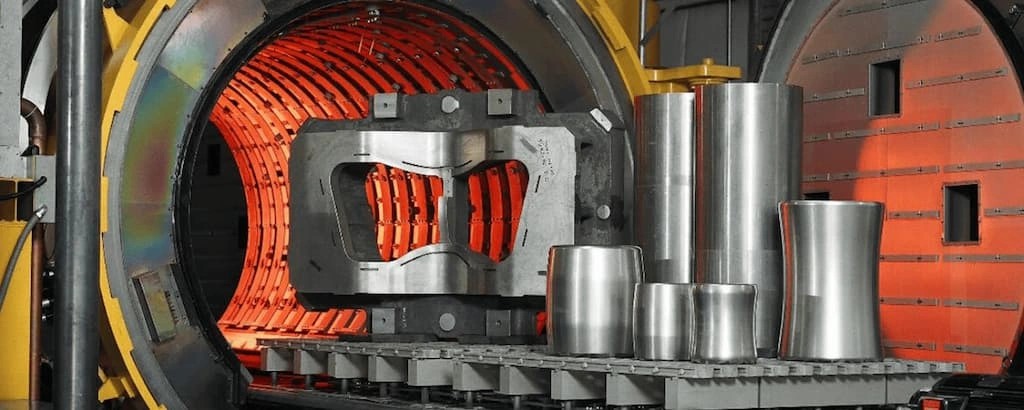
Heat treatment of titanium
Heat treatment is a process of controlled heating & cooling to alter the microstructure of the material, improving physical & mechanical characteristics. It is important in titanium fabrication for stress relief of fabricated items.
Annealing heat treatment is used for titanium, which involves heating at high temperature and cooling down to room temperature at a slow rate. This method allows titanium to relief internal stress from metal forming operations and stablize the mechanical properties.
Surface Treatment and Finishing
Often, the fabricated titanium part or product requires surface treatment & finishing to enhance the surface properties, aesthetic, and dimensional accuracy. Meanwhile, surface finishing improves the smoothness and aesthetic.
You can apply any of the following surface treatments and finishing techniques to the titanium parts.
- Passivation: This surface treatment method uses chemicals to remove the metallic contaminants, organic residues, and surface oxides.
- Surface Polishing: It is the process of removing minor material from the surface using a fine-grain abrasive wheel, which reduces the roughness significantly and creates a glossy finish.
- Bead or Sandblasting: Beads of zirconia alumina or other abrasive material are blasted over the titanium surface at high speed to clean and smooth the surface.
- Anodizing: In this process, a hard protective layer of titanium oxide is created through electrolysis. Anodizing improves surface hardness and has an extensive color spectrum.
- Plating: It refers to coating a metallic layer through electrolysis, useful for both corrosion protection and aesthetics.
- Plasma Nitriding: This surface treatment method develops a titanium nitride layer by use of a vacuum & heated nitrogen-containing plasma chamber. It increases the surface hardness and corrosion resistance.
Titanium in Pressure Vessel Fabrication
Especially, pressure vessels that need to withstand extreme stress, heat, and chemical exposures are made with titanium. For example, chemical reactors, desalination plant components, and offshore gas systems.
Pressure vessels are typically made by forming titanium plates or sheets through rolling, forging, and bending, followed by precision welding under inert gas. Furthermore, fabricated pressure vessels are strengthened with a heat treatment process.
What are the Applications of Titanium Fabrication? Product Examples
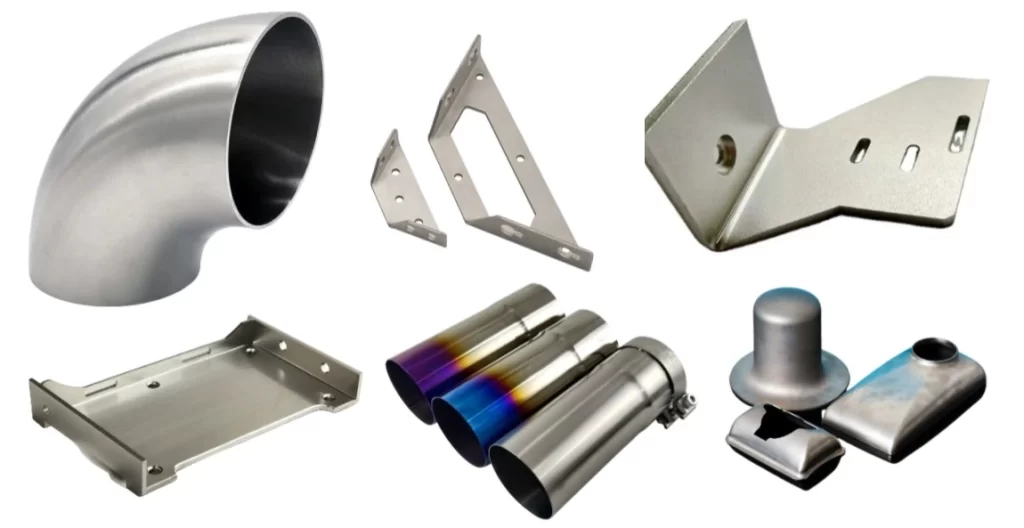
Fabricated titanium components
Titanium fabrication products & components are ideal for applications where a high strength-to-weight ratio, fatigue resistance, corrosion resistance, and thermal stability are crucial for performance.
Let’s look at the product examples of titanium fabrication across various industries, including automotive, marine hardware, aerospace, pipes & fittings, pressure vessels, industrial machinery, and chemical processing.
- Automotive: Exhaust headers, springs & retainers, suspension components, and fasteners for motorsport.
- Marine Hardware: Thru-hull fittings, propeller shafts, in-ship tubing, seawater tubing, deck hardware, and offshore systems.
- Aerospace: Aircraft fasteners, airframe brackets, compressor parts, and hydraulic actuator bodies.
- Pipes & Fittings: Piping in harsh environments, like humid and underwater installations. E.g., flanges, pipe spools, and instrument tubing.
- Pressure Vessels: High-pressure gas cylinders, aerospace gas tanks, industrial pressure, and autoclave liners.
- Industrial Machinery: Pump shafts, mixing blades for slurries, tooling fixtures, valve seats, and guide rails.
- Chemical Processing: Reactor baffles & trays, distillation column internals, corrosion-resistant piping manifolds, and components of chlor-alkali hardware.
What Are the Common Challenges in Fabricating Titanium?
The titanium fabrication challenges are associated with the process complexity, required equipment & tooling, and raw material cost.
The list below outlines the common challenges in titanium fabrication.
- Complexity: It is challenging to sequence the fabrication operations while making complex titanium components.
- Titanium Cost: Although titanium has excellent properties for high-performance applications, it is an expensive engineering material.
- Tool Wear: Titanium tends to stick with cutting tools during machining, which increases the tool wear. Therefore, you need a special coating on the cutting tool.
Summing Up
Titanium is a relatively challenging material to fabricate into desired parts & products, compared to other engineering materials like steel and aluminium. Therefore, you can shape different titanium alloys precisely with careful considerations and the use of appropriate equipment & tooling.
Furthermore, it is also important to choose an expert & experienced manufacturer for high-quality titanium parts, like ProleanTech. We have our own in-house machine shop and fabrication facility with advanced equipment & systems.
FAQs
Why is titanium so hard to weld?
Titanium reacts quickly with oxygen, nitrogen, and hydrogen at high temperatures, which makes it difficult to avoid contamination in joints.
What is the downside of titanium?
The main downside of titanium is its difficulty with machining and forming processes. Additionally, it is also a relatively expensive manufacturing material.
How is titanium made?
Titanium is produced in the form that we see in the market by extracting mineral ores like rutile or ilmenite through various metallurgical processes.
0 Comments