
Heavy sheet metal fabrication deals with large & thick structural components of stainless steel, carbon steel, aluminum, and other materials. It involves the use of powerful equipment and specialized tooling. This method produces robust and durable components and products for industries like heavy machinery, construction, energy, and agriculture.
During heavy fabrication, several distinct techniques are employed, from raw material cutting to forming and joining. Each stage must be planned and executed properly to shape the designed structure (or part ) precisely.
This article will guide you through the process, types, quality control procedures, and applications of heavy metal fabrication.
What is Heavy Manufacturing and Metal Fabrication? 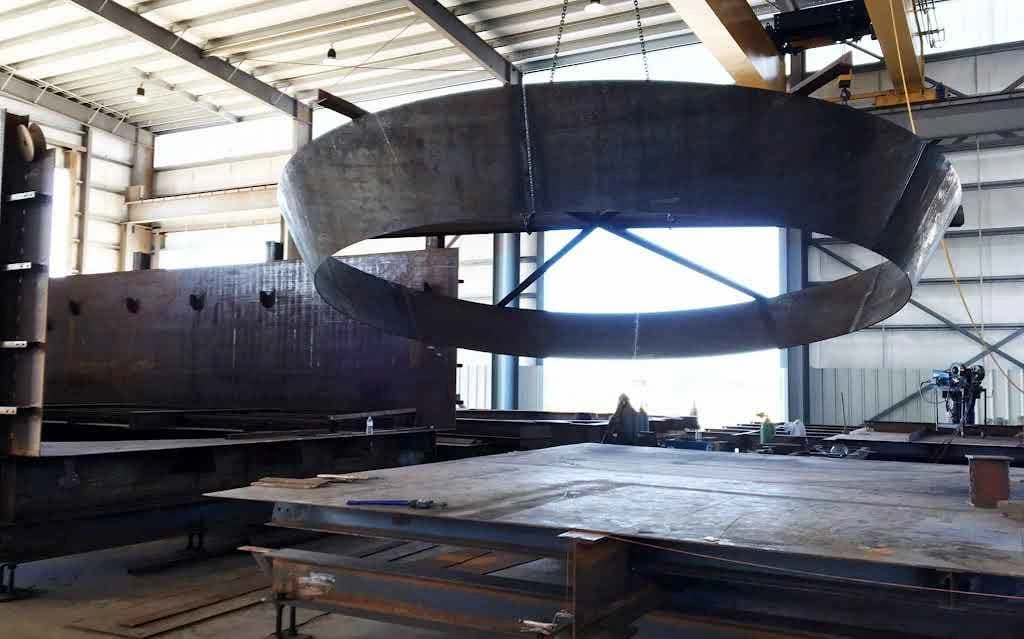
heavy fabrication process
Heavy manufacturing or fabrication refers to the production of large and complex metal parts/products, typically for structural purposes. Subsequently, they undergo various processes, including cutting, bending, machining, and welding.
Some examples of heavy fabrication include ASME pressure vessels, storage tanks, ship hull blocks, wind turbine towers, locomotive underframes, construction beams and frames, and gantry crane parts. Moreover, it is challenging to find fabricated heavy parts in local workshops and suppliers, as they require extensive equipment and technical expertise. They are made within the application industry.
Light Vs Heavy Metal Fabrication
What makes heavy metal fabrication different from light (regular) fabrication is the complexity and scale of manufacturing. They are preferred for distinct purposes. Light metal fabrication produces small-sized components from thin sheets & strips, whereas heavy fabrication involves thick sheets, plates, bars, and strips to shape larger structures.
Light fabrication can be made with single-pass metal fabrication techniques like stamping. Meanwhile, some typical applications include electronic enclosures, mounting brackets, battery pack casing, small HVAC ducts, and architectural items.
Heavy Metal Fabrication Types
Based on the intended application and the methods used, there are different types of heavy metal fabrication. Before starting the project or outsourcing the service, determine which types of fabrication best meet your requirements, allowing you to optimize the process.
Let’s briefly elaborate on the common heavy metal fabrication types: sheet fabrication, heavy cutting & machining, forming, and welding.
Metal Cutting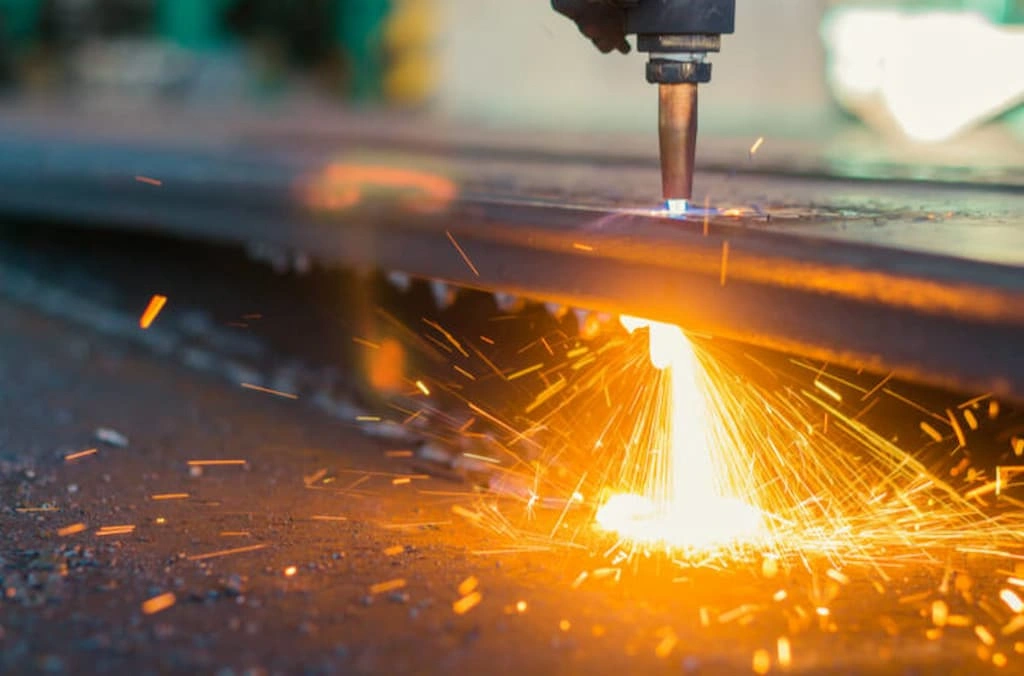
Heavy metal cutting
It is the process of cutting blank sheets, plates, or other forms of raw metal into desired sizes, shapes, and profiles. Typically, each heavy fabrication structure needs cutting operations as a preparatory step before shaping. The custom cut sheet metal pieces are later used for bending, rolling, welding, and other forming processes.
Consequently, metal cutting methods used in heavy metal fabrication and manufacturing are plasma cutting, mechanical sawing, waterjet, and oxyfuel cutting. Which cutting technique to choose depends on the metal type, thickness, and precision.
Metal Forming

Heavy sheet bending
Forming involves permanently deforming a material into its desired shape. There are several methods for deforming metal, including bending, forging, extrusion, and rolling. All of these techniques are versatile and can be used to form large structures for industrial machinery, automotive bodies, tubes, and other heavy mechanical components.
Heavy Sheet Fabrication
Heavy sheet metal fabrication involves shaping blank sheets into desired components, with a thickness of more than 10 gauge. Cutting, press-brake bending, rolling, welding, and other techniques are applied to metal sheets. Meanwhile, fabricators use steel, stainless steel, aluminum, and other metal sheets to fabricate the heavy parts.
Heavy Metal Machining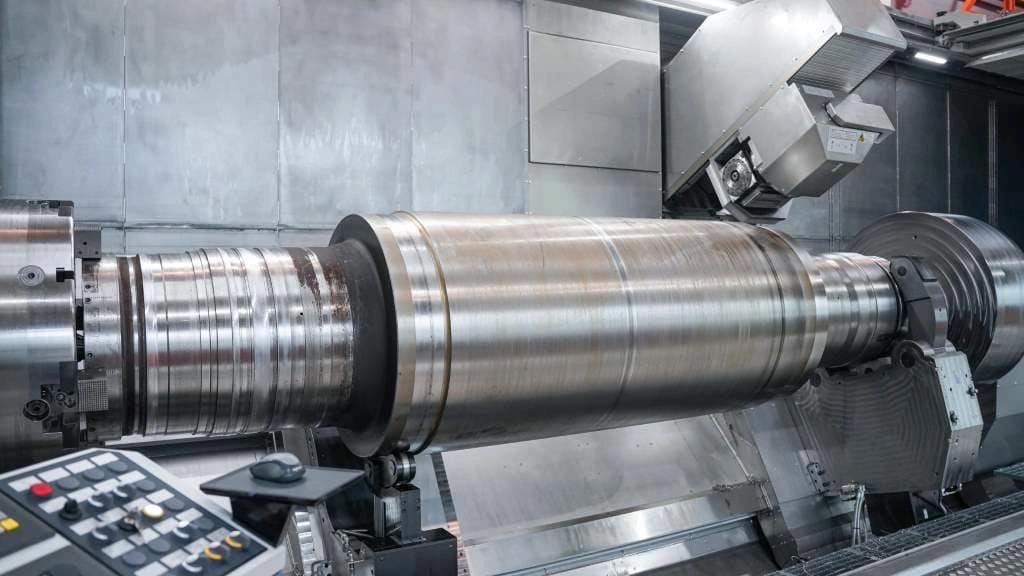
heavy metal machining
Machining shapes the metal pieces by removing material using appropriate cutting tools. In heavy fabrication, it prepares the material for forming, creates the specialized parts, and refines the welded & forged items. Machining techniques such as milling, turning, drilling, and threading are commonly used in heavy machining, while typical tooling options include carbide inserts, large-diameter face mills, heavy-duty drills, and end mills.
Utilize CNC mills, lathes, mill-turn centers, drilling machines, or other suitable equipment for high precision and fast turnaround. CNC equipment is especially beneficial when you need to make fitting components in heavy structural fabrication work.
Welding 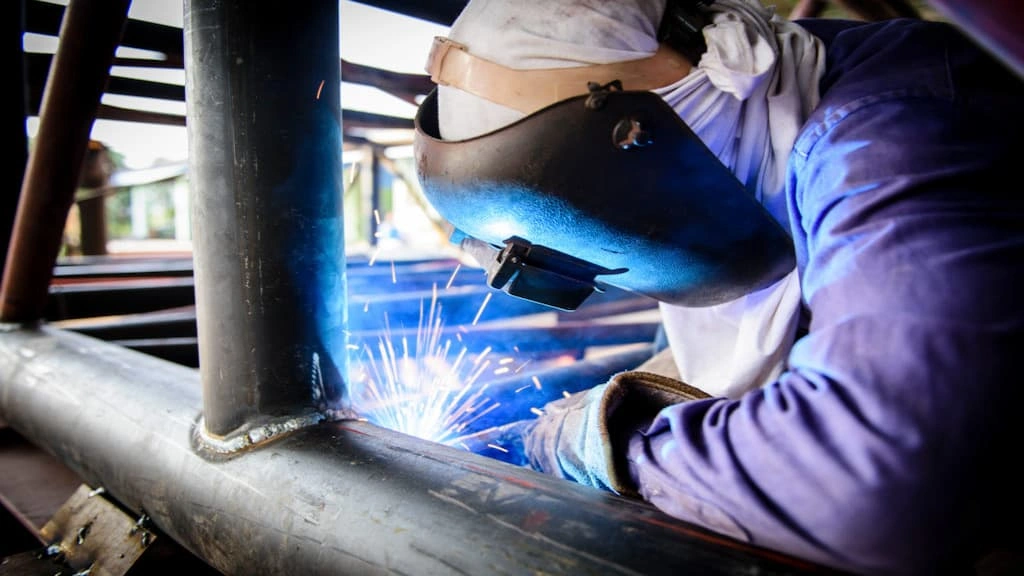
Truss welding
Welding joins multiple metal components into a single structure by a permanent metallurgical bond between their mating surfaces. Whether large structural metal fabrications or custom machinery parts, welding forms robust and durable joints.
Consequently, there are many welding techniques available for heavy metal fabrication and manufacturing, such as submerged arc welding(SAW), MIG welding, and stick welding.
“Would you like to know which type of fabrication is best suited for your project? Get experts guide from industry engineers, everything from DFM to material selection and fabrication strategies for cost optimization.”
Try Prolean Now!
What are the Steps Involved in This Process?
Like regular sheet metal fabrication, heavy fabrication began with cutting the blank sheets into specific sizes. Then, sheets are bent or formed using a suitable technique and assembled with welding or bolting. Meanwhile, the process might also need drilling, threading, or other operations.
Here are the typical steps involved in the heavy fabrication process.
- Cutting sheet metal into specific shapes and sizes
- Punching or drilling for assembly bolts or other specific purposes
- Forming process: bending or rolling operations
- Assembly: bolting, thread fastening, or welding
- Post-processing and surface finishing, such as powder coating.
Which Tools and Equipment do Heavy Metal Fabricators Use?
Heavy metal fabrication involves handling large loads, thus requiring specialized equipment and tooling. You can imagine the size of large pressure vessels to get an idea about the scale of equipment needed for heavy fabrication.
The following are some examples of tools and equipment used by heavy metal fabrication companies.
- CNC hydraulic press brakes with capabilities of 20 to 1000+ tonnes
- Plate Rollers (50+ mm of plate thickness)
- Large overhead bridge cranes
- Hydraulic lifters
- Plasma cutters with 600+ rated amperage
- Watjet cutters
- Coordinate Measuring Machine (CMM) for quality control, etc.
What is Structural Metal Fabrication?
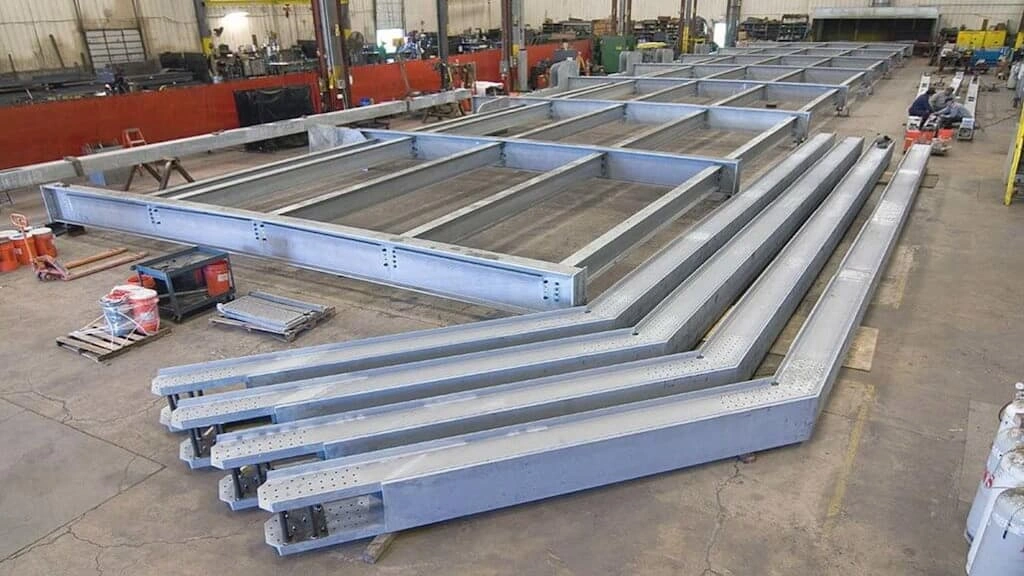
structural fabrication
It is the application-specific type of heavy metal fabrication used to make reliable structural members for bridges, buildings, offshore modules, and mechanical equipment. E.g., frames, columns, beams, and trusses.
Structural fabrication involves cutting the plates, channels, sheets, tubes, and bars, then bending them into specific shapes and assembling them together with welding to create the desired structure. Moreover, it is essential to follow industry-standard procedures in heavy fabrication, such as AISC specifications, AWS D1, and ASME.
Try Prolean Now!
Applications of Heavy Metal Fabrication
Heavy metal fabrication is used across several industries, including manufacturing equipment, construction, energy, automobile, and agricultural machinery.
Let’s elaborate on them with examples of fabricated metal products.
Manufacturing Equipment
Structural frames and other components of manufacturing equipment are made with heavy fabrication. It ensures that the stiffness, strength, and durability of fabricated metals and machines can run seamlessly.
Some application examples are:
- Structural frames and subframes
- Heavy fixturing
- Conveyor frames and idler supports
- Roll and shaft housings
- Gantry
- Overhead crane girder
- Welding jigs
Construction Industry
Heavy structural fabrication is widely used in the construction of buildings, bridges, skyscrapers, and architectural metal works. The large & stable fabricated items provide high load capability and long-span stability.
Some application examples are:
- Roof trusses
- Sub-frames & cross-beams
- I-beam columns
- Connection plates
- Façade panels
- Staircases
Automobile Industry
In the automobile industry, heavy metal fabrication is used to produce chassis, frame parts, large body panels, structural reinforcements, muffler assemblies, etc. The fabricated items can provide high impact resistance, torsional stiffness, and durability.
Some application examples are:
- Chassis frames and subframes
- Bumper beams
- Exhaust systems
- Suspension control arms
- Transmission mounts
- Vehicle bodies
- Structural reinforcements
Energy
Both the oil & gas and the renewable energy industries use heavy fabricated metal items in the construction of various structures. They can sustain harsh environments, fatigue load, and high stress in offshore platforms, pressure vessels, heavy towers, and structural frames.
Some application examples are:
- Offshore platform structures
- Pressure vessels
- Piping spools
- Fuel storage tanks
- Turbine casings
- Chimneys & ducting
- Wind turbine towers
Agricultural Machinery
Harvesting, farm, trailers, heavy tillage implements, and other equipment in the agricultural industry rely on heavy fabrication, which can deliver strong and reliable components and frames to work in harsh & rugged environments.
Some application examples are:
- Header for harvesters
- Tractor front loaders
- Hoppers for fertilizer spreaders
- Tow frames and chassis for Trailers
Metal & Alloys for Heavy Fabrication Needs
Metal and alloys with high strength, stiffness, durability, and corrosion resistance are preferred in heavy fabrication projects, such as stainless steel and carbon steel. The material choice depends on the application requirement, environmental conditions, ease of fabrication, cost, and other factors.
The table below outlines common materials for heavy fabrication and their key properties:
| Material | Why Use? | Use Cases |
| Structural Steels (A36, S355) | Low cost, good weldability, and reliable strength | Bridges, building frames, and crane structures. |
| HSLA Steels | Strength-to-weight ratio, better toughness, and corrosion resistance | Small cranes, heavy vehicle chassis, and ship structures. |
| Alloy Steels (4130, 4140) | Heat-treatable, fatigue strength, and impact strength | Shafts, gears, pins, heavy machine parts. |
| Stainless Steels (304, 316, Duplex) | Corrosion resistance and stable mechanical properties. | Marine structures, chemical processing tanks, offshore equipment. |
| Aluminum Alloys (5083, 6061) | Lightweight, corrosion-resistant, good formability | Ship superstructures, trailers, and lightweight frames. |
| Cast Iron (Gray, Ductile) | Excellent compressive strength and vibration damping. | Engine blocks, housings, and machine bases. |
Furthermore, copper, bronze, and a few other materials are also used in heavy sheet metal processing works, but not for structural purposes. For example, electrical and thermal systems in industrial facilities.
Custom Metal Fabrication Services At ProleanTech
At ProleanTech, we offer comprehensive fabrication solutions for a wide range of industries. Our in-house fabrication facility is equipped with advanced and automated equipment to produce custom components, with thickness up to 0.250″ or higher.
Our ISO 9001:2015 certified services encompass a wide range of materials, including stainless steel, carbon steel, aluminum, titanium, and over 50 additional options in total. Consequently, we utilize a range of versatile technologies, including CNC bending, stamping, forging, laser cutting, plasma cutting, welding, and machining.
If you have a ready-to-fabricate design and want an accurate estimation? We provide a one-hour quote from an industry engineer with DFM feedback. Upload your file and request a quote now.
Summing Up
Overall, heavy metal fabrication serves as the backbone for structural manufacturing across various industries, ranging from construction to heavy machinery. It focuses on large and stable structures rather than tight precision, utilizing multiple fabrication techniques.
If you are outsourcing sheet metal fabrication services for a mechanical fabrication project, consider a reliable manufacturer like ProleanTech, equipped with advanced technology, technical expertise, and a decade of experience.
0 Comments