
Grains in materials are mostly associated with carpentry. Metals, too, have grains, the foundational crystalline structures that form during the solidification of metal. Usually varied in length and width, grains in metal mostly align in the same direction and create a grain boundary when they align in different directions.
For a CNC machining service provider, the metal grain structure is paramount because it affects relevant properties, including ductility and strength.
This article examines the concept of grain direction in metal and its effect on sheet metal fabrication approaches.
What is Sheet Metal Fabrication?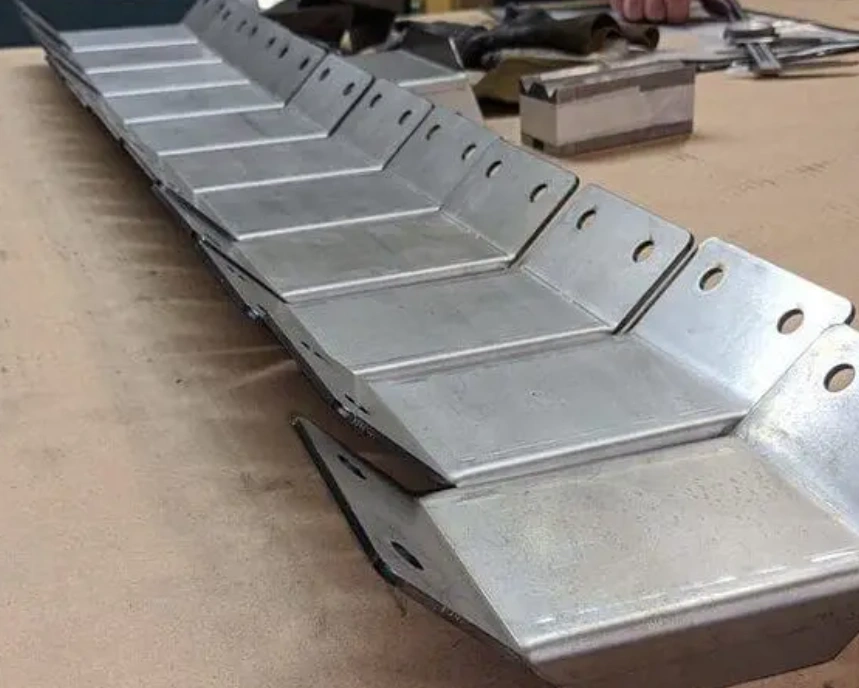
Fabricated metal parts
Sheet metal fabrication is a manufacturing process that transforms sheet metal into useful components using techniques that fall under cutting, joining, forming, and bending. Metal sheets have an internal grain structure, which affects the metal’s response to sheet metal fabrication.
These effects are evident in the final part’s dimensional accuracy, mechanical properties, and surface quality. This is because the grain direction in metal influences the formability of the material, the machined surface quality, and the springback characteristics.
What Is Grain in Metal?
Grains in metal are the tiny crystalline structures that emerge during the metal cooling and solidification process. Each grain carries countless atoms, which are organized in recognizable patterns. An atom is the fundamental building block of a material.
Grain in metal, visible under the microscope, is packed with other grains to create a 3D network of pieces with boundaries. The specific arrangement of these pieces determines how a material behaves in sheet metal manufacturing.
Most notably, the grain’s shape, size, and orientation can affect the metal’s mechanical strength.
Why Do Metals Have Grains?
Metals develop grains because they solidify slowly and systematically, with numerous nucleation points crystallizing after the melting point. The crystals grow until they intersect with other growing crystals, resulting in polycrystalline structures, as illustrated in the diagram below.
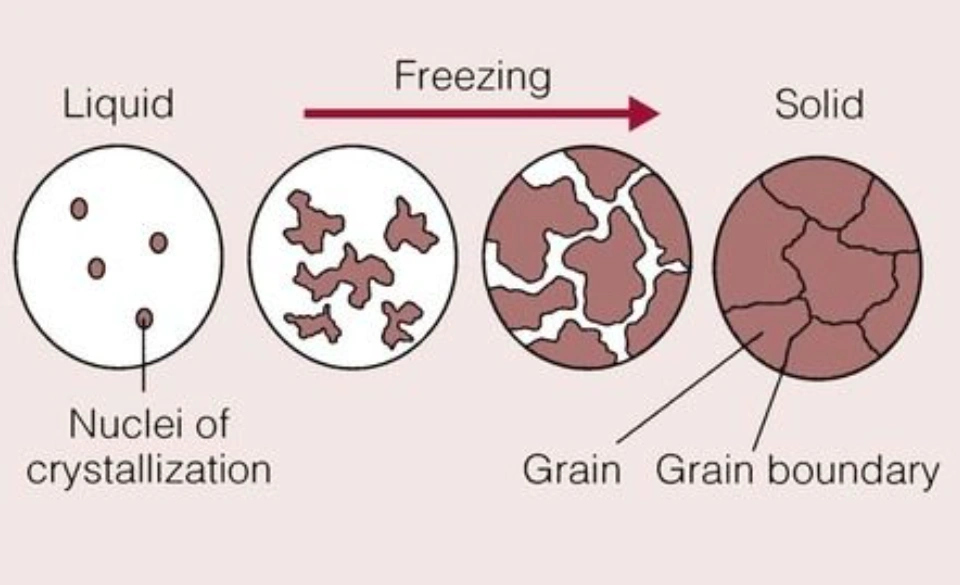
Metal solidification
This process is natural to metals and is affected by metal alloy components and the cooling rate. Therefore, you can expect every raw metal to have a metal grain structure, albeit different from another metal.
What Causes Grain Growth in Steel?
Regarding grain growth in steel, the trigger is heat, which is administered to the metal during forging, heat treatment, or any other process that increases the temperature.
Other factors that influence this grain growth process in steel include chemical composition and cooling rate.
Heating Steel
When heat is applied to steel, the atoms in the metal gain thermal energy, prompting a larger size of grains to eliminate the smaller ones.
Apart from the amount of heat, the holding time for the heat is equally influential. Larger grains are formed for longer holding times.
If the steel is held at a high temperature for a prolonged period, allowing it to change from ferrite to austenite, tiny grains can form.
Chemical Composition of Steel
The specific properties unique to a steel alloy can affect the form and size of grain growth in the metal. Aluminum, titanium, vanadium, and other alloying elements can significantly alter grain growth and characteristics.
These elements trigger the formation of carbides and nitrides in a phenomenon called Zener pinning, which helps bind grain boundaries.
Cooling Rate of Steel
The cooling rate can affect the type or size of grains formed in steel because it fundamentally controls phase transformation.
Rapid cooling, also known as quenching, triggers the material to change from the austenite phase to the martensitic phase. For slow cooling of steel, the material transforms to pearlite and ferrite, which have a coarser metal grain structure.
Try Prolean Now!
Why Is Grain So Important?
Grain, particularly grain direction, is crucial in the custom parts manufacturing from metals. While not fully appreciated, this element influences the appearance, performance, and durability of parts, especially those of high-performance.
Grain direction in metal is a critical consideration in custom parts manufacturing, as it affects the mechanical properties. It is a major determinant of whether a sheet metal part will perform as expected or fail catastrophically when subjected to real-world conditions.
It encompasses the crystal alignment arising from the metal’s manufacturing process. Whether for stainless steel grain direction or any other metal, the alignment determines the metal’s strength, ductility, and related properties.
Grain and Bend Quality
When metal is bent, the grain relative to the bend direction is important. The strongest bend is when it is done against the grain. Longitudinal bending can easily prompt grain separation at the boundaries.
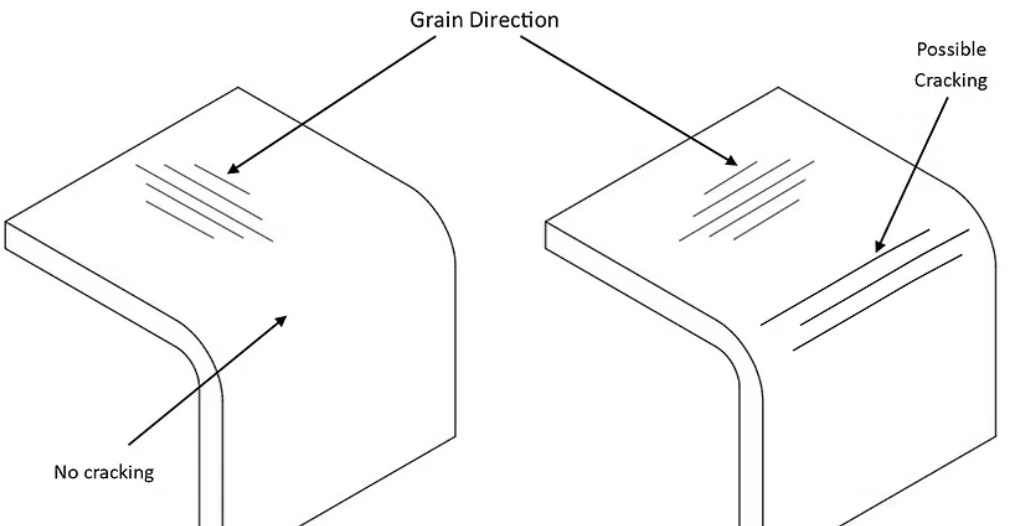
Grain effect on bend quality
Sheet metal fabrication service providers should optimize the relationship between bends and grain direction. If some parts are being bent longitudinally and others axially, dimensions and angles may vary significantly across different batches.
A reliable way to avoid this problem is to use uniform cutting and bending, and marking the grain direction on the parts. This way, a consistent quality of metal-fabricated parts can be guaranteed.
Effects of Metal Grain Size
Typically, metals with smaller grains are stronger than those with larger grains. They also have better mechanical properties. The smaller grains present more obstacles to dislocations, which are crystal lattice defects that compromise the grain structure.
As the diagram below shows, the effect is significant, hence the need for designers and fabricators to focus on this element.
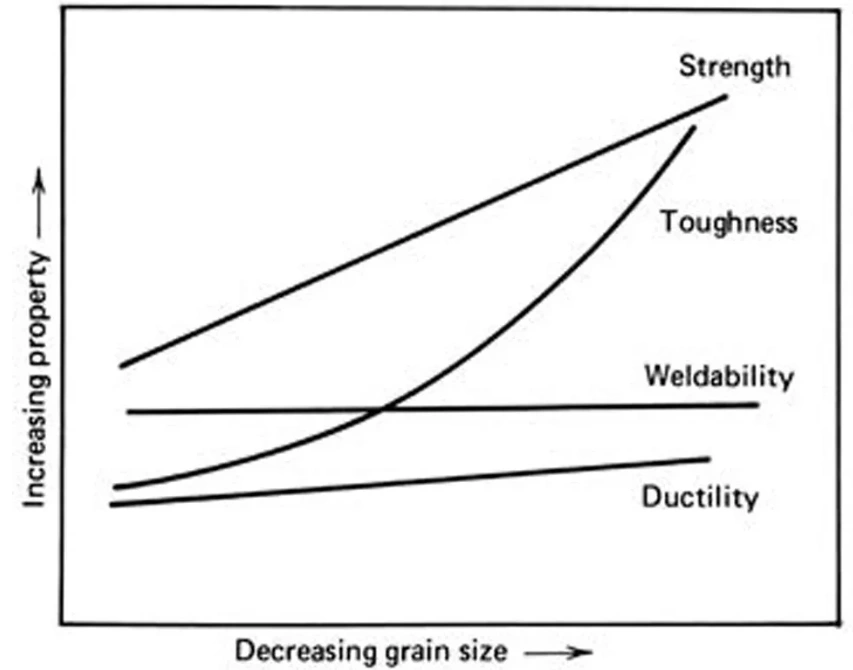
Grain size effect
The effects of the size of grains on the strength, for instance, can be explained by the Hall-Petch relationship, which says that the square root of the grain size and a material’s strength are inversely proportional.
The relationship is shown in the equation below,

Where:
Sy = yield strength;
Si = lattice resistance to dislocation movement;
ky = dislocation locking;
d = grain diameter.
The Effects of Metal Grain Structure
The orientation, shape, and boundary properties of the grains define grain structure. Each of these properties affects how a metal behaves during sheet metal fabrication services and its subsequent use, particularly in terms of mechanical properties such as fatigue resistance, ductility, and strength.
Fatigue Resistance
The metal grain structure affects fatigue resistance, which is the systematic structural damage caused by cyclic loading.
Ductility
Ductility and grain size are related. Metals with smaller grains are strong but have less ductility. Larger grains make the metal weaker, but more ductile.
Strength
As explained in the Hall-Petch relationship, smaller grains make a metal stronger. These grains have more boundaries, which slow down the dislocation movement and minimize deformation.
Different Methods to Optimize Metal Grain Structure in Fabrication
The main fabrication strategies for optimizing metal grain structure are graining, mechanical working, and heat treatment. ProleanTech appreciates and uses these grain refinement methods to manufacture optimal parts for aerospace, structural, automotive, and other industries.
-
Graining: Definition and Importance in Metal Fabrication
The graining or grain process involves removing the top layer from sheet metal blanks to create a uniform surface finish. The sheet metal blank is typically passed through a sanding belt or any other metal-graining tool.
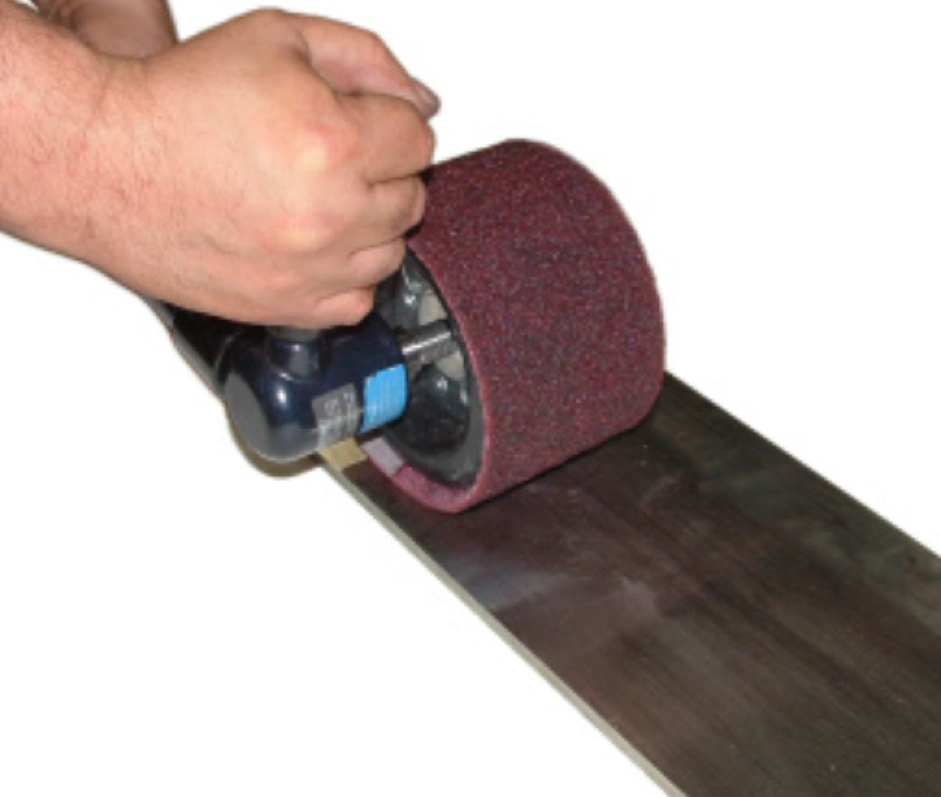
Graining
This surface finishing technique is important because it removes imperfections on the surface, such as weld discoloration, tool marks, scratches, and other factory defects.
Components should be grained after cutting, forming, and other primary fabrication processes for architectural, automotive, aerospace, and other industrial applications.
-
Mechanical Working
Mechanical working, as an external source of force on a metal, can affect the ductility, hardness, elasticity, and other mechanical properties. Therefore, forming methods such as extrusion, forging, and rolling can be employed to improve grain structure.
Extrusion: It is one of the most effective methods in grain processing, as it not only refines grains but also eliminates defects and improves the mechanical properties. When the grain structure is aligned, the metal becomes tougher and stronger.
Forging: This method eliminates defects and produces a uniform grain structure, resulting in higher strength.
Rolling:
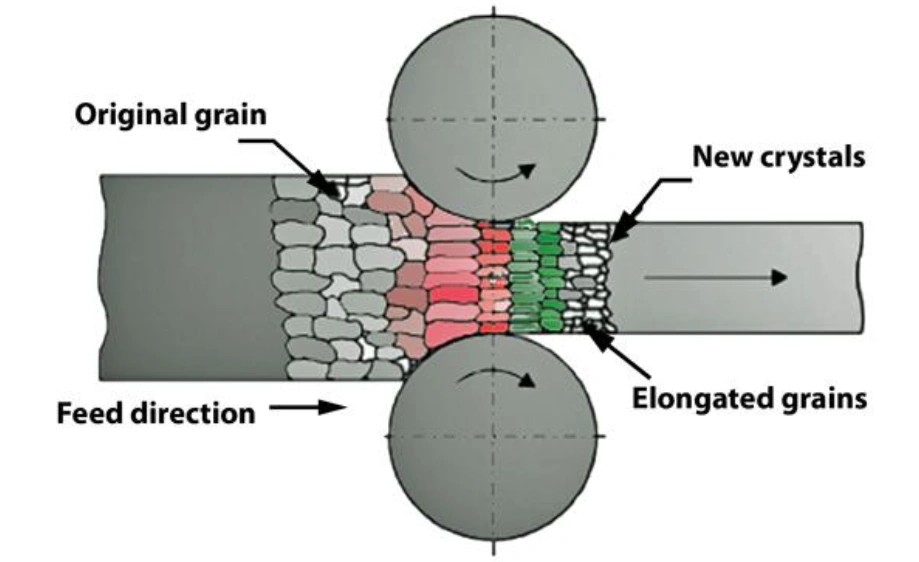
Metal rolling
Like extrusion, rolling aligns the grains in metal in one direction, thereby enhancing mechanical properties.
-
Heat Treatment
Heat treatment, which is the controlled heating and cooling of a metal, is an effective grain optimization strategy. This is because it influences grain size and structure.
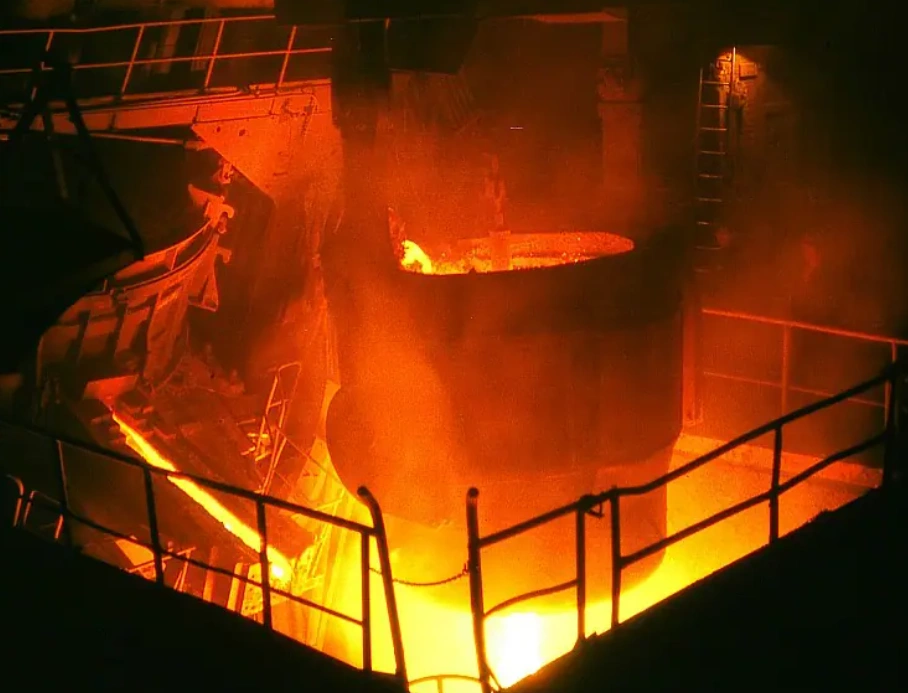
Heat treatment
Therefore, one can apply this grain refinement process to achieve the desired metal properties. For instance, it is possible to eliminate dislocations and imperfections by heating a metal above the recrystallization temperature.
Request a quote and see how your persistent metal grain issues in fabrication projects can be handled professionally.
Try Prolean Now!
In Conclusion
Grains can have a significant effect on a metal’s properties, including those critical in metal fabrication. The metal’s grain structure is paramount because it affects even the usability of the finished item in the field.
An experienced sheet metal fabrication company is aware of these issues. It takes the right measures during the manufacturing process, including proper selection of materials and applying remedies such as grain refinement.
With ProleanTech, grain in metal is well managed for sturdy, durable, fatigue-resistant, and corrosion-resistant parts.
If you have more questions about how to optimize graining in your upcoming fabrication project, contact us, and a fabrication expert will assist you.
0 Comments