
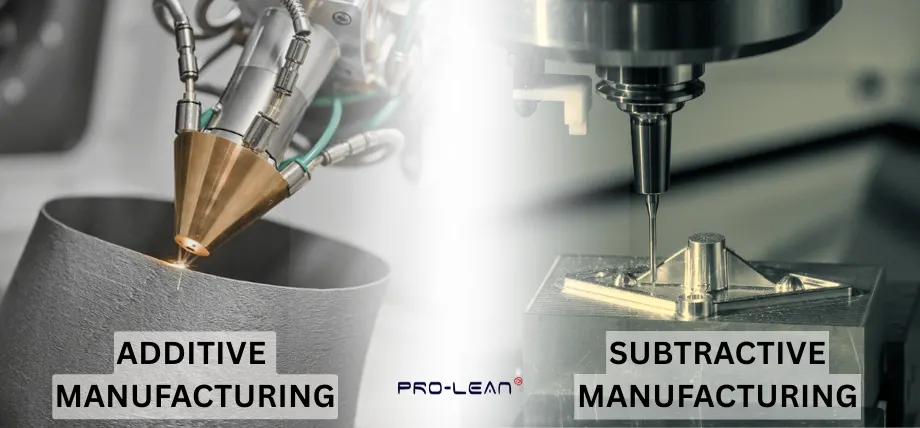
Additive vs subtractive methods are used by engineers in aerospace, automotive, and medical manufacturing. Selecting the best can reduce your cost and lead time.
Additive manufacturing and subtractive manufacturing are two processes that lie within the wide range of modern manufacturing. Both of these have different methods and advantages, employing two distinct approaches.
After reading this article, you’ll have a better understanding of additive and subtractive manufacturing processes, their associated costs, and key details, while also diving into the integration of hybrid manufacturing with additive and subtractive technologies.
What is Subtractive Manufacturing?
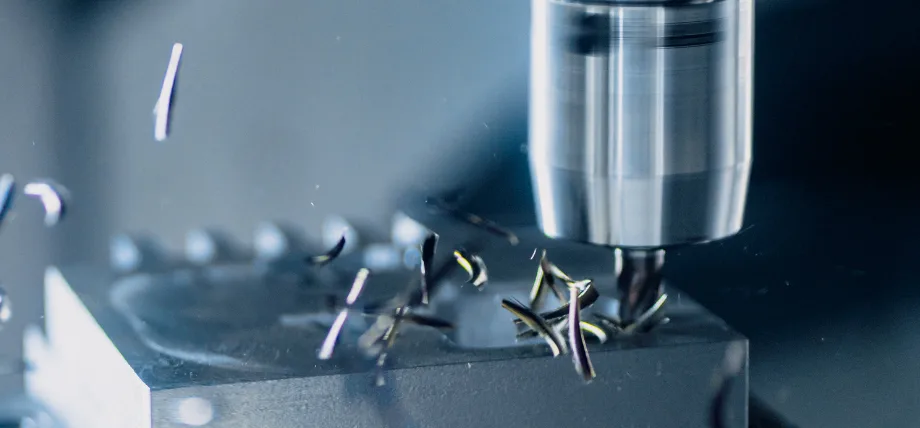
Subtractive machining is shown by material removal
Definition: Subtractive manufacturing is a fabrication method that creates parts by removing material from a solid workpiece using controlled cutting, drilling, milling, grinding, and boring operations, as opposed to additive manufacturing which builds parts layer by layer.
Also Known As: Subtractive manufacturing is also called machining, CNC machining, or conventional manufacturing.
Key Characteristics
Subtractive manufacturing has three defining features:
- Material Removal: Starts with excess material and removes what’s not needed
- Precision Control: Achieves tolerances down to ±0.001″ (0.025mm)
- Subtractive Processes: Uses cutting tools, lasers, water jets, or electrical discharge to remove material
Manual vs. CNC Subtractive Manufacturing
Manual Machining: Traditional subtractive manufacturing relies on skilled machinists operating lathes, mills, and drill presses by hand, adjusting settings based on experience and measurements.
CNC Machining: Modern subtractive manufacturing uses Computer Numerical Control (CNC) systems that automate the entire process:
- CAD Design: Engineers create 3D models in CAD software
- CAM Programming: CAM software converts designs into machine-readable G-code
- Toolpath Generation: Software calculates optimal cutting paths, speeds, and feeds
- Automated Execution: CNC machines execute the program with minimal human intervention
- Quality Control: Parts are inspected against the original CAD model
This computer-controlled approach delivers repeatability, consistency, and complexity impossible with manual machining.
How the Subtractive Manufacturing Process Works
Step 1: Design Engineers create a 3D CAD model defining the part’s geometry, dimensions, and tolerances.
Step 2: Programming CAM software analyzes the model and generates CNC code (G-code and M-code) specifying:
- Tool selection and changes
- Spindle speeds (RPM)
- Feed rates (inches/minute)
- Cutting depths and passes
- Coolant activation
Step 3: Setup The workpiece is secured in the machine using fixtures, vises, or vacuum tables. Cutting tools are loaded into the tool magazine.
Step 4: Machining The CNC machine executes the program, systematically removing material through various operations:
- Roughing passes remove bulk material quickly
- Finishing passes achieve final dimensions and surface quality
- Tool changes happen automatically for different features
Step 5: Post-Processing Parts may undergo secondary operations like deburring, polishing, heat treatment, or coating.
What are the Common Subtractive Manufacturing Processes?
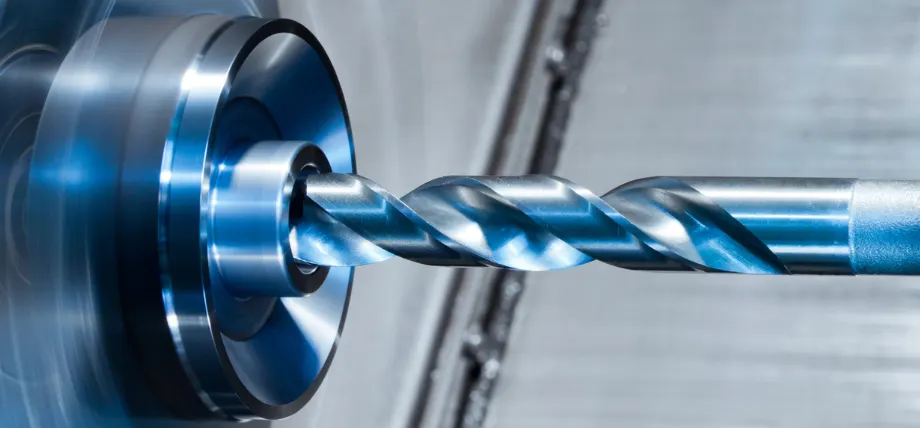
CNC drilling on a turning machine
The common subtractive processes include various methods that serve different applications. The main types of subtractive methods include:
| Process | How It Works | Materials | Typical Applications |
|---|---|---|---|
| CNC Milling | Uses rotating multi-point cutting tools to remove material from a workpiece, creating complex 3D geometries with high precision | Hard thermoplastics, aluminum, steel, titanium, brass (industrial CNC machines) | Aerospace components, automotive parts, molds, prototypes |
| CNC Turning | Rotates the workpiece while a stationary cutting tool removes material, producing cylindrical parts with tight tolerances | Soft and hard metals, engineering plastics, wood | Shafts, pins, bushings, threaded components |
| CNC Drilling | Creates precise holes in workpieces using drill bits, with depth and position controlled by CNC programming | Metals, plastics, composites, wood | Circuit boards, engine blocks, structural components |
| CNC Boring | Enlarges existing holes to precise diameters using a single-point cutting tool for improved accuracy and surface finish | Hard metals, cast iron, steel alloys | Engine cylinders, hydraulic cylinders, precision housings |
| CNC Reaming | Finishes pre-drilled holes to exact dimensions with superior surface quality using multi-flute reaming tools | Hardened steel, stainless steel, aluminum | Precision bearings, valve bodies, aerospace fittings |
| Grinding | Uses an abrasive wheel rotating at high speed to remove small amounts of material, achieving tight tolerances and excellent surface finishes | Hardened metals, ceramics, glass, carbide | Tool and die finishing, precision gears, bearing races |
| Electrical Discharge Machining (EDM) | Uses electrical sparks to vaporize metal, forming intricate shapes without physical tool contact, ideal for hard materials | Hard metals, tool steel, titanium, tungsten carbide | Complex molds, dies, medical instruments, aerospace parts |
| Laser Cutting | Focuses a high-powered laser beam to melt, burn, or vaporize material along programmed paths with extreme precision | Thermoplastics, wood, acrylic, textiles, sheet metal (industrial laser systems) | Signage, decorative parts, gaskets, sheet metal fabrication |
| Water Jet Cutting | Propels high-pressure water mixed with abrasive particles to cut through materials without heat-affected zones | Plastics, rubber, soft and hard metals, stone, glass, composites, foam | Gaskets, food cutting, stone countertops, intricate metal parts |
The common subtractive processes include turning, drilling, and milling, which are executed using industrial machines or desktop machines to large equipment in machine shops.
Subtractive manufacturing tools are available today in various forms, which cater to both small-scale and large-scale production needs.
Materials in Subtractive Manufacturing
Subtractive manufacturing offers a wide range of material selection, giving versatility to the process. Some of the most commonly used materials are listed below:
- Metals: Metals are the most commonly used material in subtractive manufacturing due to their outstanding properties, which are ideal for making precision components to be used in the aerospace and automotive industries.
- Plastics: Nylon and ABS plastics are used to make precision components that are used in various applications that need to be lightweight.
- Composites: polymer composites, such as carbon fiber, can be processed using special cutting tools to make high-performance parts.
- Wood and Ceramics: These materials are machined only for specific applications, such as furniture or custom components.
The ability to machine diverse materials makes subtractive manufacturing a preferred choice for industries requiring high-precision parts. We machine 40+ material grades with guaranteed tolerances at Proleantech. Upload your design for a free material and process recommendation.
Try Prolean Now!
What is Additive Manufacturing?
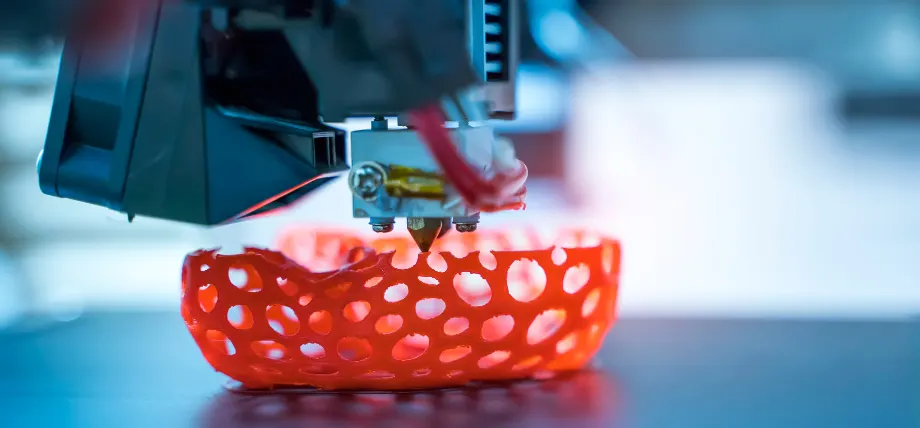
3D printing
Additive manufacturing (AM) is a layer-by-layer fabrication process that builds physical parts directly from a CAD file, depositing, fusing, or curing material only where the design requires it. Unlike CNC subtractive machining, which cuts away material from a solid block, AM adds material with near-zero waste, making it the preferred method for rapid prototyping, low-volume production, and components with complex internal geometries.
The most common additive manufacturing process is 3D printing, which is used to produce precise components with complex geometries.
Some common additive manufacturing processes include techniques such as fused deposition modeling (FDM), stereolithography (SLA), and selective laser sintering (SLS), each having different applications. Additive manufacturing technologies have made prototyping and small-batch production easier and are readily available due to highly versatile 3D printing.
Additive Manufacturing Proceesses
Additive manufacturing is a highly versatile process, which has various manufacturing techniques with unique capabilities:
| AM Process | How It Works | Compatible Materials | Best For | Typical Tolerance |
|---|---|---|---|---|
| Fused Deposition Modeling (FDM) | Extrudes thermoplastic filament through a heated nozzle layer by layer | PLA, ABS, PETG, Nylon, PEEK, TPU | Functional prototypes, jigs, fixtures, low-cost end-use parts | ±0.5 mm |
| Stereolithography (SLA) | UV laser cures liquid photopolymer resin layer by layer | Standard resin, engineering resin, dental resin, castable wax resin | High-detail prototypes, dental models, investment casting patterns | ±0.1 mm |
| Selective Laser Sintering (SLS) | CO₂ laser sinters polymer powder — no support structures required | PA12 Nylon, PA11, TPU, Glass-filled Nylon | Complex geometries, functional assemblies, short-run production | ±0.3 mm |
| Direct Metal Laser Sintering (DMLS) | High-power fiber laser fuses metal powder to produce fully dense parts | Ti6Al4V, 316L Stainless Steel, AlSi10Mg, Inconel 718, CoCr | Aerospace brackets, medical implants, tooling inserts, high-load structural parts | ±0.1 mm |
| Multi Jet Fusion (MJF) | Infrared energy fuses nylon powder with binder and detailing agents | PA12, PA11, TPU | High-volume polymer production, isotropic part strength, fine surface detail | ±0.3 mm |
| Binder Jetting | Liquid binder is jetted onto metal or sand powder layer by layer | Stainless steel, Inconel, full-color gypsum, silica sand | High-throughput metal parts, sand casting molds, full-color models | ±0.2 mm |
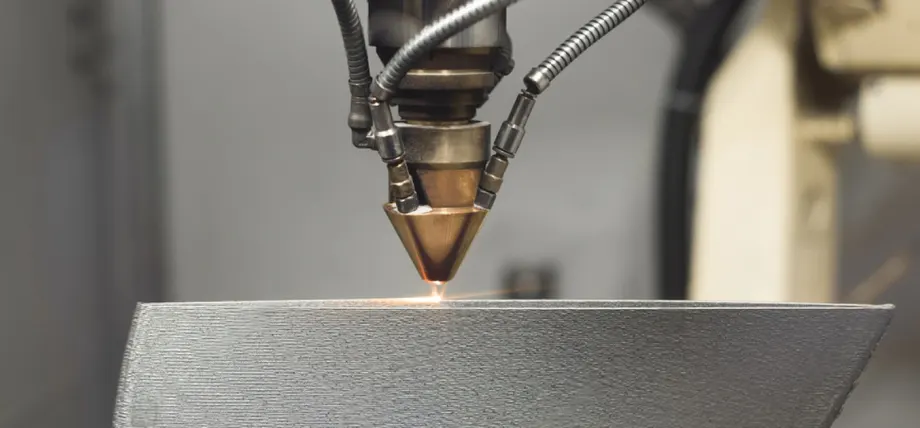
| Directed Energy Deposition (DED) | Focused laser melts metal wire or powder as it is deposited | Titanium, Inconel, stainless steel, copper alloys | Component repair, large-format metal builds, hybrid AM+CNC | ±0.5 mm |
These additive technologies are supported by easy-to-use desktop additive and subtractive manufacturing systems, as well as large industrial machines, making additive manufacturing accessible across various industries. We offer 3D printing services for industrial-grade FDM, SLA, and SLS printing and deliver parts in 3–5 days.
What Materials Can Be Used in Additive Manufacturing?
Additive manufacturing supports a wide range of materials, enabling flexibility in design and application. Common materials include:
Plastics: Plastics are the most commonly used material for additive manufacturing, due to their cost-effectiveness, seamless printing process, and quality.
Metals: Metals are tough and durable. This makes them useful in a wide range of applications. Materials like titanium and alloys are often machined using CNC machines.
DMLS Additive process is used to manufacture high-strength precision components used in heavy industries
Composites: Reinforced polymers such as carbon fiber and glass-filled materials are lightweight and exhibit high performance, which is ideal for the automotive industry.
Resins: SLA is a resin curing process that has high detail and a smooth surface finish, ideal for jewelry.
Ceramics and Biocompatible Materials: These materials have a very niche application, such as implants, and have a lot of variation, so additive manufacturing, such as 3D printing, is ideal for biocompatibility.
Subtractive and Additive Manufacturing: Key Differences
Additive and subtractive manufacturing differ fundamentally in their approach to material manipulation, impacting their applications and outcomes.
| Aspect | Subtractive Manufacturing | Additive Manufacturing |
|---|---|---|
| Process | Removes material from a solid workpiece via cutting tools | Builds parts layer by layer by adding material |
| Equipment | Uses CNC machines like mills, lathes, drills, and turning centers | Uses 3D printers guided by CAD software (FDM, SLA, SLS, etc.) |
| Equipment Costs | Small CNC machines for workshops start around $2,000. Advanced workshop tools range from $10,000-$50,000 depending on axes, features, part size, and tooling needed. Industrial systems cost $50,000-$500,000+ | Professional desktop 3D printers start at $3,500 for plastics. Industrial SLA/SLS systems range from $15,000-$100,000. Large-scale industrial metal printers start from $400,000+ |
| Material Efficiency | Generates material waste as chips and scraps are removed | Minimizes waste by using only the material needed for the part |
| Materials | Metals (aluminum, steel, titanium, brass), hard thermoplastics, thermoset plastics, wood, foam, composites | Thermoplastics (PLA, ABS, nylon), photopolymer resins, metal powders, ceramics, composites |
| Geometric Complexity | Limited to geometries accessible by cutting tools; difficult to create internal channels or lattice structures | Excels at complex geometries, organic shapes, internal channels, lattice structures, and assemblies as single parts |
| Precision and Finish | Achieves high precision (±0.001″), tight tolerances, and excellent surface finishes directly from machining | Typical precision ±0.1-0.5mm; may require post-processing (sanding, vapor smoothing, machining) for fine surface finishes |
| Production Volume | Cost-effective and rapid for medium to high-volume production runs once tooling is set up | Ideal for low-volume production, customized parts, on-demand manufacturing, and prototypes |
| Lead Time | Longer setup time for tooling and fixturing, but faster per-part production at scale | Minimal setup time; print time depends on part size and complexity; better for rapid prototyping |
| Part Size | Can produce very large parts with industrial machines (several meters); size limited by machine bed | Limited by printer build volume; typically 200-400mm for desktop, up to 1000mm+ for industrial systems |
| Strength and Properties | Parts have full material density and strength; no layer adhesion concerns; excellent mechanical properties | Strength depends on layer adhesion; may have anisotropic properties (weaker between layers); improving with advanced materials |
| Training Requirements | Small CNC machines require moderate training for software, job setup, maintenance, operation, and finishing. Industrial subtractive systems require dedicated staff and extensive training | Desktop 3D printers are practically plug-and-play with minor training on build setup, maintenance, and finishing. Industrial additive systems require dedicated staff and extensive training |
| Facility Requirements | Small CNC machines suitable for workshops; industrial systems require larger dedicated space with proper ventilation and power | Desktop machines suitable for office and benchtop use in moderate space; industrial 3D printers often require dedicated space or room with HVAC control for temperature stability |
| Ancillary Equipment | Various tooling required; advanced systems automate processes like tool changing, chip clearing and handling, coolant management | Tools and systems for cleaning, washing, post-curing, finishing, and support removal depending on the process |
| Surface Finish | Excellent as-machined surface finish; can achieve Ra 0.4-3.2 µm (16-125 µin) | Visible layer lines; typically Ra 6-25 µm; requires post-processing for smooth finishes |
| Design Flexibility | Requires consideration of tool access, draft angles, and machining direction | High design freedom; minimal geometric constraints; ideal for organic shapes |
| Material Waste | 40-90% material removal typical; chips can often be recycled | 5-10% waste (supports); powder can be reused in some processes |
| Best Applications | High-precision parts, production runs, metal components, tight tolerances, excellent surface finish | Complex prototypes, custom parts, low-volume production, rapid iteration, geometric complexity |
Process and Methodology
Subtractive manufacturing involves material removal processes, such as milling, turning, and drilling, which are performed using CNC machining.
Subtractive manufacturing is a highly precise and detailed process. It’s guided using computer numerical control and can process metal, plastic, and composite workpieces.
Additive manufacturing is the opposite of subtractive manufacturing. Additive processes work by slowly printing material layer by layer using 3D printers.
Equipment and Setup
Subtractive processes utilize a 5-axis CNC mill and machine tools to precisely machine excess material, forming the workpiece. Reducing cycle time in CNC improves the overall efficiency of the setup.
Additive manufacturing utilizes 3D printers paired with CAD models to create the workpiece.
The 3D printers can range from Desktop machines to large industrial equipment that can produce parts at a large scale with high efficiency.
Material and Waste
Subtractive manufacturing removes material and creates waste, which can increase the cost of precious metal parts. On the other hand, Additive manufacturing prints the material through a tip, making it more efficient.
3D printing does require support for the components to maintain proper structure and keep the print secure
Design Flexibility
Additive manufacturing is versatile and can create complex geometries with ease. It is supported by CAD, which enables it to create complex designs such as hollow components, which is not possible using subtractive methods.
Subtractive manufacturing is limited to specialized tools and tool and material machining capabilities.
Try Prolean Now!
What are the Advantages of Subtractive Manufacturing?
Subtractive manufacturing offers several advantages when compared to other machining processes. Some of which are mentioned below:
- High Precision and Tolerances: Subtractive CNC processes can achieve tight tolerances with consistent finishes using 5-axis machining,
- Material Versatility: Subtractive manufacturing can process a wide range of materials, ranging from metals and plastics, composites, catering to a multitude of applications.
- Established Infrastructure: Subtractive manufacturing tools are available in most machine shops, supported by decades of technological development and skilled labor.
- Durability: Parts produced through subtractive processes are often monolithic, offering superior strength compared to some 3D printed components.
What are the Advantages of Additive Manufacturing?
Additive manufacturing offers unique benefits that complement subtractive methods:
- Complex Geometries: Additive processes enable the creation of intricate designs, including internal structures and lattice patterns, without the need for specialized tooling.
- Rapid Prototyping: The 3D printing process is fast and efficient, enabling quick refining and development, which can identify any flaws before mass production.
- Material Efficiency: Additive manufacturing does not produce excessive waste material and only utilizes the material needed to produce the workpiece. It does not produce waste like subtractive material.
- Customization: Additive manufacturing is highly customizable, so producing low-volume and personalized products is easy.
Price of Additive Manufacturing vs. Subtractive Manufacturing
The manufacturing cost of additive and subtractive processes can vary depending on the material and machine type. The table below compares key cost factors:
| Cost Factor | Subtractive Manufacturing | Additive Manufacturing |
| Equipment Costs | High initial cost in CNC machines, mills, and lathes. | Desktop 3D printers (cheap) to expensive industrial machines; lower maintenance. |
| Material Costs | Higher due to waste from material removal. | Lower material waste; metal powders can be expensive. |
| Labor Costs | Requires a skilled CNC machinist | Lower labor costs for desktop systems |
| Production Volume | Cost-effective for high-volume machining processes. | More economical for low-volume or custom parts |
| Tooling and Setup | Requires custom fixtures and tools, increasing cost | Minimal tooling costs |
| Post-Processing | Minimal post-processing | May require significant post-processing |
Subtractive manufacturing costs more due to the need for CNC machines and cutting tools. Apart from that, it produces waste, which requires specialized tools, increasing the costs exponentially when working with metals. However, it is cost-effective for high-volume production.
In the case of Additive manufacturing, it does not produce material waste but does have a higher material cost due to specialized polymer and metal powders.
It is affordable and best suited for small-scale batch production of components with complex geometries. Ready to start manufacturing? Get an instant quote for your project needs
Choosing Between Additive and Subtractive Manufacturing
Both processes produce highly detailed workpieces that are utilized in various applications across different industries.
Choosing between additive and subtractive manufacturing can depend on the project and material properties
In some cases, combining both additive and subtractive manufacturing to make a hybrid process gives the best, but this process requires thorough project evaluation and material behaviour assessment results.
Design and Geometric Complexity
Producing complex Geometries, such as internal lattices and hollow components, can easily be made using additive manufacturing. These geometries are impossible to make using subtractive methods.
Subtractive manufacturing can produce simple geometries with high precision, but cannot create internal geometries due to accessibility issues, since the tool cannot read inside the workpiece.
Material Requirements
Subtractive manufacturing is versatile and can process a wide range of materials with high precision and efficiency, which includes metals, plastics, and composites various processes such as milling and CNC machining.
Additive manufacturing works with plastic and polymer composite materials, but may have low strength in some 3D printed parts when compared to machined components.
Precision and Surface Finish
Subtractive CNC processes can produce products with tight tolerances and surface finishes, which is ideal for the aerospace and medical industries.
Additive manufacturing does produce a smooth finish but requires grinding and milling to polish the surface and achieve tight tolerances. This additional processing can increase the cost of the workpiece.
Production Volume and Scalability
Both processes are suited to different scales of production. Subtractive manufacturing is cheaper at a high volume and utilizes rapid machining processes for efficiency.
Additive manufacturing is better suited to small-scale batches that require customization and complex geometries. This process does not require expensive tooling, but the per-unit cost is higher, so it is only recommended for low-volume production.
Lead Time and Prototyping
Additive manufacturing significantly reduces lead times for prototyping, allowing rapid iteration and design validation without the need for custom fixtures.
Subtractive manufacturing, while capable of producing prototypes, often involves longer setup times due to tooling and programming requirements.
Cost Considerations
The cost-effectiveness of each manufacturing method depends on the project scope. Subtractive manufacturing may be more economical for large production runs of standard parts, while additive manufacturing is advantageous for small batches or complex designs that minimize tooling costs.
Environmental Impact
When discussing the environmental impact of both processes, Additive manufacturing is more efficient and produces less material waste, leading to a smaller environmental footprint but consumes more energy per part produced.
Subtractive manufacturing is based on removing material from a solid block to form a component. This results in a large amount of waste material, especially when working with metals.
Manufacturers need to consider all these factors to assess whether additive, subtractive, or hybrid manufacturing is the best choice for your project.
In general, additive manufacturing is a better option for low-volume complex production cost and subtractive manufacturing is ideal for high-volume production of precision metal parts.
Hybrid Manufacturing: Combining Additive and Subtractive Processes
The combination of additive and subtractive technologies to form a single seamless process is known as hybrid technology.
The hybrid process uses a 3D printer to print parts with complex designs and internal structures, which is then refined by CNC machining to achieve precise tolerances and surface finishes.
This process is also known as additive and subtractive machining and is done using modern manufacturing systems that combine additive and subtractive manufacturing tools.
What is Hybrid Manufacturing?
Hybrid manufacturing is based on the principle of incorporating both additive fabrication and subtractive CNC operations. A part 3D printed part may be finished on a CNC mill to achieve a tight tolerance and quality finish.
The combination of these processes reduces material waste and allows you to make parts with complex design.
Hybrid manufacturing has become easy with readily available products that range from desktop machines to large industrial equipment.
Can hybrid manufacturing be used for metals and plastics?
Yes, hybrid manufacturing works with both metals and plastics, combining 3D printing with CNC machining to process a wide range of materials.
Metals Used in Hybrid Manufacturing:
Hybrid manufacturing processes common metals including aluminum alloys, stainless steel (304, 316L), titanium (Ti-6Al-4V), tool steels, Inconel, and cobalt-chrome. The workflow typically involves metal 3D printing via powder bed fusion or directed energy deposition, followed by CNC machining to achieve tolerances of ±0.001 inches and surface finishes of Ra 0.8-3.2 µm.
Plastics Used in Hybrid Manufacturing:
For plastics, hybrid systems process engineering thermoplastics including ABS, nylon (PA12), PEEK, Ultem, polycarbonate, and carbon fiber composites. Parts are first 3D printed using FDM or SLS, then CNC machined for dimensional accuracy, threaded features, and smooth mating surfaces.
Key Advantages by Material Type:
For metals, hybrid manufacturing reduces material waste by 60-80% compared to traditional machining from solid billets while creating complex internal features like conformal cooling channels. For plastics, the process combines organic 3D-printed geometries with precision-machined mounting features and tight-tolerance interfaces.
Applications:
Metal hybrid manufacturing is used for aerospace turbine components, medical implants, tooling with conformal cooling, and automotive performance parts. Plastic hybrid manufacturing serves functional prototyping, custom end-use parts, jigs and fixtures, and low-volume production components.
Both metals and plastics benefit from hybrid manufacturing’s ability to combine the geometric freedom of additive processes with the precision and surface quality of subtractive machining.
Applications of Additive and Subtractive Manufacturing
Additive and subtractive manufacturing serve diverse industries, each leveraging their unique capabilities:
- Aerospace: Subtractive manufacturing is used for precision metal components, while additive manufacturing produces lightweight, complex parts like fuel nozzles.
- Automotive: CNC machines create durable engine components, while 3D printers prototype custom parts and produce lightweight structures.
- Medical: Additive manufacturing enables custom implants and prosthetics, while subtractive processes ensure precision in surgical tools.
- Consumer Products: Desktop additive and subtractive manufacturing tools support rapid prototyping and small-batch production of consumer goods.
Conclusion
Additive and subtractive manufacturing are the most widely used modern manufacturing processes, which offer advantages for different applications across various industries.
Subtractive manufacturing has high precision and material versatility paired with an already established Industry, which is ideal for high volume production of metal and composite parts.
Additive manufacturing is ideal for creating complex geometries and custom parts with minimal waste. Hybrid manufacturing combines additive and subtractive processes to form an optimal approach to making parts from 3D model data.
The process of choosing between additive and subtractive manufacturing or integrating them in a hybrid process is a complicated process that requires assessment of material properties, design and production volume.
High Precision 3D Printing Services at Prolean-Tech
At Prolean-Tech, we provide subtractive machining, additive manufacturing, and 3D printing services for prototypes and production parts. Backed by decades of engineering experience, we help customers find practical manufacturing solutions at every stage of product development.
Request a free quote today and get manufacturing support from our engineering team.
0 Comments