
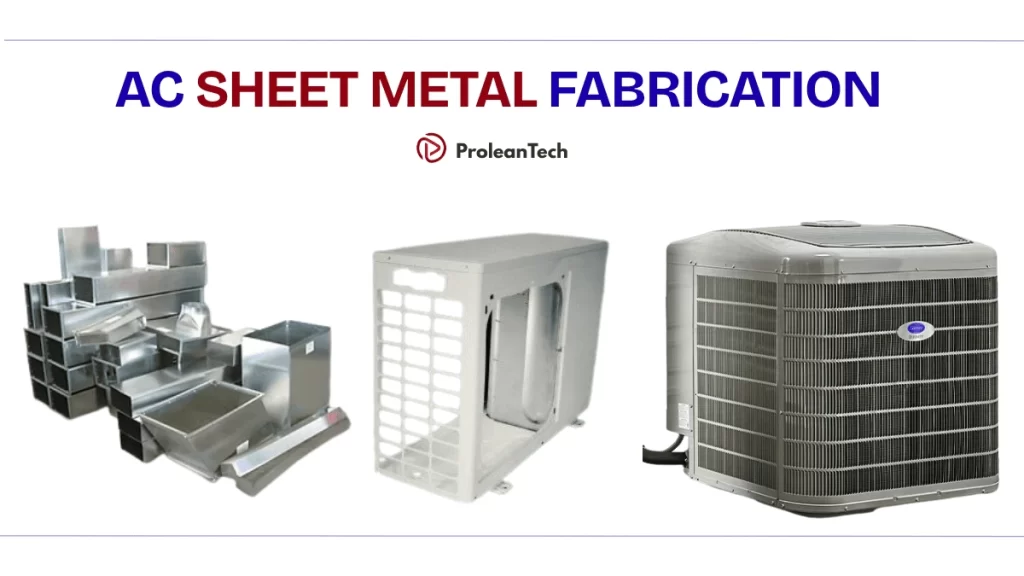
AC sheet metal fabrication
Whether residential or industrial air conditioning systems, Metal fabrication plays a crucial role in their manufacturing and installation. Sheets of steel, galvanized steel, aluminum, brass, and other suitable metals are converted into distinct AC components by cutting, forming, and joining processes.
In this article, you will get detailed insights into the AC fabrication process, AC Materials, advantages, and how you can fabricate high-quality components for AC systems.
Let’s get started.
Air Conditioning(AC) System and Sheet Metal Fabrication
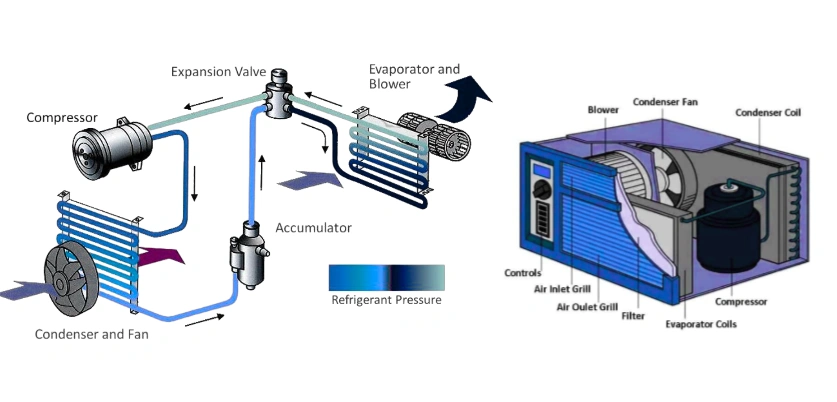
AC schematic diagram
Several AC components are manufactured by shaping raw metal sheets using metal fabrication techniques, such as cutting, punching, bending, stamping, welding, and riveting.
Fabrication provides an airtight seam, smooth internal surfaces, seamless transition, and flexible integration of insulations. All of these factors are essential for airflow efficiency and longevity of any AC or HVAC system.
Here is the list of AC components that you can fabricate from sheet metal.
- Air Ducts
- Mounting brackets
- Support frames
- Sheet metal AC covers
- AC brackets
- Access panels/service doors
- Lever arms
- Sheet metal AC contactor
- HVAC duct systems
- Duct fittings (elbows, tees, etc.)
- AC Enclosures
- AC vents
- Evaporator coil cabinet
- Condensate drain pans
Do you want to know which specific AC parts or accessories can be made with sheet metal? Contact us; we will review your design and identify the parts that are suitable for forming with the fabrication method. We have experience in the custom manufacturing of complete AC units and AC spare parts for global HVAC companies.
What Are the Different Steps of the AC Fabrication Process?
AC fabrication is a complex process that involves various steps, from creation of a manufacturable design to final assembly and post-processing.
Let’s break down the AC fabrication process into six different steps
AC Design
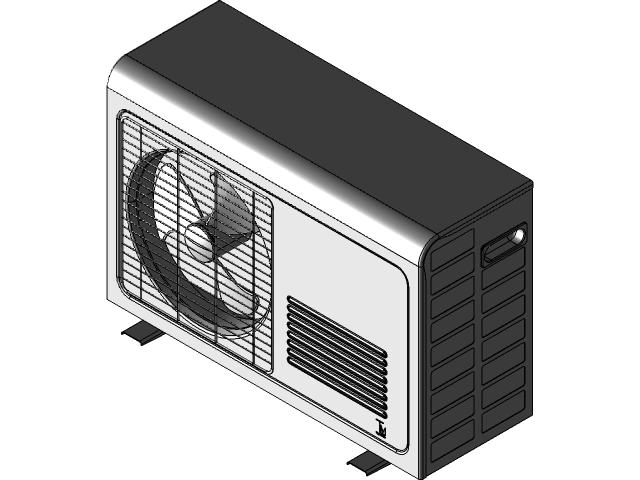
AC design
Like every other sheet metal fabrication process, AC fabrication begins with creating a detailed design. You must choose among portable, multi-split, and ducted AC systems and design accordingly. While designing, define the individual components, their dimensions, and the thermal characteristics of the system, as well as the cooling requirements, etc.
Once the design is ready, identify the metallic components that will be fabricated using the specified method.
Material Selection
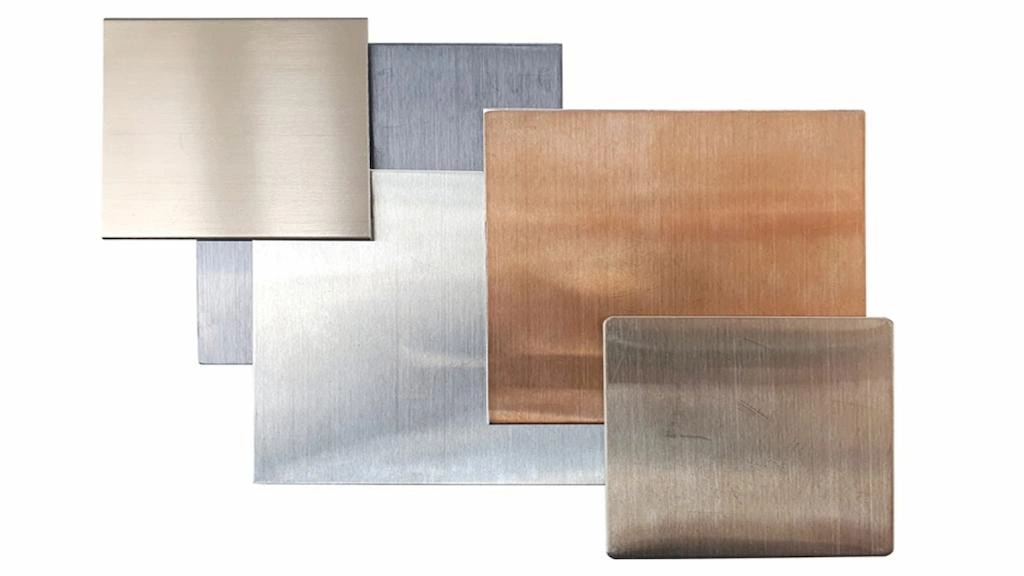
Different types of metal sheets
Select the sheet metal materials for AC fabrication based on end-user requirements, including strength, hardness, thermal conductivity, and cost implications. You should also analyze the performance needs of individual components while choosing suitable materials for them.
The standard material options are aluminum alloys, galvanized steel, and stainless steel. Meanwhile, certain components require materials such as brass, copper, or magnesium alloys.
Sheet Metal Cutting
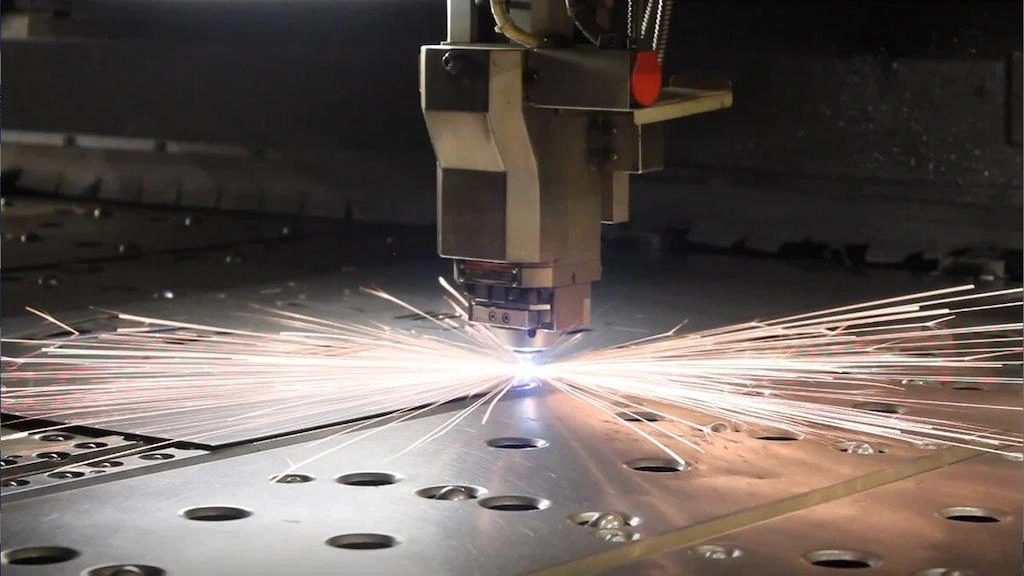
Laser cutting AC sheets
This step involves cutting the chosen material sheets into specific shapes and sizes. It is often considered a preparatory step for further forming operations. You can use shear cutting, laser cutting, plasma cutting, or metal punching.
For instance, laser cutting is preferred for metal AC sheet metal cover, enclosure, metal ductwork sections, and cabinet panels, whereas punching or piercing is ideal for sections having small holes or air channels.
Metal Forming Stage
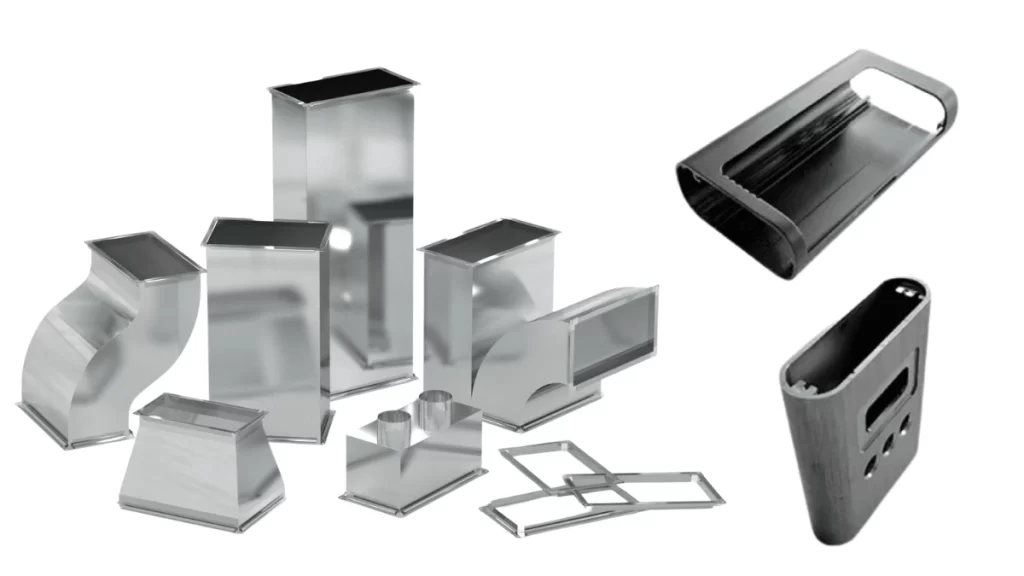
AC components forming
Next, the flat metal sheets are shaped into the desired shape of AC components using suitable metal forming techniques. With the use of suitable equipment and tooling, sheets are bent, rolled, stretched, deep-drawn, embossed, or stamped according to the initial design.
For instance, rectangular air ducts are formed by bending, whereas a combination of bending and rolling forms tapered transition parts.
Parts Joining/ AC Assembly
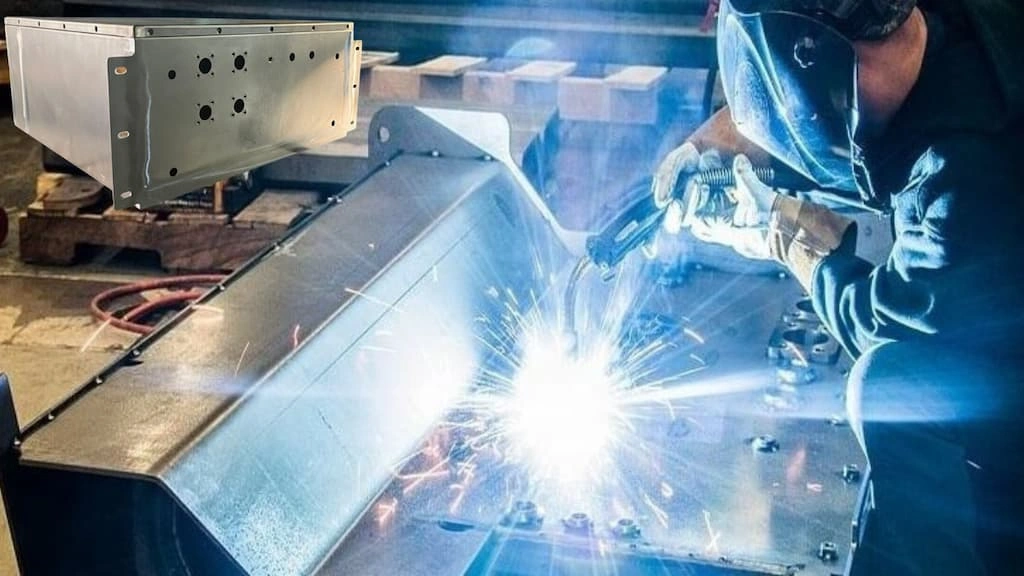
AC sheet metal welding
The individual AC components and other accessories are assembled to give the final shape. Welding techniques, such as MIG, TIG, Resistance seam welding, or brazing, are used for assembly based on the material type & joining location. Consequently, riveting is another reliable technique for AC assembly.
Surface Finishing of AC

Surface finishing of AC parts
Post-processing & finishing can be carried out after the fabrication of individual components and final assembly. Often, bead blasting, sanding, or other post-processing operations are carried out on each component. Meanwhile, painting or coating is applied after final assembly. Standard finishing for AC includes powder coating, adhesive painting, and polishing.
Materials for AC Sheet Metal
Material selection is not only crucial for formability, but it also impacts the performance and longevity of AC systems. Therefore, you must consider the desired strength, hardness, formability, weldability, and other related factors.
The list below outlines the AC materials and their key properties.
Aluminum
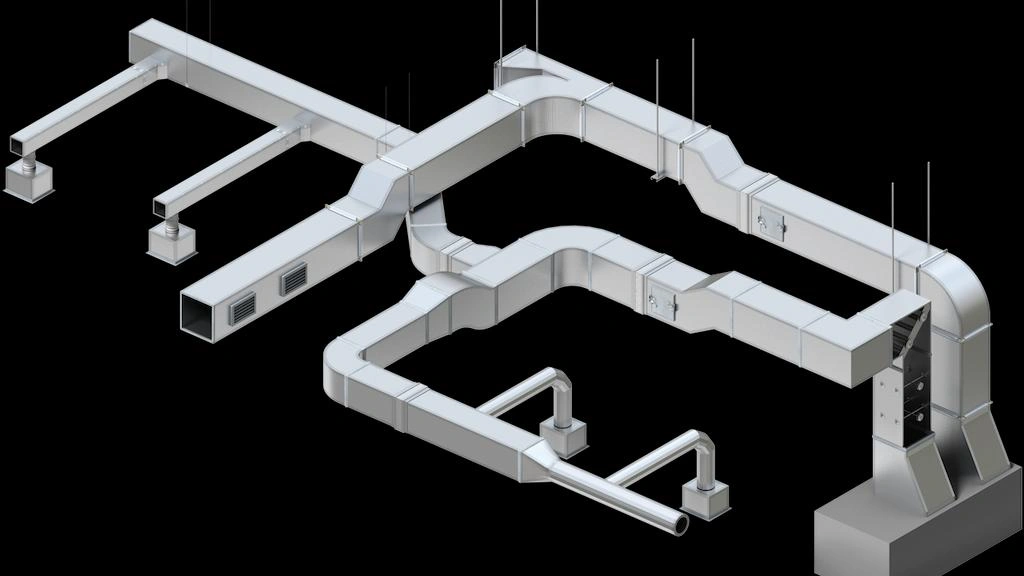
AC ductwork forming
Sheets of 3003,1100, 5052, 6062, and 6063 are primary choices of aluminum alloys in AC fabrication. They are known for high corrosion resistance, strength-to-weight ratio, durability, and formability.
Stainless Steel
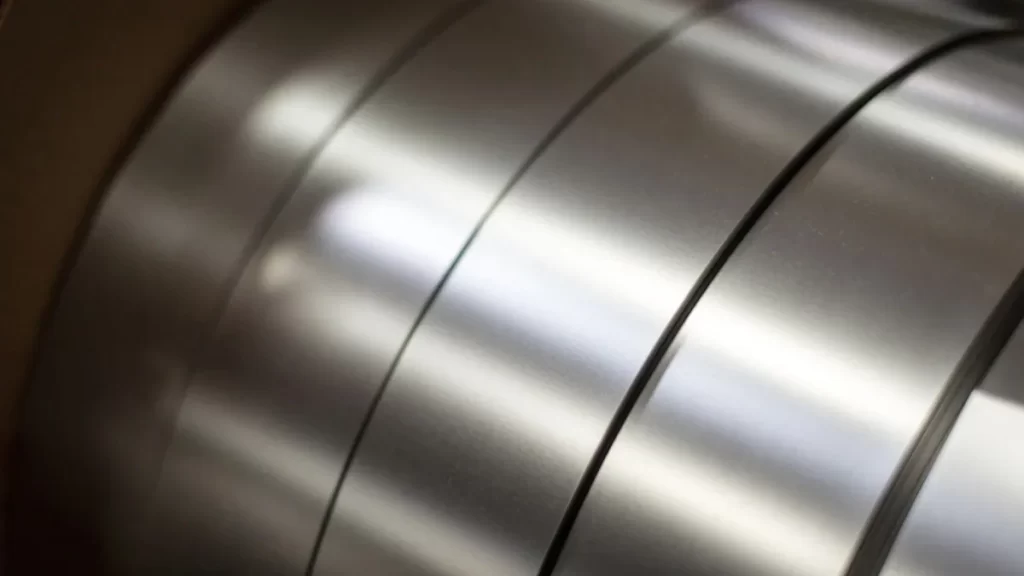
Martensitic Stainless Steel
It is a high-strength material option suitable for various AC components. Sheet metal manufacturers choose stainless steel in AC fabrication for its corrosion resistance & durability in a humid environment.
Galvanized Steel
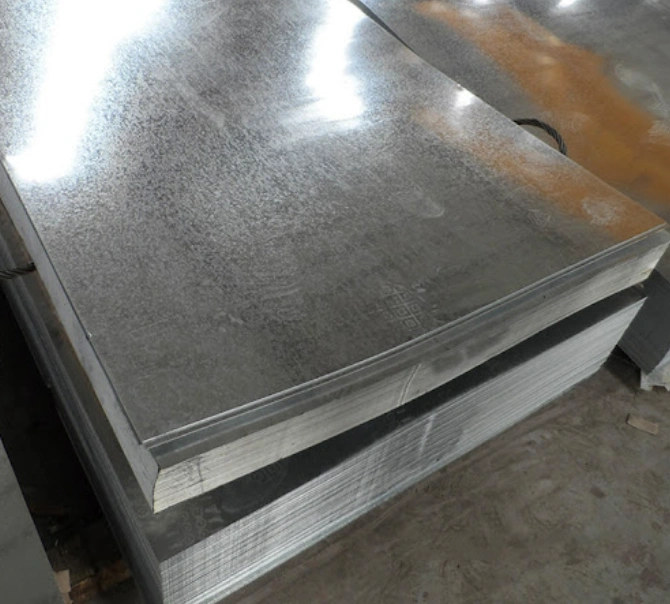
galvanized steel sheets
The coating of zinc on steel further enhances the corrosion & wear resistance without significantly affecting formability, allowing for a longer lifespan of AC. Subsequently, it is also cost-effective than stainless steel.
Considerations for AC Fabrication Design
Design is the primary foundation for producing a high-quality air conditioning system. Your design must deliver the manufacturability, perfect incorporation of AC elements, clear dimensioning, and optimal performance after fabrication.
The following are some design practices to consider when creating an AC fabrication design.
- Identify which AC components can be produced with sheet metal fabrication techniques.
- Calculate the thickness and size (dimensions) of flat sheets required to shape each individual component.
- Clearly illustrate the configurations of parts, heating & cooling source, installation features, and direction of airflow in the system.
- Determine the required amount of airflow, air pressure, ductwork configuration, and potential losses. Then, draft your design to comply with these requirements.
- Ensure your design complies with industry standards, such as ACCA and ASHRAE Standard 90.1.
- Define seam type, seam weld, sealing method, and leakage specifications.
- Consider the bend radii, K-factor, tolerances, allowable edge breaks, assembly fits, and other parameters related to metal forming.
Can I Use Sheet Metal Fabrication for AC Prototyping?
Yes, you can use sheet metal prototyping to produce conceptual and functional models of custom air-conditioning systems and individual components for HVAC systems. It is a versatile process compatible with complex shapes and produces a wide range of parts and products precisely.
Techniques such as laser cutting, bending, rolling, and welding are flexible with small batches. You can prototype a custom AC unit using minimal tooling and fast turnaround. Furthermore, metal fabrication technology allows quick iterations and scaling.
With sheet metal AC prototypes, you can test duct leakage, pressure & airflow, condensate performance, and the final aesthetic of AC systems.
Get a Quote for Your AC Fabrication Needs
Do you have your design ready and need a quote for an AC fabrication project? Upload your design and request a quote in our online portal for sheet metal fabrication services. We provide extensive services for AC manufacturing with a high degree of customization freedom.
Our experience of collaborating with multiple AC companies for on-demand manufacturing could be beneficial in achieving high-quality components at competitive pricing. Additionally, you can get DFM feedback from industry engineers to optimize the AC design.
Conclusion
AC fabrication is a complex process that involves forming various components from sheet metal and assembling them with other accessories using riveting or welding techniques. It demands several calculations and careful considerations in each stage of fabrication to manufacture an AC unit that provides high performance and energy efficiency.
If you are looking to manufacture ACs through OEMs, you must partner with an expert and experienced manufacturer that offers high-quality components and strong assembly at competitive metal fabrication costs.
0 Comments