
Aerospace Laser Cutting Service
In the aerospace industry, each part/component requires a tight tolerance, an accurate fit, and no room for error. Therefore, every part must be cut with meticulous care. Even a small mistake leads to system failure.
At ProleanTech, we employ modern precision laser cutting machines. These machines are designed to meet tight tolerances and high standards. Our process results in clean edges, uniform surfaces, and precise dimensions on metals such as aluminium, stainless steel, and titanium. We also manage a range of laserable engineered plastics like ABS, PLA, Acetal, POM, and PEEK.
Our team focuses on quality from the outset of every project. We check each detail in the design, setup, and cutting stages to ensure the parts match exact specifications. This approach allows for avoiding errors, conserving materials, and providing parts that are ready for immediate use. Additionally, we support aerospace laser cutting for both prototypes and production work. Explore more about our capabilities in this article.
What Does an Aerospace Laser Cutting Services Provider Do?
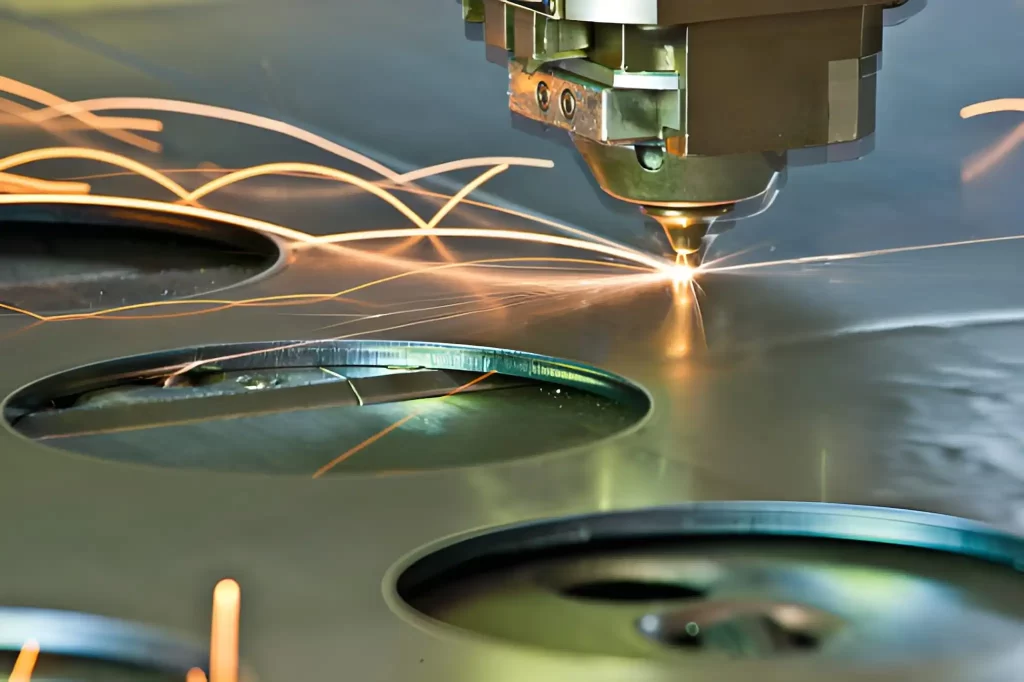
Precision Aerospace Laser Cutting
An aerospace laser cutting services provider designs safe, lightweight, and reliable parts for aircraft. These delicate parts are often produced using laser cutting machines. These machines are easy to handle and use a fine beam of light. The cutters cut materials cleanly and accurately, usually resulting in parts with less waste and better overall quality.
Cutting of Different Materials
A laser machine produces parts, including brackets, panels, and structural supports for aerospace use. These parts are usually used for assembly purposes. It can handle materials like titanium, aluminium, and stainless steel.
Surface Treatment
Aircraft parts/products require a clean surface before anodising and painting. Initially, laser treatment removes old paint, dirt, and rust without damaging the base material. It also keeps the surface smooth and ready for finishing work later, like coating and polishing.
Laser Marking
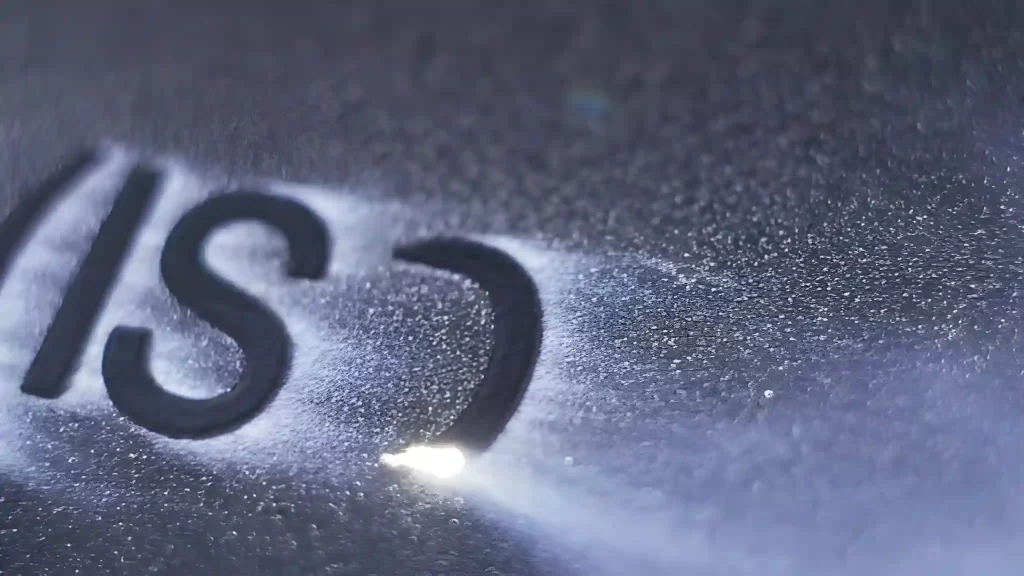
Laser Marking
Each aerospace part must have a clear identification mark. Laser marking is used to engrave numbers and codes directly onto the surface of the material. So, these parts can be easily traced during inspection, maintenance, and future replacement.
Laser Welding
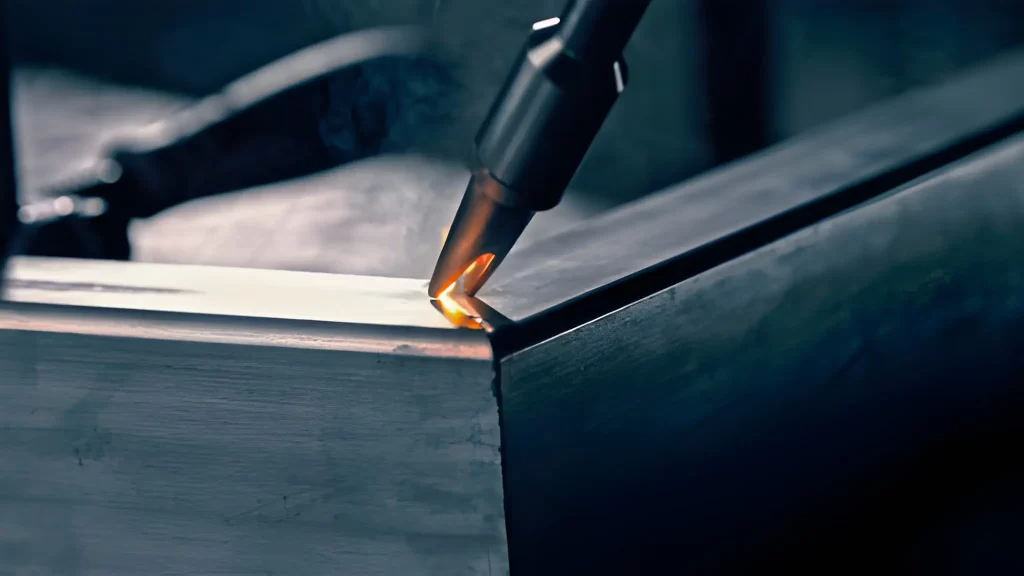
Close-Up of Aluminum Welding Torch
Lasers are also used for welding two components together. They produce strong, clean joints without overheating the material.
Process of Laser Cutting for Aerospace Parts
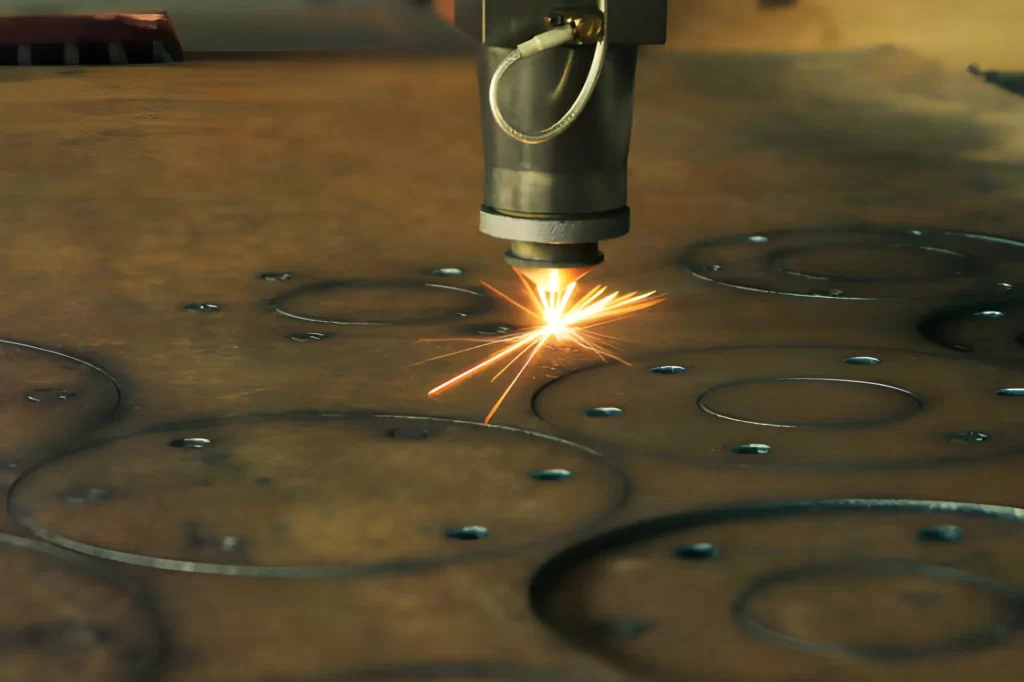
CNC laser machine Cutting Thick Metal Sheet
The process of laser cutting goes like this:
- Design the Part (CAD File): Like other CNC machining operations, the aerospace prototyping process also starts with a digital design. Engineers prepare a CAD file. It includes all essential details, such as part dimensions, laser cutting tolerance, and cutting path. This design is then transferred to the laser cutting machine. This reads the file and sets the cutting pattern.
- Set up the Laser Cutting Machine: Next, place the metal sheet on the cutting bed. The machine uses a high-powered laser beam on the surface of the targeted part. It gradually melts and vaporises along the programmed path.
- Cut the Metal Sheet: The process gives clean, precise cuts with delicate edges. The laser moves according to the digital design encoded with G-codes. Therefore, the end parts are produced with excellent accuracy and precision.
- Inspect and Finish the Parts: Once cutting is complete, the parts are inspected for dimensions and finish quality. Any small burrs/imperfections are checked and eliminated to meet aerospace standards.
Benefits of Laser Cutting in Aerospace Sheet Metal Fabrication
The aerospace sector is the most critical. Each component/part must be precise, accurate, and an engineered fit. One minor mistake can influence the performance of an aeroplane. That’s why aircraft parts manufacturers rely on precision laser cutting. It provides clean, precise cuts that require minimal finishing. It also saves time and reduces the material waste in production.
High Accuracy & Speed for Critical Parts
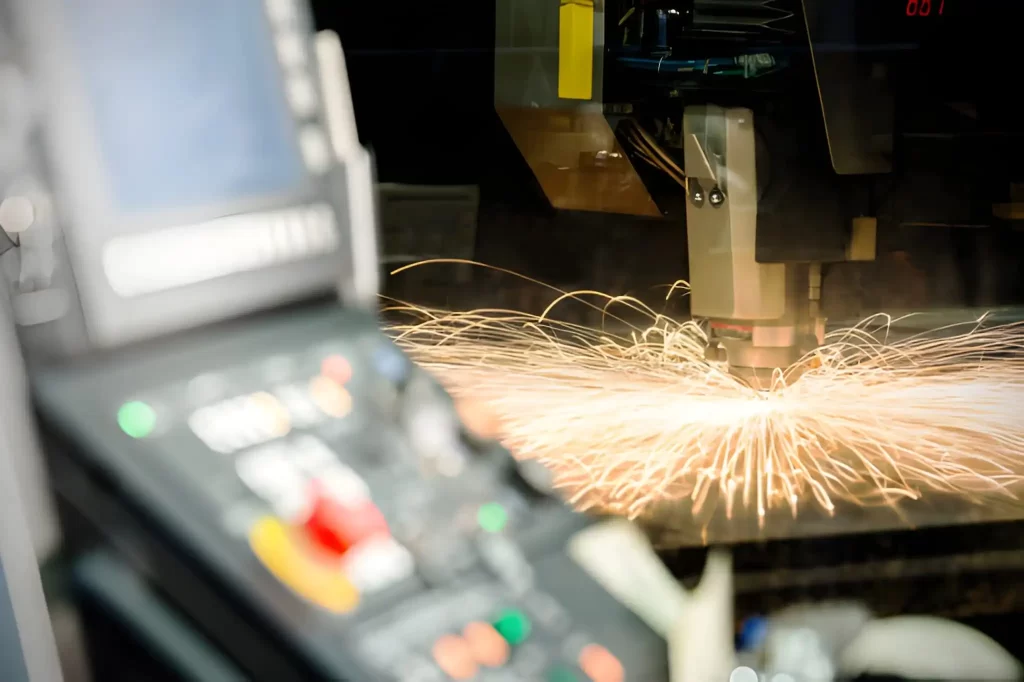
High-Speed Laser Cutting Machine Alongside Control Panel
Aircraft parts must maintain a perfect fit and performance. It is possible through laser cutting, which uses a concentrated beam to trace out the digital design with precision. It often provides a smooth surface, close tolerances, and parts up to aerospace-grade standards. Traditional cutting tools are less efficient than modern laser machines. The greatest advantage of laser cutting in aerospace is its high speed, which allows faster production without compromising accuracy. It also meets stringent precision standards, like ISO 9001 and AS9100, for aerospace components.
Takes Less Time and Reduces Costs
Laser cutting is quick and efficient. It slices sections directly from the design file; therefore, no additional equipment or configuration is required. There is less wastage of material, and production runs are less time-consuming. It means reduced expenses and a more straightforward process throughout.
Reliable and Safe Production
Sheet metal laser cutting is a safe process. It doesn’t require any direct contact with the material. The risk of wear and breakage of tools is eliminated, and thus the quality remains consistent over time. The process further prevents errors, which may result in rework or downtime.
Built for Long-Term Use
The laser machines are constructed with durability. They also require minimal maintenance, unlike other cutting tools. In the case of aerospace production, it would be consistent performance and reliable outputs over the years. At ProleanTech, we utilise highly developed laser systems that ensure all cuts are of the utmost precision and reliability.
What Types of Laser Cutters Are Used For Making Aerospace Parts?
Our factory floor is equipped with advanced laser cutting systems. We can design and handle complex aerospace materials, such as titanium, steel, and aluminium, as well as designs with delicate features.
Laser Marking Machines
Laser marking machines are used to label parts with identification details. These details can be serial numbers, special codes, and lot numbers. It helps ensure full traceability and easy inspection throughout production.
CO₂ Lasers
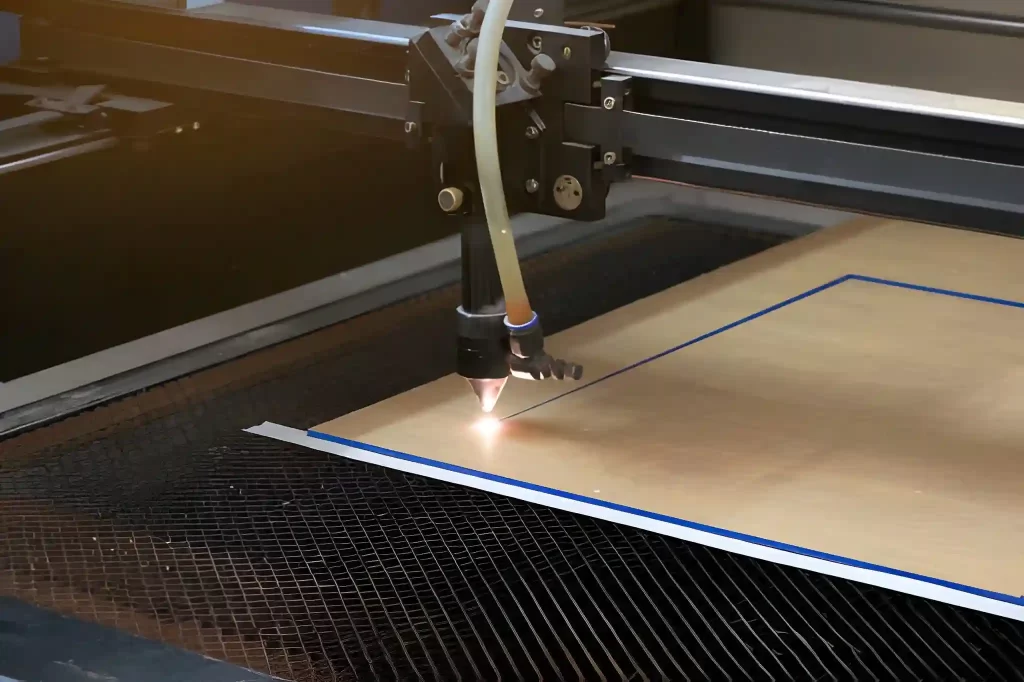
CO2 laser Cutter Cutting Plastic Sheet
CO₂ lasers are mainly used for non-metallic materials. Some common examples include: wood, acrylic, glass, paper, leather, and textiles. Using higher power and added helium, they can also cut rigid metals and alloys effectively. These lasers provide clean edges, optimal for lightweight aerospace components.
Fiber Lasers
Fiber lasers are useful for cutting hard metals such as titanium and steel. They use argon gas. Argon is relatively cheaper. So, it reduces cost while maintaining high cutting speed and precision. At ProleanTech, our fiber lasers provide fast, accurate, and repeatable cuts for every project. (Explore deeper insights into: aerospace sheet metal fabrication)
Try Prolean Now!
Common Materials Used for Laser-Cut Aerospace Machining Parts
At our facility, we use 50+ materials to choose from. These include metals and engineered aerospace-grade plastics, which are used to produce strong and accurate components for the aerospace industry. Each material has its own benefits and is chosen based on what the part needs to do.
Metals
Aluminum
Aluminium is light, highly formable, and flexible. It reduces the aircraft’s weight. Also, it keeps it safe and stable and doesn’t rust easily. Therefore, it is used for parts exposed to hostile environments. (Read further to understand laser cutting titanium)
Stainless Steel
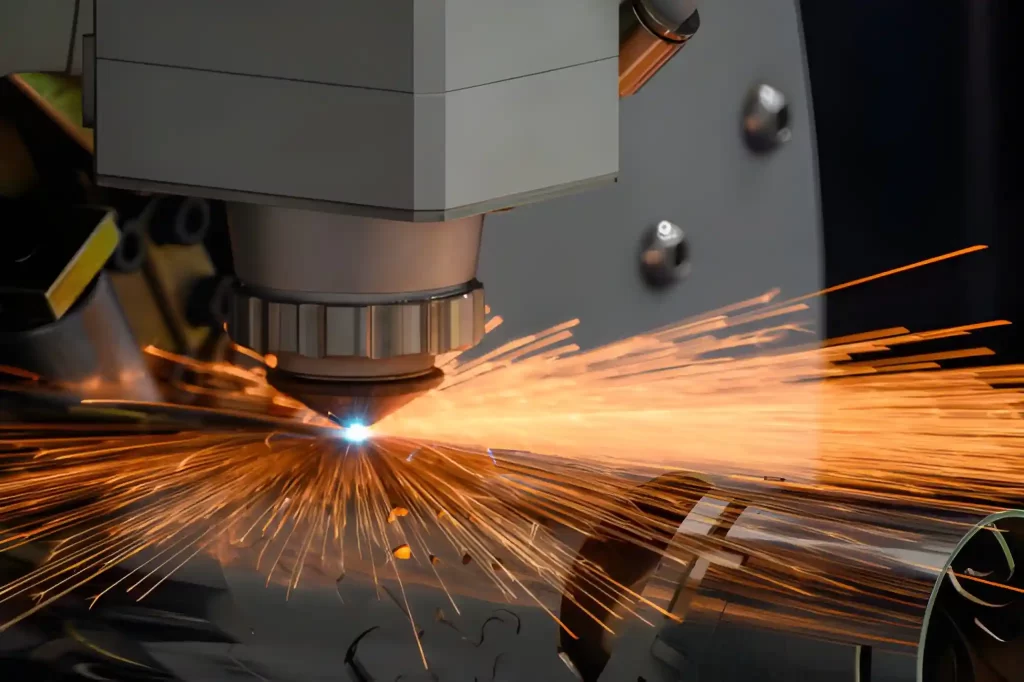
Stainless Steel Pipe Laser Cutting
Stainless steel is strong and can handle high thermal conditions. It is mainly used for engine parts and other critical components. Steel aerospace parts often deal with high pressure and temperature. It also stays clean and does not corrode easily. On top, steel parts last longer than other materials.
Carbon Steel
Carbon steel is tough. However, it can hold its shape under stressful situations. It is often used for heavy parts that demand high strength and structural support. Its parts are heat-treated to make them long-lasting.
Galvanized Steel
Galvanized steel entails a zinc coating that protects it from rust. It is used for brackets, frames, and covers where water or humidity might be a problem. It’s also reliable and requires low maintenance.
Cold-Rolled Steel
Cold-rolled steel has a smooth surface. It’s used for detailed parts, such as panels and fittings. It also remains clean and can be painted easily.
Hot-Rolled Steel
Hot-rolled steel is easier to form and strong enough for large structures. It’s used for significant aerospace parts that may require additional machining. It’s practical and cost-effective for many uses.
Plastics
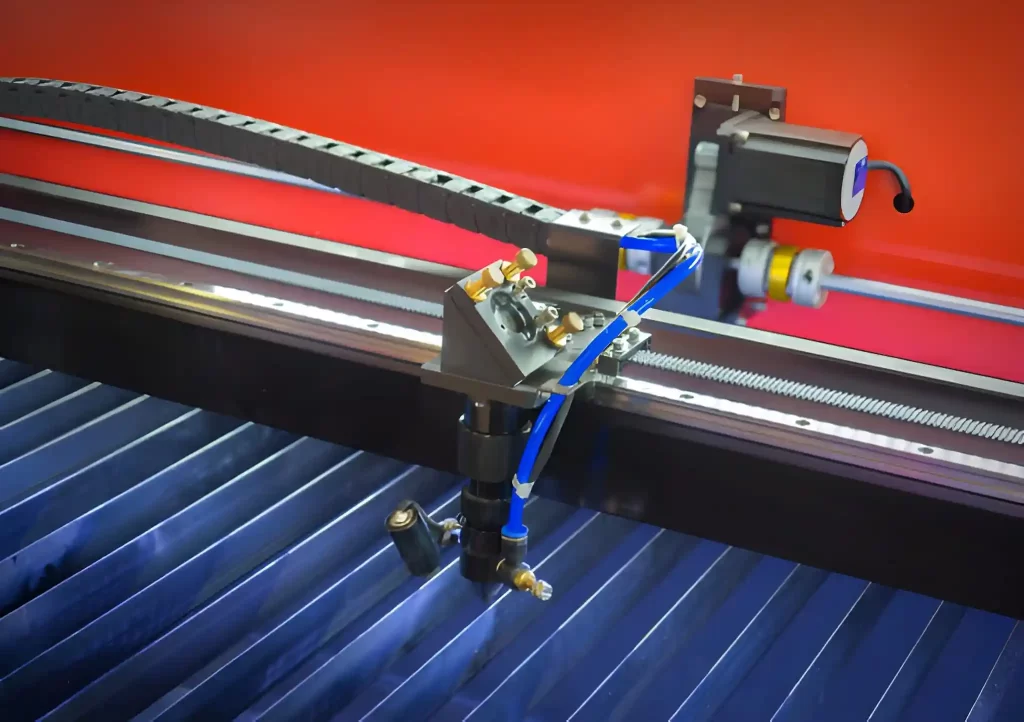
Plastic Sheet Laser Cutting
Here are engineered-grade plastics commonly used for laser-cut aerospace machining parts:
- PEEK (Polyether Ether Ketone)
- PEI (Ultem – Polyetherimide)
- PTFE (Teflon)
- Polycarbonate (PC)
- PPS (Polyphenylene Sulfide)
- Acetal (POM / Delrin)
- Nylon 6/6 (Polyamide)
- PMMA (Acrylic)
- ABS (Acrylonitrile Butadiene Styrene)
At ProleanTech, we choose every material carefully based on the part’s purpose, quality, and performance requirements in each aerospace project.
Try Prolean Now!
What Products Can Be Made with Aerospace Laser Cutting
Our laser cutting technology helps create a wide range of engineered parts for the aerospace industry. Each component is made with high accuracy to meet the industry’s strict safety and performance needs.
End Effector Parts
End effector parts and components are used in robotic and assembly systems. They need to be lightweight yet durable to handle precise movements. Laser cutting ensures clean edges and exact shapes, improving performance and fit.
Wing Fastener Parts
Wing fasteners connect different sections of the aircraft wing. They must be strong and dimensionally perfect and remain structurally integral. Laser cutting provides precise holes and edges for a secure fastener fit.
Tooling Parts
Tooling parts are used during the aircraft manufacturing process. They help shape and hold materials in place. With laser cutting, these parts are made accurately, which improves production speed and consistency.
Fixture Parts
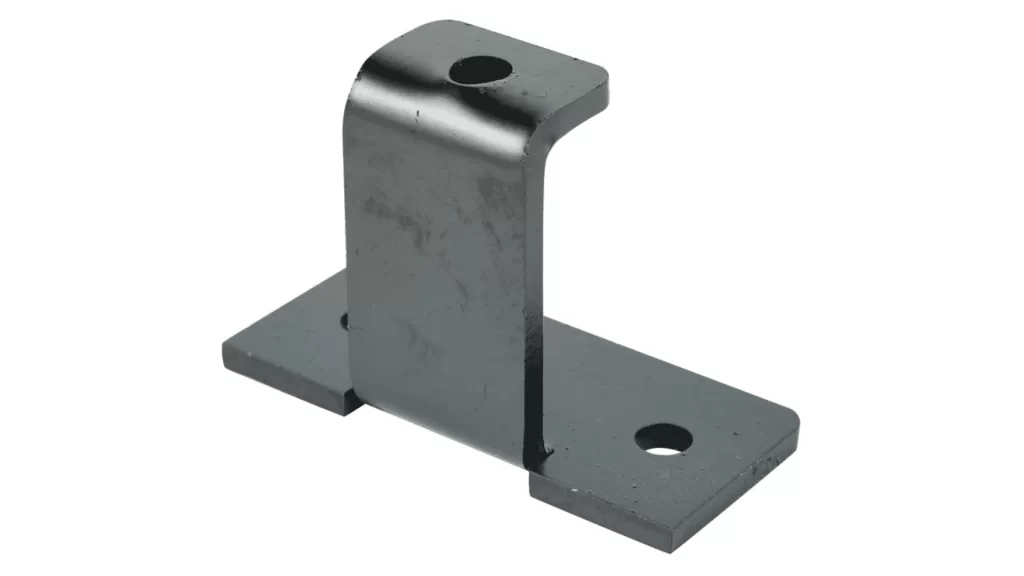
Aluminum Fixture Part
Fixture parts support components during assembly and testing. They must align perfectly with other elements to avoid errors. Laser cutting provides the accuracy needed to make these fixtures reliable and repeatable.
Custom Components
Beyond standard parts, ProleanTech can create custom aerospace components based on your exact design. From brackets and panels to small fittings, our laser cutters handle complex geometries with ease and precision.
Why Choose ProleanTech for Aerospace Laser Cutting Services
At ProleanTech, we manage aerospace laser cutting projects of all sizes. Whether you need single prototypes or large-scale production runs, our advanced equipment and organised workflow allow us to provide precise results quickly and efficiently.
Unlike traditional machining, which often takes longer to set up and prepare, our process is flexible and designed to meet your specific requirements without delay. We provide fast quotations, often within 48 hours, and ensure short turnaround times to keep your project on schedule.
0 Comments