

Machining 304 stainless steel
Machining 304 stainless steel has become an essential part of manufacturing and various other industries. The material’s strength, durability, and versatility suit a wide variety of applications. This naturally means that machining 304 stainless steel is essential to make different parts and components for varying applications. Machining 304 stainless steel involves using various cutting tools and procedures, such as milling, to achieve your desired shape and tolerance.
Machining 304 stainless steel is a complex process that has various challenges. Still, due to its demand and advantages, machined 304 stainless steel is being used in many applications, such as kitchen utensils and medical equipment.
Machining Properties of 304 Stainless Steel
Rapid Work Hardening
Work hardening is the most significant property related to machining 304 stainless steel. Light cuts and dull tools can cause the surface to harden up quickly, decreasing the 304 stainless steel machinability. As the cutting tool cuts the surface, it deforms the metal beneath, causing plastic deformation. This deflection is what causes work hardening. Hardened surfaces require more cutting force and thus the tools wear quickly.
Thermal Conductivity
304 stainless steel is an austenitic grade of steel. Like similar austentic steels, it has poor thermal conductivity of around 16.3−21.5W/m⋅K. This causes the heat to concentrate at a localized point of the cutting tool, reducing its life. Cooling is often recommended to combat this issue.
Chip Control
The chips produced when cutting 304 stainless steel are tough, long ribbons that tangle and often make the machining process difficult. Tool geometry must include breaking grooves that break the chip into small pieces for better chip evacuation.
304 Stainless Steel Machining Processes
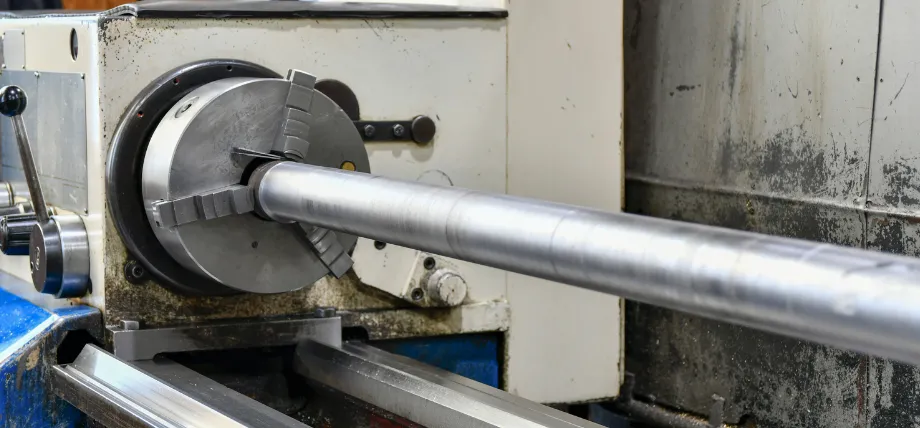
Industrial CNC turning setup
Milling
Milling is the most basic stainless steel machining operation that is used to process 304 stainless steel. It uses a high-speed rotating cutting tool that slowly moves along predetermined paths to remove excess material from the workpiece.
Using the correct tools for machineable stainless steel helps to improve machining time, cost, and reduce tool wear. 304 stainless steel is the best machined with TiAlN or TiCN-coated carbide tools that feature multiple flutes. This is because these tools are more complex and cut more efficiently.
The milling stainless steel speeds and feeds used for milling are typically around 330-440 SFM in normal setups, and the rake angle is kept positive to help with a cleaner and more precise cut. The majority of the 304 stainless steel being processed today is done via milling.
Turning
Turning is a machining process in which you attach the steel to a high-speed spindle that can rotate at varying speeds. A sharp cutting tool gradually removes material in straight passes. Coated carbide inserts are used as the cutting tool. This is because machining steel requires a more robust material to machine efficiently.
Turning is primarily used for cylindrical parts or for hollow parts. The procedure normally runs at 400-600SFM with a cut depth of 0.015 – 0.05 inches. If you go any deeper, the surface will harden and decrease tool life. Coolants are preferred during machining to control the temperatures.
Threading
Threading milling involves creating threads to remove material from a workpiece. The threads can be either on the inside of a hole or on the exterior surface. Tap drills are used for the process, and the optimal way to perform the process is to have a 50-60% thread engagement. Thread milling is often preferred over standard milling because it offers better tool life and control when working with machinable stainless steel, especially 304 stainless steel.
Laser Cutting (Non-Machining Cutting Method)
Laser cutting works by using an amplified light beam to heat metal at a localised point and melt it away. This method works well with thin sections or sheets. The stainless steel hardness isn’t a problem when using laser cutting. Typically, a fibre laser, along with nitrogen, is used to minimise oxidation, as it is ideal for cutting 304 steel. Laser cutting eliminates the tool wear that occurs when using different processes, but it is more expensive and requires skilled labour.
Surface Finish Options for 304 Stainless Steel
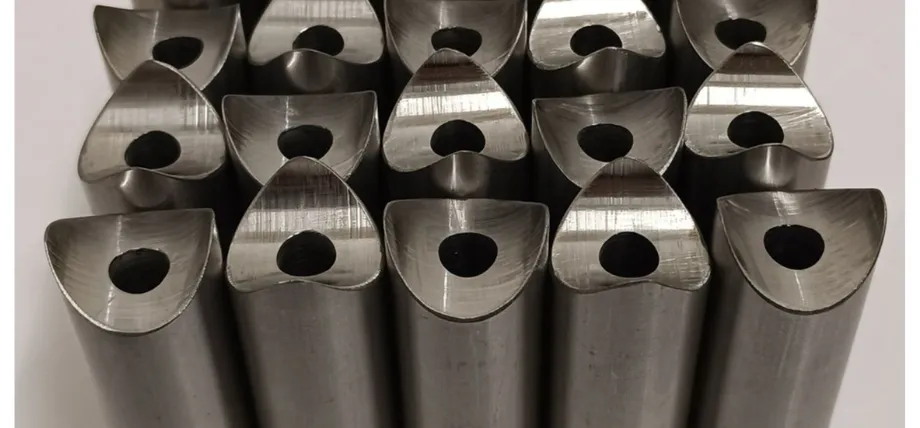
Machined metal surface finish
Brushed Finish
The brushed finish has parallel lines, which give the steel a satin appearance. This helps to hide tool marks and scratches. The brushed finish is done using a fine-grit abrasive of around 150 -180 grit. The roughness average of the finish is really low, 0.3–0.8 µm, which makes it smooth to the touch. It is durable, easy to maintain, and commonly used in high-wear applications such as kitchen appliances and general fabrications
Rolled Finish
The rolled finish is a semi-smooth matte appearance that is achieved by passing the steel through polished rollers. The most commonly used variant is called 2B, and it is cold rolled. The appearance of the steel is a slightly reflective grey. Normal Ra of such a finish is around 0.1–0.5 µm. It is typically used in general fabrication and processing equipment.
Hairline Finish
Hairline finish is a variant of the brushed finish. It is achieved by using finer abrasives with a grit of around 150- 320. Long unidirectional strokes are used along the length of the workpiece to make fine straight lines and give it a hairline look.
The finer abrasive naturally means that the hairline finish has a lower Ra, typically ranging from 0.2–0.5 µm. This sort of finish is generally used for aesthetic appeal in modern furniture and high-traffic areas, where it can resist smudges.
Mirror Polished
Mirror polish is a super reflective and shiny look that is achieved by polishing the steel surface with a series of abrasives. The abrasives get finer and finer up to 8000 grit for a fine reflective surface. After polishing, the surface is buffed with polishing wheels.
The polished and smooth surface means that the Ra is really low, around 0.02 to 0.1 µm. The finish is widely used in luxury components due to its aesthetic appeal, such as furniture and ornamental elements. In other industries, it is used for processing foods and other general fabrication since it is easy to clean.
Try Prolean Now!
Factors Affecting the 304 Machining Process
Lubrications and Coolants
Cutting 304 stainless steel generates a lot of heat due to high friction and low thermal conductivity. Lubrication and cooling help to regulate the temperature and minimise tool wear. Flood cooling is the most common cooling process that is used, but cold delivery systems are also used in some alternative setups.
Tool Wear
Tool wear is a significant aspect of the machining process. Selecting the right tools for 304 stainless steel will reduce work hardening and heat generation. This means that the tool wear will be minimised and the tool cost will remain lower. The most commonly used are carbide-coated tools, such as TiAlN or TiCN. These ceramic coatings are sharper and tougher than steel and ensure a clean and smooth machining process.
High Temperatures In The Cutting Area
304 steel is an austenitic steel with poor thermal conductivity, about 16.3−21.5W/m⋅K. Additionally, 304 stainless steel is tougher and work-hardens more compared to low-carbon steel. The larger force and higher energy required to cut the steel produce more heat. In dry conditions, the temperature can exceed 800 °C. The higher temperature drives work hardening, which in turn means more tool wear and deformation of the parts.
Optimising 304 Stainless Steel Machining
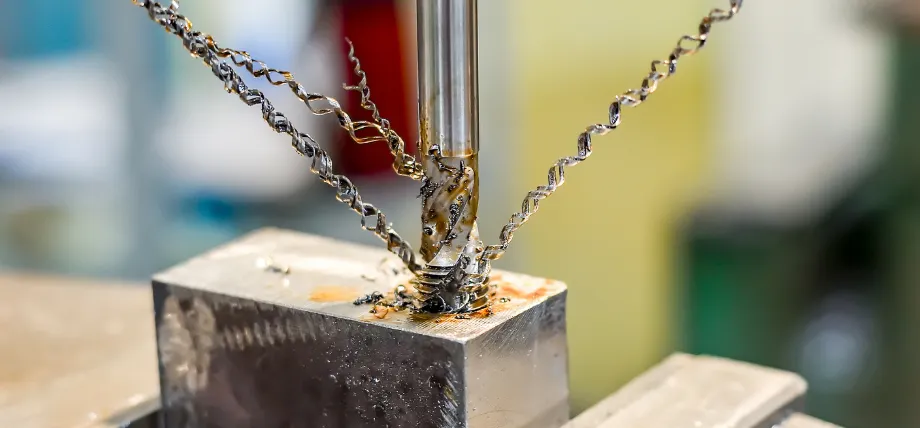
Metal chip formation process
Optimise Cutting Parameters
When working with machinable stainless steel, it is important to note that 304 is a difficult steel to cut, as this is due to various factors like work hardening and heat generation. To address this issue, you need to adjust your cutting parameters, such as speed, depth, and feed rate.
Cutting speed should be set to around 50-60% of the low-carbon steel to dress the tool wear. It comes out to be around 50-80m/min. The feed rate should be set to 0.1- 0.8 mm for standard machining. And for finishing, it is recommended to go lower, around 0.15- 0.4 mm.
A shallower cut depth means more passes, and using a cut depth too large can cause vibrations. Using the correct cut depth is ideal to get the best possible results. A cut depth of 2 mm-4 mm is suitable for roughing, and for more refined passes, 0.2- 0.5 mm is recommended.
Coolants and lubrication
Machining 304 stainless steel generates a lot of heat, which means that selecting the appropriate coolant and lubrication fluid is essential. Emulsion and sulphurized oils provide the cooling properties and lubrication needed for machining 304 stainless steel. Methods such as flood cooling, coolant delivery systems, and mist cooling are recommended for the process.
Proper Tooling
To get the best result when you machine 304 stainless steel, you must use the appropriate cutting tools. Usually, the cutting tools are made from high-speed steel or are carbide-coated for durability and sharpness. Additionally, the cutting tools should have the proper geometry with positive rake angles, chip breaker grooves, and relief angles.
Try Prolean Now!
Applications of Machined 304 Stainless Steel Parts
Machine 304 stainless steel parts are used across various industries because of their versatility and excellent physical properties, such as durability and corrosion resistance. Its excellent mechanical strength and good weldability mean it’s a great option for fabrications. Below is a list of common sectors that use 304 stainless steel
Automotive industry
Exhaust brackets, trims, and hardware are commonly made of 304 stainless steel. This is because it is durable and has excellent mechanical strength. Fluid systems like oil coolers use 304 stainless steel valves and connectors since they can withstand extremely high temperatures in car engines.
Medical and pharmaceutical industry
304 stainless steel doesn’t rust easily, which is why it is an excellent material to use for surgical tools. Things such as trays, sterilizer fittings, and device housings are made of 304 stainless steel.
Chemical processing
Valves, sensor housings, vats, and pipes are made of 304 stainless steel. This is because it can handle mildly acidic and alkaline environments. Additionally, it can withstand high temperatures up to 800 °C, which suits processing facilities.
Other industries
Other industries, such as construction and architecture, use it for decorative trim and elements. The marine industry used it for the deck hardware. Bushing and bearings are also made of 304 stainless steel.
Does 304 Stainless Steel Suit Your Project?
304 stainless steel, although it is a bit tricky to machine, has advantages that other metals can’t offer. Though there are various types of stainless steel available, the primary advantage of 304 is that it is rust-resistant, which means it can withstand humid environments better compared to iron or other metals. It has excellent mechanical strength and tensile strength, making it ideal for load-bearing components. Its versatility allows it to be used in numerous different components. Whether you need to use 304 stainless steel depends on your project’s requirements. If they align with the materials’ properties, then you should opt for it as its pros outweigh its little cons.
Custom Metal Machining Service
Proleantech provides high-quality metal machining, including standard stainless steel grades and alloy steel options. Proleantech is an ISO certified company with material certificates to ensure you have the exact alloy you are looking for.
Some of our end-to-end production options include:
- Custom surface finishing
- Alloy sourcing
- Custom fixtures during machining
- Precise tolerances ± 0.01” and sub-millimeter precision with EDM
- Door to door shipping
Request a free quote today!
Conclusion
In conclusion, 304 stainless steel is a versatile and robust material that is used in many applications. It is one of the most widely used materials for custom metal machining. It has some machining challenges, such as work hardening and poor thermal conductivity, but they are addressable by following proper machining practices. If you select the most suitable cutting process with optimized parameters, then CNC machining of 304 stainless steel is a smooth process that is ideal for making parts and components.

0 Comments