
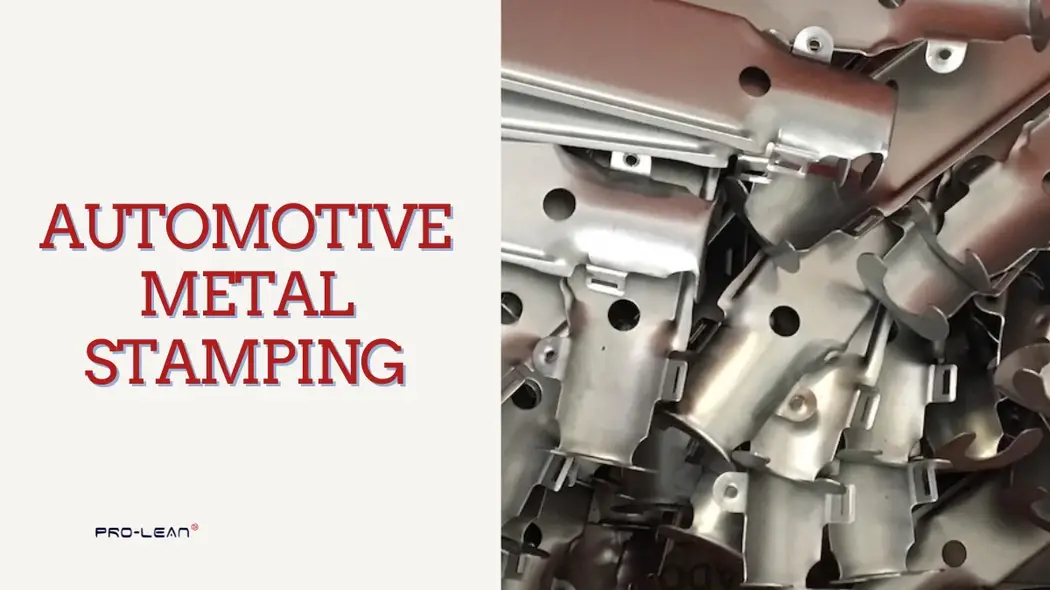
Automotive Metal Stamping
Automotive manufacturing is one of the most demanding and complex areas, bringing together many processes, with automotive metal stamping being one of them. The automotive metal stamping process converts flat sheet metal to 3-D parts of varying complexity, with unmatched accuracy and speed. It is defined by fundamental phases, starting with design and ending with quality assurance.
Metal stamping is also defined by different techniques, the main ones being blanking, piercing, forming, and flanging. For part resellers and other businesses dealing in car components, learning the details of this method adds value to business strategy. For instance, the knowledge helps in identifying the best firms to outsource to. Such partners help maximize benefits such as cost-effectiveness, speed, and durability.
What is Automotive Metal Stamping?
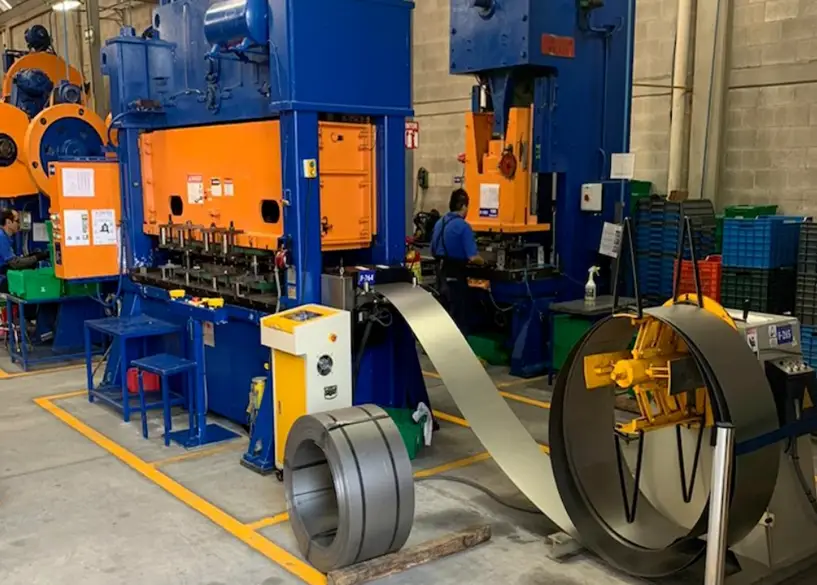
Stamping press line
Automotive metal stamping is a car manufacturing process that converts sheet metal into usable metal stampings for automotive components using stamping presses and automotive stamping dies. The stamping process often comprises several techniques, including bending, blanking, coining, embossing, flanging, and punching.
Blanking
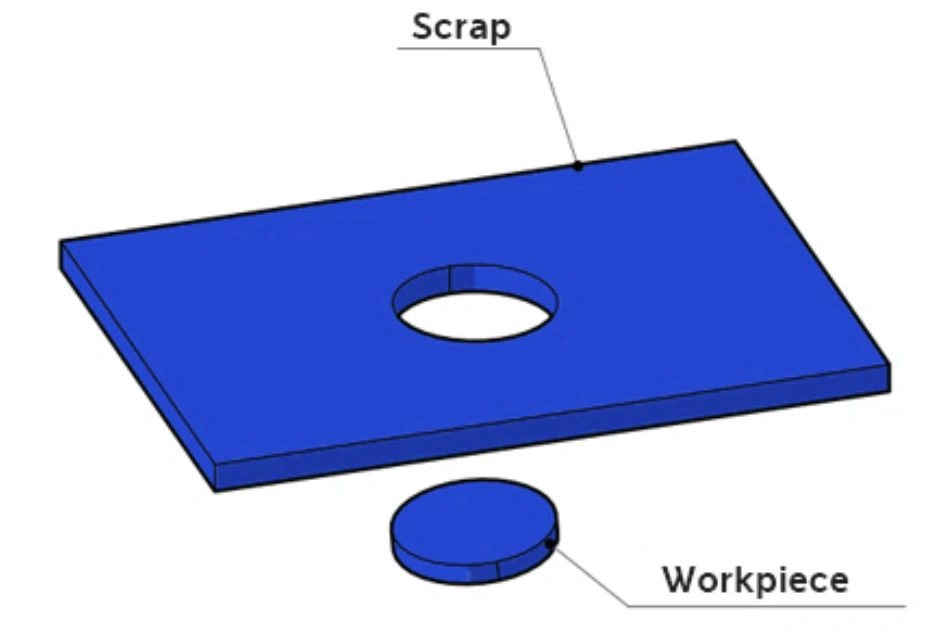
Blanking
This stamping technique cuts a section of the metal from a larger sheet using a die.
Coining
Automotive coining entails bending a sheet of metal using a die and punch to produce U, V, and other shapes.
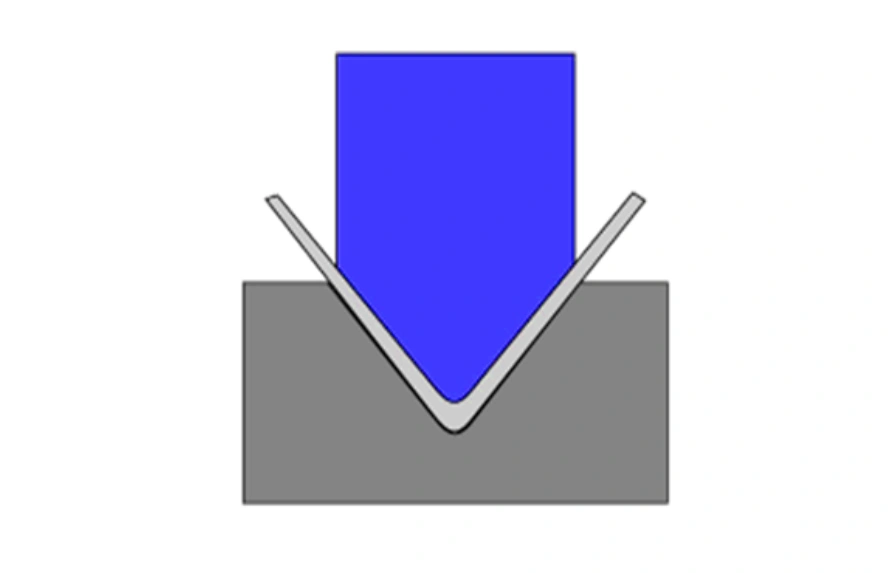
Coining
Embossing
In embossing for automobile sheet metal parts, a die or press forces a pattern or design on a metal sheet.
Flanging
Flanging entails forming the edge of the metal sheet into a flange to allow for the attachment of other panels and related parts.
These steps are carried out systematically, as shown in the figure below.
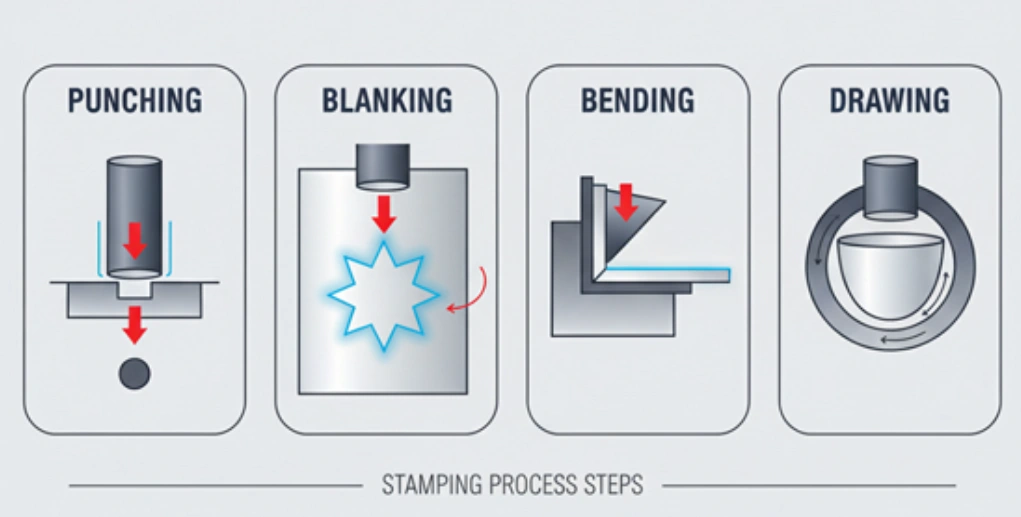
Stamping process steps
Car manufacturers, especially those of electric and gas-powered vehicles, are fond of the automotive metal stamping process. With metal stamping techniques, sheet metal stamping services can meet the sheet metal part requirements of the expansive automotive industry.
Read more:
How Are Car Parts Stamped?
The stamping process for car parts comprises meticulous phases that start with design, followed by die-making, stamping, post-processing, and finally, quality assurance. For automobile sheet metal parts to emerge as desired, each of these steps is followed keenly and according to existing standards.
Step 1: Design
This phase is where engineers produce preliminary models of the car parts to be stamped. Advanced software tools are useful for this critical step. A few designs and redesigns are possible and allowed because this phase sets the pace for the rest in terms of manufacturability, reliability, tolerances, and so on. It is the step where potential metal stamping defects should be identified and avoided.
Step 2: Die-making
The design paves the way for the design and manufacture of the respective die. The idea is to replicate the part design in the die, so innovative thinking and special engineering strategies are applied. The manufacturer ensures strict adherence to standards.
Step 3: Stamping
Stamping is the core step, so it is equally engaging for the manufacturer. Nowadays, there are advanced and powerful presses to help undertake this step. Yes, the presses are powerful, but they also produce parts to unmatched accuracy levels. The automobile sheet metal parts, though of high quality, are not yet ready until they pass through the next phase.
Step 4: Post-processing
Each type of automotive metal stamped part comes with its requirements and specifications, and some of these are covered after the main stamping step. It could be heat-treated to enhance strength, surface finished for appearance, or coated for added durability.
Step 5: Quality Assurance
Automotive metal stamping also involves strict adherence to quality requirements, usually handled by the quality assurance team. They ensure that each part not only meets manufacturing best practices but also adheres to any special requirements outlined in the custom metal stamping details.
Try Prolean Now!
Equipment for Automotive Metal Stamping
The main equipment for automotive stamping broadly includes specialized tools, machinery, and systems. Of note are stamping presses and stamping dies, whose capacities and designs matter in the success of automotive custom metal stamping and related services.
Stamping Presses for Automotive Metal Stamping
Mechanical and hydraulic presses are central to metal stamping in the automotive industry. These machines are built for power and precision, helping shape some of the most important sheet metal components in a car.
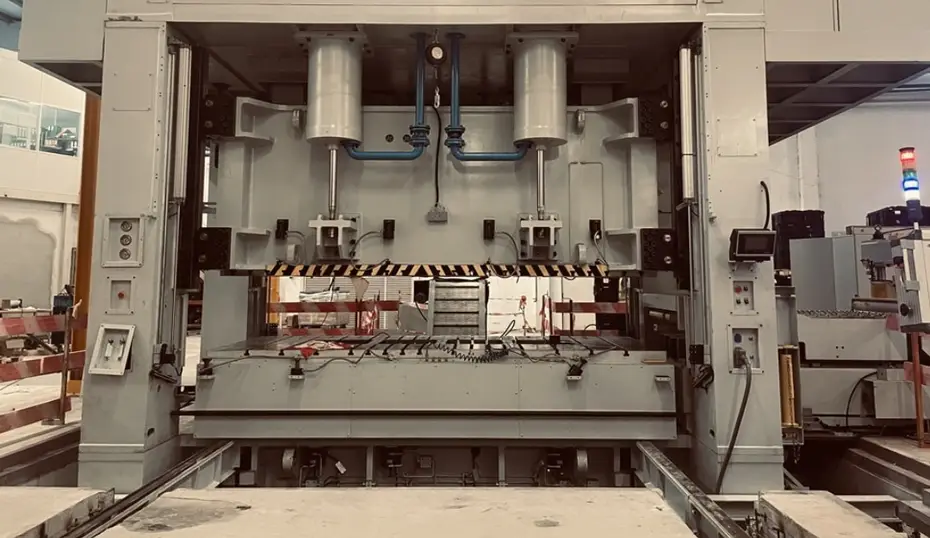
Stamping press
The pressing capacity varies, typically in the 100-2,500 ton range. With this level of variety, manufacturers can produce both small and large stamped parts at any production capacity.
Automotive Stamping Dies
Stamping dies are equally critical in the automotive sheet metal stamping process. They are built to withstand the rigorous performance requirements of the industry. For instance, the dies are made from automotive-grade materials such as high-speed steel, tool steel, and carbide.
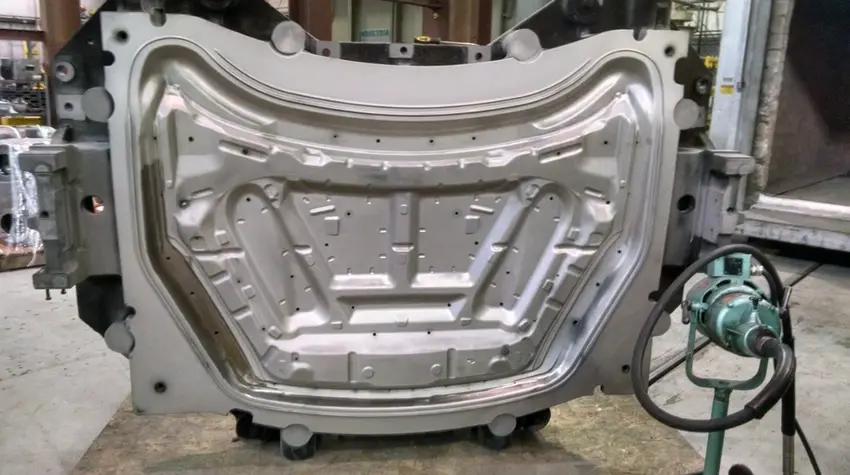
Stamping die
The multi-stage die (progressive die) and single-stage die are widely used in the industry, and are applied according to the features and geometry of the automotive metal stamping parts. The production volume is also a big determinant as to which type of die to use. For instance, the high efficiency and flawless feeding capability of the progressive die make it well-suited to high-volume manufacturing.
Other considerations for stamping dies in the automotive metal stamping process are;
- The shape and clearance of the die and punch should meet the manufacturing requirements
- The stamping die should have automation features
- Incorporate features for quality control – gauges, vision systems, sensors
- Features for ease of maintenance
- Simulation tools
Contact us to learn more about the stamping die designs and how they contribute to the stamping process.
Stamping Feed and Ejection Systems
After each stamping stroke, the stamped parts and the associated scrap metal must be cleared from the machine, a function that is executed by these systems. The feed and ejection systems are so essential in the stamping process that their failure can cause bottlenecks or even serious damage to the part and tool. Modern feed and ejection systems come with advanced sensors and automation capabilities to ensure a safe and smooth flow of the stamping process.
The Different Materials for Automotive Metal Stamping
Metal stampings for automotive components are manufactured from various materials – aluminum alloys, stainless steel, mild steel, advanced high-strength steel (AHSS), high-strength steel (HSS), and others – each chosen according to specific requirements of the car. Mostly, automotive stamping companies are looking to optimize important design aspects such as strength-to-weight ratio, corrosion resistance, durability, and thermal performance.
Here are more details on the main materials for automotive metal stamping.
Aluminum Alloys
The aluminum stamping process can produce usable stamped parts for cars from various alloys; the choice depends on what the manufacturer seeks to achieve.
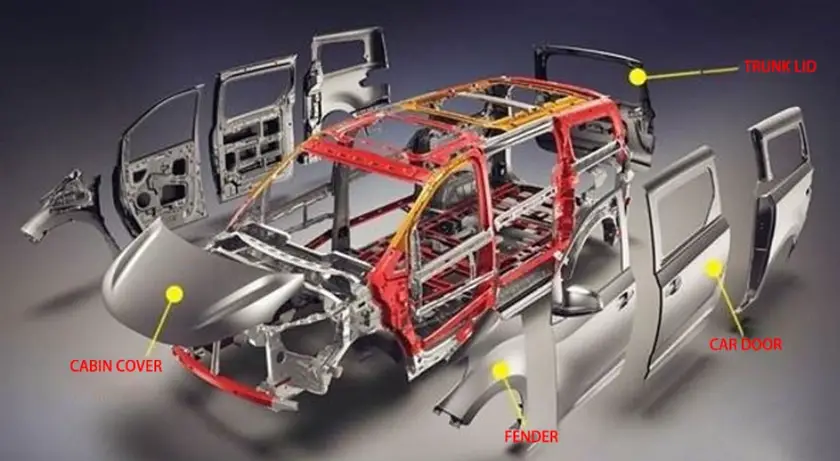
Aluminum stamped parts
7075 aluminum is one of the strongest options available, with superior resistance to stress corrosion cracking and fatigue resistance. It can also be heat-treated for added strength. Another popular alloy is 2024 aluminum, which is highly touted for a blend of high strength and machinability. For corrosion-resistant stamped parts, manufacturers mostly choose 5052, 6061, and 6063 aluminum.
Stainless Steel
The corrosion resistance, design versatility, durability, environmental sustainability, and overall low metal stamping cost in this case are valuable in car metal stamping. Popular grades for stainless steel stamping are 301, 304, 316, 316L, and special grades such as 321 and 347.
Mild Steel
Mild steel grades such as Q195, Q235, and Q345 are formable and cost-effective, hence are excellent options for automotive metal stamping.
Advanced High-strength Steel (AHSS)
Advanced High-strength Steel (AHSS) has undergone quenching and tempering to enhance its mechanical properties. This steel type is built for automotive parts, especially for a high strength-to-weight ratio. Common grades for this purpose are martensitic, complex-phase (CP), dual-phase (DP), and transformation-induced plasticity (TRIP) steels.
High-Strength Steel (HSS)
High-strength steel is also popular in automotive metal stamping, particularly for bumpers and other structural parts.
Try Prolean Now!
Types of Stamped Parts for Automotive Applications
In the automotive industry, stamping applications include engine parts, heat sinks, body panels, connectors, and brackets. The technology produces these parts with the required precision, repeatability, and cost-effectiveness.
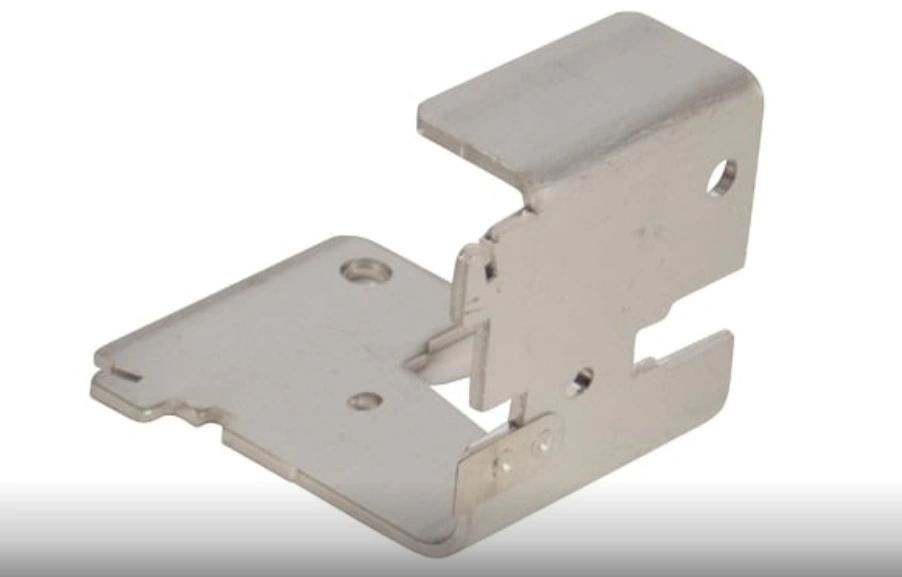
Heat sink
Indeed, the number of stamped parts in a car is so high that listing the parts that are not stamped would be easier.
A list of the different parts is given below.
- Engine oil pans
- Bumper reinforcement bars
- Battery cable connectors
- Brackets
- Body panels
- Seat belt buckles & latches
- Hinges
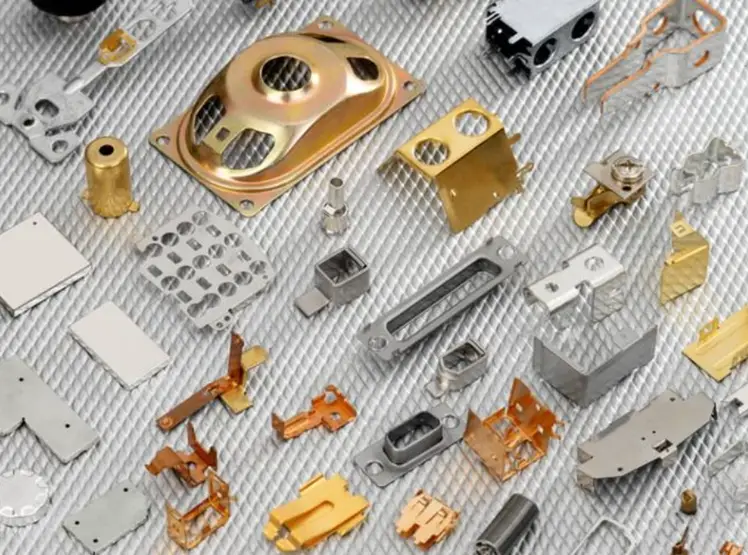
Other types of stamped parts
The Benefits of the Metal Stamping Process in Automotive Components Manufacturing
The automotive industry uses stamping so consistently because the technology enables the production of complex parts quickly and in diverse sizes. The method is valuable because it minimizes waste, thereby enhancing business profitability. Moreover, automotive metal stamping is consistent, so manufacturers can produce identical parts and serve a wide clientele with the same quality.
Limitations of Automotive Metal Stamping
Automotive stamping companies have to keep in mind the various limitations of metal stamping, which include;
- Material properties limit the suitability of a part to the requirements
- It is not easy to swap stamped parts for other types of parts
- Addressing critical dimensions can be expensive
- It doesn’t suit small batch production
- Specialized automotive stamping dies are expensive
Advancements and Innovations in Automotive Metal Stamping
Automotive metal stamping technology is still advancing, with integrated simulation software, servo-based presses, modern progressive die stamping, and hot stamping for enhanced strength being the highlights. ProleanTech, being a top producer of custom automotive metal stamping parts, is at the top of these developments.
Integrated Simulation Software: Engineers can use computational fluid dynamics (CFD) and finite element analysis (FEA) to optimize stamping of car parts before actual production.
Servo-based Presses: Servo-driven stamping systems outperform conventional ones in waste management, energy management, and die longevity.
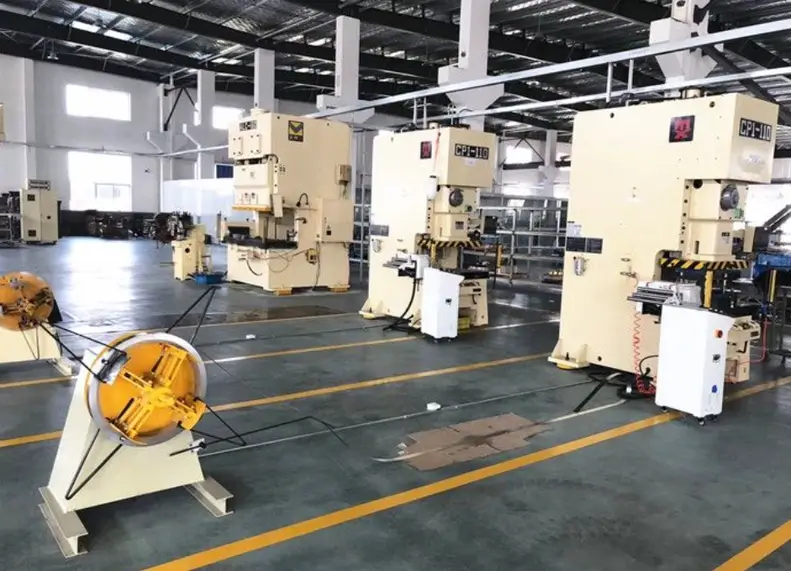
Servo presses
Advanced Progressive Die Stamping: Multi-stage stamping operations equipped with adaptive controls and advanced sensors produce intricate metal-stamped parts.
Hot Stamping: This modern method involves heating blanks to austenitizing temperatures, followed by forming and quenching to produce parts with extremely high tensile strength.
In Conclusion
Car manufacturing relies on metal stamping for many parts. The best automotive metal stamping services are characterized by compliance with standards, innovation, and commitment to cost-efficiency. We have the experience and expertise to deliver stamped metal parts that meet the car manufacturing needs.
So, please don’t hesitate to call us and get a quote.
0 Comments