
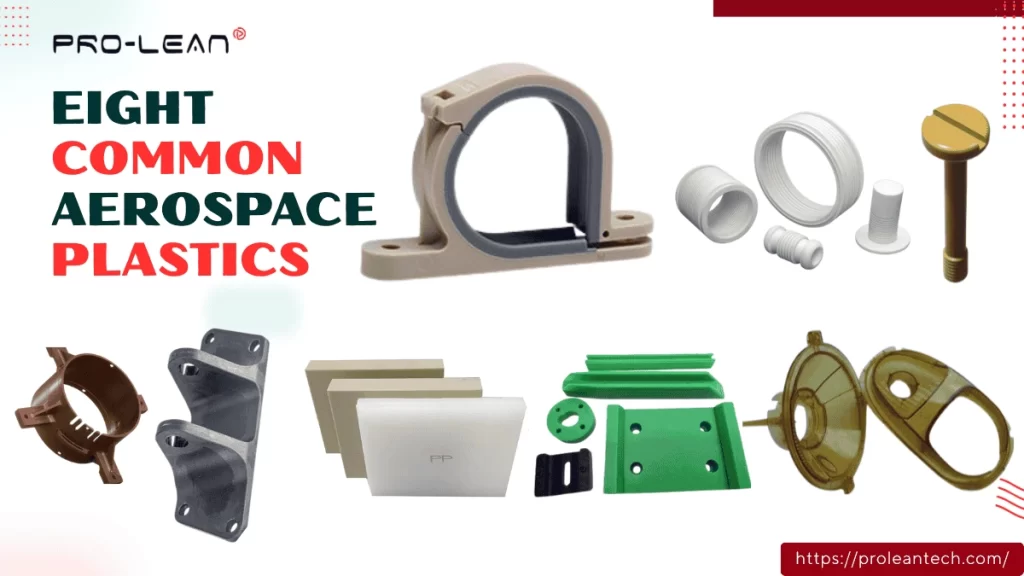
Aerospace plastics
Weight reduction is a key challenge during the design and material selection of aerospace parts manufacturing. It might be costlier in terms of production & fuel efficiency while choosing strong metal & alloys unless they are absolutely necessary for functionality and performance.
Manufacturers opt for engineered plastics to produce diverse aerospace components, whether for a passenger plane or a military aircraft. The upcoming sections will elaborate on eight common aerospace plastics, their applications, and what manufacturing processes can be used to produce aerospace plastic components.
Let’s get started.
1. Polycarbonate (PC)
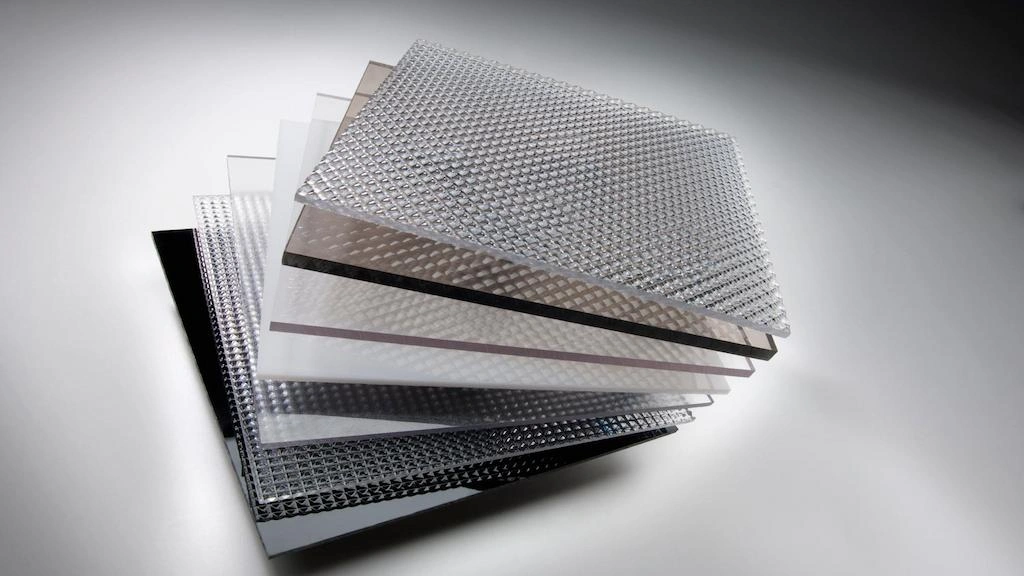
Aerospace-grade polycarbonate
Polycarbonate is a tough, lightweight, and durable thermoplastic used for making various aircraft parts with high dimensional stability and thermal stability. Often, manufacturers choose PCs as a glass or acrylic replacement in aircraft.
Moreover, polycarbonate is an impact resistance plastic, which offers visibility up to 90% and can be machined with tight tolerances and finished with polishing for optical clarity.
Applications of Polycarbonate in Aerospace
Windows
PC is used to make windows in aircraft for its high optical clarity & withstand high stress.
Shields & Guards
High impact-resistance and visibility make PC a good material choice for safety visors, helmets, face shields, and other protective guards.
Cockpit Instruments
Flame retardancy, clarity, impact strength, and dimensional stability of PC plastics are useful for cockpit instrumentation. For instance, display screen covers, HUD combiner panels, switch guards, and avionics housing.
Lighting Fixtures
Interior and exterior lighting fixtures, such as LED light pipes, dome light covers, edge-lit panels, and light diffusers.
Try Prolean Now!
2. Polyether Ether Ketone (PEEK)
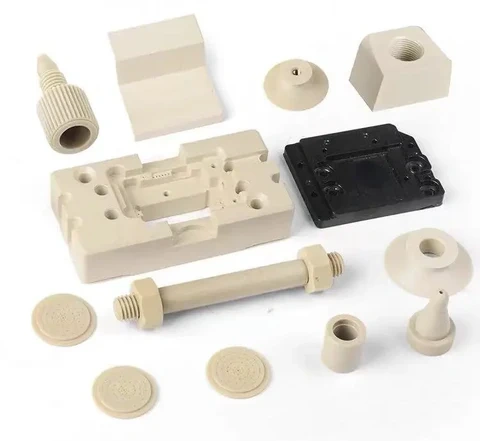
PEEK aerospace parts
Polyether ether ketone, or PEEK, is another high-performance plastic used to produce various aerospace plastic components, from structural & engine parts to electrical connectors. PEEK provides high stiffness, tensile strength, creep resistance, chemical resistance, low toxicity, and performance at elevated temperatures (up to 250° C). Additionally, PEEK grades are flame-resistant polymers certified for airframe interiors.
Applications of PEEK in Aerospace
Engine and Heat-Zone Components
The high tensile strength, flexural modulus, stiffness, and thermal stability of PEEK are beneficial for aircraft engines and heat-zone components. E.g., compressor seals, valve seats, thrust washers, and bushings.
Structural Applications
The lightweight, excellent mechanical properties of PEEK make it beneficial for aircraft structural components, such as precise fasteners, stiffeners, clips, seat arms, and routing brackets.
High Performance Composites
The aerospace industry utilizes several high-performance composites for enhanced mechanical & physical properties. Hence, PEEK is used to make CF-PEEK, GFRP, and quartz fiber composites.
3. Polyetherimide(PEI)
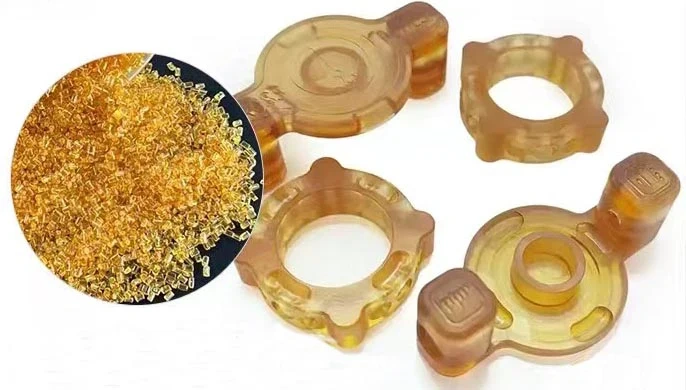
PEI plastic
Polyetherimide, or PEI Plastic, is an amorphous polymer with excellent creep resistance, flexibility, lightweightness, strength, and mold processability. Consequently, grade UL 94 V-0 is among the flame-resistant polymers certified for airframe interiors.
These combined properties make PEI a good thermoplastic option in aerospace component manufacturing.
Applications of PEI in Aerospace
Interior Structures
Lightweight, flame-retardant, and strong aircraft interior components, such as wall liners, lavatory fixtures, and cabin hardware.
Air Duct System
Thermally stable air duct system parts, such as ducts, ventilation housing, and airflow guides.
4. Polypropylene(PP)
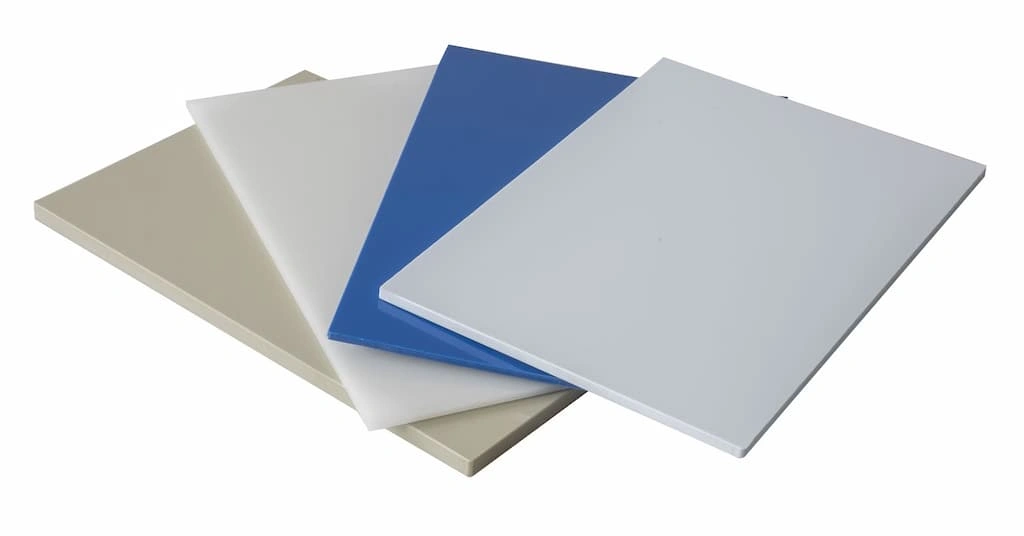
Polypropylene Sheets
Polypropylene (PP) is another aerospace plastic used for interior, packaging, and storage rather than structural components. It provides high fatigue strength, flexibility, chemical resistance, and low water absorption.
Consequently, you can easily fabricate the Polypropylene components with CNC machining, injection molding, and other processes.
Applications of PP in Aerospace
Aircraft Interior
Different interior components, such as interior cabin trims, armrests, seat parts, side panels, bezels, and tray tables.
Protective Items
It means a protective shield and housing for various instruments or components, such as electrical junction boxes, connector covers, and battery casings.
Non-structural Components
Polypropylene is also preferred where strength is not the key requirement, such as clips, clamps, terminal caps, and access covers.
5. Polytetrafluoroethylene (PTFE)
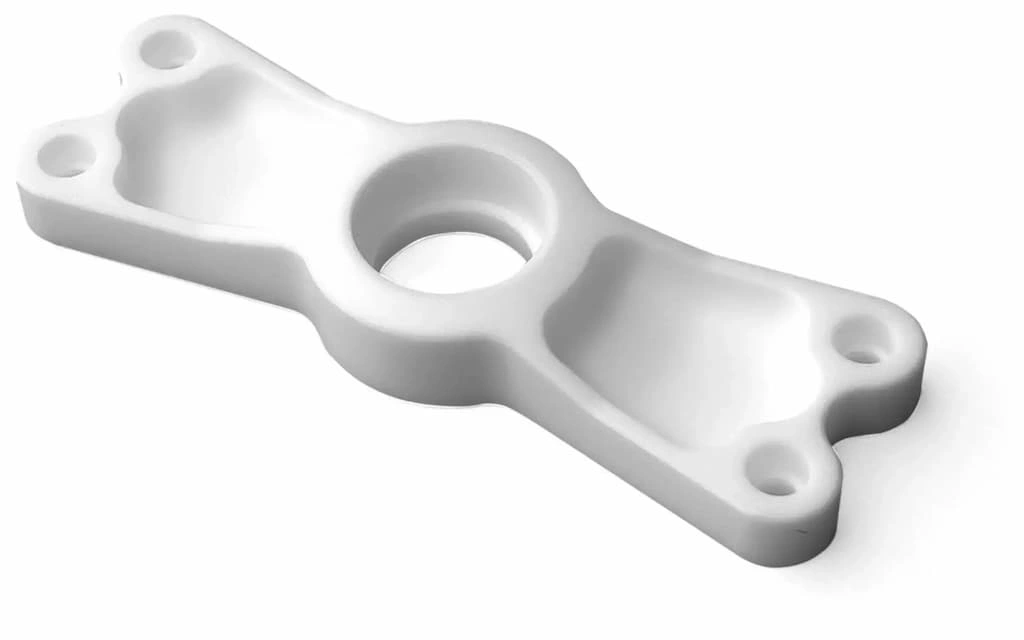
PTFE aerospace bracket
Polytetrafluoroethylene (PTFE) is also referred to as Teflon®. A high-performance plastic that can work under a wide range of temperature variation, typically from – 200 to 260 ° C.
Subsequently, PTFE is also known for a low coefficient of friction, chemical resistance, low outgassing, high dimensional stability, and electrical insulation.
Applications of PTFE in Aerospace
Electrical Insulation
PTFE is used for different electrical insulation parts, including insulators for wires, cables, connectors, and harnesses.
Fluid Lining Systems
Seals, gaskets, bushes, and liners for fuel systems, hydraulic circuits, etc.
Rotating/Low Friction Parts
The low-friction and self-lubricating properties of PTFE make it the best aerospace plastic for rotating/moving components, such as actuator bushings, sliding pads, washers, and spacers.
Try Prolean Now!
6. Polyethylene(PE)
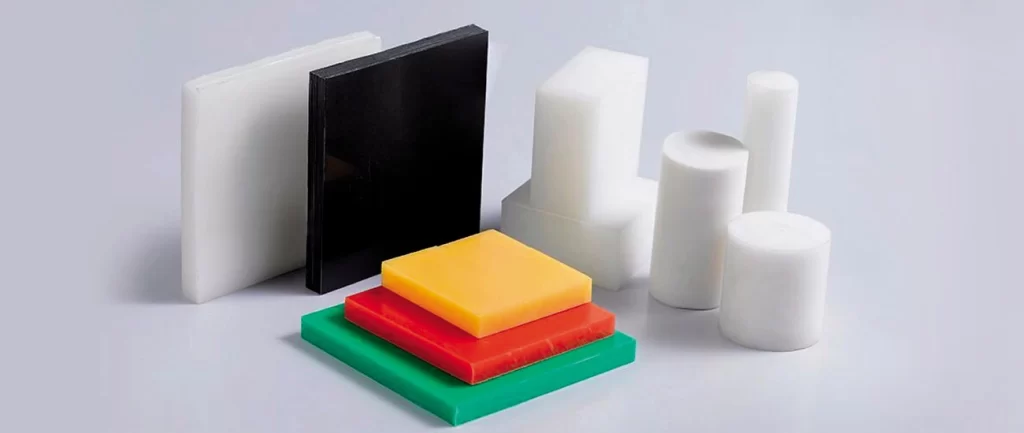
HMW-PE
Polyethylene(PE) is a lightweight aerospace plastic that offers excellent chemical resistance, fatigue & wear resistance, low outgassing, and electrical insulation. In aerospace, high molecular weight PE, called HMW-PE, is popular for aircraft applications due to its high strength-to-weight ratio. So, the weight can be reduced for better fuel efficiency.
Applications of PE in Aerospace
Electrical Insulation
Insulation for wire and cables in aircraft electrical systems for reliability.
Tubing Systems in Aircraft
Pipes and tubes for hydraulic systems, fuel lines, electrical ducting, and cooling systems.
Protective Components
The strength and shock-absorbing capacity of PE make it a good plastic choice for the protective housing of various instruments in aircraft.
Packaging
PE is a good packaging material for transporting aerospace manufacturing components without any damage or scratches.
7. Polyamide-imide (PAI)
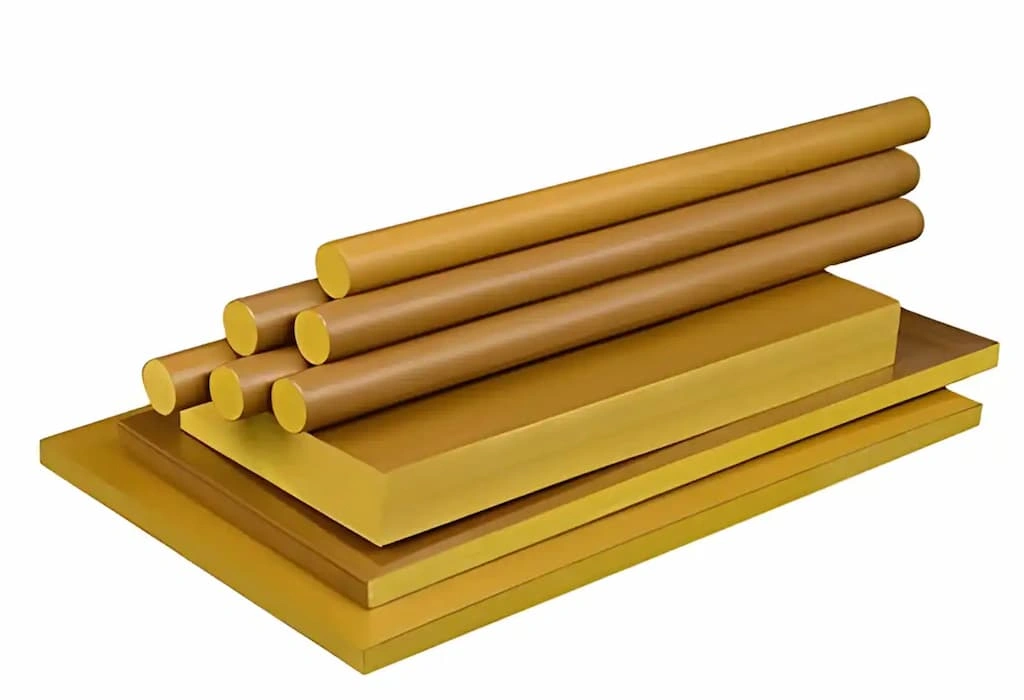
PAI plastic
Polyamide-imide, or PAI plastic, is a strong and heat resistant plastic. It is often used with glass and carbon fiber fillers for enhanced performance. Another significant advantage is that PAI maintains strength up to 250°C.
Consequently, PAI aerospace plastic is suitable for high-stress, corrosive, and thermally unstable environments.
Applications of PAI in Aerospace
Load-bearing Components
Precise load-bearing and structural parts, such as support washers, fasteners, spacers, and linkage components.
Electrical Insulators
Different electrical insulators and supports for electronic components, including connector housing, jacketing for avionics wiring, and support frames for electronics.
Fluid Control Interfaces
Seals and contact surfaces for fluid control systems, such as weather gaskets for hydraulics, fuel components, and valve parts.
Temperature Sensitive Parts
A wide range of allowable operating temperatures makes PAI one of the best material choices for fuel systems’ valve seats, clips & fasteners, thermal insulators, etc.
8. Thermoplastic Composites
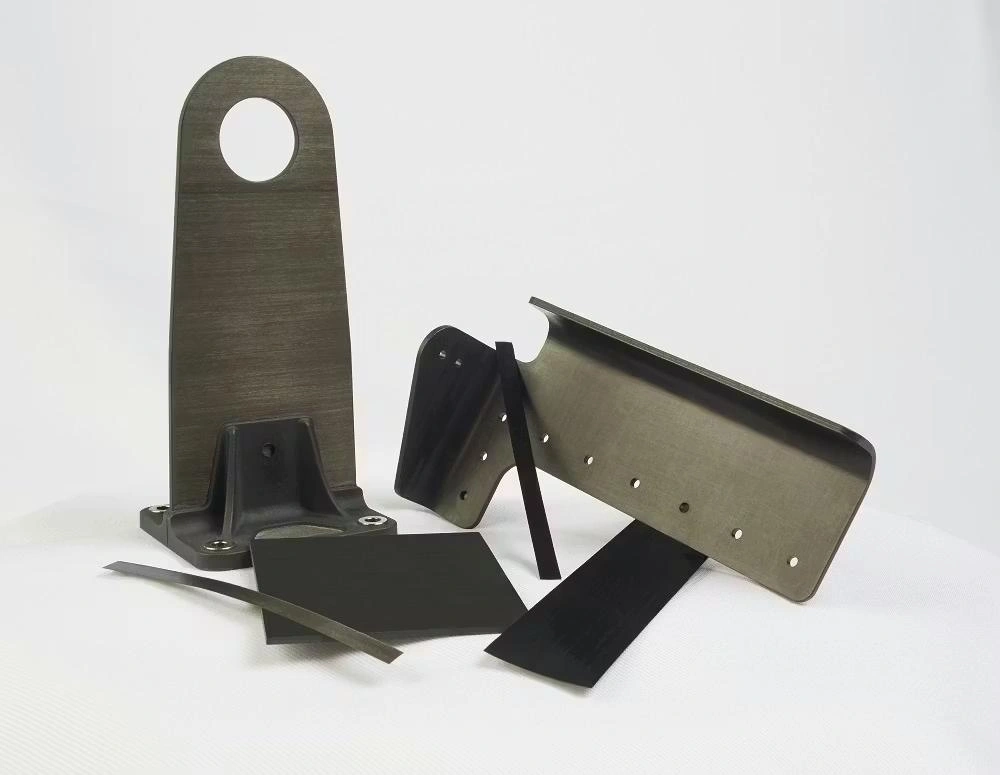
Thermoplastic composite
In the aerospace industry, different composite materials are used for high-performance parts, whereas composites are made with reinforcement of fillers in thermoplastics. Some examples are PEEK, PPS, and PCTFE.
Carbon fiber, glass-filled, and aramid fibers are the common fillers that are reinforced with thermoplastics.
Consequently, aerospace manufacturers choose composites of thermoplastics for aerospace design flexibility. The following are the reasons why composites are chosen over regular thermoplastics.
- Same or higher strength can be achieved at reduced weight.
- They provide better resistance to corrosion, chemicals, and humidity.
- Composites are more reliable and durable than regular plastic materials.
- They are easy to repair and can be recycled after the completion of their life cycle.
Manufacturing Processes for Aerospace Plastic Parts
CNC machining, injection molding, vacuum forming, and twin-thin sheet forming are the four key techniques for manufacturing aerospace plastic parts.
Let’s elaborate on each of them briefly.
CNC Machining
Machining is a process of removing material from plastic or any other type of workpiece until the desired shape is achieved. CNC milling, turning, drilling, threading, and other precision machining processes are used to produce aerospace prototypes and components.
CNC machining delivers tight tolerances, smooth finishes, and complex features with quick lead times. On the other hand, material wastage and longer lead time for mass production are two major limitations.
Injection Molding
Injection molding is ideal for large-scale production of aerospace parts with excellent repeatability and faster production cycles. It involves injecting the molten plastic into a mold under high pressure, where it flows and captures the cavity’s geometry.
Once you invest in mold tooling, up to a million cycles can be run for identical parts. Some examples of injection-molded plastic parts used in aerospace are connectors, interior trims, and snap-fit covers.
Vacuum Forming
Vacuum forming involves stretching a hot plastic sheet over a mold tooling and drawing down with a vacuum to form the desired shape. This process is known for low-tooling cost, faster cycles, and design flexibility.
Manufacturers choose vacuum forming to produce aerospace parts in small-to-medium volumes that are large in size and have relatively simple geometry, like instrument bezels and interior panels.
Twin-sheet Thermoforming
In thin-sheet thermoforming, two plastic sheets are heated separately and simultaneously drawn over matching molds, followed by fusing the mold faces to get a singular hollow part.
This method is suitable for hollow aerospace parts with ribs and internal features, such as ducts, storage compartments, and seat backs.
Advantages of Plastics in Aerospace Manufacturing
There are several advantages of plastic in aerospace manufacturing, like weight reduction, cost-effectiveness, corrosion resistance, design flexibility, etc.
- Lightweight: Plastics are lightweight materials and help to improve the fuel efficiency of aircraft.
- Corrosion Resistant: Many aircraft plastics are highly resistant to chemicals, moisture, and corrosive environments.
- Thermal Stability: Plastics like PEEK and PAI have a wide range of operating temperatures ( up to ~ 250 °C).
- Electrical Insulation: Plastics have high dielectric strength and insulate the current flow.
- Cost-effective: Plastics are cost-effective material choices in aerospace manufacturing, compared to many metals & alloys.
- Sealing & Transparency: Some aerospace plastics have excellent sealing properties and optical transparency.
Try Prolean Now!
Factors to Consider While Choosing Plastics for Aerospace Applications
Choosing the right type of plastic for aerospace applications typically depends on the parts for which you are selecting the material and what the application requirements are.
Let’s look at the list of common factors to consider while selecting a plastic for aerospace components.
- Application scenario and operating environment
- Regulatory compliance in the aerospace industry, such as FST/FAR 25.853
- Ease of fabrication, such as machinability, formability, and finishing compatibility.
- Supply chain reliability of raw materials
- Flammability and strength-to-weight ratio
Aerospace Material Challenges and Future Trends
Weight reduction without compromising the desired strength & stiffness is the key challenge in the aerospace material selection. Companies always try to achieve the best tradeoff between lightweightness and mechanical strength.
Therefore, high-performance plastics and composites are becoming increasingly popular in aerospace manufacturing.
Other challenges include:
- Thermal resistance at lower and elevated temperatures
- Material’s ability to withstand cyclic loads
- Ease of fabrication, such as machinability.
- Cost-effectiveness of high-performance plastics
Future Trends in Aerospace Plastic Materials
- Lightweight Composites: Use of carbon-fibre reinforced polymers (CFRP), aramid fiber, and other advanced composites with excellent strength-to-weight ratios.
- Thermoplastics: Aircraft manufacturers are choosing high-performance thermoplastics, such as PEEK and PEI, over metals & alloys.
- Automation: Industries are using automation in composite manufacturing to ensure high & consistent quality.
- 3D Printing: Another trend is the use of polymer 3D printing to produce aircraft components.
The size of the aerospace plastic market is approximately $10.1 billion in 2026, a significant increase from 2024 ($8.15 billion). According to Towards Chems & Materials, the market size of aerospace plastics is expected to reach $23.3 billion by the end of 2035, with an average annual growth rate of 9.75%.
Next, let’s look at the chart below for year-wise prediction of market size for aerospace plastics.
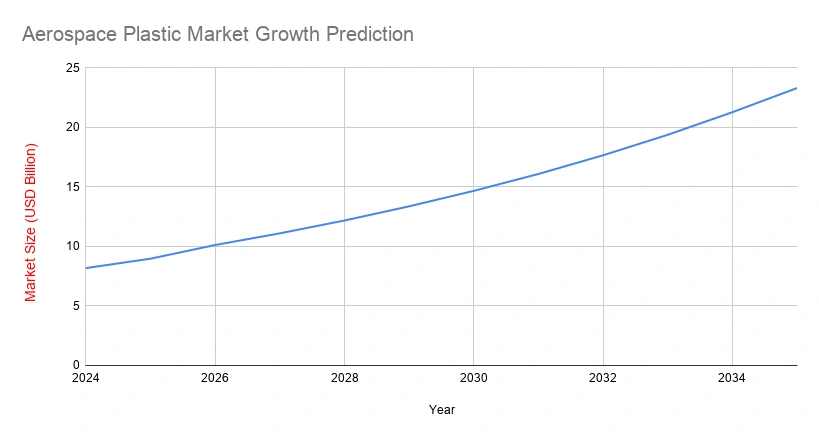
Market growth of aerospace plastics
Try Prolean Now!
Conclusion
Overall, aerospace plastics are essential materials that are used to produce a variety of parts for cabin interiors, back-lit panels, protective components, and electrical systems, sub-assembly fasteners, and critical near-engine manifolds.
High-performance plastics like PEEK, PTFE, PEI, and PAI not only meet the performance and safety requirements but also reduce the weight and boost fuel efficiency.
At ProlenTech, we provide plastic machining services for aerospace, automotive, medical, consumer goods, electronics, and many other industries. We have multi-axis CNC machines that can precisely shape complex plastic parts with tolerances down to ± 0.005mm.
FAQs
What polymer is used in aerospace?
High-performance polymers like PEEK, PEI, PTFE, and PAI are used in aerospace for structural parts, electrical systems, interior, etc.
What is aerospace-grade material?
An aerospace-grade material is any metal, alloy, plastic, or composite engineered to meet or comply with performance, safety, and quality-standard requirements.
What are the thermoplastics for aerospace design flexibility?
PEEK, PEI, PPS, and PC are the common thermoplastics for aerospace design flexibility.
0 Comments