
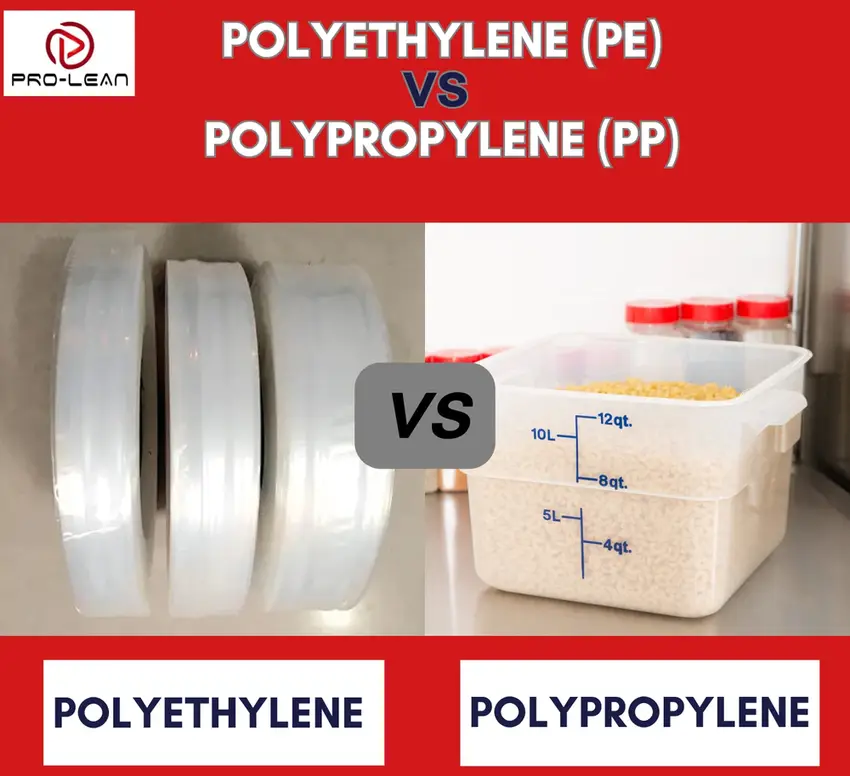
Polyethylene vs Polypropylene
At a time when the variety of plastic products is mind-boggling, selecting the right thermoplastic material is fundamental for a business. A wrong material choice can prompt part failures, reworks, and unnecessary costs. At ProleanTech, we have noted an inevitable question: from buyers and engineers alike: Polyethylene vs polypropylene – which thermoplastic suits my application? The two thermoplastics are confusing because they are both lightweight, chemically resistant, and versatile. Yet, wrongly opting for one can have costly repercussions. It is only after deeper analysis that leading differences become clear.
The flexibility, impact resistance, and moisture resistance of polyethylene material are outstanding. Polypropylene is more exciting if you focus on tensile strength, dimensional stability, and fatigue resistance.
So, whether one is better than the other depends on the application. Your budget and performance demands are also critical. This article covers these and other points to help you make a confident and cost-effective decision.
What is Polyethylene?
Polyethylene (PE) is a widely used plastic globally, which has been commercially available for about eight decades. This thermoplastic polymer stands out for its versatility, good sliding friction properties, low-temperature impact strength, and high ductility.
Notably, there are different categories of PE, each presenting unique properties. This shows the diversity of thermoplastics, as seen in their different applications. The basic formula of polyethylene material is (-CH₂-CH₂-)n. The ‘n’ indicates that the ethylene unit keeps repeating multiple times. These units could be in the thousands, depending on the material’s molecular weight.
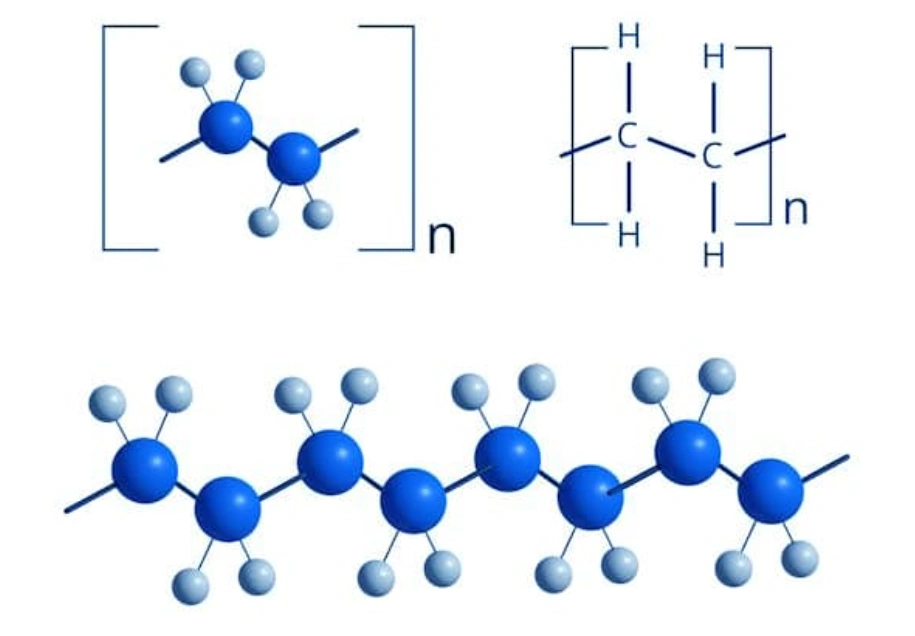
Polyethylene molecular structure
How is Polyethylene Produced?
As shown in the diagram below, the production steps for polyethylene polymer include polymerization, the addition of various catalysts, control of process variables, and fine-tuning of the plastic’s properties.
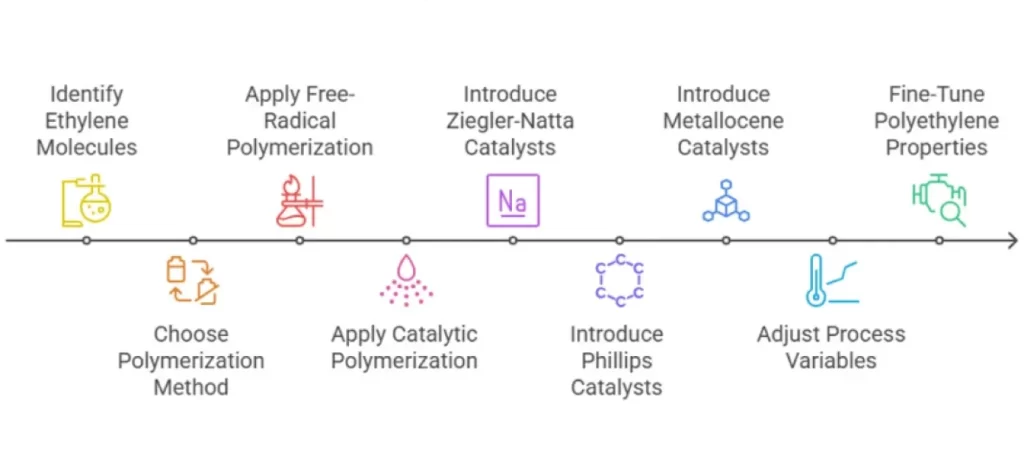
PE production process
Properties of Polyethylene
The properties of polyethylene can significantly vary from grade to grade. For instance, higher density is seen in grades with more linear polymer chains. Thus, HDPE is denser than LDPE. Variance in properties is also evident in optical properties, flexibility, tensile strength, and melting point.
| Density | Depends on the grade. LDPE is lighter, HDPE is denser |
| Optical properties | Depends on crystallinity and processing. Translucent to almost-transparent |
| Flexibility | Excellent. Highest in LDPE and LLDPE. |
| Tensile strength | Moderate. Denser grades are stronger. |
| Toughness | High impact resistance |
| Melting point | Relatively low, but the exact figure depends on grade. |
Different Polyethylene Grades
The common polyethylene grades are low-density polyethylene (LDPE), high-density polyethylene (HDPE), linear low-density polyethylene (LLDPE), ultra-high-molecular-weight polyethylene (UHMWPE), and medium-density polyethylene (MDPE). Among these, HDPE is one of the most widely machined grades because it is easy to machine, resists chemicals, and performs well in wear applications, making it suitable for HDPE Machining.
Other grades are cross-linked polyethylene (PEX/XLPE), high-density cross-linked polyethylene (HDXLPE), high-molecular-weight polyethylene (HMWPE), ultra-low-molecular-weight polyethylene (ULMWPE/PE-WAX), and metallocene polyethylene (mPE).
The list also includes very-low-density polyethylene (VLDPE) and chlorinated polyethylene (CPE). Each of these grades has unique properties that guide the respective industrial applications. The table below gives a perspective of these differences.
| Polyethylene Grade | Properties | Typical applications |
| LDPE | Good clarity, flexible, low-density | Bottles, plastic bags |
| HDPE | Rigid, high-strength-to-density | Crates, fuel tanks, pipes |
| LLDPE | Stress-crack resistant, flexible, tough | Packaging wraps |
| UHMWPE | Low friction, highly wear-resistant | Bearings, gears, medical implants, cutting boards |
| MDPE | Flexible and tough | Fittings, gas pipes |
| PEX/XLPE | Chemically stable, heat-resistant | Wire insulation, plumbing pipes |
| HDXLPE | Temperature-resistant, rigid | Industrial piping systems |
| HMWPE | Impact-resistant, strong | Bins, drums |
| ULMWPE/PE-WAX | Lubricating properties, low molecular weight | Coatings |
| mPE | Uniform structure, good clarity | Packaging films |
| VLDPE | Elastic and soft | Cling films, sealants |
| CPE | Chemical- and weather-resistant | Cable jacketing |
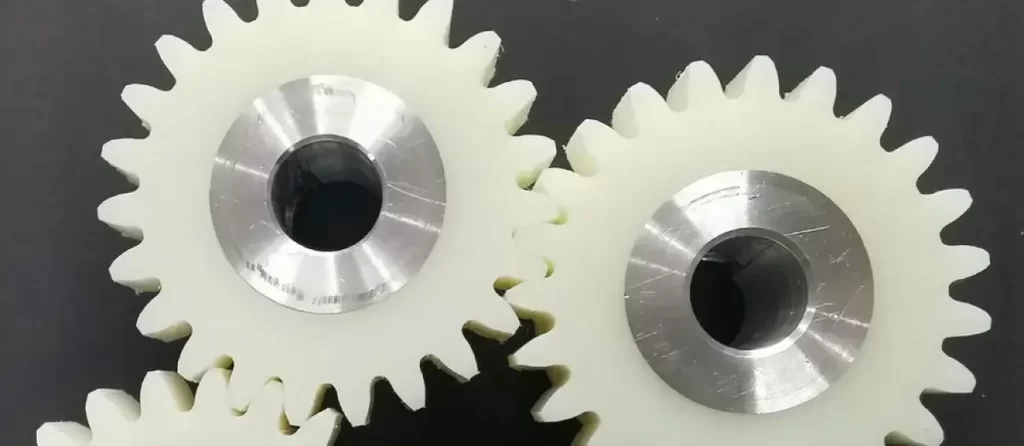
UHMWPE plastic sprockets
Is Polyethylene Thermoplastic?
Yes, polyethylene polymer is a thermoplastic – it softens when heated and solidifies when cooled. These physical changes are reversible. Since polyethylene is a thermoplastic, it can be easily extrusion molded, thermoformed, blow molded, and injection molded. These are popular manufacturing methods used for parts such as food packaging containers, plumbing pipes, and plastic bottles.
What is Polyethylene Used For?
As a versatile thermoplastic, polyethylene is used in different industries, including packaging, medical, consumer goods, automotive, electronics, agriculture, and construction.
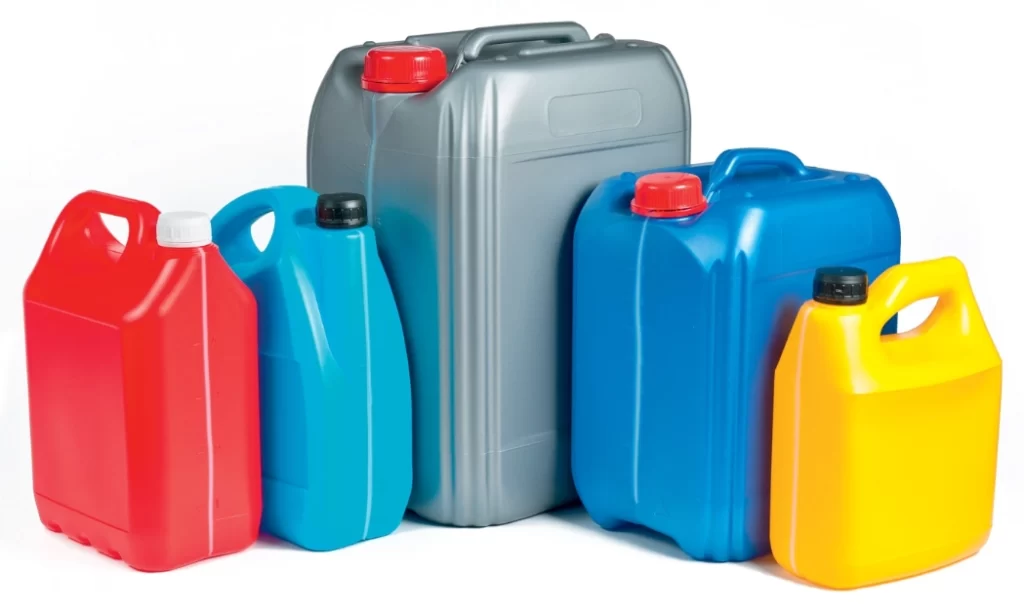
PE plastic jerry cans
What is Polypropylene?
Polypropylene is a lightweight, strong, and durable thermoplastic polymer with impressive fatigue resistance. It also has good chemical and solvent resistance. The other main features of material PP are affordability and good heat resistance. Although polypropylene is predominantly white, color options can be explored with your manufacturer. The material is easy to pigment, so request any color for your parts, and it can be done. It has the chemical formula (C3H6)n, and the molecular structure is as shown below.
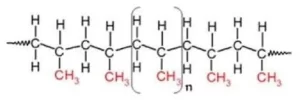
Polypropylene molecular structure
How Polypropylene is Produced
Polypropylene is produced through the polymerization of propene, a monomer. This is through either Metallocene catalysis polymerization or Ziegler-Natta polymerization. Based on the methyl group position, the resulting chain structure can be atactic (aPP), isotactic (iPP), or syndiotactic (sPP).
Further, there are varieties of polypropylene based on opaqueness/transparency, weight, insulation, and hardness. A PP material acquires any of these specific properties depending on the production process.
Properties of Polypropylene
Some notable properties of material PP are a variable polypropylene melting point, low density, good chemical resistance (unless they are oxidizing agents or aromatic hydrocarbons), and flammability. The material also exhibits good retention of electrical and mechanical properties at high temperatures. It does repel water.
Here’s a summary of the main properties of polypropylene.
| Strength and durability | Flexible, impact-resistant, good stiffness, high tensile strength |
| Chemical resistance | Resistant to alcohols, acids, and bases. Degrades in oxidizing agents |
| Temperature resistance | Electrical and mechanical properties maintenance at elevated temperatures |
| Moisture resistance | 0.01–0.03% water absorption |
| Recycling | Fully recyclable |
| Weight/density | Lightweight thermoplastic – density at 0.90 to 0.91 g/cm³ |
Types of Polypropylene
The main types of polypropylene are polypropylene homopolymer, polypropylene copolymer, and polypropylene impact copolymer. Each of these categories is unique in terms of strength, processing, and stiffness.
Applications of Polypropylene
Polypropylene uses across different industries, including packaging, automotive, healthcare/medical, consumer goods, textile, and industrial, demonstrate its versatility.
Packaging – In packaging, the main polypropylene uses are reusable bags, food containers, container enclosures, and bottle caps.
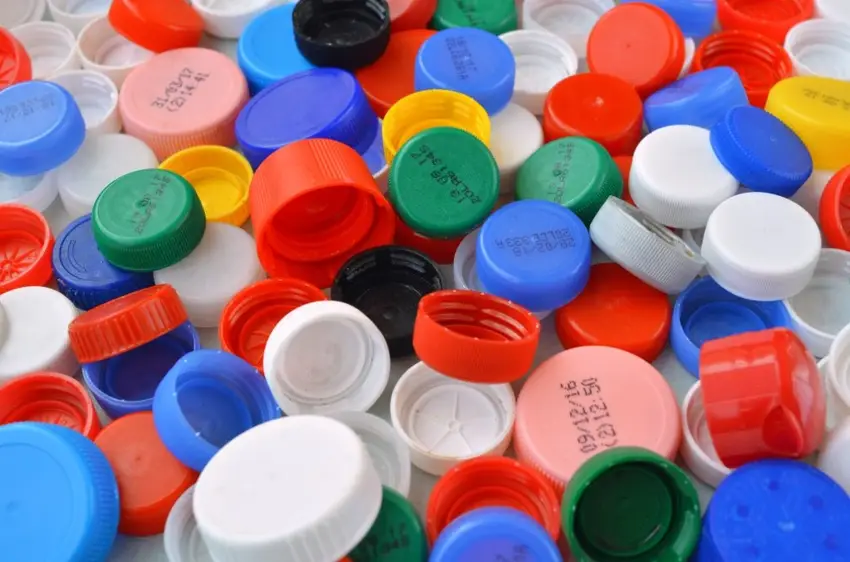
Polypropylene bottle caps
It is food-safe- it doesn’t react with the food and is microwavable due to heat resistance.
Automotive – The longevity and strength of PP are appealing to automotive manufacturers. They process the plastic for essential parts, including fuel systems, battery enclosures, interior trim, and bumpers.
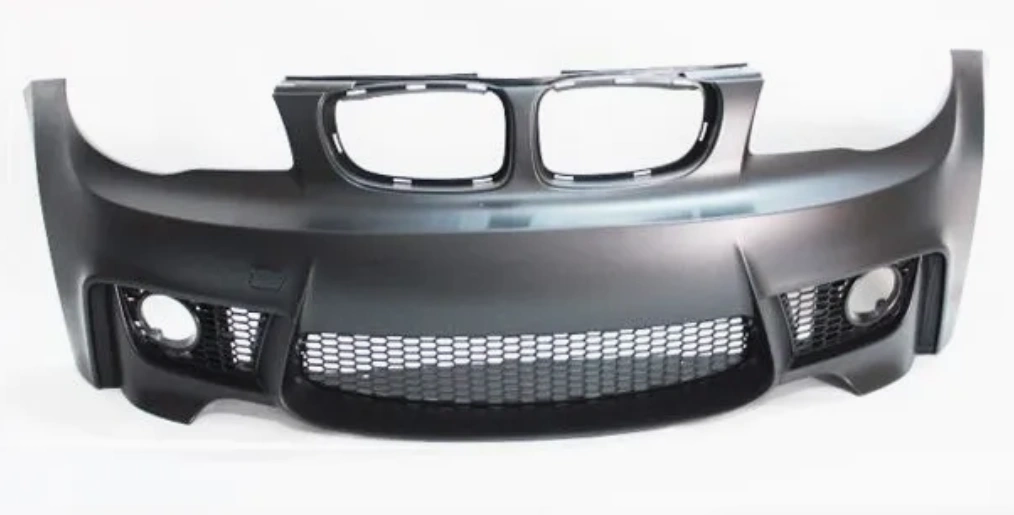
PP car bumper
Healthcare/Medical – The chemical resistance and sterility of PP come out clearly in this critical sector. CNC machining and other processing methods can convert the material into medical instruments, syringes, specimen bottles, and drug containers, among other items.
Consumer Goods – Consumer goods include toys, storage boxes, furniture, and food containers. These are made from this versatile plastic, mostly due to its strength and safety.
Textile – For an industry that thrives on strength and moisture management, there are probably not many better materials than polypropylene. This popular plastic can be found in camping gear, ropes, clothing, and carpets.
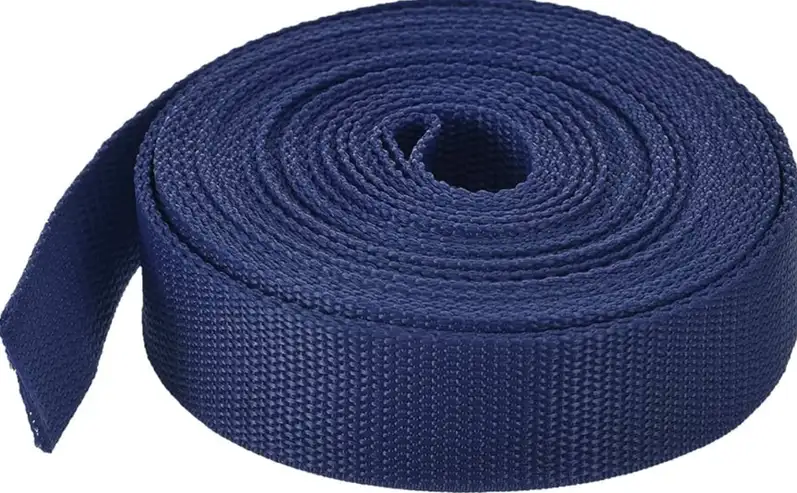
PP outdoor camping strapping band
Industrial – There are many industrial applications of PP for reasons such as chemical resistance, durability, and versatility. Examples are industrial tanks, low-friction gears, pipes, and machinery components.
Is Polypropylene Water-Resistant?
Yes, polypropylene (PP) is very water-resistant. The plastic’s water absorption is 0%, so expect it to behave similarly outdoors in humid conditions and indoors. Owing to its hydrophobic characteristics, PP is a preferred material for filtration systems. Filtration membranes made of this material allow for selective filtration, repelling water and other contaminants.
Added advantages of PP in this application include:
- Corrosion resistance
- Cost-effectiveness
- Customization
Try Prolean Now!
Polyethylene vs Polypropylene in Different Angles
PE and PP differ in physical, chemical, and mechanical properties, recycling, and applications. The specifics of these differences are outlined below to help you determine which of the two plastics suits your requirements.
Polyethylene vs Polypropylene: Physical Properties
Plastic PE material is lighter, has lower heat resistance, and is more flexible at elevated temperatures. Material PP has a more scratch-resistant surface, suitable for CNC machining.
Polyethylene vs Polypropylene: Chemical Properties
Both plastics resist acids, alcohols, and bases excellently. However, PE resists moisture and stress cracking better. Polypropylene is more dimensionally stable in chemical processing applications.
Polyethylene vs Polypropylene: Mechanical Properties
The flexibility and impact resistance of plastic PE material are unmatched, especially for the HDPE grade. It is one of the best impact resistance plastic. However, PP has higher tensile strength – up to 40 MPa vs 35 MPa. It also has superior fatigue resistance and stiffness.
Is PP or PE stronger?
Yes, PP is stronger than PE in terms of rigidity and tensile strength. Structural components are mostly made of PP instead of PE. Plastic PE material is a more impact-resistant plastic and is more flexible. The machinability of PP is better due to its higher dimensional stability.
Polyethylene vs Polypropylene: Applications
The properties of the two plastics determine the ideal applications. For PE, piping, packaging, and containers are the most recurrent applications. PP is mostly used in medical devices, automotive parts, and other demanding applications.
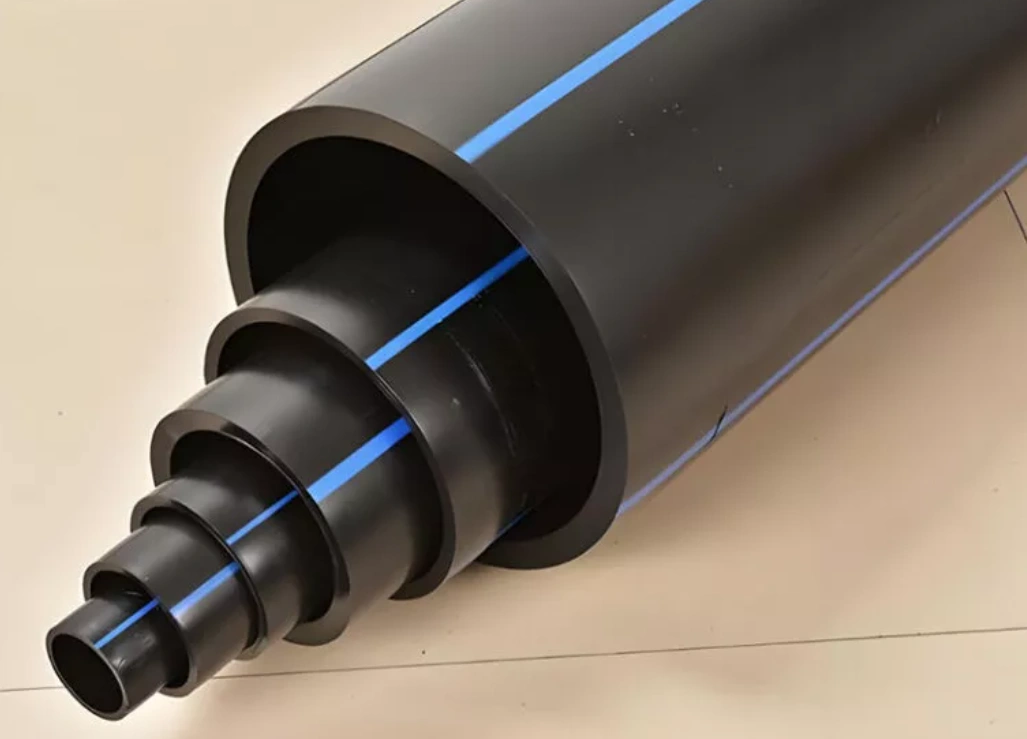
HDPE pipes
Polyethylene vs Polypropylene: Recycling
The full recyclability of both materials should impress the manufacturer. Of course, PP recycled materials are bound to be more valuable due to the better mechanical properties.
Comparison Table for Polyethylene vs Polypropylene
Below is a table summarizing the Polyethylene vs Polypropylene comparison. Key comparison areas are optical clarity, electrical insulation, heat resistance, melting point, strength, durability, chemical resistance, recycling, and density.
|
Property |
Polyethylene |
Polypropylene |
|
Optical clarity |
Good |
Moderate |
|
Electrical insulation |
Excellent |
Excellent |
|
Heat resistance |
Lower |
Higher |
|
Melting point |
Polyethylene melting point: 105 to 135 °C |
Polypropylene melting point: 160 to 170 °C |
|
Strength & durability |
Flexible, impact-resistant |
Rigid, higher tensile strength |
|
Chemical resistance |
Excellent |
Excellent |
|
Recycling |
Recyclable |
Recyclable |
|
Density |
0.91–0.96 g/cm³ |
0.90–0.91 g/cm³ |
Despite the differences between polyethylene and polypropylene discussed above, the two plastics share several common properties. You may find their parts used interchangeably because they are both lightweight, versatile in processing, and chemically resistant.
Low Weight – PE and PP are light, hence suitable for transportation and packaging applications. Their parts can significantly minimize associated costs.
Manufacturing Versatility – The plastics can be processed using different methods, including plastic CNC machining, extrusion, and molding. This is another opportunity for the manufacturer to align with the market’s application requirements.
Chemical Resistance – Polyethylene material and polypropylene have exceptional resistance to many chemicals. The plastics make packaging equipment that can handle corrosive products.
Try Prolean Now!
So, Do You Choose Polyethylene or Polypropylene?
Despite the good properties in both polyethylene and polypropylene, sometimes, you just have to choose. The recommended elements when presented with this choice are;
- PP is restricted to translucency, while PE can be processed to be transparent.
- PP is more chemically tolerant than PE
- PE melts at a lower temperature
- PE has more UV resistance
All these differences and potential compromises suggest one thing: Expert advice is required when choosing between PE and PP.
Polystyrene vs Polypropylene
Another critical material comparison is that of polystyrene vs polypropylene. Although we will cover this comprehensively in a different article, we can mention the main differences, which include;
- Polypropylene offers better heat resistance
- Polystyrene is generally more affordable
- Polystyrene is more prone to stress cracking at low temperatures due to its rigidity and brittleness.
- Polypropylene works better in chemical environments.
In Conclusion
The polyethylene vs polypropylene comparison provided here can help you get the best thermoplastic-machined parts at a cost-effective price. The guidelines show that while polyethylene and polypropylene differ, each serves the market in particular ways.
Choose PE when flexibility, moisture resistance, and sealing performance are needed. Choose polypropylene for parts that require higher stiffness and better outdoor durability. If you’re unsure which material fits your application, ProleanTech can help. We provide plastic CNC machining and polyethylene machining services for custom parts. Contact us to discuss your project.
0 Comments