
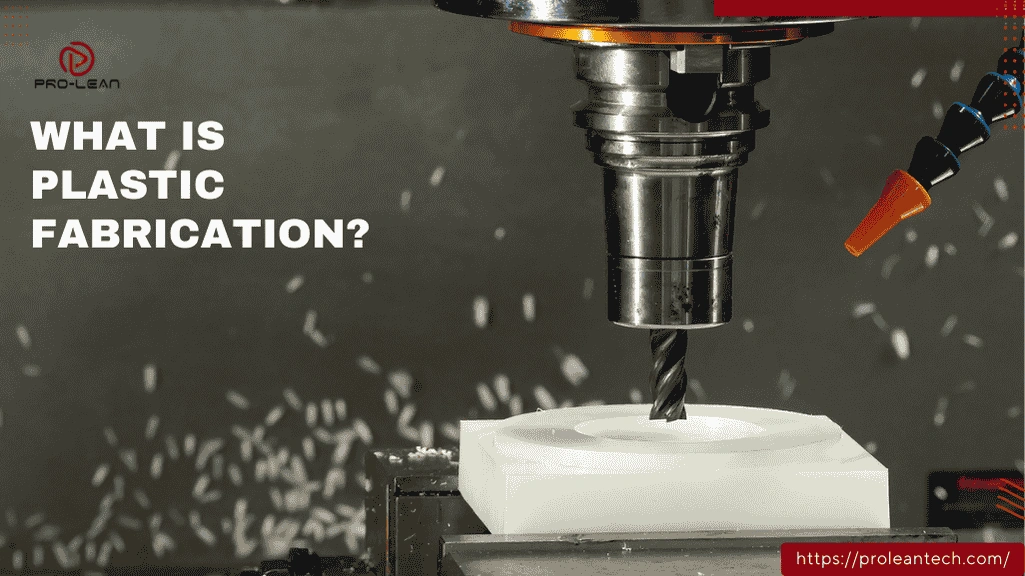
Plastic fabrication
Fabrication is all about shaping raw materials into functional items using manufacturing processes and assembly techniques. You can use molding, extrusion, thermoforming, plastic CNC machining, 3D printing, and other methods for plastic fabrication.
To fabricate high-quality plastic parts and products at an economical rate, each fabrication stage must be optimized for end-use requirements and cost competitiveness. It requires an understanding of materials, fabrication processes, production economics, and related topics.
This article discusses eight plastic fabrication methods, the common plastics used in fabrication, the applications of fabricated products, and more.
What is Plastic Fabrication?
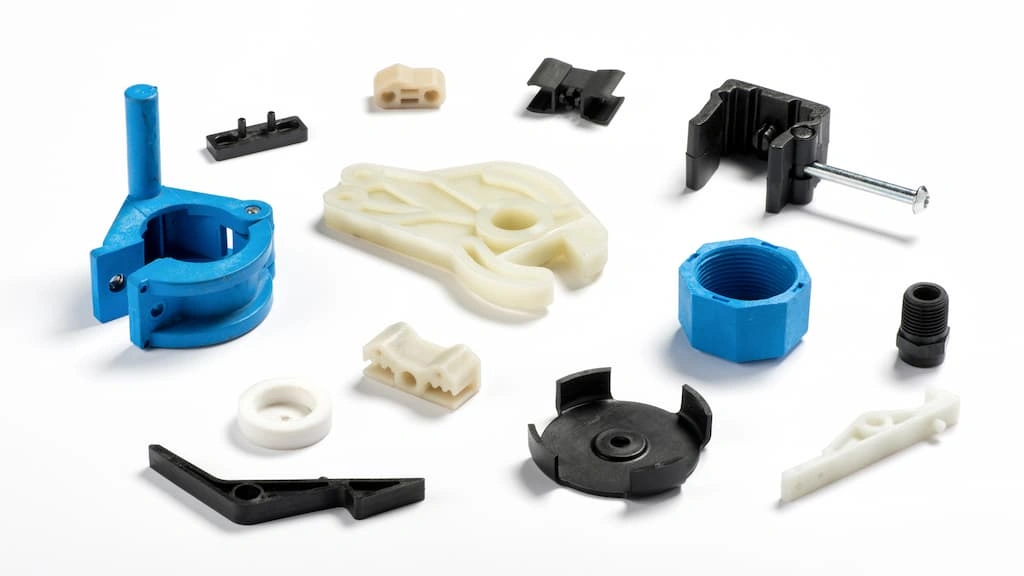
Fabricated plastic items
Plastic fabrication is a process of creating useful products and industrial components from raw plastic pellets, resin powders, or sheets. It involves engineering design of parts/products, selection of appropriate material types and plastic fabrication methods, post-processing operations, and assembly techniques.
Acrylic, polycarbonate, polyethylene, HDPE, Nylon, PET, and many other types of plastic can be fabricated into desired shapes using appropriate methods.
Fabricated items offer lightweight, cost-effectiveness, durability, design flexibility, and application versatility. Additionally, the plastic fabrication process can be used across all kinds of production requirements: prototyping, small batches, and mass manufacturing.
Eight Types of Plastic Fabrication Methods
Let’s look at eight different fabrication methods for the manufacturing of plastic components and products: 3D printing, CNC machining, molding, extrusion, thermoforming, vacuum casting, die cutting, and plastic welding.
1. Plastic 3D Printing
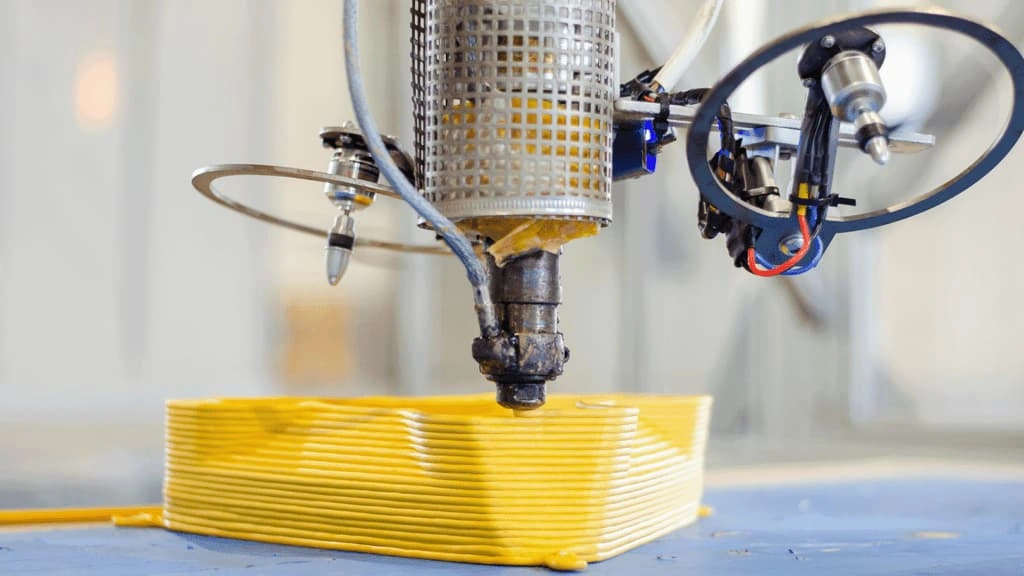
Plastic 3D printing
This method involves building plastic parts with successive polymeric layers. In 3D printing, printing techniques, resins, layers, or filaments of plastic are used to build the designed shape. Consequently, it allows for complex plastic shapes with intricate internal detailing.
You can use Fused Deposition Modelling (FDM), Stereolithography (SLA), or Selective Laser Sintering (SLS) techniques to print your parts and products.
Best for: Complex shapes, quick small runs, and rapid prototyping
2. Plastic CNC Machining
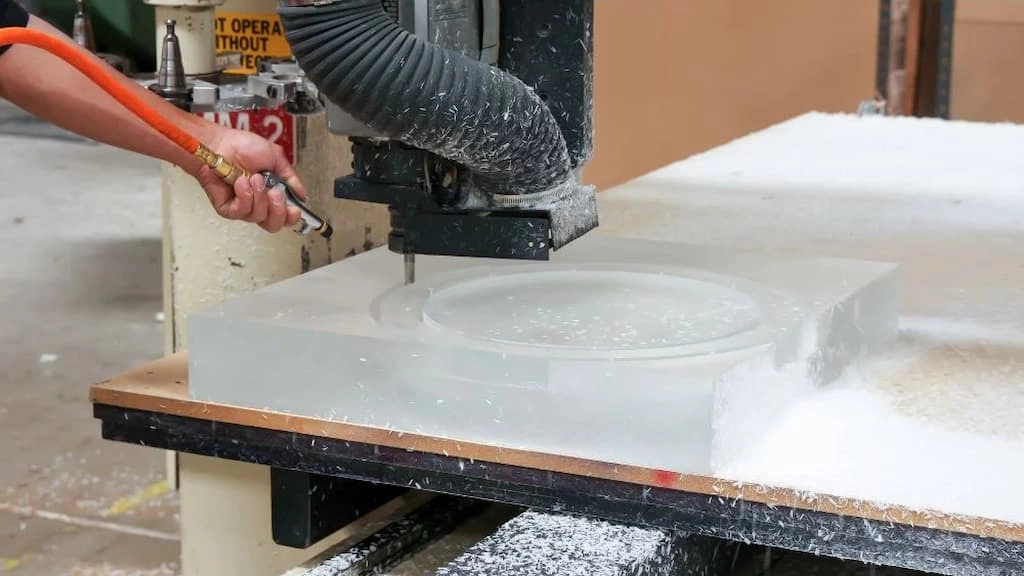
Plastic CNC machining
Unlike 3D printing, plastic CNC machining is a subtractive manufacturing method that involves removing material from a plastic workpiece using appropriate cutting tools to shape it. It is critical to select the appropriate feed rate, speed, and tooling material to avoid melting, burning, or other potential defects.
A CNC program (G & M codes) controls the tools and other auxiliary systems in plastic CNC machining, reducing human input and enhancing automation. You can use CNC milling, turning, drilling, routing, and other machining processes to machine plastic materials. This method offers complex shaping, tight tolerances (± 0.01mm), and repeatability.
Furthermore, almost all plastic materials are machinable: acrylic machining, ABS machining, and polycarbonate machining are the most common plastic machining methods.
Best for: Low- to medium-volume production with tight tolerances, a smooth finish, and consistency.
3. Plastic Molding
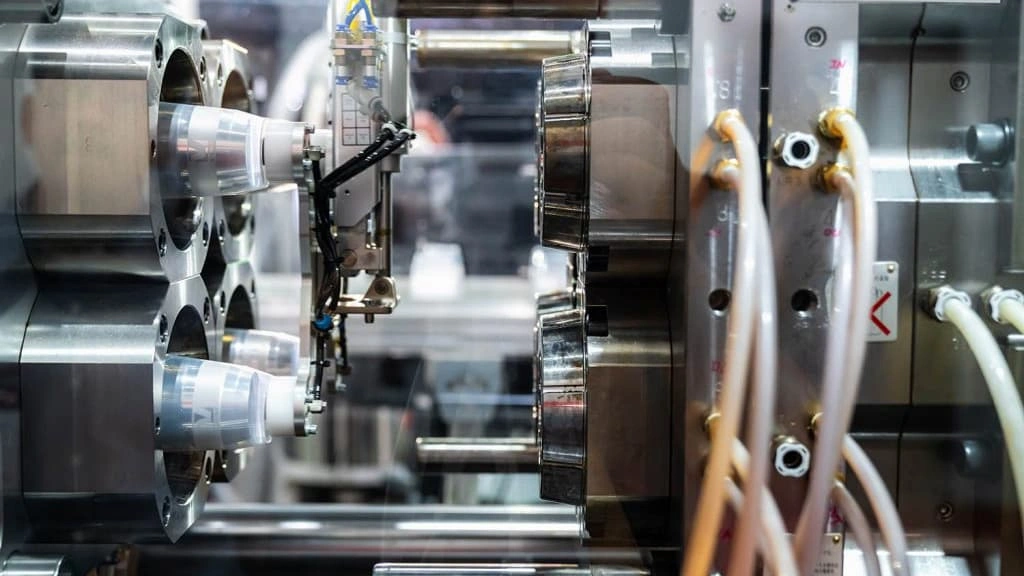
Plastic injection molding
Molding involves melting and solidifying plastics to form them into desired shapes using mold tooling. It is one of the most consistent and cost-effective methods for producing plastic items in large volumes.
You can use Injection molding, overmolding, insert molding, blow molding, rotational molding, or any other suitable type.
Best for: When medium or high volumes of parts/products are needed with low per-part cost and uniform quality.
4. Plastic Extrusion
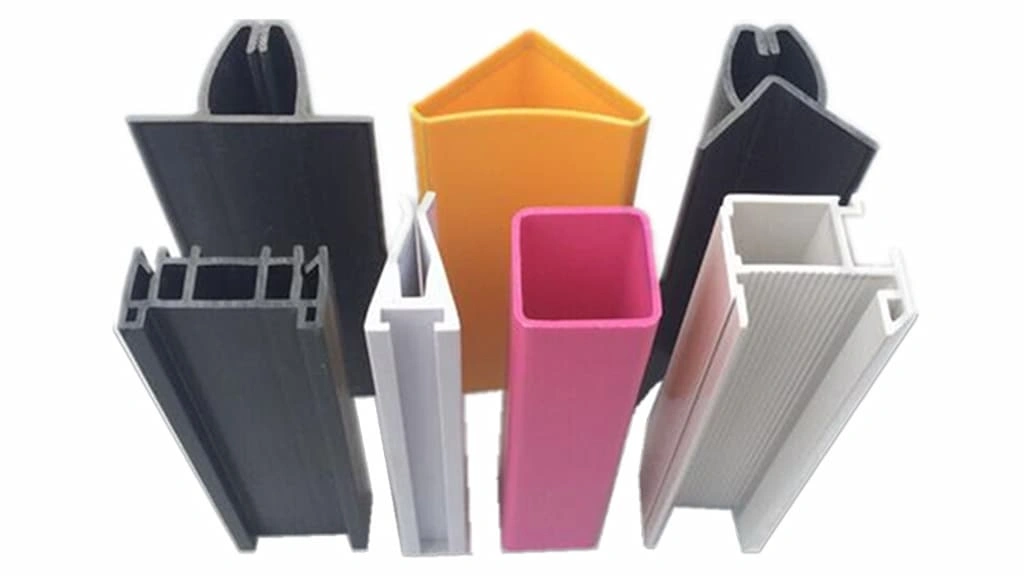
Plastic extrusion
Extrusion is a method of producing products with a uniform cross-section by forcing the thermoplastics into a metallic die. The die setup includes heating elements, flow channels, and a cooling arrangement to complete the shaping process.
Thermoplastic granules or pellets are forced into the die through one opening; the heaters melt, and the screw pushes the plastic through the cavity. The cooling system solidifies the flowing plastic into shape as it exits another opening of the die cavity.
Best for: Producing continuous cross sections like tubes, rods, frames, and custom profiles in large volumes.
5. Thermoforming
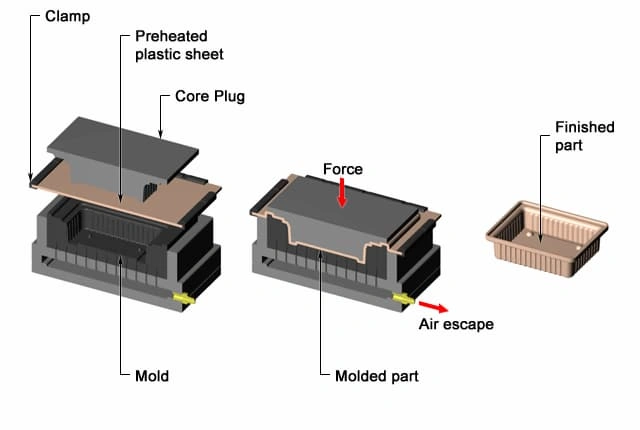
Thermoforming
In thermoforming, medium-to-large-sized plastic sheets are formed into the required shape using a mold and vacuum pressure. A heated pliable plastic sheet is placed over the thermoforming mold (half-open) and stretched using a vacuum pressure from the other side.
Best for: Thin-wall plastic components/products at a competitive rate.
6. Vacuum Casting
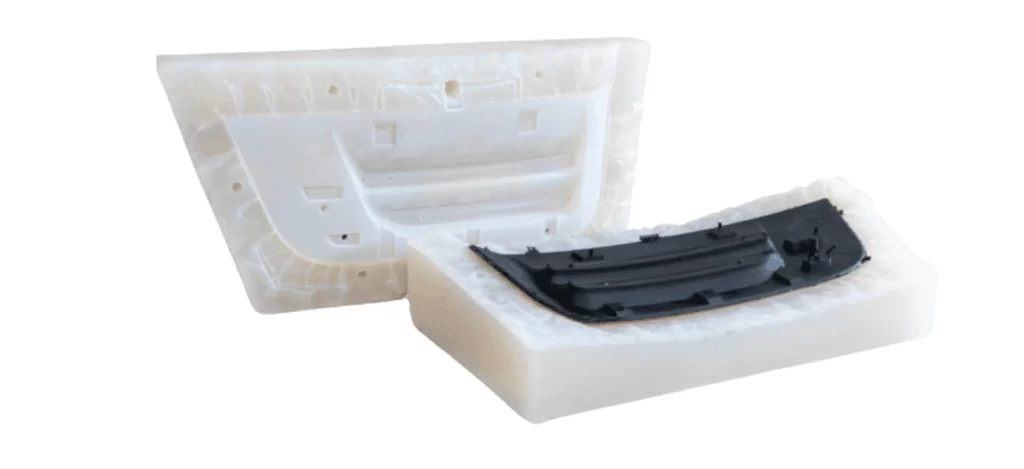
Vacuum casting
Vacuum casting, also known as urethane casting, is a low-volume production method for plastic items. It involves the use of a flexible silicone mold, in which molten polyurethane or other resins are poured and solidified to achieve the desired shape. Meanwhile, to make the silicone mold, you first need a physical replica of the required shape, called “pattern”.
Best for: Low volumes ( typically up to 100 units) with fine detailing and finish
7. Plastic Welding
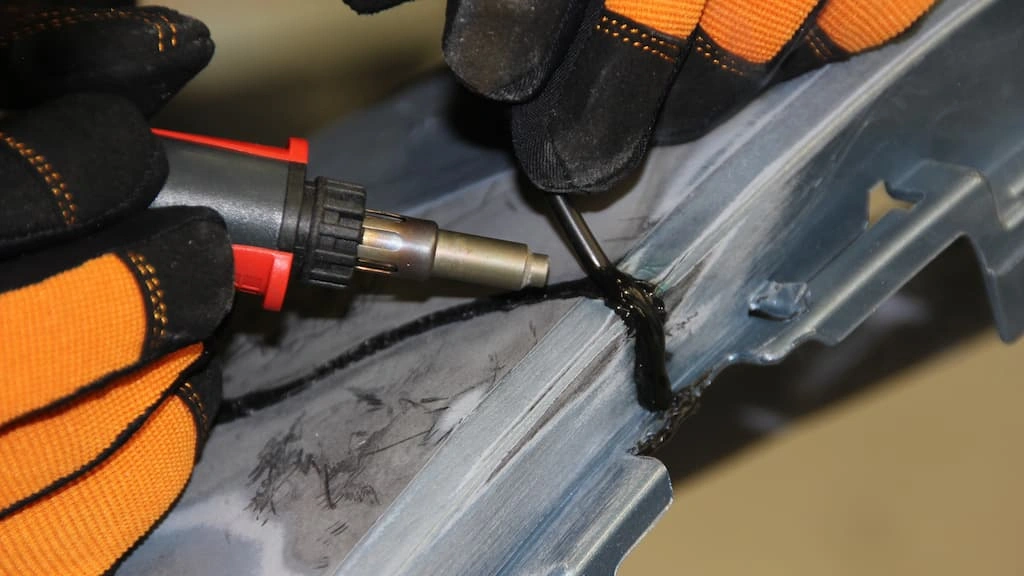
Plastic welding
Plastic welding uses heat and pressure to join multiple plastic parts. This method creates cross-linked molecular chains at the joining position, forming strong, reliable joints. Consequently, it also allows the joining of dissimilar plastics.
You can use induction, hot-plate, ultrasonic, hot-gas, laser, or friction welding techniques to weld plastics.
Best for: Permanent joining of thermoplastic parts without any fasteners and leak-proof assemblies.
8. Die Cutting
Die cutting involves shearing a sheet of plastic into a specific profile defined by a metal die. A steel die-cutting tool is pressed against the work plastic, which shears the material without melting. It can be used for seals, electronic panels, gaskets, and other items.
Best for: Medium to large-scale production of uniform flat parts, maintaining precision and clean edges.
How to Choose the Right Plastic Fabrication Method?
Choosing the right fabrication method for your plastic parts depends on the type of plastic you are using, the geometry of the desired part, production volume, and per-part economics.
Let’s look at the key considerations below.
- Part Geometry and Features: Consider the size, shape, and geometric features of the parts you want to fabricate.
- Plastic Material Type: Consider which plastics you are using and which fabrication methods are compatible with them.
- Production Volume and Economics: Often, each plastic material can be processed using multiple fabrication approaches, but the cost and overall quality may vary. Therefore, consider the volume you want to produce and per-part costing.
- Desired Functionality and Performance: For what application purpose are you producing the plastic parts, and what are the specific application requirements? Some methods produce more rigid structures than others.
- Required Precision: Consider the required consistency and dimensional tolerances of parts. CNC machining and 3D printing are good at maintaining tight tolerances across batches.
The Process of Plastic Fabrication
The plastic fabrication process includes a series of multiple steps, such as designing, material preparation, shaping & forming, assembly, and quality inspection. Here are the steps on how you can carry out plastic fabrication.
1. Plastic Part Designing
The fabrication process starts with the creation of an engineering design for a part or product. It entails shape, geometrical features, their positions and orientations, dimensions, tolerances, and other critical information.
You can use CAD software such as AutoCAD, SolidWorks, CATIA, etc., for part design.
2. Material Selection and Preparation
Choose the right plastic material based on the properties required for the end application. Also, prepare the fabrication materials. For instance, you need pellets for molding and thin sheets for thermoforming.
3. Material Shaping
Next, prepared raw plastic materials are shaped using the right fabrication methods, as we have discussed above. Meanwhile, continuous monitoring of the shaping operation is mandatory.
4. Post-processing and Assembly
If required, refine and finish the parts after shaping them. It includes trimming, deburring, sanding, polishing, coating, etc. Then assemble the components using fastening, adhesion, or plastic welding, whichever is best.
5. Quality Inspection and Packaging
Quality control inspections and measurements are crucial for verifying the desired quality, properties, dimensional accuracy, and production consistency. You can use different instruments and tools for this. For example, 3D scanners, CMM machines, micrometers, hardness testers, etc.
Try Prolean Now!
Which Materials are Used in Plastic Fabrication?
Several materials are used in the manufacturing of plastic components, including Acrylic, Polycarbonate, Polystyrene, HDPE, PVC, PET, and Polypropylene. Each of these plastics has its unique properties and benefits, used across diverse applications.
The table below outlines common plastics used in fabrication with their common properties.
Acrylic(PMMA)
PMMA, or Acrylic, is known for its optical clarity and is often used as a glass replacement. Consequently, Machining, thermoforming, and laser cutting are common methods for fabricating PMMA.
- Pros: High optical clarity, lightweight, weather-resistant, good stiffness, and appealing finish.
- Cons: Low impact strength and good outdoor performance.
Polycarbonate (PC)
You can see polycarbonate fabricated items as safety gears, eyewear lenses, and automotive parts.
- Pros: High impact resistance, transparent, and thermal stability
- Cons: Costlier and prone to scratches and stress cracking
Polystyrene (PS)
This clear, rigid synthetic polymer is used in electronic components, toy manufacturing, insulation, food-contact products, etc.
- Pros: Rigid, lightweight, dimensional stability, cost-effective
- Cons: Low heat resistance, UV sensitivity, and relatively brittle
HDPE
High-density polyethylene fabrication is used for pipes, containers, bottles, etc. It is considered a food-safe plastic and can be processed with distinct fabrication approaches.
- Pros: High strength, toughness, chemical inertness, and easily recyclable
- Cons: Opaque and relatively lower tensile stiffness
Polyoxymethylene (POM)
POM is a high-performance plastic with excellent stiffness and low friction, making it ideal for rotating parts. You can choose POM CNC machining, injection molding, or extrusion for fabrication.
- Pros: mechanical strength, stiffness, low coefficient of friction, and dimensional stability
- Cons: UV-sensitivity, flammability, and challenging to paint
Polypropylene (PP)
It is another versatile plastic with good toughness and thermal resistance.
- Pros: Good fatigue, strength, heat resistance compared to many plastics, and food-contact safety
- Cons: Limited transparency, stabilizers required to control flammability
PVC (Polyvinyl Chloride)
PVC is available in both flexible and rigid grades with varying hardness levels.
- Pros: Rigid and flexible grades, high strength, flame resistance, durability, lightweight
- Cons: Chlorine content and recycling challenges
Polyethylene Terephthalate (PET)
It is a clear, safe polyester suitable for most food and drink packaging.
- Pros: Strong, lightweight, shatter-resistant, and transparent
- Cons: Moisture absorption, lower heat resistance than some engineering plastics.
Advantages and Disadvantages of Plastic Fabrication
Using plastic fabrication for your parts & products offers many benefits, including ease of forming, high production speed, and application versatility. On the other hand, it also has some limitations regarding high-temperature sensitivity, heavy-load bearing, and environmental impacts.
Plastic Fabrication Advantages
- Ease of Shaping: Low melting temperatures and the malleability of plastics allow for easy shaping, even for intricate geometries.
- Production Speed: Compared to metals, the fabrication speed is high for plastic materials.
- Lightweight Parts: Plastic fabrication allows for the creation of lightweight parts.
- Diverse Applications: Plastics can be processed with multiple fabrication methods for diverse applications, from medical to aerospace and consumer goods.
- Cost-Effective: With the use of the right method, plastic fabrication is cost-effective for all volumes.
Plastic Fabrication Disadvantages
- Most of the fabricated plastic parts provide low heat tolerance.
- In high-stress applications, plastics can crack or tear, weakening the structure.
- The processing and afterlife of plastic parts raise environmental concerns.
Try Prolean Now!
Applications of Plastic Fabrication
Plastic fabrication has extensive applications across industries, including automotive, aerospace, medical, electronics, and construction.
Let’s look at the application examples in the table below:
|
Industry |
Applications |
|
Automotive |
Dashboards, bumpers, interior trim panels, fuel tanks, headlamp housings |
|
Aerospace |
Storage compartments, lightweight brackets, and interior parts |
|
Medical |
IV connectors, instrument housings, labware trays, catheter components |
|
Electronics |
Device housings, keyboard shells, connector bodies, display frames, and insulators |
|
Construction |
PVC/PEX pipes, insulation panels, window frames, roofing trims, façade cladding |
What is the Cost of Plastic Fabrication?
Although the exact cost of fabrication depends on many factors, it is generally considered a cost-effective approach to making plastic items. The key reasons are lower prices of plastic materials, simpler steps, and versatility in shaping.
Mainly, the method of fabrication, tooling, part size, the material type, the desired precision & complexity, and production volume determine the fabrication cost.
Summing Up
Plastic fabrication is a very generic term in manufacturing that covers numerous methods of shaping raw plastic materials, including CNC machining, injection molding, 3D printing, and thermoforming. Similarly, you can process diverse plastic polymers to obtain the desired shapes.
You need to identify the end requirements and consider the material type, part complexity, production volume, desired accuracy, and cost competitiveness when deciding which method is optimal for your parts.
At ProleanTech, our engineers provide DFM feedback and guidance on selecting the right fabrication method, based on your design and application. Meanwhile, our facility for plastic fabrication service is equipped with the latest manufacturing equipment and quality-control systems.
So, upload your design and request a quote for your plastic fabrication project. We offer a variety of specialized services, including injection molding, 3D printing, and plastic machining services.
FAQ
How Much Does Plastic Fabrication Cost?
The cost of plastic fabrication depends on resin type, part geometry, tooling, production volume, and the plastic manufacturing methods you use.
Are Fabricated Plastic Products Durable?
Yes, fabricated plastic products are durable, and their lifespans vary depending on the type of plastic and the application environment.
0 Comments