
Types of brass
From the water taps in your bathroom to the device parts in the hospital, types of brass are central to manufacturing and engineering in many industries. Brass machining is widely accepted for its aesthetically pleasing, durable, and corrosion-resistant parts. However, not all types of brass material are the same. The metal’s raw materials are first mixed. They are then allowed to solidify. This is followed by the alteration of the properties and shape of the material.
So, from copper and zinc, different types of brass can emerge: Leaded brass, naval brass, yellow brass, and red brass. Each of these has distinct properties. Of course, the applications of brass parts are as diverse.
This guide brings out these different varieties more clearly. It can help you determine the best variety for your CNC machining applications.
What is Brass Material?
Brass is an alloy of copper and zinc. These components can be adjusted to generate different brass compositions. Generally, brass is composed of 67% copper and 33% zinc. Manufacturers adjust these compositions to suit desired properties and applications. This material is corrosion-resistant and highly machinable. It is also easy to form. Other notable properties are spark resistance and high conductivity.
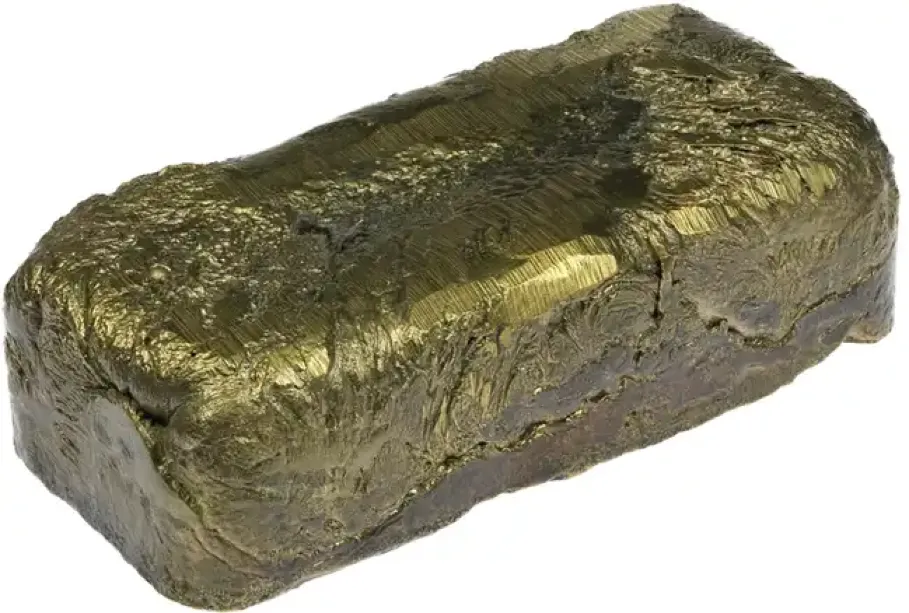
A brass ingot
The color of brass ranges from red to yellow. It depends on the proportion of elements such as zinc in the brass composition percentage.
Properties of Brass
Brass properties, encompassing physical and mechanical properties, are outlined below.
Physical Properties
The physical properties of brass include a density of 8.3 to 8.7 g/cm³, a melting point of 900°C to 940°C, and thermal conductivity of 120 to 180 W/m·K. These and other physical properties are highlighted in the table.
| Physical Property | Value/Level |
| Density | 8.3 to 8.7 g/cm³ |
| Melting Point | 900°C to 940°C |
| Thermal Conductivity | 120 to 180 W/m·K |
| Electrical Conductivity | 28% to 43% IACS (International Annealed Copper Standard) |
| Workability | High |
| Coefficient of Thermal Expansion | 18 to 20 x 10^-6/K |
| Corrosion resistance | Exceptional |
Mechanical Properties
Notable mechanical properties of brass are as follows:
| Mechanical Property | Value/level |
| Strength | High. Red brass is stronger than yellow brass |
| Hardness | Moderate to high. Increases with zinc addition. |
| Toughness | Good |
| Ductility | Excellent |
| Fatigue resistance | Excellent |
| Creep resistance | Good |
| Formability | Good |
| Workability | High |
What is Alpha and Beta Brass?
There are three main types of brass: alpha brass, beta brass, and alpha-beta brass. Brass composition and properties differentiate these types. So, alpha and beta brass are popular categories of brass.
Alpha Brass
This type contains less than 37% zinc. Brasses in this category are ductile and soft. Manufacturers have an easy time forming and shaping alpha brass. Some of the most popular alpha brass items are screws, pins, and bolts.
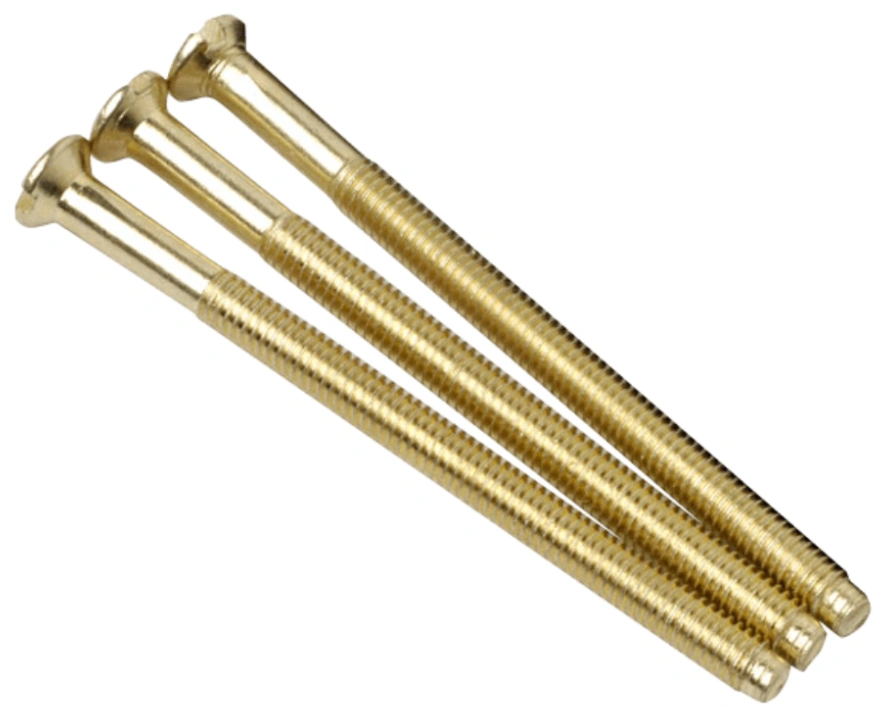
Alpha brass screws
Beta Brass
Beta brass contains more zinc – above 45%. Also called high brass, this variety is stronger and harder. It is also less ductile. Manufacturers use beta brass for door fittings, sprinkler heads, and taps, among other items.
Alpha-Beta Brass
Then, there is alpha-beta brass, also called duplex brass. It contains 37% to 45% zinc. While stronger and harder than alpha brass, it ranks lower than beta brass in these areas. It is perfect for hot-working processes, hence its other name, ‘hot-working brass’. Alpha-beta brass is commonly used for the manufacture of nameplates, clock parts, and gear meters.
What are the Alloys of Brass?
The alloys of brass include free-cutting brass (C360), cartridge brass (C260), yellow brass (C270), naval brass (C464), admiralty brass (C443), and red brass (C230). Brass is already an alloy of copper and zinc, but it can be further alloyed for enhanced properties. Properties of brass that may need improvement are color, machinability, and corrosion resistance.
The alloying agents involved are;
- Aluminum – Adds hardness, strength, and corrosion resistance.
- Arsenic – Enhances brass corrosion resistance
- Lead – Adds softness and malleability
- Nickel – Gives the alloy a silvery look. Also increases strength, wear resistance, and corrosion resistance.
- Manganese – Turns the metal brown.
Here’s more about the alloys of brass;
Free-Cutting Brass (C360)
Free-cutting brass contains approximately 3% lead, which contributes to its exceptional machinability. Its other components include 35% zinc and 60% copper. As a popular CNC turning brass alloy, you can use its parts for connectors, valves, and screws.
Cartridge Brass (C260)
C260 is widely used in electrical components and decorative pieces because it is highly formable. It is easy to bend and cold-form. It is called ‘70/30 brass’ because it contains 70% copper and 30% zinc. Use it for stamping applications, and you will never regret it.
Yellow Brass (C270)
Yellow brass (C270) is valued for its balance of corrosion resistance, ductility, and strength. The 65/35 copper-zinc alloy may be less formable than C260, but it is stronger. These properties and deep-drawing capability are applied in the manufacture of architectural fittings and radiator cores.
Naval brass contains 60% copper, 39% zinc, and 1% tin. The addition of tin makes this brass highly corrosion-resistant. It is mostly used in seawater applications. Examples of such are marine valves, shafts, and heat exchangers.
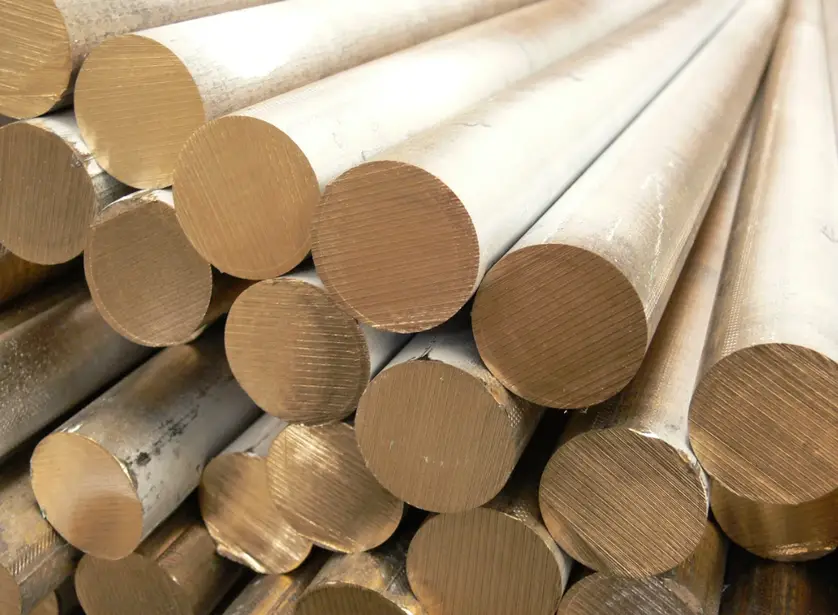
Naval brass shafts
Admiralty Brass (C443)
This is another high-performance alloy of brass. It contains approximately 0.9–1.2% tin and 70.0–73.0 % copper. The zinc composition is approximately 25–29%. The copper base metal gives the alloy a characteristic conductivity and ductility. Tin is responsible for dezincification resistance.
Admiralty brass also contains important trace elements, such as lead, iron, and arsenic. Lead adds machinability, iron enhances grain refinement, and arsenic is for chloride corrosion resistance.
Red Brass (C230)
Containing 85% copper and 15% zinc, red brass has a distinctive red color indicative of the high copper content. Consequently, the brass grade has excellent conductivity and corrosion resistance. It works great in brazing and forming applications due to its higher ductility and softness. Read more:Red Brass vs Yellow Brass
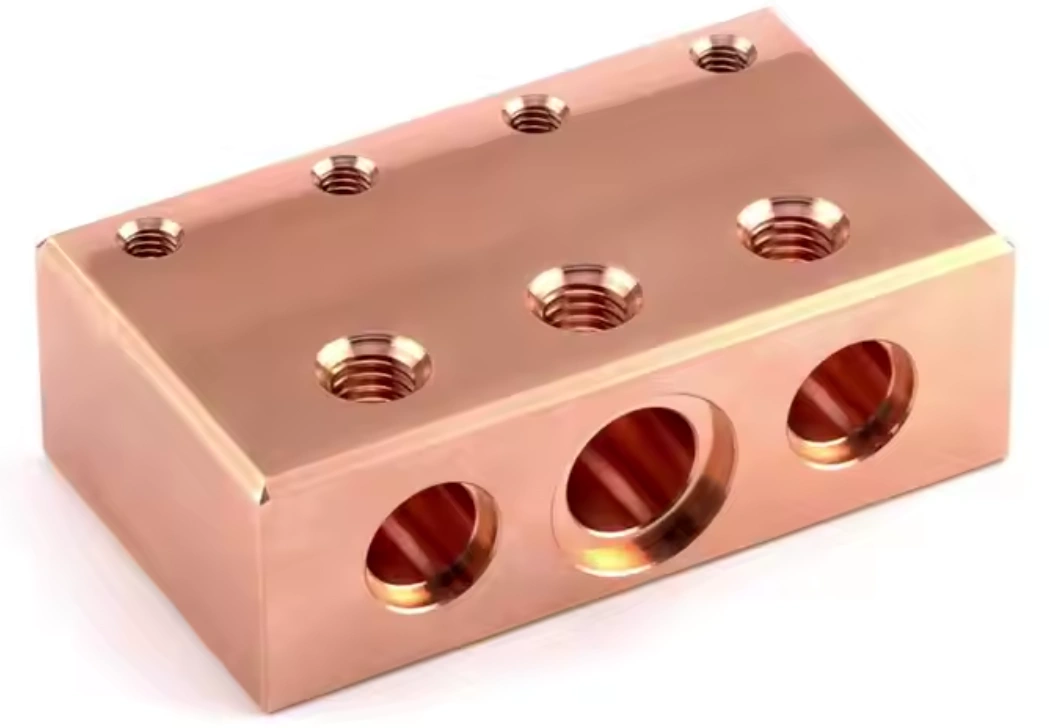
Red brass part
For more on the relationship between the brass and copper, check out:
Brass Compared to Other Metals
Potential alternatives to brass in a CNC machining project are aluminum, bronze, copper, and stainless steel. These offer various advantages, ranging from corrosion performance to conductivity.
Find below a comparison table for the four metals against brass.
| Metal | Strength | Corrosion resistance | Machinability | Cost | Common CNC Applications |
| Aluminum (6061) | Lower or similar | Good | Higher | Lower | Frames, housings |
| Bronze (C932) | Higher | Excellent | Lower | Higher | Bushings, bearings |
| Copper (C110) | Lower | Excellent | Lower | Higher | Heat sinks bus bars |
| Stainless steel (303) | Higher | Excellent | Lower | Higher | Fittings, shafts |
Benefits of Brass Parts
Thanks to its capability to be alloyed with other metals and being one of the most corrosion-resistant metals, brass parts offer the following benefits. Of course, brass corrosion resistance is the top-most one.
Corrosion Resistance – Brass machining parts from the most popular grades are highly corrosion resistant. Since aluminum contributes to this corrosion resistance, the level of resistance aligns with the percentage of aluminum content. In some applications, manufacturers also compare finishing methods such as brass anodizing and other surface treatments.
Machinability – Machining brass is easy thanks to the lead component. This means we can use different machines and make a wide variety of parts from the metal. Design freedom is there, and the cost of parts is manageable because the tools wear relatively less.
Electrical and Thermal Conductivity – For those looking for parts that can conduct electricity and heat, brass can be a super choice. Components that generate heat and want it dissipated as much as possible work optimally with brass parts.
Sustainability – In the day and age of recycling and remodeling, brass stands tall as a material of choice for many. It is recyclable, so businesses can boost their sustainability contributions.
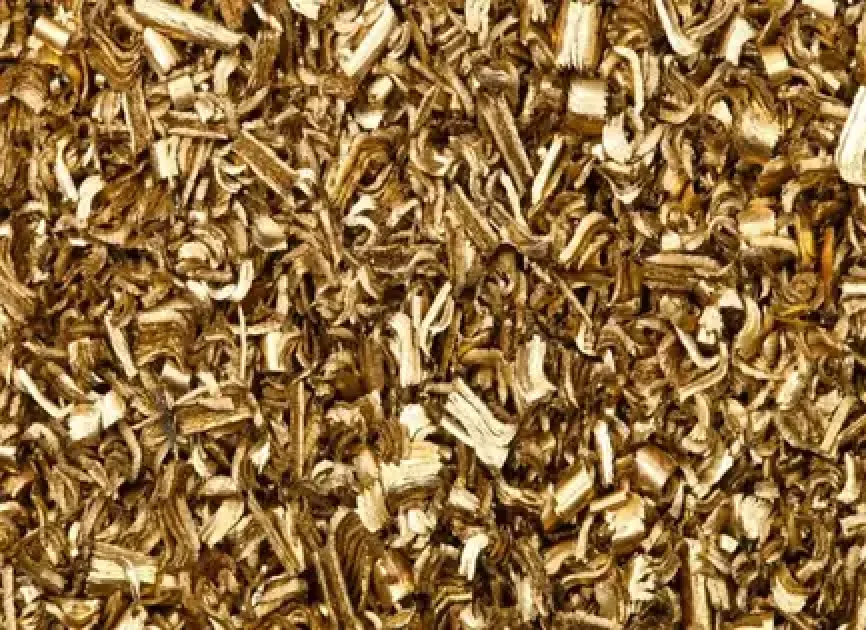
Brass swarf
Aesthetics – The different types of brass material are aesthetically pleasing. Using them adds this value to a product, available in different shades, including silver and gold.
Strength and Hardness – Don’t be mistaken. The malleability of brass doesn’t make it weak. Indeed, one of the properties of brass is strength. Suitable applications should have a strength requirement of between 300 MPa and 600 MPa.
The highest figure is for hard-tempered brass alloys, while the lower one is for annealed brass. The metal also has some measure of hardness to suit the relevant applications. There is half-hard brass at a Rockwell B hardness of 70–80 HRB. Free-cutting brass has a hardness of about 100 HRB. Some varieties can reach 150 HRB hardness.
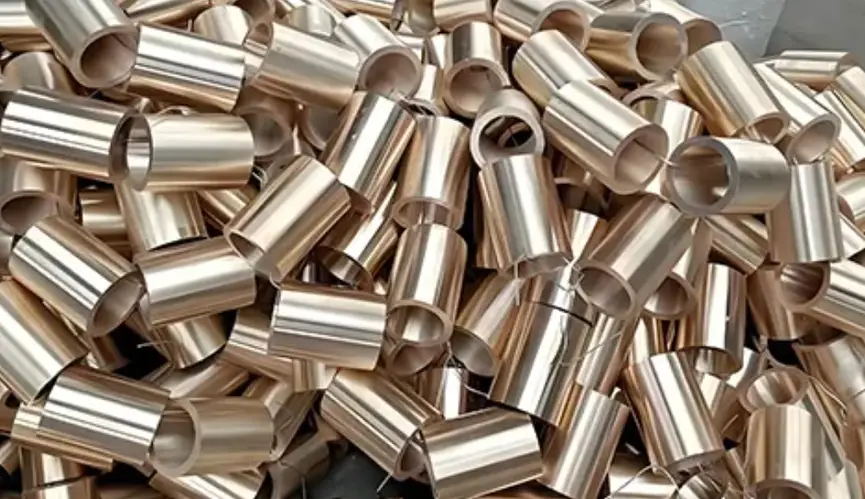
Half-hard brass parts
Try Prolean Now!
Limitations of Brass Parts
The above benefits are irresistible, but it is worthwhile to consider limitations such as corrosion when exposed to some materials, price concerns, and toxicity.
Corrosion
Brass parts may be highly regarded for their corrosion resistance, but they are susceptible to the issue in some circumstances. A common one is when they are exposed to ammonia and acids.
What is the Cheapest Type of Brass?- The Cost Question
Cartridge Brass(C260) is mostly the most affordable brass grade for parts. It has a high zinc content, which translates to low material cost. That aside, brass is more expensive than several other CNC-machinable materials. If cost is your top priority, you might consider aluminum machined parts, which have their pros and cons. Check out our extensive coverage of aluminum and other CNC machining materials on our site for comparison.
Toxicity
While brass is generally non-toxic, some of its grades contain lead. This means that if you are considering parts for sensitive applications, for instance, medical, you need to pick the grade carefully.
How to Process Brass
Brass continues to shape the manufacturing world through key processes such as CNC machining, forging, extruding, and sheet metal stamping.
Brass CNC Machining
Since brass is highly machinable, this is one of the preferred processes. Brass manufacturers use CNC machining for highly precise parts suitable for corrosion-prone conditions.
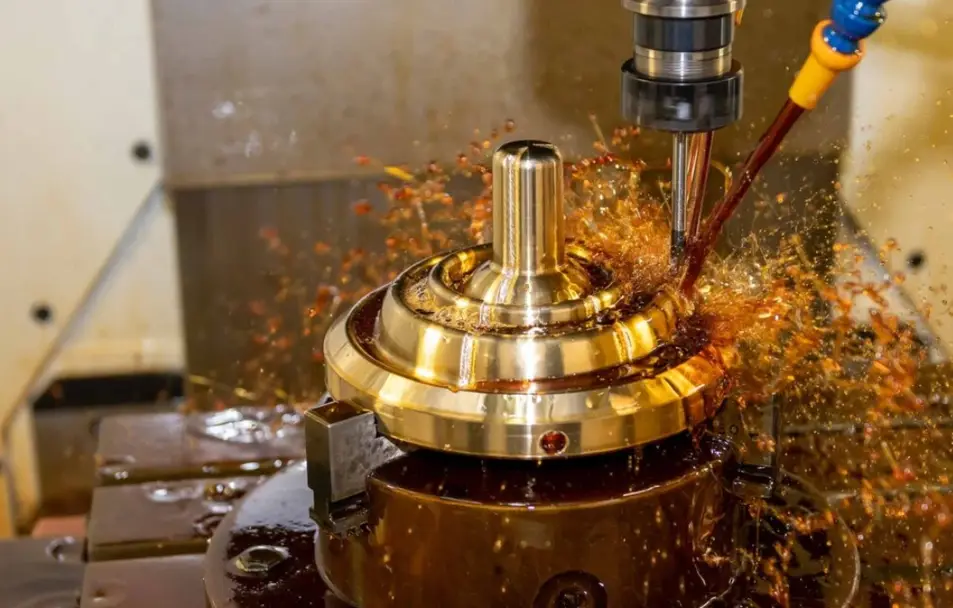
Brass CNC machining
Brass Forging
Brass can generally undergo hot forging. The metal is heated to a specific temperature and then shaped using a hammer or press. Other types of brass forging are cold forging, open die forging, and closed die forging.
Extruding Brass
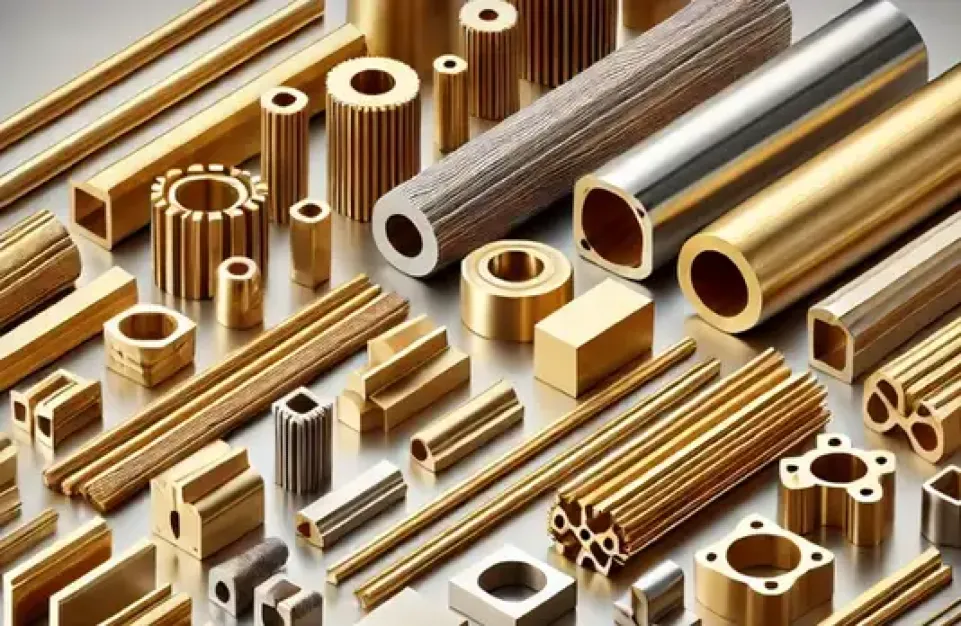
Brass extrusions
Brass can be forced through a die to create different cross-sections. Four types of extrusion apply;
- Direct extrusion
- Indirect extrusion
- Hydrostatic extrusion
- Impact extrusion
The extruded brass parts have a wide range of applications, including valves and handrails.
Sheet Metal Stamping
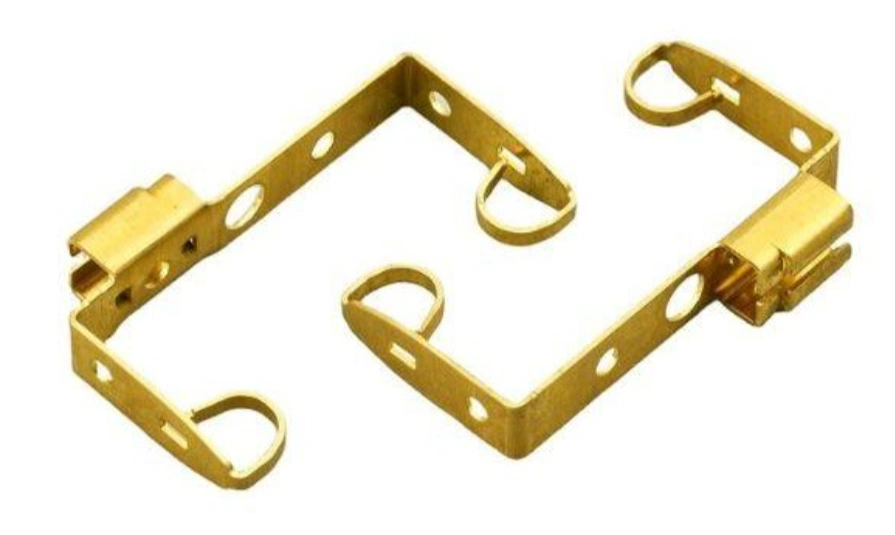
Brass metal stamping parts
Try Prolean Now!
Applications of Brass
Brass parts have diverse applications covering industries such as architectural, plumbing, electrical & electronics, automotive, aerospace, and musical instruments.
|
Industry |
Use Case |
Main Properties |
|
Architectural |
Fixtures, door handles, handrails |
Aesthetic appeal |
|
Plumbing |
Faucets, fittings, valves |
Corrosion resistance and durability |
|
Electrical & electronics |
Connectors, switches, terminals |
Electrical conductivity, machinability |
|
Automotive |
Electrical connectors, radiator cores |
Conductivity, corrosion resistance, and strength |
|
Aerospace |
High-precision parts |
Precision and strength |
|
Musical instruments |
Saxophones, trombones, and trumpets |
Acoustic characteristics, malleability |
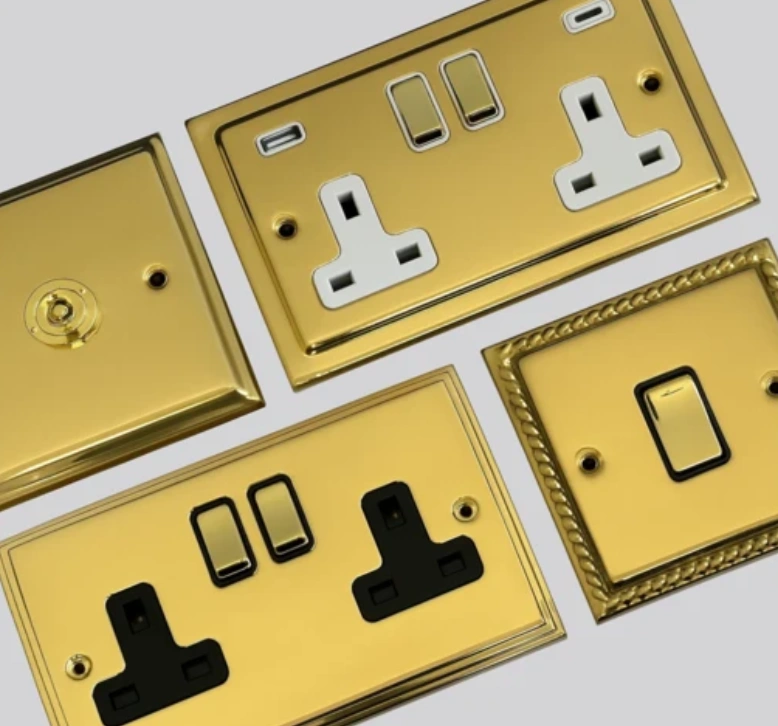
Brass electrical switches and sockets
In Conclusion
The different types of brass present various industries with benefits such as brass corrosion resistance, machinability, and aesthetic appeal. By understanding the different options and the accompanying capabilities, you can order quality parts that enhance your business. For procurement teams and engineering professionals, our brass machining service offers the opportunity to get it right the first time. We make parts for optimal performance, compliance with global standards, and lower costs.
FAQ
Which is worth more, red brass or yellow brass?
Red brass is more expensive than yellow brass. This is because of its higher copper content, which enhances corrosion resistance and adds to the material cost.
0 Comments