
Molybdenum is a refractory metal that requires specialized molybdenum machining techniques because of its material properties. TZM alloy, one of the key materials for CNC machining, requires a thorough understanding during various cutting operations, as it supports applications in both high-temperature settings and the manufacture of precise components.
Proleantech offers high-quality molybdenum fabrication using high-speed steel and coated cutters that ensure precise cuts with additional laser cutting for molybdenum for a burr free product.
How To Cut Molybdenum?
Molybdenum, used in manufacturing on demand, requires precise cutting methods because of its hard and brittle nature, which demands both material preservation and dimensional accuracy. Cutting methods vary by material (rods, sheets, plates), while considering tool deterioration and the use of efficient cooling systems.
Conventional Sawing Techniques
Molybdenum materials can be cut using power hacksaws and band saws, which produce a 1/8-inch kerf and 3/16-inch camber on thick sections. High-speed steel blades should cut at a rate of 100 feet per minute and utilize sulphur-based cutting oil to extend tool life and manage chip formation. The recommended method for cutting molybdenum plates involves edge machining molybdenum instead of shearing, as shearing beyond 0.050 inches can lead to material cracking.
Laser Cutting Methods
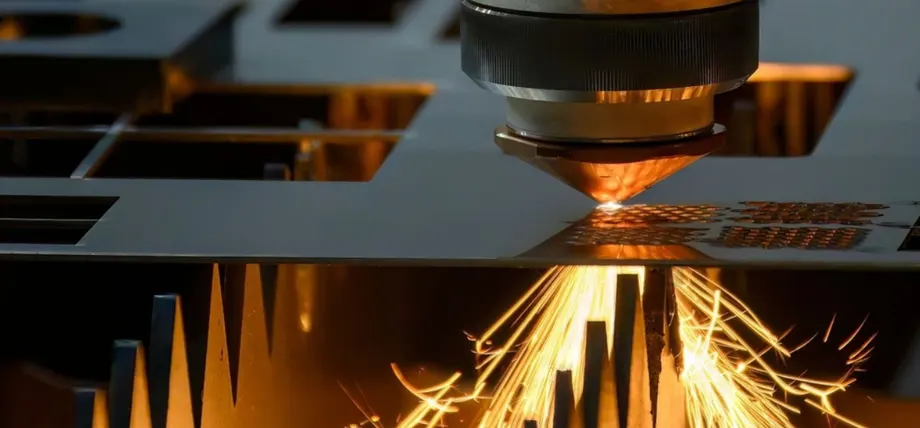
Laser cutting molybdenum for clean, precise edges.
The laser cutting process delivers precise results for molybdenum sheets and plates through fiber laser technology, which operates at 800–1,200 watts of power and 1,500–2,500 mm per minute to minimize heat-affected zones. The method delivers excellent results for intricate designs because it produces smooth edges without introducing mechanical tension. The use of soluble oil coolant with fiber lasers provides better efficiency for pure molybdenum, while CO2 lasers remain a viable alternative.
Plasma and Abrasive Cutting
Plasma cutting technology uses high-temperature arcs to cut through thick molybdenum plates when speed requirements take precedence over surface quality. The process of using abrasive wheels for thin materials produces straight cuts while minimizing the chance of material chipping. The cutting process requires rigid tool support and chlorinated oil cooling to prevent tool deterioration and maintain cutting-edge precision.
Wire EDM for Precision Cuts
The process of wire electrical discharge machining (EDM) with molybdenum wire as the cutting tool allows non-contact cutting for complex shapes and threading operations. The method protects molybdenum material from mechanical stress because it operates without contact, delivering excellent results for deep drilling and face milling precursor operations.
Try Prolean Now!
What Are The Molybdenum Machining Properties?
- High Melting Point and Thermal Stability: The high melting point of molybdenum, which reaches 2620°C, enables its use in high-temperature applications; however, it requires proper cooling systems to prevent thermal cracking during machining operations.
- High Hardness and Abrasiveness: The material exhibits high hardness and abrasiveness, which can cause rapid tool wear. Therefore, operators should use tungsten carbide or cubic boron nitride tools for milling and drilling operations.
- Brittleness at Room Temperature: Pure molybdenum exhibits brittleness at room temperature, making it prone to chipping during lathe turning and machining molybdenum operations, which necessitate specific tool rake angles and controlled feed rates.
- Low Thermal Expansion Coefficient: The material maintains its dimensional stability through heat because its thermal expansion coefficient measures 4.8 × 10^-6/K /K; however, deep drilling operations face challenges due to heat accumulation.
- Good Thermal Conductivity: The material exhibits good thermal conductivity at 138 W/m·K; however, poor chip control leads to built-up edges that require a sulphur-based cutting oil for proper lubrication.
- Grain Structure Influence: The machining properties of as-sintered molybdenum are better than those of recrystallized molybdenum because the larger grain structure makes rough turning and face milling operations more prone to cracking in recrystallized molybdenum.
- Corrosion Resistance: The material shows excellent corrosion resistance to acids and alkalis, but the metal surface finishing quality depends on maintaining clean operating conditions during molybdenum fabrication processes.
- Density and Strength: The high density of 10.2 g/cm³ in molybdenum requires robust machines that can withstand cutting forces while providing stable tool support to prevent vibrations and ensure precision.
Best Methods for Machining Molybdenum
The best machining molybdenum methods for molybdenum balance material removal efficiency and tool durability. The combination of conventional machining techniques, including turning, milling, and drilling, works well with suitable parameters; however, EDM proves to be the most effective for creating complex shapes. The selection of carbide tools is the primary choice for most operations because they outperform high-speed steel tools in resisting the abrasive nature of molybdenum.
The use of sulphur-based oils and chlorinated oils as cutting fluids provides essential cooling and lubrication properties, which decrease friction and extend tool durability. The recommended feed rate for turning operations should be between 0.005 and 0.015 inches per revolution to prevent overheating.
CNC Milling Molybdenum
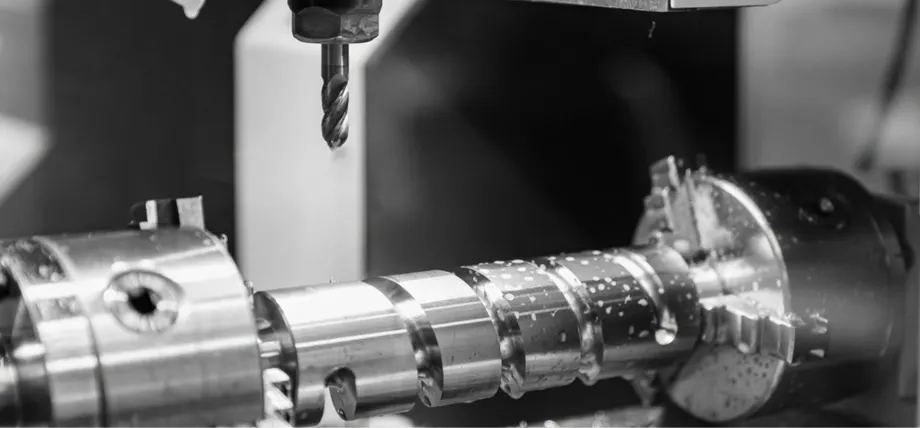
CNC milling a large screw
The process of CNC milling molybdenum requires exact speed and feed management to produce both precise dimensions and smooth surface finishes. The combination of carbide-tipped cutters with face milling techniques delivers optimal results for planar surfaces when operating at depths of 0.125 inches and speeds between 200 and 400 surface feet per minute.
The combination of positive rake angles between 10 and 20 degrees, along with rigid tool support, helps reduce tool wear during machining molybdenum. The process of ultrasonic-assisted milling proves effective for machining complex shapes because it reduces the forces required to cut molybdenum materials.
Chip control requires sulfur-based cutting oil to facilitate removal and prevent re-welding. The milling machine must operate with minimal vibrations, as excessive chipping of edge-machined features occurs when the machine vibrates.
CNC Turning Molybdenum
The process of CNC turning molybdenum requires specific lathe parameter optimization because of its extremely hard nature. The process of rough turning requires carbide tools to operate at speeds between 150 and 300 feet per minute, with depths of cut ranging from 0.050 to 0.200 inches. Finishing passes are reduced to 0.010-0.030 for improved surface quality. The cutting edge pressure decreases when using positive rake angles, which match those used for cast iron at 15 degrees.
The tool life extends when soluble oil coolant runs continuously during deep cuts because it helps reduce heat buildup. The machine operates at its best when the workpiece remains securely fastened to prevent any deflection that would result in measurement errors.
CNC Drilling Molybdenum
The process of CNC drilling molybdenum requires specific drill tools to manage chips effectively and prevent material cracking. The drilling process for deep holes requires carbide drills, which operate at speeds of 100-200 feet per minute while using feed rates of 0.002-0.006 inches per revolution. The split-point design on drills maintains hole accuracy by preventing tool movement during operation.
The process of drilling deep holes requires a machining lubricant with sulphur-based oils for effective cooling, as it helps remove heat and chip debris when the hole depth exceeds three times its diameter. The peck drilling method protects tool integrity when working with molybdenum plates.
EDM Molybdenum Machining
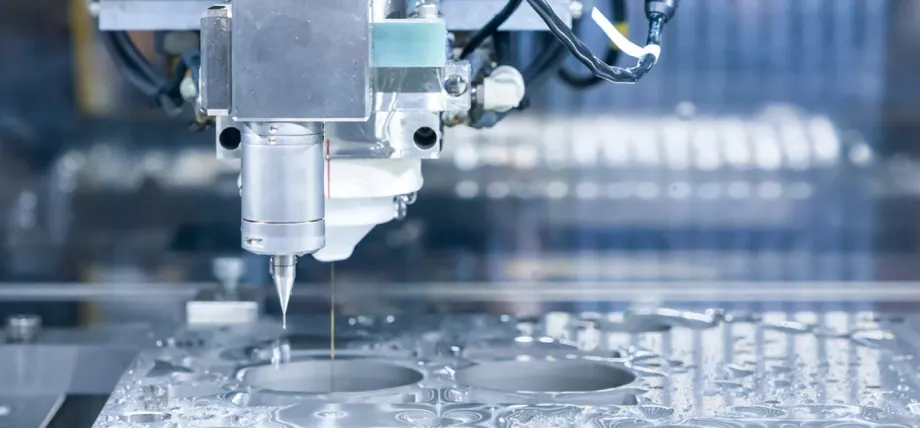
Wire EDM for intricate molybdenum geometries.
The EDM machining process for molybdenum utilizes electrical discharges to remove material, making it particularly effective for challenging machining operations. Wire EDM cutting of molybdenum enables accurate cutting operations that produce low thermal distortion, making it suitable for manufacturing complex shapes. The optimal surface finish is achieved by using pulse durations between 10 and 50 microseconds, combined with current levels of up to 30 amps. The die-sinking EDM process with graphite electrodes successfully machines molybdenum, but oxide formation in water-based dielectric fluid can be a problem.
The technique yields excellent results for producing molybdenum parts that require precise dimensions while minimizing mechanical stress.
Try Prolean Now!
Best Way for Machining Molybdenum Plates
Molybdenum plate machining requires a dual approach that begins with milling operations, followed by grinding, to achieve both flatness and precise edge quality. The process begins with face milling, using carbide tools at controlled depths to remove material efficiently, followed by grinding for surface quality improvement.
The edges require positive rake shaper or milling machine setups to prevent chipping during operation. High-volume molybdenum plate operations benefit from cryogenic cooling systems, which extend tool lifespan while preventing thermal cracking. The process of laser-assisted contouring serves as a precise alternative that reduces the amount of mechanical tool deterioration.
What Kind of Machining Tools Can Be Used for Molybdenum
High Speed Steel Tools
High-speed steel tools are best suited for roughing operations and shallow drilling at normal speeds, as they can effectively handle the hard nature of molybdenum. High-speed tools are effective during lathe turning operations when used with positive rake angles that match those recommended for cast iron, but require regular sharpening to prevent chipping.
Carbide Tools
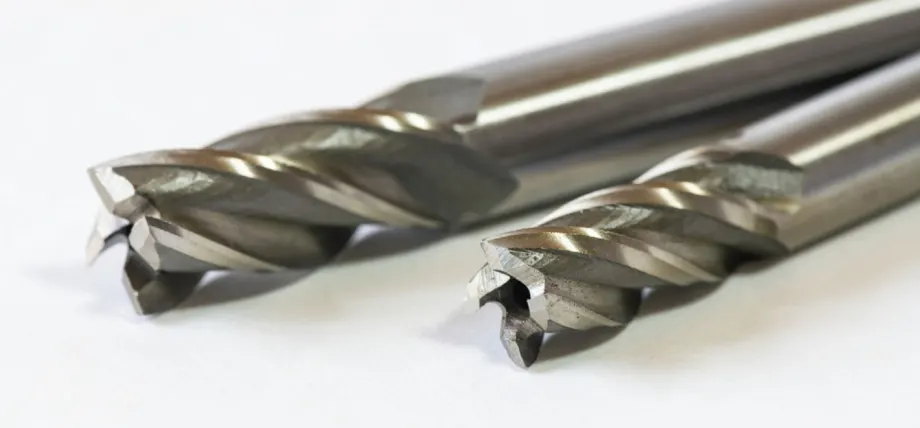
Carbide end cutters
The C2 grade of carbide tools offers long-lasting performance during molybdenum processing, as they outlast high-speed steel tools due to their resistance to the material’s abrasive nature. The combination of sulfur base oils with carbide drills and carbide-tipped cutters delivers optimal performance for deep drilling and face milling operations.
Cubic Boron Nitride and Polycrystalline Diamond Tools
Cubic boron nitride inserts deliver exceptional chip management and surface quality during high-speed molybdenum plate processing. The use of polycrystalline diamond tools provides excellent durability for threading operations and machining complex shapes.
Specialized EDM Tools
The EDM process utilizes molybdenum wire to create precise cuts, thereby avoiding tool wear during the intricate manufacturing of molybdenum parts. The die-sinking EDM process utilizes graphite electrodes to effectively handle materials with high hardness levels.
What Kind of Parts Can Be Made from Molybdenum
Aerospace Industry
- Heat shields and turbine blades utilize molybdenum’s thermal stability.
- Guide vanes and combustion chambers for jet engines.
- Structural components in satellites and spacecraft.
Steel and Metallurgy Industry
- Extrusion dies and metal processing tools.
- Furnace electrodes and heating elements.
- Alloy additives, such as ferromolybdenum, are used for strengthening steel plates.
Automotive Industry
- Crankshafts and piston rings in engines.
- Exhaust systems and axle shafts.
- Steering components require high hardness.
Electronics and Semiconductor Industry
- Anodes and cathodes for electronic parts.
- Switch electrodes and heat sinks.
- Components in semiconductor manufacturing equipment.
Chemical and Energy Industry
- Crucibles and boats for high-temperature processes.
- NOx analyzers in power plants.
- Spray coatings for corrosion-resistant parts.
Common Problems When Machining Molybdenum
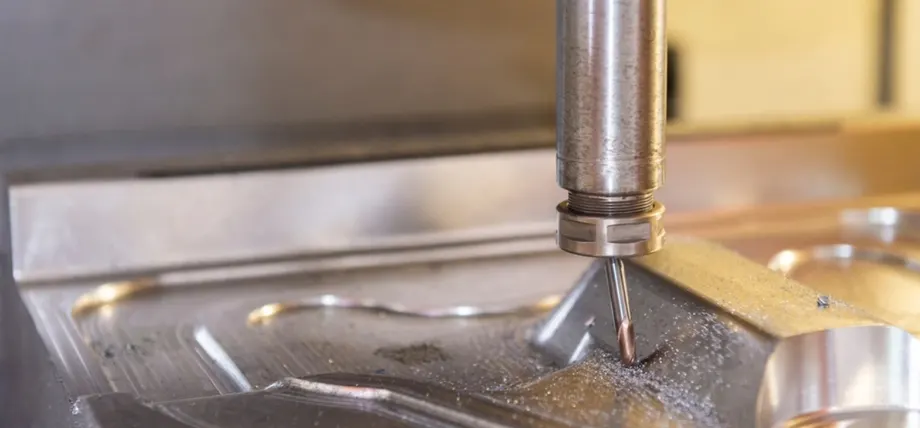
CNC Milling molybdenum workpiece with tool breakage
- Rapid Tool Wear: The abrasiveness of molybdenum causes rapid tool wear, which shortens the blade’s lifespan and requires frequent tool replacement.
- Chipping and Cracking: The brittle nature of the material causes edge chipping during rough turning operations and when tools lack proper support.
- Poor Surface Finish: The combination of heat generation and built-up edges produces pitted or rough surfaces, which need both effective cooling systems, high-quality cutting tools, and processes like passivation or hard chrome plating for better results.
- High Cutting Forces: The high hardness of molybdenum requires more power to cut, which may lead to machine vibration when the equipment lacks sufficient power.
- Chip Control Issues: The use of sulphur-based cutting oil becomes necessary to remove gummy chips that stick to tools and affect precision measurements.
- Thermal Cracking: Molybdenum parts develop thermal cracks when subjected to high-speed operations without suitable lubrication systems.
- Dimensional Inaccuracies: The combination of heat expansion and brittleness in the material leads to dimensional inaccuracies, which can be controlled through specific depth of cut and feed rate settings.
Metal CNC Machining Services
Proleantech offers high-quality custom metal CNC Machining services with precision milling, precision turning, and EDM machining of critical metal parts in aerospace and medical industries. We are an ISO certified company with the shortest lead times for high-volume manufacturing and rapid prototyping.
Conclusion
You can achieve better tool longevity and product quality by selecting appropriate tools, including carbide and cubic boron nitride, and implementing sulphur-based cutting oil cooling methods.
The production of molybdenum parts through CNC milling, turning, and drilling, and EDM enables manufacturers to create both basic plates and intricate shapes. The combination of rigid equipment setups with controlled operational parameters enables engineers to prevent tool wear and chipping, thereby achieving dependable results.
The production efficiency of molybdenum parts depends on these methods because industries use molybdenum for its high melting point and hardness properties.
FAQ
Can molybdenum be machined?
The machining of molybdenum material becomes possible through standard operations, including turning, milling, and drilling, but requires carbide tools and specific parameters to prevent tool chipping.
Is molybdenum safe to machine?
The safe machining of molybdenum requires proper ventilation systems to prevent dust inhalation, which causes respiratory problems, while standard safety equipment protects workers from harm.
Can you grind molybdenum?
Diamond wheels are suitable for grinding molybdenum, but operators must maintain low speeds and employ proper cooling methods to extend blade life due to the material’s abrasive nature.
How to cut a molybdenum sheet?
Cutting molybdenum sheets requires band saws with fine-tooth blades or precision laser cutting, accompanied by proper cooling, to prevent cracking.

0 Comments