
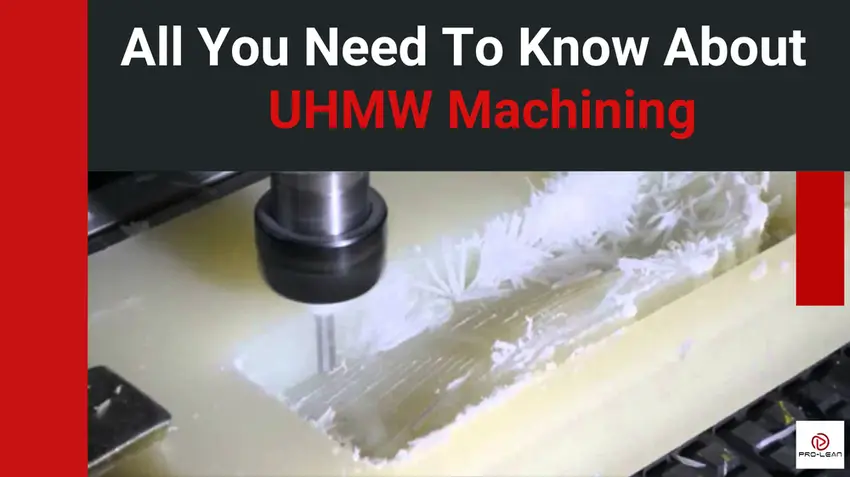
UHMW Machining
Ultra-High-Molecular-Weight Polyethylene (or UHMW) is a thermoplastic polymer with a molecular weight of 5-9 million AMU, which is extremely high. The engineering plastic is chemical-resistant, wear-resistant, and durable.
Its long, aligned polymer chains bound together by powerful Van der Waals forces make machining UHMW polyethylene challenging.
Optimizing cutting speeds, heat management, clamping mechanisms, and part design helps get the best from machining UHMW plastic. This is necessary because UHMW machined parts are critical in medical, automotive, chemical processing, food & beverage, and many other industries.
Continue reading this article for more details about the material and the process of getting custom UHMW parts.
What Is UHMW Material?
Ultra High Molecular Weight Polyethylene (UHMW) is a popular thermoplastic polyethylene with a high strength-to-density ratio, high wear resistance, low friction coefficient, and unmatched durability.
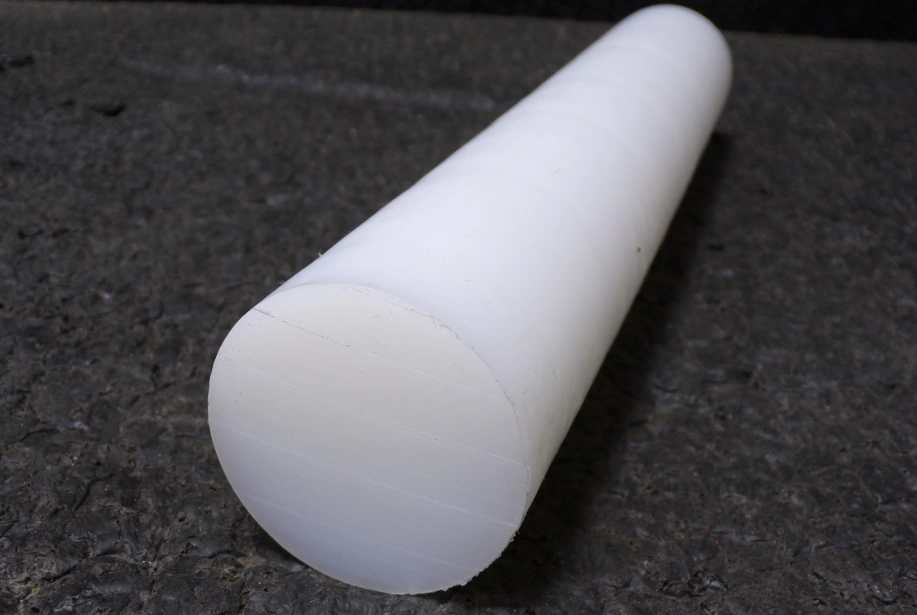
A UHMW rod
This outstanding engineering plastic, with its superior mechanical properties, finds application in demanding applications. CNC machining services deliver UHMW machined parts for medical components, food processing, and industrial components, among other demanding areas.
UHMW Properties
UHMW has a wide range of good properties that make it a perfect choice for demanding applications – chemical resistance, fatigue resistance, abrasion resistance, impact resistance, and water resistance, among others.
Here is a table summarizing the properties, including the UHMW melting point:
| PHYSICAL PROPERTIES | ||
| Property | Units | Value |
| Density | g/cm³ | 0.934 |
| Water Absorption (24 hrs) | % | 0.01 |
| MECHANICAL PROPERTIES | ||
| Property | Units | Value |
| Tensile Strength | MPa | 31.0 |
| Tensile Modulus | GPa | 0.55 |
| Tensile Elongation at Break | % | 350 |
| Flexural Strength | MPa | 24.1 |
| Flexural Modulus | MPa | 607 |
| Compressive Strength | MPa | 20.7 |
| Compressive Modulus | MPa | 552 |
| Shear Strength | MPa | 6.2 |
| THERMAL PROPERTIES | ||
| Property | Units | Value |
| Heat Deflection Temperature | °C | 49 |
| Melting Temperature (approx.) | °C | 135 |
| Maximum Operating Temperature | °C | 82 |
| Thermal Conductivity | W/m·K | 0.42 |
| Coefficient of Linear Thermal Expansion | ×10⁻⁵/°C | 20 |
| ELECTRICAL PROPERTIES | ||
| Property | Units | Value |
| Dielectric Strength | kV/mm | 23.6 |
| Dielectric Constant (1 kHz) | – | 2.30 |
| Dissipation Factor (1 kHz) | ×10⁻⁴ | 5 |
| Surface Resistivity | Ω | 10¹⁵ |
This data is publicly available and shared for comparison purposes only.
Is UHMW Hard To Machine?
UHMW is difficult to machine due to chip buildup, dust particles, heat sensitivity, and tool wear. These issues make this polymer more challenging to process compared to options like HDPE (high-density polyethylene) and other polymers.
However, there are strategies to make the CNC machining process more manageable.
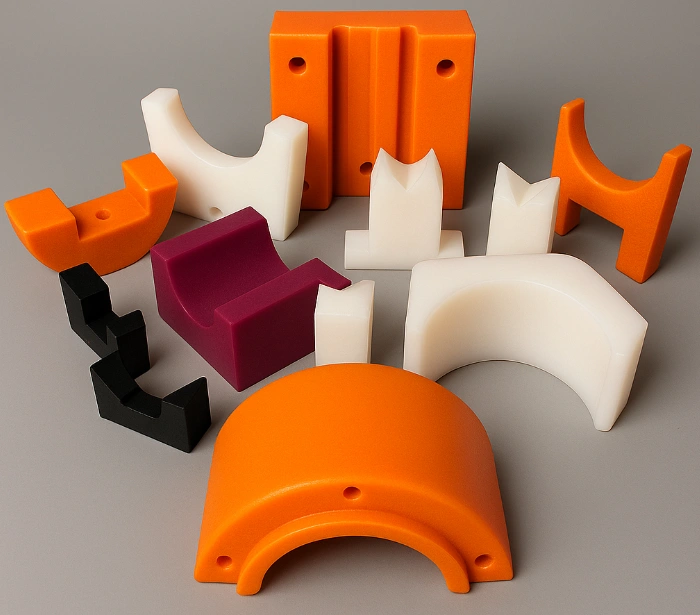
CNC-machined UHMW parts
Try Prolean Now!
More About Common Problems And Solutions in UHMW Machining
As mentioned, UHMW machining is prone to several problems that require good strategies to overcome. Here are the leading problems alongside the best solutions:
-
Chip Buildup
Owing to its high wear resistance and low friction coefficient, this material tends to form long chips. The chips can easily crowd around the cutting tool, potentially causing overheating.
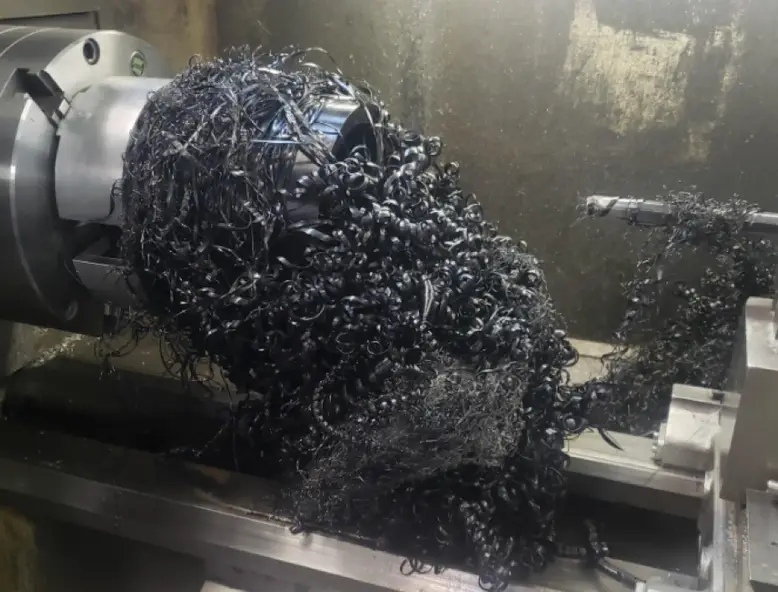
Chips buildup
The solution to this issue is to apply chip-breaking strategies, evacuate chips using the air blast method, and use the best tool geometry.
-
Dust Particles
As a hard material, UHMW also forms dust during machining. These fine particles can make UHMW machining hectic, affecting both the machinist and the CNC machine. A dust extraction mechanism is necessary when machining this thermoplastic.
-
Heat Sensitivity
UHMW is sensitive to heat, a characteristic that becomes evident during CNC machining. If the heat is too high, this thermoplastic melts or softens at the cutting line, leading to poor surfaces. The dimensional accuracy can be below par because of this issue.
One of the effective strategies to counter this sensitivity is to use sequential cutting methods. The type of workholding mechanism used also matters. For better dimensional stability, the part can also be stress relieved before the final cut.
-
Tool Wear
Even tools are not spared from the toughness and abrasion resistance of UHMW workpieces during CNC machining. Even the hard carbide tools can become ineffective, especially if the monitoring aspect is overlooked.
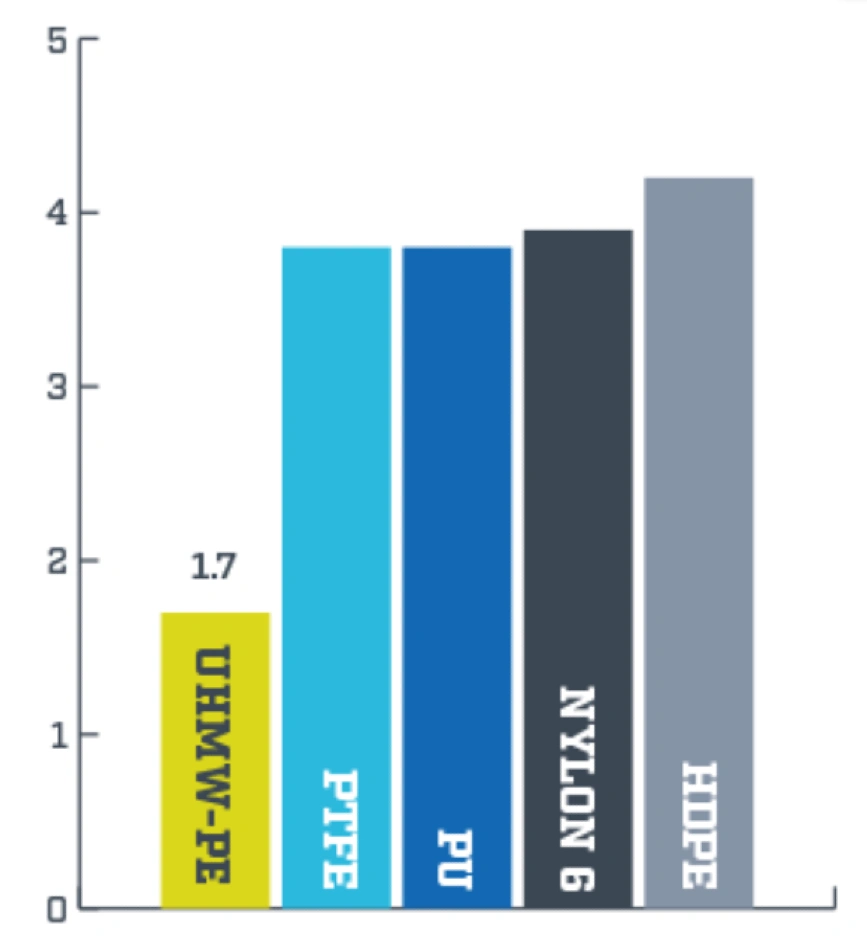
Abrasion resistance for UMMW compared to other materials
-
Expansion and Contraction
UHMW machining can be challenging because of the tendency of the material to expand and contract due to prevailing temperature changes. Therefore, the environmental conditions should be carefully considered before the UHMW manufacturers start the machining process.
The best CNC manufacturers also minimize this issue by designing the fixture with thermal expansion in mind. They also consider the final dimensions of the UHMW machined part. Using appropriate machining parameters also helps manage this challenge.
Try Prolean Now!
How To Choose The Right UHMW Machining Process
The right UHMW machining process accounts for thermal expansion, cutting parameters, clamping & workholding, heat control, and UHMW-centric cutting tool selection.
Therefore, the strategy entails evaluating requirements for UHMW machined parts, assessing heat management, selecting the primary CNC machining method, determining the workholding method, and optimizing cutting parameters.
Requirements for UHMW Machined Parts
The first consideration is the requirements for the machined parts in terms of geometry, surface finish, and tolerances. These are the fundamental guides for the ideal machining approach or strategy.
Heat Management
Heat generation must be well managed in UHMW machining. The solutions for this problem include the use of sharp tools, the correct tool geometry, lower cutting speeds, and proper chip removal management.
Primary CNC Machining Method
The primary CNC machining method often depends on the type of UHMW machined parts. Turning operations produce cylindrical parts, milling operations are for pockets and flat surfaces, and drilling with pecking cycles manufactures holes.
Given the nature of this polymer, avoid grinding.
Workholding Method
This is another critical area of UHMW machining because you need to manage both the clamping force effect on the material and the vibrations generated during machining. Soft-jawed clamps are recommended for heavy parts.
Use custom fixtures that distribute forces appropriately when machining complex UHMW parts.
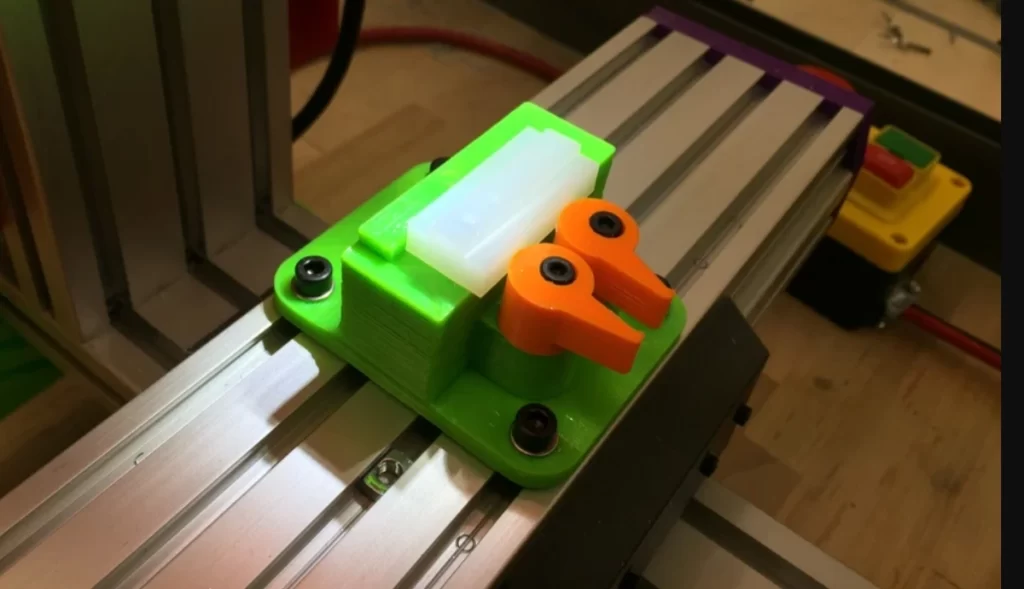
UHMW sliding fixture
Cutting Parameters
The cutting process will be successful if the feed rate and cutting speed ranges are limited to 0.05 – 0.15 mm/rev and 100 – 200 m/min, respectively.
Related:
What Tools Are Used For UHMW Machining?
Carbide tools are the most effective for UHMW machining because they not only produce sharp cuts but also minimize material sticking. High-speed steel (HSS) is also an option because it resists wear and maintains the sharpness needed to cut this tough material.
So, often, the machinist will be torn between carbide and HSS tools. The choice depends on project-specific requirements such as tolerance, surface finish, and manufacturing speed.
What Are The Applications of UHMW Machining?
Applications of UHMW machined parts from ProleanTech include marine, automotive, food & beverage, chemical processing, automation, and pharmaceutical industries. It is also used for specialized aerospace parts.
The specific machined UHMW parts include the following:
- UHMW gears
- UHMW washers
- UHMW pulleys
- UHMW bushings
- UHMW wheels
- UHMW rollers
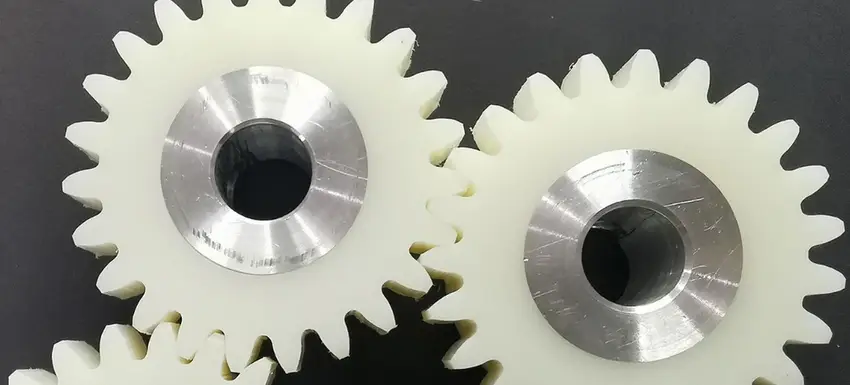
UHMW gears
Read more: CNC Machining for Aerospace Parts
Is UHMW Better Than HDPE For Machinability?
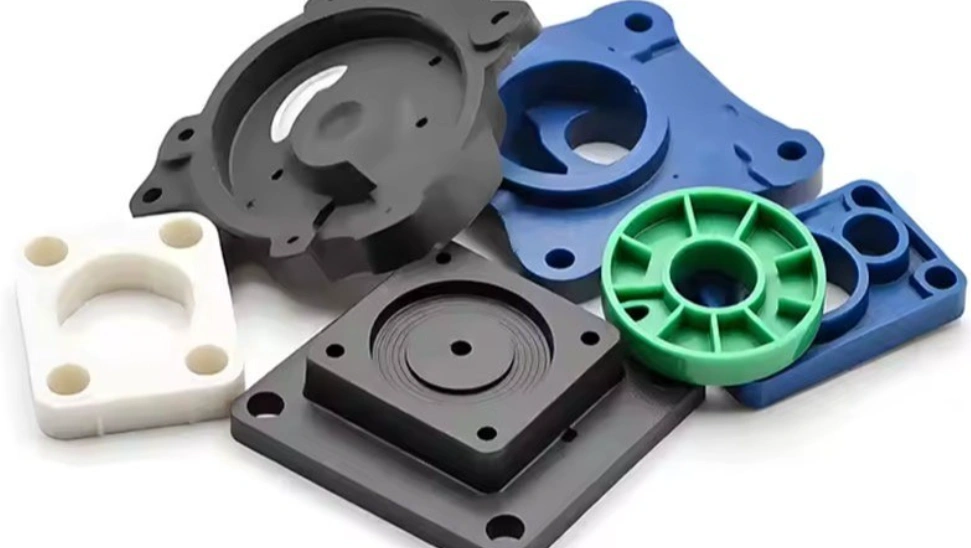
CNC-machined HDPE parts
No, UHMW is more difficult to machine than HDPE. HDPE is crystalline, but UHMW is also crystalline. The problem is that UHMW has extremely long polymer chains, which render the material extremely impact-resistant with a sort of self-lubricating surface.
The cutting tool tends to slide on the surface instead of cutting the material. Moreover, this thermoplastic has high ductility, which presents dimensional stability challenges. Even after being CNC-machined, UHMW can undergo creep, so getting tight tolerances from the material is difficult.
Further reading on impact resistance: Impact Resistance Plastic
Comparing UHMW With Other Polymer Materials
To add to the HDPE comparison, UHMW for CNC machining can be compared with acrylic, polycarbonate, and Polyvinyl chloride (PVC). UHMW demonstrates higher abrasion resistance than acrylic. It is also stronger and more rigid than both polycarbonate and Polyvinyl chloride (PVC).
More on these comparisons is next:.
UHMW vs Acrylic
Acrylic lacks the abrasion resistance of UHMW, so it can stress crack and turn opaque when its surface is repeatedly worn out. On the contrary, UHMW retains its dimensional stability against a wide variety of surface wear types. Indeed, tests have indicated UHMW can be up to 10 times more abrasion-resistant than acrylic.
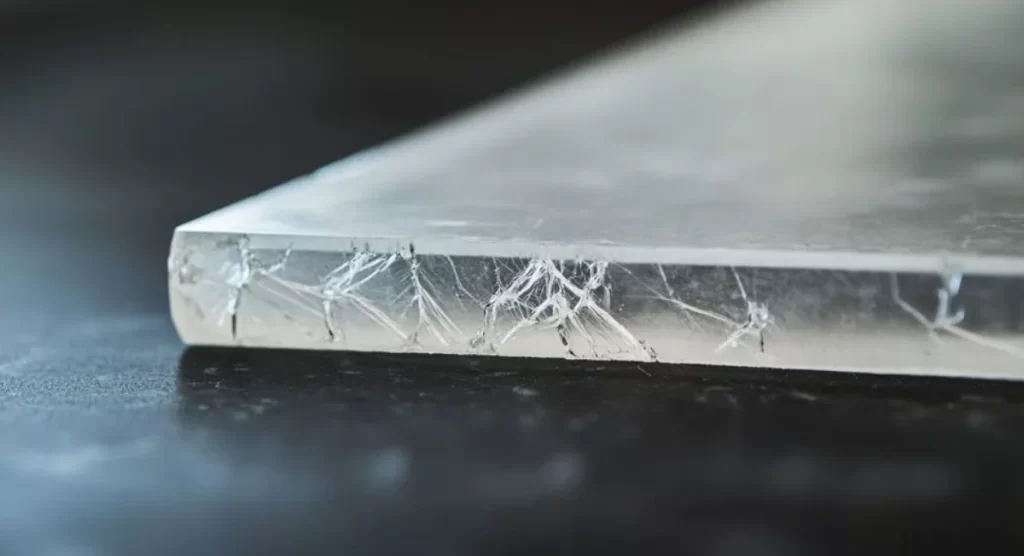
Stress cracking in acrylic
The polymer also performs better in damp and corrosive environments. Chemicals like dimethyl formamide and acetone will easily compromise acrylic, but not UHMW.
However, the optic clarity of acrylic is much better than what UHMW can offer. Therefore, this would be the CNC machining material of choice where transparency is critical.
UHMW vs PC
Polycarbonate’s high heat resistance and impact strength are useful in applications such as lenses and machine enclosures.
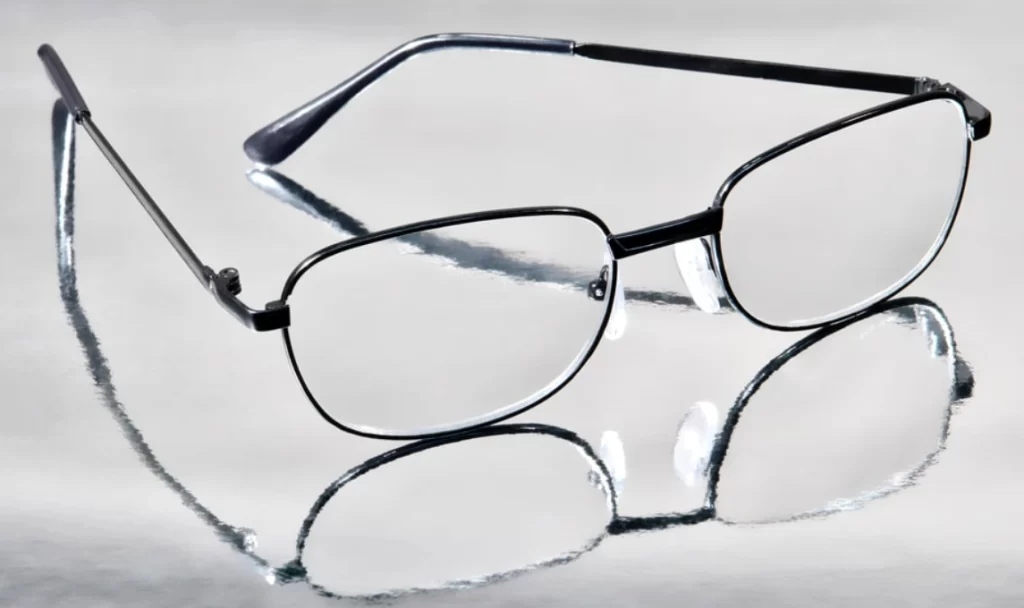
Polycarbonate lenses
However, UHMW outperforms it in abrasion resistance, rigidity, compressive strength, and tensile strength.
UHMW vs PVC
The corrosion resistance of PVC is beyond argument. The material is also affordable, making it relevant in common applications such as window frames and pipes. However, like polycarbonate, it doesn’t have as good strength and abrasion resistance as UHMW does.
Conclusion
It is now clear why custom UHMW parts are highly regarded for demanding industrial applications. Chemical resistance, low friction coefficient, abrasion resistance, and general durability are good properties that industries cannot afford to ignore.
The resilience and performance of UHMW parts are the answer to many industrial operational requirements.
Contact us for more details and ask to get a quote today.
0 Comments