
Types of threads
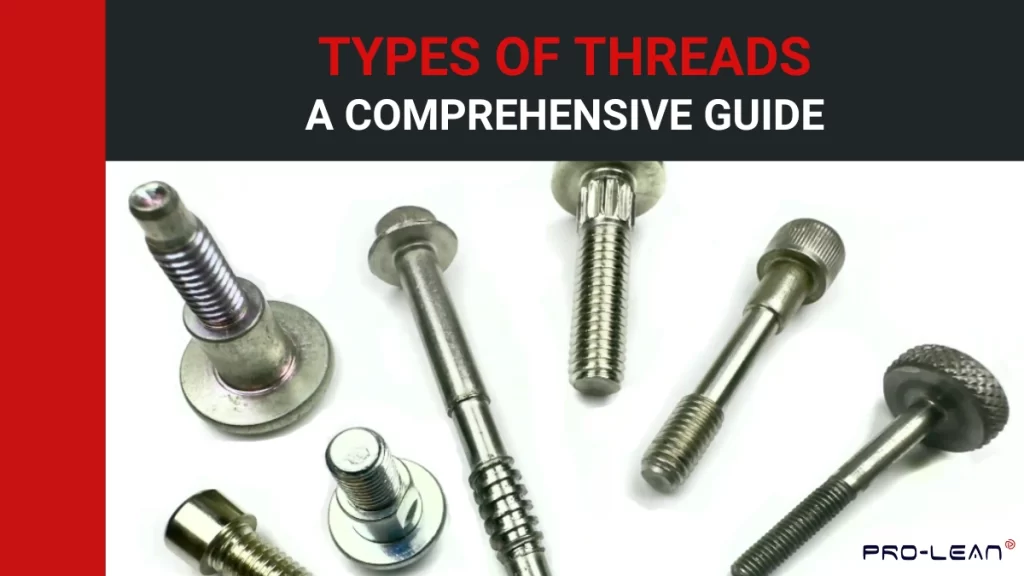
Many connections and fastening systems use threads. From simple ones like bolts and screws to bigger ones for machinery, different types of threads are available in the market.
A thread is a shortened reference to a screw thread, which is a helical structure on a component used to convert rotary motion to linear motion. This feature appears simple, but it comprises different geometric parameters that include the pitch, crest, root, thread flank, major diameter, and minor diameter.
Made of aluminum, hardened steel, stainless steel, and titanium, or other materials, threads find varied industrial uses for assembly & disassembly, sealing, motion transmission, and many other applications.
This article highlights the thread basics, the types to choose from, the basic manufacturing methods for threads, and applications, among other details.
Find out more in the next sections.
What Is A Thread?
A thread is a helical, profiled notch formed on a conical or cylindrical surface. It is a common feature on pipes and threaded fasteners. A thread is designed to derive linear motion from rotational motion, specifically by creating a mechanical advantage. Threads are of different types and shapes, serving various applications, from industrial to aerospace.
The following diagram of a thread shows the basic parts.
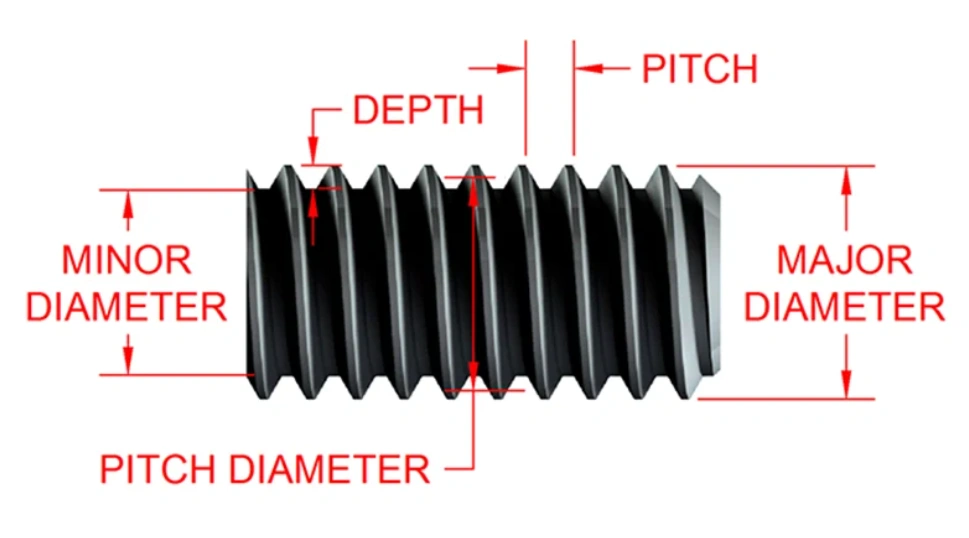
Diagram of thread
Geometric Parameters of a Thread
Different geometric parameters define a thread. They include minor diameter (inner diameter), major diameter (outer diameter), thread angle, helix angle, tooth angle, lead, number of thread starts, pitch, and pitch diameter. The mechanical integrity, strength, and fit of a thread depend on these geometric parameters.
Here’s more about the parameters.
Minor Diameter (Inner Diameter)
The minor diameter is the smallest diameter of a nut or screw. It is also called the core diameter in a screw thread and the inside diameter in a nut.
Major Diameter (Outer Diameter)
The major diameter is the largest diameter of a nut or screw. It is called the outside diameter in a screw thread and the full diameter in a nut.
Thread Angle
The thread angle is the angle between the thread’s sides and the axial plane.
Helix Angle
The helix angle is the angle between a plane perpendicular to the thread’s axis and the spiral path of the thread.
Lead
The lead is the distance a thread covers in the axial direction in one turn.
Pitch
The pitch is the distance from one point of the thread to a corresponding one measured parallel to the axis of the thread.
Pitch Diameter
The pitch diameter is the diameter of an imaginary cylinder for which the space between the threads equals the thread thickness.
Try Prolean Now!
Different Types of Threads
The different thread classifications are right-hand threads, left-hand threads, taper threads, “V” shape threads, British Standard threads, and metric or international threads.
Other designs that are possible with CNC threading are square threads, seller threads, knuckle threads, ACME threads, worm threads, buttress threads, and single and multi-start threads.
Right-handed Threads
Right-handed threads
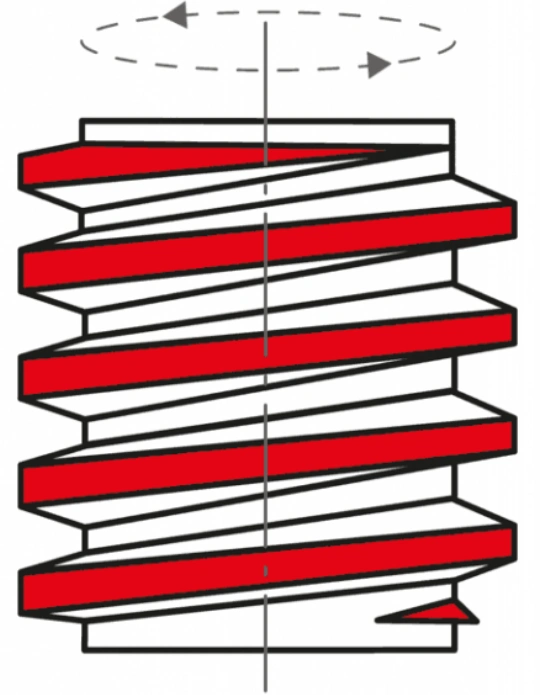
Right-handed screw threads have their threads sloping upwards to the right. That implies that the screw moves into the material when turned clockwise.
Left-handed Threads
Left-handed threads
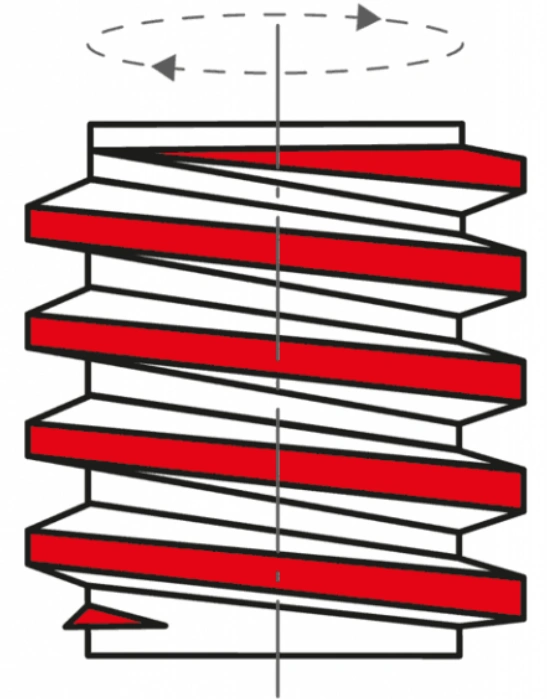
Left-handed screw threads have threads that slope upward to the left. To drive such a screw into a material, you would need to turn it anticlockwise.
This design may seem strange, but it is critical in sensitive areas such as plumbing, CNC-machined parts, gas supply valves, and propane tanks.
Taper Threads
Taper threads are types of threads produced on a tapered surface. They can be right-handed or left-handed and are commonly used in shafts.
“V” Shape Threads
“V” Shape threads are so-called because they have a V-shape. They are widely used and can be manufactured by the lathe, thread milling, die, tap, and so on.
British Standard Threads
The origin of these kinds of threads is Great Britain, hence the name. British Standard (BS) is an umbrella standard for standards from the UK that relate to fittings, pipes, and screws.
Under the BS threads standard, there are others like British Standard Pipe Parallel Thread (BSPP), British Standard Pipe Taper Thread (BSPT), and BSW – British Standard Whitworth.
British Standard Pipe Parallel Thread (BSPP): It is an internationally adopted standard for threads used in plumbing fittings.
British Standard Pipe Taper Thread (BSPT): This standard is also used for plumbing fittings internationally. It is defined by a tapered thread 1°47’ and a thread angle of 55°.
Manufacturers have a British Standard Pipe Taper (BSPT) Thread Size Chart for dimensional details of pipe thread sizes.
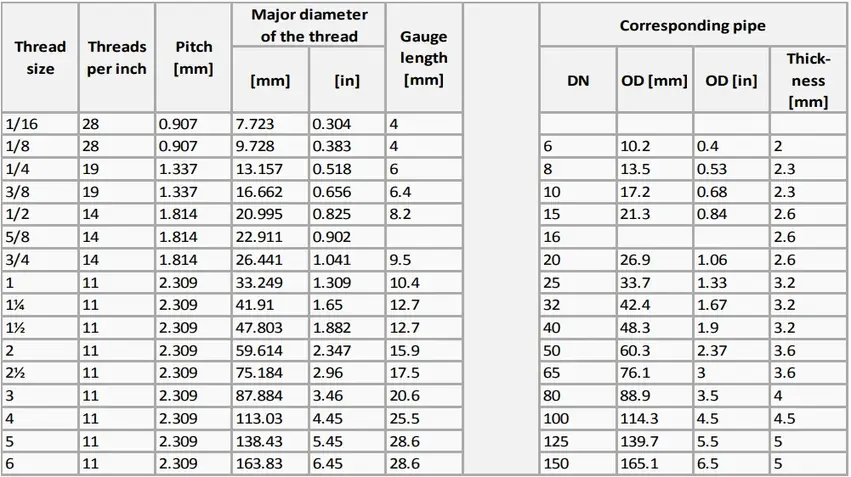
BSPT threads size chart
BSW – British Standard Whitworth: The BSW standard threads are recognizable for their 55° thread flanks and radii at both crests and roots.
Metric or International Threads
Metric threads date back to the 1900s and have since been adopted by many countries. They have a specific thread angle, crest, root, and pitch. The threads have specified thread angle, pitch, depth, radius, and other parameters.
Square Threads
Defined by a square makeup, square threads are highly regarded for their strength. You will find these types of threads in machine lead screws, power transfer, lifting of heavy objects, and press machines.
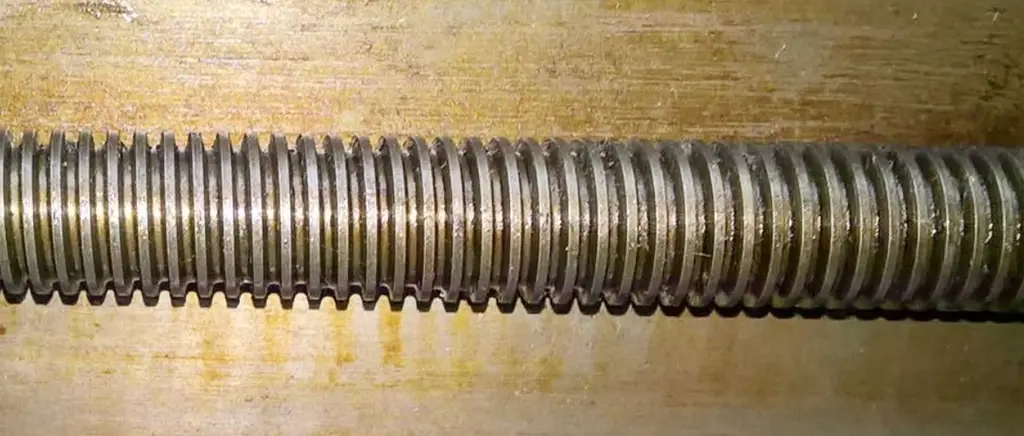
Square screw thread
Seller Threads
Also called American national threads, seller threads have a “V” shape and specifications from the American Standards Institute.
Knuckle Threads
Knuckle threads are defined by half-roundness at the crest and root. They are designed to be very strong to support heavy loads.
ACME Threads
ACME threads got their name from a company called ACME Thread Company in the late 1800s. These threads have a tapered square shape with the thinner section at the top. They are stronger than square threads.
Worm Threads
Worm threads have a similar shape to ACME threads, but have a deeper profile. The thread angle is 29°.
Buttress Threads
A buttress thread has a triangular shape and a flat face perpendicular to the thread axis.
Single and Multi-start Threads
A single-threaded screw moves a distance of one thread for one complete turn, while a multi-start threaded screw moves multiple threads’ distance for one complete turn.
Recommended further reading:
Thread Taps: A Complete Guide on the Cutting Too
Try Prolean Now!
What Is The difference between NPT and NPTF Threads?
NPT and NPTF threads can be confusing because they look similar at first glance, but they have functional differences. A closer look reveals that NPT threads have flattened peaks and valleys, while in NPTF threads, these features have controlled truncation or interference fit.
Due to this design, the leak path in NPTF threads is eliminated, so there is no requirement for sealant. These differences are the reason NPTF threads are perfect for hydraulic and high-pressure systems, while NPT threads are for low-pressure applications and general plumbing.
What Does UNF Stand For?
UNF is an abbreviation for Unified National Fine threads, which are part of the Unified Thread Series used in North America. Their pitch is finer than that of Unified National Coarse (UNC) threads.
What Are The Three Imperial Measurements For Threads?
The three imperial measurements of threads are the major diameter, pitch diameter, and threads per inch (TPI). These elements are critical because they define the thread’s width, depth, and fineness (courseness). With these measurements, the fit and function of a thread is guaranteed.
Different Types of Materials for Threads
There are different materials for machining threads, the common ones being stainless steel, steel (hardened steel), aluminum, brass, plastic, copper alloy, titanium, superalloys, and molybdenum.
Manufacturers choose a thread material depending on essential factors such as strength, corrosion resistance, weight, operation temperature, and cost-effectiveness.
Here is the list of these materials alongside their main properties:
Stainless Steel – Stainless steel threads are mostly in 304/A2 and 316/A4 grades. The material is corrosion-resistant, strong, and affordable.
Steel (hardened steel) – Hardened steel threads go a step higher than stainless steel ones in terms of strength and wear resistance.
Aluminum – Aluminum makes lightweight and corrosion-resistant threaded fasteners. It is non-magnetic and easy to form.
Brass – Made up of copper and zinc, brass threads are corrosion-resistant and easy to manufacture. The gold-like appearance of the material makes it suitable for electrical and plumbing projects.
Plastic – Plastic threads are preferable in applications where chemical resistance, temperature resistance, and a specified level of strength are required. The options include acetal (Polyoxymethylene, POM), polypropylene (PP), and nylon (Polyamide).
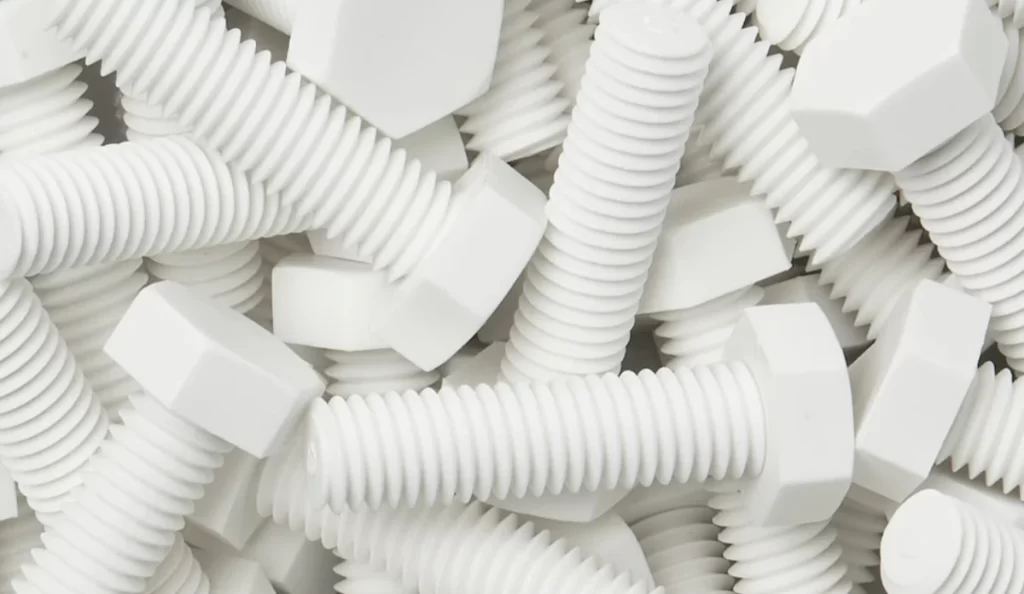
Polypropylene (PP) threads
Copper Alloy – Threaded fasteners made of copper alloys are widely used for their corrosion resistance, strength, and ease of manufacture. The fasteners also have decorative properties.
Titanium – Titanium alloy threads are biocompatible, strong, lightweight, heat-resistant, and corrosion-resistant.
Superalloys – Superalloy threads have superior resistance to corrosion, creep, oxidation, and temperature.
Molybdenum – Molybdenum threads have excellent strength and temperature resistance
Main Manufacturing Methods for Threads
The primary manufacturing methods for threading in manufacturing are thread turning, thread rolling, CNC milling, thread grinding, and thread casting. Each of these methods has advantages related to material compatibility, manufacturing speed, precision, and cost-effectiveness.
Here are more details about the thread manufacturing methods.
Thread Turning
Turning on a lathe is a conventional and still popular manufacturing method for threads. The workpiece is rotated against a stationary single-point cutting tool to produce external threads.
Thread Forming –
Thread forming is a broad thread manufacturing category that entails plastic deformation of the workpiece using molds or tools. A popular method in this category is thread rolling, whereby rollers or wheels press against a workpiece to produce threads.
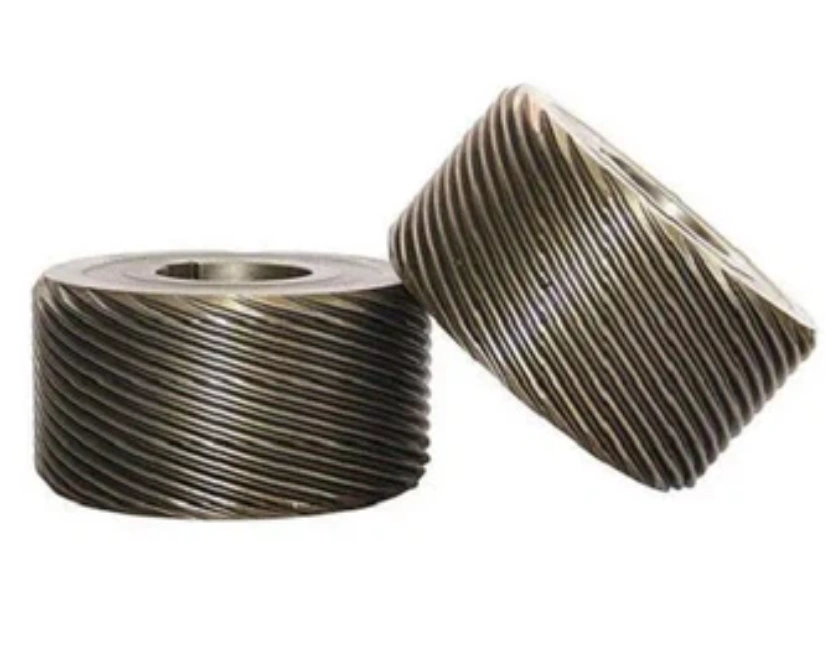
Thread rolling dies
The other thread-forming method is flat-die thread rolling.
Thread Milling
Thread milling entails using a rotating cutter in a hole to make threads. The cutter enters the hole in a spiral manner and creates the required threads. This technique is very precise.
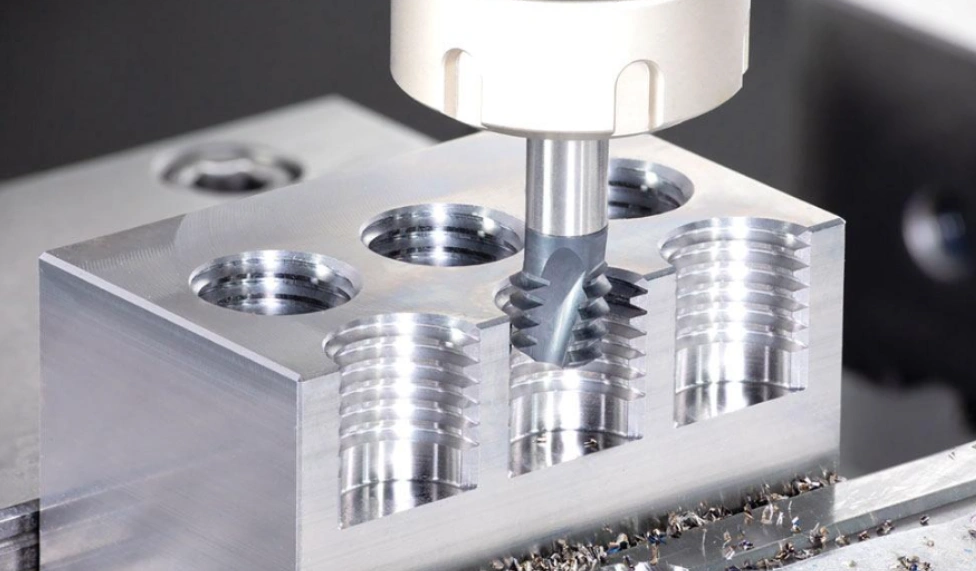
Thread milling
Thread Grinding
Thread grinding is about grinding the surface of a workpiece to produce threads. The grinding process is gradual, but it eventually generates the required thread profile.
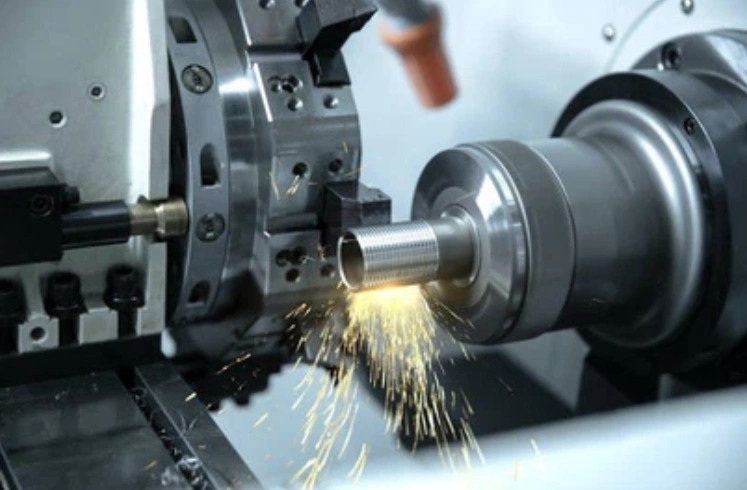
Thread grinding
Thread Casting
Thread casting is a direct thread-forming technique that entails placing a replica pattern in a mold to create a cavity. When molten material is poured into the cavity and allowed to cool, a thread forms.
Other Methods of Forming Threads
Other methods for threads that manufacturers use include;
- 3D printing for threads
- Blow molding for plastic threads
- Thread tapping
- Thread broaching
Tips to Identify a Thread Type
To identify a thread type for CNC machining services, first check if it’s a male thread or a female thread, then check if it’s tapered or parallel, and measure the pitch. Next, the question is, what is thread size? It is important to determine the thread size, and finally identify the thread standard. These stepwise checks are effective in classifying all threads.
How to Choose the Right Type of Thread
To choose the right type of thread, consider the load requirements, material compatibility, assembly/disassembly requirements, and environmental conditions. For instance, threads meant for the petrochemical industry should be engineered for the tough conditions.
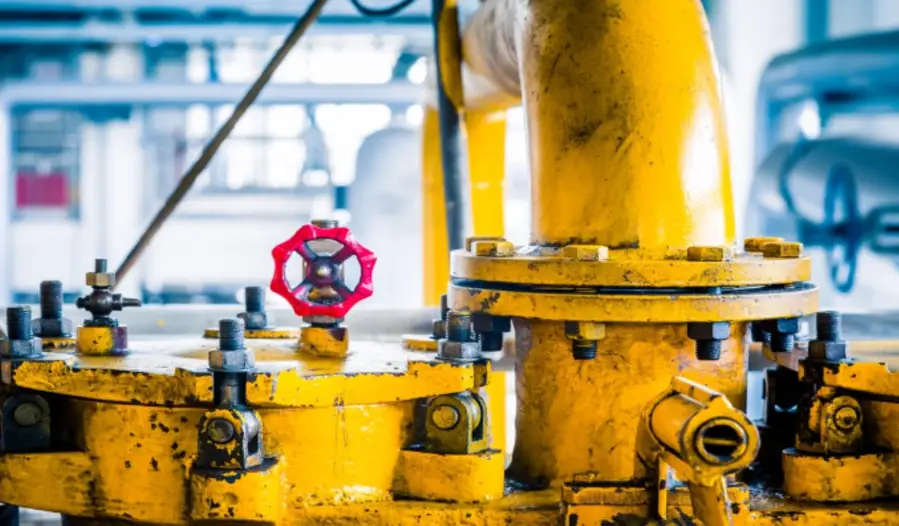
Threads for the petrochemical industry
With these considerations, the chosen thread should perform optimally for an extended period.
Applications of Threads
The applications of threads spanning various industries include fastening & joining, motion & power transmission, measurement, sealing, assembly & disassembly, and specialized applications.
Here’s more about these applications:
Fastening & Joining
Threads on bolts, nuts, and screws are widely used to provide reliable mechanical connections in assemblies. Their detachable joints are found in automotives, machinery, and structures, among other areas.
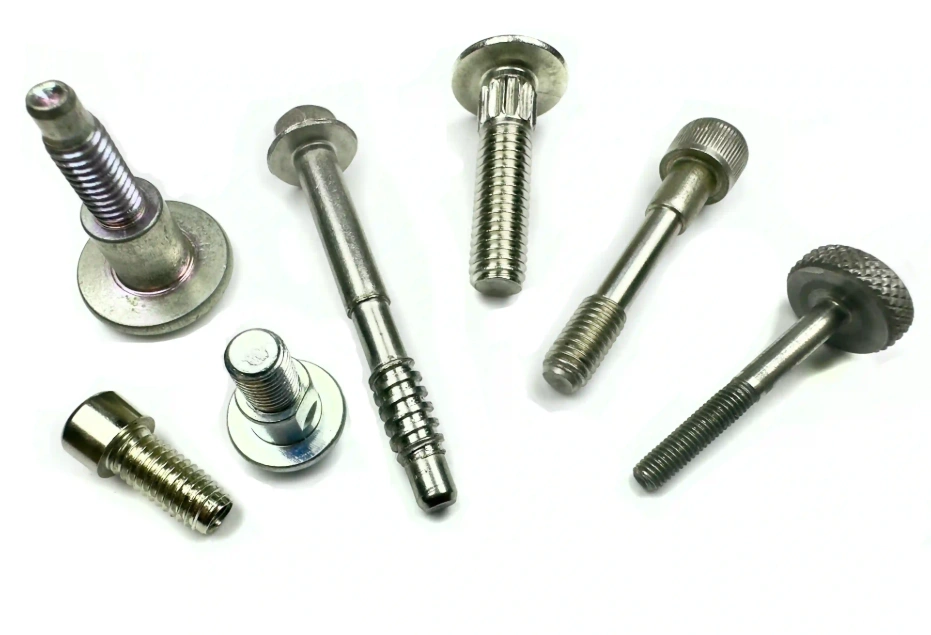
Automotive screw fasteners
Motion & Power Transmission
There are types of threads in mechanical systems that help transmit motion and power. Examples are worm gears and lead screws in automotives and CNC machines, respectively.
Measurement
The uniform geometry and pitch in threads are useful in measurement applications, for example, in micrometers and threaded gauges.
Sealing
The sealing capability of some threads is required in pressure vessels, hydraulic systems, and plumbing systems. The NPT (National Pipe Taper) and other forms are widely used in such circumstances with reliable performance.
Assembly & Disassembly
Since threads engage and disengage through rotation, this mechanism comes in handy in assembly and disassembly applications. Many examples are in the electronics and industrial machinery spaces.
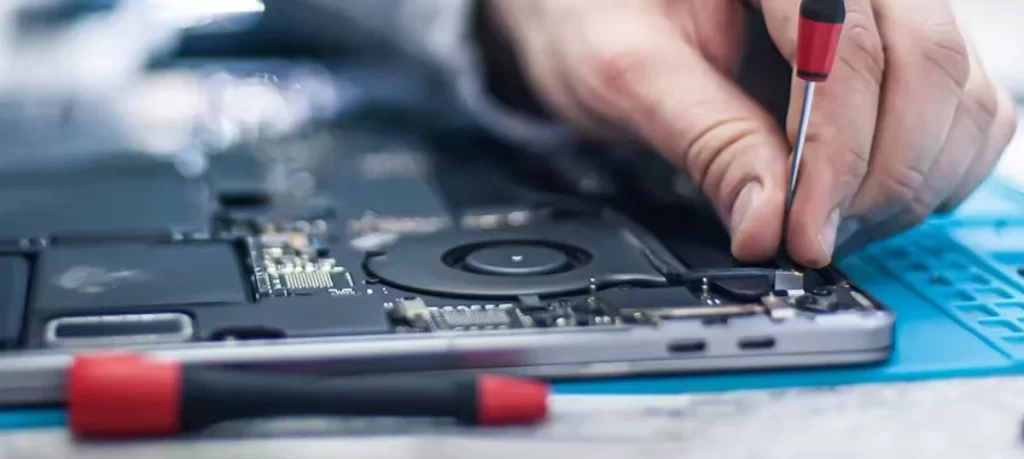
Threads in electronics
Specialized Applications
To add to the above examples, thread engineering is also present in several special use cases, including pressure relief valves and bone screws.
In Summary
The value that thread components bring to joining and connecting components is unmistakable. With the many types of threads available, understanding the basics and categories is the starting point for a successful project.
Materials, designs, standards, and manufacturing processes all contribute to the suitability of a thread.
ProleanTech has unmatched prowess in CNC threads machining for different industries. Contact us today to get a quote for all your threading needs.


0 Comments