
Sheet metal frames provide functionality and stability in structural settings for different industrial components. Creating custom metal frames begins by cutting a flat sheet of metal to the required dimensions, bending it on a press brake, and joining the different sections using either permanent or non-permanent methods.
These frames are used in various applications, including architectural, industrial, automotive, aerospace, and electronic components.
Anyone interested in sheet metal frame products has many options, thanks to automation, quality materials, and top-notch expertise. Copper, brass, aluminum, steel, stainless steel, and mild steel can all be used to make high-quality frames.
Ultimately, a truly exceptional sheet metal frame results from the right combination of precision, prowess, and quality processes. Read on for an exploration of these important elements and insights on how to ensure the next fabricated frame meets the highest standards.
What Is A Sheet Metal Frame?
A sheet metal frame is a structural component that forms the skeleton of an object. It is designed not only to provide the shape but also to support other loads.
Fundamentally, a frame comprises beams, columns, and joists. The beam transfers loads, the column provides vertical support, and the joist supports the flooring. 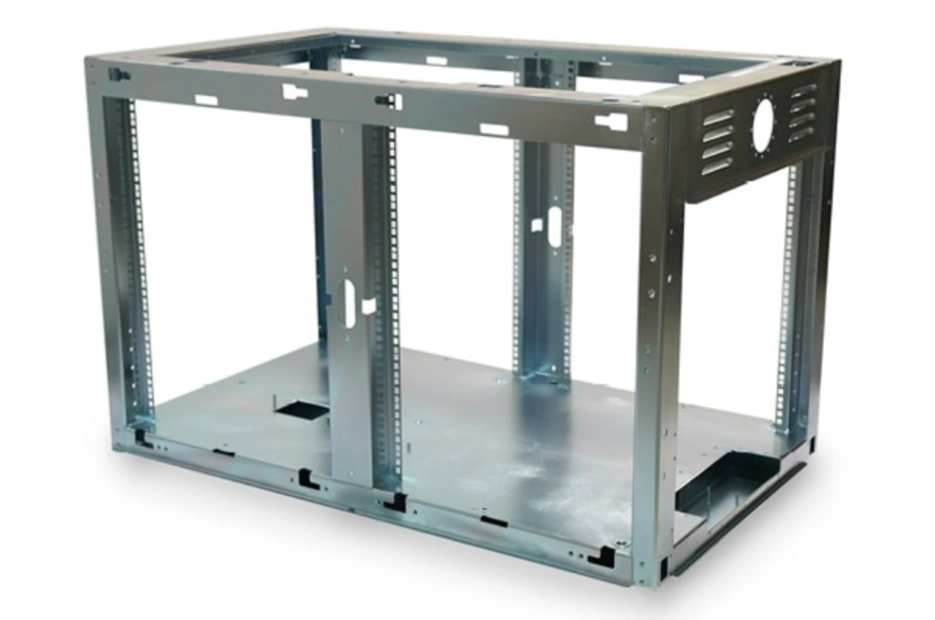
A sheet metal frame
Benefits of the Sheet Metal Frame
Metal frame fabrication offers several benefits, including:
High Strength-To-Weight Ratio
Compared to alternative materials such as plastic and wood, metal has superior strength, thus it withstands heavy loads. Concerning sheet metal vs machined parts, frames are more preferable for high strength-to-weight ratios.
The metal frame company can comfortably use the material for beams, columns, and other critical structural components.
Corrosion Resistance
Sheet metal can ward off corrosion, whether naturally or through the application of protective surface layers. Aluminum and steel sheets form natural protective coatings, while other metals can be treated with powder coating or galvanization.
Higher Longevity
When the custom metal frames are for relatively harsh environments, such as windy or snowy areas, users can bank on the many metals’ ability to withstand the conditions.
Despite these environments, sheet metal structures still perform excellently in commercial, industrial, and residential settings.
Assembly and Installation Ease
With its flexible design, a sheet metal fabrication frame-type product can be effortlessly assembled and installed according to the prevailing design requirements.
Whether for decorative or functional reasons, the metal frame manufacturer can use tools and design guidelines to build a reliable, safe, and appealing product.
Sustainable Structures
With the increasing need for sustainable building and manufacturing practices, the fact that most metals used in frames are recyclable is exciting. These materials further enhance energy efficiency by reflecting sunlight and helping cool spaces in hot climates.
Cost-Efficient Solution
While competitive in performance and general quality, metal frame fabrication is relatively affordable. Metal fabrication cost depends on the type of material, design complexity, and production volume, among other factors.
Overall, a metal frame is easy to process, manufacture, transport, and install, aspects that contribute to the overall low cost.
Limitations of the Sheet Metal Frame
The limitations of sheet metal framing solutions are:
- Susceptibility to Loads and Heat: High mechanical stress or temperature can deform thin sections.
- Limited Thickness: The load-bearing capacity is limited by the small cross-section.
- Corrosion Problems: Poor coating and improper material selection can lead to corrosion issues.
- Vibrations, if not well-damped: Dynamic loads can cause resonance in lighter frames, reminding us of the need to consider damping mechanisms.
Try Prolean Now!
Different Material Options for Metal Frames
The types of metals ProleanTech can use for custom metal frames include aluminum, copper, brass, steel, stainless steel, and galvanized steel. Each option has its pros and cons, which suit project requirements differently.
Below are more details about these metals, covering their alloys and popular surface treatments.
| Frame Material | Grades (Alloys) | Surface Treatments |
| Aluminum | 3003, 5052, 6061 | Anodizing, powder coating, chromate conversion coating (Alodine), and mechanical finishes for custom aluminum framing |
| Brass | C26000, C28000 | Electroplating, polishing or buffing, powder coating |
| Copper | C11000, C14500 | Polishing or buffing, clear lacquer coating, electroplating, and powder coating |
| Steel | A36, A572, A992 | Hot-dip galvanizing, powder coating, painting, and electroplating |
| Stainless Steel Framing | 304, 316, 410, 430 | Passivation, electropolishing, bead blasting, and powder coating |
| Galvanized Steel | G90, SGCC, | Chromate conversion coating, painting, powder coating |
Types of Sheet Metal Frames to Consider
Custom metal frames can be categorized as angle frames, box/enclosure frames, channel frames, reinforced/welded frames, and tubular/hollow frames.
Any reputable metal frame company will recommend a version based on mounting requirements, load specifications, and the specific intended application. This is critical because each frame design has different loading capabilities, manufacturing requirements, and rigidity.
The different types of frames are discussed below.
Angle Frames
These frames have L-shaped sections and thus are usually suitable for light loads.
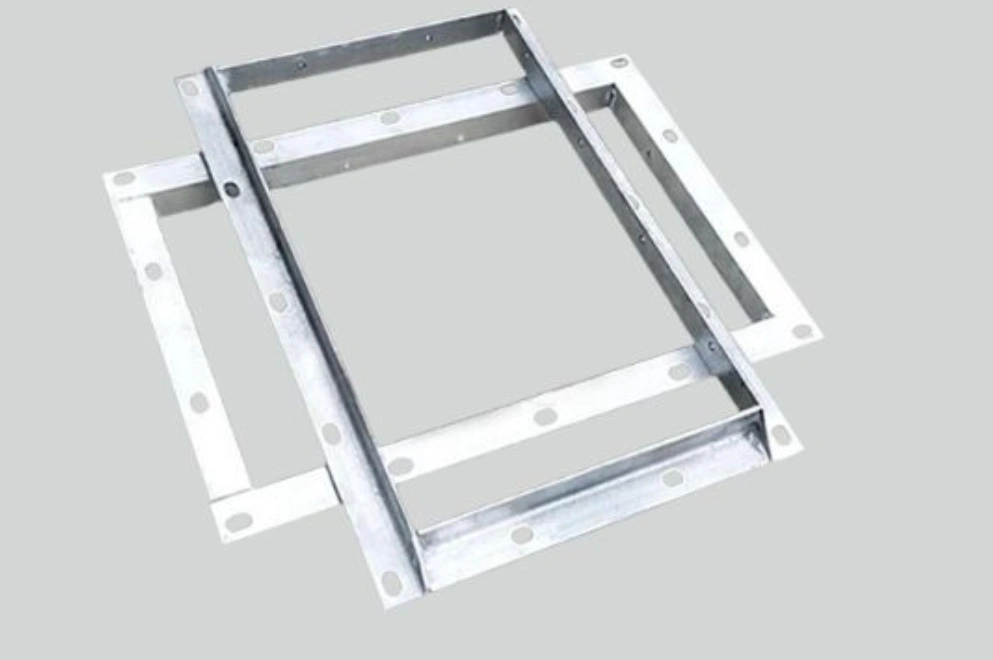
Angle frame assembly
Box/Enclosure Frames
Defined by closed geometries, box frames typically feature welded or folded sheets that provide high rigidity and strength.
Channel Frames
With their U-profiles, channel frames are designed for use with mounting hardware. These frames are renowned for their high bending strength.
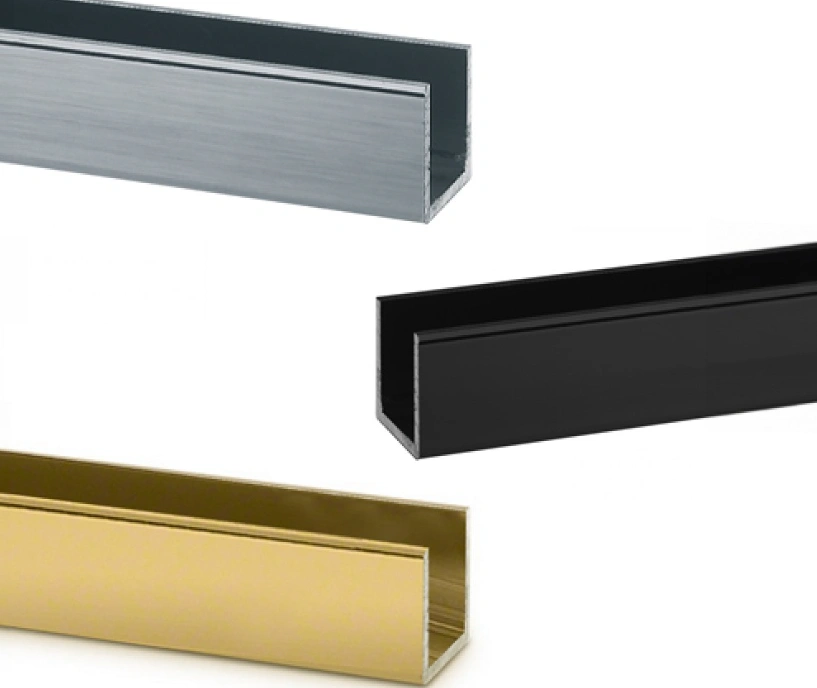
U channels
Reinforced/Welded Frames
As a testament to their high load-bearing capacity, reinforced sheet metal frames have gussets or welded joints.
Tubular/Hollow Frames
Tubular or hollow frames are recommended when the application requires uniform load distribution from a strong yet light structure. These frames usually have round or square sections.
Square metal frames are particularly widely used for their uniform strength and ease of fabrication.
Manufacturing Sheet Metal Frames
The manufacturing process for a sheet metal frame involves cutting, bending, joining, and assembly. The sheet metal fabrication services provider selects metals from reliable materials, such as steel, aluminum, and stainless steel frame fabrication to ensure sturdiness and reliability.
However, it all starts with design, as the following steps show.
Step 1: Design Phase
The engineers first develop a detailed design for the sheet metal frame. In so doing, they consider important factors such as load-bearing capacity, shape, dimensions, and structural requirements.
As they require 2D and 3D models, they usually turn to CAD (Computer-Aided Design) software. An important element at this point is a detailed
Step 2: Choosing the Material
The type of metal for the frame is chosen based on performance and aesthetic requirements. For the fabricator, key factors include strength, corrosion resistance, and cost.
Step 3: Cutting
The sheet metal is then cut into a specific size using metal fabrication techniques such as CNC laser cutting, waterjet cutting, or even the more conventional shearing. The choice depends on the level of precision and surface quality the fabricator seeks.
Sheet metal slitting is an excellent option for fabrication jobs requiring narrow metal strips.
Step 4: Bending
Bending is about transforming the cut sheet metal into the designed shape and form. The press brake is the most prominent tool in this step, but alternatives include roll benders and rotary bending machines.
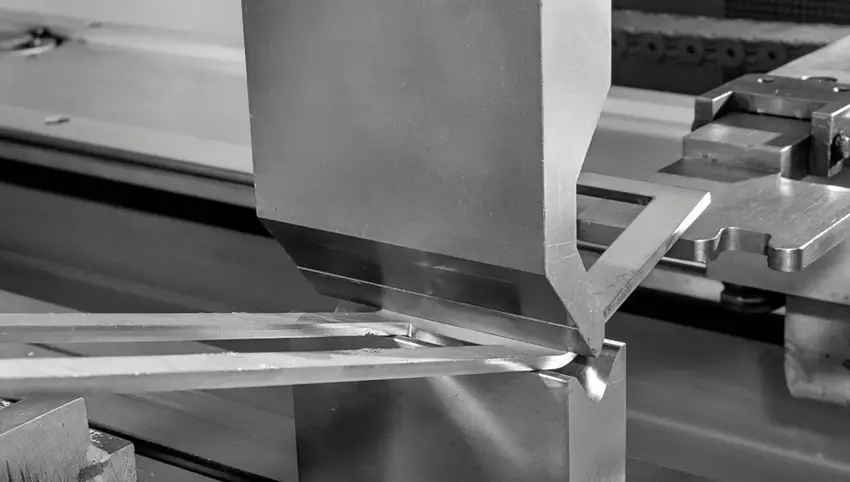
Sheet metal bending
Bending techniques vary in complexity, with options such as sheet metal drawing and metal stretching used to create complex contours and curves.
Fabricators determine which tool to use based on sheet metal thickness, the required production volume, and the bend radius.
To reinforce structures, sheet metal hemming is one of the most reliable strategies.
Step 5: Joining
The number of sheets joined depends on the frame’s size and complexity. Welding is a common joining method in metal frame fabrication due to its strength and durability.
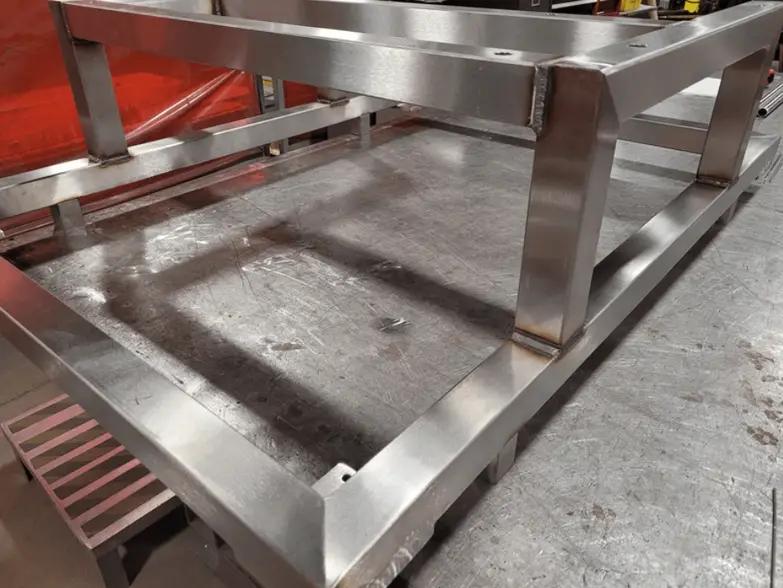
Welded frame
Step 6: Sheet Metal Frame Assembly
The jointed frames can be further assembled to build a bigger, complete design. Joining techniques include riveting and bolting.
Step 7: Surface Finishing
The fabricated custom metal frames often require fine-tuning through finishing processes, such as deburring and cleaning. Popular surface-finishing techniques can enhance the frame’s visual appeal, including galvanizing, brushing, anodizing, powder coating, and polishing.
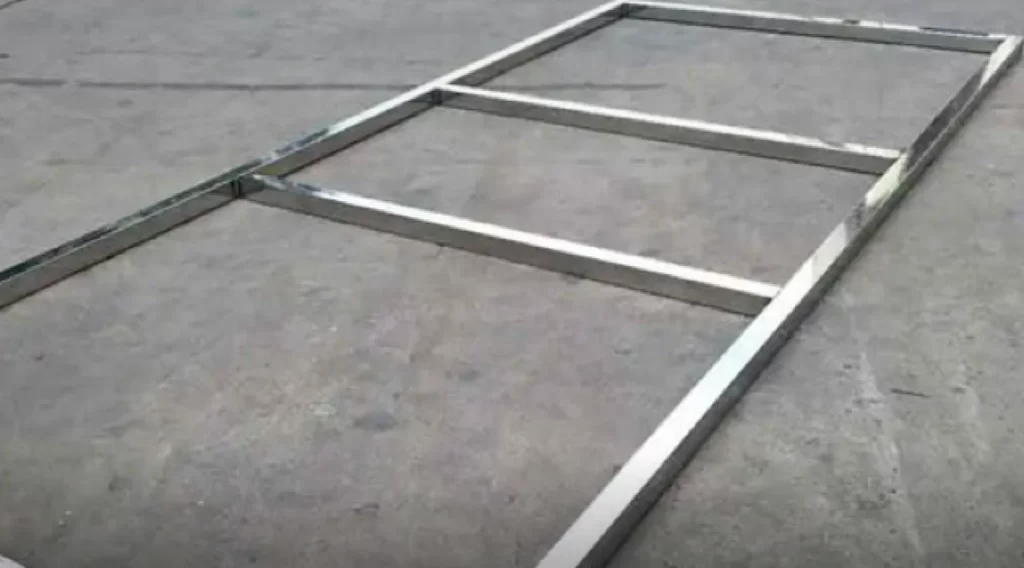
A polished frame
Try Prolean Now!
Common Applications of Sheet Metal Frames
Custom metal frames can be produced for automotive, construction, electrical, telecommunication, and general industrial sectors.
Get a quote for sheet metal fabrication services in any of the following areas.
Automotive Applications
Sheet-metal structures in cars include dashboard frames, battery enclosures, and seat frames.
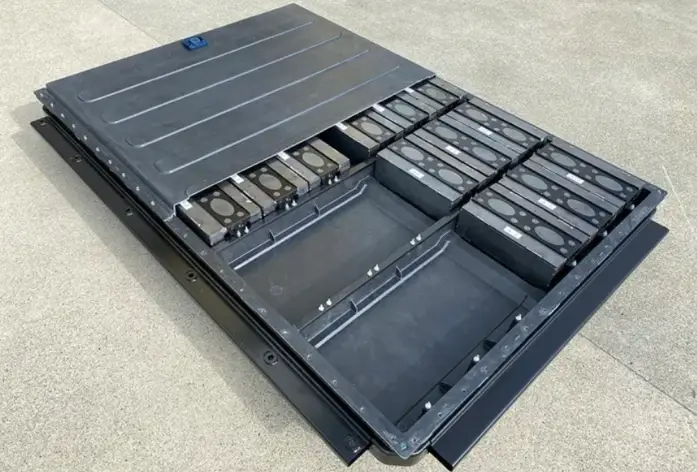
A car battery enclosure
Construction Applications
The construction industry uses many custom metal frames, specifically the cold-formed steel framing (CFS), for ceilings, floors, and walls.
Electrical Applications
For electrical components, the role of precision metal fabrication is evident in framed enclosures for PLC systems, distribution panels, and switchgear.
Telecommunication Applications
In the telecommunications industry, sheet metal frames feature in hardware, servers, routers, and PCBs. Most of the chassis used in the industry contain custom metal frames.
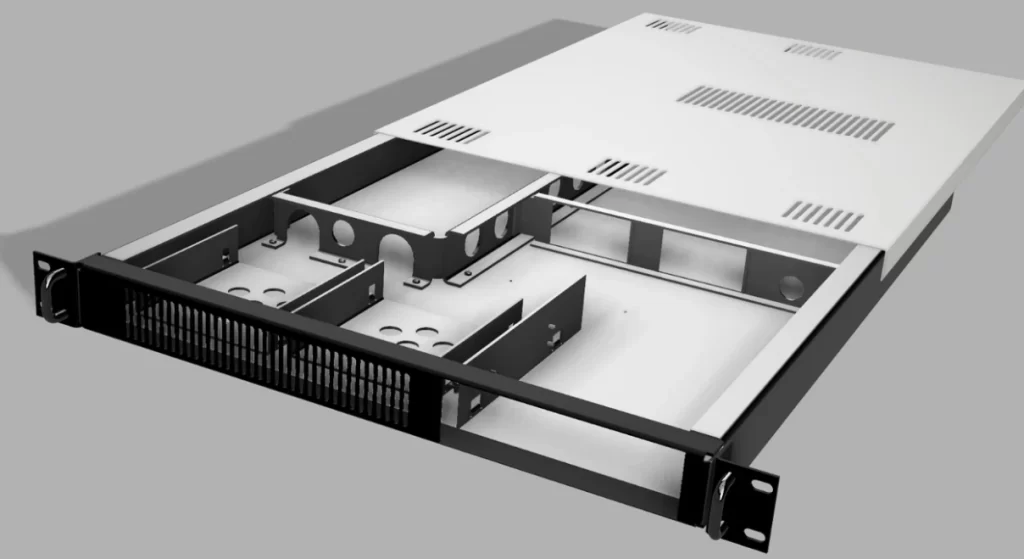
Server sheet metal frame
Industrial Machines
Numerous machines in the industrial setting require structural frames, either for structural support or for protective enclosures. Metal frame fabrication works are evident in guardings, robotics, and CNC machines, among other areas.
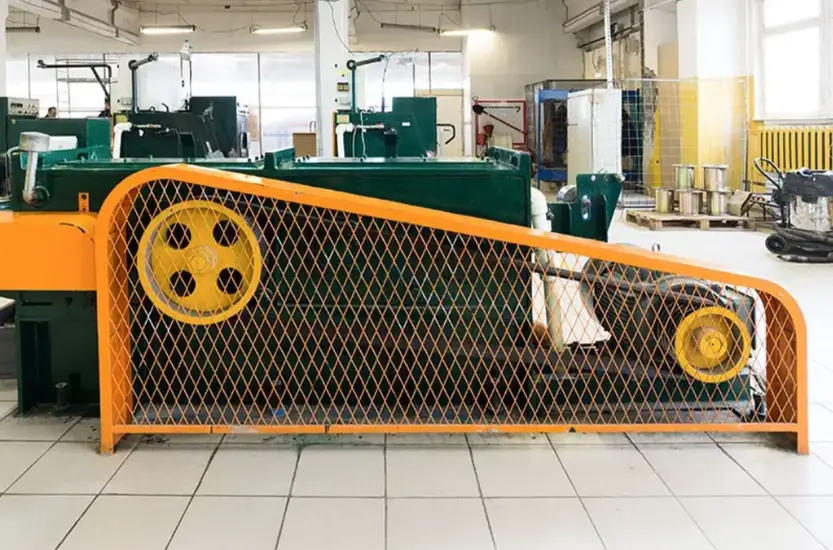
Machine guarding
In Conclusion
The material type, processing method, and the company’s reputation matter a lot whenever you are selecting the source of sheet metal frames. With various frame types available, you need a partner who can quickly decipher which option suits your requirements.
You can never go wrong with ProleanTech because we know and actualize all the necessary elements for successful custom metal frames. We are committed to delivering sheet metal cutting and forming services in line with the ISO 9001:2015 standards.
Contact us to kickstart this journey!
0 Comments