
The sheet metal stamping process starts with a design, which guides how sheet metal is cold-formed into usable parts. This plastic deformation is performed through various techniques, including cutting, blanking, bending, and deep drawing.
There are general metal stamping steps that start with design, whereby the manufacturer and the client decide on the stamped part material, dimensions, and other characteristics.
Other steps that follow are material preparation, feeding, stamping, and post-processing (such as finishing).
For successful metal stamping, it is important to understand the material’s properties. For instance, if you are blanking steel and follow the exact approach for 6000-series aluminum, the process is likely to fail.
Many metals can be stamped – aluminum alloy, cold-rolled steel, copper, phosphor bronze, beryllium copper, galvanized steel, stainless steel, and others – so it’s advisable to consider the exact properties one is looking for.
What Is Metal Stamping?
Metal stamping is a versatile and efficient cold-forming manufacturing process for transforming flat metal sheets into desired, accurate parts. The method utilizes force and pressure from stamping tooling to produce parts with bends, curves, cutouts, and other features.
How Does Stamping Work
There are five main steps in the stamping manufacturing process, namely, design, material preparation, stamping, finishing, and quality control. Each stage is crucial for optimizing manufacturing efficiency, minimizing metal stamping defects, and managing costs.
A closer look at the stamping stages is below.
Design and Material Preparation
The first step is material selection and stamping design. The step is critical for ensuring the stamped part meets the aesthetic and functional requirements.
Stamping Operation
Stamping is typically a series of steps, which start with blanking, the process of cutting the metal sheet into specified shapes and sizes. Forming, cutting, piercing, trimming, and other metal stamping details follow.
Secondary Operations
The stamped part undergoes any necessary secondary operations, for instance, deburring, polishing, and coating. These steps enhance the functionality and surface quality.
What is Process Control for Sheet Metal Stamping?
Quality-stamped parts are the result of process control from the design stage to the final step. Apart from maintaining close contact with the client, the manufacturing firm should use quality control technology.
Some technological options are;
- Optical vision systems
- Custom gauges
- In-die measurement systems
- Statistical process control systems
What are the Four Types of Metal Stamping Operations?
There are four main types of metal stamping: Progressive stamping, transfer stamping, deep drawing, and fine blanking. ProleanTech determines which one to use depending on required tolerances, production volume, and part complexity.
As the further discussion below indicates, progressive stamping is for high volumes, transfer stamping supports complex parts, deep drawing produces cylindrical components, and fine blanking is preferred for tight tolerances.
Let’s learn more about these metal stamping techniques.
Progressive Stamping
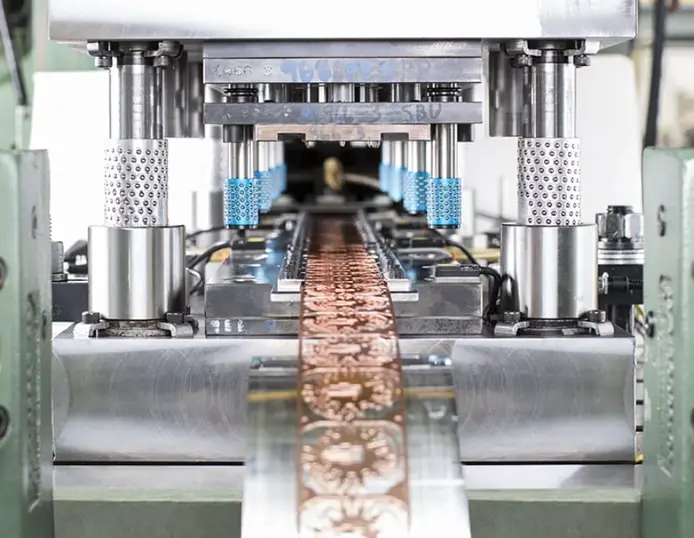
Progressive stamping
In progressive stamping, a metal coil is continuously fed into the stamping press. The punching, bending, and shaping process is simultaneous.
Transfer Stamping
The basic version of transfer stamping is where the metal blanks are taken from one stamping station to another for shaping and forming until the final shape is achieved. This technique is preferred for the ease with which it produces relatively complex and larger parts.
Deep Drawing
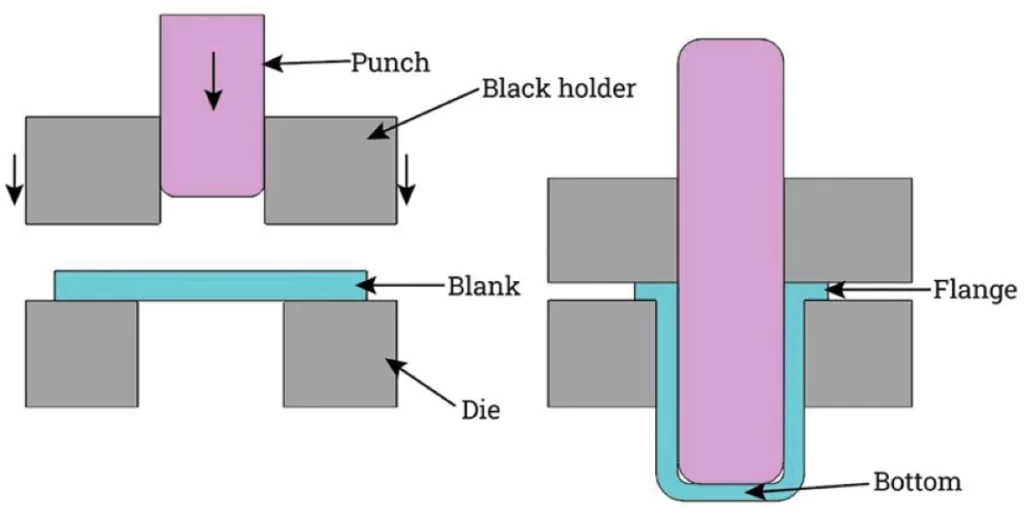
Deep drawing
Deep drawing entails using a punch to pull the sheet metal into a die. The sheet metal is forced to acquire the shape of the die. For a component to be considered to have undergone deep drawing, industry convention requires the drawing ratio to be more than 2. In other words, the ratio of the blank diameter to the punch diameter should exceed 2..
Fine Blanking
Fine blanking combines machining and stamping to manufacture precise parts. The material flow is controlled through the expert combination of a blank holder, punch, and counterpunch.
The material is placed on the fine blanking press, pressure is applied, and the punch descends on the material as counterpressure is applied from below. The result is a clean cut devoid of fractures or burrs.
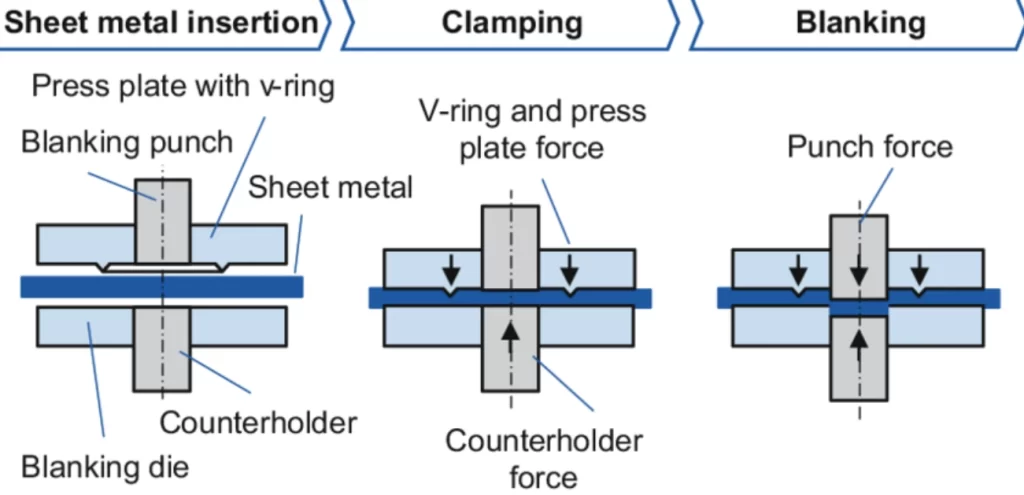
Fine blanking
Try Prolean Now!
Types of Metal Stamping Processes
The main metal stamping processes are blanking, punching, bending, stretching, and coining. Others are imprinting, flanging, embossing, and grooving.
Blanking
Blanking is the use of a shearing force to cut out a sheet metal workpiece from a larger stock. In other words, the piece removed is the desired part.
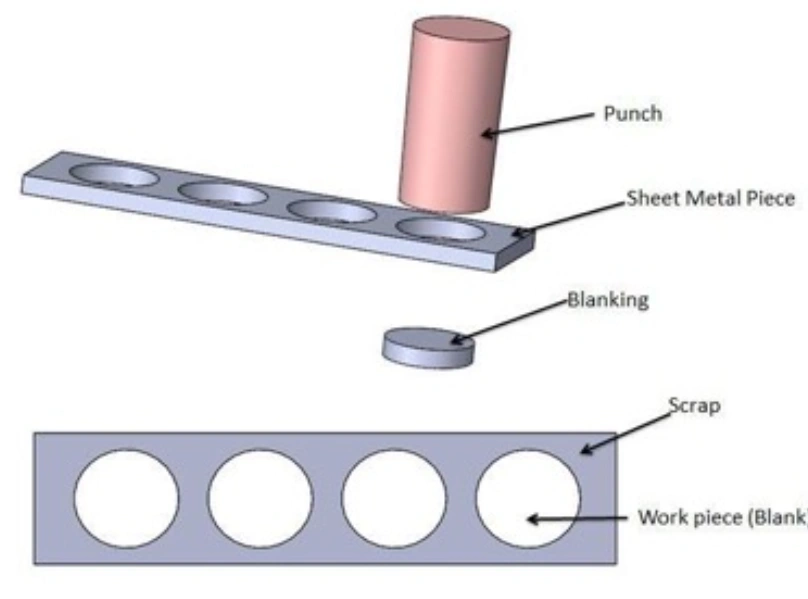
Blanking
Punching
Punching is the use of a punching press to produce specific shapes of sheet metal. The process produces waste metal referred to as slug, which is often sent to the scrap metal yard. Punching is different from blanking in that the removed piece is the waste, while the larger part is the workpiece.
You can learn more about the details of punching from the punching vs stamping comparison.
Bending
Bending in metal stamping entails forming the sheet metal into U, V, L, or any other desired shape or profile. The process is typically done along a single axis.
Stretching
Stretching is the application of tensile force on the sheet metal using a mold to generate a concave shape.
Coining
Coining is a form of bending sheet metal in which the die and punch have the exact angle required on the workpiece. They are typically at 90 degrees. High tonnage of bending force is required to achieve this metal forming result.
Imprinting
Imprinting is the process of recessing or raising some particular sections of sheet metal to produce a predetermined pattern.
Flanging
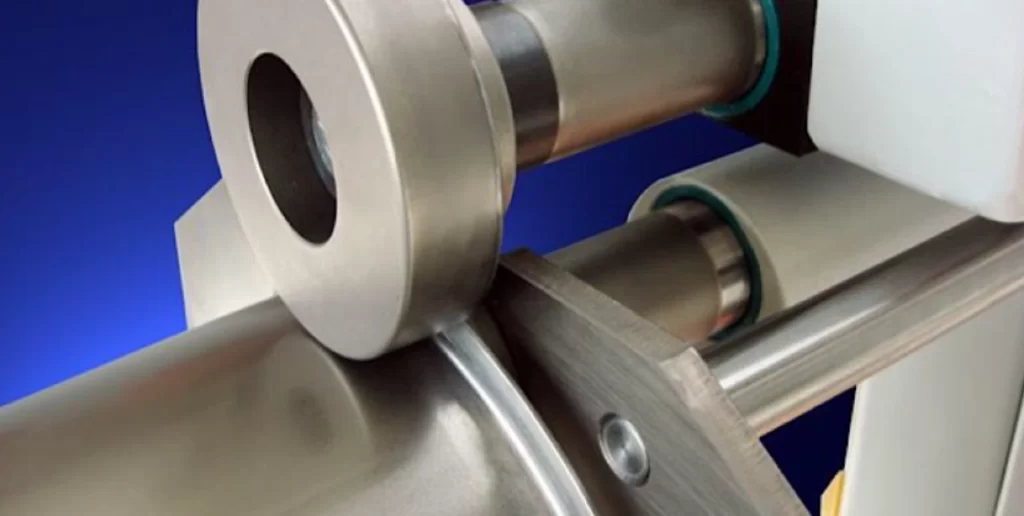
Flanging
Flanging creates a flange or flare on the sheet metal using special equipment or the usual die and press.
Embossing
Embossing is a stamping process that produces recessed or raised features in the sheet metal after pressing it against the die. The sheet metal acquires the shape of the die.
Grooving
Grooving is the use of a die or punch to create shallow channels on sheet metal. The channels may be used for functional or decorative purposes.
Categories of Stamping Presses
Stamping presses are available as mechanical presses, hydraulic presses, and servo presses. Further categorizations of presses can be derived from tonnage and stroke length. These presses should be paired with the right die design for optimal stamping results.
Mechanical Presses
These presses store their stamping energy in a flywheel, which releases it through a linked, double-action, eccentric, geared, single-gear, or double-gear drive type.
Hydraulic Presses
This type of stamping press relies on static pressure via a pressurized incompressible fluid to drive the ram. This type of stamping press is advantageous because it produces lightweight parts, requires only one mold, is cost-effective, and delivers a powerful stroke.
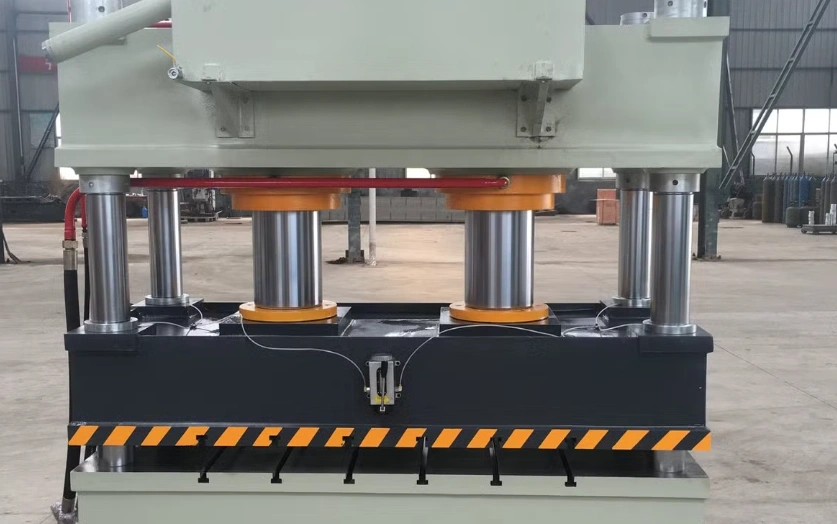
Hydraulic press
Servo Presses
Motors and clutches of the conventional press can be replaced with servomotors, introducing a relatively new category: servo presses. These presses have the unique capability to apply programming effects, including specifying the dwell time for the downward stroke.
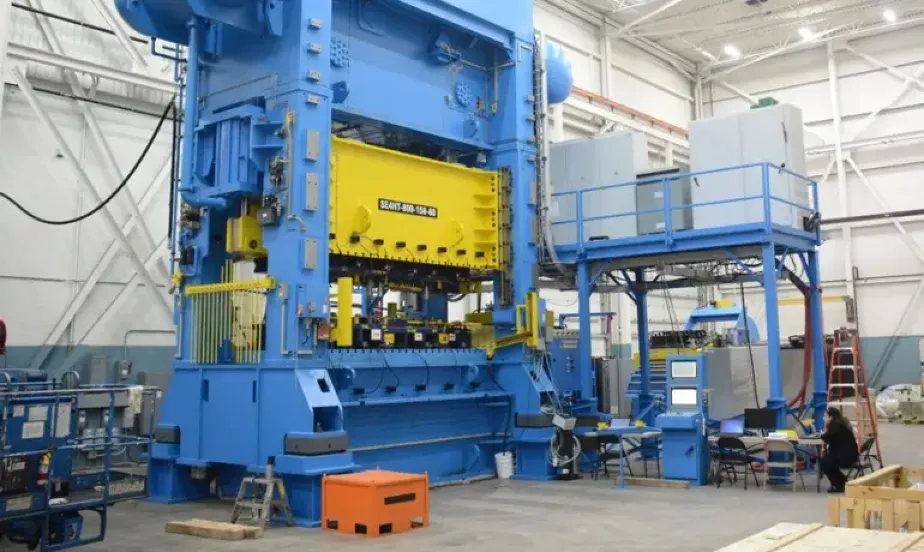
Servo press
Try Prolean Now!
Common Materials in Metal Stamping Processes
From copper to brass, and stainless steel to aluminum, the list of different types of sheet metal materials that can undergo stamping is long. Various elements guide manufacturers when choosing a specific sheet metal type – strength, corrosion resistance, formability, and cost-effectiveness, among others.
The choice of precision metal stamping materials has process repercussions, including the die wear rate and post-processing requirements.
Here is a list of the most common metal stamping materials to consider for your next project.
Aluminum Alloys
Aluminum alloys are widely preferred for their low weight, thermal conductivity, corrosion resistance, and strength. Aluminum stamping process parts can be used in corrosive environments and for lightweight components.
Car parts, electronic enclosures, and mobile phones are popular applications for this stamping material.
Cold Rolled Steel
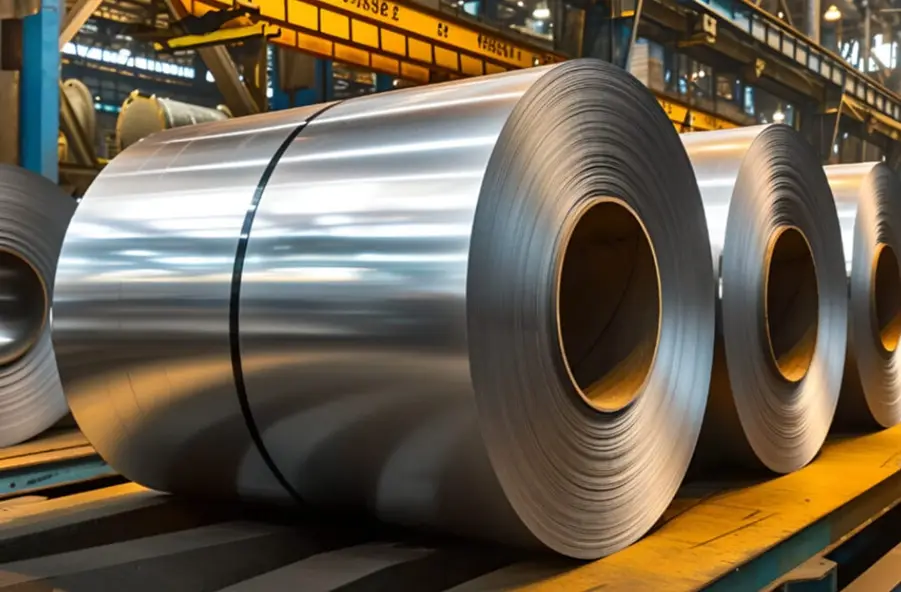
Cold-rolled steel
Cold-rolled steel may be strong, but its formability is also good and usable in metal stamping projects. Provided the manufacturer adheres to the material’s bend radius requirements, this steel is one of the best materials for metal stamping, especially where high strength and quality surface finish are required.
Copper
Copper and its alloys are easy to fabricate through stamping to produce intricate, exciting designs. Some popular applications of copper parts are jewelry and custom gifts.
Copper is a delicate material, but ProleanTech knows how to handle it correctly, including hitting the material softly, annealing it before stamping, and using clean equipment.
Phosphor Bronze
Phosphor bronze is machinable, strong, and corrosion-resistant. The alloy contains copper and tin, components that make it suitable for automotive and marine applications, with strength and the capability to stand harsh environments.
Beryllium Copper
Beryllium copper stamped parts are high-performance and durable. They are reliably used in electronics, automotive, aerospace, medical, defense, and many other applications.
Galvanized Steel
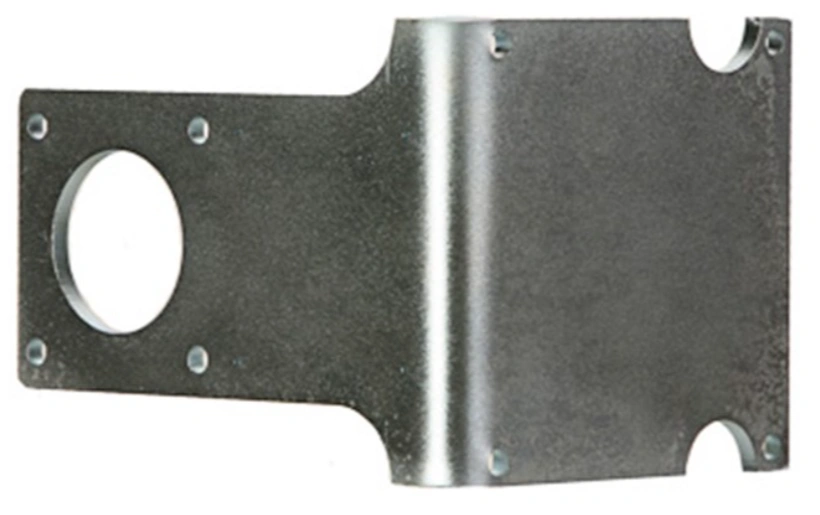
Stamped galvanized steel part
The durability, corrosion resistance, malleability, and cost-effectiveness of galvanized steel are major reasons many metal parts stamping companies use the material.
Stainless Steel
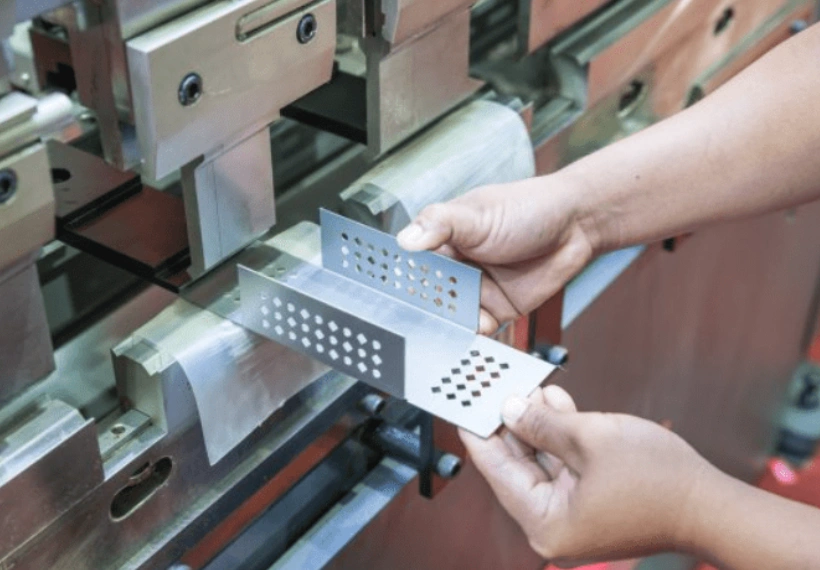
Stainless steel stamping
Stainless steel has unique properties that suit some types of stamped parts. Stainless steel stamping revolves around austenitic, ferritic, and martensitic types.
Austenitic stainless steel is suitable for deep drawing and parts for kitchenware. Ferritic steel is very popular in the automotive metal fabrication world, while martensitic steel is suitable for scissors and knives.
Note that annealing is part of the stamping process for the hard metals.
Nickel Alloys
The hardness, ductility, heat resistance, and corrosion resistance of nickel alloys mean that the metal’s stamped parts are very reliable in many industrial applications. Indeed, stamped parts from alloys like A286 work excellently in fasteners, superchargers, and jet engines.
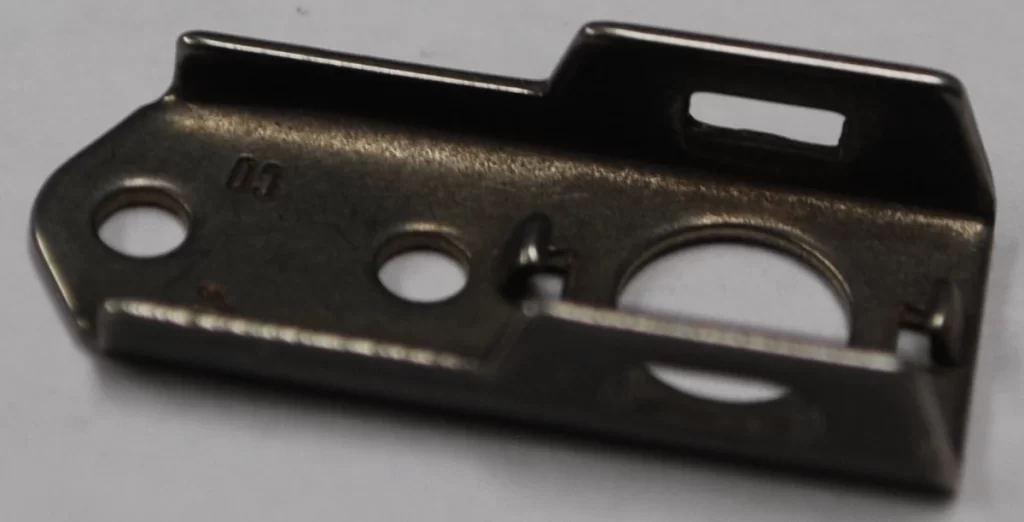
Nickel alloy part
Titanium Alloy
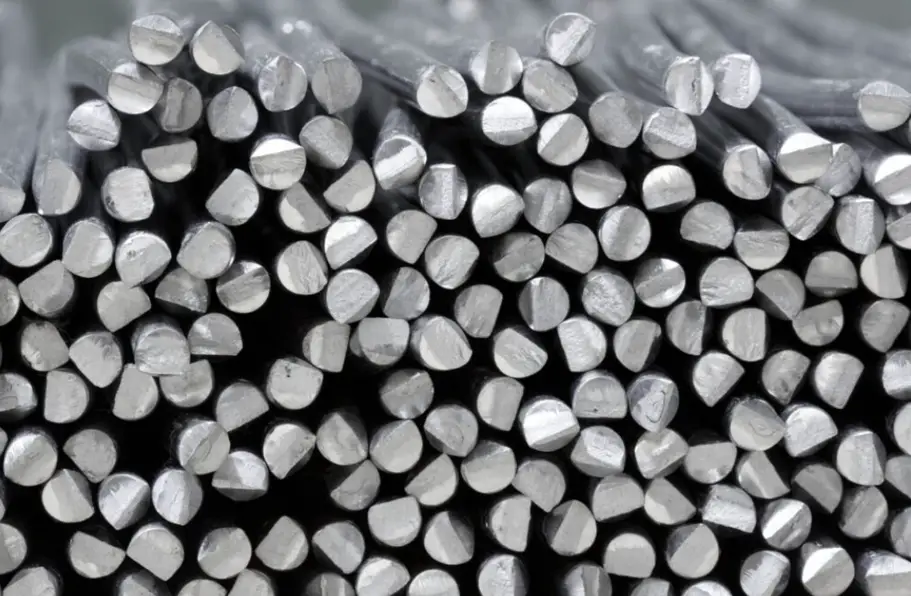
Titanium alloy
Titanium alloys have unmatched oxidation resistance, corrosion resistance, and strength-to-weight ratio; hence, their stamped parts are ideal for industrial valves & gauges, medical instruments, and engine components.
Different Metal Stamping Applications
Sheet metal stamping services are relevant to a wide range of industrial applications, from aerospace parts to electronic components. Chassis parts, electronic enclosures, brackets, and connectors are among the countless components produced using metal stamping techniques.
It doesn’t matter whether you are looking for custom metal stamping items or hundreds of thousands of identical parts; there’s always a metal stamping solution for you.
Here’s more about the applications.
Automotive
Aesthetic and functional stamped parts are popular in the manufacture of different automotive components. Structural reinforcements, lightweight parts, and brackets are common stamped parts for the industry.
Electronics
Precision metal stamping materials are widely used in the electronics space to produce connectors, switches, controls, and relays, among other parts.
Medical
The medical industry requires accurate and reliable parts, some of which are often built through stamping manufacturing processes. From hearing aids to surgical instruments, the medical field uses various metal stamping techniques.
Construction
The construction industry is another big user of metal stamping parts. Popular stamped components are heat sinks, trusses, brackets, shields, and housings.
Metal Furniture
Metal stamping for furniture is also available, with items such as baby swings, bassinets, and cribs commonly manufactured in this manner.
HVAC
Precision metal stamping parts are widely used in the HVAC industry, with components such as mounting parts, filtration systems, air duct systems, and heat exchanger fins being the most popular.
Defense
Military-grade stamped parts are necessary for clips, brackets, contacts, crush bushings, among many other parts. Commonly used materials for these parts include beryllium copper, copper, stainless steel, galvanized steel, and titanium.
The Design Considerations for Metal Stamping
The metal stamping designers consider important elements like material properties, bend radius, part tolerances, grooves/slots, and wall thickness.
Material Properties
Material properties that influence metal stamping design are density, magnetic properties, corrosion resistance, strength, and, of course, formability. Metal stamping cost is also a major consideration. Brass, copper, aluminum, and other ductile materials are most commonly stamped.
Bend Radius
Quality stamped parts cannot be achieved without proper control of the bend radius. Too-tight radii pose the risk of cracking and strain hardening. There is a minimum recommended inside bend radius for each material.
For instance,
- Aluminum alloys – Thickness x 1
- Low carbon steel – Thickness x 0.5
- Stainless steel – Thickness x 1
Tolerance Requirements
The accuracy of stamped features matters. A common way to design hole placement is to measure from the datum.
The recommended tolerances are as follows;
Up to 150mm from the datum – ±0.5mm
150mm – 300mm from datum – ±0.8mm
Grooves/slots
Wide slots are preferred over long ones due to positional accuracy. The slot length should not exceed 3 times the width.
Wall Thickness
There is one secret to consistent metal stamps – uniform wall thickness. On the contrary, thickness variations promote cracking and other flaws. Custom metal stamping experts follow best practices for the main materials.
For example, the ideal wall thickness tolerance for low-carbon steels is ±0.1 mm.
Other design considerations in metal stamping revolve around tooling, post-processing, parting lines, draft angles, and bridging.
Contact us to learn about all this and how to achieve the optimal metal stamping results.
Conclusion
The search for stamping parts should not be daunting and frustrating.
ProleanTech is widely respected for consistently meeting local and international standards of sheet metal stamping and other CNC machining processes.
For more details on the wide variety of stamping designs available, visit our site and request to get a quote anytime.
0 Comments