

Joggle in sheet metal
Bespoke metalworking services are common nowadays, and one of the options is joggle forming. Various industries require joggle forming service, which entails the formation of an offset or step on the edge of a sheet of metal. The joggle, or offset, serves multiple functions, including enhancing fit between parts, accurate welding, minimizing distortion, and reducing stress concentrations.
Joggles with strict adherence to requirements are common in car body panels, seams in roofing, casings for electronics, and many other applications. The diversity of these applications is due to the smooth, strong connection the feature creates.
What is a Joggle in Sheet Metal?
Regarding the joggle meaning, this is a sheet metal fabrication feature defined by an offset bend that allows panels to overlap. As the diagram below shows, the deformation is Z-shaped with a step.
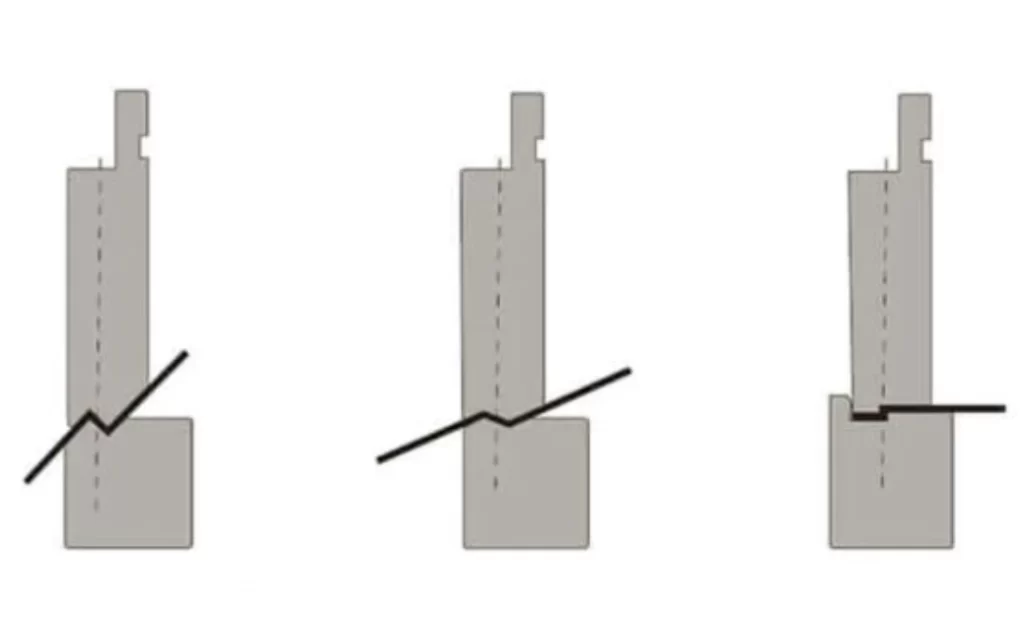
Joggle forming
A joggle is pressed or bent from sheet metal using a press or a specialized joggle die. This feature is ideal for creating seamless joints in HVAC, fuselage systems, and car body panels.
What is the Function of a Joggle?
Joggles are essential in ensuring strong, smooth, aerodynamic joints between sheets of material, such as metal in this case. They are particularly effective in creating joints with uniform surfaces. As these features eliminate gaps between two metal sheets, they can be used to improve tolerances and enhance load distribution.
Types of Joggle Forming
Joggle forming can be categorized as single joggle forming, twin joggle forming, and double joggle forming. Each category is designed for distinct assembly requirements. Some are ideal for accessibility, while others suit aerodynamic performance.
- Single Joggle Forming: A Z-shaped offset on a sheet metal, suitable for simple joints and overlaps.
- Twin Joggle Forming: A pair of joggles on opposite sides of a sheet of metal. It is perfect for structural integrity and symmetrical overlaps.
- Double Joggle Forming: Multiple Z-shaped offsets for stable and stronger structures.
What Materials Can Joggles Be Made From?
The most common materials in sheet metal fabrication can be used to make joggles. These include copper, brass, mild steel, stainless steel, and aluminum alloys. Choosing any of these is mostly based on crucial characteristics such as corrosion resistance, strength, weight, and formability. For instance, aluminum alloys would be well-suited for aerospace sheet metal forming applications for their superior strength-to-weight ratio.
Here’s more about some of these materials.
Aluminum
The workability, corrosion resistance, conductivity, and strength-to-weight ratio are the biggest selling points of this metal for joggle projects. A piece of aluminum can be used many times because the metal is highly recyclable. Parts are common in aircraft, kitchenware, and industrial applications.
Copper
Copper appeals to fabricators in joggle applications because of its high conductivity, natural corrosion resistance, and excellent ductility. With these properties, the metal makes suitable joggles for roofing, cooling, and piping systems.
Carbon Steel
While simple to work with, carbon steel is also relatively strong. It is a common sheet metal fabrication material, particularly in areas with harsh weather. Carbon content correlates with hardness – less carbon means more ductility and malleability.
Bronze
Bronze is a versatile fabrication material with a relatively low melting point. Its joggle sheet parts can be used in armor and cookware.
Magnesium
Magnesium is a lightweight, stiff material commonly used in fabrication. Its joggle parts are ideal for automotive and aircraft applications.
Stainless Steel
Stainless steel is an iron-based alloy combined with elements such as aluminum and chromium. It is highly corrosion-resistant and brittle. It can be used for joggle creation, but the fabricator must ensure all the requirements for bends and angles are met to prevent cracking and other issues.
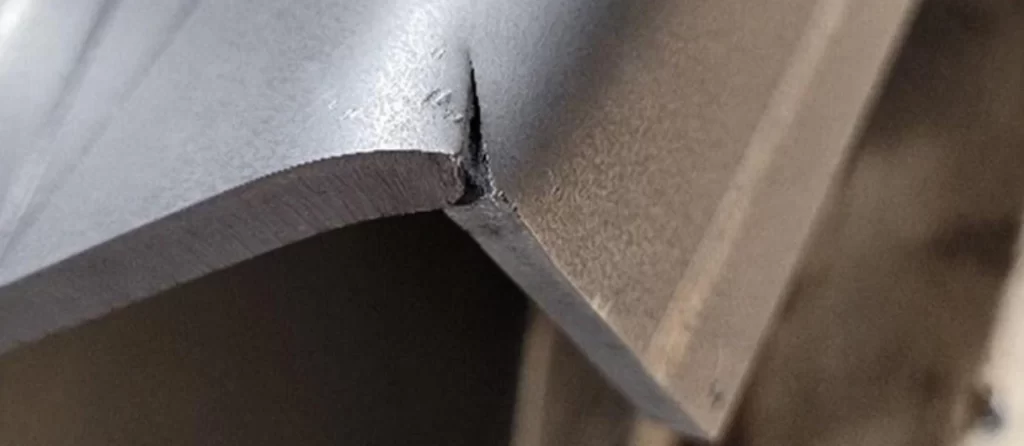
Crack in a bend
Main Tools in Sheet Metal Joggle Forming
Producing joggles in sheet metal fabrication requires a set of tools comprising the machine (joggle press or press brake with Z tool), fixtures, dies, measurement devices, and a clamping system.
Similar to other sheet metal bending techniques, some manufacturers may rely on older equipment for joggle forming. However, the best forming results are obtained using advanced machinery. Selecting a specific joggle forming tooling depends on factors such as material thickness, dimensional tolerance requirements, and production volume.
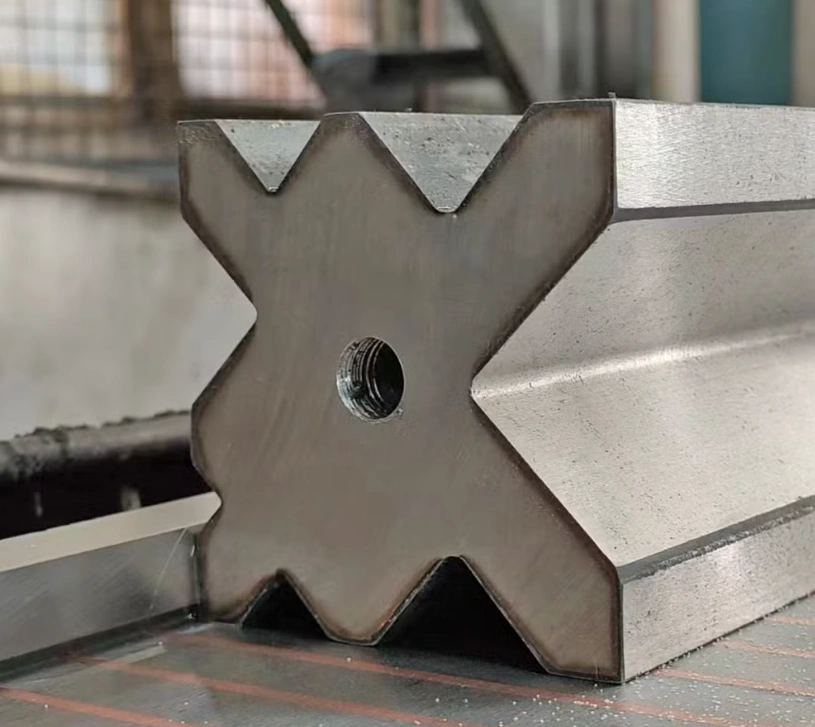
Z tool
Steps on How to Make a Joggle in Sheet Metal
Joggle forming is a systematic process entailing metal selection, metal preparation, positioning on the joggle press, first bending, return bending, and quality inspection.
Yes, pliers and other basic tools can produce a joggle. However, a joggle press is recommended for its precision and power. Now, here is how a professional sheet metal bending process for the feature is undertaken. While the process is typically done cold, heating is necessary for tougher and thicker metals. For instance, titanium alloy sheets are usually heated for a smooth forming process.
Step 1: Metal Selection
Since the most important requirement is ductility, the material options for joggles are endless. At this stage, the ideal option is selected for its combination of strength, durability, corrosion resistance, and so on.
Step 2: Setting Up the Metal on the Press Brake (Machine)
After the selection and other preparatory steps, the sheet metal is first marked before being set up on the press brake. Marking the line of bending is crucial because remedying an already formed part (if done at the wrong position) can be hectic.
Step 3: First Bending
Some special tools, for instance, Z tools, can form a joggle in a single stroke (single-step joggle bending). However, more conventional strategies require two steps (double-step joggle bending). In the double-step method, the first bend is typically done at 90 degrees and along the marked line.
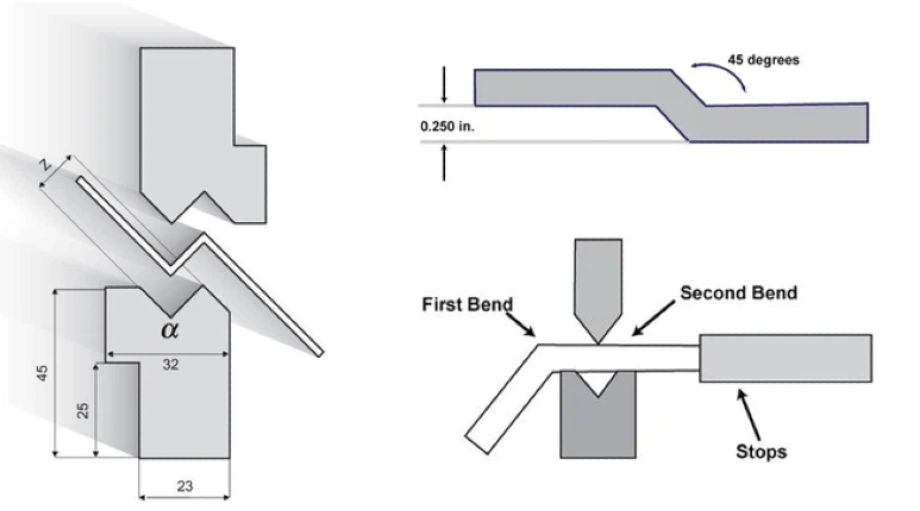
Single-step vs double-step joggle bending
Expert fabricators ensure the press brake ram falls at the exact position, with the right speed and pressure. The material is subjected to the minimum pressure.
Step 4: Return Bending
Careful positioning is equally crucial for the second bend to achieve the typical Z offset profile of the joggle. After establishing the design joggle width, the machinist descends the ram precisely and with measured pressure. The quality of tooling also matters in ensuring the final feature has the designed dimensional accuracy, and the material doesn’t fail.
Step 5: Quality Inspection
There are a few aspects of the formed part to inspect – dimensional accuracy, surface parallelism, offset height, and width. Trained inspectors perform this task; any angular deviations, material cracks, or misalignments can render the part unsuitable.
Try Prolean Now!
Factors Considered in Joggle Forming
Several factors determine the quality of sheet metal bending for joggles. The most crucial considerations are minimum bend radius, material thickness, material type, springback compensation, grain direction, and bend angle accuracy.
Material Type
Different materials have unique properties, including strength, brittleness, ductility, and malleability. Joggle quality varies from material to material. For instance, stainless steel is more brittle than aluminum, so the fabricator must be extra careful when bending it.
Material Thickness
Material thickness affects the achievable bend radius and ideal bending force. Thicker materials require more force and larger bend radii.
Minimum Bend Radius
The minimum bend radius varies depending on the type of metal. A softer material, such as aluminum, has a smaller minimum bend radius than harder options do. Generally, sharp bending radii are not recommended.
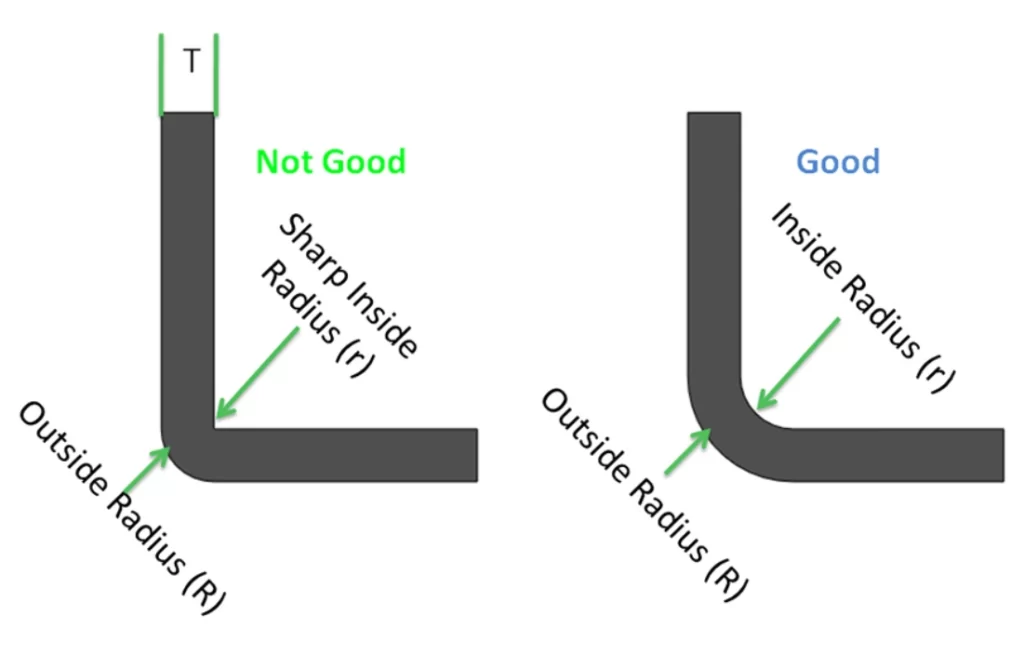
Bend radius
Grain Direction
Similar to other forms of bending, the grain direction has a significant impact on the effectiveness of joggle forming. Grain orientation relative to the bend line determines the smoothness of the joggle forming process and the strength of the resulting part.
Springback Compensation
Overbending is necessary to compensate for the metal’s elastic recovery after bending. The level of overbending depends on material thickness, type, and temper.
Bend Angle Accuracy
Joggles and other mating pieces match perfectly if the bend angles are precise. Even a few degrees of deviation can cause significant interferences and misalignments.
Advantages of Joggle in Sheet Metal
The main advantages of joggle bending for various applications are;
- Produce a flush surface that enhances aesthetics and reduces aerodynamic drag.
- Enhancing component strength,
- Enabling rapid component assembly
- Minimizing the need for fasteners.
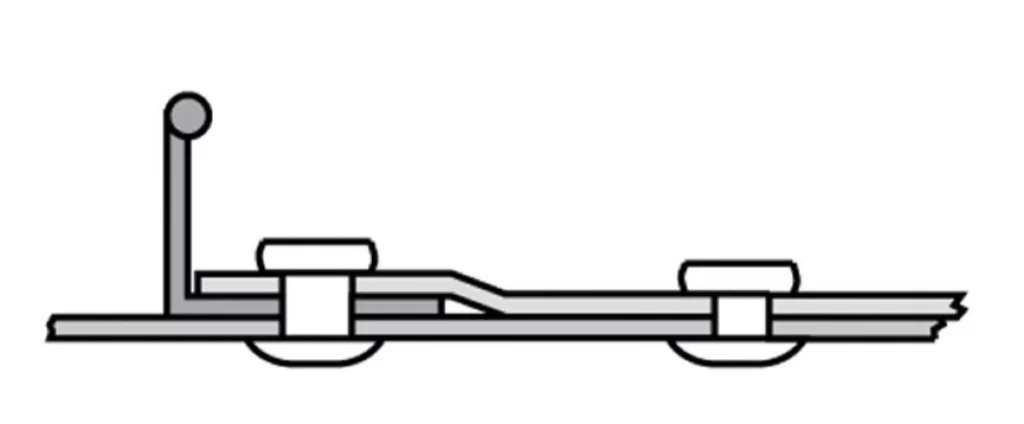
Joggle flush surface
Limitations of Joggle in Sheet Metal
The limitations include;
- Introduction of stress concentrations. Cracks can form due to cyclic loading along the bend radii, thereby rendering the sheet metal part ineffective or dangerous.
- The joggle tool should be specialized, and this can increase the initial cost for the process.
- Limitations of material thickness (typically up to 3mm) and the need for skilled operators for joggle production are other concerns.
- If this type of sheet metal bending service is done haphazardly, it can easily cause misalignments in components.
These challenges reiterate the importance of collaborating with experts.
Try Prolean Now!
Applications of Joggle in Sheet Metal
There are many industrial applications of the joggle process as outlined below.
Aerospace
Joggles are commonly used in fuselage systems, wing sections, and other panel joints.
Automotive
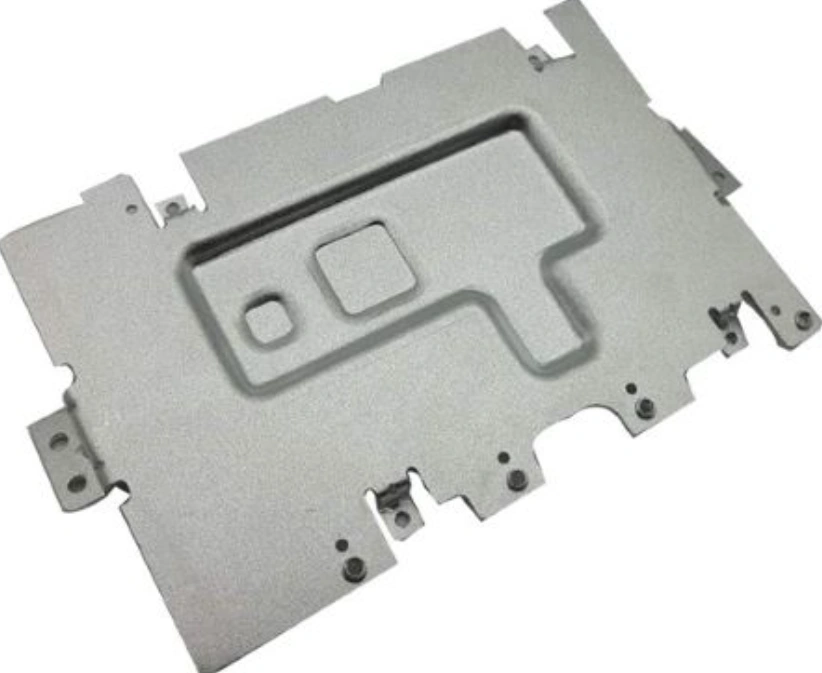
Automotive Joggled Heat Shield
This forming version is necessary for smooth overlaps in heat shields, doors, hoods, and other body panels. Usually, a joggle is a quality sheet metal reinforcement for stiff and vibration-free performance.
Construction
Constructions widely use joggle forming to join cladding and roofing sheets.
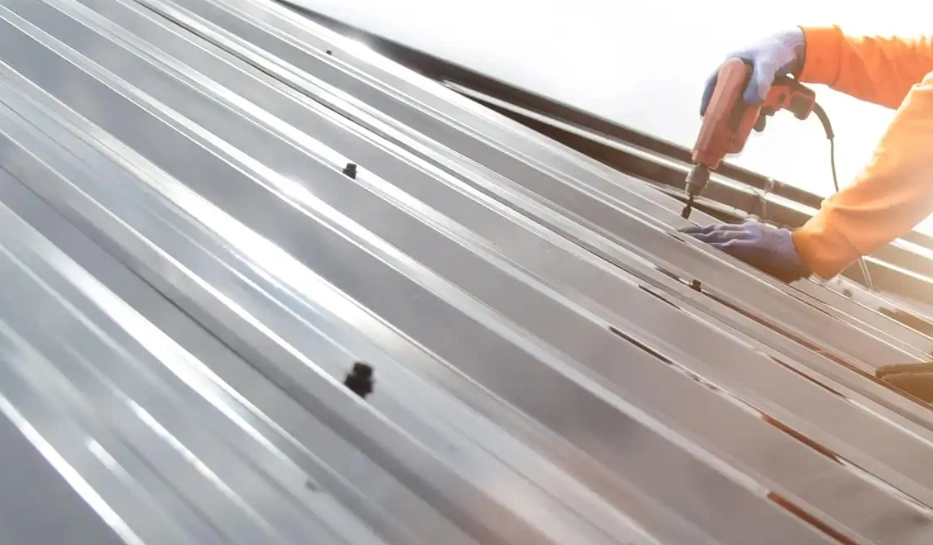
Joggle bends on roofing sheets
Electronics
The electronic industry requires clean joints in casings and housings, which are catered for by the forming method.
HVAC systems
Joggle in sheet metal is commonly used to manufacture HVAC components, such as ducts.
Marine Industry
Joggle-formed joints for boats and other marine vessels are smooth, durable, and light.
In Conclusion
The joggle forming process is crucial in modern manufacturing, supporting the production of precise, complex shapes for different industries. ProleanTech is prolific in providing market-leading metal forming services, including joggles. All parts are made to meet local and international standards of durability, safety, and functionality.
Contact us today and request a free quote for sheet metal bending service.
0 Comments