
Aluminum is one of the most common materials used today in manufacturing. Its strength, lightweight properties, and corrosion resistance make it best suited for a wide variety of industry applications, such as aerospace, automotive, and electronics.
Aluminum is even more useful when it is combined with CNC milling technology. Modern machining methods, such as precision cutting, rapidity in production, and smooth surface finishes, are attained. This is one of the reasons why businesses usually seek out trusted metal milling services to do the complicated components with precision by milling aluminum. As a leading custom manufacturing company, ProleanTech offers expert one-on-one solutions for your aluminum milling projects, from understanding your product to making it functional ultimately.
This guide will discuss why aluminum is a popular milling material, the challenges involved, the most effective tools for cutting aluminum, and the methods that give the most satisfactory outcomes.
Why Aluminium is Popular for CNC Milling?
Aluminium is a very popular milling material due to the fact that it is light, strong, and easy to machine. It is highly machinable, and this means that cutting tools can cut through material fast with minimal wear and tear. The metal also provides a smooth surface finish and tight tolerances. Therefore, it is suited to precision work. To add to it, aluminium is resistant to corrosion and is also readily available at an affordable price. First preference of aluminum CNC machining is in the aerospace, automotive, electronics, and prototyping industries.
What are the Common Challenges Faced During Aluminium Machining?
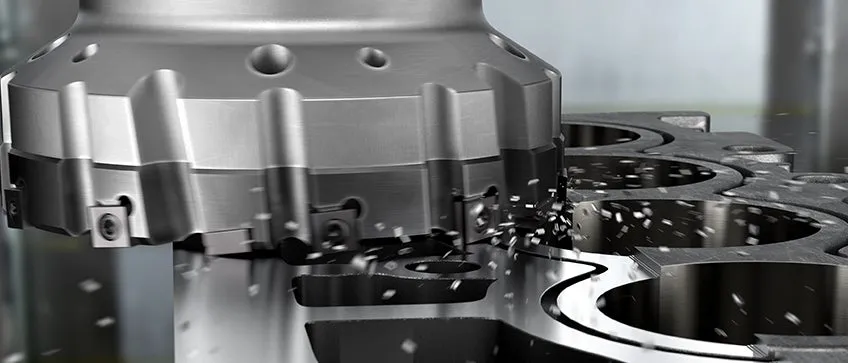
Challenges of Working with Aluminum
Aluminum milling involves some challenges, like which cutting tool should be used and how the temperature should be maintained to avoid getting too high and to avoid friction.
Chip evacuation
Due to its ductile nature, aluminum gives long and soft chips in the milling process. Poor chip evacuation is a common phenomenon in deep pockets, tight corners, or where there is insufficient coolant or air movement. In case of re-cutting of chips, the surface gets scratched, the tool gets damaged, and precision is compromised. The accumulation may also make the cutting tool go out of track, causing dimensional errors and low-quality surfaces.
Heat Generation
High spindle speed and improper engagement of the cutting tool create a lot of heat unless it is cooled. Worn tools or built-up edges enhance rubbing and cause heating of the cutting zone. Excess heat can lead to expansion of the tool and the workpiece, leading to loss of precision in the measurements. It may also soften the aluminum, smear the surface, or make the material weld on the cutting edge. In other cases, the tool coating wears out, and it shortens the life of the tools.
Friction
Some aluminum alloys are gummiest in nature and can stick to the tool. This is the primary reason for friction. This sticking degrades the tools into a built-up edge, altering the cutting geometry of the tool. The incorrect choice of the tool, blunt edges, or inadequate lubrication is only increasing the issue. It also negatively affects the finish of the surface. Lubrication is essential, as well as sharp carbide tools, without which friction is one of the greatest hindrances to efficient milling of aluminum.
Try Prolean Now!
What are the different Grades of Aluminum?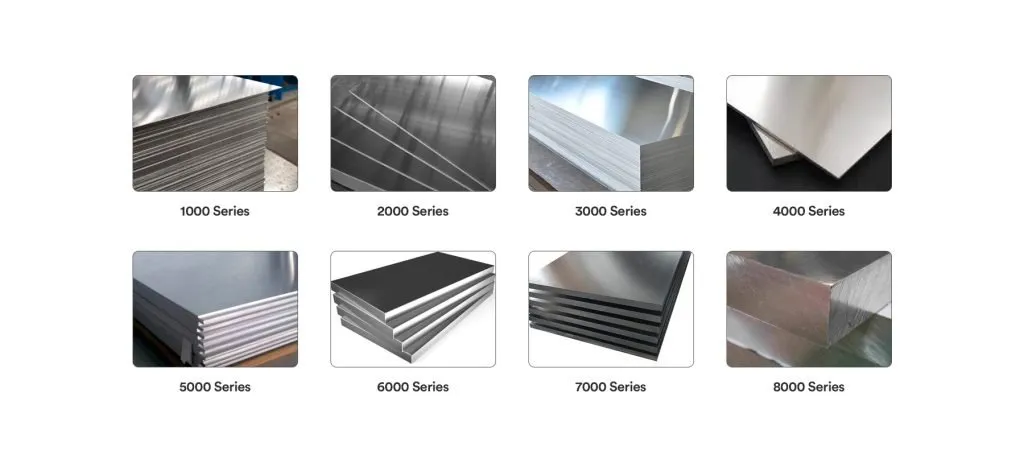
Grades of Aluminum (Aluminum Alloys)
Different grades or alloys of aluminum differ in their alloying elements and treatment. These modifications affect the strength, corrosion resistance, machinability, and weldability of the material. The selection of the appropriate grade is important according to the task that the part is supposed to perform (structural loads, exposure to environmental factors, finish, etc.). Some of the common aluminum grades, their advantages and disadvantages, and their applications are listed below.
| Aluminium Grade | Pros | Cons | Application |
| Grade 2011 | Very soft-cut machinability; excellent for precision turns and small parts | Poor corrosion resistance; weak in wet or harsh environments; limited weldability | Screws, bolts, small fasteners, decorative parts, and hardware requiring fine finishes |
| Grade 2024 | High strength; excellent fatigue resistance; good in structural applications under load | Low corrosion resistance; poor weldability; requires protective coatings or cladding | Aircraft wings, structural parts, rivets, gears, high-stress components |
| Grade 5052 | Excellent corrosion resistance (especially in saltwater); good workability and weldability; good fatigue strength | Lower tensile strength compared to heat-treatable alloys; not as strong in very high load structural parts | Marine applications (boats, fuel tanks); pressure vessels; electronic enclosures; sheet metal work |
| Grade 6061 | Most common: good corrosion resistance, good weldability, balanced strength, good machinability | Lower strength than 2024 and 7075; less fatigue resistance under very high stress | Structural components; frames; general mechanical parts; automotive parts; extruded profiles |
| Grade 6063 | Good corrosion resistance; high weldability; excellent for extrusions; good surface finish | Moderate strength; less suitable for heavy load or high fatigue parts | Window and door frames; architectural trim; sign frames; pipe & tubing; decorative structural components |
| Grade 7075 | Very high strength; excellent fatigue resistance; good for high-stress structural applications | Lower corrosion resistance than 6061; poor weldability; more difficult to machine | Aerospace and defense (airframe parts, fittings); high-performance sporting goods; shafts, gears; bicycle components |
Which Cutting Tools are Used for Aluminum Milling?
A carbide end mill is the best tool for cutting aluminum in most machining setups. Carbide tools are very tough, strong, and heat-resistant, which means they retain a sharp edge even during hot conditions. This allows them to be used for longer in the field and in high-speed machining, where the softness of aluminum and sticking to tools can be problematic.
The geometry of the tool is also important in selecting the optimal tool for milling aluminum. End mills that are polished with sharp angles have lower levels of friction and enhance finished chip evacuation. This reduces heat generation, reduces cutting force, and avoids the buildup of an edge on the tool.
How to Select the Right Cutting Tool for Your Aluminum CNC Machining Project?
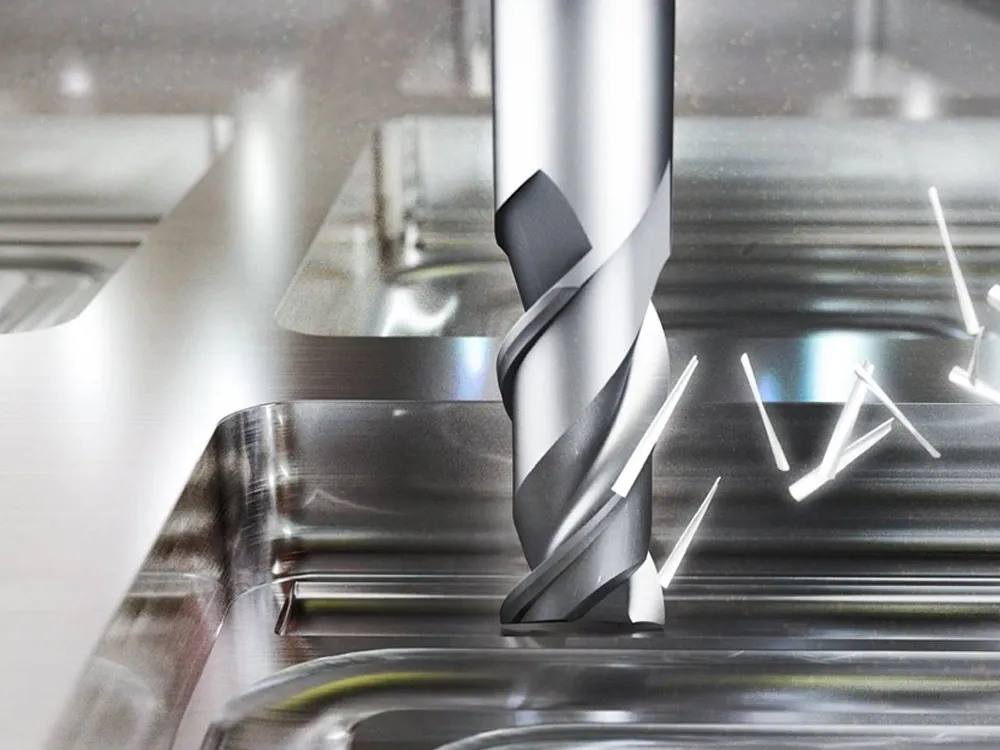
Aluminum Milling with End Mill Cutter
The selection of the best tool for cutting aluminum is based on the material, geometry, and cutting conditions. All details count towards surface finish and tool life, as well aluminum cnc machiningas machining efficiency.
Cutting Tool Material:
Solid Carbides are best for aluminum machining. Carbide tools are good with heat and remain sharp longer. They provide precision even in high-speed machining.
Flutes:
A 2-flute end mill is the most balanced tool with regard to the chip clearance and the tool strength. It is efficient in roughing, plunging, and ramping, since both the cutting edges reach up to the center of the tool. A 3-flute end mill is preferable to high-speed machining, and it offers a better surface finish.
Helix Angle:
The angle of the cutting edge with respect to the tool axis is termed the helix angle. A lower surface finish can be obtained at less than 40. It is enough for roughing. For precision and accuracy, an angle greater than 40, mostly 45 degrees, performs best. If you need both roughing and finishing, then a compromise can be made to around 40 degrees.
Tool Finish/Coating:
Do not have a coating made with aluminum. An even better choice is ZrN (zirconium nitride), which makes the tool stick less and enhances its performance.
Feeds and Speeds:
The tool’s feeds and speeds for milling aluminum are important factors to consider while selecting. Aluminum cutting tool speeds are typically 100-500 m/min based on alloy, tool diameter, and hardness. For higher hardness aluminum alloys, you may remain in the range of 100-200 m/min, whereas for softer ones, you can push higher.
Cutting Fluid:
Never cut aluminum dry. Control heat by the use of coolant or lubrication to ensure that the chips do not weld to the tool. WD-40 and other light cutting fluids are applicable to maintaining the tool’s coolness and evacuating the chip.
Try Prolean Now!
What are the different methods to make Aluminium Parts by CNC milling
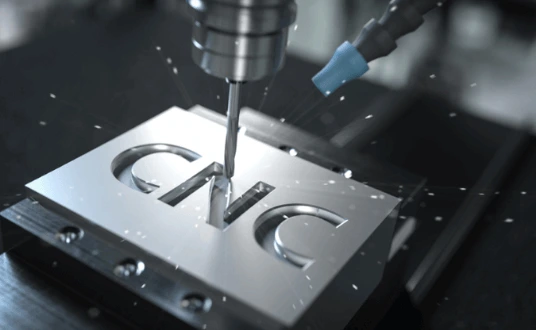
Aluminum CNC Machining
There are different ways to make aluminum parts, including CNC machining, extrusion, fabrication, casting, and forging. Let’s have a look at these methods:
CNC Machining
In CNC machining, an aluminum block is machined using computer-controlled machines. The CNC milling tool cuts away the additional material until the final shape is formed. This technique provides a lot of precision, clean edges, and detail. It is primarily applied to machine components, prototypes, and aerospace components.
Extrusion
Extrusion is a process that involves heating aluminum and forcing it through a die of a shape, just like we squeeze toothpaste. The protruding part is in the same form throughout. It is sliced into parts and even machined. This is applied to rods, frames, and window parts.
Sheet Metal Fabrication
Fabrication is the process used to shape sheet metals such as aluminum flat sheets by bending, cutting, and punching. The design is made with the help of such tools as laser cutters and press brakes. It is an economical method of producing boxes, covers, and panels. It is a typical approach to cases when medium or large amounts will be required.
Casting
Casting entails fusing aluminum and putting it into a template. The molten metal forms the shape of the mold as it cools down and solidifies. It is a nice option when you want to make parts that are of complex designs. These are frequently made in the form of engine blocks, tools, and housings.
Forging
During forging, aluminum is stamped or beaten into form with heavy dies. This is done to transform the grain structure of the part, thereby making it stronger. Cars, planes, and sports equipment are usually forged with parts. It also does not suit detailed design making.
Superforming
Superforming involves heating sheets of aluminum till they are soft and flexible. Air pressure is then applied to the sheet and then put into a mold to create smooth, curved sections. This procedure produces robust but lightweight parts. It finds its applications primarily in automobile bodies and aircraft.
Is High-Speed Machining (HSM) of Aluminium Preferred?
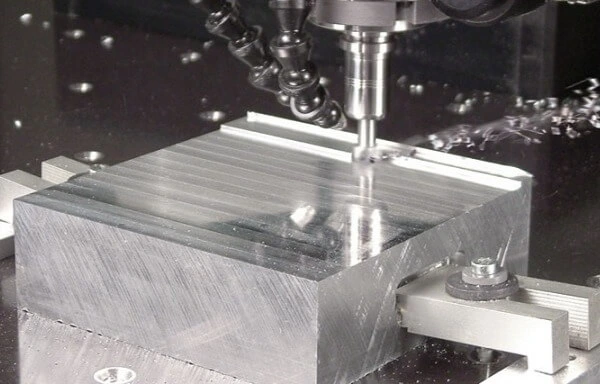
High-Speed Machining for Aluminium
Yes, HSM is popular when used with aluminum since it offers quicker production and higher-quality parts than when using traditional CNC aluminum milling. It is used by industries such as aerospace, automotive, and prototyping to save on time and cost and attain improved accuracy. Some notable advantages of high-speed aluminium machining are listed below:
Gives High-Precision Parts
HSM simplifies surfaces and makes them more precise. With increased feeds, the cutting force is less, leading to less vibration. This leads to improved part finish and accuracy details.
It produces More Feeds.
With high-speed machining, higher spindle speeds are permissible as well as higher feed rates. Up to 2 to 3 times faster than a standard milling speed results in fast material removal. This renders the production very efficient.
Temperature Goes Down at Very High Speed
Temperature increases with speed, but decreases sharply at very high speeds. A case in point is a cutting at 1200 m/min, which brings the temperature to a lower than 200 °C. This prevents the destruction of the material.
Minimal Use of Coolant
Less coolant can be used because the temperatures at high-speed cutting are low. In other instances, it is just a case of minimum quantity lubrication. This reduces expenses and even makes the process cleaner.
Increased tight tolerance
The tolerances are well supported by HSM, a factor that is needed in other industries such as aerospace. Components are produced with tight tolerances and need reduced secondary finishing.
Tools Stay Longer
The cutting tools also stay safe from wear and tear longer due to less heat and thinner chips. The aluminum does not adhere to the cutting edge when it is at high speed. This enables tools to stay sharp longer to do additional operations.
Constant Engagement Angle of Cutting Tool
HSM uses smart tool paths that maintain a constant cutting angle. The tool engages the material gradually, avoiding sudden load increases. This improves precision and extends tool life.
What is the Optimal Spindle Speed for Milling Aluminum?
The ideal spindle speed for milling aluminum is dependent on the tool diameter, alloy hardness, and cutter material. In carbide tools used on typical aluminium alloys (such as 6061), typical cutting speeds are 200-600 meters per minute (m/min).
That equates to spindle speeds between 8,000 and 24,000 RPM of a 10 mm diameter tool. The number of feeds per tooth is usually between 0.1 and 0.3 mm/tooth, and feed rates (linear movement of the tool) may be 100-300 mm/min, depending on the depth of cut and whether finishing or roughing.
In machining, speed (or cutting speed) is the rotational rate of the spindle or a workpiece, whereas feed rate is the linear rate of motion of a cutting tool into or along the material. Speed determines the level of chip load and removal, and feed rate influences the surface finish as well as the chip formation.
Final Thoughts
CNC machining has made aluminium the most desired material due to its strength, lightness, and machinability. Manufacturers have been able to make production faster with the right tools, the best spindle speeds, high-speed machining strategies, tighter tolerances, and longer tool life. This makes CNC aluminium milling the best choice when it comes to industries that require accuracy and efficiency.
Businesses with the need to find a reliable partner can find an end-to-end solution in ProLean, which has decades of experience. Our team guarantees precision, expediency, and dependability in all projects since we can work on CNC milling and turning, as well as on the most modern sheet metal fabrication. When you opt to use the metal milling service offered by ProLean, you are guaranteed the best quality in parts, reasonable pricing, and a service that is client-focused.
Contact our engineers to get a free quote now!
0 Comments