
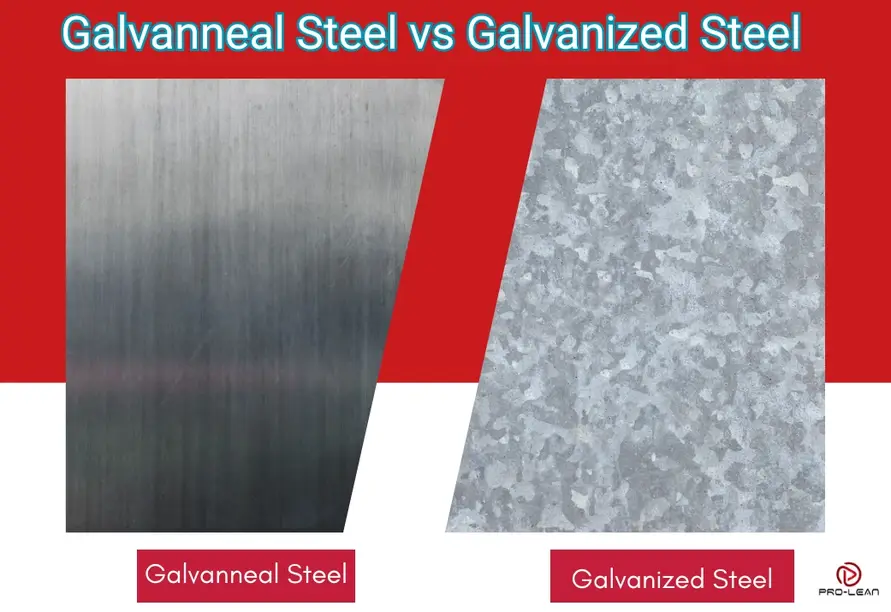
Galvanneal vs galvanized steel
Galvanization is a relatively common surface coating process in steel manufacturing circles. Manufacturers immerse the steel in a molten zinc bath, resulting in the formation of a zinc coating.
A variation of this product is galvanneal steel, which is galvanized steel that has undergone heat treatment. While both processes present advantages such as corrosion resistance and enhanced service life, their specific offerings and limitations are different.
The essence of this article is to outline the differences of galvanized aluminum vs. galvanized steel in manufacturing, corrosion resistance, and cost, among other areas. Read on for details.
What Is Galvannealed Steel?
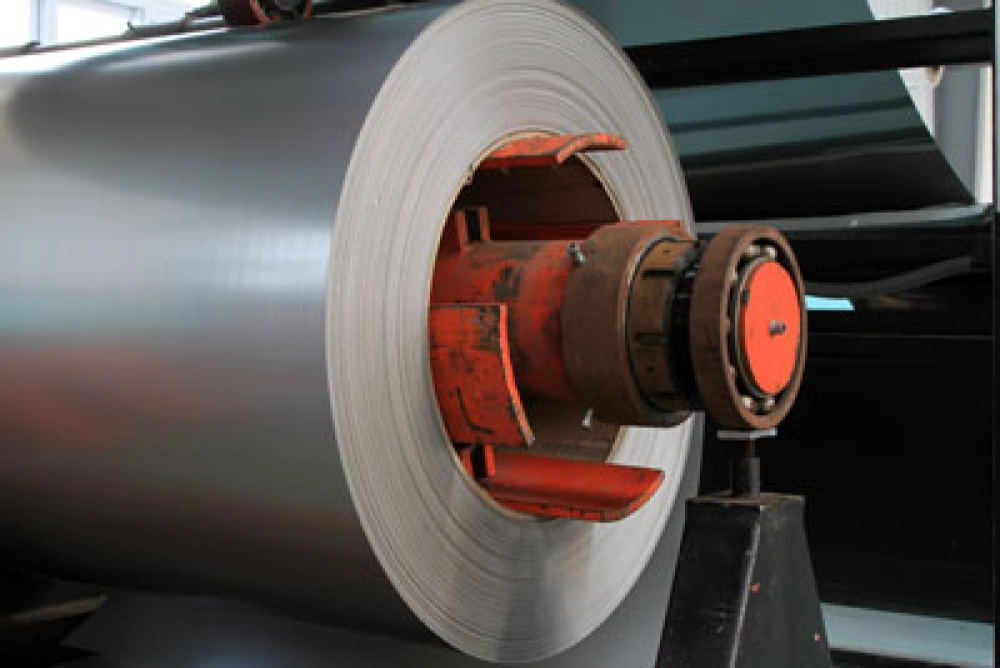
Galvanneal steel sheet roll
Galvannealed steel is a type of steel that has been treated with a combination of galvanization and annealing. The galvanized process comes first, and then it is followed by annealing or heat-treatment.
What Does Galvannealed Steel Look Like?
The result of this steel treatment is a matte surface with a gray appearance. It is not as shiny as galvanized steel, but the gray color is uniform. Below is an image of a galvannealed sheet to show this appearance.
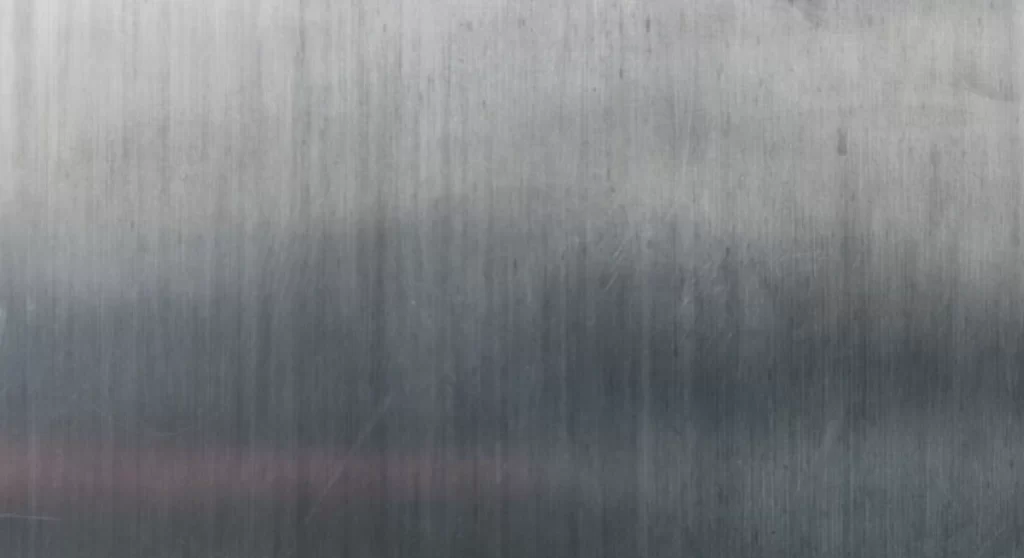
Galvannealed steel appearance
Galvannealed steel has excellent paint adhesion properties, which are valuable in the appliance and automotive industries.
What is Galvanized Metal Coated With?
Galvanized Metal is coated with zinc, which bonds to the metal substrate to provide corrosion protection to galvanized steel. The metal in this case is iron or steel. The susceptibility of these metals to corrosion, due to their ferrous nature, makes them the most common candidates for this process.
Manufacturing Process for Galvanneal Steel
The manufacturing process of galvanneal steel entails two major steps: Hot-dip galvanizing and annealing. The two steps are typically performed in one production line.
Hot-dip Galvanizing
Hot-dip galvanizing entails dipping the steel in a molten zinc bath. The bath is hot (815°C to 850°C). When the steel is submerged and left for some time, the reaction of iron and zinc forms a zinc coating.
Annealing
The galvanization process is immediately followed by annealing or heat treatment. This involves heating the coated steel to a temperature of between 550°C and 600°C, and sustaining the heat for some time.
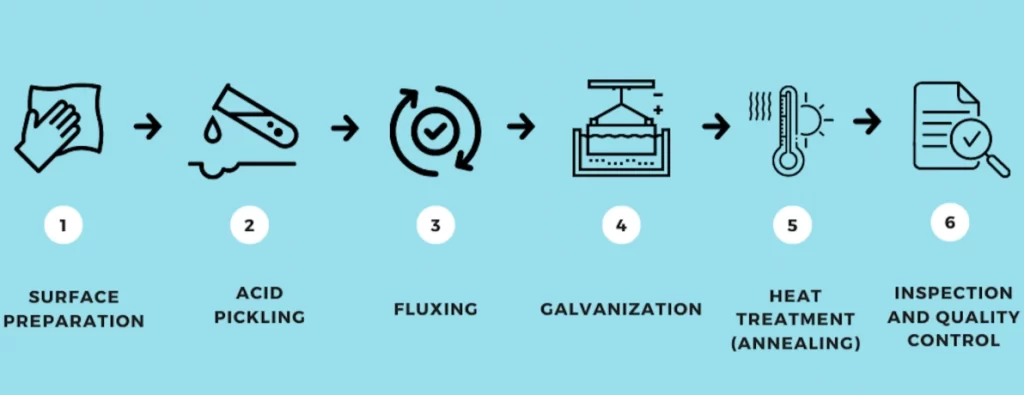
Galvanneal steel process
The heating and the waiting time allow for the formation of a zinc-iron alloy on the surface of steel.
Advantages of Galvanneal Steel
Galvannealed steel in custom sheet metal fabrication offers superior paint adhesion, good corrosion resistance, enhanced formability, and improved weldability, particularly when compared to the usual galvanized steel.
-
Paint Adhesion
A primary and most notable benefit of galvannealed steel is superior paint adhesion. The rough and porous texture of the coat is perfect for painting, even if these details are at the microscopic level.
-
Wear Resistance
Galvannealed steel creates a tough layer on the metal, which is difficult to wear through. This layer performs better than that of galvanized steel because it is more complex.
-
Better Weldability
The zinc-iron alloy coat of galvanneal steel responds better to weldability than a pure zinc coat does.
Limitations of Galvanneal Steel
Galvanneal steel has several limitations, including higher temperature sensitivity, higher production costs due to the extra step, and a brittle coating.
-
Temperature Sensitivity
Galvannealed coatings do not perform well in high-temperature environments.
-
Higher Production Cost
This manufacturing technology tends to cost more than galvanization because of the extra annealing process.
-
Flaking
In the case of a forming process on the steel, the coat can easily crack because it has poor ductility. This will show in the form of flakes and cracks.
Is Galvanneal Rust Proof?
Galvanneal steel is not 100% rust-proof. However, the performance of this coat highly depends on the application conditions. If exposed to surface damage, the underlying steel is exposed to corrosion.
The best remedy is to add a coat of paint, which can significantly enhance the steel’s rust protection capabilities.
What Are Examples of Products Made From Galvannealed Steel?
Galvannealed steel products span the automotive, HVAC, energy, furniture, and electrical industries.
-
Automotive Products
Galvannealed steel is used to make automotive frames and bodies for its corrosion resistance. The zinc-iron alloy coating protects against harsh elements that cars are often exposed to.
-
HVAC Products
The HVAC industry requires components such as ductwork, which require welding for different joints. Galvannealed steel is suitable for such applications for its weldability, which promotes manufacturing versatility.
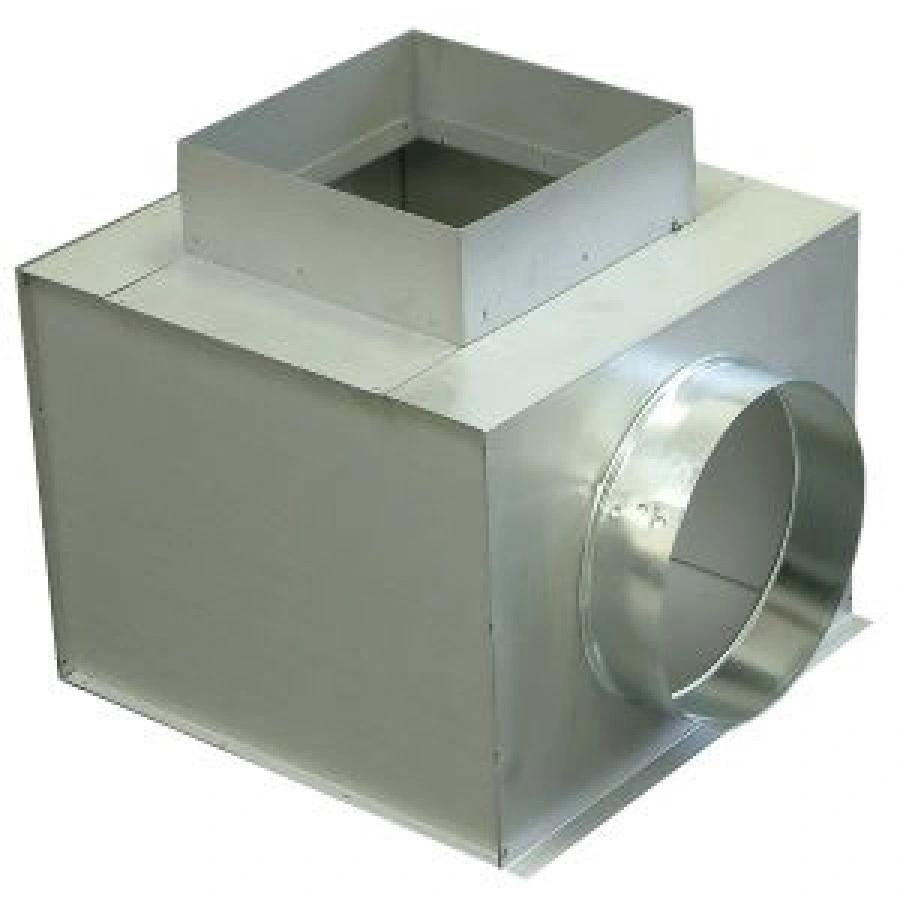
Galvannealed steel HVAC part
Paintability, being an essential requirement for these products, makes galvannealed steel popular in the HVAC industry. Refrigerators, for instance, widely use this material for their exterior panels.
-
Construction Products
Galvanneal steel for precision sheet metal fabrication is also applicable in the construction industry, most prominently where painting is required. The uniform zinc-iron alloy coating, with its good adhesion properties, provides a perfect surface for applying paint on construction products.
For this and relative hardness, durability, and corrosion resistance, galvannealed metal is a good choice for panels, door frames, and window frames, among other architectural products.
-
Electronic Products
This type of steel has an attractive look and a protective surface that is necessary for different electronic products, including refrigerator panels, electrical control panels, washing machine drums, and computer enclosures.
What is Galvanized Steel?
Galvanized steel is low-carbon steel with a protective zinc layer. This material provides good corrosion resistance, strength, and durability at an affordable cost. Hot-dip galvanizing is the most widely used coating method, but there are other techniques too.
What Does Galvanized Steel Look Like?
Most galvanized sheet metal parts are shiny, but the exact appearance can vary based on the steel’s chemical composition and the cooling rate after the galvanization process.
Here’s an image of galvanized steel sheets.
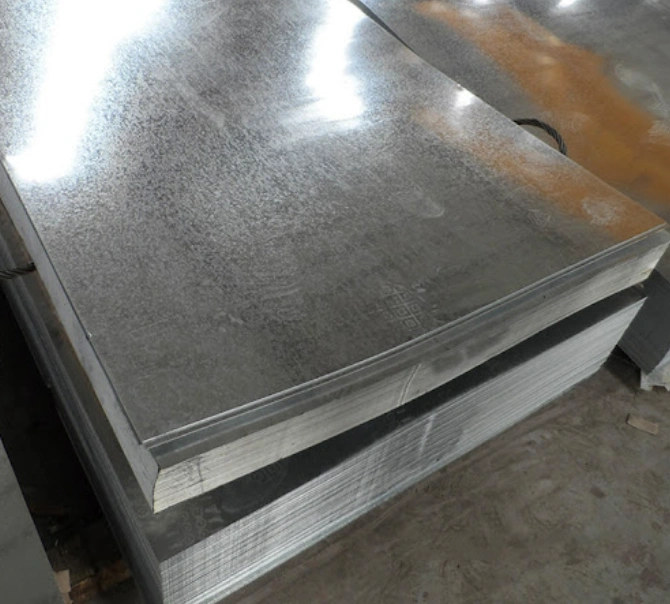
Galvanized steel sheets
The Galvanizing Process
Hot-dip galvanizing, the most common manufacturing process for galvanized steel. However, there are alternative galvanization processes, including thermal spray (or metallizing), electrogalvanization, and sherardizing.
Hot-dip Galvanizing
It entails surface preparation, dipping in a molten zinc bath, zinc and steel bonding, and finally cooling. The success or quality of this process mostly depends on the surface preparation.
Here’s a schematic diagram for this process;
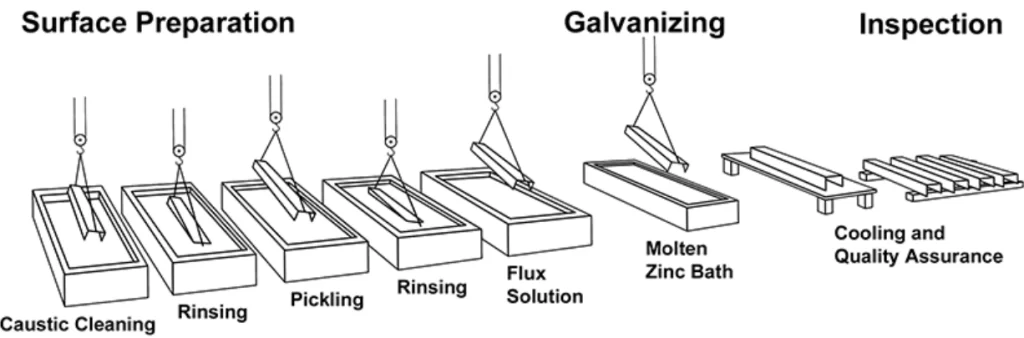
Zinc galvanizing process
Other Galvanizing Processes
Here are more details about other processes:
Thermal Spray (or Metallizing)
In thermal spraying, zinc is melted and, together with auxiliary compressed air or compressed gases, sprayed on the steel surface. The air/gases provide the velocity needed in the process.
Electrolytic Galvanising (Electrogalvanising)
This method applies zinc to steel using electrolysis. The metal is within a zinc solution, and current is also administered.
Sherardising
Invented by Sherard Osborn Cowper-Coles, this technique entails zinc coating application using thermal diffusion. It is done at a temperature of up to 450 °C to enhance the diffusion of zinc metal dust onto the part.
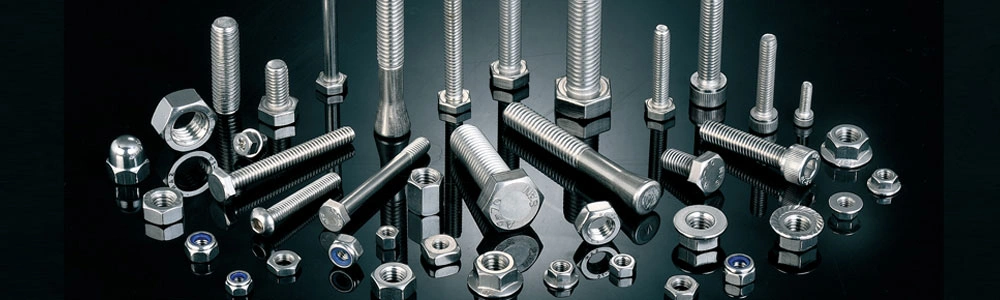
Sherardized fasteners
Try Prolean Now!
Advantages of Galvanized Steel
Galvanized steel stands out from other forms of untreated steel for its durability, cost-effectiveness, high rust resistance, and maintenance-free performance. This informs the many applications of the material, including automotive sheet metal parts, HVAC components, and agricultural equipment.
-
Durability
This steel coating provides a long service life, which can run to five decades or more in standard conditions. It can last for two decades in demanding applications.
-
Cost-effectiveness
Since it is only the galvanization process without annealing, galvanizing steel is more cost-effective than galvannealing steel.
-
Will Galvanized Steel Rust?
Yes, galvanized steel can rust, but only with damage to the zinc coating. But since the coating gets affected first, protection of the underlying steel is strong.
-
Maintenance-free Performance
This protective coating is a one-time solution with a low initial cost. After that, it is maintenance-free, hence cost-effective.
Limitations of Galvanized Steel
Some of the challenges of galvanized steel are the potential to produce harmful zinc fumes during welding, minimal flexibility compared to uncoated steel, higher weight due to the zinc coating, and proneness to cracking in extreme forming processes.
-
Painting Challenges
While the zinc coat can be painted, its high smoothness is a major challenge. Adequate priming is necessary; this can increase the painting time and cost.
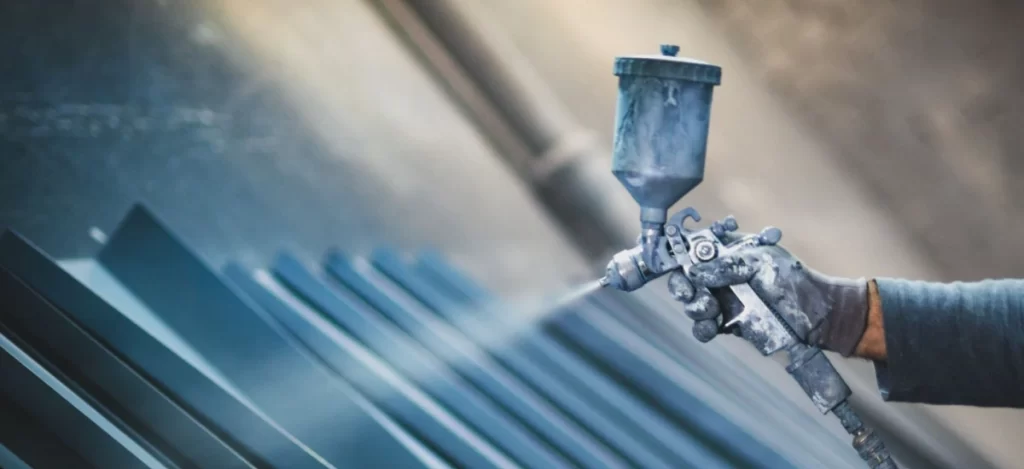
Galvanized steel painting
-
Difficult to Weld
It can also be welded, albeit with problems. Spattering and porosity can occur in the case of a zinc coating.
What Are Examples of Products Made From Galvanized Steel?
The strength and adaptability of galvanized steel make it a preferred material in sheet metal services, including aerospace, automotive, construction, energy, and manufacturing.
Let us examine the specifics for each of these industries below.
Aerospace Industry
Airframe structures and fuel tanks are perfect examples of aircraft parts made of this versatile material. These and other parts should be corrosion-resistant and generally reliable, requirements that match galvanized steel sheet properties.
Automotive Industry
Galvanized steel is a regular material in carmaking, especially for brake systems, body panels, exhaust, and chassis parts. Its corrosion resistance and durability promote the maintenance-free requirement for these and other parts.
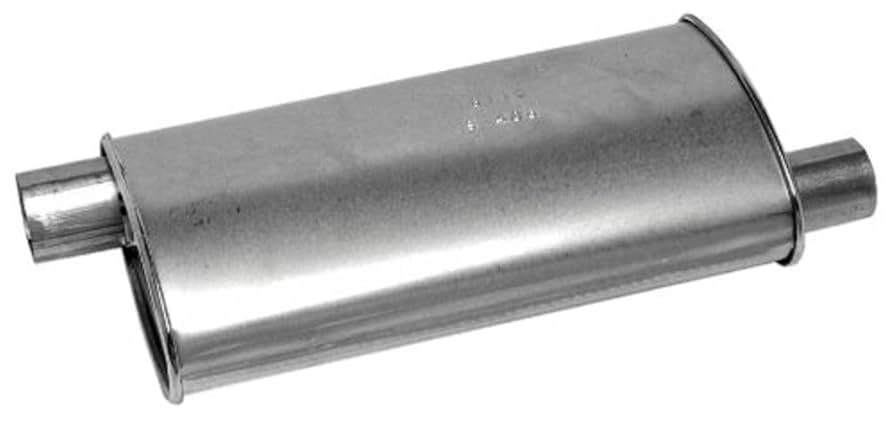
Galvanized steel car muffler
Construction Industry
Beams, trusses, and other structural components are widely made of galvanized steel to complement the material’s high weight-bearing capacity (about 350 MPa) with corrosion resistance and aesthetics.
Energy Industry
This is another industry with countless ways of using this type of steel – from frames to towers, and transportation systems to oil pipelines. The corrosion resistance and strength of the material add value to these applications.
Manufacturing Industry
The manufacturing industry has many systems and components that require the resilience and low-maintenance characteristics of galvanized steel. These include enclosures and frames.
Is Galvanized and Stainless Steel the Same?
No, galvanized steel and stainless steel are different products. Here are some basic areas where the two metals differ.
Difference in Main Properties
Looking at the properties, stainless steel offers better corrosion resistance than galvanized steel. Scratching stainless steel does not hamper its corrosion resistance capabilities, unlike in galvanized steel.
Better Aesthetics for Stainless Steel
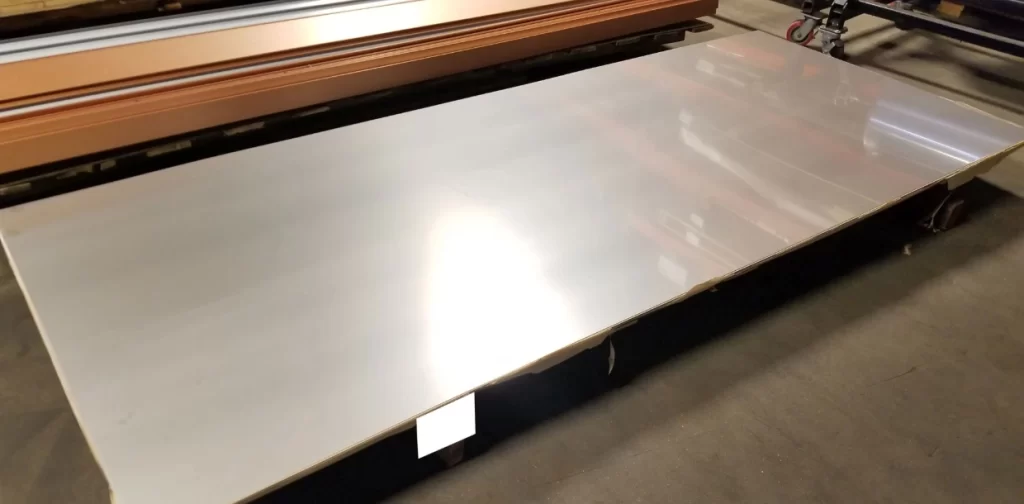
Shiny stainless steel sheets
The better aesthetics of stainless steel are also worth noting. Stainless steel has varied appearances, but it generally has a better look and feel than galvanized steel. Galvanized steel turns dull grey with time.
Stainless Steel is Costlier
Another difference is in cost, with galvanized steel being the more affordable of the steel varieties.
Stainless Steel’s Better Fire Resistance
While the zinc coating in galvanized steel easily melts away under heat, stainless steel performs much better under similar circumstances, especially if it is austenitic stainless steel.
Try Prolean Now!
Comparing Galvanneal vs Galvanized Steel
Galvanneal steel and galvanized steel differ across six main elements: Manufacturing process, coating characteristics, strength characteristics, corrosion resistance levels, weldability performance, and ductility in manufacturing processes.
More on these dimensions of hot-dipped galvanized vs zinc-plated steel is covered below:
Difference 1: The Coating Process – Heat Treatment for Galvanneal Steel
The process of producing galvanized steel is different from that of galvannealed steel. Galvannealed steel has an additional step to the galvanization process.
The heat treatment (annealing step) entails heating the material to a temperature of between 550°C and 600°C and keeping it at that temperature for a prescribed period. Annealing prompts the formation of a zinc-iron alloy layer.
Difference 2: Coating Characteristics Are Different
The coating composition and thickness for the two coatings differ. While the coating for standard galvanized coating is mostly zinc, the one for galvannealed steel is a zinc-iron alloy with a composition of 90% and 10% respectively.
Galvanized coatings are typically thicker than galvannealed coatings, when you consider the zinc coating. A G90 galvanized layer is about 20 µm thick compared to 13 µm for a galvannealed coating.
Difference 3: Corrosion Resistance is Higher In Galvanized Steel
The corrosion resistance of the metals aligns with the coating thickness. This implies that galvanized steel will, in most cases, offer more corrosion resistance than steel with a galvannealed coating.
Of course, galvannealed steel can resist corrosion for some time, but it will eventually give in in harsh environments. Painting the surface is usually a perfect way to enhance the corrosion resistance.
Difference 4: It’s Easier to Weld Galvanneal Steel
Welding galvannealed steel is less challenging than welding galvanized steel. Zinc in the coating for galvanized steel melts easily and produces harmful fumes. With iron in the galvannealed coating, the melting point is higher; the vaporization process is harder than in galvanized steel.
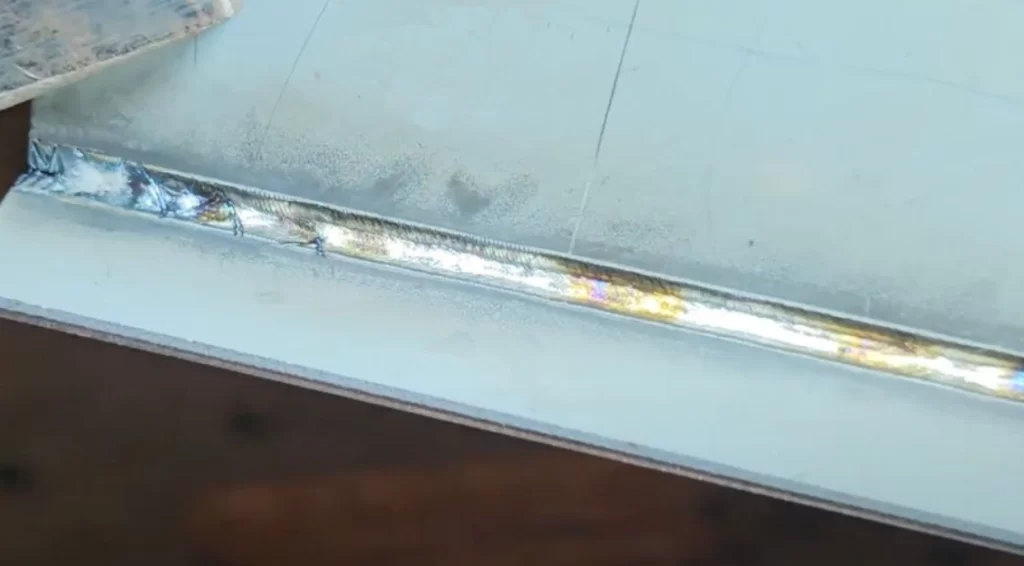
A galvanized steel weld
Difference 5: Formability is Higher In Galvanized Steel
Galvanized steel has higher formability, which allows for bending or shaping without damaging or cracking the surface coating. This characteristic comes in handy in HVAC, appliances, and other applications that require complex parts.
On the contrary, the galvannealed steel coating is prone to peeling or flaking when exposed to extreme forming processes. Therefore, it is not as suitable for the applications mentioned.
Overview Table for Galvanneal vs Galvanized Steel
Here is a comparison table for various properties of galvanneal vs galvanized steel:
|
Property |
Galvanneal Steel |
Galvanized Steel |
|
Surface Finish |
Uniform, matte gray appearance |
Shiny, glittering metallic finish |
|
Coating Composition |
Iron-zinc alloy (90% zinc, 10% iron) |
Pure zinc coating |
|
Coating Adhesion |
Superior |
Good |
|
Corrosion Resistance |
Good for indoor applications |
Perfect, suitable for outdoor applications |
|
Cost |
Relatively higher due to heat treatment |
More affordable because the process is simpler |
|
Formability |
Good |
Superior |
|
Machinability |
Better because of the harder surface |
Moderate |
|
Paintability |
Excellent |
Fair |
|
Surface Hardness |
Harder because of the iron-zinc alloy |
Softer |
|
Common Applications |
Appliances, automotive parts |
HVAC, outdoor equipment |
Conclusion
Both galvanneal and galvanized steel are common products, but they have their individual unique properties. For the user, considerations for galvanized vs non galvanized are corrosion resistance, outdoor vs indoor use, cost, versatility, and such factors. You can get all the details and sheet metal fabrication services at ProleanTech. Contact us today to get a quote.
0 Comments