
Delrin machining
The use of Delrin, or POM CNC machining, is everywhere; we can find parts and products made from this material, including in our cars, electronic devices, industrial machinery, medical, and other application areas.
Compared to other thermoplastics, Delrin offers excellent machinability. You can create complex geometries and features with tight precision, down to ±0.0127mm. Various machining processes, such as milling, drilling, turning, and routing, shape Delrin to the designed geometry using computer-controlled cutting tools.
The upcoming sections will cover what Delrin material is, its properties, machining methods, industrial applications, and considerations for Delrin machining.
What is Delrin Material?
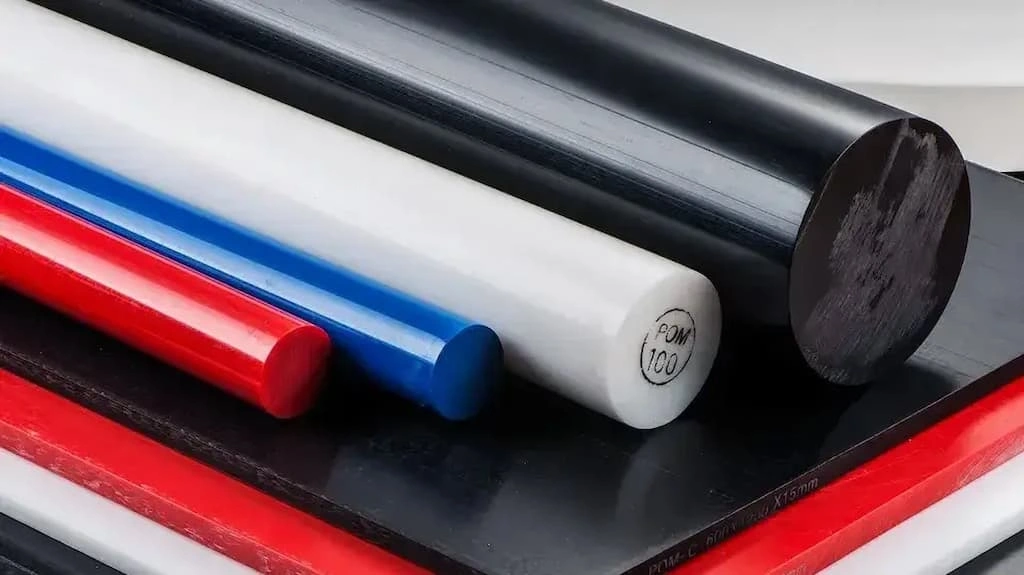
Delrin material
Delrin® is a trademark name for acetal material formulated by DuPont that falls under the polyoxymethylene (POM ) plastic family. This semi-crystalline polymer comprises repeating oxymethylene units (-CH₂-O-), derived from the polymerization of formaldehyde under controlled & catalytic conditions. This highly stable, regular molecular structure of Delrin homopolymer results in stiffness, strength, low friction, and wear resistance, and machined parts maintain their dimensional stability over time.
In some applications, Delrin is considered a lightweight plastic replacement for metals. It can deliver performance and durability similar to metal in light-to-medium load precision gears, bushings, snap-fit levers, etc. Consequently, it has good thermal stability and does not lose its properties over the working temperature range of -40 to 120°C.
Grades of Delrin
For machining, the two most popular Delrin Grades are Delrin 150 and Delrin 100AF.
- Delrin 150: It is a standard unfilled Delrin homopolymer known for its higher strength, machinability, and structural applications.
- Delrin 100 AF: A specialized low-friction grade, which includes PTFE fibres, in addition to POM homopolymers. 100 AF is best for bearings, slides, and low-friction interfaces.
What are the Delrin Material Properties?
Delrin is a lightweight thermoplastic polymer with excellent mechanical, physical, and chemical properties. It provides high flexural modulus, strength, rigidity, weather-resistance, chemical neutrality, and good fatigue life.
Its chemical inertness is limited and may not withstand strong oxidizing agents, alkalies, etc. Additionally, Delrin mechanical properties are not favourable for parts that require high creep resistance to tackle heavy and constant stress.
Here is the value table for Delrin material properties.
|
Property |
~ Value |
|
Crystallinity (%) |
75 – 85 |
|
Density (g/cm³) |
1.41 – 1.43 |
|
Temperature Range (°C) |
−40 to 120 |
|
Melting Point (°C) |
175 |
|
Water Absorption (%) |
< 0.25% |
|
Tensile Strength (MPa) |
60 – 89 |
|
Yield Strength (MPa) |
48 – 72 |
|
Young’s Modulus (GPa) |
2.5 – 4 |
|
Dielectric Strength (kV/mm) |
15 – 35 |
What Are the Delrin Machining Processes?
As mentioned before, Delrin can be machined with CNC lathe turning, milling, drilling, and other processes. Which process to use depends on the shape & complexity of the part you want to machine. Consequently, each Delrin CNC machining process involves distinct tooling and material-removal approaches.
Next, let’s discuss the key machining processes for Delrin.
Delrin CNC Milling
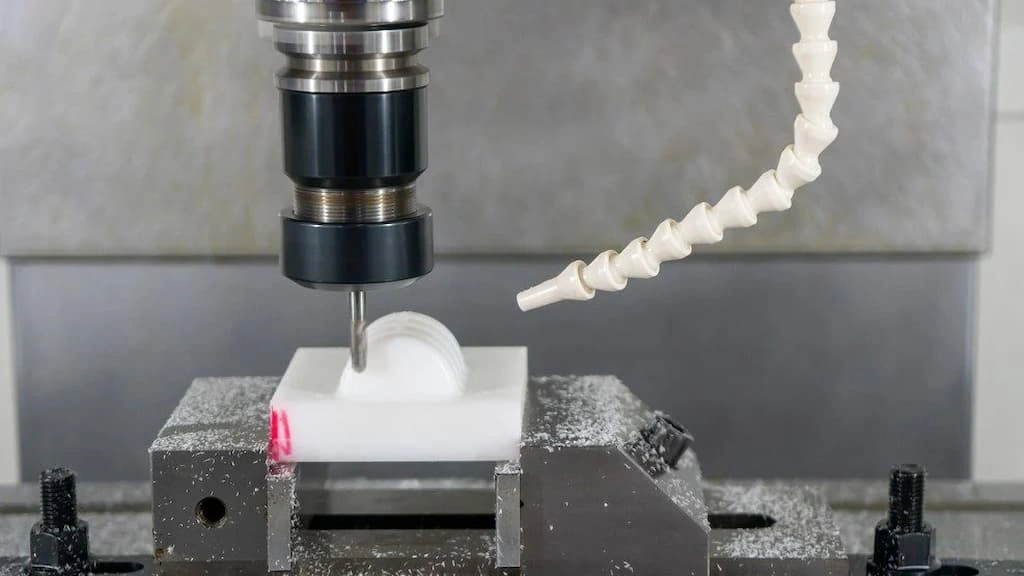
CNC milling Delrin
Rotating carbide/HSS end mills (or similar tools) on the spindle move across the Delrin workpiece to remove the material and shape it. Milling can create flat surfaces, complex contours, slots, pockets, etc.
When to Use: For plastic parts machining with complex contours and internal features. E.g., gears, pump parts, and fittings.
Delrin CNC Turning
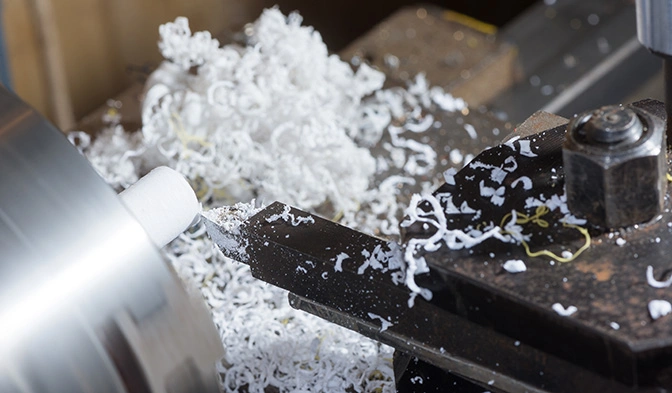
Delrin CNC turning
CNC turned Delrin parts can be produced on conventional lathes or CNC turning centres. Meanwhile, turning tools with carbide inserts are the right choice for Delrin at high machining speeds.
When to Use: If the geometry of the designed Delrin part is cylindrical, round, or requires machining of symmetrical features. E.g., spacers, bushings, and custom rods.
Delrin CNC Drilling
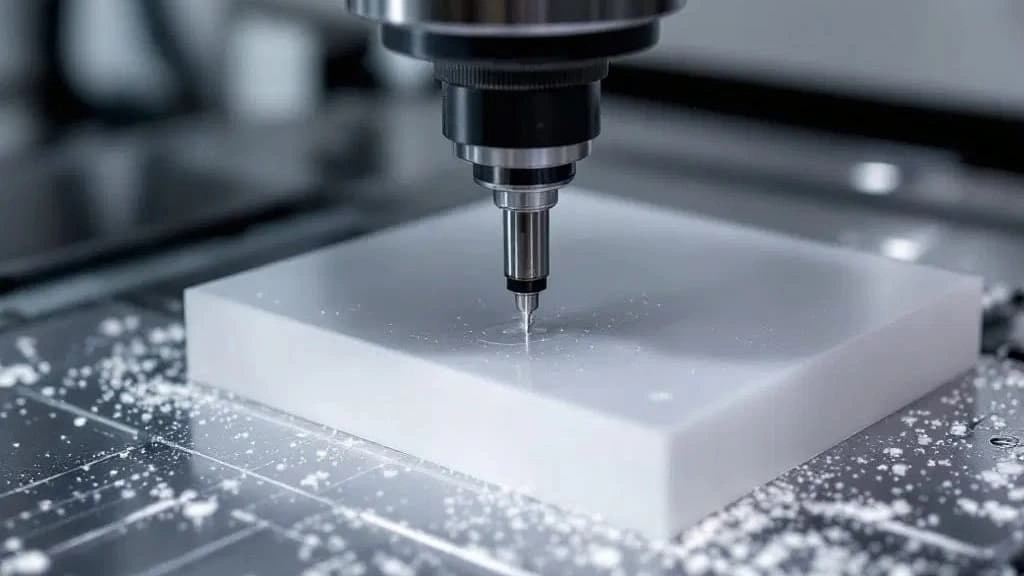
Drilling delrin
Twist or specialized plastic drills are used to create holes in Delrin. It can create both blind and through holes. Meanwhile, it is critical to use coolant or to make frequent drill withdrawals to prevent heat buildup.
When to Use: Hole creation for alignment, fastening, assembly, or any other purpose.
Delrin Laser Cutting
A CO₂ Laser cutter can be used to cut, shape, engrave, and pattern Delrin. It produces clean, accurate cutting edges. However, the balance of laser power and movement speed is critical to prevent melting and thermal disturbance.
When to Use: For cutting & shaping thin acrylic sheets with great detailing
Try Prolean Now!
Best Practices for Delrin Machining
Since Delrin is one of the most machinable plastics used in CNC machining, it does not require specialized approaches or careful considerations. Following a few best machining practices is enough to avoid any defects or dimensional deflections. It includes maintaining a uniform wall thickness, light clamping of Delrin, using the right feed & speed, etc.
Here are the six best practices for machining Delrin workpieces.
- Uniform Thickness: Ensure the part design has uniform thickness and ribs, fillets, or other reinforcement are added for large-sized parts. It helps to prevent the risk of material warpage.
- Firmly Hold Delrin Workpiece: Delrin does not require rigid/tight work clamping; a firm hold is sufficient. Therefore, use a light clamping force.
- Use the Right Machining Speed and Feed: The right spindle speed and feed rate are crucial for effective heat dissipation from the machining area. Additionally, these variables also impact the texture & finish quality of Delrin machining parts. Therefore, set the right speed and feed. You can also run trial cycles for optimization.
- Use Climb Milling for Smooth Surfaces: Climb milling is recommended for milling Delrin parts with a smooth as-machined finish. Also, ensure the tools are sharp and do not cause any drag.
- Cooling System: Heat buildup on the machining interface and the cutting tool causes dimensional inaccuracies, warping, and melting. Therefore, utilize an appropriate cooling system, such as an air blast.
- Avoid Undersized Finishing Cuts: Avoid undersized finishing cuts. Leave 0.15 mm for final reaming or finishing to maintain dimensional accuracy and surface integrity.
Different Surface Finishes for Delrin
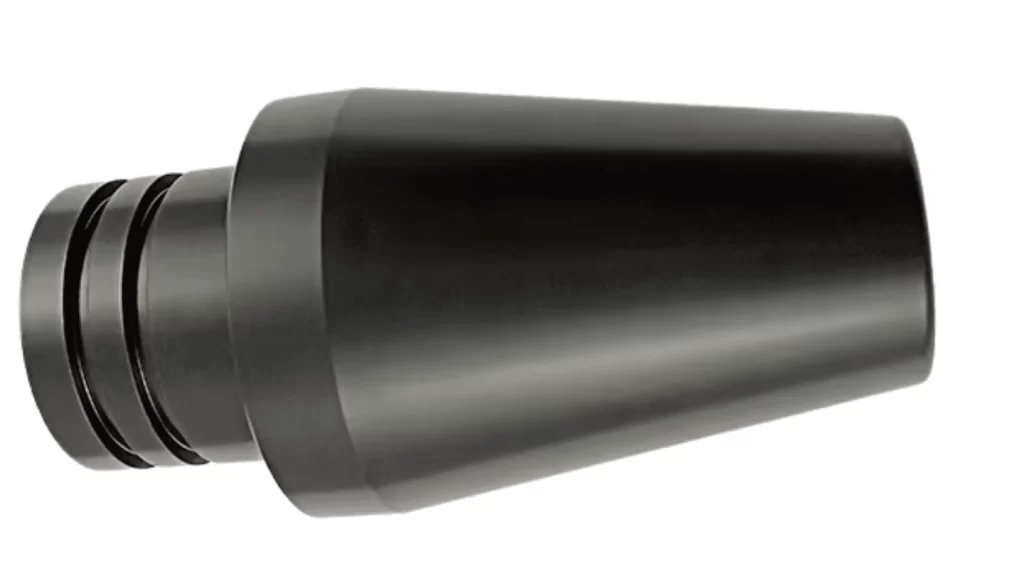
Delrin machining surface finish
Like metallic material or other plastics, Delrin does not support diverse surface finishes. You can finish them with as many as machined, bead blasting, cryogenic deburring, and painting.
As machined refers to the finish of Delrin parts without additional processing. In Bead blasting, fine glass beads are blasted to produce a uniform surface texture. Cryogenic deburring involves a low-temperature finishing for burr removal.
The table below outlines the texture and benefits of different Delrin finishes
| Finish | Texture | Benefits |
| As-Machined | Smooth, but directional tool marks |
• Low-cost finishing option • Maintains tight tolerances |
| Bead Blasting | Matte, uniform texture |
• Cosmetic appeal & uniformity • Reduces glare and fingerprints |
| Cryogenic Deburring | Minimal change in Ra value |
• Burr removal from complex parts • Dimensional accuracy |
| Painting | Matte to Gloss |
• Color coding and branding • Enhances visual appeal |
Advantages and Disadvantages of Delrin CNC Machining
Delrin, or Acetal machining, offers benefits like excellent machinability, dimensional stability, creep resistance, and durability of parts. On the other hand, it has limitations, such as flammability and heat sensitivity.
Advantages
- Delrin is easily machinable and can be shaped into intricate parts.
- The low-friction of Delrin provides a natural-lubricant surface, beneficial for rotating parts.
- Delrin’s toughness and strength enable it to withstand heavy loads.
- Delrin has a longer lifespan than many plastics due to its high creep and fatigue resistance.
- It has a moisture absorption ratio and is suitable for humid environments.
- Delrin is a good electrical insulator and can withstand voltage shocks.
- Machined Delrin components are resistant to wear and abrasion.
Disadvantages
- Delrin’s surface lacks good adhesion, making it challenging to coat and bond with other materials.
- A slight increase in machining temperature can cause a quality failure.
- Delrin is flammable and does not self-extinguish.
Try Prolean Now!
Applications of Delrin CNC Machining
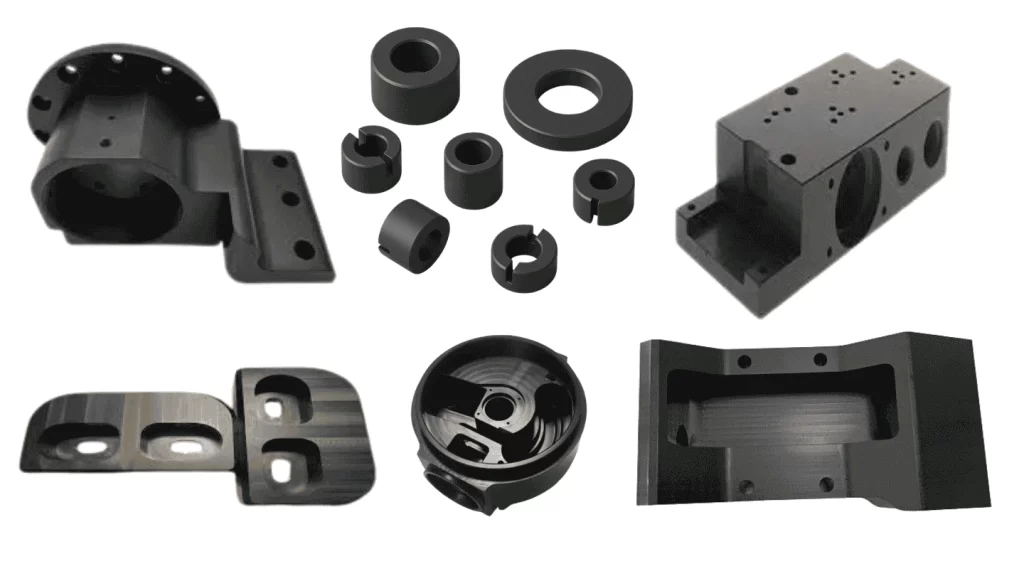
Delrin CNC parts
The use of CNC-machined Delrin parts spans across industries, including automotive, industrial machinery, electrical, medical, furniture hardware, and consumer goods.
Let’s look at the list below that outlines application examples of CNC Delrin machining.
- Automotive: Bushings, gears, sensor housings, door lock & seat belt mechanisms, parts for fuel system assembly.
- Industrial Machinery: Conveyor guides, linear bearings, wear strips, cams, thrust washers, and pump parts.
- Electrical and Electronics: Insulating mounts, electrical spacers, sensor bodies, and switch components.
- Medical: Surgical instrument handles, pump housings, prosthetic parts, and parts for diagnostic equipment
- Furniture Hardware: Roller guides, adjustment cams, levelling feet, drawer slides.
- Consumer Goods: Tool handles, fasteners, snap-fit parts, appliance hinges, and parts for sports items.
Summing Up
Overall, Delrin is a high-performance thermoplastic that can be machined into a variety of parts/products with tight precision. Choosing the right process, feed & speed, tooling, and thermal management are all crucial requirements for machining Delrin.
If you need Delrin or any other plastic parts made strictly to your design & specifications, our CNC machining services can be the one-stop solution. We have advanced multi-axis CNC mills, lathes, drills, and other equipment that can work with 30+ plastic materials.
So, request a quote for custom Delrin machining service today!
FAQs
What grade of Delrin for machining?
The most common Delrin grade for machining is Delrin® 150, but 100AF can also be machined.
What is the machining tolerance of Delrin?
The general machining tolerance for Delrin is ±0.127mm, but tighter tolerances are also achievable, as low as ±0.0127 mm.
0 Comments