

Chemical-resistant plastics
Applications involving exposure to harsh chemicals (acids, alkalis, and solvents) require chemical-resistant materials; plastics like PPS and PTFE are one of the available options. Although not all plastics are inert towards aggressive environments, a few show excellent resistance and prevent corrosion and degradation, maintaining the dimensional stability of the mechanical system, equipment, or product.
In CNC machining, PTFE, PEEK, PVC, HDPE, PPS, and PP are the most common chemical resistant plastics, used as raw material to produce a variety of parts and products.
The upcoming sections will elaborate on six types of chemical-resistant plastics and provide considerations for selecting the right one.
1. Polytetrafluoroethylene (PTFE) or Teflon Plastic
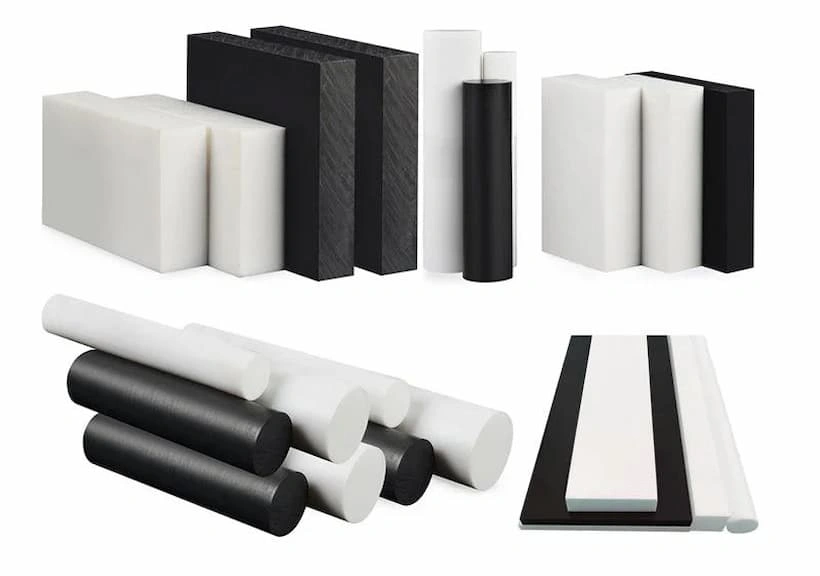
Teflon Plastic
You must be familiar with Teflon material, which can be found as a non-stick coating in cookware. Well, it has more diverse applications beyond this, from machining industrial bearings to chemical lab instrumentation.
Polytetrafluoroethylene (PTFE, also known as Teflon) involves a strong carbon-fluorine (C-F) covalent bond and carbon-carbon (C-C) bond, resulting in a robust structure, low friction, and excellent chemical inertness. Consequently, Teflon maintains the dimensional & physical stability up to 200 to 260°C, after that, it starts to decompose.
Teflon acid resistance is considered as universal as it resists almost every strong acid, as well as it resists alkalis & solvents.
Machining Characteristics: Teflon is easy to machine because of its low-friction. Sharp carbide tools with low cutting forces are recommended.
When to Use: Linings, seals, valves, bearings, and chemical processing parts
2. Polyetheretherketone (PEEK) Plastic
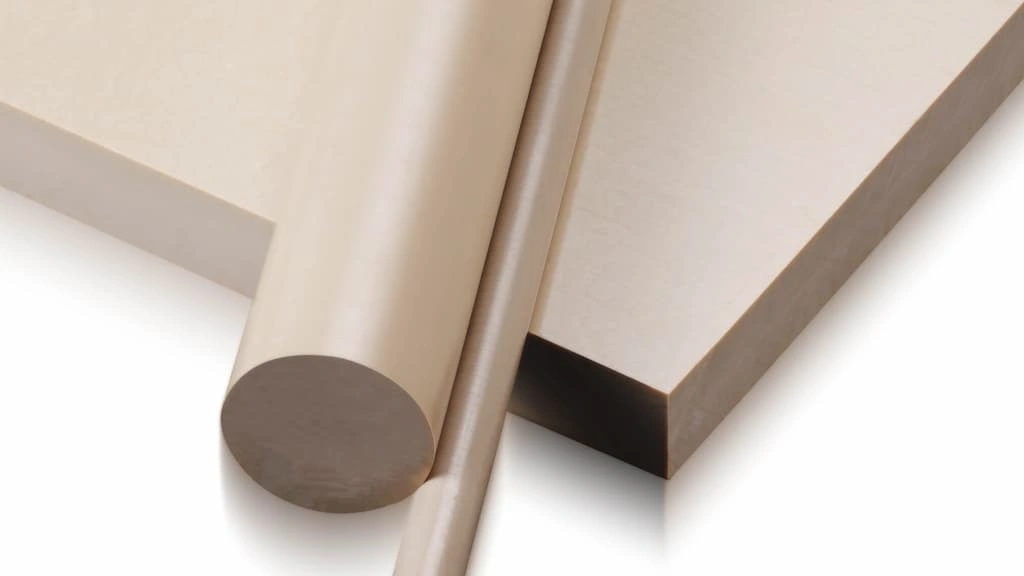
PEEK plastic materials
PEEK is a high-performance and durable plastic that offers thermal stability up to 170°C, high fatigue strength, wear resistance, stiffness, low coefficient of friction, and resistance to harsh chemicals.
The internal structure of PEEK plastic involves semi-crystalline & linear order chain, containing benzene rings (-⌬-), ether linkages (-O-), and ketones (C=O). It shows neutrality towards a wide range of chemicals and does not corrode over time.
Consequently, PEEK resists moderately concentrated acids, oxidizing acids, strong alkalies, organic solvents, and steam. You can use unfilled, gas-filled, FDA-compliant, and other specific forms of PEEK, depending on your application needs.
Machining Characteristics: Good machinability; rigid tooling with slow speeds and moderate feeds is recommended.
When to Use: When a balance of chemical resistance, structural strength, and mechanical performance is required. e.g., electronics enclosures, medical equipment, lightweight aircraft parts, hard packaging products.
3. Polyvinyl Chloride (PVC) Plastic
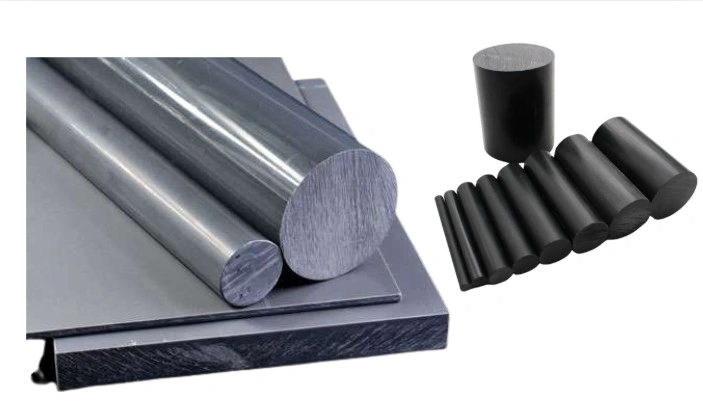
PVC machining plastic
PVC is another chemical-resistant plastic that is relatively cost-effective. In fact, it is the third most used plastic worldwide after polypropylene and polyethylene.
It provides high tensile strength, stiffness, durability, easy to bond and join, easy to machine, resistance to cracking & abrasion, antibacterial, and other useful properties. Consequently, PVC chemical resistance is excellent except for some hard oxidizing agents and some solvents.
Machining Characteristics: Easy for tight tolerance machining, HSS/Carbide tooling with slow feeds is recommended.
When to Use: When moderate chemical resistance is required and affordability matters. Some application examples are piping, chemical processing components, sewage system parts, and cabinets in chemical factories.
4. High Density Polyethylene(HDPE) Plastic
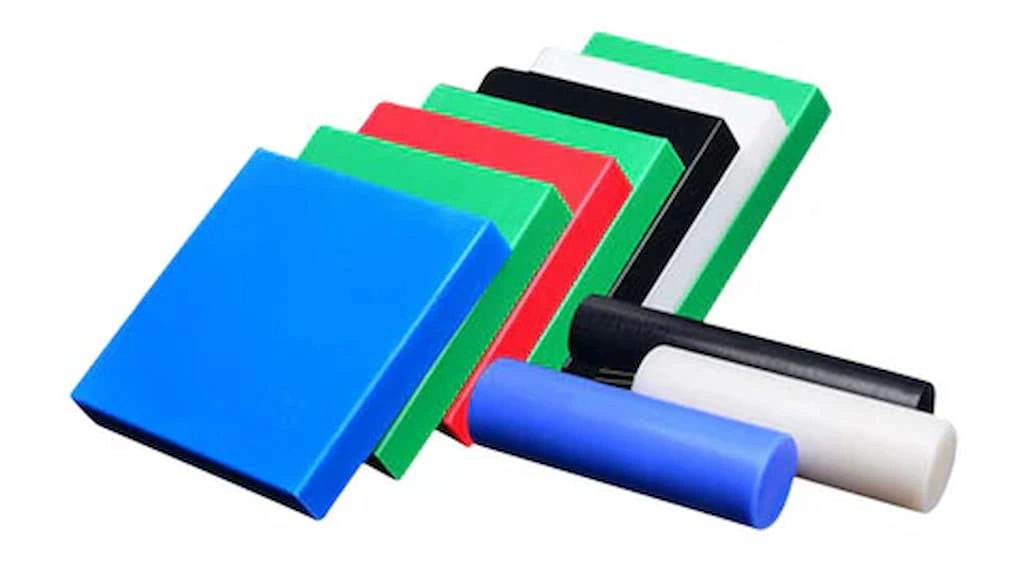
HDPE materials
HDPE is a flexible & durable thermoplastic which shows high resistance towards dilute acids, alkalies, and alcohols, but has low thermal stability (~80–100°C). Other properties are minimal moisture & water absorption, lightweight, and high rigidity.
The reason behind strong HDPE chemical resistance involves highly stable polymer chains formed by polymerization of ethylene gas in the presence of chromium or Ziegler-Natta catalyst.
Machining Characteristics: As HDPE is a soft plastic, HSS/Carbide tooling with low cutting forces is recommended.
When to Use: Low temperature applications when impact resistance matters, along with chemical neutrality. Some application examples include chemical liners, food processing conveyors, wastewater treatment components, and industrial machine guards.
5. Polyphenylene Sulfide (PPS) Plastic
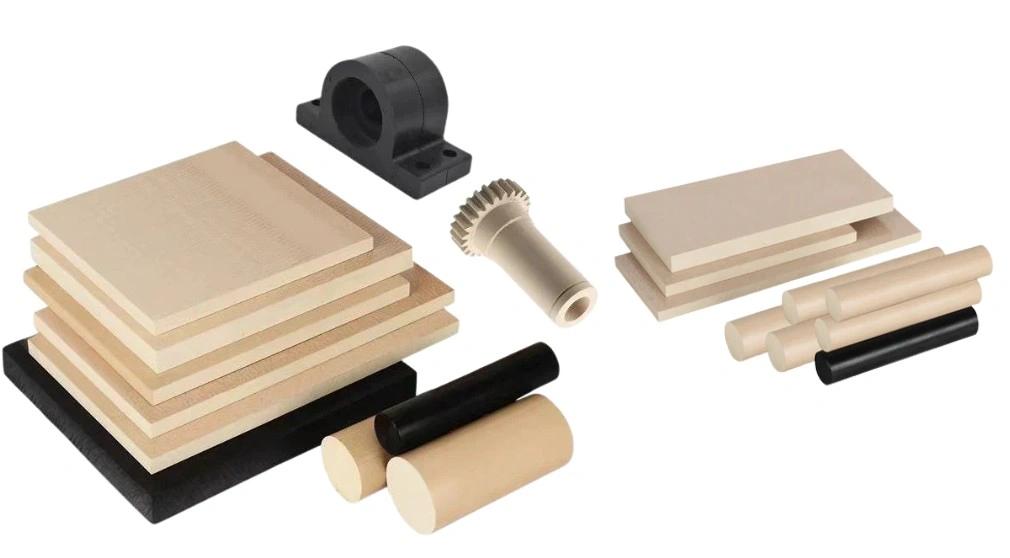
PPS plastic
This semi-crystalline and dense plastic is neutral to almost every common acid, alkali, solvent, and fuel.
The internal structure of PPS involves covalent bonds of sulfur and benzene rings, forming a long and stable polymer chain. As a result, PPS can be stable under high mechanical stress, harsh chemical exposure, and elevated temperatures (up to ~220 °C).
Often, it is considered an affordable PEEK alternative for low-temperature applications requiring high chemical resistance and excellent mechanical properties.
Machining Characteristics: Moderate to excellent machinability, dimensional stability, and suitable for tight tolerance machining. Use sharp carbide tools with moderate cutting speed & slower feeds.
When to Use: Consistent chemical resistance even when heat fluctuates. Some notable application examples are chemical processing tanks & related components, pipe flanges, fertilizer plants, chemical storage, and water-treatment systems.
6. Polypropylene (PP) Plastic
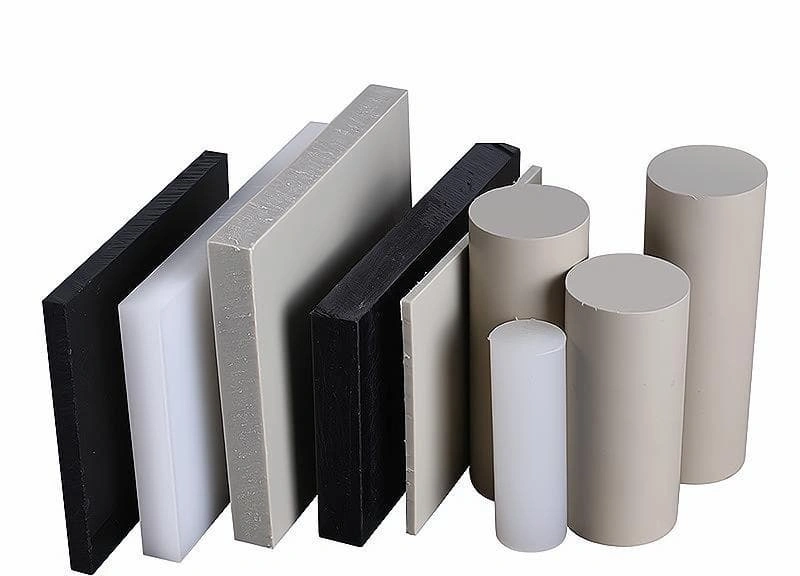
PP plastic material
Polypropylene does not react with chemicals (acids, bases, alcohols, aldehydes, ketones, etc.), and remains stable up to 80-100°C, whereas its melting point is approximately 170°C. Additionally, PP plastic has a minimal water absorption ratio (<0.01%).
Internal structure of Polypropylene involves long propylene monomer chains –(CH2–CH(CH3))n–. The dense hydrocarbons, tightly packed chains, and absence of polar groups make PP highly resistant to chemicals.
Machining Characteristics: Soft and machinable, but more heat-sensitive as it has a low melting point. Use standard carbide tooling.
When to Use: Chemical-exposed manifolds, precise tube & fittings, oil & gas components, medical devices, consumer goods, and industrial tanks.
Try Prolean Now!
Factors Affecting the Chemical Resistance of Plastics
Multiple factors affect the chemical resistance of plastic materials, such as the presence of additives and fillers, exposure time, chemical temperature & concentration, and mechanical stress.
The list below outlines the common factors:
- Additives in Composition: The presence of plasticizers, flame retardants, and other fillers influences the resistance level, either improving or weakening it.
- Temperature: If plastic is used in the processing or storage of chemicals at high temperatures, it decreases the plastic’s resistance.
- Presence of Stress: If the plastic part is subjected to heavy mechanical stress and prolonged chemical exposure, it causes micro-crack propagation, which also reduces its chemical resistance.
- Exposure Time: High-concentration chemical exposure over an extended period compromises chemical resistance.
- Chemical Absorption: If plastic has a higher chemical absorption ratio, it reduces the resistance.
Best Practices for Maintaining Chemical Resistance
We have discussed what factors influence the chemical resistance of plastics. Now, let’s examine how you can maintain resistance, as outlined in the list below.
- Select the appropriate type of plastic and apply coatings tailored to the specific chemical exposure conditions.
- Maintain temperatures and pressures within specified limits to ensure chemical resistance isn’t compromised.
- Inspect regularly and ensure the resistance level through non-destructive testing.
- Consider applying paints, linings, or surface treatments to further enhance the chemical resistance of plastic.
How to Choose the Right Chemical-Resistant Plastic for CNC Machining?
Choosing the right chemical-resistant material for Plastic CNC machining requires several key considerations, including end-use requirements, operational humidity & thermal stress, material cost, and dimensional stability.
Let’s elaborate more on each consideration.
Application Requirements
First, identify the specific chemicals and their corresponding concentrations that the plastic needs to resist for the desired application and performance. If you need to store strong acids or solvents, use plastic with a semi-crystalline structure. Consequently, you can refer to the “Plastic Chemical Resistance Chart” to ensure that the chosen plastic is compatible with the chemicals that will come into contact during application.
Humidity and Temperature
Consider the humidity and temperature fluctuations that plastic parts need to withstand during applications. Although all of the plastics listed above are resistant to chemicals, they have different limits for thermal stability. For instance, PPS and Teflon retain their properties up to 200 °C, whereas polypropylene loses its properties below 100 °C. Next, consider the moisture and water contact during applications. For humid environments, you need plastic with a minimal water absorption ratio.
Desired Mechanical Strength
Some applications might require the ability to withstand high mechanical stress along with chemical neutrality. If so, choose high-performance options, such as PEEK.
Material Cost
The main purpose of material selection is to find a cost-effective solution that delivers desired functionality and performance. Therefore, consider the cost of plastics that provide the required level of chemical inertness and other properties at an affordable price.
Dimensional Stability
In some applications, it is crucial to ensure that machined plastic parts do not swell or creep when in use. Therefore, identify the required level of stability, and check which plastic can deliver that. For example, PEEK maintains excellent dimensional stability when its parts are used for chemical processing over time.
Try Prolean Now!
Plastic Chemical Resistance Chart
It is a systematic table that contains plastic materials and their resistance to various types of chemicals. Designers, engineers, and manufacturers refer to this chart to determine whether a plastic material is resistant to specific chemicals or not.
The charts also suggest the degree of resistance and for which chemicals plastics are not recommended. You can also use this chart as a tool when choosing a chemical-resistant plastic for machining.
You can download the “Plastic Chemical Resistance Chart” here and use it for your general material selection purposes.
Read More:
Summing Up
The plastics we have discussed in the articles are all known for their high chemical resistance and are widely preferred for applications related to chemical processing, storage, and its transfer. However, you need to ensure their inertness tendency towards specific chemicals involved in applications. When machining chemical-resistant plastics, it is essential to use the correct type of tooling and machining variables to prevent melting and warping.
Are you looking for CNC-machined parts and products made from chemical resistant plastic sheets, blocks, rods, or strips? At ProleanTech, we offer over 20 plastic options for you to choose from, tailored to your specific application needs. Our CNC Machining Services include everything, from material selection & DFM feedback to production and surface finishing. So, upload your design and request a quote to start the project.
FAQs:
What plastics are chemical resistant?
Although there are many chemical-resistant plastics, Teflon, PEEK, PVC, HDPE, and PP are among the most commonly used in manufacturing.
Is PVC plastic chemical-resistant?
Yes, PVC plastic is chemically resistant to acids, alkalies, solvents, alcohols, etc. It is due to PVC’s chlorine-rich polymer chains.
Which plastic doesn’t melt with acid?
Teflon (PTFE) plastic doesn’t melt with acids. However, PP, PE, and HDPE, and others are also excellent acid resistant plastics.
0 Comments