
Alloy Steel Machined Components
Alloy steel machined parts are essential in industries that require exceptional strength, durability, and precision. These specialized steel components are used in aerospace and automotive applications. They combine iron with alloying materials like nickel, chromium, and molybdenum for superior mechanical properties.
The manufacturing of alloy steel parts involves precise CNC machining services and processes that transform raw materials into components capable of withstanding extreme conditions. From high-temperature environments to heavy mechanical stress, these parts maintain their structural integrity where standard carbon steel would fail. The versatility of alloy steel machining allows manufacturers to create custom components with tight tolerances, making them indispensable for critical applications where failure is not an option.
In this blog, we will discuss what alloy steel is, common alloy steel grades, and how alloy steel parts are advantageous in various applications.
What is Alloy Steel Machining
Alloy steel machining is the process of cutting, shaping, and finishing alloy steel, which has many useful elements other than just carbon. Alloy steel contains chromium, molybdenum, vanadium, and manganese. These elements provide the mechanical properties to alloy steel that make it compatible with the components used in a wide range of industries.
Some alloy steel grades have better hardness, toughness, and corrosion resistance than carbon steel. The machining process involves the removal of material from the alloy steel workpiece. Various cutting tools and techniques are used during this process. This can be done by conventional methods. But in the modern world, usually CNC (computer numeric control) machining is used to create alloy steel components. This method ensures precision and repeatability.
Common Grades of Alloy Steel
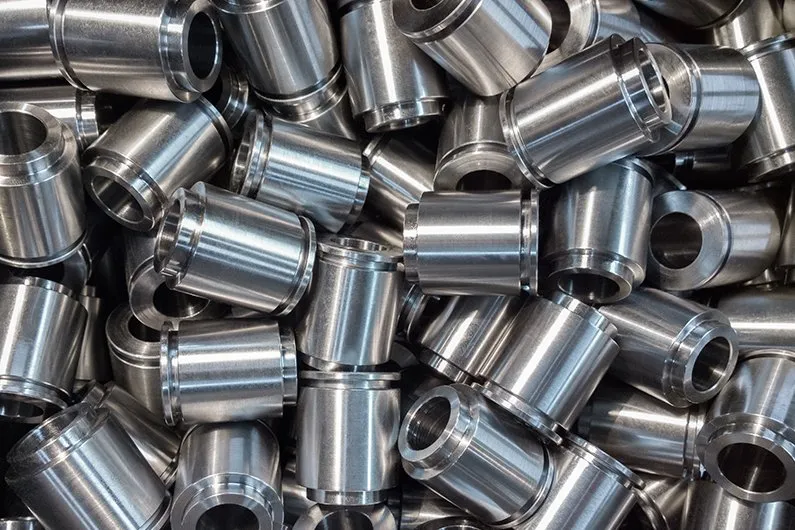
Precision Machined Alloy Steel Components
Different grades of alloy steel offer different characteristics. We need to choose the best grade for our project depending on the application requirement and the grade’s properties. The following are some common alloy steel grades that are used in precision machining.
4140 Alloy Steel
4140 is one of the most commonly used chromium-molybdenum alloy steel grades in machining. This alloy has versatile characteristics due to the presence of up to 0.40% carbon. This composition makes it suitable for applications where strength, wear resistance, and toughness are required. 4140 alloy steel parts are commonly used in automotive components and tooling applications.
4340 Alloy Steel
4340 alloy steel offers better strength and toughness than 4140 alloy steel grade. This alloy is composed of chromium, nickel, and molybdenum. It has a high impact resistance and deep hardening abilities. The presence of nickel makes it more suitable for applications where high-stress is present. This alloy has high tensile strength. 4340 alloy steel manufactured parts are used in aerospace components and other heavy-duty applications.
4042 Alloy Steel
4042 alloy steel contains molybdenum and carbon in its chemical composition. This alloy offers good hardening and stability at high temperatures. It is used in applications where high wear resistance is required. It includes the machinery components like bolts, studs, etc.
5140 Alloy Steel
5140 alloy steel contains chromium and carbon. It offers good machinability characteristics. Chromium content makes it corrosion-resistant as compared to plain carbon steels. 5140 machined components are used in automotive and industrial machinery. It is commonly used to make bolts, gears, shafts, and pins, etc.
8620 Alloy Steel
8620 alloy steel contains chromium, nickel, molybdenum, and a relatively smaller amount of carbon than other alloys. This alloy is designed for carburizing applications. 8620 alloy steel machined parts are used in gears and other power-transmitting components. Low carbon content makes 8620 alloy easy to machine.
Alloy steel machining is the process of cutting, shaping, and finishing alloy steel, which has many useful elements other than just carbon. Alloy steel contains chromium, molybdenum, vanadium, and manganese. These elements provide the mechanical properties to alloy steel that make it compatible with the components used in a wide range of industries.
Some alloy steel grades have better hardness, toughness, and corrosion resistance than carbon steel. The machining process involves the removal of material from the alloy steel workpiece. Various cutting tools and techniques are used during this process. This can be done by conventional methods. But in the modern world, usually CNC (computer numeric control) machining is used to create alloy steel components. This method ensures precision and repeatability.
Benefits of Alloy Steel Machined Components
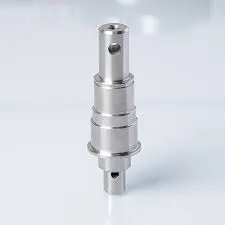
Custom Alloy Steel Machined Component
Alloy steel machined parts have many advantages in terms of their chemical and mechanical properties. These make them suitable for many demanding industries.
Toughness
Toughness is the ability of a material to absorb pressure and resist fracturing during deformation. Alloy steel parts have good toughness due to their structure and the elements present in their composition.
Hardness
Hardness means the ability of a material to resist localized plastic deformation. Alloy steel components have higher hardness than plain carbon steel parts. This hardness can be achieved through the heat treatment processes, such as quenching and tempering.
Different alloy grades can be treated at different levels to achieve the desired hardness required for specific applications. For example, 4140 can achieve hardness levels of 28-32 HRC in the annealed condition or up to 60 HRC after hardening, while 8620 can develop surface hardness exceeding 60 HRC through carburizing.
Strength
Alloy steel machined parts have good tensile strength and yield strength when compared to carbon steel machined parts. The strength of alloy steel comes from its elements and microstructure that maintain stability under load. The strength of alloy steel makes it suitable for applications where a smaller size with good load-bearing capacity is needed.
Corrosion resistance
Alloy steel parts show better corrosion resistance than carbon steel parts, but not as good as the stainless steel parts. Some of its grades (Cr ≥ ~10.5%) create the passive oxide layer and show resistance against the moist and reducing environment.
Choose wisely when you are going to select the material from alloy steel vs stainless steel. They differ from each other in many mechanical aspects. Choose alloy steel when your application needs toughness and strength, and stainless steel is the best choice to use in the marine environment due to its excellent corrosion resistance properties.
Wear Resistance
Wear resistance is the ability of a material to withstand abrasion, sliding contact, and surface degradation. Alloy steel machined parts have good wear resistance after surface hardening processes.
Carburizing is the case hardening process that creates an extremely hard surface and core remains flexible. This structure makes the material the best steel for machining, where wear resistance and impact absorption are required.
Try Prolean Now!
Operations Involved in Alloy Steel Machining
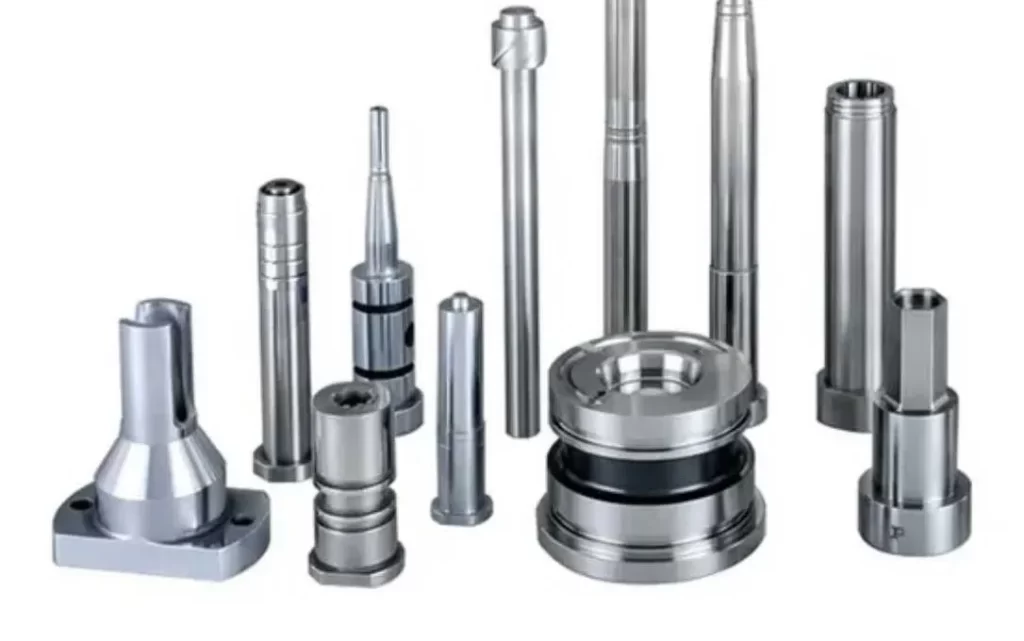
Different Alloy Steel Machined Components
Alloy steel processing includes a variety of manufacturing processes that transform raw materials into precision components. Understanding how these operations work is crucial to achieving the best results.
Rough Machining
Turning Operation
The turning process is fundamental in machining. A cutting tool rotates the workpiece while it removes material. This creates cylindrical shapes. CNC lathes are used to perform turning operations in alloy steel, producing shafts, pins, and bushings with tight tolerances. Surface finishes can range from rough cuts to a mirror finish, depending on the tooling and parameters.
When working with alloy steels, it is important to select the right tool based on the hardness of the material. Carbide inserts that have the right geometries, coatings, and geometry are able to handle alloy steels’ abrasiveness while maintaining cutting-edge integrity.
Milling Operations
Milling is a cutting technique that uses rotating multi-point tools to remove material. This process is versatile and can create flat surfaces, pockets, slots, and complex 3-dimensional contours on alloy steel components. CNC machining services perform these operations with precision and consistency.
On alloy steel parts, face milling and end milling are commonly performed operations. The tool selection is dependent on the operation. High-performance carbide face mills and indexable end mills are most commonly used.
Drilling Operations
Drills are rotating cutting tools that create round holes in components made of alloy steel. This operation is crucial for fastener and oil passages, as well as features that are going to be reamed or bored. Precision drilling is essential for maintaining tight dimensional and positional tolerances, which are critical to assembly and functionality.
The hole size and the depth required are taken into consideration when selecting twist drills. Drilling operations for alloy steels are typically performed with carbide-tipped drills or solid carbide ones that maintain size accuracy and resist wear.
Broaching
A broaching process is a machining technique that removes material using a multi-toothed cutting tool in one linear pass. This operation produces internal and external shapes such as keyways or splines in alloy steel components. With high productivity, broaching produces excellent surface finishes with dimensional accuracy. Surface broaching is used to contour or flatten external surfaces. This process is best suited to alloy steels that have been annealed, normalized, or hardened.
Heat Treatment After Machining
After machining, heat treatment is usually performed to obtain the final mechanical properties of alloy steel components. The microstructure is modified by processes like annealing and normalizing. Understanding alloy steel grades can help determine the appropriate heat treatment cycle.
Many components are rough-machined under the annealed state, heat-treated for desired properties, and then finished-machined, or ground, to final dimensions. This sequence reduces distortion and allows precision machining on hardened surfaces.
Finishing Operations
Grinding Operations
Abrasive wheels are used to produce extremely tight tolerances on alloy steel components and superior surfaces. Heat-treated components that are too tough for conventional cutting tools can be machined using this process. Alloy steel parts are commonly machined by surface grinding, cylindrical grinding, and centerless grinding.
CBN and aluminum oxide grinding wheels are usually selected for alloy steels according to their hardness level. CBN wheels are superior on materials hardened above 50 HRC. They offer faster cutting rates and a longer wheel life than conventional abrasives.
Thread Cutting
Thread cutting is used to create internal or external threads in alloy steel components, for applications such as fastenings or power transmission. You can achieve this by using thread milling or tapping, as well as single-point threading. Each method has distinct advantages based on thread size and pitch, as well as production volume.
Thread milling is becoming more popular with alloy steels, as it allows for better chip removal compared to tapping. One thread mill can produce both left-hand and right-hand threads and multiple thread sizes. This improves tool inventory management.
Try Prolean Now!
Common Components Manufactured by Alloy Steel
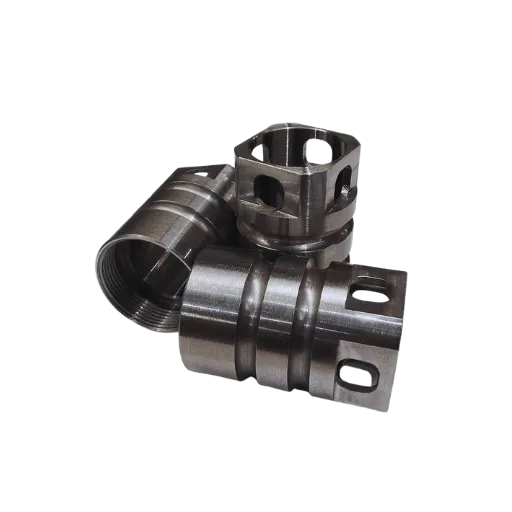
Alloy Steel Machined Components
Alloy steel has the versatile properties that make it suitable for making many useful components. A list of the most common components is given below:
- Bolts: Alloy steel is used to make high-performance bolts to be used in automotive, aerospace, and agricultural industries.
- Anchors: Anchor bolts are made of alloy steel through machining. They are best used in construction, mining, and infrastructure projects.
- Washers: spring washers, local washers, and flat washers are made using alloy steel grades. They offer high fatigue resistance that prevents cracking and failure.
- Socket products: Socket products, like screws and screw caps, are also made with the help of alloy steel machinability. They resist deformation during installation and removal.
ProLean Tech is a leading company in the delivery of high-precision alloy steel machined components tailored to your specifications. Our advanced CNC machining services ensure tight tolerances and consistent quality, whether you require custom metal machining or specific alloy steel grades such as 4140 or 8620.
Industries Using Alloy Steel Parts
Mechanical properties of this alloy machined parts make them suitable for many industries such as agriculture, automotive, hydraulics, aerospace, and defence.
Agriculture
The machining of alloy steel is used to create components like gears, drive shafts, and tillage points in tractors and harvesters. This ensures long-term performance under these challenging conditions.
Automobile
Automotive components that are subjected to cyclic loads and thermal stresses require materials with high strength and excellent fatigue resistance. Alloy Steel is used in vehicle systems, including crankshafts and camshafts, as well as transmission gears, steering knuckles, and control arms.
Hydraulics
Hydraulic systems operating at pressures between 3,000 and 10,000 psi demand materials with superior fatigue and wear resistance to prevent failure under constant pressure cycling. Alloy steel machined parts possess the necessary hardness and pressure-withstanding capability, making them the preferred choice for hydraulic components.
Rail
Rail components are subjected to extreme loads, vibrations, and repeated impact forces, which would deform other materials. The exceptional fatigue resistance of alloy steel allows for efficient performance throughout the service life of axles, wheels, and coupling systems.
Aerospace
For critical safety systems, the aerospace industry looks for materials that offer an optimal weight-to-strength ratio and impact resistance. Alloy steel components are used to absorb huge impact loads while maintaining structural integrity during landing.
Defense
For defense applications, materials must perform consistently under extreme conditions, where failure is not acceptable. Alloy Steel is used to provide the reliability necessary for mission success.
Alloy Steel Machining Quality Control
To maintain consistent quality, it is important to conduct thorough inspections and tests throughout the entire manufacturing process. Coordinate measuring machines (CMMs), which measure dimensions, ensure that machined features are in accordance with the drawing specifications. Surface finish measurements ensure that roughness values are within acceptable ranges to maintain proper function and appearance.
Documents of material certification verify the chemical composition and mechanical characteristics of raw materials. The heat treatment certifications verify that the thermal processing has achieved the specified hardness or microstructure. These records of quality provide traceability as well as assurance that the components will perform according to design.
Conclusion
Alloy-steel machined parts are the result of a marriage between material science and precision manufacture. They deliver components that are strong, durable, resistant to wear, and reliable. These versatile materials are used in a wide range of applications from agricultural equipment to aerospace. They ensure safety and performance while also enabling innovation. Understanding different alloy steel grades and their properties, as well as the appropriate machining techniques, will allow manufacturers to create components that meet even the most demanding specifications.
ProLean Tech’s CNC machining capabilities are combined with material expertise in order to produce precision alloy steel components that exceed expectations. We are the ideal partner for your critical machining project because of our commitment to customer service, quality, and continuous improvement. Contact us to learn how our alloy steel solutions can help you with your next project. We will provide the precision and reliability that your application requires.


0 Comments