
Laser Cut Glass
Ever wondered if you can laser cut glass? Safely, we can say, yes. Laser cutting glass has changed the way glass is shaped and designed by offering the utmost precision and versatility. Rather than employing mechanical tools like in glass cutting, engraving, and etching, glass laser cutting uses focused light, which is powerful enough to cut glass and leaves clean and crisp edges, without needing to touch the material, unlike other techniques.
It makes it possible to create elaborate, detailed designs and finish glasses, including soda-lime glass, borosilicate glass, and even fused silica glass. Various industries, including electronics, medical devices, optics, and even interior design, make use of laser-cut glass for practical and ornamental uses.
Choosing the right type of laser is important to get the best results. Knowing the material properties, laser type, and process strategies will result in high-quality cuts for the business without any defects. If you are struggling to choose the right option, ProleanTech is available to offer expert guidance and advanced laser cutting services and glass machining services for reliable and precise results every time.
What is Glass Laser Cutting?
Glass Laser Cutting
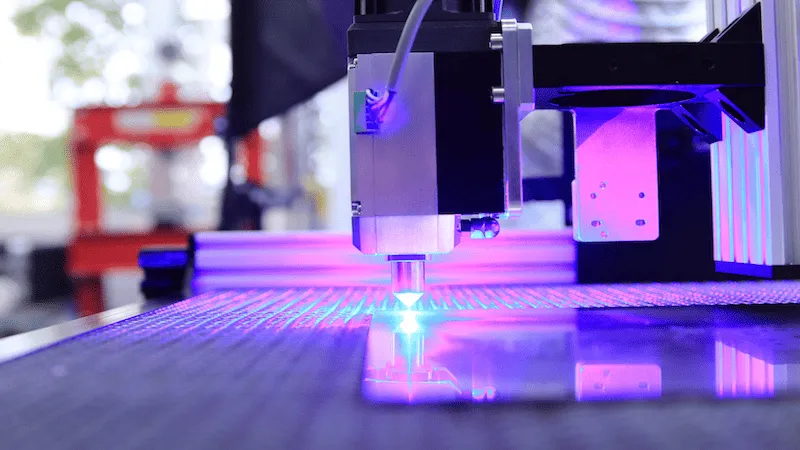
Glass laser cutting is a type of glass separation technique that employs powerful ultrafast lasers, which emit light in short pulses instead of a continuous wave laser, which emits light continuously. The laser is focused on the glass surface to create fractures in the glass without melting or physically cutting it. Fine and accurate results, including on thick or dense glass, can be achieved without heat damage. The laser energy is applied in short, controlled bursts, preventing deformation of the surrounding area.
This procedure is used for making highly complex shapes and detailed designs with minimal chances of chipping or cracking. This is due to the fact that the laser itself does not come in direct contact with the surface. Glass laser cutting is applied in the electronics, optics, and automotive industries to achieve high precision and quality edges. The optics are usually extremely difficult to cut with the use of traditional cutting tools.
How Laser Cutting Glass Works
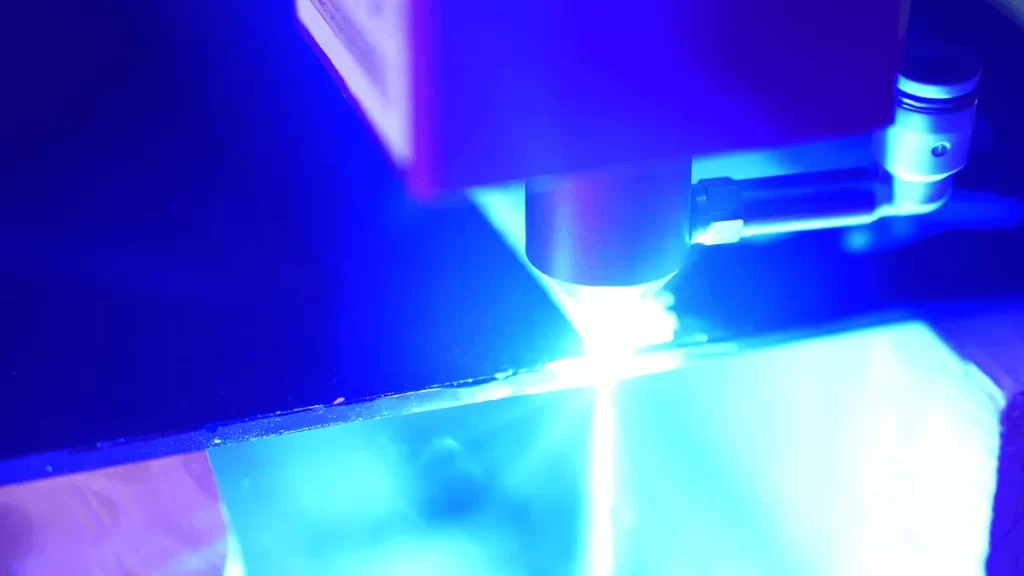
In the laser cutting process, a beam of light is focused on a specific area, heating it to the point of glass fracture. This process is delicate and requires precision due to the nature of glass itself, which is brittle and sensitive to heat. There are different types of lasers used for cutting glass. When it comes to picking the right option, we should know the characteristics of fiber vs CO2 lasers and other types.
What Kind of Laser Can Cut Through Glass?
Glass Cutting with a Beam of Laser
Glass is brittle and reflective, and therefore, not all lasers are able to cut glass. It can be effectively handled only by some types of lasers.
Cutting Glass with CO2 Lasers
Although CO2 lasers are mostly used for glass engraving, they tend to be ineffective for glass cutting. This is because glass does not allow CO2 laser beams to penetrate the material deeply. As CO2 lasers attempt to cut glass, they are bound to encounter thermal shock, cracking, or breaking of the glass.
CO2 lasers are ideal when it comes to etching or engraving designs on the glass surface. They allow the engraver to create a detailed design without penetrating the glass. This has made CO2 lasers used in a wide range of industries for decorative glass works or glass branding because it allows for the control of superficial marks and prevents fracturing the glass deeply.
Cutting Glass with Fiber Lasers
Fiber lasers are not designed for cutting glass. The 1.06 micrometer wavelength of light they produce is used for laser engraving, but not for glass cutting. The energy is ineffective to heat the material for cutting or shaping.
Fiber lasers are great for cutting metals, plastics, and composites since their wavelength works well with those materials, offering quick, clean, and precise cuts. However, fiber lasers cannot be used for full-depth cutting of glass since it is transparent to the laser beam.
UV Laser Cutter
Glass Laser Cutting Machine
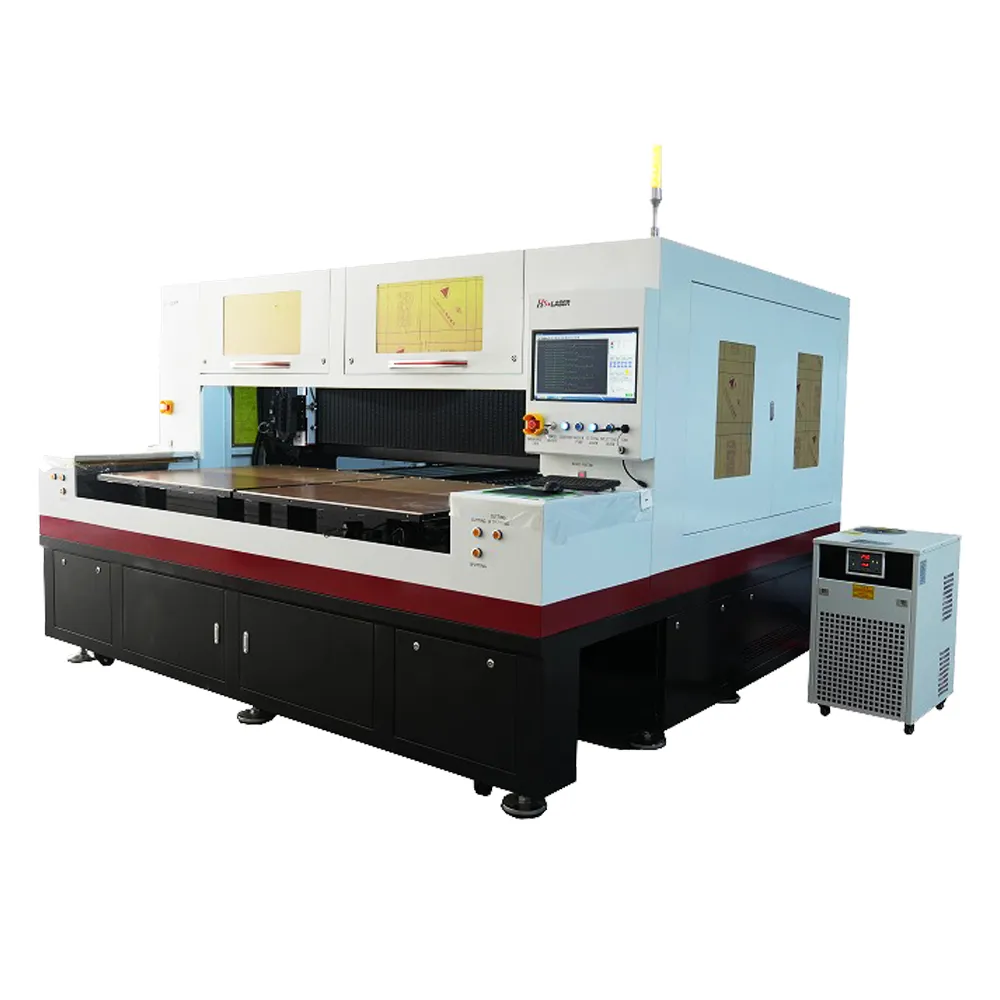
UV lasers are great for cutting glass. A UV laser does this by using ultraviolet light, which, unlike other lasers, works with glass on a molecular level. The beam laser cuts glass by using short and precise energy bursts, which heat and separate the glass cleanly without causing large temperature changes, which reduces the risk of cracking and smooths the edges.
UV lasers are great for cutting thin glass sheets and complex patterns with little to no damage to the glass. This is used for high-precision instruments like optical instruments, electronics, and other decorative glass components.
Glass Types Suitable For Laser Cutting
| Glass Type | Can It Be Laser Cut? | Notes / Applications |
| Soda-Lime (common window glass) | Yes | Thin to moderate thickness; use UV or ps/fs lasers depending on finish. Used for decorative panels, signage, and functional parts. |
| Borosilicate | Yes | Thermally stable and chemically resistant. Suitable for labware, kitchenware, and precision components; cut with ultrafast lasers or water-assisted methods. |
| Aluminosilicate (e.g., strengthened glasses) | Yes (with specific processes) | High strength and toughness. Used for smartphones and touchscreens. Requires ultrafast lasers and micro-perforation strategies for clean cuts. |
| Fused Silica / Quartz | Yes | High purity and thermal stability. Ideal for optical components, lenses, mirrors, and high-temperature applications; cut with UV or ultrafast lasers. |
| Tempered (heat-strengthened) Glass | No | Internal stresses cause shattering if cut after tempering. Standard practice: must be cut before tempering. |
| Coated or Stained Glass | Conditional | Coatings change absorption; process validation is required. Thin decorative panels may be cut successfully with proper settings. |
How to Laser Cut Glass
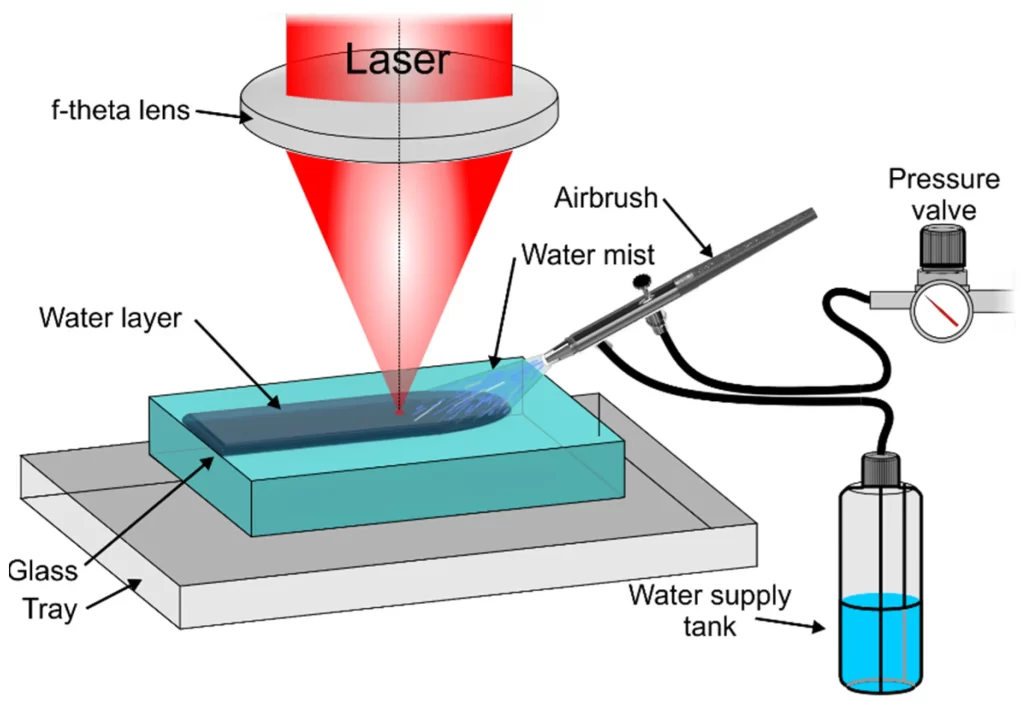
Laser Cutting Process of Glass
The laser cutting procedure for glass is mentioned step by step below:
Material Identification
The first step is to identify which device would be appropriate for the type of glass that needs to be cut. Apart from the thickness, is the glass tempered or coated? These aspects help to determine the laser settings that would achieve the best cut.
Pick Laser and Optics
Laser types are important in the glass cutting industry. Picosecond or femtosecond lasers are the best for cutting strong glass. For cutting thin sheets or simple decorative work, UV or green pulsed lasers work best.
Fixture and Support
The glass should be held down with consistent support, like a vacuum table or soft padding. The best fixture grips the glass enough for it not to move during cutting.
Auxiliary Media
Water film, immersion, cutting with gas flow, and similar techniques can be used to reduce the glass temperature during cutting. These methods focus on the thermal stress that micro-cracks can cause, along with the glass edges. It also assists in removing glass particles from the cutting zone.
Process Strategy
The process uses micro-perforation inside the glass to create a controlled weak line. You then apply mechanical force to separate the glass along that line with a clean cleave. Some projects need repeated surface ablation instead of cleaving when the design requires direct removal of the top layer.
Post-process inspection
Check for cracking or roughness on the edges of glass that might result from the cutting process. They can be detected by dye-penetrant techniques, but the glass can also undergo bending and edge strength assessments. This is to ensure that the acceptable quality and strength standards are met in the end product.
Try Prolean Now!
Benefits of Cutting Glass Using a Laser Cutter
Here are some benefits of cutting glass with a laser cutter.
High Precision
The accuracy offered by laser cutting glass is unparalleled. The ability of the glass to retain intricate designs ensures that the tolerances are very tight, something that other cutting tools are unable to do. The smooth edges are a guarantee as laser beams retain uniform density at all times, even on complex shapes or fine features.
Non-Contact Process
Laser is much more efficient for use because the glass is not touched, and it becomes very little scratched, chipped, or cracked. The glass surface is perfect due to no wear and tear to the tools used and less mechanical stress.
Speed and Efficiency
Laser cutting works at very high speeds, up to 30 meters in just one minute, but it depends on the type of laser. This makes it perfect for use in mass production while still being accurate. Also, because the process is automated, fewer man-hours are spent, and idle time is minimized.
Design Flexibility
Distinct and intricate shapes, detailed patterns, and inner holes can be produced at no additional cost for the tools. This is more economically efficient when compared to traditional cutting, especially in small-batch production.
Improved Product Quality
The heat-affected zones produced by ultrafast lasers are very minimal, resulting in very smooth and strong edges of the glass. This makes the glass very valuable in demanding electronic and optical fixtures. Corning Incorporated uses ultrafast lasers to improve smartphone glass, reduce waste by 20 percent, and increase productivity by 15 percent.
Laser Cut Glass Applications
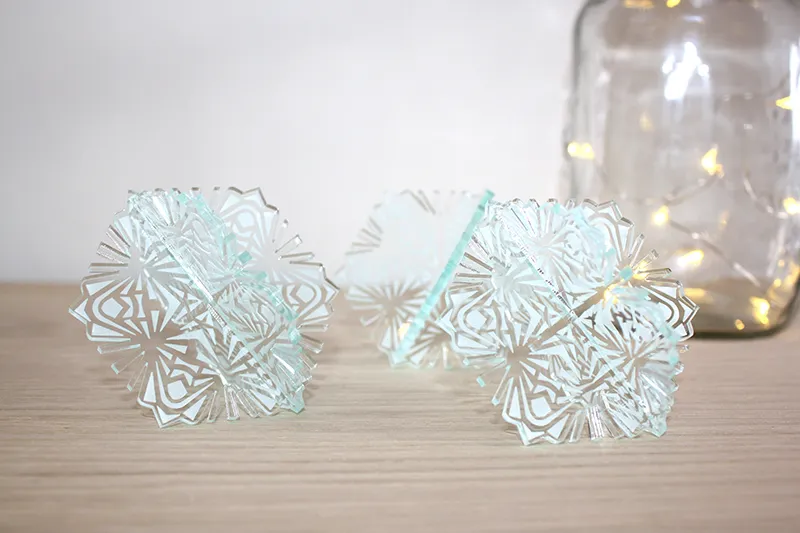
Laser Cut Glass Decoration Pieces
Laser-cut glass is used in many industries in our daily lives. A few are mentioned below.
Phone and Tablet Displays
The laser is used to cut the borders of the screen and protective cover, which ensures that all edges are defect-free and of premium quality. This results in high-quality protective displays for smartphones, tablets, and wearable devices.
Small Electronic Parts
In the manufacture of microchips, lasers are used because of the precision obtained in cutting. Lasers’ high precision in micro-cutting ensures the process avoids cracks or breakage.
Medical Equipment
The devices have high reliability and performance due to clean, precise edges and cuts. Laser-cut glass is used in laboratory, diagnostic, and optical instruments.
Light-Emitting Optical Devices
There are other components in optics, like prisms and lenses, that are produced using laser cutting. They still maintain high precision, ensuring that light gets transmitted and defects are minimized.
Laser Engraving and Etching
Besides cutting glass, it can also be engraved or etched with decorative designs using a laser. Just like acrylic laser cutting, this serves interior designers, creating these designs for awards or in custom glass products, blending artistry with functional accuracy.
What are the Limitations of Glass Laser Cutting
There are also some limitations, like high cost and material thickness, when we are cutting glass with a laser cutter.
High Costs
The operating expenses and purchase of ultrafast laser systems are very high, making the glass laser-cut project more of a challenge.
Cutting Thick Glass
Thick glass laser cutting takes time, even though it’s faster than water jets or saws. Saws/waterjets may not always be faster for thick glass; it depends on glass type & thickness.
Issues with Tempered Glass
Glass that has been tempered is difficult to cut because it’s prone to shattering, especially during the laser cutting process. The only option is to temper or anneal the glass beforehand.
Try Prolean Now!
Things to Consider When Laser Cutting Glass
Glass types to be used, their thickness, and the size of the working area are a few factors that should be considered carefully.
Glass Type and Composition
Various types of glass react differently to different laser energies. Glass that is tempered, for instance, is more difficult to cut due to its pre-stressed structure. It is more prone to shattering due to a local heat source.
Material Thickness
More powerful lasers are required to cut through thick glass, or more passes of laser cutting are required. This is why glass should be assessed for thickness before using it in order to avoid using a weak laser.
Power Output and Precision
A laser cutter that is powerful enough to work on the cutting model should be used since it will be able to cut through the glass much faster and can cut through thick and complex shapes. Every cut in intricate design is smooth, irrespective of the glass used.
Working Area Size
Confirm that the machine’s work area can accommodate the size of the projects that will be constructed. More complex glass sheets will be easier to work with, the more space that is given. It also provides more flexibility for intricate patterns to be created.
Cooling Systems and Ventilation
Glass cutting machines should incorporate appropriate cooling and ventilation systems to control and eliminate heat, fumes, and debris. For safety, cutting quality, and glass condition should be sustained, along with protection for the operator.
Safety Features
Laser machines should be equipped with safety equipment such as air assist, exhaust systems, and an emergency stop. These features help prevent accidents and ensure safe operation during the laser cutting process.
Cost Considerations
Laser cutting equipment can be quite costly, ranging from 50,000 to 200,000 dollars. Although the machine may be costly to obtain, the investment can be justified with the higher efficiency, less material wasted, and an overall reduction in improved product quality.
What to Expect Next in Laser-Cut Glass
There are many more to come in the future trends of glass laser cutting technology. Some are discussed below:
Advanced Laser Technology
More powerful, faster, and more efficient lasers will be an advantage for future glass cutting with lasers. Designed for an increase in cutting speed and precision, technology advancements will create more intricate patterns and expedite production cycles.
Automation and AI Integration
The need for manual monitoring will decrease as laser systems and AI technology advance. Efficiency will increase, and consistent quality will be maintained for high-volume production.
Customization and Design Flexibility
More intricate and personalized designs can be produced with laser-cut glass with precision. Without the need to change tools, detailed patterns can be created with ease.
Waste Reduction and Sustainability
Laser cutting, in comparison to other methods, produces less waste and uses energy more efficiently. This balances with the rising trend in green manufacturing and more sustainable production.
Broader Industry Uses
The importance of glass laser cutting will continue to rise for the electronics, medical equipment, construction, and automobile industries. Progress in technology and innovation will create further opportunities for design, accuracy, and added features in contemporary manufacturing.
Final Statement
Laser cutting technology,with glass as one popular laser cutting material, is used for manufacturing high-quality glass products and accessories. It can produce intricate designs with smooth edges while cutting down on material waste. It is used in many different fields, industries, and sectors like electronics, optics, decor, and architecture.
Prolean Tech supports your glass laser cutting projects with reliable planning and precise execution. You receive clear timelines, controlled material use, and stable accuracy across all custom designs. The team manages large batches, fragile parts, and complex shapes with consistent performance.
Contact us now to get a quote for your next successful laser-cut glass project.
0 Comments