
Often, people think that Metal Stamping and Forming are the same fabrication methods. But the fact is that “forming” refers to a broader fabrication process that shapes the sheet metals with bedding, stretching, deep-drawing, or other operations. Meanwhile, metal stamping services are specialized types of metal forming.
Understanding their mechanism, key differences, benefits, and limitations can be helpful for you to decide the right method for your project. So, this article will provide a comparative overview of metal stamping and forming in detail.
Let’s Get Started.
What is meant by Metal Forming?
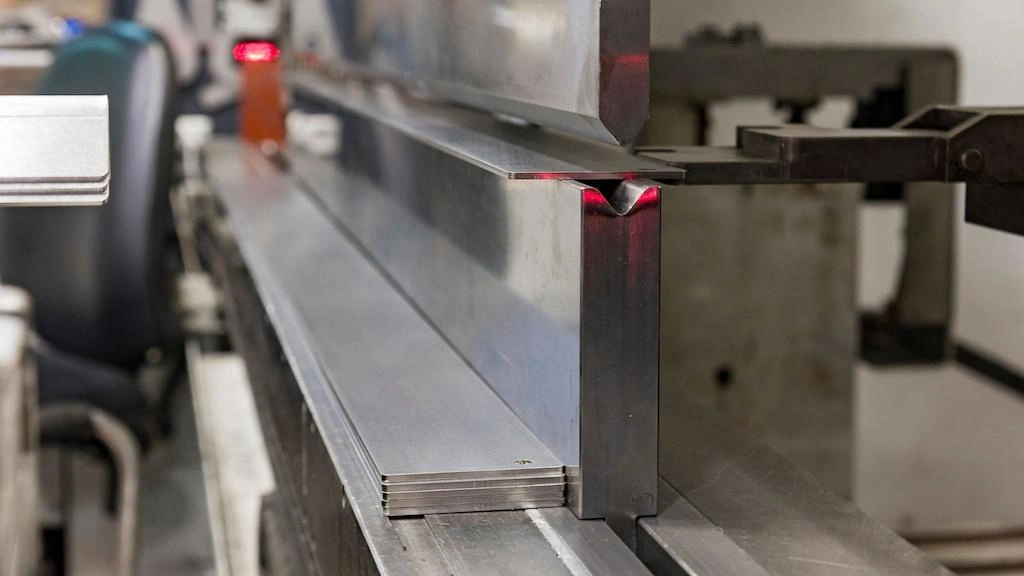
sheet metal forming
Sheet metal forming is a sheet metal fabrication process that shapes the metal sheets according to your design. It involves simple cutting and bending to advanced die-press operations with multiple tooling. For example, cutting, bending, punching, hot rolling, embossing, extrusion, stretching, and coining.
If you are making simple parts, one or two sheet metal press forming operations would be enough. But you might need several operations in sequence for complex items. Additionally, a wide variety of metals and alloys are compatible with the forming process.
Metal press forming can produce automotive parts, lightweight aircraft components, electronics parts, HVAC ducts, medical housing, and agricultural machinery parts.
What is meant by Metal Stamping?
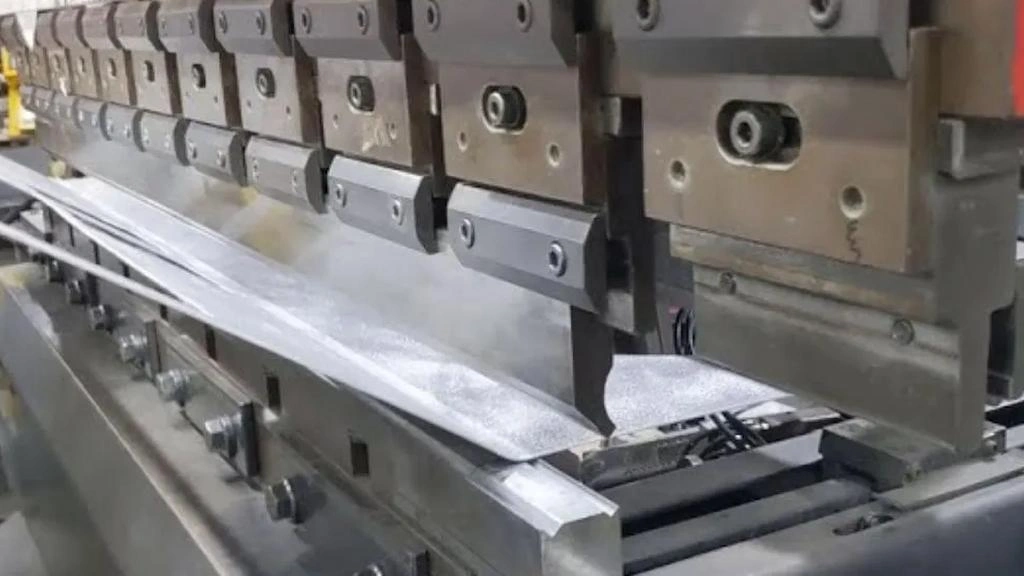
Metal stamping
Metal stamping is a specialized metal forming process that uses dies and press setups to form flat metal sheets into complex shapes. Progressive die stamping is popular for this, where the sheet is fed continuously, and multiple operations are carried out in a sequential die-pressing setup. Additionally, other techniques like die transfer stamping and deep draw stamping are also applicable.
What makes stamping different from metal forming is its application preference and limitations in sheet metal operations, like rolling. You can consider this as a “high-speed subset of forming” that focuses on high-volume production using dies and presses.
The sheet metal stamping process is suitable for large-volume production of complex parts with excellent precision. You can make parts like custom brackets, sheet metal enclosures, and home appliance components.
Try Prolean Now!
Metal Stamping Vs Forming: Key Differences
There are several differences between stamping and forming, including their process complexity, material options, precision capability, and cost. Let’s further elaborate on stamping Vs forming.
Process Complexity
The metal forming process is more complex than stamping, as it involves a range of operations. On the other hand, stamping is a more streamlined method, optimized for higher speed and efficiency. Once the die and tooling are set, most of the process involves automation.
Material Diversity
Metal parts stamping and forming are both compatible with several metals and alloys, but forming can shape thicker sheets than stamping.
Parts Complexity
Stamping outperforms forming when it comes to the fabrication of complex parts with multiple intricate features. On the other hand, forming is still ideal if the design has curvatures and cylindrical geometry.
Precision & Accuracy
Due to high-speed presses, in-line operations, and low material flow in stamping, it more precise fabrication technique than regular forming. Subsequently, stamping offers more tight tolerances, 0.0125 mm, or even lower.
Production Cost
The costing difference between metal press forming and stamping depends on the production volume. Metal stamping costs for large volumes provide lower prices as die & tooling cost spreads over numerous batches. On the other hand, forming costs less for prototypes and small volumes.
Which Factors Affect the Metal Stamping Cost?
The cost of metal stamping is mainly influenced by four factors: material type & thickness, tooling, part complexity, and production volume. Material with low formability and higher sheet thickness increases the cost.
The complex part, designed with intricate features like deep-drawn, small holes, and multiple bends, also makes the process more costly. The reason is that it demands complex tooling. Production volume is another critical factor. High-volume productions are more cost-effective because a significant investment in tooling spreads over a large number of parts.
If you want to know how much your stamping parts will cost, upload the parts design and get a quote with a detailed breakdown of the cost structure.
When to Choose Metal Stamping Over the Forming Process?
Choosing the right method between metal stamping and forming depends on your part’s specifications, required volumes, lead time, and other factors. It is all about achieving high quality with short lead times at competitive pricing.
The following are the five scenarios where you can use stamping over metal forming:.
- If you need parts in medium to high volumes, while maintaining excellent repeatability.
- Choose stamping for tight tolerances, especially if tolerance matters to the part’s functionality and performance, such as electrical connectors.
- Stamping is better than forming when it comes to handling thinner parts.
- Choose stamping if you need high automation for speedy production.
- Stamping is preferable if you need strain-hardening benefits.
If you are still unsure, you can consult with industry experts like ProleanTech to know which sheet metal fabrication approach is most suitable for your project.
Applications of Metal Forming and Stamping
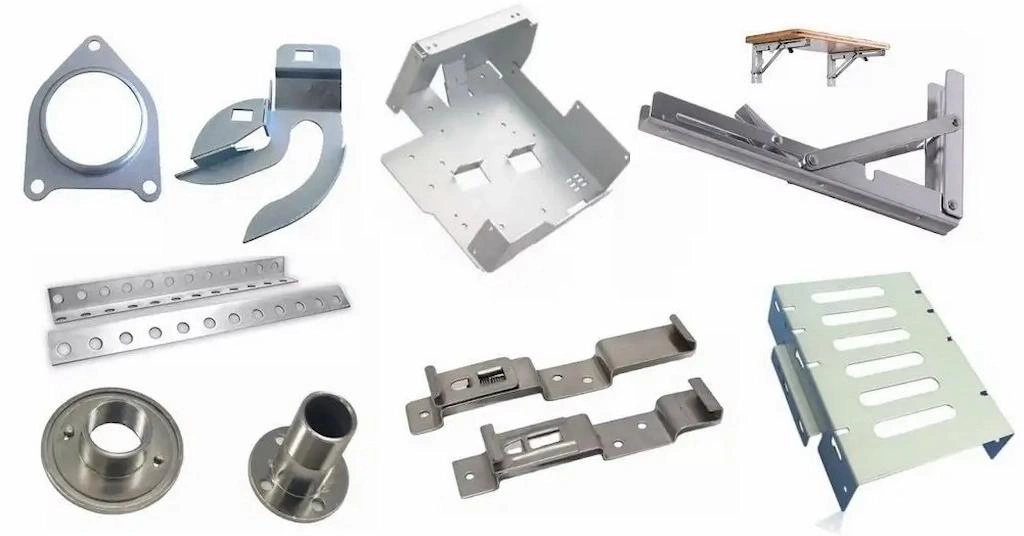
Metal stamping parts
Both stamping and metal forming are used across industries, including heavy machinery, electronics, medical, aerospace, and automotive. Stamping is specialized for the mass-production of flat & complex parts with consistent quality, whereas forming has extensive uses and flexibility in production volume.
Automotive
Forming is preferred for large-sized components, including structural panels, chassis rails, and deep-drawn fuel tanks. On the other hand, the automotive metal stamping process produces door skins, brackets, clips, heat shields, and precision electrical terminals.
Aerospace
Aerospace metal forming & bending has extensive uses in the making of aircraft, rockets, and drone components. E.g., structural skins, hydroformed ducts, and other large drawn components. Meanwhile, stamping is ideal for precision brackets, clips, housings, and missile parts.
Electronics
Forming makes enclosures, custom housings, and structural supports, whereas stamping is used for battery tabs, PCB contacts, small connectors, and shielding components.
Home Appliances
Metal forming produces deep-drawn sinks, heat-exchanger housings, ductwork, and large panels. On the other hand, mounting brackets, switch plates, and motor mounts.
Medical
Metal forming can be used to make surgical trays, equipment enclosures, and medical furniture. On the other hand, stampping is preferred for surgical instrument parts, oxygen tank components, and medical staplers.
If you are further interested in the uses of stamping, read the article “ Automotive Metal Stamping” here.
Mistakes to Avoid in Metal Stamping and Forming
Inaccurate die and tooling, pressing force, and feeding misalignment can cause stamping forming issues. Therefore, you must consider the following factors to avoid the metal stamping defects.
- Incompatible Material and Thickness: Choose the right type of material and thickness. Otherwise, it might cause cracks, wear, and a high springback effect.
- Tool Alignment: Misaligned punches and dies in press strokes result in off-center parts, uneven deformation, and even part failure.
- Issues in Die Design: Avoid incorrect die clearance, worn edges, finish, or misalignment.
- Lubrication: Use appropriate lubrication to reduce friction and tool wear.
- Material Flow & Hold Back Pressure: A precise control of material flow or blank holder is essential to avoid wrinkles and material tears.
Try Prolean Now!
Summing Up
In conclusion, “All stamping is a metal forming process, but not all forming processes are metal stamping”. Forming is a broader process with more operations and application preferences. However, stamping is preferred when you need flat & complex parts in large volumes.
If you are looking for a partner to outsource metal stamping parts based on your design, ProleanTech is an ideal option for you. We have advanced CNC stamping capabilities and more than a decade of experience in metal fabrication.
Our services offer extensive solutions across the industry with high precision, competitive pricing, quick lead times, and customization flexibility. Do you have any further queries? Contact us right now.
FAQs
What is stamping in metal forming?
Stamping is a process of shaping a metal sheet using presses and dies. It involves operations like punching, bending, and shear cutting.
What is the difference between stamping and press forming?
Stamping is a subset of press forming that involves fewer operations than forming, whereas forming is flexible and has extensive uses.
What is roll forming and stamping of metal?
Roll forming is a continuous process that shapes metal into long and uniform profiles by feeding sheets through a series of rollers. In contrast, stamping involves a press and a die to create the designed part.
0 Comments