
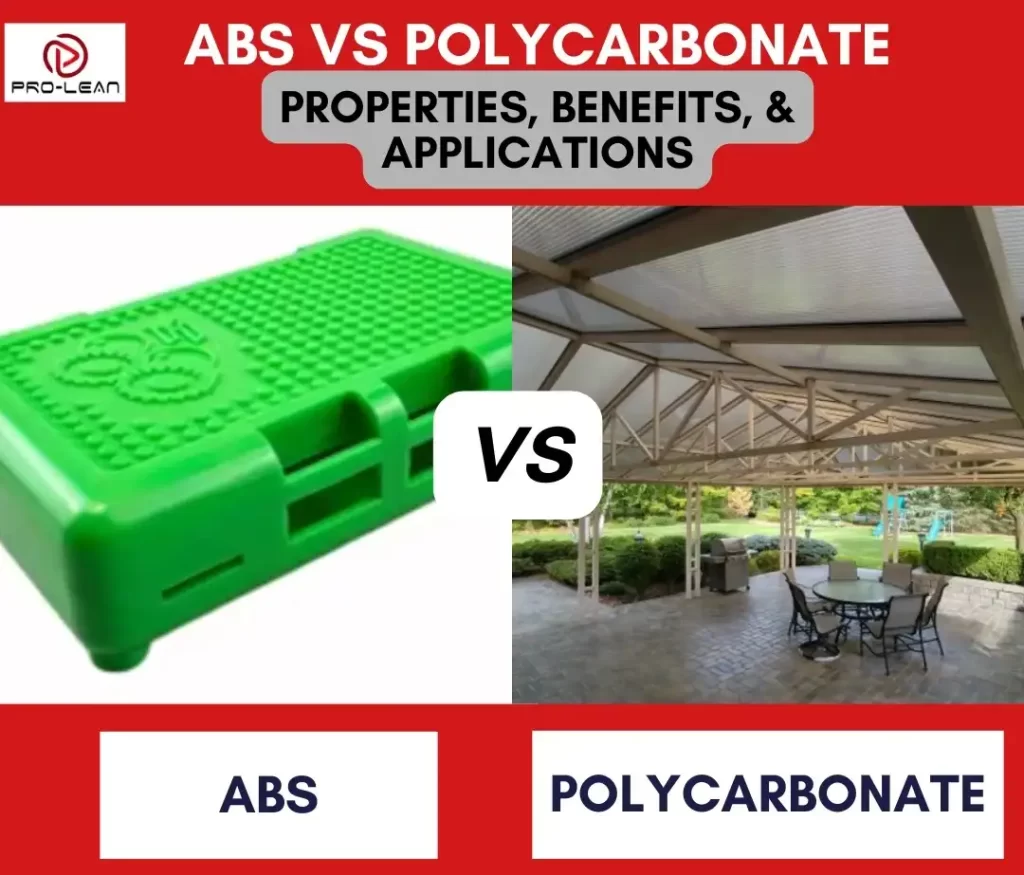
ABS vs polycarbonate
ABS (Acrylonitrile Butadiene Styrene) and polycarbonate (PC) are both critical engineering plastics, but they differ in properties, benefits, and applications. Polycarbonate has a higher impact resistance and weather resistance when UV-stabilized.. It is also naturally transparent. ABS is opaque and recyclable, and suits budget-friendly projects.
Processing and part manufacturing approaches for the two plastics are also different. While ABS plastic is made through mass polymerization and emulsion, PC plastic is produced through interfacial polymerization. For details about ABS machining service and more, continue reading this guide, which will provide a clear distinction between ABS and polycarbonate thermoplastic polymers.
What is ABS Plastic?
ABS plastic is an acronym for a complex name, Acrylonitrile Butadiene Styrene. This name is derived from the three monomers, namely acrylonitrile, butadiene, and styrene, which combine to produce a remarkable material.
Each of these monomers has a unique contribution to ABS plastic. Acrylonitrile provides strength and chemical resistance, butadiene adds impact resistance and flexibility, while styrene enhances manufacturability and aesthetics.
What Material is ABS?
ABS is a thermoplastic polymer, so it becomes plastic when heated and hardens on cooling. It is a unique plastic because it can be molded at high temperatures and solidified at lower temperatures while maintaining its integrity.
The capability to be molded and shaped is so good that the plastic can be made into virtually any part. This property has seen the material extensively used in prototyping.
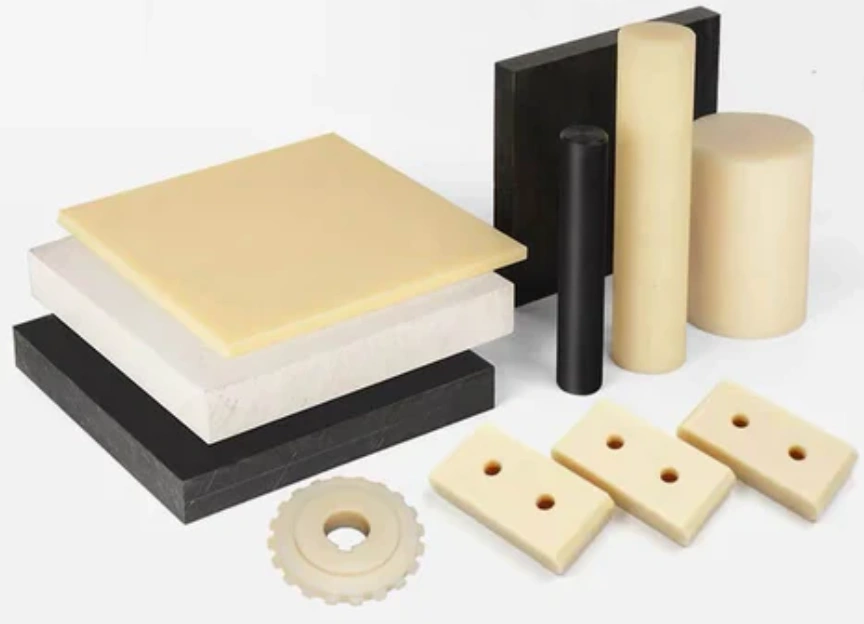
ABS parts
Is ABS a Strong Plastic?
Yes, ABS is a strong plastic with a tensile strength ranging from 45 MPa to 60 MPa. That makes it a structural plastic. It can be used to manufacture brackets, gears, and load-bearing components.
You can comfortably use ABS plastic in parts for automotive, medical, electronics, and toys.
How ABS Plastic is Made
Manufacturing ABS plastic entails bonding the three monomers to form a uniform thermoplastic. The two most popular processes for this are mass polymerization and emulsion. Mass polymerization has fewer steps, but it cannot match the detailed results of emulsion in terms of material properties and particle size.
Processing ABS for Parts
ABS material is commonly processed using the following methods;
- ABS CNC Machining
- ABS 3D Printing
- ABS Injection Molding
ABS CNC Machining
CNC machining is a popular processing method for ABS and other plastics. Computer programs control the machines that shape the thermoplastic. Commonly used machines include CNC lathe, CNC drill, CNC mill, and CNC router.
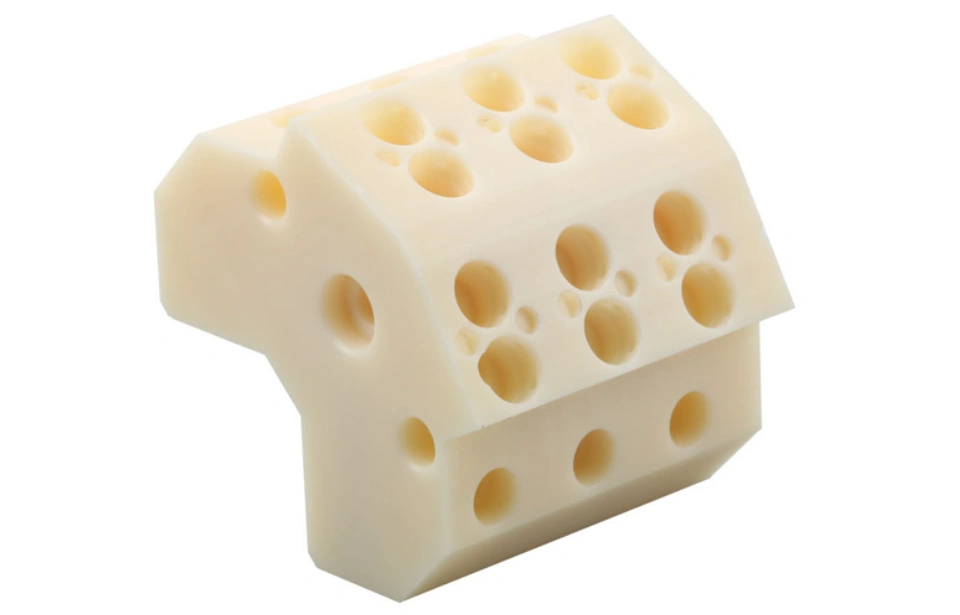
A CNC-machined ABS part
Advantages of ABS CNC Machining
- High durability of parts
- Highly accurate process
- Faster – prototype and mass production
- Superior surface finish
- Complex parts
- Cost-effective
Limitations of ABS CNC Machining
- Tends to waste relatively more material
- High initial cost of equipment
ABS 3D Printing
3D printing is another processing approach for ABS material. Indeed, the material is very effective in 3D printing due to its strength and moldability. FDM and FFM printers dominate the market. Filamentous ABS is first heated to melt it. It is then deposited on the printing platform to produce the 3D part. The process is meticulously done, with the material deposited layer by layer.
Advantages of ABS 3D Printing
- Superior mechanical properties
- Cost-effective
- Smoother surface finish
Limitations of ABS 3D Printing
- Advanced machinery required
- Possibility of curling and cracking
- Warping proneness
- Bad odor
ABS Injection Molding
ABS injection molding entails placing ABS resin pellets in a hopper. The pellets are then melted by pressure. The injection of the melted pellets into the mold follows. The cooled and solidified part is then ejected from the mold.
Advantages of ABS Injection Molding
- Less waste
- Larger components
- Lower labor cost – automation is possible
- Multi-featured parts
Limitations of ABS Injection Molding
- Danger of material igniting/burning
- Expensive tooling
- High initial investment
Benefits of ABS Plastic
ABS delivers the following benefits;
- Ease of machining
- Impact resistance
- Dimensional stability
- Quality surface finish
A balance of these qualities is why many manufacturers specify this material for parts in the automotive, consumer goods, and electronics industries, among others.
Limitations of ABS
While specifying this material for parts, consider the following limitations.
- UV instability
- Heat resistance up to only 80°C
- Reaction to some chemicals and solvents
These limitations make ABS plastic unsuitable for outdoor applications and chemical environments.
Is ABS Material Safe?
ABS material is generally considered for food-grade items. It has FDA approval for consumer products. However, it should be correctly formulated, meaning that there are no harmful additives or colorants that could contaminate the food.
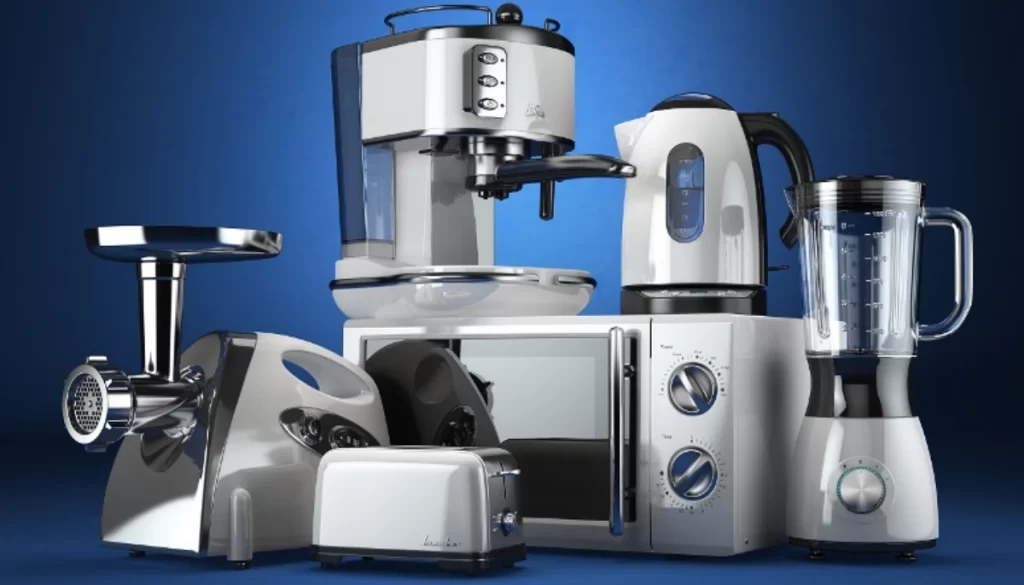
Food-grade ABS equipment
However, styrene emissions are a concern in the manufacturing stage. Effective ventilation can minimize this problem and related respiratory diseases.
What is ABS Plastic Used For?
ABS plastic is used in a wide range of industries, including automotive, electronics, household appliances, and plumbing systems. It combines manufacturability, cost-effectiveness, and impact resistance.
These are examples of applications that require durable and reliable parts at an affordable cost.
Automotive Parts
The weather resistance and impact resistance of ABS plastic are instrumental in cars. Parts made with the material include interiors, bumper bars, and door panels.
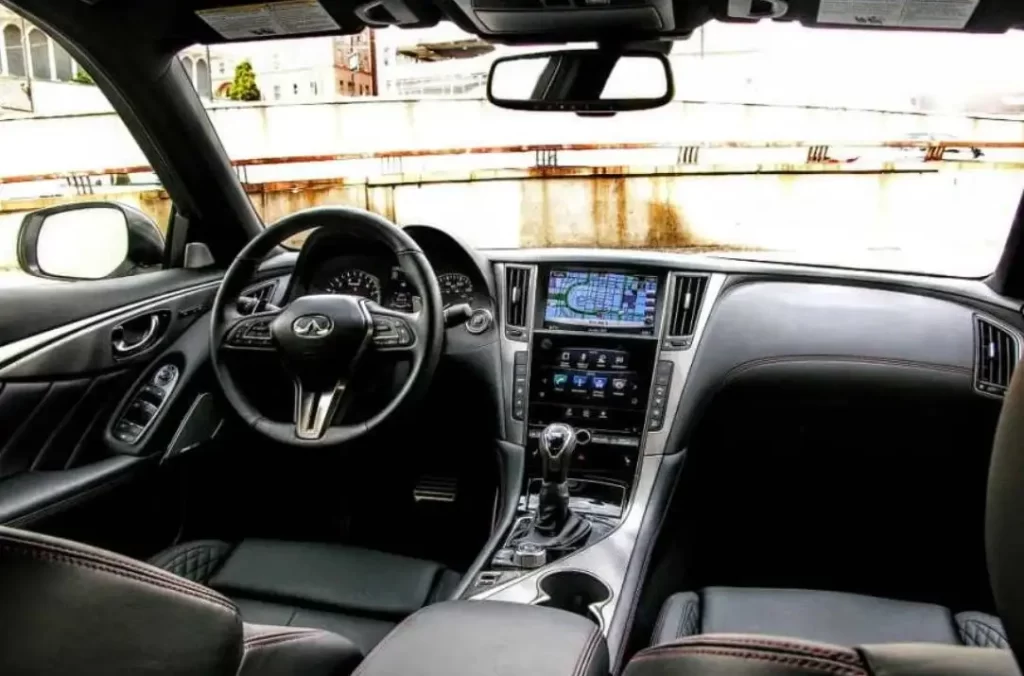
ABS in a car interior
Electronics
Printers, computer monitors, and computer keyboards are made using this durable and strong plastic.
Household Appliances
A major reason ABS sheet plastic is ideal for household appliances is its high durability. Examples of these are utensils, toasters, and vacuum cleaners.
Plumbing Systems
Builders and plumbers often prefer to use ABS material due to its combination of low weight, durability, temperature resistance, and strength. Typically, these pipes are black in color to absorb and retain heat.
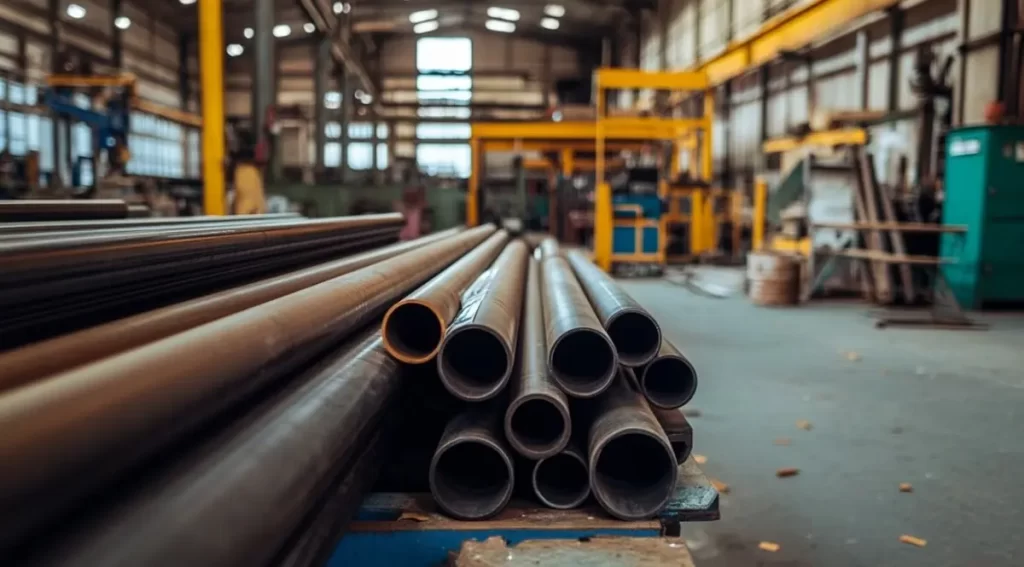
ABS plastic pipes
Try Prolean Now!
What is Polycarbonate?
Polycarbonate is a thermoplastic polymer renowned for its unmatched impact strength. It also has excellent optical clarity. This plastic dates back to the 1950s, and its commercialization is attributed to Bayer and General Electric.
Polycarbonate is in applications requiring a blend of toughness and optical clarity. For instance, it is being used in bulletproof glasses, where light transmission and impact resistance are priorities.
PC Material Properties
Polycarbonate mechanical properties, physical properties, and chemical properties are engineered to deliver dimensional stability, toughness, durability, and transparency. The low moisture absorption and superior electrical insulation further evidence the premium status of this thermoplastic.
How Polycarbonate is Made
The most popular manufacturing method for polycarbonate is called interfacial polymerization, which is basically the reaction of phosgene and bisphenol A (BPA). The steps include mixing the components, polymerization, extrusion, cooling and cutting, and quality control of critical properties of polycarbonate material.
The steps details are given as:
- Mixing the Components
The components – BPA, phosgene, and sodium hydroxide – are mixed
- Polymerization
The mixture prompts a chemical reaction. Long polycarbonate polymer chains are formed.
- Extrusion
The extrusion production technique is used to form pellets, profiles, or sheets of plastic.
- Cooling and Cutting
After rapid cooling, the product is cut to the desired dimensions and shapes.
- Quality Control
The finished product is checked for critical properties, including dimensional accuracy, thickness, and impact resistance.
Processing Methods for Polycarbonate Parts
Polycarbonate is commonly processed through CNC machining, extrusion, injection molding, and thermoforming. The choice of any of these processes depends on factors such as part geometry and the number of parts.
CNC Machining
PC machining is an effective manufacturing method for precise, complex PC parts. It is suitable for both custom prototypes and high-volume production, offering excellent accuracy and repeatable results. Tolerances of ±0.025mm are achievable with advanced machinery, sharp cutting tools, effective cooling, and moderate cutting speeds.
Extrusion
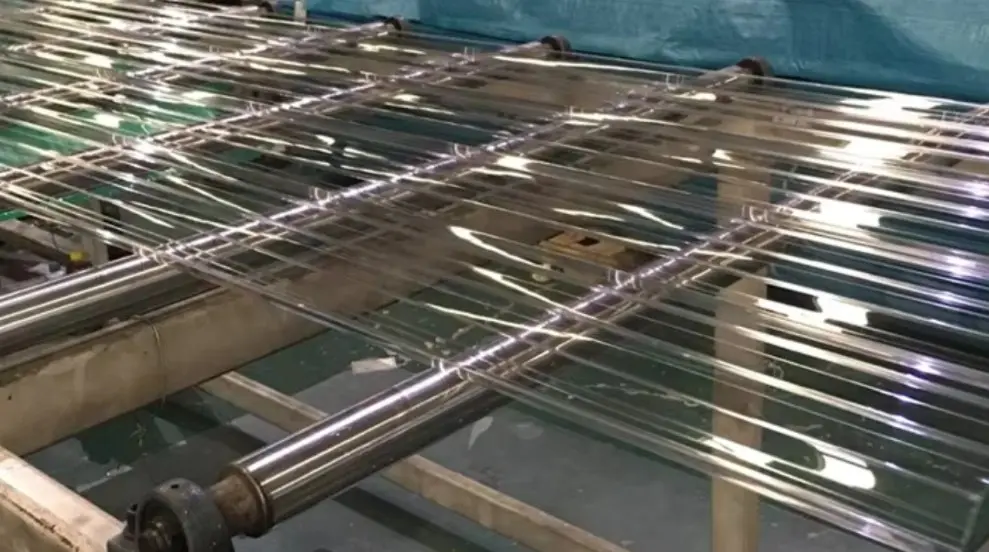
Polycarbonate sheet extrusion
Extrusion is a popular method for producing PC sheets, rods, and tubes. It is used for common parts such as glazing sheets, cable insulation, and light guides. Anything with a continuous profile made of PC can be manufactured this way.
Injection Molding
This process entails injecting melted polycarbonate pellets into a mold using high pressure and temperature. This allows the amorphous thermoplastic to be molded into virtually any shape. The primary injection molding techniques employed are water-assisted injection molding, rapid heating & cooling (RH&C), overmolding/insert molding, and compression molding.
Thermoforming
Thermoforming entails changing the shape and structure of a PC sheet. The sheet is first heated, then pressed into a mold. Heating is typically done below the melting temperature.

Thermoformed polycarbonate
Advantages of Polycarbonate
Polycarbonate parts are valued for the following reasons;
- Optical clarity
- Can be sterilized
- Lightweight
- High-dimensional stability
- Incredible impact resistance
- Heat tolerant
Limitations of Polycarbonate
The primary limitations of this plastic include;
- Prone to UV degradation if exposed for long
- Scratching
- Relatively higher cost
- Chemical (alkaline and solvent) vulnerability
Applications of Polycarbonate
Polycarbonate parts applications are in the automotive sector, the electronic devices industry, bulletproof glasses, greenhouses, and in industrial machine guards sector. Details are given as:;
Automotive – Battery enclosures (EV), center console, gear shift
Electronic Devices – Enclosures, insulators, light covers, connectors
Bulletproof Glasses – Gas stations, pharmacies, banks, schools, police stations, embassies, military bases
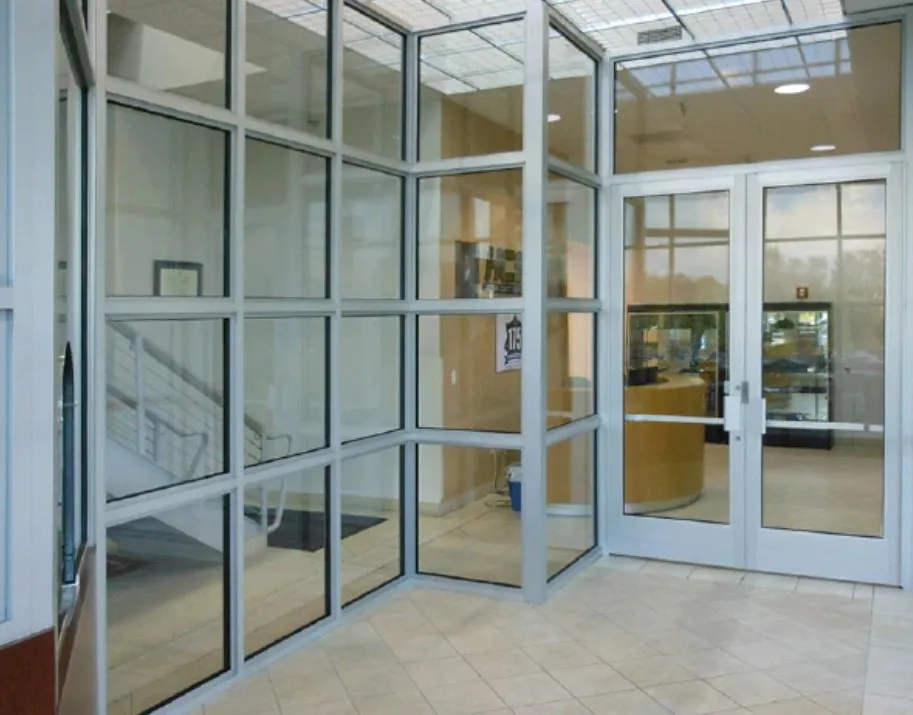
PC bulletproof glass
Greenhouses – Light transmission and durability
Industrial Machine Guards – clear and impact-resistant. Meets OSHA standards.
These and other applications require characteristics such as impact resistance, dimensional stability, optical clarity, and heat resistance.
Try Prolean Now!
Comparing ABS vs Polycarbonate
Let us now compare ABS vs polycarbonate in terms of properties, cost, and applications.
ABS and Polycarbonate Mechanical Properties
|
Property |
ABS |
PC |
|
Tensile strength (MPa) |
31-50 |
58.6-154 |
|
Impact strength (Izod) (kJ/m²) |
10-25 |
60-80 |
|
Hardness (Rockwell) |
abs hardness: 68-118 |
PC hardness: 72-126 |
|
Elongation at Break |
3-30% |
80-150% |
|
Young’s Modulus – Rigidity (GPa) |
2.15 |
2.37 |
|
Flexural Modulus (GPa) |
2.0-2.8 |
2.0-2.4 |
ABS vs. Polycarbonate: Physical Properties
|
Property |
ABS |
PC |
|
Density |
density of ABS plastic: 1.05-1.18 |
density of PC plastic:1.18-1.22 |
|
Water Absorption (%)- 24 hrs |
0.3 |
0.15 |
|
Vicat Softening Temp (℃) |
100 |
136 |
|
Continuous Service Temperature |
80°C |
116°C |
|
Heat Deflection Temperature (℃) – 1.8MPa |
93 |
131 |
|
Shrink rate (%) |
0.4-0.9 |
0.5-0.7 |
|
Melting index(g/10 min) |
10-40 |
5-30 |
ABS vs Polycarbonate: UV Resistance
UV rays can break the chemical bond of plastics, so neither ABS nor PC is 100% safe. However, PC generally exhibits more UV resistance. That said, manufacturers often coat ABS with a UV-resistant layer to optimize durability.
ABS vs Polycarbonate: Chemical Resistance
The chemical resistance of PC is better than that of ABS. ABS may be sensitive to some acids, solvents, and oils. Because of its better performance in this aspect, PC is commonly used in industrial settings.
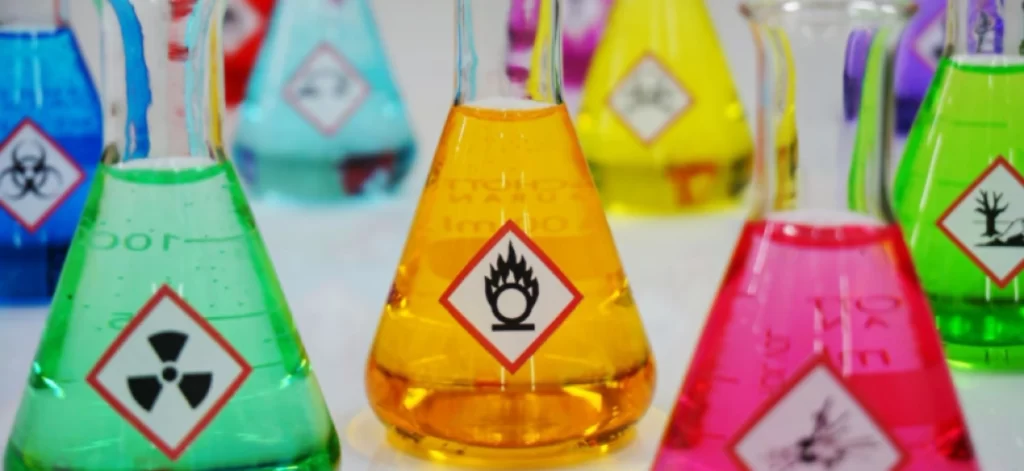
Polycarbonate chemical resistance
ABS vs Polycarbonate: Applications
Both plastics overlap in many applications, but there are scenarios where either of them is ideal.
Here are some examples;
|
Application Scenario |
Best Option |
|
Indoor electrical or electronic component |
ABS plastic |
|
Parts exposed to UV, chemicals, heat |
Polycarbonate plastic |
|
Budget, low-impact components |
ABS plastic |
|
Safety and durability |
Polycarbonate plastic |
|
Industrial and outdoors |
Polycarbonate plastic |
ABS vs Polycarbonate: Sustainability
Both ABS and PC materials are sustainable, but the suitability of this property depends on the application. For instance, polycarbonate offers more heat resistance. It is less flammable. However, when you consider the recycling aspect, the high complexity of recycling PC is an issue. The material also consumes more energy to manufacture.
On the contrary, ABS is easy to manufacture and recycle. Therefore, its sustainability element is stronger that of PC, despite lasting as long.
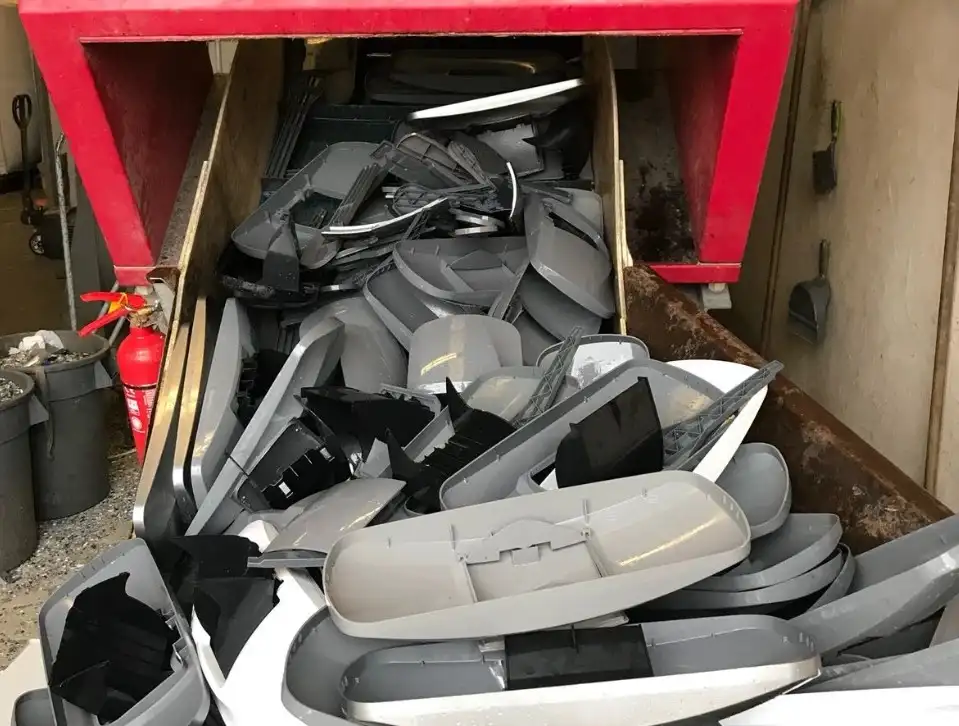
ABS plastic recycling
ABS vs Polycarbonate: Cost
While both plastics are relatively cost-effective, ABS is about half the price of polycarbonate. Sometimes, the two materials are mixed to gain a balance of properties at a lower cost.
Suggested Reading:
Conclusion
When comparing ABS vs polycarbonate, the distinct benefits of each come into focus. Depending on your application, the elements to critically analyze include strength, temperature resistance, chemical resistance, machinability, and cost.
ABS plastic is more cost-effective and offers more color variations. However, it lacks polycarbonate’s clarity, heat resistance, and strength. ProleanTech experts are ready to help you in this selection process and proceed to deliver quality parts.
Contact us today for details regarding ABS and polycarbonate machining services.

0 Comments