
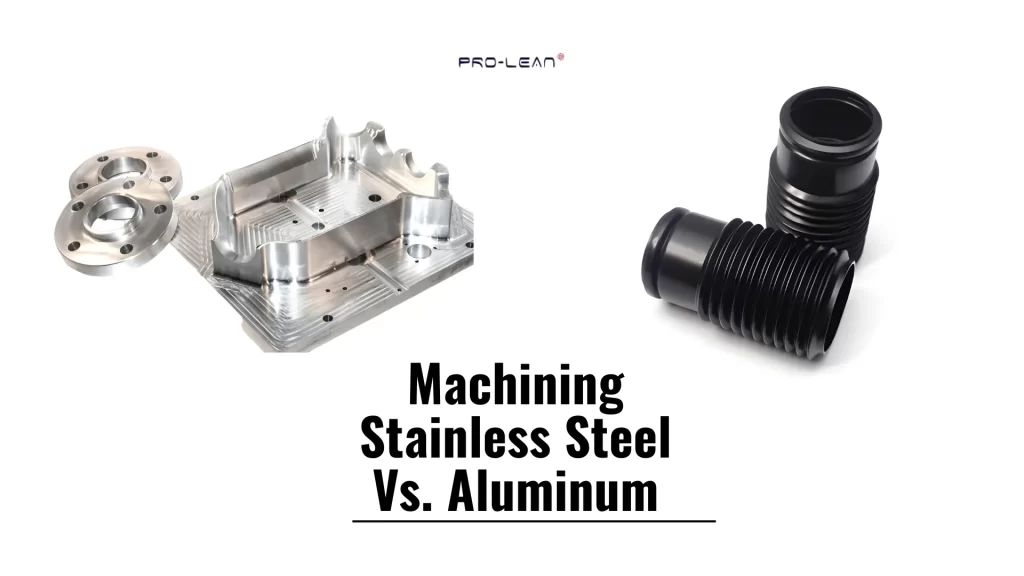
Stainless steel vs aluminum machining
Choosing between stainless steel vs aluminum is not simple when producing precision parts. Both materials are widely used and perform well, but they behave differently when the tool contacts the surface.
Aluminum cuts easily, enabling fast cycle times. But it can deform if the fixturing and feeds are not optimized. On the other hand, stainless steel machines more slowly. This increases tool wear and requires meticulous process control. Therefore, the same CNC setup typically does not perform well on both materials without adjustments.
At Prolean Tech, we machine aluminum vs stainless steel every day for functional, tolerance-critical parts. Our machinists adjust tooling, speeds, coolant flow, and implement in-process quality checks. This keeps dimensions stable and impedes costly surprises during production. Contact us today for your custom metal machining needs.
In this article, we will examine critical aspects of machining stainless steel vs aluminum, focusing on cutting behavior, tool stress, surface finish, tolerance control, and cost. So, keep on reading.
Why Aluminum Is Popular for CNC Machining
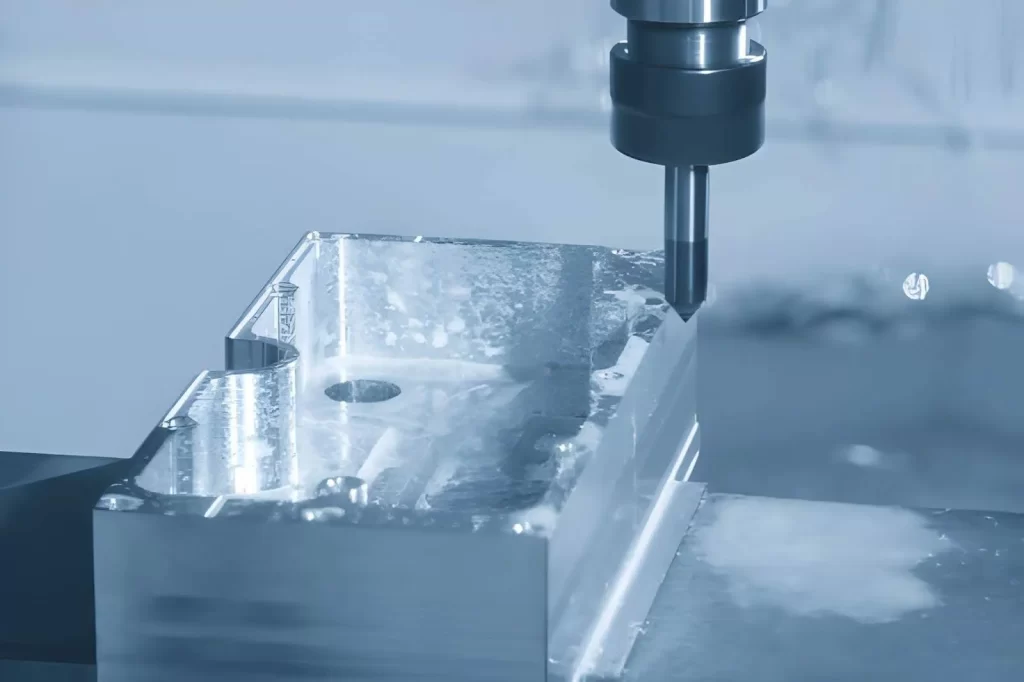
CNC milling aluminum part
Aluminum is a flexible, lightweight, silvery, lustrous metal. It is one of the most easily machined structural metals. It can cut, shape, and drill with standard tools. Therefore, machining aluminum is a go-to choice for the manufacture of tiny, precise components.
Moreover, aluminum is readily available in various forms like many CNC machining materials; for example,
- Sheet stock
- Plate stock
- Rod stock
- Bar stock
- Tubing stock
- Extruded stock
Aluminum precision machining supports a wide range of alloy options. For example, 6061 aluminum has good strength and versatility. It is used extensively in aerospace and automotive components. 7075 aluminum is a high-strength aluminum alloy used for structural components. Besides this, alloys such as 5052 or 2024 provide enhanced corrosion resistance or reduced weights.
Typical machined aluminum components include housing components, brackets, enclosures, heat sinks, and mechanical components. As aluminum is relatively light, it is the preferred choice for applications where weight is crucial, such as drones, airplanes, and electronic components. Furthermore, aluminum is widely used in the fabrication of decorative items because it polishes well and can be anodized, too.
Popular Aluminum Grades for Machining & Their Applications
Table 1: Aluminum Grades & their Applications
| Grade | Application |
| 6061 Aluminum | Bicycle frames, machine parts, structural beams |
| 7075 Aluminum | Airplane wings, racing bike frames, sports gear |
| 5052 Aluminum | Boat panels, fuel tanks, pressure vessels |
| 2024 Aluminum | Aerospace panels, military vehicle parts, truck wheels |
| 1100 Aluminum | Electrical cables, chemical tanks, decorative sheets |
An Overview of Stainless Steel
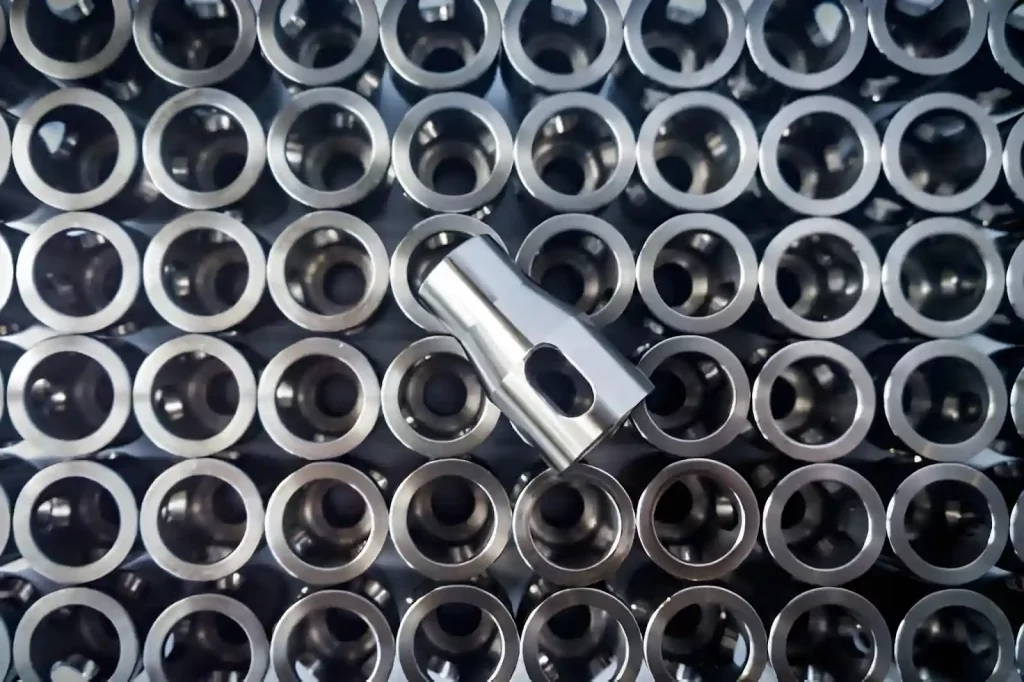
Shiny Stainless Steel Machined Parts
Stainless steel is a durable, corrosion-resistant metal. It is produced by alloying steel with chromium. Due to its chromium content, it is an ideal metal for applications that require a durable component with a polished finish and/or a high degree of wear resistance.
Like aluminum, stainless steel is available in various forms for machining, including sheet, plate, rod, bar, tube, and block stock. Usually, it is machines using techniques such as cutting, CNC drilling, and forming to produce complex shapes and patterns.
Stainless steel also has several types used in machining. Austenitic grades (such as 304 and 316) are highly corrosion-resistant, non-magnetic, and suitable for use in food processing, medical equipment, and chemical processing. Martensitic grades (such as 410) are hard. So, they are typically used to manufacture tools, shafts, and high-wear components. Ferritic grades are less commonly used in machining; however, they do have some applications where moderate corrosion resistance is desired.
Examples of machined stainless steel components include kitchen sinks, valves, fasteners, shafts, medical instruments, and structural components.
Common Stainless Steel Grades for Machining & Their Applications
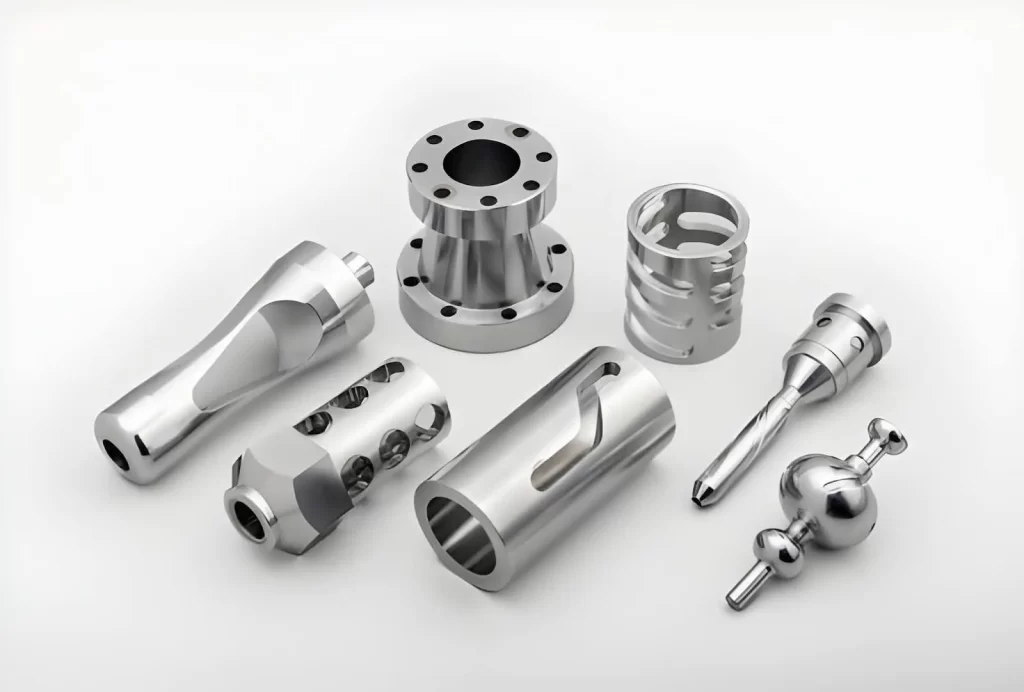
Stainless steel precision-machined parts
Table 2: Stainless Steel Grades & their Applications
|
Grade |
Applications |
|
Stainless Steel 304 |
Kitchen sinks, cutlery, and food processing trays |
|
Stainless Steel 316 |
Surgical tools, marine equipment, and pharmaceutical devices |
|
Stainless Steel 410 |
Car exhausts, turbine blades, and hand tools |
|
Stainless Steel 430 |
Decorative panels, kitchen appliances, and car trims |
|
Stainless Steel 17-4 PH |
Aerospace components, chemical processing, nuclear parts |
Try Prolean Now!
Machining Stainless Steel Vs Aluminum: Major Material Differences
For optimal machining stainless steel and aluminum, it’s imperative to understand their behavior under cutting forces, heat generation, and friction between the tool and the material. Although both materials are popular choices, they exhibit vastly different machining approaches.
Density and Strength-to-Weight Ratio
Aluminum has a lower relative density than stainless steel, enabling the design of components with larger cross-sectional areas without a significant increase in weight. So, designers can produce large, bulky designs using aluminum and still maintain the same level of portability as a similar design made from stainless steel.
Stainless steel is denser and heavier than aluminum. It exhibits greater stiffness in smaller cross-sectional areas, which is beneficial in applications where space is limited and stiffness is essential.
Formability During Machining
Aluminum is soft and pliable. So it does not deform when it is cut or shaped. Moreover, it is very prone to burrs in drilling, contour milling, and sheet metal processing. Although it requires lower cutting forces. In contrast, stainless steel resists deformation but tends to work-harden when the feed rate is set too low. Consequently, the risk of excessive tool wear and damage to the machined part’s surface finish increases.
Austenitic stainless steels are more easily formed, though they still require controlled machining conditions to prevent surface imperfections.
Corrosion Performance After Machining
Stainless steel contains a chromium-rich passive layer. This protects it against corrosion. However, heavy machining, heat-affected zones, iron contamination, or scratches can damage this layer, so pickling or passivation is often necessary. Aluminum forms a thin oxide film, and consequently, additional processing is required to restore its corrosion resistance in harsh environments.
Thermal Behavior at the Tool Interface
Aluminum rapidly conducts heat away from the tool-material interface, thereby protecting the tool and enabling higher machining speeds. Contrarily, stainless steel tends to trap heat at the tool tip. This causes the cutting temperature to rise and accelerates tool degradation unless adequate cooling and protective tool coatings are applied.
High-Temperature Stability
Stainless steel retains its strength at elevated temperatures and does not degrade over extended periods of time during machining. Aluminum starts to lose significant strength at around 200–250 °C. Stainless steel retains its strength up to approximately 600–800 °C, and it is nearly lost above 1000 °C, with complete loss only near the melting point.
Welding Compatibility of Machined Parts
Stainless steel machined parts can be welded reliably with minimal pre-treatment. While aluminum must be carefully cleaned and heated immediately after machining to remove oxidation and minimize heat conduction into the surrounding structure, this complicates the welding process.
Machinability and Tool Life
Aluminum is easily machined, provides a long service life for machining tools, and offers high material removal rates. Compared with stainless steel, machining stainless steel is more challenging, causes faster tool wear, and typically requires carbide or coated tooling to produce reliable results.
Try Prolean Now!
How to Choose Between Aluminum Vs Stainless Steel
Selecting between aluminum and stainless steel is not merely a matter of cost or aesthetics; rather, it depends on how each material will perform during machining and in the end-use application.
Cost
Aluminum is easier to cut, produces fewer burrs, is easier to drill, and requires less power during machining than stainless steel, which is expensive to machine. Moreover, it requires less energy during manufacturing than stainless steel.
On the other hand, stainless steel is harder on tools and reduces productivity, and can significantly increase labor and tooling costs in high-volume projects.
Weight vs Strength
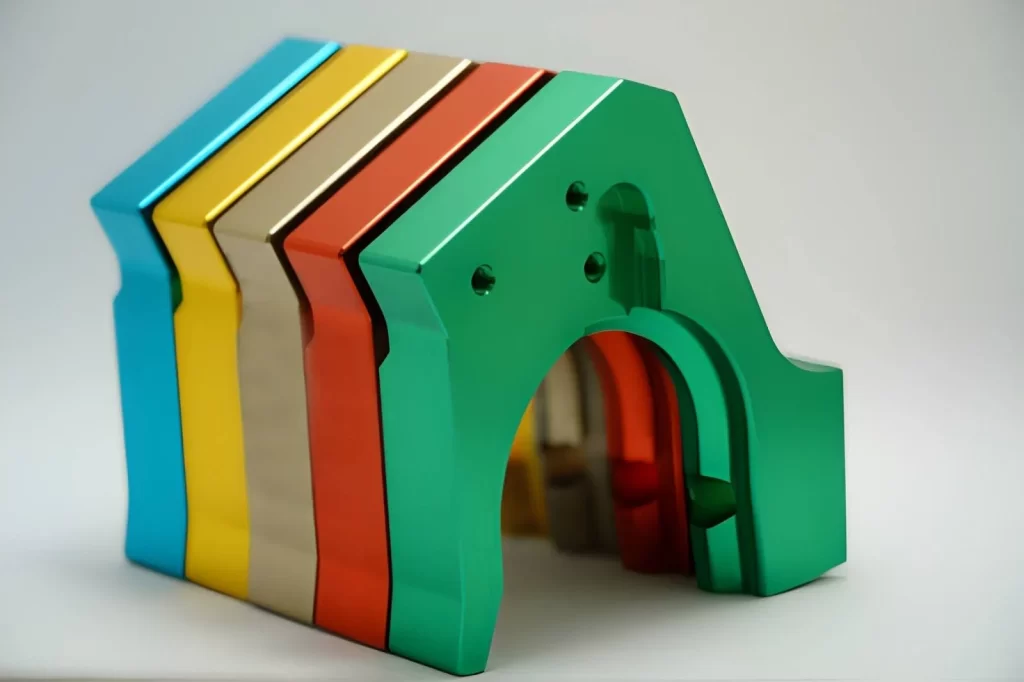
Anodized aluminum lightweight parts
When it comes to aluminum strength and weight, it is approximately one-third the weight of stainless steel. Therefore, it is the preferred material for components where weight is a concern, such as aircraft structures, automotive body panels, and lightweight frames.
On the other hand, stainless steel is heavier than aluminum. It possesses greater structural integrity and is considered a better selection for pressure vessels, surgical instruments, and load-bearing machine components.
Weldability and Fabrication
Aluminum has a high thermal conductivity and forms a tough oxide layer, making it difficult to weld. To successfully weld aluminum, specialized welding techniques(TIG, MIG, friction stir, spot, and laser welding) can be used, and heat input must be controlled to prevent warping or part cracking.
Comparingly, stainless steel grades like 304 and 316 are generally easier to weld. It can be welded using MIG or TIG welding, and once welded, it retains its corrosion resistance and structural integrity in both high-temperature and aggressive environments.
Machining Behavior
Aluminum is relatively soft and forgiving; it is easy to cut, drill, and shape. So, it produces few burrs and requires lower cutting forces during machining. In contrast, due to the high hardness of stainless steel, it is more prone to work-hardening when used with low feeds. As a result, it tends to dull cutting tools, requiring carbide tooling and lower feeds to achieve a desired surface finish.
When to Choose Aluminum for CNC Machining
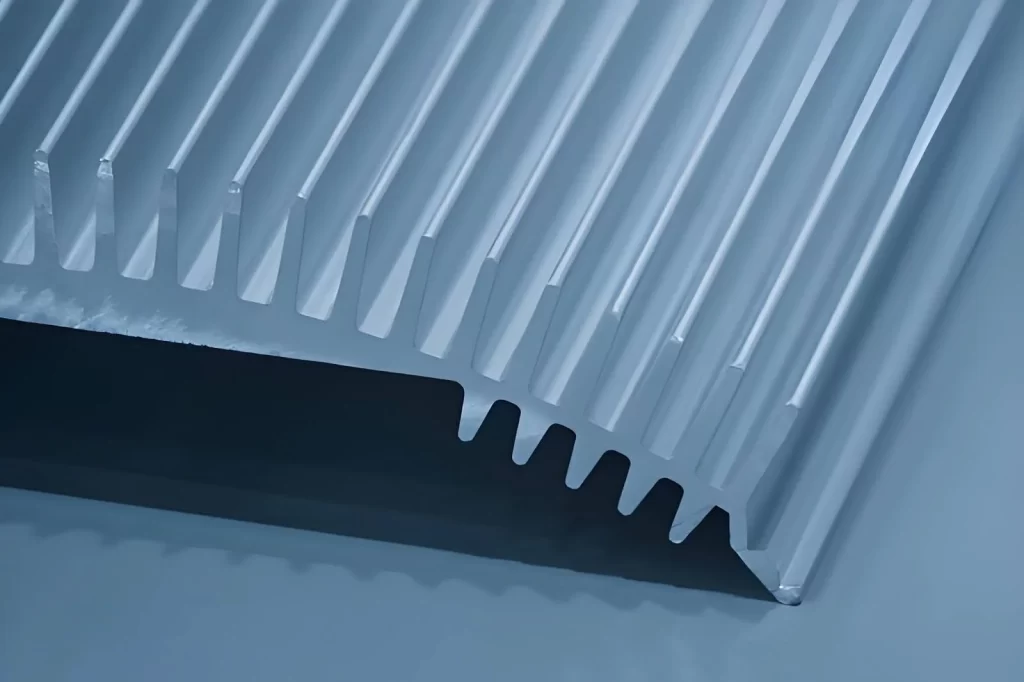
Aluminum heat sink
- Aluminum is the preferred material choice when parts need to be fabricated to reduce weight, machine quickly, and dissipate heat efficiently.
- It is relatively inexpensive to purchase and easy to machine, thereby minimizing tool wear and manufacturing time.
- Aluminum is also used in a variety of decorative products, as it polishes well and accepts anodic coatings.
When to Choose Stainless Steel for CNC Machining
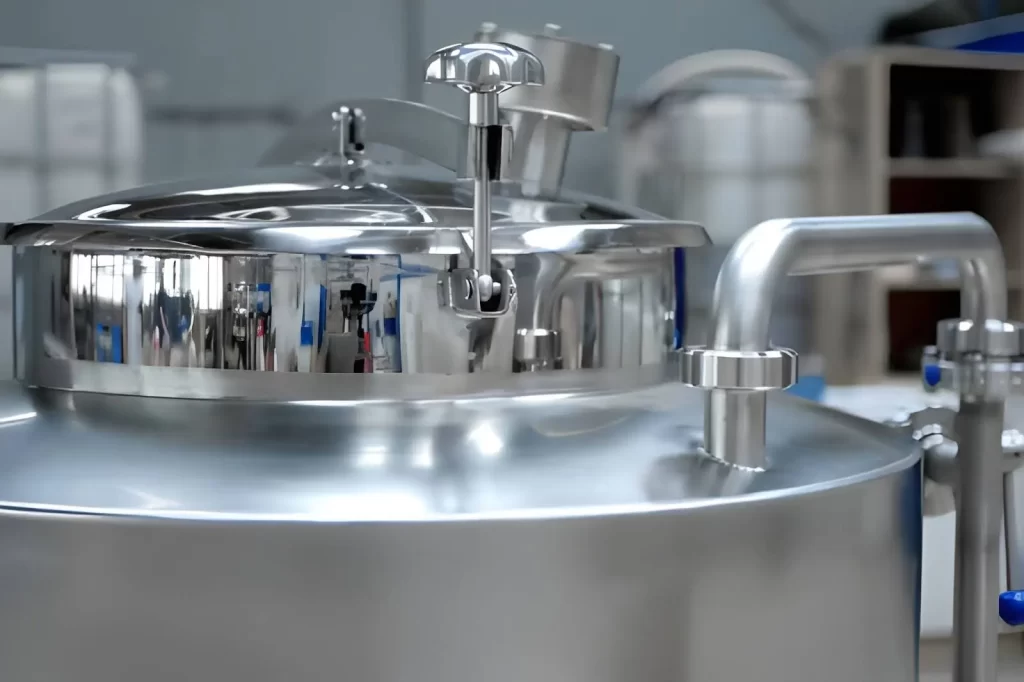
Stainless steel in food equipment
- Stainless steel is a go-to choice for parts that require exceptional strength, durability, and corrosion resistance.
- It can withstand extreme temperatures and corrosive environments, and it will not deteriorate with age.
- Typical applications for stainless steel include surgical tools and medical equipment, marine hardware and boat fittings, pressure vessels and industrial machinery, and kitchen equipment and food-grade surfaces.
Start Your CNC Machining Project with Prolean Tech
At Prolean Tech, we bring over 15 years of experience in custom metal machining. Our shop handles everything from lathes and combined turning-milling machining to Swiss-style and 5-axis machining, as well as rapid prototyping. This means we can make complex parts with high accuracy, regardless of size or shape.
We also provide a range of finishing services, including heat treatment, anodizing, PVD coating, polishing, and sandblasting, so your parts come ready to use without needing extra steps.
To make your project easier, we provide free DFM (Design for Manufacturing) support. Our engineers review your design to ensure it’s optimized for cost and efficiency. Every part also undergoes a comprehensive CMM inspection to verify all dimensions and tolerances, ensuring nothing is left to chance.
We believe in transparent pricing. So you know the cost of materials, machining, and finishing upfront with no hidden fees. Contact us today, and get an instant quote!
0 Comments