
Anodized titanium
Titanium anodizing is an electrochemical finishing process used to enhance the performance and appearance of titanium components. It is the go-to solution for engineers in the medical, aerospace, and high-end consumer sectors who require a finish that is both functional and biocompatible. Unlike other metals, titanium does not require organic dyes to achieve color; instead, it uses the physics of light refraction to create a permanent, non-fading finish.
So this guide will help you understand the process of Anodized Titanium, variables such as voltage control, electrolyte chemistry, and the distinction between Type II and Type III finishes.
What is Anodized Titanium?
Anodized titanium is an electrochemical metal finishing process. It uses an electrolytic cell to increase the thickness of the natural oxide layer (TiO2) on the surface of titanium parts. This process does not add a new coating on top of the metal; rather, it transforms the existing surface into a protective barrier.
As a result, the corrosion resistance of the part increases, surface lubricity improves, and in Type III, it develops bright, iridescent colors.
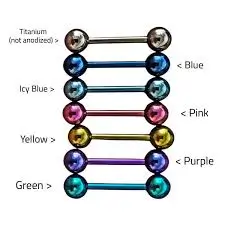
Titanium Anodization Color Spectrum Chart
In this process, the titanium part is placed into an electrolyte bath, and an electric current is passed through it. The titanium acts as the anode, meaning it serves as the positive electrode. This allows oxygen to react with the surface.
In this reaction, an oxide film forms that is much thicker and more durable than the natural oxide layer that forms in air. And this chemical layer is stable, non-toxic, and maintains the metal’s original high strength-to-weight ratio.
How Does Anodizing Work with Titanium?
Titanium anodizing basically speeds up what the metal already does naturally, but in a controlled way. The titanium is placed in an electrolytic bath. When current is applied, water breaks down and releases oxygen, which bonds with the surface. This forms a thin and transparent oxide layer, and its thickness is controlled by voltage. Higher voltage means a thicker layer.
Thin Film Interference Physics In Titanium Anodizing
How Does Titanium Color Anodizing Work?
Unlike aluminum anodizing, which relies on dyes, titanium gets its color in a completely different way. It comes from something called thin-film interference. Basically, the oxide layer is transparent. Light hits it, and some waves reflect from the top while others bounce off the metal underneath. These waves interact and filter certain colors, which is what we end up seeing. As a result, the color isn’t painted on. It’s built into the surface itself. That’s why it’s long-lasting.
Process Steps: How to Anodize Titanium
Titanium anodizing isn’t just dipping a part and hoping for the best. It’s a careful mix of chemistry and precise electrical control. Even small changes in time or voltage can affect the final result. So, to get consistent, industrial-grade results, the process has to follow a clear and repeatable sequence.
Step 1: Surface Preparation and Cleaning:
First, the parts are thoroughly cleaned. They go through ultrasonic degreasing and acid etching to remove any oils, dirt, or leftover coolants.
Step 2: Racking and Electrical Connection:
Next, the parts are securely attached to titanium racks to maintain a stable electrical connection throughout the process.
Step 3: The Electrolytic Bath:
The titanium part (anode) and a stainless steel cathode are placed in an electrolyte solution. When current flows, oxygen ions move toward the titanium surface and start building the oxide layer.
Step 4: Voltage Regulation and Monitoring:
At this stage, voltage becomes the key factor. It directly controls the color of the titanium. The operator slowly increases the voltage until the desired shade appears.
Step 5: Rinsing and Drying:
Finally, the parts are rinsed in deionized water to stop the chemical reaction right away. After that, they’re simply dried.
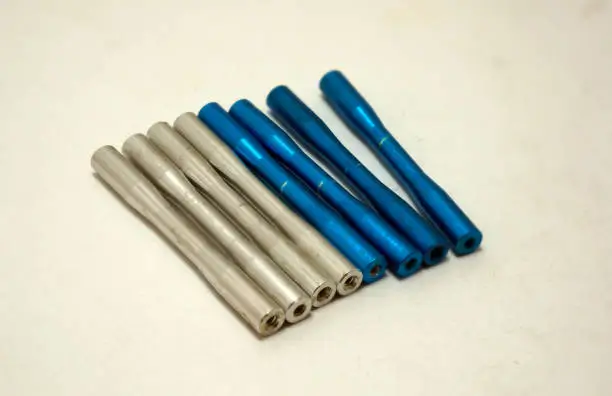
Titanium Anodization Types for Industrial Components
What Are the Types of Anodization Processes for Titanium?
Titanium anodizing is categorized into two main types. Type II for mechanical performance and Type III for visual identification.
Type II Anodizing:
This is a functional finish defined by the AMS 2488 standard. It creates a thick grey oxide layer that reduces friction and prevents galling in moving parts. That’s why it is mostly used in aerospace fasteners and engine components, where metal-on-metal contact is unavoidable, helping the parts operate smoothly and efficiently.
Type III Anodizing:
This process is also known as decorative or “color” anodizing. This type is mainly used for aesthetics and color-coding. It creates a thinner, transparent oxide layer, and the colors appear through light interference. That’s why you see those shifting shades on the surface instead of paint or coating.
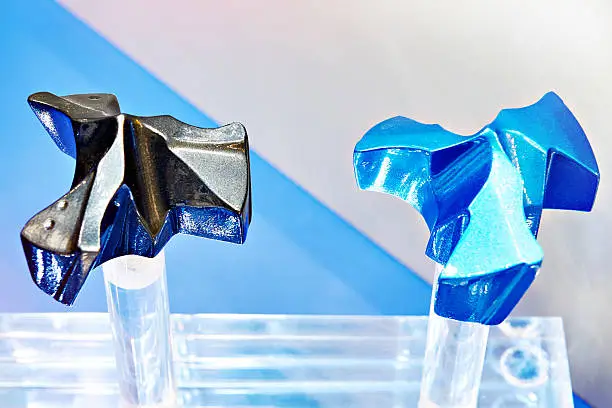
Type II vs. Type III Titanium Anodizing Comparison
Comparison Table: Anodizing Type II vs. Type III
|
Feature |
Type II (AMS 2488) |
Type III (Decorative) |
|
Primary Goal |
Friction & Wear Resistance |
Aesthetics & Color Coding |
|
Appearance |
Matte Grey / Charcoal |
Vibrant Rainbow Spectrum |
|
Standard |
Aerospace Grade (AMS 2488) |
Commercial / Medical |
|
Common Use |
Gears, Joints, Fasteners |
Implants, Watch Parts, EDC |
|
Biocompatible |
Yes |
Yes |
Note: Anodizing does improve surface durability, but it can slightly reduce the fatigue strength of titanium alloys. Because of that, mission-critical aerospace parts that deal with high cyclic stress need careful evaluation before choosing this finish.
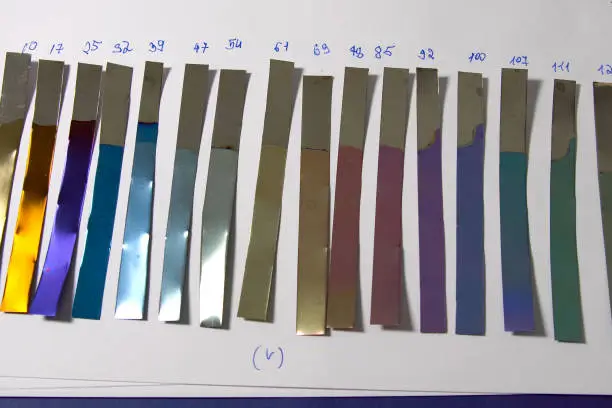
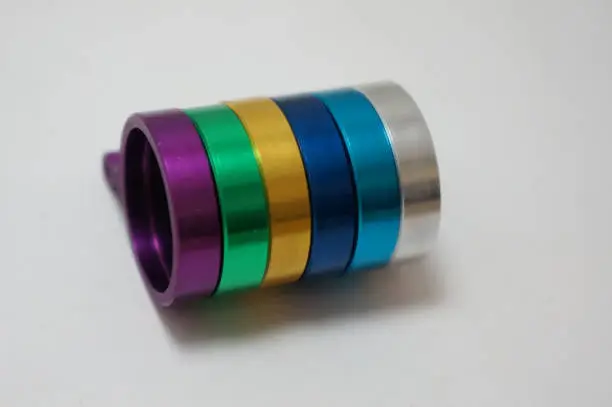
Sample Strips with Color Variations
Titanium Anodizing Color Chart
The colors you see on anodized titanium aren’t pigments or coatings. They’re actually an optical effect created by the thickness of the oxide layer. As the voltage increases, the layer gets thicker, and that changes how light reflects off the surface.
|
Voltage Range |
Resulting Colors |
Typical Applications |
|
Low (10V – 25V) |
Bronze, Purple, Dark Blue |
Medical marking, basic identification |
|
Medium (30V – 60V) |
Light Blue, Gold, Yellow |
Surgical kits, premium electronics |
|
High (70V – 100V+) |
Pink, Magenta, Teal, Green |
High-end EDC gear, custom implants |
Does Anodized Titanium Color Fade or Wear Off?
The color doesn’t fade because it is not made from dye or paint. It is a natural process in which the surface changes itself, and no external layer is applied. However, it can look dull over time if oils, dirt, or fingerprints build up on it, as this affects how light reflects.
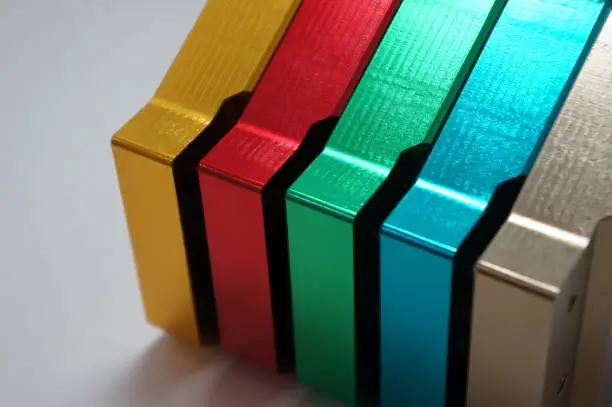
Colorful Metal Blocks in a Row
How to Get the Best Results with Color Titanium Anodizing
A flawless finish doesn’t come from voltage alone. It also depends on keeping the environment stable and using clean, pure materials from the start.
- Use Grade 5 Titanium: Use Grade 5 titanium (Ti-6Al-4V) whenever possible. While other grades can be anodized, this one gives the most stable and vibrant color results
- Avoid Cross-Contamination: Avoid cross-contamination at all costs. Even a tiny trace of another metal, especially aluminum, can ruin the entire electrolyte bath.
- Consistent Racking: Make sure racking is consistent. The contact point won’t anodize, so it should always be placed in a non-visible or non-critical area of the part.
- Control Current Density: Control the current density properly. Don’t rush the process. If the voltage is increased too quickly, you might get the right color, but the oxide layer becomes weaker and less durable.
Equipment for Anodizing Titanium
Titanium anodizing needs stable, industrial-grade equipment because even small changes can affect the final result. Precision here is what separates a clean finish from a failed batch.
- Variable DC Power Supply (Rectifier): Provides controlled DC power (0-120V). Even a small voltage change can shift the final color.
- Electrolyte Tank: Acid-resistant tank that keeps the solution evenly mixed and stable.
- Titanium Racking System: Uses only titanium contact to maintain a steady electrical circuit.
- Chiller & Heater Units: Keep temperature stable (20°C-25°C) to avoid uneven oxide formation.
Try Prolean Now!
Why Choose Anodized Titanium?
Anodizing basically takes titanium’s natural strengths and pushes them further for real industrial use.
- First, it’s 100% biocompatible. The oxide layer is non-reactive, which makes it safe for medical and dental implants without issues.
- Improves lubricity, especially in Type II anodizing, where reduced friction helps prevent galling in aerospace fasteners and moving engine parts.
- On top of that, the aesthetics are non-fading. They don’t peel, chip, or flake over time. Because the colors are created through physics, not fake paint.
- And it provides an extra layer of shield against saltwater, acids, and environmental pollutants.
When Should You Choose Anodized Titanium?
It really comes down to what matters more in your application: strength under stress or visual clarity. You should go for Type II when the part is part of a high-friction system, like gears or sliding brackets, where long-term durability is critical, and failure isn’t an option.
On the other hand, Type III makes more sense when color-coding is needed, such as in medical tools for surgery, or when you want a clean, high-end look in consumer electronics. If your project requires tight tolerances and high-volume consistency, working with a professional metal anodizing service is the most cost-effective choice.
Conclusion
Titanium anodizing is one of the most effective ways to enhance the performance of titanium parts without adding extra weight or affecting the material’s core strength. Whether it’s Type II or Type III, the process delivers a level of durability that simple surface coatings like paint can’t match.
Remember that consistent results only come when you stick to the basics, control the voltage properly, and prepare the surface the right way.
At Prolean Tech, we focus on high-precision finishing for complex parts, from surgical screws to structural brackets. By combining industrial metal anodizing services with broader fabrication expertise, we help ensure parts meet strict aerospace and medical standards.
Frequently Asked Questions
Q1: Does titanium anodizing wear off?
It’s highly durable, but not completely indestructible. While it won’t fade or peel like paint, the thin oxide layer can still be removed through heavy abrasion or exposure to strong acidic cleaners.
Q2: Can you anodize titanium black?
No, true black isn’t possible with titanium anodizing because of how light interference works. If a black finish is needed, processes like PVD coating or DLC (Diamond-Like Carbon) are used instead.
Q3: Does anodizing titanium make it weaker?
No. The process only modifies the outermost surface, just a few nanometers thick, by forming a protective oxide layer.
Ich brauchte neulich auch eloxiertes Titan für ein Experiment. Glücklicherweise konnte unser Techniker für Oberflächen das sehr schnell herstellen. Besonders die erhöhte Korrosionsbeständigkeit war sehr hilfreich.
Es ist großartig zu hören, dass Ihre Teile durch Titanpolieren korrosionsbeständig werden und das Ergebnis wie erwartet war!
I have used anodizing for titanium components, excellent aesthetic and protection as you said in the article. I will be happy to read more articles regarding titanium anodizing.
Sure, We will publish more of titanium finishing articles in upcoming schedules! Thanks for your comments