

Precision Brass CNC Machining Guide
Brass CNC machining is a commonly used material in modern manufacturing. With CNC machining, manufacturers can create highly intricate designs with speed and accuracy. Brass is one of the best materials for machining and manufacturing. As the demand for highly intricate designs with tighter tolerances grows, so does the demand for precision brass machining components.
ProLean Tech is the leading company in brass CNC machining services. The brass components CNC-machined for your company will meet the highest of today’s application standards. We can guarantee your components will be of the highest quality due to our expertise in CNC precision machining of turned components and brass metal fabrication.
In this blog, we will get to know the brass qualities that make it best for machining components, applications, alloys, and future trends.
What is Brass CNC Machining?
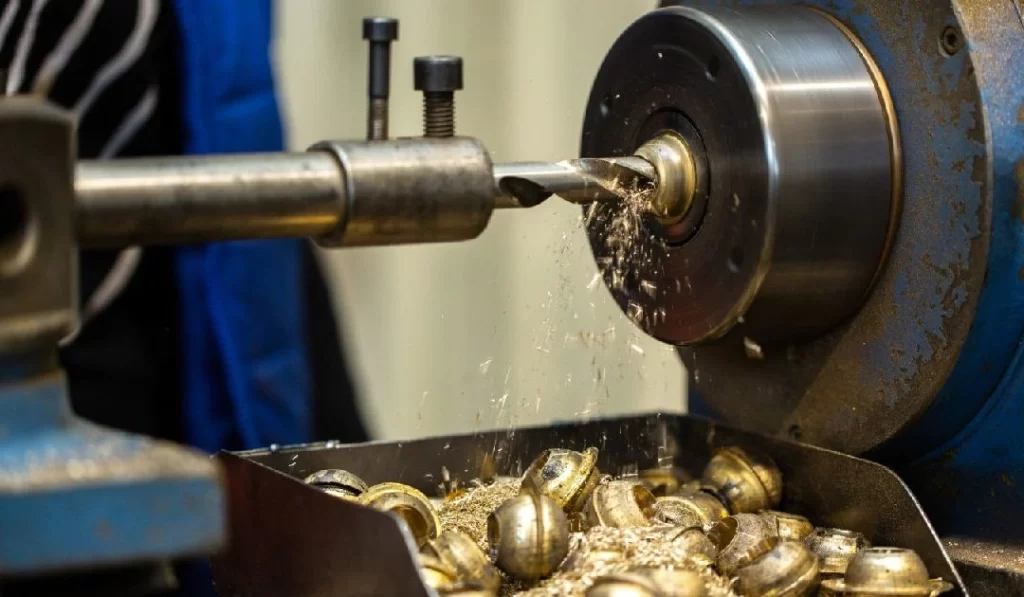
Brass CNC Machining
The automated technique of utilizing computer numerical control (CNC) machines to cut, shape, and form high-quality brass machined parts is termed “Brass CNC machining.” The manufacturing of intricate components and brass parts from brass metals is made possible due to these machines’ exceptional accuracy and precision.
This includes advanced programmable and computer-controlled machines that can precisely follow guidelines across extremely small dimensions. It enables them to carefully cut out particular shapes or shave off substances while guaranteeing a high degree of repeatability and precision.
Brass is an alloy of zinc and copper that has become one of the most frequently utilized materials for precision brass machining. This is because of its distinctive characteristics, including exceptional ability to be machined, resistance to corrosion, and conductive properties.
Why Brass Is an Ideal Material for CNC Machining?
The metal brass continues to be one of the most preferred metals used in Brass CNC machining for a number of reasons. It includes its exceptional machinability attributes that improve manufacturing efficiency via rapid feed rates and speed of cutting. There is less tool wear, which lowers the likelihood of recurring tool changes that could have disrupted the manufacturing procedure. The following are some crucial factors:
Excellent Machinability
Brass is renowned for its outstanding machining properties, which make it possible to manufacture intricate parts with precision and ease. Extended lifespan of tools, reduced milling times, and cheaper manufacturing costs are all results of this feature.
High Resistance to Corrosion
Brass is exceptionally resistant to corrosion, particularly in extremely humid or water-exposed environments. Because of this property, it is a perfect option for applications in which life expectancy and durability are important considerations. This renders it appropriate for plumbing components, marine applications, plumbing parts, and moist environments.
Electrical and thermal Conductivity
Brass is an ideal material for applications that require the transfer of electricity or heat efficiently because of its high thermal and electrical conductivity. It improves performance in situations in which dissipation of heat is required, particularly in applications involving thermal management systems.
Versatility
Brass is utilized in some industries, from plumbing to electronics to a wide range of others.
Aesthetic Appeal
Brass has a natural luster and hue of gold, making it an aesthetically pleasing material. In applications where appearances are important, such as high-end items and decorative elements, their aesthetically pleasing appearance increases the appeal of brass parts.
Key Properties of Brass for Precision Brass Machining
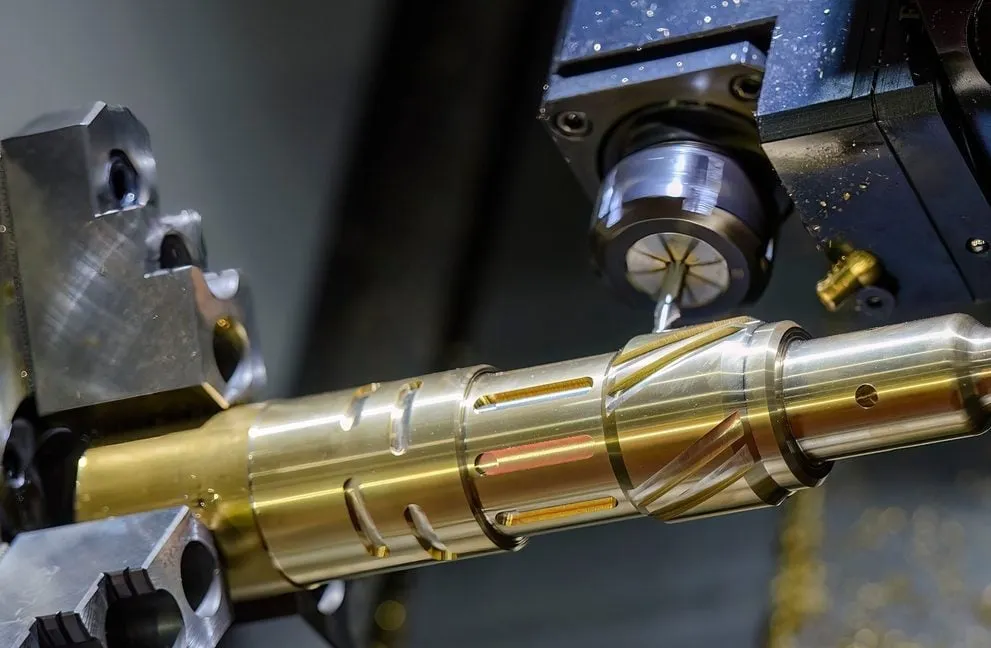
CNC machining of Brass
Brass is a great choice for CNC machining due to its various mechanical properties. Here are some of them:
Strength and Ductility
The capability to make brass machined parts that are both flexible and strong.
Low Friction
Although there are a number of variables that affect its precise friction coefficient, brass typically produces minimal friction. As a result, machining produces limited heat buildup, which facilitates the fabrication of brass parts with tight tolerances and complex designs.
Dimensional Stability
Brass exhibits dimensional stability during machining primarily not due to CTE, but rather because of its low cutting forces, low residual stress, and low heat concentration. Tighter tolerances appropriate for industrial and marine applications are therefore made possible.
Cutting Ease
Compared to harder alloys like steel, brass is easier to cut due to its relatively soft constituent parts. Because of this, brass is a highly machinable material and generates less tool wear throughout the process.
Workability
The ability to be readily formed or shaped without sacrificing structural integrity. The stability and softness of brass metal make it simple to precisely machine, particularly to the most exact specifications. However, the properties of other materials, like malleability, excellent durability, resistance to corrosion, and electrical conductive properties, enable a variety of uses.
Common Brass Alloys for CNC Machining and Their Applications
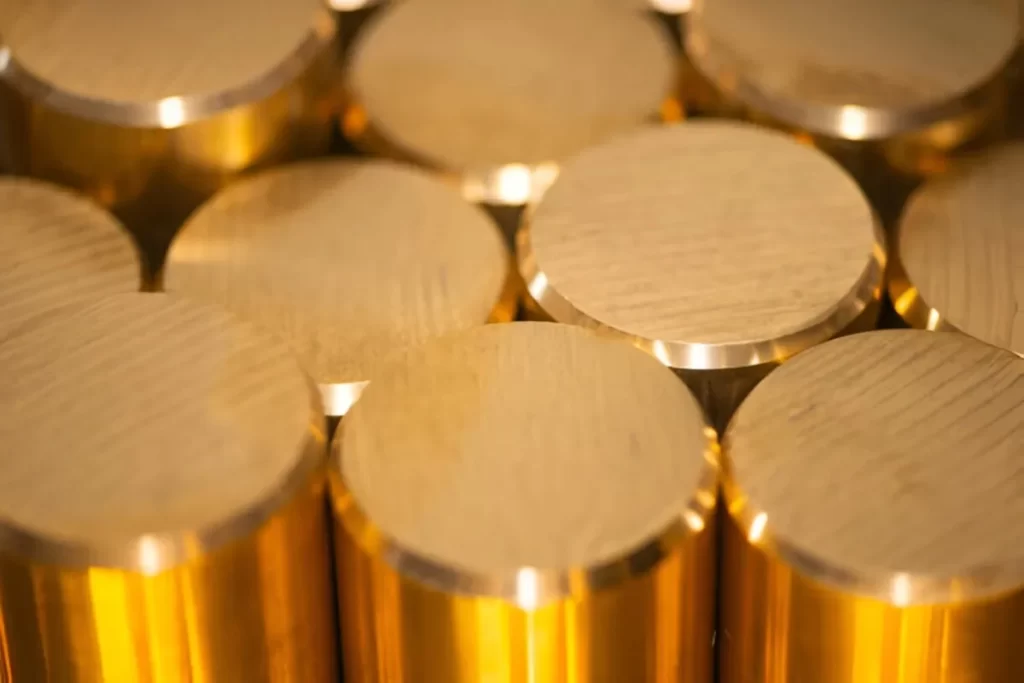
Brass Alloy Rods for Machining
The requirements of the application determine which brass alloys are utilized. In terms of machinability, strength, resistance to corrosion, and aesthetics, each alloy has special qualities. The three main brass alloy types are:
- (70% Cu, 30% Zn), also known as cartridge brass, has lower lead and zinc and higher copper concentrations. The superior ductility and malleability of C260 make it perfect for bending and cold forming. Therefore, it is frequently utilized in electronic, plumbing, hardware, clip, and ammunition applications. For stamped components, we frequently suggest C260 due to its superior formability over C360.
- C360, or free-cutting brass, is among the most popular brass alloys for brass CNC machining because it includes about 3% lead, which makes it highly machinable. It contains 60%+ Cu, 30%+ Zn, and trace levels of other elements and works well in brazing and soldering applications. It is 25–40% faster than the C260 in terms of machining.
- C360 is frequently utilized for electronic connectors, valves, screws, and fasteners, brass CNC-turned parts, and a variety of manufacturing-related components.
- Naval brass, or C464, contains less than 1% lead and tin, approximately 60% concentration of copper, and 40% zinc. This increases its strength and resistance to corrosion, especially in saltwater environments, making it appropriate for use in marine applications and industrial brass machined parts.
When considering bronze vs copper vs brass for CNC machining projects, each material offers distinct advantages. Brass is more easily machined than bronze, which has a higher strength and resistance to wear. Copper is the best conductor of heat and electricity, but it tends to create long, stringy chip that makes machining difficult. Brass is a good choice for precision machining because it strikes the perfect balance between strength, machinability, and functionality.
Brass CNC Machining Techniques
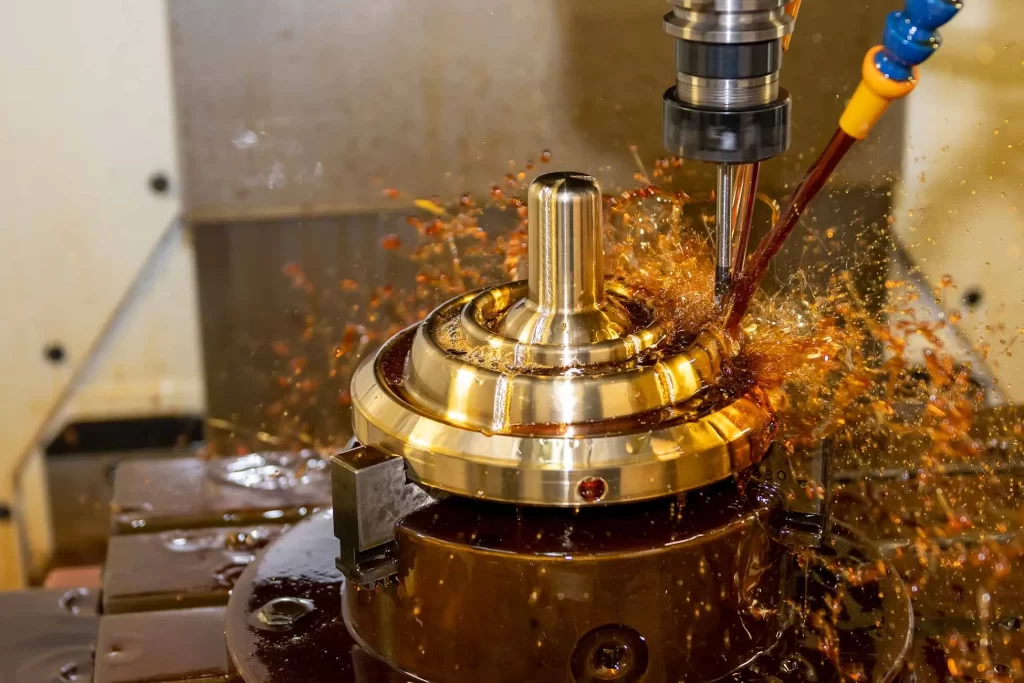
Selection of the right tools for brass CNC machining
After selecting an alloy having the right material qualities for your procedures, you still require consideration about the machining methods required for fabricating your product. Machining parameters, the selection of the tool, and the intended surface finishing of the end product are important considerations. Computer Numerical Control machines have been programmed for fabricating parts in accordance with various parameters and the designs that represent them. Among the cutting parameters are tooling techniques include turning, milling, drilling, grinding, and more.
CNC Turning
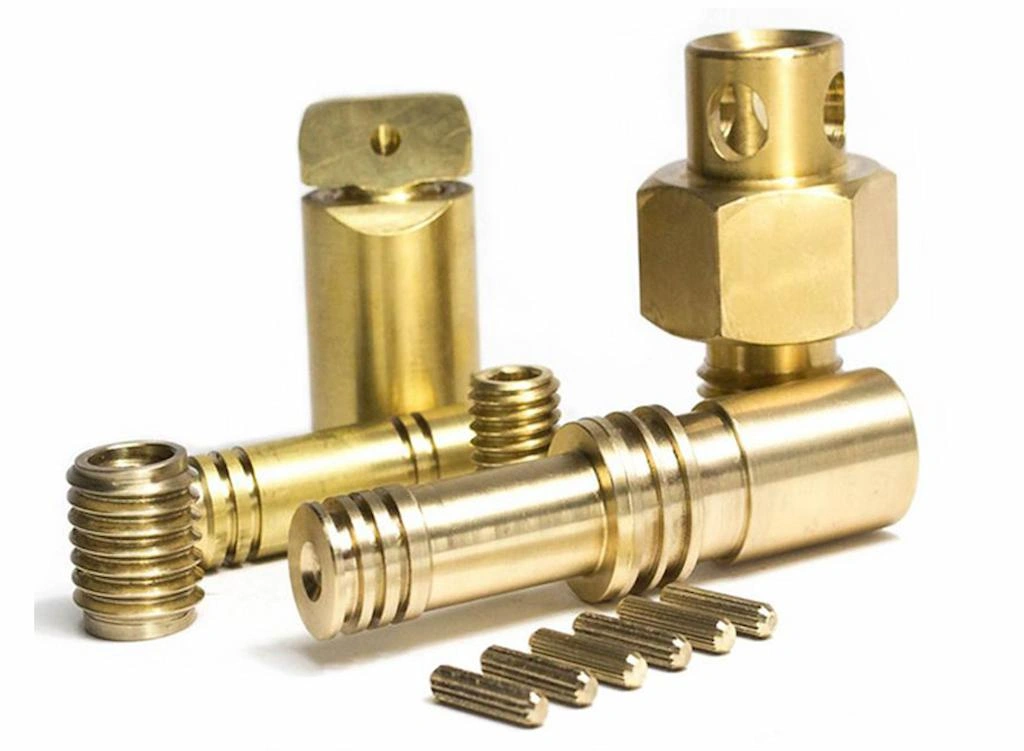
CNC Turned Brass Parts
Turning produces cylindrical pieces having excellent precision by utilizing machine-controlled lathes. The tools for cutting removed material in accordance with preprogrammed instructions as the brass product is rotated on a lathe.
It is perfect for cylindrical brass parts, including precision-machined pins, bushings, and threaded bars. Tight/close concentricity and optimal surface finishing are made achievable by turning. To get optimal results, adjust the feeds and speeds according to the brass grade.
Turning processes use a variety of methods:
- Flat surfaces perpendicular to the axis are produced by facing
- Narrow channels are cut via grooving.
- Precise screw threads are produced through threading.
- Additionally, boring produces accurate interior dimensions.
The technique will give your applications symmetrical, consistent components.
CNC Milling
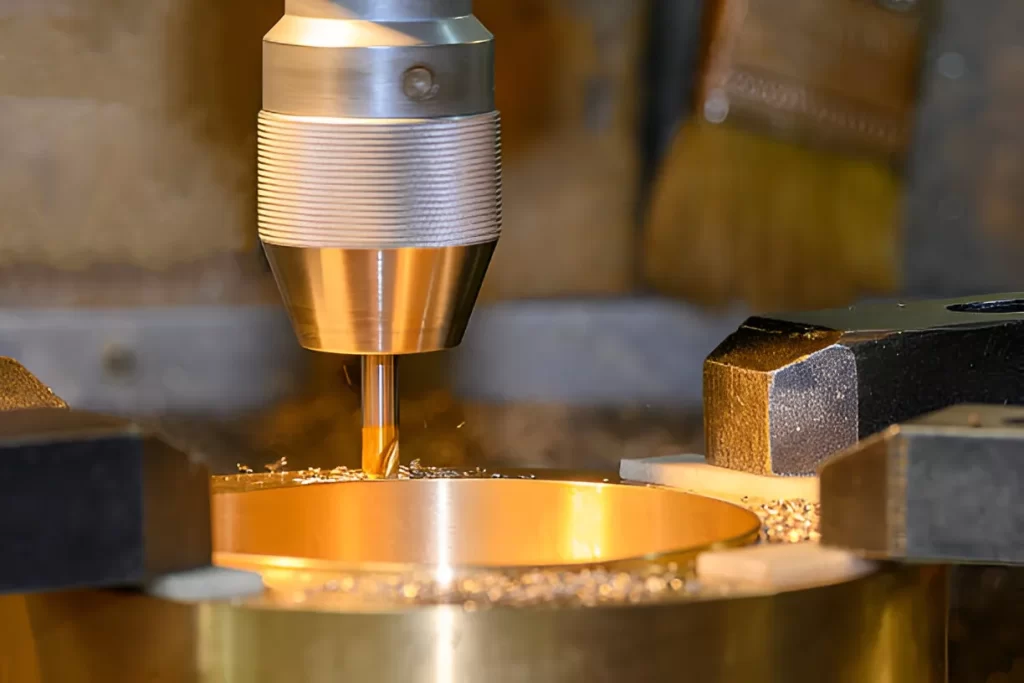
Brass CNC Milling
CNC Milling involves rotating tools that move in multiple directions to carve complex designs. It is utilized to create smooth surfaces, pockets, slots, and complex geometries, including two-dimensional (2D) and three-dimensional (3D) shapes, in machining brass. It offers the unique ability to create both multi-angled and flat brass parts.
Carbide tools should be chosen to ensure durability. Coolants should be used to control the buildup of heat and chips. This technique is suitable for your need for intricate, asymmetrical brass parts. Complex brass-turned components require CNC milling because of its capacity to produce intricate designs.
CNC Drilling
For precision holes and internal threading, brass is the chosen material due to its superior thread production capabilities.
CNC Grinding
Grinding utilizes abrasive wheels for the removal of tiny traces of components. Grinding can reliably maintain tolerances as tight as ±0.0001 inches, whereas milling and turning can attain ±0.001-inch tolerance. For extremely accurate flatness and diameters, surface, centerless, and cylindrical grinding are used.
Parameters of Brass CNC Machining
- Optimizing Feed Rate and Cutting Speed: One of the main factors affecting the quality of the surface and efficiency of the machine is cutting speed. Brass’s low friction and excellent formation of chips enable fast cutting speeds, but too much heat might hasten tool deterioration.
- Recommendations for cutting speed: For C260, the recommended speed for cutting should be 350-600 SFM (106-183 m/min). For C360: speed for cutting should be around 250-459 SFM (76-137 m/min)
- Feed rate is the tool’s rate of advancement within the material.
- Recommendations for Feed Rate: 0.03–0.08 mm/rev for finishing, and 0.08–0.20 mm/rev for roughing. Burrs and rubbings result from too low feed, whereas visible tool marks are created by too high feed. To prevent tool clatter and rounded edges, retain a steady feed for deep pockets.
- Cutting Depth: Cutting depth is the depth to which each pass of the tool drives into the stock. To prevent vibrations and provide excellent surface finishes, stepover and cutting depths need to be precise. Suggested cutting depth for roughing should be between 0.5 and 1.5mm, and 0.1 and 0.4 mm for finishing.
- Rake angle: The angle formed by the tool face and a plane that is perpendicular to the direction of cutting is known as the rake angle. A 10 to 15 degree rake angle “lifts” the chip out of the component’s surface and lowerthe s pressure of cutting.
These key parameters are essential for both maintaining the operability of your CNC machine and machining the part in accordance with specifications. Considering the brass alloy’s hardness, selecting the right cutting depth and feed rate is crucial for increasing machining effectiveness and the lifespan of the tool. Reducing cutting depth and spindle speed can help with managing issues related to heat because they additionally affect the degree of friction produced throughout the cutting operation.
Try Prolean Now!
Selecting the Right Tools for Brass Machined Parts
There is more to choosing the correct tool for brass CNC-turned parts than just figuring out the cutting technique. The efficacy of brass CNC machining processes and final product is controlled by factors like tool geometry, cutting angle, speed, and blade coating, impacting both tool life and final product condition.
Rough edges and increased concentration of stress leading to damage caused by burring can be minimized by selecting a positive rake angle, low cutting depth, a higher cutting speed, and finishing of a carbide blade, which is ideal for brass CNC machining that reduces tool wear too.
Use sharp edges for cutting during turning CNC brass parts to lower cutting resistance and attain the best surface finish. In Brass CNC machining, brass parts should be machined with carbide tools that have a sharp edge for cutting. High-performance coated tools like those made of Titanium Aluminium nitride and Titanium Nitride can prolong tool life span by reducing wear and friction. In softer brass metals, the cutting edge may occasionally be somewhat rounded by coatings such as titanium aluminum, nickel (TiAlN), resulting in increased friction.
Surface Finishing techniques for Brass machined parts
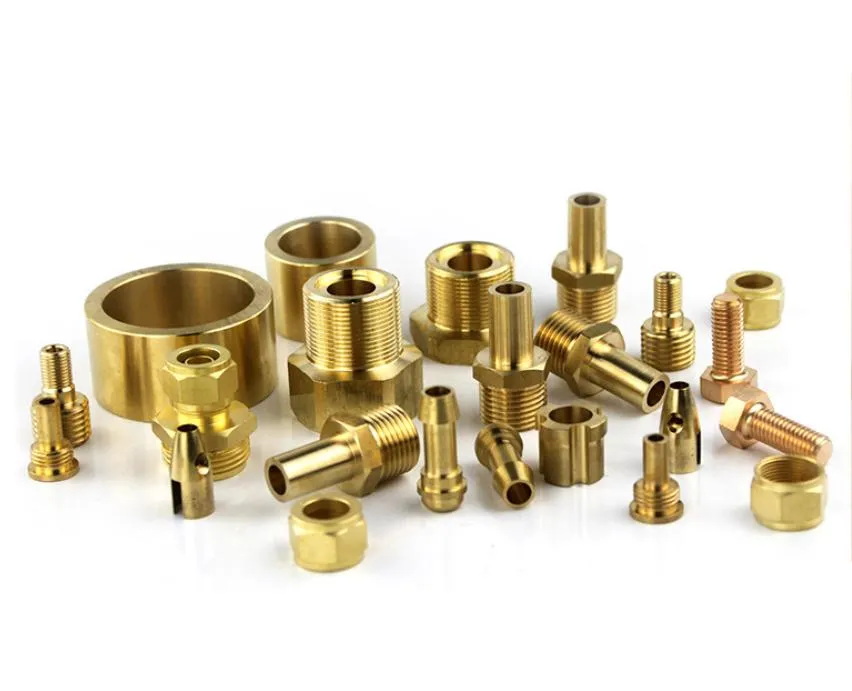
Brass CNC Machined Parts
As surface finishing significantly affects visual appeal, resistance to corrosion, wear efficiency, and stability over time, it is crucial in brass CNC machining. After CNC machining, the proper finish enhances durability, improves aesthetics, and maximizes functionality. Brass machined parts undergo finishing processes in a number of ways to enhance their longevity, resistance to corrosion, and visual appeal. Some common brass finishing options are
Polishing

Polished Brass Musical Instrument
Polishing improves resistance to corrosion by eliminating micro-defects that could lead to oxidation. It provides a fine and reflective surface. Mirror-like finishes achieved through polishing and buffing improve both aesthetics and functionality. These procedures provide low friction and smooth surfaces by removing surface imperfections.
Applications: ornamental components, lighting fixtures, and luxurious hardware
Plating
The technique in which the component is charged electrically close to a different metal component while submerged in an aqueous electrolytic solution, allowing transfer of another component over its surface and forming a thin film around brass parts. It involves plating the surface of brass with a thin layer of metallic material, like gold, chrome, and nickel. This makes it more resistant to corrosion, improves the conductivity of electricity, and lends it a shiny, mirror-like look.
Applications: Medical equipment, marine hardware, electronic devices, and parts that are susceptible to rust
Powder coating
It is used where the part is sprayed with a powdered substance, which typically requires heating in order to ensure correct adhesion. Powder coating is a covering that gives color to the part and considerably raises its resistance to wear, as well as corrosion and impact.
Anodizing and Coating
Anodizing is an electrochemical process for aluminum and its alloys. Brass is not suitable for anodizing.
Design Tips for Brass CNC-Machined Parts
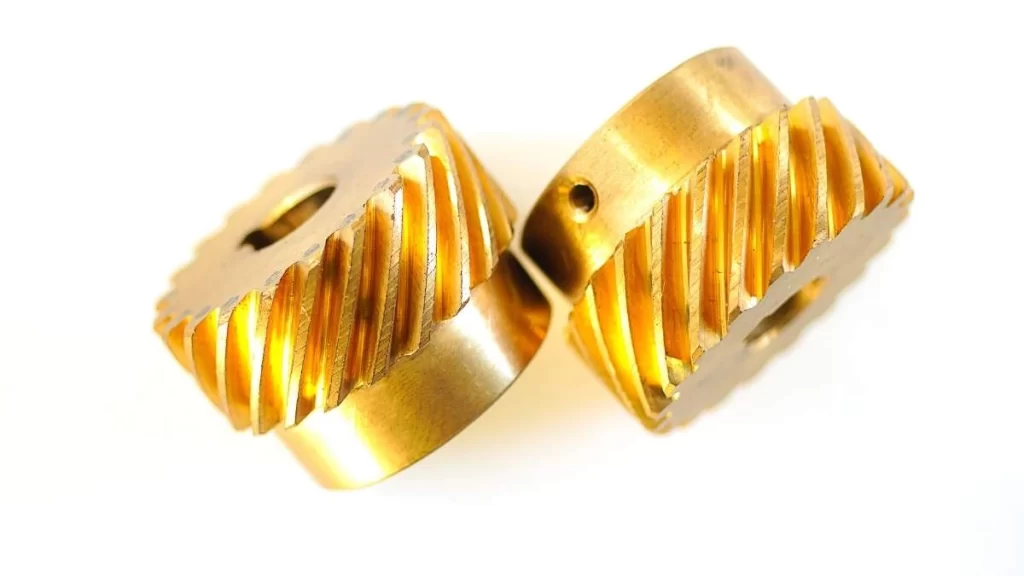
Brass Threaded Machined Parts
Proper Design for Manufacturability (DFM) is essential for successful brass CNC machining. Following these design guidelines will improve part quality, reduce manufacturing costs, and streamline production:
- Avoid razor-thin walls: Maintain minimum wall thickness of 0.5-1mm (0.020″-0.040″) to prevent vibration, warping, and machining difficulties
- Add fillets to reduce tool chatter: Use minimum 0.5mm radius fillets on internal corners to improve tool life, reduce vibration, and create smoother cuts
- Specify tolerances only where needed: Only apply tight tolerances (±0.0005″ or less) to critical features; use standard ±0.001″ tolerances elsewhere to control costs
- Thread depth guidance/chamfers for threading: Limit thread depth to 1.5x nominal diameter; always include 45° chamfers at thread entrances to prevent tap breakage and cross-threading
- Hole sizing standardization: Use standard drill sizes rather than custom dimensions to reduce tooling costs and improve availability
- Plan for deburr access: Design parts with accessible edges and features; incorporate chamfers (0.5mm x 45° minimum) on external edges to minimize post-machining deburring work
- Avoid deep pockets with sharp corners: These are difficult to deburr and machine; use radiused corners and accessible geometries
- Consider parting-off clearance: For turned parts, provide 3-5mm clearance for clean separation from stock material.
5 Brass CNC Machining Challenges and Their Solutions
Although the Brass metal itself is ideal for precision brass machining applications, there are still certain barriers to achieving exceptional brass metal fabrication. Some common Brass CNC machining challenges and their solutions are:
Tool Wear
The inappropriate cutting angle, depth, or speed might cause your tools to wear out excessively, requiring more power and reducing their lifespan. For the materials made from softer brass, choose a positive rake angle with high cutting speed because a worn cutting tool could harm the brass parts. For best results, use carbide tools with appropriate rake angles and sharp cutting blades.
Controlling the chip formation
One of the main challenges in brass CNC machining involves managing the formation of chips. In particular, lengthy, tangled chips might encircle the machine tools and product. This damages the surface of the tool and may cause it to break. Optimization of cutting parameters, along with suitable evacuation processes for chips, eliminates these problems. Smaller, uniform chips that are significantly less likely to harm the machine are produced by shallower cutting depths and slower feed rates.
Burr Formation
Burr formation is caused by a variety of variables, so the aim is to optimize depth as well as feed rate and speed for cutting. Additionally, applying coolant can control the generation of heat while lowering adhesion and resultant burrs.
Retaining Tight Tolerances for Brass Machined Parts
Precision/close tolerances are necessary for some complex brass machined parts, and maintaining them during the procedure of brass CNC machining can be challenging. A robust approach to Design for Manufacturability (DFM), combined with secondary finishing processes such as polishing, helps in achieving precision.
Heat Generation
Finishing issues and dimensional variations might result from the excessive generation of heat during brass CNC machining. Although brass is a good heat conductor, deep drilling or machining at high speeds can nonetheless result in the formation of localized areas of heat. The excess heat results in physical shift, softness of the tool, and minor cutting-edge chipping
When producing brass machined parts on a computer-controlled lathe, suitable cutting speed and effective cooling systems assist in controlling thermal impacts.
- To prevent recurring reengaging spikes in heat, keep your toolpaths continuous.
- For steady heat circulation, lower the stepover and cutting depth for steady heat circulation.
- For cooling the zone of cutting immediately, use Minimum Quantity Lubrication (MQL) as well as high-performance coolant in brass CNC machining.
- Minimize stress and heating by optimizing toolpaths via high-efficiency machining.
Try Prolean Now!
Applications of Brass CNC Turned Parts
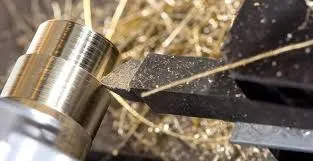
Custom-machined brass part
Numerous industries use brass, and CNC machining is crucial for creating high-precision brass turned components for a variety of applications:
Automotive Industry
In the automobile industry, brass CNC-turned parts find widespread applications in components such as electrical connectors, fittings, sensors, radiator cores, and bushings. Properties like High resistance to corrosion and excellent electrical conductivity make brass parts ideal for automobile applications.
Electrical Industries
Because of its ability to conduct electricity, resistance to corrosion, and machinability, brass is a common material used to manufacture electronic parts like terminals, switches, and electronic connectors.
Examples of the application of brass-turned parts in electronic components are
- components of switches,
- plug and socket connection,
- terminal of batteries, antennas
- printed circuit board fastener.
Brass, being a superb thermal conductor, acts as a heat sink to keep electronics such as laptops against over heating overheating.
Plumbing and Fluid Systems
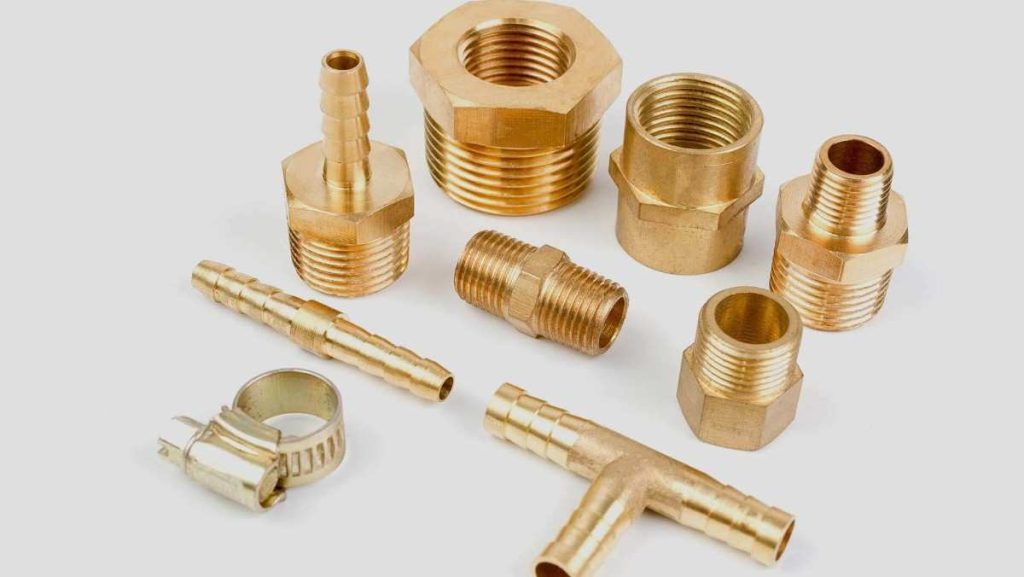
Alpha-Beta Brass Fittings
Brass machined parts are typically used in pipeline fittings, faucets, and valves. Because of its antibacterial and corrosion-resistant properties, the material is perfect for wet environments and potable water systems. Brass can be found in:
- Plumbing components, including bushings and fixtures
- Engines, propeller shafts, and rudders in naval subsystems.
- Thermal exchangers, pumps, radiators, and other fluid transportation units
For marine applications, naval brass, also known as C46400, is usually the preferred alloy. The additional tin gives the metal antifouling properties and durability against corrosion.
Aerospace Sector
Brass CNC-turned parts are used in certain applications for highly accurate parts that need to be reliable and durable. The metal brass is utilized to manufacture precision brass machining components like fittings, connection components, and fasteners in the aerospace industry. The machining capabilities, strength, and anti-corrosion properties of the alloy are essential for ensuring the durability and long-lasting nature of aircraft components.
Industrial Equipment
Because of its superior machinability, low friction, and resistance to wear, brass is highly valued when creating complex, long-lasting brass machined parts like gears, bearings, bushings, and connecting rods. It is also preferred for high-performance brass CNC turned parts like impellers and casings of pumps because of its blend of resistance to corrosion and bending strength.
Medical Equipment
Brass is frequently utilized for crucial gas transportation systems and surface sterilization because of copper’s antibacterial characteristics. Surgical instrument components, diagnostic equipment housings, and medical connectors require the precision that brass precision turned components manufacturers deliver. Experts are needed in this regard to ensure safe limits as per regulatory authorities.
Consumer Goods
Brass is naturally visually appealing. As per composition, it displays a reddish hue (copper-rich brass) to golden shine (zinc-rich brass). Because of its enduring appeal, brass is frequently used in everyday items, including watches, various types of jewelry like bracelets and rings, and decor for homes. Brass also finds application in musical instruments due to its favorable acoustic characteristics.
Innovations and Future trends in Brass CNC machining
As Brass is already a preferred alloy used in many industrial applications, technological advancements are taking brass material to heights higher than before. Key innovations and trends in brass CNC machining are as follows:
- Artificial intelligence for brass CNC (computer numerical machining) to improve productivity and efficacy by optimizing parameters for machining and paths for tools.
- AI transforms brass CNC machining from a stale, predetermined coded instruction to a constantly changing, automated technology, ensuring error reduction.
- Development of eco-friendly brass alloys with enhanced properties.
- Sustainable *green Machining* Green practices to reduce wasteful material
Compositions of brass are being thoroughly investigated by engineers in an effort to improve product quality and sustainability while increasing CNC precision brass machining.
Conclusion
Knowledge of brass CNC machining would make you succeed. This is a flexible production process that needs thorough knowledge of the properties of materials, the choice and use of tools. This guide provides manufacturers with the information that they require to get the most out of brass machining, both in making simple components out of brass and in making components with tight tolerances. Every choice made during part production, such as the right brass alloy or high-tech finishes, could affect the quality and efficiency of the parts.
The manufacturers have any brass machining job, however complicated, that ProLean Tech can assist with. CNC machines, our operators of the machine, and our dedication towards quality will see your brass parts being delivered to the most demanding of standards, whether to medical equipment or electronic devices.
Get in touch with us to know more about our brass CNC machining services in helping you with your project. We deliver the accuracy, consistency, and experience that complicated apps need.
0 Comments