
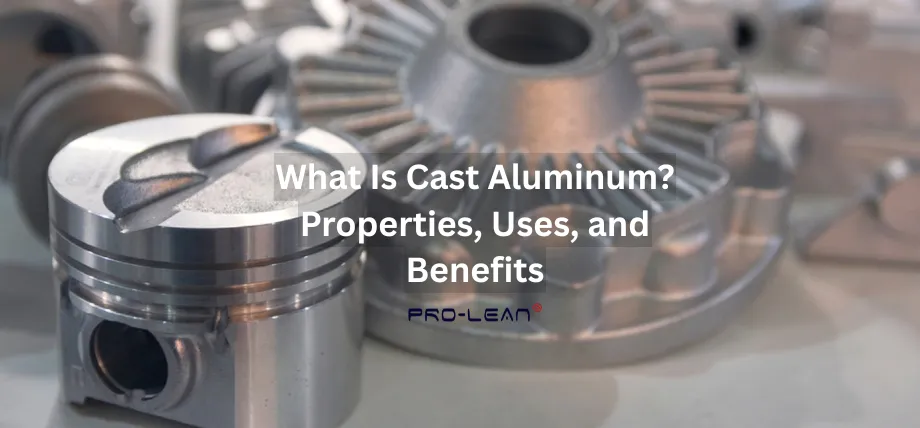
Precision cast aluminum products
Out of many industrially used forms of aluminum, cast aluminum is one of the most popular forms used in modern manufacturing. Cast aluminum has a unique balance of mechanical properties different from that of wrought, forged, or billet aluminum. Engineers choose cast aluminum especially for making complex shapes with moderate strength and low weight. This is a very reasonable technique when compared to other expensive forming operations.
To use it smartly, you must understand how it is produced and how it compares with other competitive engineering metals, such as cast iron and wrought aluminum.
What Is Cast Aluminum?
Cast aluminum is a product of forming aluminum alloys by melting them, pouring them into a mold, and then solidifying to form a rigid component. Casting produces the part directly from liquid metal. That’s why it’s different from other methods that shape the metal by rolling, forging, or extrusion.
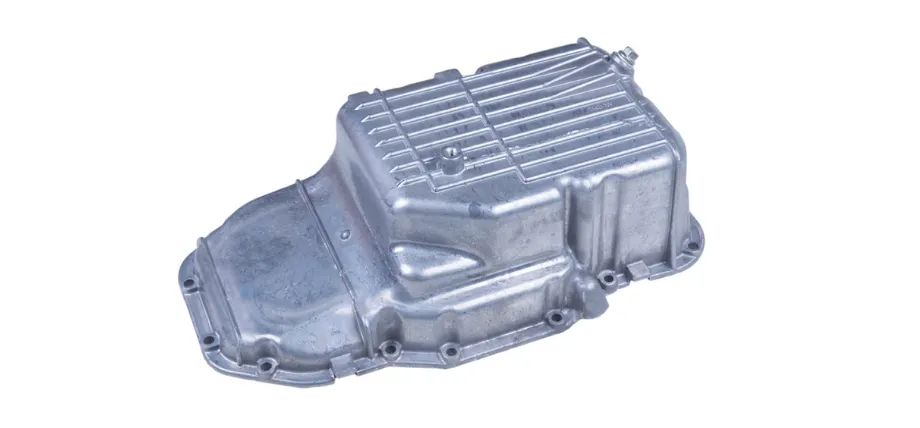
Cast aluminum automotive component
Appearance of Cast Aluminum
In general, cast aluminum alloys also contain silicon, magnesium, or copper to improve engineering properties such as increasing fluidity, reducing shrinkage, controlling strength, etc.
The highlights below on cast aluminum will give you a strong foundation for understanding its positioning in the industry, especially when compared to its competitors.
- It is produced by pouring molten aluminum into molds
- Can form complex internal and external geometries
- Has a lower melting temperature than ferrous metals
- Has a lower density than steel and cast iron
Like many other engineering metals, it is also a family of alloys available in different grades, which gives you a wide range of properties.
How is Cast Aluminum Made?
If you observe the process of producing cast aluminum, you can notice the following main steps carried out.
- Aluminum alloy ingots are melted in a furnace
- Alloying elements (as needed) are added to reach the target composition
- Molten metal is poured or injected into a mold
- Metal solidifies and cools
- Casting is removed and cleaned
- Heat treatment and machining may follow
The grain structure and mechanical properties of cast aluminum are mainly determined by the cooling rate and mold type. If you need finer grains and higher strength, you can achieve it using higher cooling rates.
Cast Aluminum vs. Regular (Wrought) Aluminum
Wrought aluminum is a type of aluminum that is shaped by rolling, extrusion, forging, or other deformation processes. On the other hand, it is shaped by solidification of the metal in a mold, as discussed above. The main differences between cast and wrought aluminum are:
Table 1: Comparison of Cast Aluminum vs Wrought Aluminum Properties
| Feature | Choose Cast Aluminum | Choose Wrought Aluminum |
| Manufacturing method | Casting | Rolling / Extrusion / Forging |
| Geometries that can be created | Very complex (customizable mold) | Limited |
| Ductility | Lower | Higher |
| Strength | Moderate | Moderate to high |
| Cost for complex parts | Lower | Higher |
| Recommended when | Complex geometry + near-net shape + moderate loads | Fatigue-critical applications + thin sections + high ductility required |
With the details in the above table, you can see that you must select casting when the part geometry is complex and a near-net shape is required. You must go for wrought aluminum when you need higher ductility, fatigue strength, or thin sections.Read more:Aluminum vs Cast Aluminum
Aluminum Casting Processes Explained
There are different aluminum machining processes. They mainly differ in cost, accuracy, surface finish, and mechanical properties.
Sand Casting Aluminum
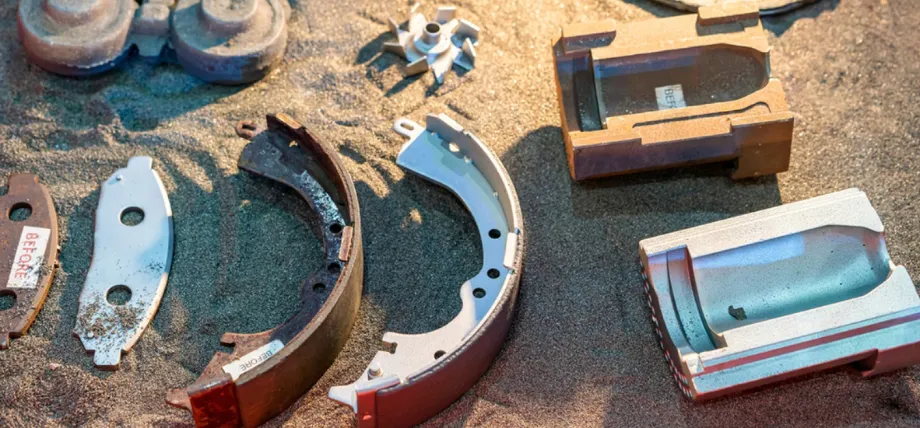
Sand casting components
In sand casting, you pack sand around a pattern to form a mold. Then you remove the pattern and pour molten aluminum into that sand cavity. Then it gradually solidifies into the shape of the pattern. And importantly, the sand mold gets broken after solidification. Therefore, sand casting aluminum is a one-time-use method.
- The main characteristics and advantages of sand casting are:
- Low tooling cost
- Suitable for large components
- Rougher surface finish
- Wider dimensional tolerances
Sand-cast aluminum is widely used to produce engine blocks, pump housings, and many industrial casings.
Die Casting Aluminum
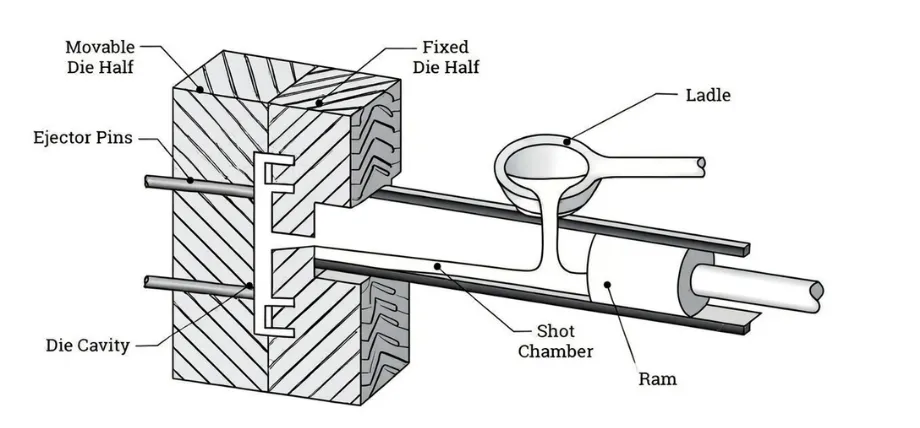
Die casting process diagram
Die casting aluminum is another popular technique for forming aluminum. Here, molten aluminum is forced into a hardened steel mold, which is also called the “die.” The forcing pressure is very high compared to other methods. Then, it is allowed to solidify and is ejected afterwards.
The casting die can be reused for many cycles. Therefore, die casting suits mass production better than sand casting. The main advantages you’ll get from die casting are:
- Smooth and high-quality surface finishes
- Ability to meet tight tolerances
- Suitable for thin walls and high production rates
One of the main disadvantages of die casting is that its initial tooling cost is high because of the steel. So, it can be expensive to use this method in small-scale productions. The most common products made using die-casting aluminum are transmission housings, electronics enclosures, appliance frames, etc.
Permanent Mold Casting
In permanent mold casting, you pour aluminum into a reusable metal mold, which is usually steel or iron. And the point it varies from die casting is that this is done using gravity or very low pressures.
Permanent mold casting is known for giving cleaner, smoother surface finish castings than sand castings. And this is the ideal technique for moderate production runs. When compared with sand casting, the most significant drawbacks are higher tooling costs and limitations in geometry.
Investment Casting
Here, you make a wax copy of the part and coat it with ceramic to form a hard shell. Then you melt the wax out. Aluminum is poured into the ceramic shell afterwards. Like in sand casting, here also, you break the ceramic after the metal is solidified. So, it’s disposable but known to be a very accurate method for precision parts. Investment casting is usually slower and more expensive (the cost for an individual part is very high) than both sand and permanent mold casting.
Cast Aluminum Alloys and Grades
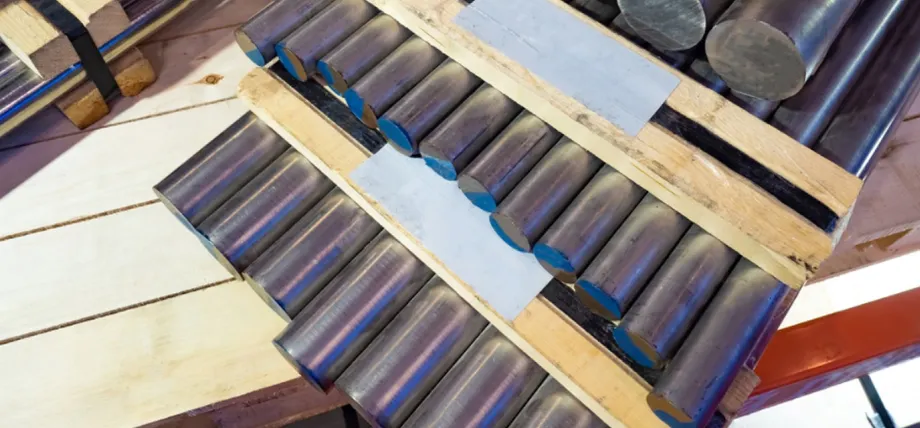
Industrial aluminum billets stack
There are different cast grades available in the market. They are grouped into numbered series (like 3xx.x, 4xx.x) mainly by their dominant alloying element. The “.x” is the indicator showing that it’s a casting alloy (not wrought). Grouping is based on the main alloying element because that element mainly controls the castability, strength, corrosion resistance, and heat-treat response of cast aluminium.
Common Cast Aluminum Alloy Series
Table 2: Common Series of Cast Aluminum Grades and Their Properties
| Series | Main Alloying Element | Examples | Well-Known Facts |
| 2xx.x | Copper | 201, 206 |
|
| 3xx.x | Silicon + Mg/Cu | 319, 356, 357 |
|
| 4xx.x | Silicon | 413, 443 |
|
| 5xx.x | Magnesium | 514, 535 |
|
| 7xx.x | Zinc | 771 |
|
3xx.x is the most widely available and used type for general-purpose applications. It’s one of the best aluminum grades for machining. This series balances the mechanical properties to obtain:
- Easy casting (good fluidity)
- Good strength after heat treatment (especially 356/357)
- Good corrosion resistance (under normal environmental conditions)
Therefore, it is suitable for everything from automotive to general industrial castings except special performance applications.
Alloying Elements and Their Effects
You can change or obtain additional properties of cast aluminium with alloying elements. You can add one or more elements as well as vary the percentage of the additions to get the desired properties. The main effects of adding the most common alloying elements are given below.
- Silicon: Improves fluidity (castability) and mold filling. Also reduces shrinkage defects.
- Magnesium: Improves heat treatability and precipitation hardening response. Increases strength as well.
- Copper: Increases strength and hardness but reduces corrosion resistance. Copper creates micro-galvanic couples with aluminum, increasing the corrosivity.
- Zinc: Improves strength and age-hardening response but increases hot-cracking tendency.
Heat-Treatable vs. Non-Heat-Treatable Cast Alloys
Heat-treatable alloys can be solution heat-treated (dissolving soluble phases into the aluminum matrix) and then aged (to form fine strengthening precipitates). This will give you significantly higher yield strength and hardness.
But you cannot increase the strength of the non-heat-treatable alloys in the same way since they don’t form useful strengthening precipitates during solution heat treatment. They’re mostly used as-cast or sometimes with stress relief only.
- Grades of heat-treatable aluminum: 356, 357, 206
- Grades of non-heat-treatable aluminum: 413, 443, 514, 535
Try Prolean Now!
Mechanical and Physical Properties of Cast Aluminum
Strength, Weight, and Durability
- Density of aluminum: 2.7 g/cm³
- Density of cast iron: 7.0 – 7.4 g/cm³
The weight of the common aluminum alloys is usually around one-third of equivalent cast iron parts. This lightweightness is a major reason for many applications, including special uses in the automotive and aerospace industries.
Corrosion and Wear Resistance
Cast aluminium has its natural oxide layer that protects the inner metal from corrosion. Therefore, many cast aluminium alloys perform well in outdoor and mildly corrosive environments. However, if you need to operate these parts in marine or chemical environments, special corrosion protection strategies are needed.
The wear resistance of cast aluminium is considered to be moderate. The inherent level is sufficient for many cases, but when sliding or abrasive contact is present, hard anodizing or surface coatings are used.
Thermal and Electrical Conductivity
It has good thermal conductivity, which is high enough to dissipate heat quickly from the components. That’s why it is widely used for heat sinks, engine components, and electronics housings.
Cast aluminum’s electrical conductivity is lower than copper’s, but it’s mostly sufficient for many electrical components.
Cast Iron vs Cast Aluminum
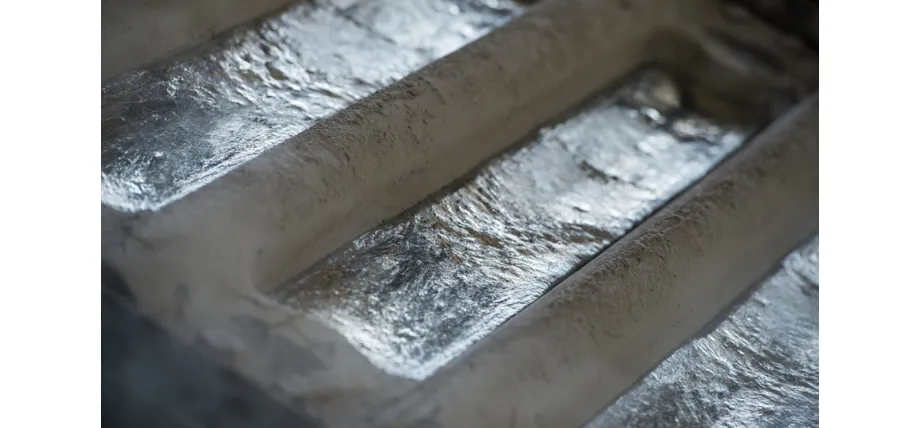
Raw aluminum casting ingots
Cast aluminum vs cast iron are two of the most common casting materials in manufacturing, and also a popular comparison among engineers. However, they serve very different purposes and have many different properties as well.
Table 3: Main Property Comparison Between Aluminum and Cast Iron
|
Property |
Cast Aluminum |
Cast Iron |
|
Density |
Low |
High |
|
Weight |
Low |
High |
|
Corrosion resistance |
Good |
Moderate |
|
Machinability |
Good |
Moderate |
|
Thermal conductivity |
High |
Low |
|
Vibration damping |
Moderate |
Excellent |
In industry, common aluminum alloys are mainly chosen for lightweight parts that also dissipate heat quickly. Cast iron is selected when vibration damping and wear resistance are more critical.
Cast Aluminum vs Die-Cast Aluminum
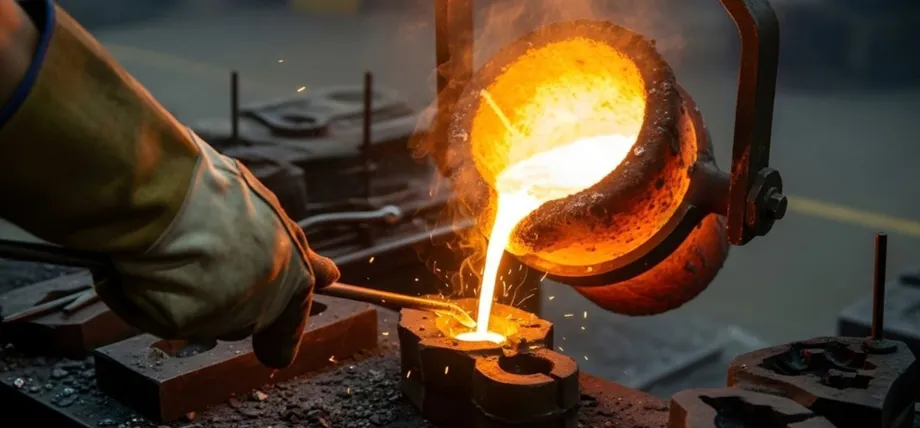
Pouring molten aluminum metal
Cast aluminum vs. die-cast aluminum is a comparison of manufacturing processes, not material types. Die-cast aluminium means aluminium made using the die-casting method. The main differences are:
- Die casting: Parts come out with an excellent surface finish. You can produce thin-wall components with tight dimensional control with this method.
- Gravity casting (sand or permanent mold) generally produces stronger and more ductile parts (due to slower solidification and lower porosity). However, their surface finish usually doesn’t meet die casting’s standards.
You can choose the right process based on your priority: precision, appearance (die casting), or mechanical performance (gravity casting).
Forged vs Cast vs Billet Aluminum
You might have heard of cast, forged, and billet aluminum. This is also a common confusing classification of aluminum. These don’t mean different “grades” but differ in how the starting metal is produced before machining. Forged vs cast vs billet aluminum have many differences in properties and their own typical uses, which is why choosing the right one is highly important.
Table 4: Forged vs. Cast vs. Billet Aluminum
|
Form |
Production Method |
Typical Use |
|
Cast |
Aluminum is melted, poured, or injected into a mold, and then cooled. Also lightly machined if needed. |
Parts with complex shapes, internal cavities, housings, engines, and pump components |
|
Forged |
Heated aluminum is pressed into shape using heavy force, then machined to the final size. |
High-strength parts such as suspension components, wheels, brackets, and structural hardware |
|
Billet |
A solid aluminum bar or plate is machined directly into the part. |
Prototypes, low-volume production, and custom parts |
Try Prolean Now!
Advantages of Using Cast Aluminum
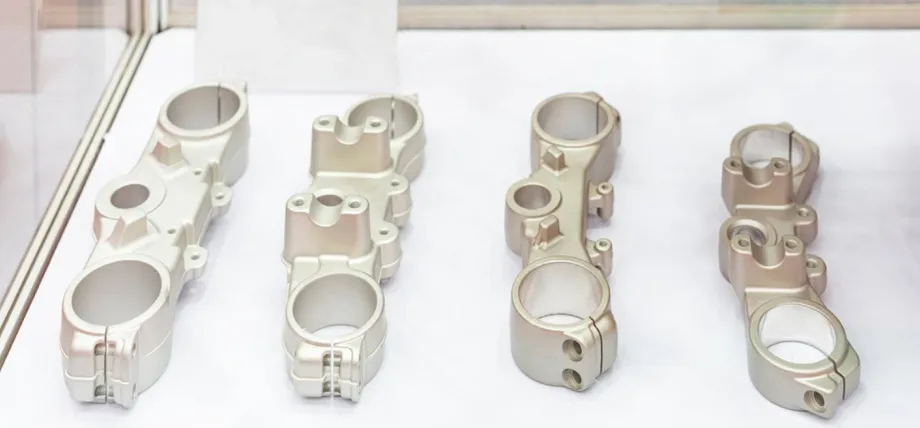
Finished cast aluminum brackets
- Lightweight: Aluminum has a lower density than many engineering metals and is also strong, but has lower strength than forged aluminum. So, you can get lighter parts without sacrificing basic structural performance.
- Good corrosion resistance: The natural oxide layer of aluminum protects the surface from corrosion. You can use aluminum safely for many normal outdoor and industrial environments without heavy coatings.
- Ability to form complex geometries: You can form geometries such as ribs, bosses, and pockets directly with casting. If you try to form these with solid machining, they would be either very slow or highly expensive.
- Lower tooling cost: Compared to forging dies and presses, casting tooling is usually simpler and cheaper, especially for sand casting and moderate production runs.
- Good thermal conductivity: Cast aluminum can dissipate heat quickly. It’s widely used for heat sinks, engine parts, and housings that must release heat fast.
- Recyclability: Aluminum can be melted again and reused. Therefore, scrap and end-of-life parts can feed back into production. You can save almost all the metal because of this opportunity.
Common Cast Aluminum Products and Applications
- Automotive engine blocks: Mainly used to create lightweight parts that can also handle heat and internal pressure. Another popular application is coolant channels/oil passages inside.
- Gearbox and transmission housings: Can obtain a rigid outer shell without a huge mass addition. Die casting is mainly used to make these housings since clean surfaces and accurate fits are important.
- Bodies of Pumps: You can include curved flow paths, mounting, and ports at the same time in one piece. So, you won’t need to assemble multiple parts.
- Heat sinks: Aluminum spreads heat well and can be formed precisely in a single casting.
- Lighting housings: Aluminum is used for lighting housings since it can protect electronics, resist outdoor corrosion, and help remove heat from LEDs effectively.
- Structural brackets: You can use them to get the needed stiffness without heavy steel.
- Cookware: Aluminum containers heat evenly and are easy to move and handle due to their low weight. Therefore, they are widely used for kitchen equipment, usually with a coating for durability.
Optional Finishes and Post-Processing for Cast Aluminum
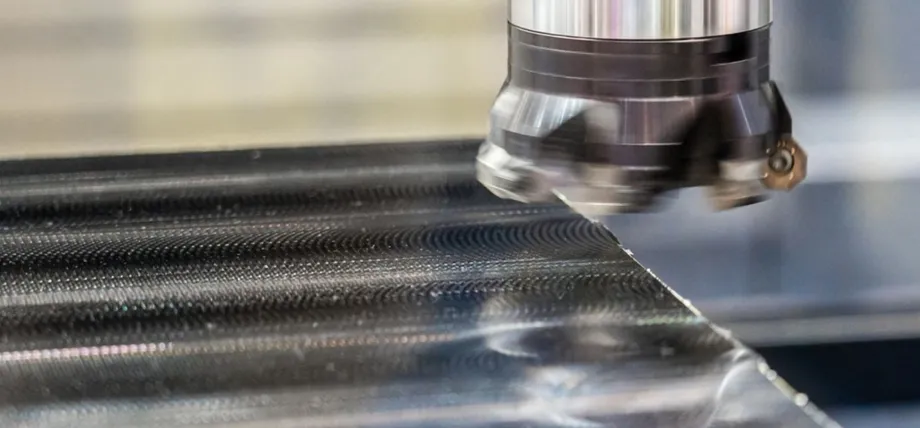
CNC milling tool path
Machining and Heat Treatment
Outputs obtained from casting aluminum are usually close to the final shape. But sometimes they need aluminum machining to reach the required functional properties and proper fits. Popular post-processing operations are:
- CNC milling for faces, pockets, and slots
- CNC turning for round features and bores
- Drilling and tapping for fasteners and threaded holes
Heat treatment is applied to heat-treatable alloys to increase strength, hardness, and dimensional stability.
Surface Treatments
You can decide whether you need an additional surface finish based on the environment, appearance, and durability needs of your part. You can go for any of the following options:
- Anodizing – forms a hard, corrosion-resistant oxide layer
- Powder coating – durable colored coating with good wear resistance
- Painting – cosmetic protection and branding
- Conversion coating – improves corrosion resistance and paint adhesion
You can extend service life and improve the appearance of your parts with the above surface treatments.
Factors to Consider When Choosing a Cast Aluminum Alloy
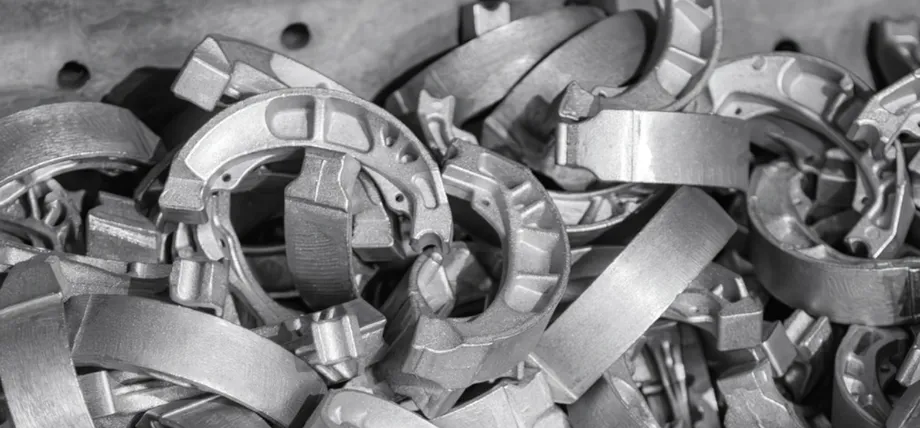
A batch of cast components
It’s important you do alloy selection strategically since the wrong choice increases expenses from the starting point of production and can also lead to unexpected errors and damage. Therefore, you must choose an alloy that can perform reliably and economically for your application. The main factors you must consider during the material selection process are:
- Required mechanical strength
- Operating temperature and environment
- Machinability
- Casting method
- Production volume
- Cost
The best option is to connect and decide with the support of an experienced aluminum CNC machining service to gain consistent quality and professional insights.
Aluminum CNC Machining Service
Proleantech provides custom aluminum machining services for performance metals like tempered aluminum alloys and custom aluminum alloys. We are an ISO certified company that provides prototyping, scaled production, and assistance to move from prototype to low-volume and high-volume manufacturing. We also deliver reliable aluminum die casting service to enrich our manufacturing solutions.
We can also cast aluminum and machine it to the exact specification, with close tolerances for moving parts.
Request a free quote today!
Conclusion
Aluminum is a very practical engineering material for producing lightweight, complex, and cost-effective components. It is an ideal alloy for many structural, thermal, and mechanical applications due to its balanced properties and the ability for precision machining. Having a proper understanding of alloy systems, casting processes, and limitations will help you pick the right grade for your applications.
FAQ’s
How are Cast Aluminum parts made?
Cast aluminium parts are made by pouring molten aluminium alloy into molds to form complex, near-complete shapes that require little to no post-machining.
0 Comments