
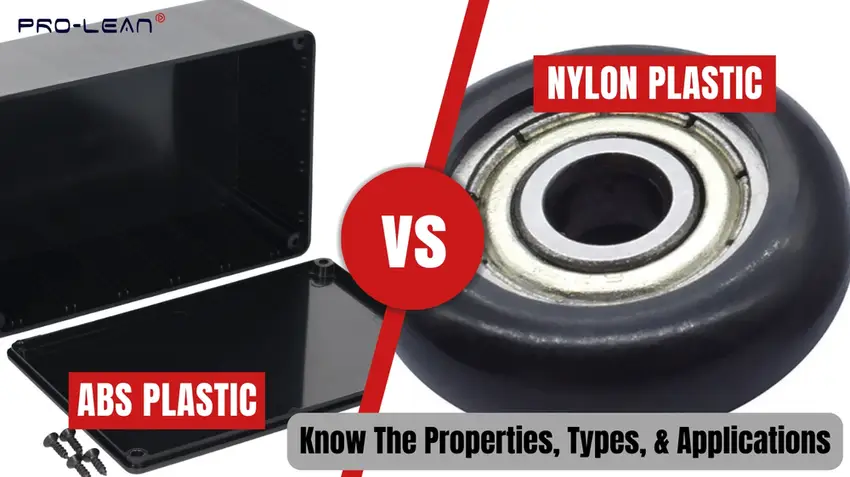
ABS vs nylon
The choice of ABS plastics vs nylon plastics is critical because it can determine whether your parts fail or perform as expected. Rush into the selection, use the wrong material, and your finances suffer a dent. The truth is that while ABS and nylon are some of the most common and popular thermoplastics, they have some distinct properties.
Nylon performs better in applications involving friction, repeated loading, and elevated temperatures. ABS is a better choice for indoor components that require good impact resistance, stiffness, and dimensional stability. Because of these properties, ABS CNC Machining is commonly used for housings, covers, fixtures, and general-purpose plastic parts, while nylon is preferred for bearings, gears, hinges, and other load-bearing components.
For more differences between ABS plastic vs nylon, read on.
What is ABS Plastic?
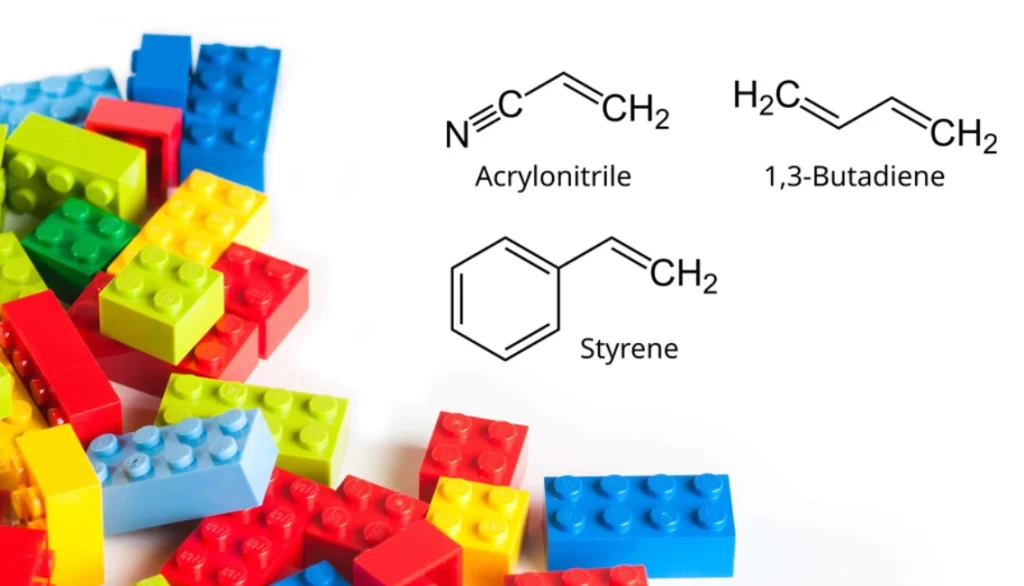
ABS plastic
ABS stands for Acrylonitrile-Butadiene-Styrene. It is a versatile thermoplastic comprising three monomers: Acrylonitrile, butadiene, and styrene. The percentage distribution of these core units is as follows.
| Acrylonitrile | 23–41% |
| Butadiene | 10–30% |
| Styrene | 29–60% |
Due to its processing ease, strength, and toughness, the resin is used in a wide range of industries.
Is ABS Plastic Strong?
Yes, ABS plastic is considered strong and suitable for tough applications. Its tensile strength falls between 45 and 60 MPa. This means the plastic can withstand a significant load before it deforms plastically. The compressive yield strength is between 65 and 75 MPa. It can support significant crushing loads before it starts failing plastically.
What Plastic is Better Than ABS?
Nylon (PA), Delrin / Acetal (POM), UHMW-PE, Polycarbonate (PC), and PEEK are better plastics than ABS because they offer better machineability.
Nylon (PA) – Nylon is tougher and more fatigue-resistant. Nylon filament is preferred for strength and flexibility in additive manufacturing.
Delrin / Acetal (POM) – Stiffer and more dimensionally stable
UHMW-PE – Offers lower friction and higher abrasion resistance
Polycarbonate (PC) – Higher heat resistance and impact strength
PEEK – Stronger, more chemically stable, and more temperature resistant
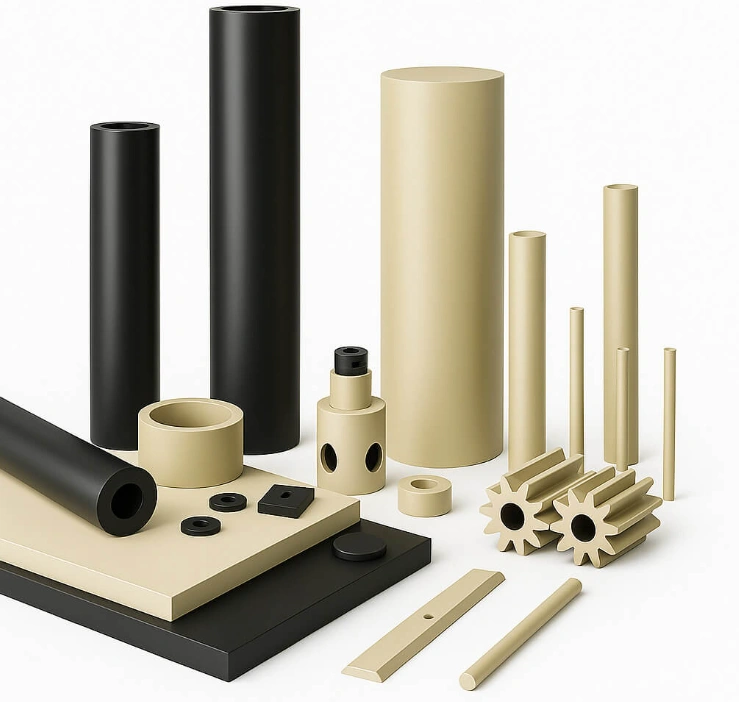
PEEK plastic parts
Advantages of ABS
- More cost-effective than most engineering plastics
- Easy to machine using standard tooling
- Tough and impact-resistant parts
- Lightweight and rigid
- Paints perfectly after CNC machining
Limitations of ABS
- Plasticizes at relatively low temperatures
- Poor ultraviolet and weather resistance
What is Nylon Plastic?
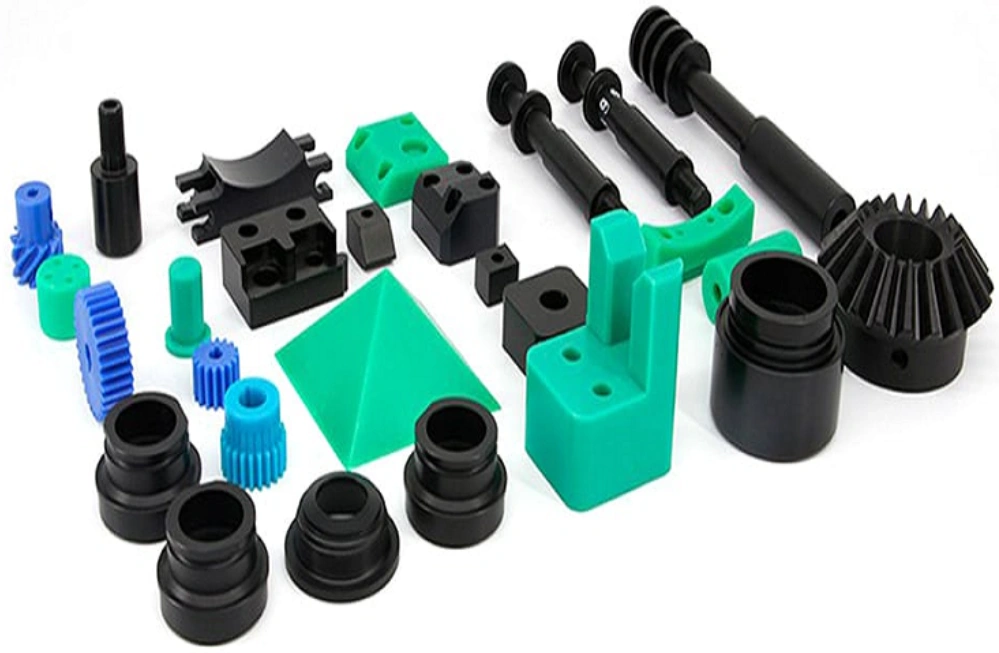
Nylon plastic parts
Nylon, also scientifically called polyamide (PA), is a popular synthetic polymer highly regarded for its versatility and superior mechanical properties. It is a product of amide polymerization. Nylon 6 and Nylon 66 are the most popular nylon grades. First synthesized in 1935, the innovative product has been widely used in automotive, power tools, medical, and consumer items, among other industries.
Is Foam Better Than Nylon?
Foam, an air-filled porous polymer structure, is better than nylon in its capability to cushion or insulate. The material is also easier to cut and compress. Foam would be preferable in applications where low weight and easy forming are the main considerations, for instance, packaging.

Packaging foam
Advantages of Nylon
- Excellent abrasion and wear resistance
- Stiff and strong for load-bearing components
- Easy to CNC machine
- Nylon’s heat resistance is higher
Limitations/Disadvantages of Nylon
- Relatively high moisture absorption – loses dimensional stability
- More expensive than ABS
- Tends to be stringy when CNC machined
ABS vs Nylon Comparison
ABS and nylon can be compared based on mechanical, chemical, and thermal properties, processing methods, cost, and applications.
ABS vs Nylon: Mechanical Properties
ABS and nylon have different mechanical properties in terms of machinability, strength, abrasion resistance, and temperature resistance. These differences are summarized in the table below.
Is ABS stronger than Nylon?
Yes, nylon is stronger than ABS, if we use tensile strength as the basis. Again, if nylon 6/6 is the benchmark, we are looking at a tensile strength of up to 85 MPa against ABS’s 45 MPa. But remember that’s on paper.
In real-life situations, the plastic absorbs water, and towards equilibrium, stiffness reduces due to the plasticization of the polymer chains. Without environmental and conditional control, strength could be reduced by as much as 50% in humid conditions.
| Mechanical Property | ABS | Nylon |
| Tensile strength | 45–60 MPa | Up to ~85 MPa (dry), drops with moisture |
| Compressive strength | 65–75 MPa | Higher than ABS’s |
| Machinability | Excellent | Good but stringy |
| Abrasion resistance | Moderate | Excellent |
| Temperature resistance | Low | High |
ABS vs Nylon: Physical Properties
On appearance, ABS is typically opaque while nylon is transparent or semi-transparent. With a shrink rate of up to 2.0%, nylon beats ABS’s rate (0.9%). The melting points are also different, with nylon’s 265°C being much higher than ABS melting temp (130°C).
These differences partly inform the different applications suitable for each of these plastics.
ABS vs Nylon: Chemical Resistance
ABS provides chemical resistance, but not to the level of nylon. It is impervious to a wide range of acids, bases, inorganic salts, and water. However, it dissolves in aldehydes, chlorinated hydrocarbons, and ketones. When it comes to nylon, excellent performance is evident against solvents, aromatic hydrocarbons, salt solutions, and alkalis.
ABS vs Nylon: Thermal Properties
Due to its higher melting point than ABS melting temp, nylon has better thermal stability than ABS. Its heat deflection temperature is higher. Glass-filled nylon has a heat deflection temperature of approximately 250°C.
ABS vs Nylon: Processing
The three most prominent processing methods for ABS and nylon are CNC machining, 3D printing, and injection molding. ABS is best suited for CNC machining and 3D printing. ABS is the more machinable plastic with higher dimensional stability, factors that result in better surface finish and generally quality parts.
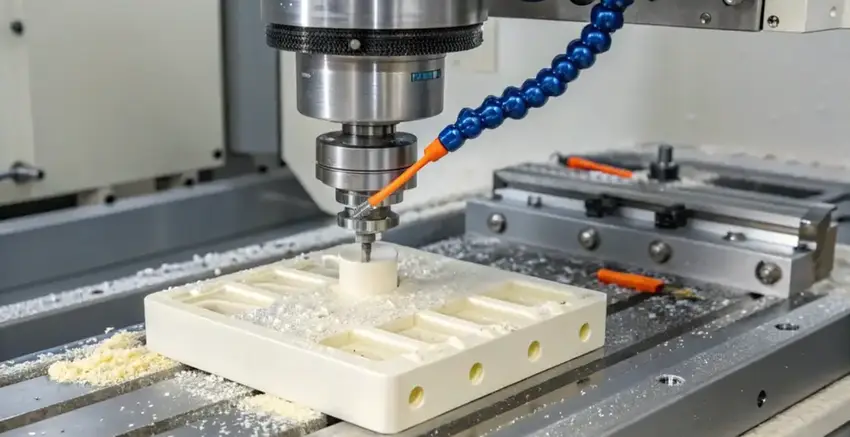
Precision nylon machining
ABS vs Nylon: Cost Comparison
There are two cost angles for the plastics: Material costs and processing costs. Nylon plastic tends to be more expensive from both perspectives. The material is durable and strong, elements that come at a cost. The lower material cost of ABS is the reason this material is more commonly used for consumer goods and other mass manufacturing applications.
On the list of disadvantages of nylon would also be that the material requires higher processing temperatures for longer. The drying requirement adds to the processing complexity and cost. Note also that nylon filament is typically more expensive than ABS filament due to properties such as moisture sensitivity and heat resistance.
Try Prolean Now!
ABS vs Nylon: Applications
Since nylon plastic has incredible strength, durability, chemical resistance, and abrasion resistance, its common applications are somewhat different from those of ABS.
Nylon’s Applications
Nylon parts perform well in areas including automotive, electronics, medical packaging industries, and more.
Automotive Parts:
Precision-machined parts for the automotive industry are common for bushings, clips, and gears, among other areas. From our nylon machining services experience, many users choose nylon parts for low friction, low weight, and high wear resistance.
Consumer Products:
The blend of low weight and high strength is the biggest selling point for nylon consumer products. Some regularly machined nylon parts for these products are rollers, fasteners, and housings.
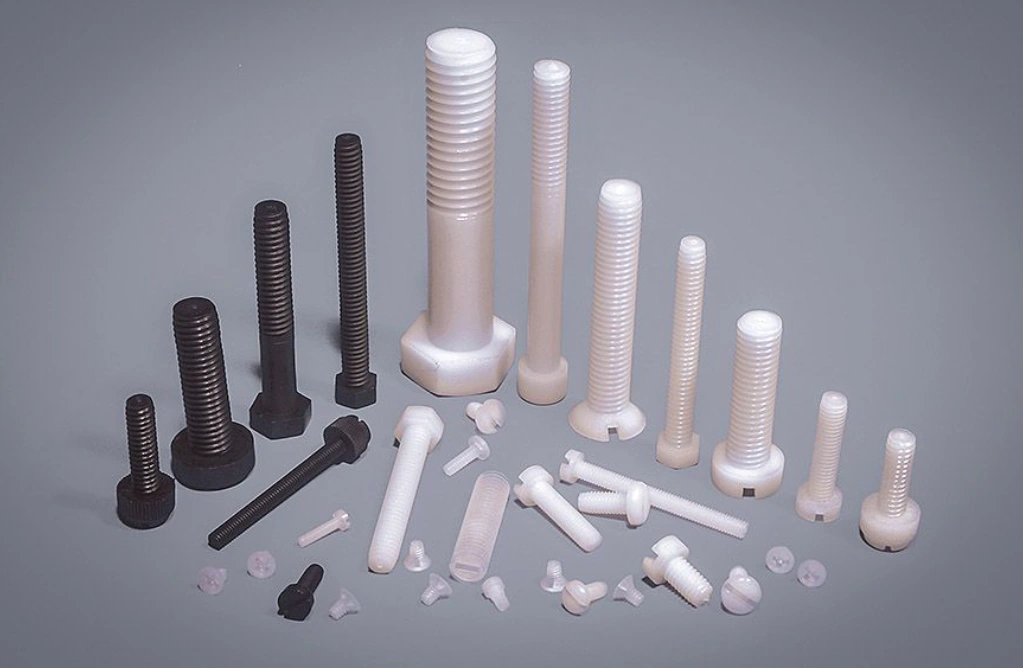
Nylon fasteners
Electronics
CNC-machined nylon parts are mostly used in this industry as insulation, spacers, and connectors. One of the advantages of nylon is dimensional stability, which is critical in these parts.
Medical Industries
Cleanliness and durability are some key advantages of nylon applied in the medical and healthcare space.
Industrial Wear Parts
Machined nylon parts for conveyor systems, bearings, slide pads, and guide rails are quiet and low-maintenance. They are perfect in manufacturing settings.
Packaging Industry
Nylon parts are commonly machined for packaging lines for their high impact resistance and low friction. They support speedy, smooth production.
ABS’s Applications
For ABS, the best applications are those that require impact resistance, ease of processing, and cost-effectiveness. Its parts can be used in relevant applications for automotives, consumer electronics, toys, and household appliances.
Automotive Industry
You can use machined ABS plastic in various automotive components, including structural interior systems and dashboards. We suggest this material for such applications when the client is seeking an aesthetic, cost-effective, and impact-resistant plastic.

ABS material car interior parts
Alt text: Is ABS plastic strong? Black ABS plastic dashboard, center console, and trim components in a car interior, proving the strength of this plastic
Consumer Electronics
ABS parts in consumer electronics deliver unmatched aesthetics, durability, and dimensional stability. Even better, this plastic is more affordable than many comparable engineering plastics.
Toys
ABS has the properties that suit a wide array of toy types. The thermoplastic is tough and versatile.
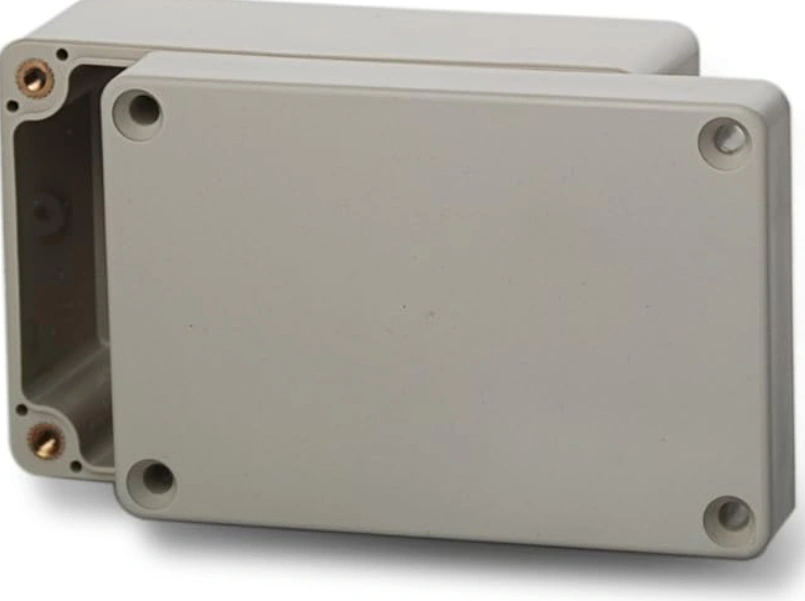
ABS plastic industrial equipment enclosure
Household Appliances
Knobs, panels, and mounts for different household items are made of ABS material. The material’s impact resistance, machinability, and cost-effectiveness perfectly suit these applications.
Comparison Table for ABS Plastic vs Nylon
The table below summarizes the comparison points discussed so far for ABS vs. nylon.
|
Property |
ABS Plastic |
Nylon Plastic |
|
Appearance |
Opaque |
Transparent / semi-transparent |
|
Moisture absorption |
Very low |
High – affects stiffness |
|
Dimensional stability |
Excellent |
Poor in humid environments |
|
Heat resistance |
ABS’s heat resistance is low |
Nylon’s heat resistance is high |
|
Processing temperature |
Low |
High – requires drying |
|
CNC surface finish |
Very good |
Good |
|
Common applications |
Consumer parts, enclosures, housings |
Load-bearing parts such as gears and bearings |
|
Cost |
Low |
Higher |
Try Prolean Now!
Making the Choice Between ABS and Nylon
To choose between ABS and nylon, the considerations that feature prominently are intended use, durability, performance, availability & compatibility, and cost.
Intended Use
The primary function of the part is one of the biggest considerations. Nylon is a better material if you require parts for high-stress applications. It therefore makes excellent bearings and gears.
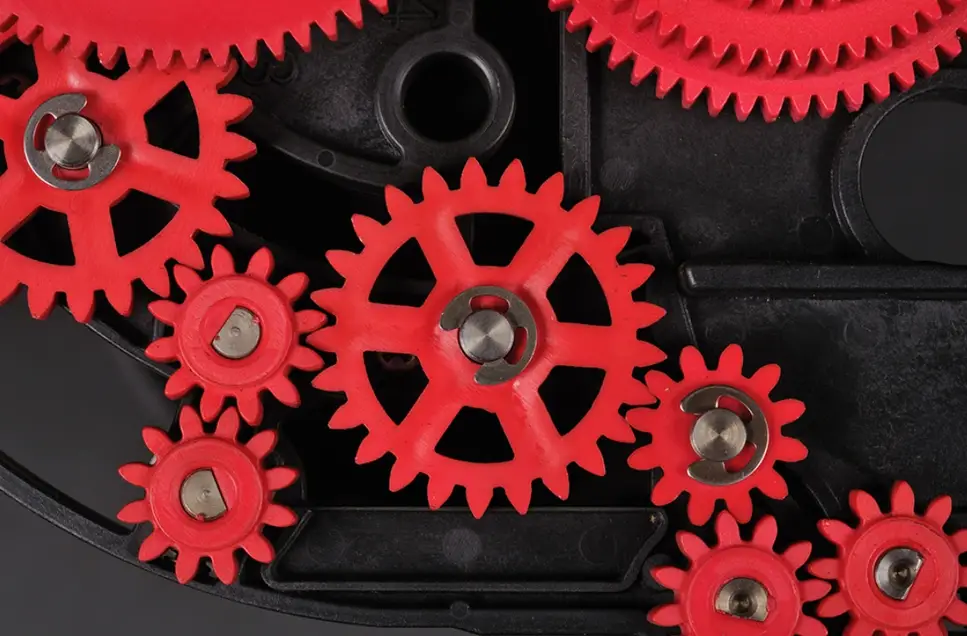
Nylon plastic gears
ABS is preferable for a balance of cost-effectiveness and durability. Its parts are found in many regular items at home and enclosures.
Durability
It is important to insist on durability, whereby, while both ABS and nylon are durable, the latter has higher wear resistance. This wear resistance is critical for its suitable parts, such as bearings and gears, as mentioned above.
Availability and Compatibility
Before selecting either ABS or nylon, ensure you have a dependable supplier of the parts. The material and parts should be supplied promptly and in the right amounts. Ensure also that the supplier’s machinery can accommodate the processing requirements of the material.
Performance Requirements
Performance is usually a sum of several factors, not just chemical resistance, or impact resistance, or strength. For instance, alongside strength, consider a factor such as thermal performance. Nylon does withstand thermal elements very well, so it could be a great choice for heat-sensitive environments.
Cost Analysis
The cost question is inevitable, with the overall cost per unit weight generally being higher for nylon. Processing nylon parts (both 3D printing and CNC machining) can in some cases be efficient, though total production cost often depends on material price, processing conditions, and application requirements.
But again, it is worthwhile to cast the eyes wider when analysing this aspect. For instance, due to nylon’s water sensitivity, the need for additional drying steps may have a significant cost impact.
In Conclusion
ABS and nylon are incredible plastics, but optimizing them requires thorough analysis and professional processing. To ensure ABS and nylon parts meet requirements, consider how they fit precision manufacturing, weather exposure, performance requirements, and your budget.
Advantages of ABS could include that it is a cost-effective option per unit weight, but thinking through other factors could sway your decision towards nylon. Because of the several trade-offs involved, having a professional on your side helps a lot.
Use ProleanTech’s nylon and ABS machining service, which is comprehensively designed for such issues. Call today for more information.
0 Comments