
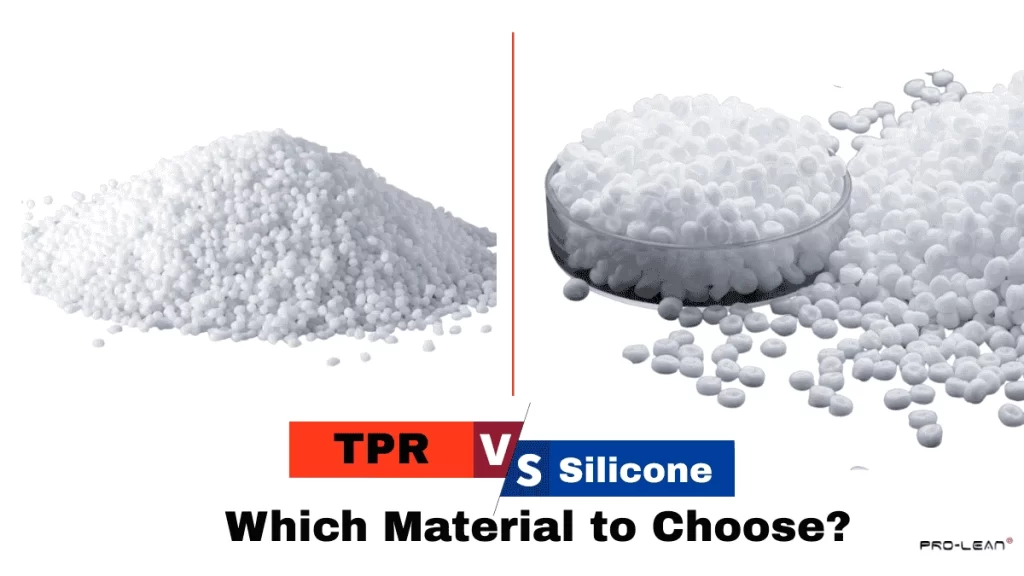
TPR vs Silicone
Are you struggling to choose between TPR vs Silicone for your parts? Although both of the injection molding materials have some similarities, they have specific differences in performance, durability, flexibility level, ease of processing, and cost.
Understanding differences helps to decide which one best suits your application requirements and analyze the balance of performance and material cost. This article will discuss both TPR and Silicone in detail and the key differences between them, as well as factors to consider for the selection process.
What is TPR Material?
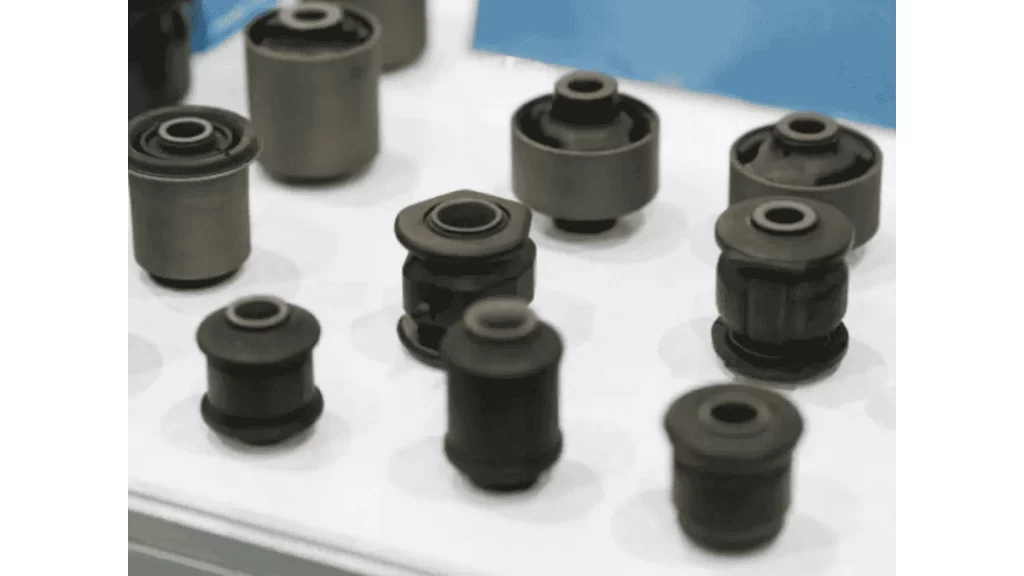
TPR material
Thermoplastic rubber (TPR) is a type of elastomer made with polystyrene (~23%) and butadiene synthetic rubber(77%). This material combines the flexibility of rubber and the molding characteristics of thermoplastics. It can be shaped through standard injection molding machines and tooling, with a few adjustments in the process.
Internally, TPR plastic materials are block copolymers formed by styrene and rubber monomers, Styrene-Butadiene-Styrene(SBS). This structure provides rubber-like flexibility, hardness & and flowability similar to those of polystyrene.
Properties of TPR
TPR properties overlap characteristics of rubber and plastics. It provides high fatigue strength, impact resistance, abrasion resistance, and chemical neutrality.
- Melting Point: TPR does not have a specific melting point; It ranges from 140–185 °C.
- Elasticity: TPR can stretch and rebound, offering excellent flexibility and elasticity. Its Young’s modulus of elasticity varies from 1 to 20 MPa.
- Hardness: The hardness of TPR also varies depending on its formulation, from 0 to 100 Shore A.
- Impact and Abrasion Resistance: In wearable or rugged conditions, thermoplastic rubber does not degrade. It also has high impact strength.
- Chemical Resistance: TPR is neutral to dilute-moderate acids, alkalis, hydrocarbons, oils, etc.
- Electrical Insulation: TPR is a good electrical insulator and can absorb electrical shocks.
Is TPR Material Toxic?
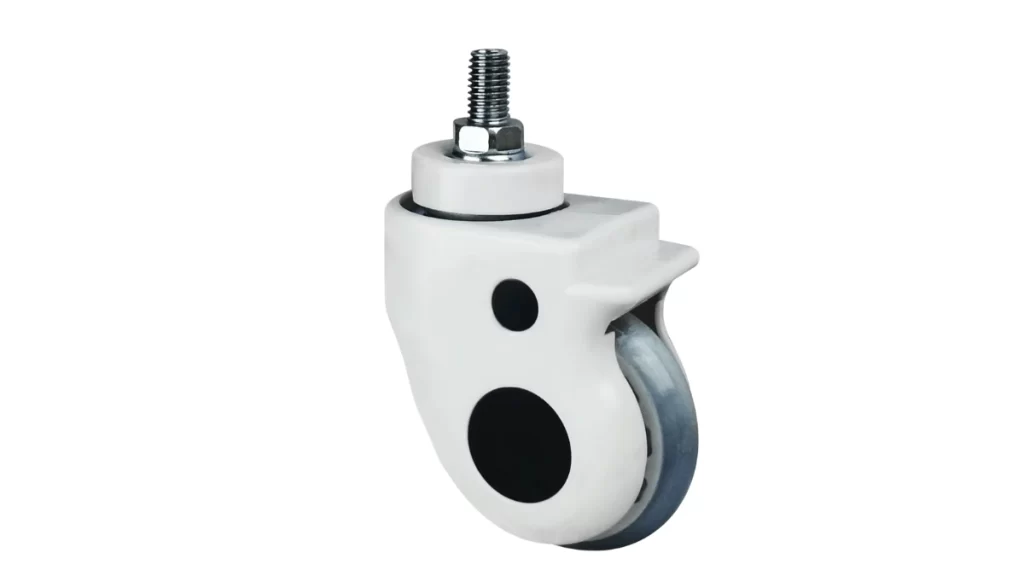
TPR medical device part
No, TPR is considered a non-toxic material in manufacturing. Its formulation and process do not involve any toxic elements. In general use, it does not release any harmful chemicals and remains neutral to the exposed environment.
TPR compliance with different international safety standards for human-contact,food-contact, and medical uses. For example, REACH, PAHs, EN 71-3, ASTM F963, FDA 21 CFR 177.2600, and USP Class VI.
Therefore, if you choose the right grade, TPR is safe for human contact, food processing, mild chemical processing, and medical devices.
What is Silicone Material?
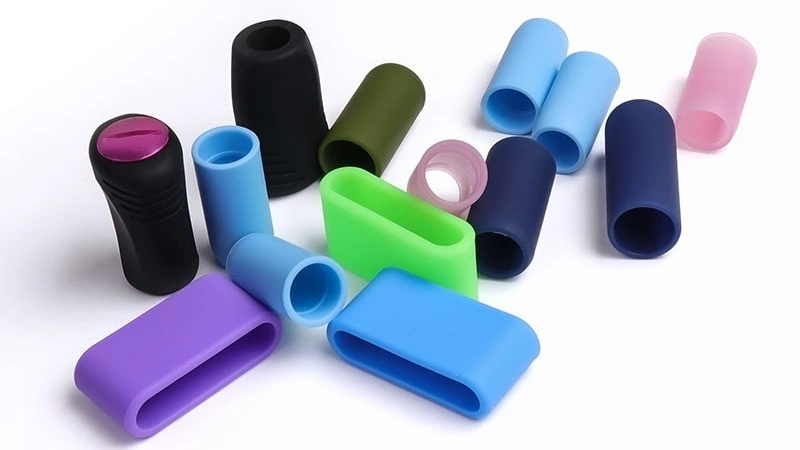
Silicone materials
Silicone is another rubber-like material, classified as a thermoset elastomer, which means it can not melt and reset. Unlike TPR, silicone is made with cured cross-link bonding of polymer chains.
Examining its internal composition, the siloxane chain is at the core, comprising silicon, oxygen, and hydrocarbon as key components, along with various catalysts & fillers. Meanwhile, the vulcanization process transfers this composition into a flexible material with rubber-like properties.
Furthermore, silicone is more challenging to injection mold and not compatible with conventional thermoplastic molding equipment & tooling. It requires LSR or thermoset shaping equipment and specialized tooling.
Properties of Silicone
Some properties of silicone include chemical resistance, elasticity, thermal stability, mechanical strength, and hardness. Details are:
- Elasticity: It is an elastic material with a high elongation at break. The Young’s modulus of elasticity ranges up to 4 MPa.
- Chemical Resistance: Like TPR, it also resists chemical solutions and some organic solvents, except high-concentration acids. Additionally, it repeals water contact.
- Thermal Stability: Silicone is stable up to 300°C, after which it slowly begins to decompose.
- Mechanical Strength: Fillers in silicone composition, like fumed silica, provide good tensile strength and tear resistance.
- Hardness: Silicone also has soft to hard grades, with hardness from ~10 – 90 shore A.
Are TPE and Silicone the Same?
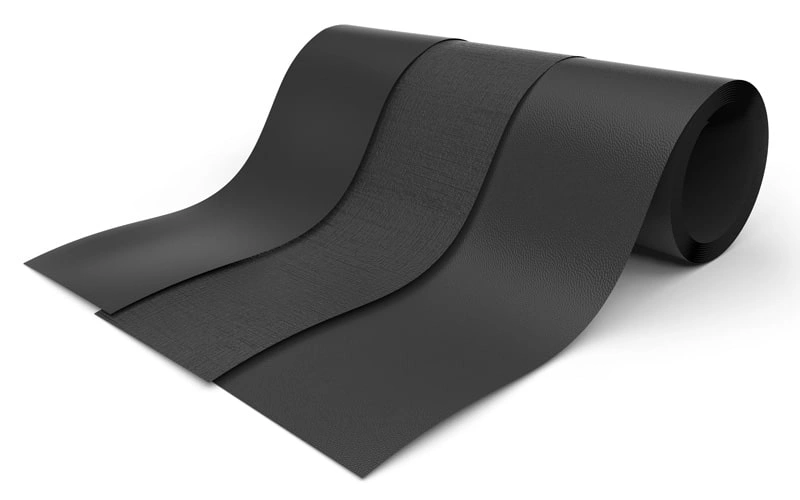
TPE Material
No, TPE and silicone are not the same.TPE (Thermoplastic elastomers) show the flowability of plastic after melting, whereas Silicone is a thermoset elastomer that can not be remelted after vulcanization.
Often, suppliers and manufacturers use the term Silicone TPE for thermoplastic elastomers due to their similar kind of stretchability, but TPE and Silicone are essentially different materials.
→You can read TPR Vs TPE here.
Try Prolean Now!
Key Differences in TPR VS Silicone
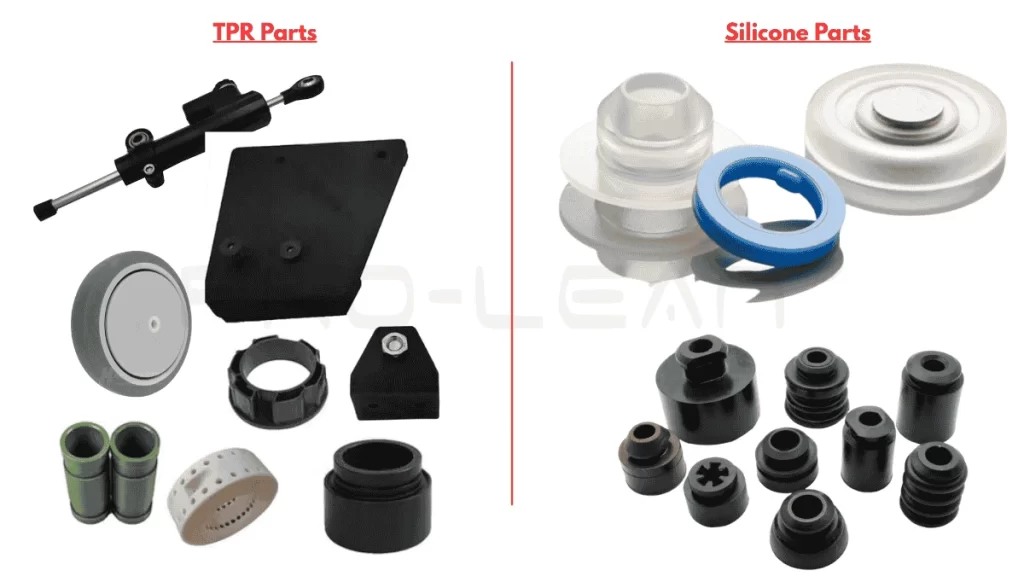
TPR vs Silicone parts
Silicone is a thermoset elastomer that offers high heat-resistance and is considered more compatible for medical use. On the other hand, TPR is cost-effective and more pliable. Similarly, these two materials have differences in hardness level, sustainability, performance, application preferences, etc. After discussing what is TPR rubber and silicone individually, now we can compare Silicone Vs TPR with various specific criteria.
Material Composition
TPR involves a thermoplastic polymer and elastomer cross-link, whereas silicone is made of siloxane (Si–O) and organic side groups. The strong inorganic bonds in silicone make the composition more stable compared to TPR.
Strenght
Typically, TPR offers higher tensile strength and elongation at break than Silicone. However, the grades you are comparing can alter the comparison.
|
Mechanical Strenght |
Silicone |
TPR |
|
Compressive (~ MPa) |
5-11 |
8-20 |
|
Tensile (~ MPa) |
10-30 |
Not specified, comparable to Silicone |
Hardness
TPR provides higher hardness than silicone, and it can be formulated with a wide range of hardness levels (0 to 100 Shore A), which makes it more suitable for molding power tool handles, shoe soles, and industrial seals.
Durability and Sustainability
TPR is more susceptible to permanent deformation under continuous stress and has lesser lifespan, 5-10 years. On the other hand, silicone lasts up to 20 years. Furthermore, TPR can be easily recycled into new forms and shapes, whereas it is challenging for cured silicone rubber. Therefore, TPR is a more sustainable material.
Ease of Injection Molding
When shaping raw material form into the desired shape, Silicone involves a vulcanization process, which is it is more challenging to process and requires specialized rubber molding machines and mold tooling. On the other hand, TPR can be injection molded more easily with quick production cycles.
Application Preferences
TPR is suitable for consumer goods grips, shoe soles, overmolding sections, and industrial components. On the other hand, silicone is preferred for high-temperature seals, electrical insulation, medical device components, etc.
Material Cost
Silicone is more costly than TPR, and specialized biocompatible & other specific application-oriented grades are available. Consequently, high performance and durability can justify the investment.
Read More: Thermoset vs. Thermoplastic
Try Prolean Now!
Factors to Consider while Choosing between TPR Vs Silicone
Both TPR and silicone have many advantages, and choosing the right option for your parts requires consideration of many factors. It involves defining the application requirements and analyzing which one is more likely to fulfill them between silicone and TPR.
Let’s look at the list of selection factors below:
- Desired Mechanical Performance: Use TPR when your parts/products need to sustain high load and risk of abrasion, and use silicone when long-term deformation resistance is desired.
- Operating Temperature: Consider the temperature at which parts need to perform. Silicone is suitable for higher temperatures, up to 250°C.
- Required Flexibility: Consider the range of elongation at break for the intended application; Silicone has more flexibility.
- Longevity: Consider the required lifespan of parts of products for applications.
- Regulatory Certifications: Based on the industry for which you are making the parts, check the industry regulations or certifications that the materials need to comply with.
- Cost-effectiveness: Consider which material gives the optimal value of money while fulfilling application requirements. It does not mean compromising the functionality and performance of desired parts for cost reduction.
Summing Up
At the end, the selection between TPR Vs Silicone depends on the performance requirements, cost-effectiveness, and compatibility with the application environment. TPR is an ideal choice for producing economical parts with soft touch and good wear resistance. Meanwhile, Silicone excels in elevated temperatures, chemical exposures, dimensional stability, and medical safety.
If you need further consultations regarding material selections or injection molding service for custom parts, contact ProleanTech. We are a professional on-demand manufacturer with more than a decade of experience in the industry, delivering comprehensive manufacturing solutions for industries.
FAQs
Is TPR better than silicone?
TPR is not better in all cases. Silicone outperforms it in thermal stability, chemical resistance, and durability.
What are the disadvantages of TPR material?
The major disadvantages of TPR plastic materials are lower heat resistance, being prone to deformation under constant stress, and being less tolerant to UV rays and chemicals.
Is TPE Silicone?
No, TPE is not silicone; they are different materials.

0 Comments