
CUSTOM CNC MACHINING
CNC Grooving
ServicesFunctional grooves.
Drawing-led precision.
Custom grooves and slots for shafts, housings and mating parts. Bring your drawing for external, internal or face grooving, with milled slots reviewed as part of the manufacturing route.
Your files are confidential. Optional NDA available ↗
GROOVES & SLOTS
Choose the feature.
Review the machining route.
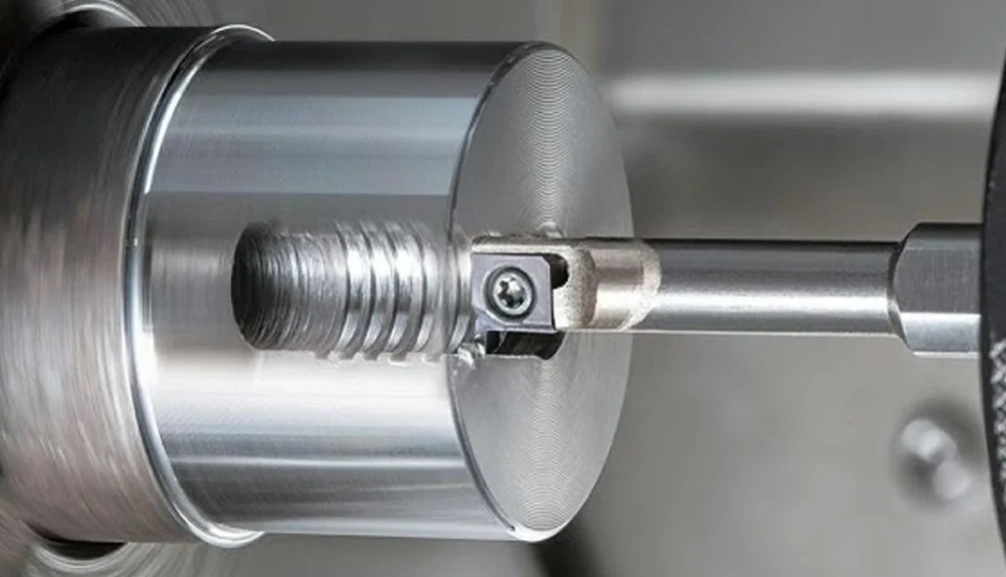
Grooving in machining removes material to form a channel with a defined profile. Tool access, groove position and the part’s function guide the process.
External grooving
Circumferential grooves on the outside of shafts and turned parts.
- Typical function
- Retaining rings, seal seats and relief features.
- Drawing focus
- Confirm groove diameter, width and distance from the datum shoulder.
Internal grooving
Grooves machined inside a bore or housing.
- Typical function
- Internal retaining rings and seal locations.
- Drawing focus
- Bore entry, reach and nearby shoulders determine tool access.
Face grooving
Annular grooves cut into the end face of a part, with axial tool entry.
- Typical function
- Face seal locations and mating interfaces.
- Drawing focus
- Define inner and outer diameters, depth and face datum.
Slot milling & profiles
Straight or shaped channels created with a milling tool.
- Typical function
- Locating slots, keyways and assembly features.
- Drawing focus
- Specify end radii, slot length, depth and orientation.
Send the groove section and its location on the part. Tooling and accessibility need review before a route is confirmed.
FUNCTION FIRST
Make room for the
features that hold it together.
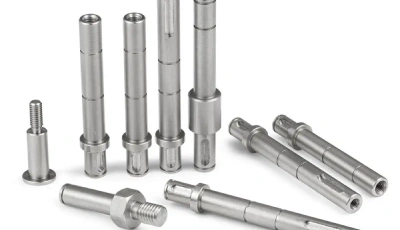
Define the sealing, retention or assembly requirement before selecting the groove dimensions. These reference images illustrate feature types, rather than documented customer projects.
Retaining ring grooves
Locate rings on shafts or in housings. Specify the selected ring and governing groove dimensions, including edge and corner requirements.
O-ring & seal grooves
State the seal specification and operating application. Groove width, depth, surface finish and entry edges need to work together.
Relief & lubrication channels
Define clearance or oil-flow requirements, the profile and the relationship to adjoining functional surfaces.
Keyways & locating slots
Control the slot’s position, length and fit to the mating component. Identify the end form and acceptable cutter radius.
Working on a complete turned part? Review the groove and adjoining features in one drawing.
Material choices start
with your application.
Request grooved parts in aluminum, steel, brass and engineering plastics. Specify the exact grade and condition so cutting, deburring and finishing can be reviewed together.
Aluminum
Lightweight components. Specify alloy and temper, especially where thin walls or a finished coating affect the groove.
Steel & stainless steel
Shafts, housings and wear-related features. Include the grade, heat-treatment condition and any post-machining treatment.
Brass
Turned fittings and related components. Identify the exact alloy and critical sealing or mating surfaces.
Engineering plastics
Specify the polymer grade and service conditions. Thin sections, burrs and dimensional stability need a part-specific review.
Material availability, achievable geometry and finish are confirmed with the project quote.
DRAWING & QUALITY
Control the groove.
Protect the fit.
One blanket tolerance cannot describe every groove. Flag the dimensions that control assembly and agree the inspection requirements before production.
What to define on the drawing
- Size & location: groove diameter, width, depth and distance from a datum.
- Profile & access: root radius, sidewall form, bore entry and nearby shoulders.
- Edges & surface: burr acceptance, edge break and roughness on functional faces.
- Final condition: heat treatment, coating and dimensions required after finishing.
Agree the inspection scope
Identify critical characteristics and any report or material-document requirements at the quote stage. Measurement access must be considered for narrow or internal features.
Confirm tolerance feasibility
Material, geometry, tool reach and part stability affect the machining plan. Requested tolerances and acceptance criteria are confirmed against the reviewed drawing.
From drawing to
grooved component.
A clear specification keeps the quotation and production review focused on the features that matter.
Share your files
Send a STEP model and dimensioned PDF, plus material grade, quantity and drawing revision. Mark grooves that control sealing or retention.
Resolve the critical details
Review geometry, tool access, tolerances, finish and inspection needs. Confirm the quote and delivery requirement for the project.
Approve the manufacturing plan
Production and inspection follow the agreed scope and drawing revision. Confirm reporting, packing and shipping requirements with the order.
What is the difference between CNC grooving and slotting?
Grooving creates a defined channel, often on the outside, inside or end face of a turned part. Slots can be straight or profiled and are commonly produced by milling. The final geometry determines the appropriate route.
Can you machine internal grooves and O-ring grooves?
Internal and external grooves can be reviewed for your part. Send the bore, groove section, seal specification and critical dimensions for review. Internal tool access and the required surface finish must be checked for the specific design.
What tolerances can you hold on a CNC groove?
Tolerance feasibility is reviewed from the drawing. Specify which groove dimensions are critical, their datums and the final material condition. Groove size, material, tool reach and inspection access affect what can be agreed.
Which files do you need for a quote?
Send a STEP model and a dimensioned PDF with material grade, quantity, revision, tolerances and finishing requirements. Include the relevant seal or retaining-ring specification and your requested delivery date.
Does this service include roller or pipe roll grooving?
This page covers material-removal CNC groove machining and slot milling. Roll grooving forms a groove by deformation and needs a separate suitability review. Send the roller or pipe drawing so the required process can be clarified.
What affects grooving cost and lead time?
Material, groove profile, width and depth, tool access, quantity, secondary operations and inspection requirements all affect the quote. Delivery timing is confirmed for the reviewed project.
START WITH YOUR DRAWING
Let’s review your
next groove or slot.
Share the part, its function and the features that matter. Our team can review the machining route and prepare a project-specific quote.
Confidential file handling · Optional NDA available ↗