
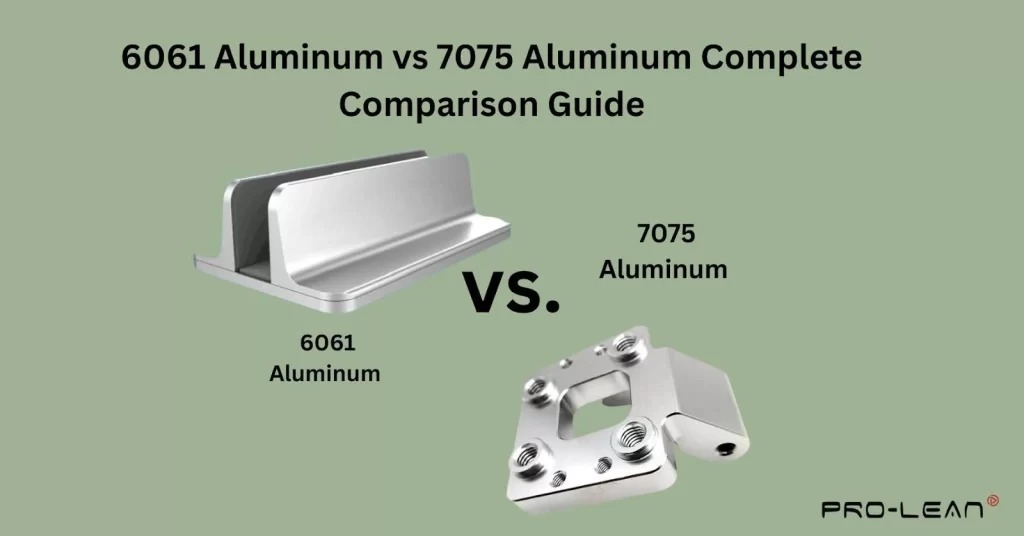
Comparison guide of 6061 aluminum vs 7075 aluminum
The outcome of your project can be influenced by your selection of alloys in the precision manufacturing stage. 6061 and 7075 alloys are used in the aerospace, automotive, and industrial sectors, but are characterized by different mechanical properties and performance features.
Aluminum grades alone do not indicate which alloy is best suited to your intended application. At ProLean Tech, we’ve gained the expertise to assist our clients in determining the best alloy in terms of strength, machinability, and weight after machining thousands of components from both materials, making us a top custom aluminum machining manufacturer.
Now, we can take a closer look at the differences between 6061 aluminum and 7075 aluminum. Generally speaking, if you need high weldibility ans higher corrosion resistance at lower costs, such as in marine applications, 6061 is the best choice, while 7075 is best when you need higher strength use cases, such as the aerospace industry.
Understanding Aluminum Alloy Classifications
Aluminum alloys are classified by a four-digit system, where the first number indicates the primary alloying element. The 6xxx series is based on magnesium and silicon, while the 7xxx series uses zinc to enhance strength. Let us read the properties of 6061 aluminum vs 7075 aluminum.
Aluminium Alloy 6061 Properties
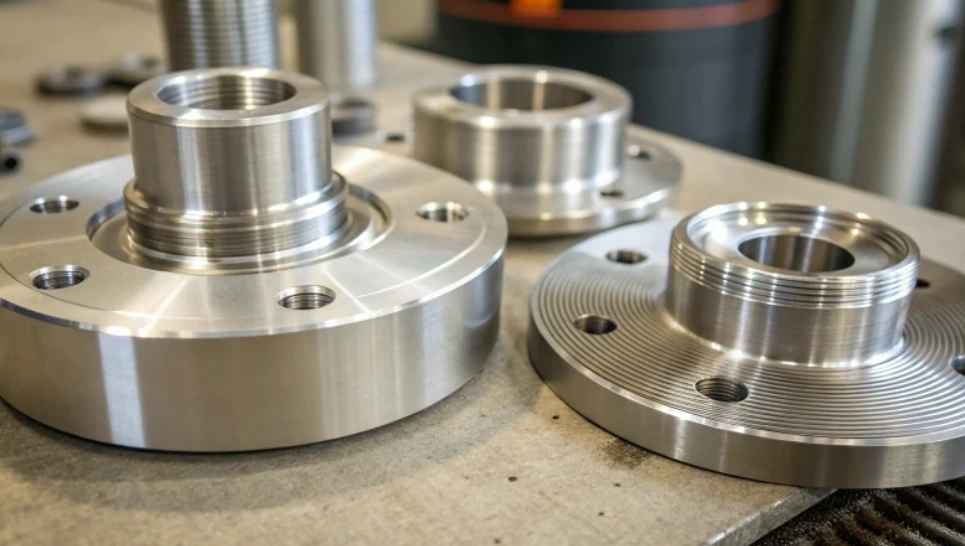
6061 Aluminum Parts
The 6061 aluminum alloy is one of the most versatile and widely used grades. This medium-strength alloy of aluminum has superior mechanical properties. This is the best choice for structural applications.
It is made up of 0.6% silicon and 1.0% magnesium. This alloy also contains 0.28% Chrome and a minimal percentage of Cobalt. This alloy is ideal for aluminum CNC-machining and has excellent corrosion resistance while maintaining weldability. T6 heat treatments are significantly strengthened through solution heat treatment and artificial ageing.
Aluminium Alloy 7075 Properties
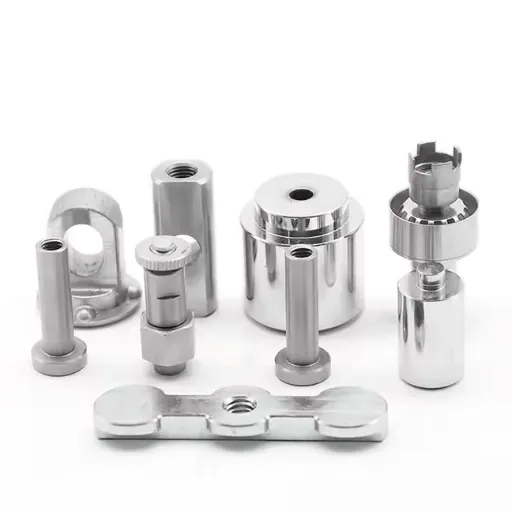
Aluminum 7075 Parts
The 7075 aluminum alloy is the strongest alloy commercially available. This alloy was designed for aerospace applications requiring exceptional strength-to-weight ratios. The alloy sacrifices some workability to achieve superior mechanical performance.
It also contains 1.6% copper and 0.23% chrome. The alloy also contains 0.23% Chrome and 1.6% Copper. Its high zinc content is responsible for its strength and makes 7075 ideal for applications with high stresses. However, the same composition reduces corrosion resistance compared to 6061. This usually requires protective coatings or different anodizing procedures.
Strength and Fatigue Comparison
The main difference between the two alloys is their aluminum strength. The 7075 aluminum is nearly twice as strong in tensile tension as the 6061 aluminum, making it the best choice for applications that demand maximum structural integrity.
The 7075 T6 has a greater tensile strength than the 6061 T6 by 85%. This dramatic difference could translate to thinner wall sections, lighter parts, or increased safety in critical applications. The 7075 yield strength offers 83% more strength than 6061 and is resistant to permanent distortion.
The higher cost of the material and the more difficult machining are worth it for high-performance racing, military gear, and aerospace structural components. The superior load-bearing capability of 7075 steel is used for components such as aircraft wing spars, landing gear, and stressed skin panels.
The 6061 Steel can also be used for structural and consumer products. The 6061 steel’s 40,000 psi is strong enough for industrial applications, while also providing high cost and production benefits.
Machinability And Tooling Impact
Machinability is directly related to manufacturing costs, speed of production, and surface quality. The choice between 6061 and 7075 aluminum will affect your custom aluminium machining budget as well as timeline. is a good way to check the machinability of 6061 and 7075 aluminum.
Which is the Most Common Aluminum Alloy for Machining?
6061 aluminum is the world’s most used CNC Machining alloy for a reason. 6061 aluminum CNC machining is popular because it needs less cutting force and breaks chips more easily. With 6061, there is less cutting force needed, and because of this, tool wear is reduced. The tool wear in the case of 6061 aluminum is usually less than that of 7075 aluminum, but 6061 allows for a better surface finish, a higher feed rate, and better size consistency while machining. All of these qualities make 6061 the best choice for aluminum precision machining.
7075 aluminum is very strong, but when machining it, a lot of production and cost issues arise. 7075 aluminum has a higher hardness that causes tools to wear more quickly. If the cutting speed is not slowed down, the tools will wear away too quickly, leading to a higher production cost. Because 7075 aluminum is more expensive to work with, 6061 aluminum is the better choice for CNC machining operations.
Aluminum Machining Best Practices
For either alloy, the right technique is essential to achieving quality results. Carbide tooling works well for 6061 at higher speeds of 800-1200 surface feet per minute (SFM). The alloy’s soft nature allows for aggressive material removal without compromising the surface finish.
For 7075 alloy, the parameters are more conservative, usually 400-800 SFM. The emphasis is on rigidity and sharp cutting edges. Flood cooling becomes essential to prevent work-hardening and manage heat. With the right tooling and programming, skilled machinists can achieve excellent results despite these challenges.
Application-Specific Selection Guidelines
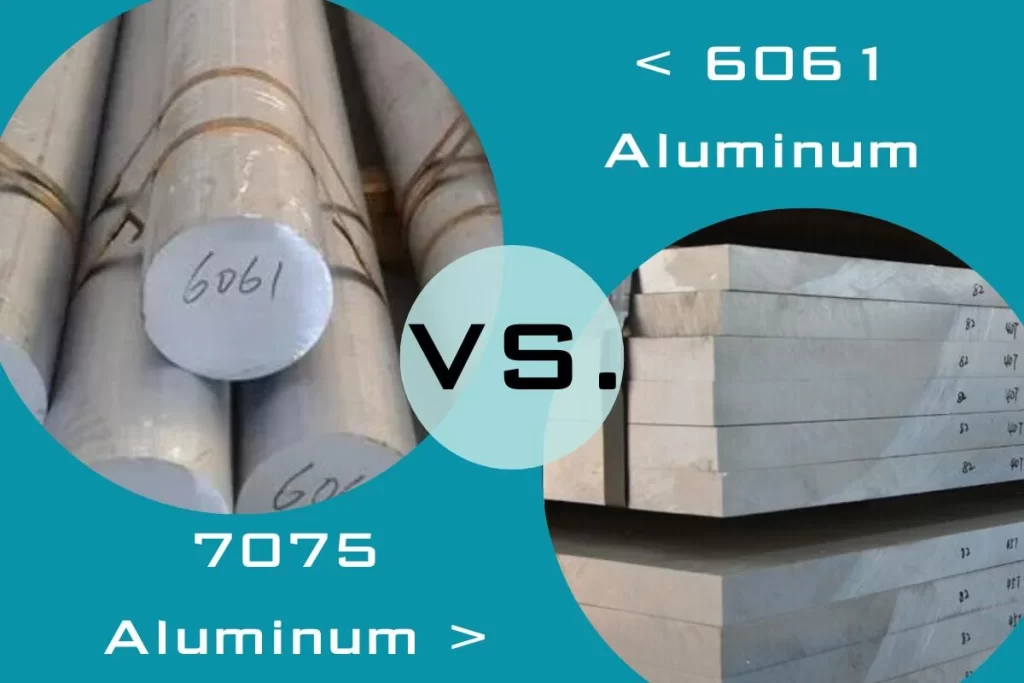
Comparison of 6061 Aluminum vs. 7075 Aluminum
To choose the best alloy, it is important to understand the properties the material must have and the requirements it must meet. The application determines the optimal materials.
Why Select 6061 Aluminum
The 6061 aluminum alloy is a good choice for industrial and commercial applications because it offers a balance of price, corrosion resistance, and ease of fabrication. This alloy is used in a variety of products, such as structural components, automotive components that do not experience severe stress, marine components where corrosion resistance must be maintained, and many consumer and architectural products. Designers and manufacturers of different industries love its balanced properties.
Weldability is one of 6061’s most distinguishing features, making it stand out among other alloys that are stronger, more expensive, and costlier, like 7075. 6061 alloy is better than 7075 because 7075 alloys can lose structural integrity when welding, while 6061 alloys are able to maintain their structural properties throughout the entire welding process. 6061 is ideal for large structures and assemblies that require extensive welding. Frames, enclosures and complex fabrications are examples of structures that can be made using 6061.
Why Pick 7075 Aluminum?
The 7075 aluminum alloy has a high price. It is still a very good value, and there’s a high demand for 7075 because of its strength-to-weight ratio. Its aerospace-grade makes it a valuable material for high-stress, high-stress applications such as aerospace, military, and high-performance. There are no alternatives. It is the best.
Many industries need structural integrity and weight savings, which can offer numerous benefits. Alloy 7075 is the best alloy for such industries. Alloy 7075 remains the best choice for aerospace components in mission-critical applications. It is ideal for applications where there is a risk of material failure. It is used in military gear, high performance racing chassis, parts with extreme mechanical performance, as well as rock climbing gear and other carabiners. The only alloy used for landing gear, wings, and fuselage frames on planes. Most of these sectors know that the best is expensive and use 7075 alloy.
Heat Treatment and Tempers (T6, T651, T73/T7351)
The same heat treatment is used to achieve the best properties in both alloys. You can narrow down your material choices by knowing the temper. Let us have a look on 6061 aluminum vs 7075 aluminum differences.
Comparing 6061 T6 Aluminum vs 7075 T6 Aluminum
The T6 temper is widely used for both alloys. This temper classification indicates that solution heat treatment followed by artificial ageing is used to achieve maximum tensile strengths. The 6061 aluminum T6 heat-treatment consists of a solution heat treatment at around 990degF, followed by rapid quenching with water. After that, the aluminum will be aged for 8-10hrs at 350degF. The material’s yield strength is increased by over two times compared to the material that has been annealed (O temper). The properties of the material are maintained indefinitely, even at room temperature.
The 7075T6 treatment is similar, but requires a tighter temperature control. Solution treatment takes place at 870degF and aging occurs at 250degF for 24 hours. This is why the alloy is more costly, as it has a smaller processing window and requires a longer aging period.
Different properties are offered by the T4 (naturally aged), and T651 (which is stress-relieved after stretching (stress-relieved). The T651 temper is particularly useful for machining, as it relieves the internal stress that can cause distortion of the material during machining.
Formability and Extrusion
In addition to machining the material, many manufacturing processes require that it be bent, shaped, or formed. These operations affect the two alloys differently.
Extrudable Aluminium Alloys
6061 aluminum is unique because it is one of the most extrudable aluminum alloys, meaning it can flow smoothly through an extrusion die and be shaped into a variety of complex cross sections, with high versatility. This alloy is a good choice for high-volume, low-cost production to produce custom and fully structural profiles, heat sinks, and other engineered parts. 6061 is a very good alloy for die flow. It has little or no surface tearing and a smooth surface straight from the die. It is the perfect aluminum alloy for structural components, internal structure, and standard geometries.
Due to its strength, 7075 aluminum has many problems with extrusion. This makes it difficult to die flow and limits the complexity of internal geometries and profiles. It requires specialized equipment and highly advanced die designs, which makes it expensive from a tooling standpoint compared to alloys that are more formable. Due to the high costs and difficulty in machining dies/sets, 7075 is only justified for a small number of highly refined applications.
Bending and Forming Operation
Cold forming 6061 is possible without cracking 7075. The 6061 alloy in its annealed T4 or annealed condition is suitable for sheet metal bending, rolling, forming, and mild cold working. Material 7075 is typically deformed by hot forming. Due to its limited elongation (11% as opposed to 17% for 6061), it is more susceptible than 6061 to cracking when bending. Stress relief heat treatment is recommended after cold forming, if it’s required.
Welding and Fabrication
Material selection is influenced by the assembly method. Both alloys respond very differently to the fusion welding processes.
6061 Welding Benefits
6061 Aluminum alloy is easy to weld with conventional methods. When done correctly, TIG, MIG, and friction stir welding can produce strong joints. Heat-affected areas retain about 65% of the strength of the base material. This is acceptable for structural purposes.
7075 Limitations on Welding
Due to the challenges that fusion welding presents, it is not always an option for 7075. Due to its crack sensitivity and drastic strength loss at heat-affected areas, conventional welding is not recommended for structural applications.
Heat-affected areas in 7075 welds lose between 60-70% of their strength and return to their annealed characteristics. This degradation was unacceptable for high-stress applications, and the reason why 7075 was specified at first. Friction stir welding is less reliable than joining methods like mechanical fasteners and adhesive bonding.
Try Prolean Now!
Surface Treatments for Corrosion-Resistant
The environmental durability of these alloys varies greatly, which influences the material selection for outdoor and marine applications.
Compare Corrosion Performance
6061 aluminum has a high resistance to corrosion. The balanced chemical composition of 6061 aluminum resists corrosion from atmospheric agents, saltwater and industrial chemicals without protective coatings. This material is ideal for outdoor and marine structures because of its natural resistance.
The 7075 alloy’s corrosion resistance is significantly reduced due to its high copper and zinc content. These alloying elements create a galvanic cellular system that accelerates corrosion. Stress corrosion cracking can be a problem in environments that experience sustained tensile forces.
Surface Finishing Options
6061 aluminum offers inherently better corrosion resistance than 7075 due to its balanced Mg-Si composition. 6061 responds more consistently to anodizing, while 7075 requires tighter process control due to its copper content. For outdoor or marine exposure, 6061 is often preferred unless 7075 is properly protected by hard anodizing or conversion coatings.
Both alloys can do powder coating, painting, and chromate conversion treatments. These are flexible to do based on their colors and other aesthetic treatments. 7075 is more difficult to treat because of the corrosion environment. 6061 has excellent corrosion resistance, which makes it easier to treat. These surface finishes all have to do with the treatments and the colors of the final component.
Compare 6061 Aluminum Alloy to Other Aluminium Alloys
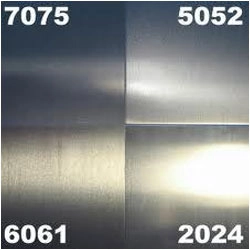
Different Grades of Aluminum
Understanding 6061 and its relationship to other materials can help you optimize your material selection for all of your products.
2024 Aluminum vs 6061
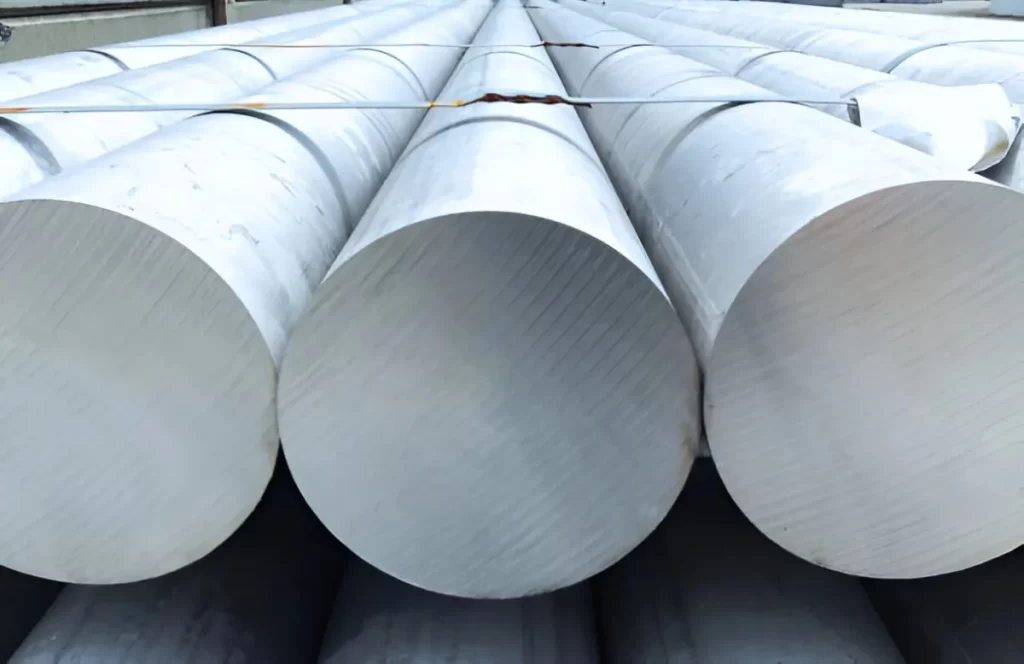
Stacked Aluminum 2024 Rods
The 2024 aluminum vs 6061 comparison reveals another strength-versus-machinability trade-off. The 2024 alloy (4.4% Cu, copper-based) is a middle-strength alloy between 6061 and 7075. It also has better fatigue resistance.
The optimal fatigue properties of 2024 make it a superior material for aircraft fuselage and skin panels. Its poor weldability, moderate corrosion resistance, and limited versatility limit its applications in comparison to 6061.
Aluminum Grades: A Complete Overview
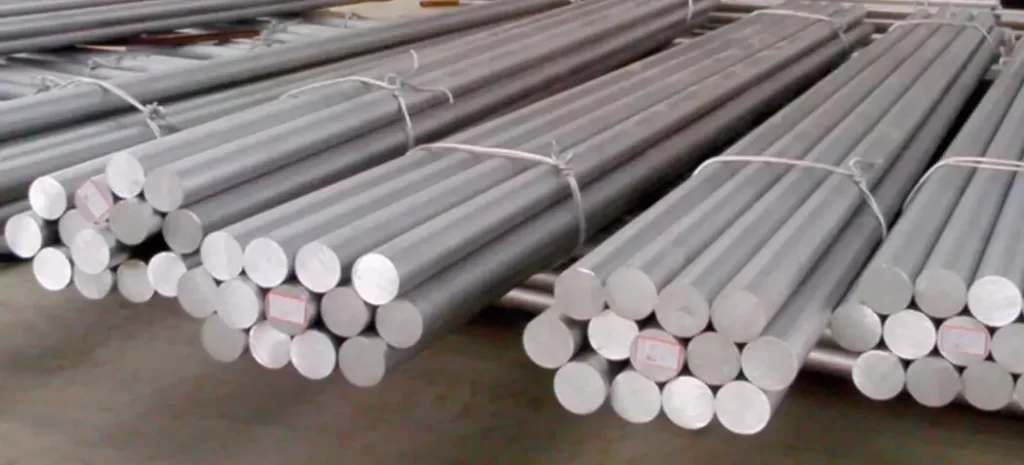
5052 Aluminum
For specialized applications, there are several other aluminum grades for machining that can be machined besides 6061 and 7075.
- 2011 Aluminum (Free-Machining Grade): Aluminum alloys have the highest machinability ratings. This chipbreaker contains bismuth and Lead for superior chip breakage. Ideal for high-volume screw machines. Limited strength (26 000 psi Tensile).
- 5052 Aluminum (Marine Grade): Superior to 6061 for corrosion resistance. Sheet metal fabrication: Good formability. Strength: Moderate (33,000 psi Tensile strength). Alloys that cannot be heated.
- 7075-T7351 (Stress-Relieved): Better stress corrosion resistance than T6. Better dimensional stability during machining. Strength is slightly reduced compared to T6. Preferred for thick-plate machining.
Your choice of alternative depends on the priority you place: cost, machinability, strength, corrosion resistance, or cost.
Design Optimization for Material Properties
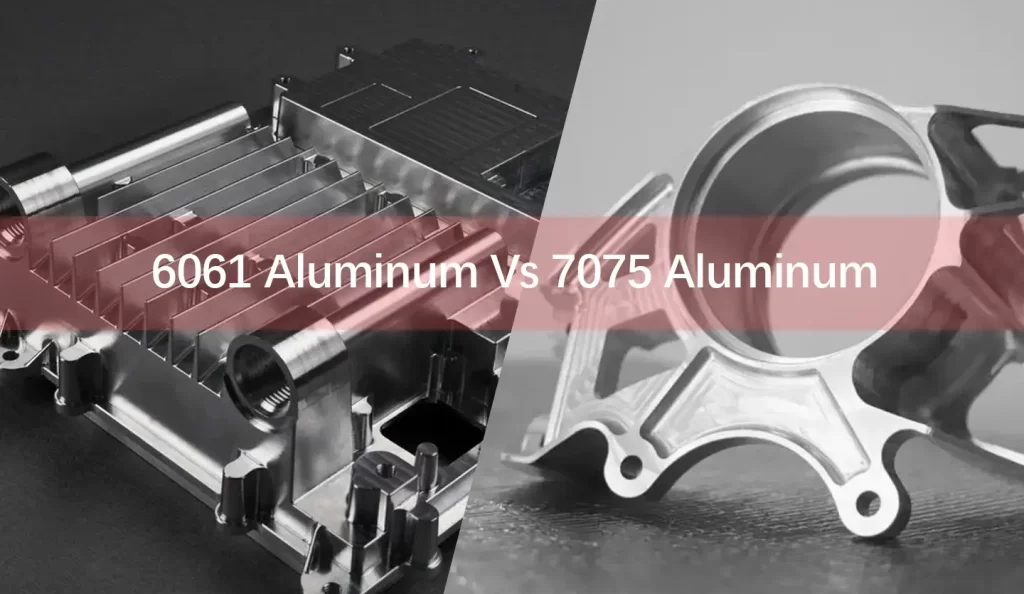
Design guidelines for 6061 aluminum and 7075 aluminum
It is best to design components with consideration of the material’s capabilities to optimize the design and minimize costs. The following are the guidelines for 6061 aluminum vs 7075 aluminum.
Guidelines when Designing with Aluminum 6061
When designing with 6061 aluminum, consider the ductility and formability of the aluminum. Designs with tighter bend radii, intricate extruded profiles, and more complex welded assemblies can now be achieved. Design taking into consideration the standard rates of material removal, and don’t design for exotic tools.
Recommended design practices: Weld assemblies can be designed to include joints to aid in assembly. Extrusions can be utilized for complex cross-sections. Zero to generous fillets and radii can be used.
Guidelines when Designing with 7075
7075 components should be designed to be as strong as possible. Design also needs to take into consideration the machining constraints and incorporate simple geometries, and replace welds with mechanical fasteners for improved manufacturability.
Recommended design practices: Machining constraints include reducing thin walls (below 0.04″) as these increase machining difficulties. Assemblies must include mechanical fasteners and adhesive bonding. Designs must include efficient machining with generous tool access. Design with consideration of the locations of stress concentrators when loads are high.
Try Prolean Now!
Material Preferences by Industry
Industries have developed standard material preferences based on a combination of performance data and regulations over time.
Aerospace and Automotive Materials
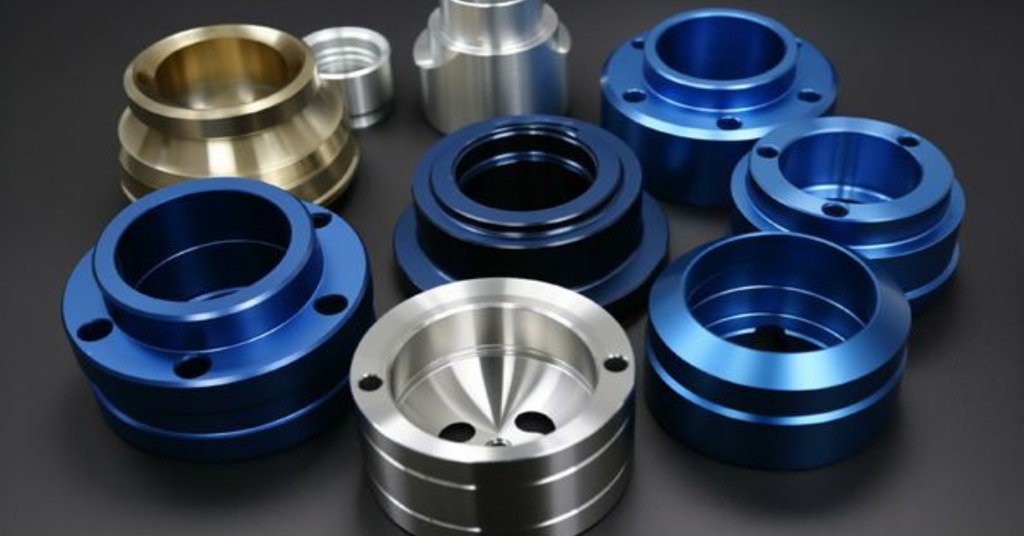
Custom Aluminum Aerospace Parts
The Aerospace and Automotive industries both use these alloys. Aluminum alloy 7075 is used for the primary construction of structures that support wings, beams, and fittings. For secondary construction and non-critical parts, 6061 aluminum alloys can be used.
This material is also used for secondary construction, internal parts and brackets that are resistant to corrosion and for secondary construction. 6061 can also be used in the manufacture of chassis, suspension, and drive parts. 7075 can also be used to construct critical parts such as control arms. It also increases the strength of the structure when combined with 7075.
Sustainability and Environmental Issues
Businesses can use the fully recyclable aluminum alloys 7075 and 6061 to meet their sustainability and legal obligations. Both alloys use only 5% the energy used for the primary production.
Aluminum can be recycled many times without affecting its quality. Recycling aluminum can save you money and energy because it requires only 95 percent of the energy. The products that are durable and do not need to be changed often differ. The 6061 alloy is the easiest to recycle and obtain. 7075 Aluminum alloy is more difficult to recycle and more expensive.
Cost Analysis and Material Economics
Aluminum stock prices are not the only factor to consider when determining material costs. Total project costs include tooling, scrap rates, machining time, and finishing requirements. 7075 aluminum is typically sold at a higher price, usually 2-3 times that of 6061 aluminum per pound. This price difference is due to the complexity of alloying, heat treatment requirements, and higher costs of zinc and copper.
The machining economy of 6061 is also favorable. For comparable geometries, faster cutting speeds, longer tool lives, and reduced complexity of setup translate into 25-40% lower costs. These savings can be significant for high-volume production.
Material Selection Guide
The choice of alloy will depend on your application, budget, and production capability. The 6061 alloy offers low production costs, good corrosion resistance, and good formability. It is also suitable for other structural applications.
If budget is not an issue and you need the best strength-to-weight ratio, 7075 alloy may be your choice. This metal is used for aerospace parts and structures that are high-strength and safety-critical. Alloys intermediates, such as 2024, can be used for applications that fall between the extremes of cost and strength. Emerging materials can be used to balance competing requirements.
Conclusion
You can now make better choices based on your preferences, the tradeoffs that you are willing to make in terms of performance, cost, and manufacturing. Aerospace applications that require high performance are dependent on durability and strength. They will always be essential. You will have to make trade-offs based on your budget, corrosion risk, preferred manufacturing processes, and exposure risk for all applications you are working on.
ProLean Tech is the most experienced manufacturer of aluminum 6061 and 19705 for the aerospace, automotive, and industrial industries. Our engineers assist customers with the selection of materials, the optimization of design to achieve the desired performance, and simplify manufacturing processes. We can help you with your next aluminum machining project. Find out how the right materials will reduce costs, speed up your time to market, and improve the effectiveness of your overall project. Contact us to get a quote now.
0 Comments