
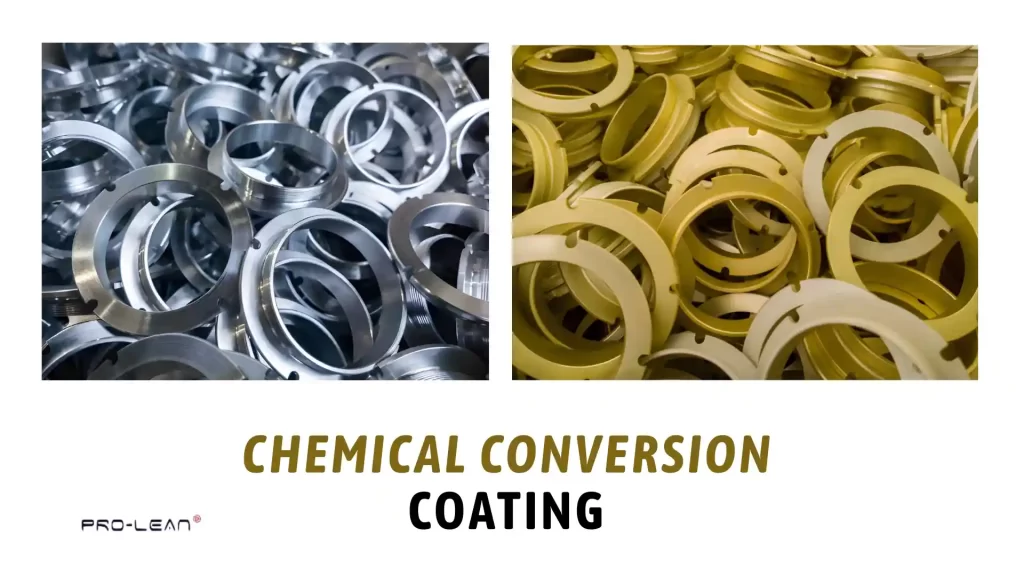
Steel Chemical Conversion Coating
Chemical conversion coating is a surface treatment to protect metal parts from corrosion. It forms a thin chemical film on the metal surface and improves the part’s durability and prepares it for further painting or sealing.
This process is commonly used on aluminium components in industries such as aerospace, defence, and electronics. Moreover, the process can meet MIL-DTL-5541 specifications. It defines different coating types and performance levels. For example:
- Type II coatings use trivalent chromium instead of hexavalent chromium.
- Class 1A coatings focus on corrosion protection.
- Class 3 coatings are used when electrical conductivity is required, such as grounding surfaces.
Several industry names, including Alodine, Iridite, and Alocrom, also refer to chemical conversion coating. These terms refer to similar treatments used to improve the corrosion resistance and surface performance of metal parts.
In this guide, we explain:
- How chemical conversion coating works and where it is used.
- Common processes include chromate coating, phosphate coating, and black oxide treatment.
- The method works differently and is used for specific metals and performance requirements.
What Is Chemical Conversion Coating?
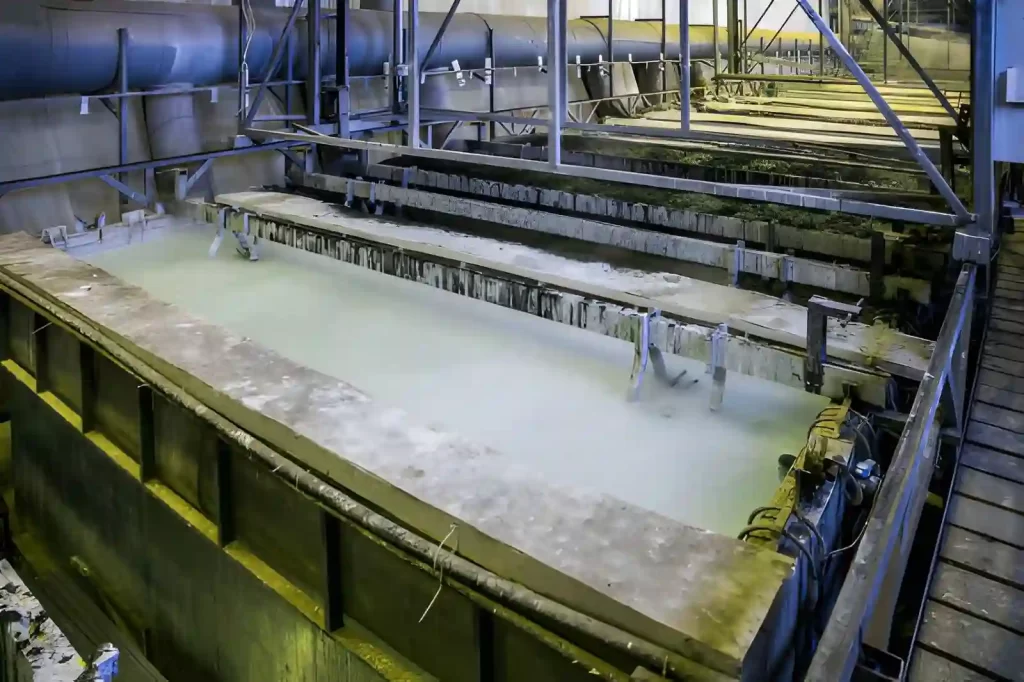
Chemical conversion coating bath
A chemical conversion coating is a process that creates a thin protective layer on a metal by a chemical reaction at the metal’s surface. This coating is mostly applied to aluminium.
These coatings increase corrosion protection of the base material, provide a consistent surface area for painting and/or powder coating, and may also enhance electrical conductivity. In general, these are usually used in the aerospace, electronic, and defence industries, which require high levels of consistency in surface finish.
Chemical Conversion coatings are typically deployed by immersion in a chemical solution (chemical bath), by brush, or by spray. Maintaining control over bath concentrations, temperatures, and immersion times will help ensure that all surfaces receive a uniform coat with optimal performance.
A routine inspection includes checking the thickness, adhesion, and corrosion protection of the coating to determine whether it meets the required industry standards for use on specific products and applications.
How Chemical Conversion Coating Works
Chemical conversion Coating provides metal protection through a thin layer of material that is formed on its surface by a Chemical reaction. There are generally three practical steps to apply Chemical Conversion Coating:
- Clean the Surface: Use acids or alkalines to clean oils, dirt, and oxide from the metal.
- Apply the Coating Solution: After cleaning the surface, apply the chemical solution. The chemical solution will react with the metal, creating a thin, durable layer on the Surface.
- Rinse & dry: Rinse off any remaining chemicals with water, then carefully dry the metal to complete the process.
What are the Benefits of Chemical Conversion Coating
Chemical conversion coatings provide metal (aluminium, steel) with an extremely thin yet highly effective protection against corrosion, making them better suited for use in actual operating conditions. The key advantages of chemical conversion coatings are:
- Corrosion Resistance: Coated aluminium and steel resist corrosion and oxidation, and will protect them from corrosion for over 1000 hours in a salt spray test.
- Better Paint and Powder Bonding: The coating provides a uniform surface, enabling paints and powders to adhere more consistently and last longer.
- Reliable Electrical Contact: The coating makes surfaces uniform and provides reliable electrical contact (Type II Class 3 per MIL-DTL-5541F), making it useful in the manufacturing process for aerospace, electronics, and other products.
What Is Chromate Conversion Coating
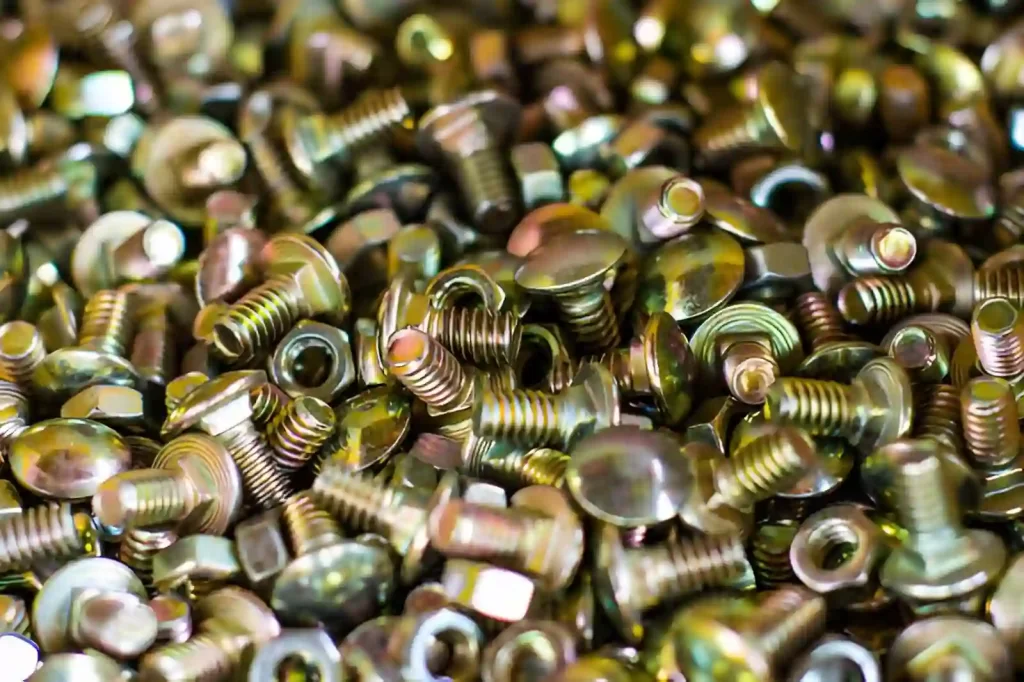
Zinc-Plated Fasteners with Yellow Chromate Coating
The chromate conversion coating process produces a very thin layer on the metal that reacts with the surface to produce a thin, protective film. This layer of material is usually very thin (just a few microns) yet strong enough to protect against oxidation and improve paint or powder coating adhesion.
Advantages
- Protection Against Corrosion: This coating reduces corrosion even in humid environments and those with high salt levels. For example, aluminum parts with a Type II trivalent chromate layer can often last over 500 hours in a salt spray test before white corrosion appears, depending on coating thickness and application. As such, this coating is well-suited for items such as aircraft brackets, fasteners, or hardware intended for outdoor use.
- Better Paint and Coating Adhesion: The thin layer produced by the chromate coating process has a micro-rough surface. Therefore, paints or powder coatings will adhere much better and are less likely to flake or chip. This is especially true for items subjected to various forms of mechanical stress (such as bending, stamping, etc.) in assemblies before paint application, as paint adhesion is typically one of the weakest points.
- Electrical Conduction: The chromate coating process does not provide an insulation barrier. Therefore, components such as connectors, printed circuit boards, and grounding plates that require electrical conduction can be coated with a chromate coating that maintains a relatively low electrical resistance while preventing corrosion.
- Visual Appearance and Inspectability: Typically, chromate coatings impart a gold, yellow, or green colour to the part’s surface. Additionally, the chromate coating makes surface inspection of treated parts easier during production or maintenance.
Typical Applications
- Aerospace: Aluminium brackets, panels, fasteners, and control surfaces. Provides corrosion protection for parts exposed to humidity, fuel, or temperature extremes.
- Automobile Industry: Aluminium body components, engine brackets, and structural members. Protects from corrosion and supports paint adhesion throughout the life of the vehicle.
- Electronic Components: Metal enclosures, connectors, and grounding plates where there is a requirement for corrosion protection and the ability for electrical conduction.
Construction: Aluminium window frames, panels, and outdoor fixtures that are exposed to the elements.
Types of Chromate Coatings
Chromate chemical coating has two main types, including:
Hexavalent Chromates (Type 1)
It imparts a thicker protective layer than trivalent chromate. Often used in aerospace and military applications due to its effectiveness. However, it contains toxic chromium, so it requires special care when handling and disposing of the material.
It is best suited for high-performance applications where maximum corrosion resistance is required, unlike trivalent chromate used in commercial settings.
Trivalent Chromates (Type 2)
This coating provides good corrosion protection and is safer for both users and the environment. Typically used in commercial applications that require compliance with environmental regulations.
It is preferred for general industrial use where safety and environmental compliance are more important than corrosion protection
What Is the Difference Between Chromate Coating vs Anodizing
Chromate Coating
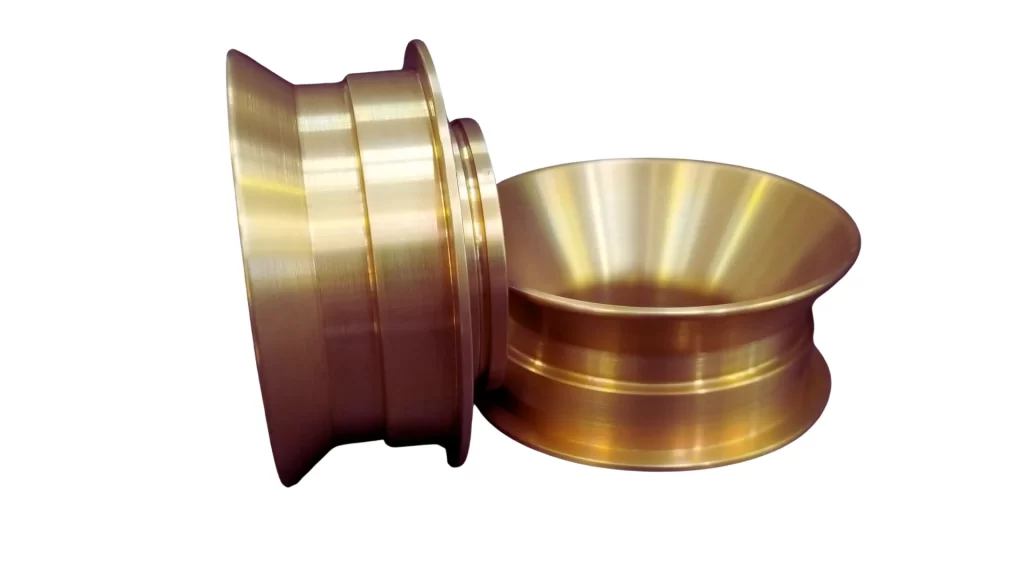
Custom parts – chromate coated
It is thinner than anodizing and the passivation process. It does not alter the underlying base metal’s structure. Additionally, it retains electrical conductivity. Therefore, chromate is preferred when the surface will be painted or powder-coated after the coating process.
Anodizing
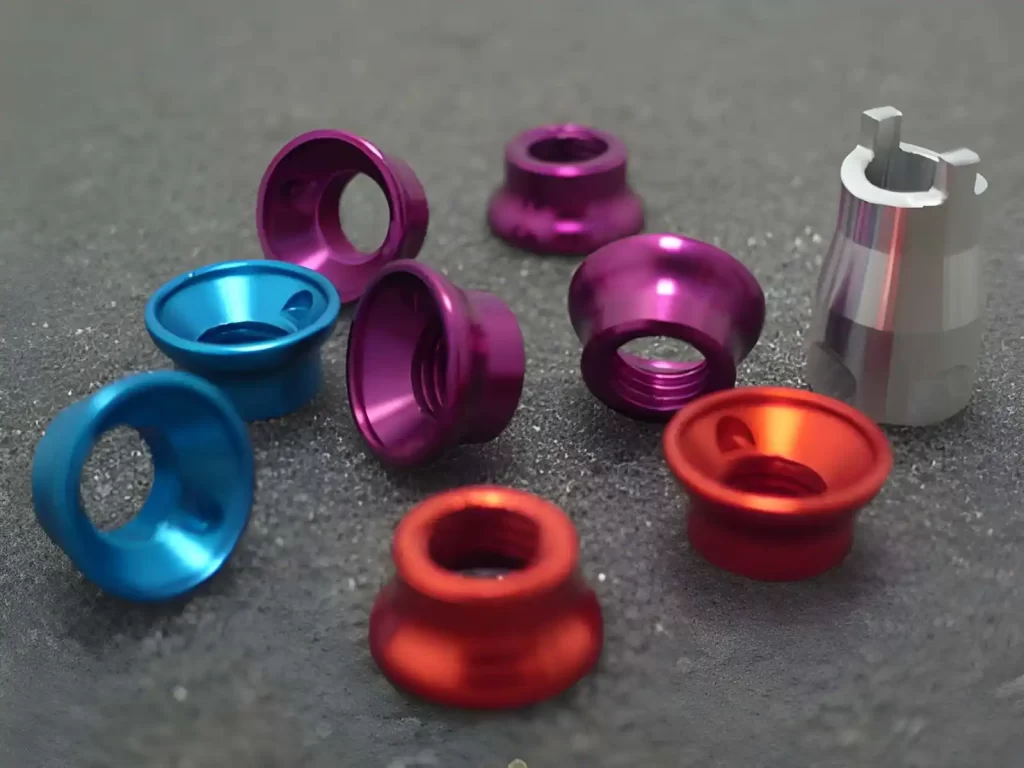
CNC turned aluminum arts – anodized finish
It creates a thicker, harder layer that enhances abrasion resistance; however, it also insulates the base metal. In addition, anodized layers can be dyed to produce many colors; however, anodizing renders the base metal non-conductive. Therefore, chromate is preferred for electrical components or for items that will be painted after the coating process.
Try Prolean Now!
What Is Phosphate Conversion Coating
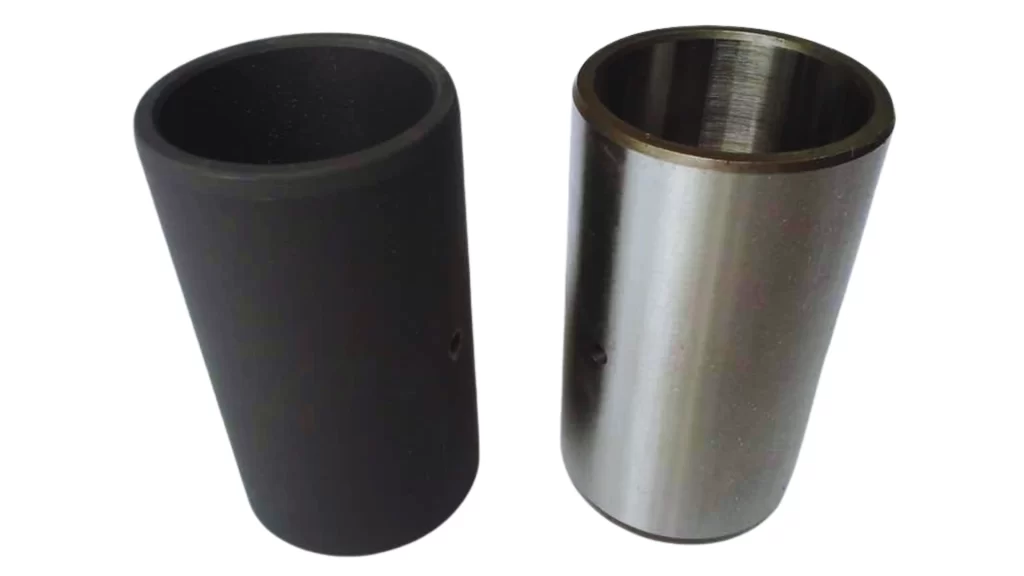
Phosphate conversion coating
Phosphate conversion coating is a chemical surface treatment applied to steel, iron, and certain lightweight alloys. During this process, a very thin, crystalline layer forms, which protects the substrate from corrosion, enhances the adhesion of paints and other coatings, and reduces friction in moving parts.
To create the phosphate coating, the substrate metal reacts with a phosphate solution, forming a tightly bonded phosphate layer on its surface.
Key Advantages
Protection Against Corrosion
Phosphate coatings inhibit corrosion by forming a physical barrier (rust or oxidation) between the environment and the substrate. For example, Zinc Phosphate can increase the service life of automotive parts operating in wet or salty environments. Steel parts coated with a phosphate coating will typically pass a Salt Spray Test of 48-96 hours, depending on the coating thickness and type.
Adhesion of Paints and Other Coatings
The crystalline structure of the phosphate coating provides numerous small peaks and valleys. These peaks and valleys provide a more adhesive surface for paints and/or powder coatings, thereby reducing the potential for peeling or flaking due to vibration, flexing, or thermal cycling. This characteristic is beneficial in applications such as chassis frames, structural frames, and metal enclosures.
Reduction of Wear and Friction
Both Manganese and Zinc Phosphate coatings provide a roughened surface to the substrate metal, which may hold a lubricant (oil or grease). The retention of lubricant by these coatings reduces friction at metal-to-metal interfaces and inhibits “galling” in moving parts (e.g., gears, bearings, engine components).
Common Applications
- Automotive: Engine parts, brackets, and fasteners are phosphate-coated to protect against rust and improve paint adhesion. Additionally, the coating will protect the parts from heat, vibrations, and road exposure.
- Aerospace: Aluminum, Magnesium, and Steel components are coated to protect them from corrosion caused by moisture or chemicals, while also allowing electrical conductivity where necessary.
- Firearms and Defense: Metal components that are subject to wear and exposure to outdoor conditions use phosphate coatings. These coatings reduce friction, inhibit rust, and provide a durable matte finish.
Types of Phosphate Coatings
The common types include:
Zinc Phosphate
This type of phosphate coating offers the best corrosion resistance and paint adhesion of all available phosphate coatings. Zinc Phosphate is most commonly used in the automotive and Aerospace industries.
Iron Phosphate
This type of phosphate coating has a lower coating weight compared to Zinc Phosphate and is more environmentally friendly. Iron Phosphate is primarily used in Appliance, Light Machinery, and Structural Steel applications. It provides minimal corrosion protection and improves paint adhesion.
Manganese Phosphate
Manganese Phosphate is thicker and rougher than both Zinc and Iron Phosphate. It is most suitable for components that are subject to sliding contact (i.e., Gears, Bearings, Camshafts). It holds lubricants well and enhances the wear properties of components.
What Is Black Oxide Coating
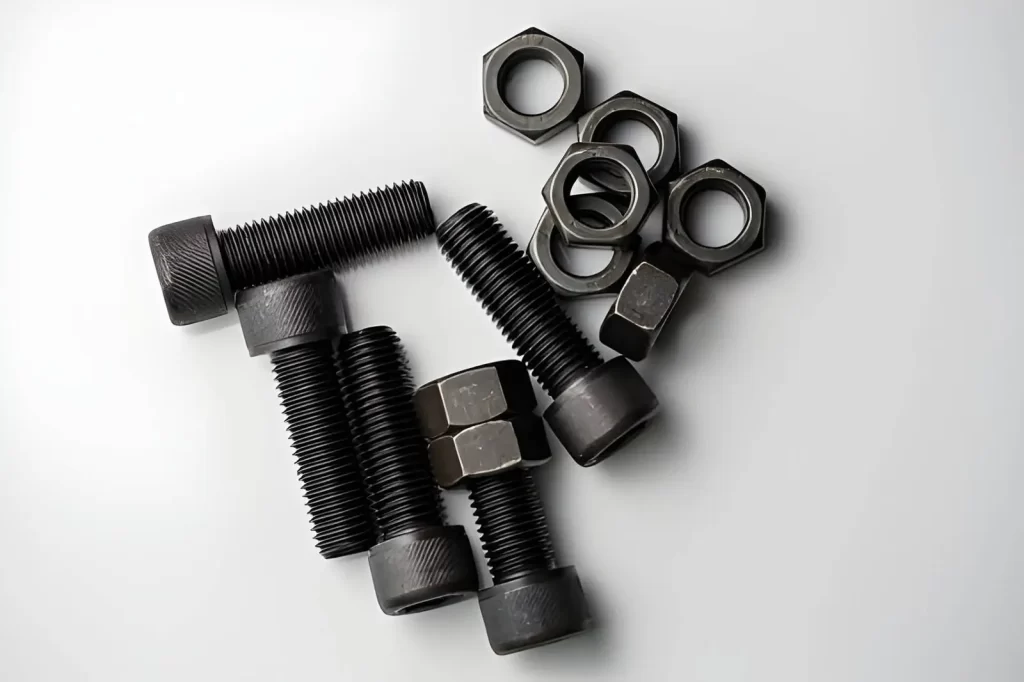
Hexagonal head bolts – black oxide coating
Black oxide is a chemical surface treatment that develops a very thin, black oxide layer on the metal surface of an item. The black oxide layer has several important functions: it prevents corrosion (rust) from forming; it stabilizes dimensions; and it produces a consistent, dark surface colour.
Advantages
The primary advantages of using a black oxide finish include:
- Corrosion protection: The oxidation process slows the formation of rust on steel and iron-based products. Some product applications will require additional sealing or lubrication to provide long-term corrosion protection in harsh environments (i.e., outdoor).
- Dimensional stability: Because of its extreme thinness, black oxide does not significantly increase the diameter of cylindrical parts such as shafts and bolts. Therefore, these types of parts can be relied upon to meet tight dimensional specifications.
- Matte finish: A consistent matte-black finish is applied to all surfaces treated by this process. This reduces glare on parts and improves their overall visual appeal.
- Wear support: The thin layer of oxide formed during the black oxide process will also provide a slightly abrasive surface, helping extend the life of moving parts and wear-prone areas of mechanical devices and equipment.
Applications
Black oxide is used in different industries, including:
Automotive
The coating is used on engine components, fasteners, and brackets. This is to maintain precise dimensions and provide excellent corrosion protection.
Firearms
On firearm slides, barrels, and trigger mechanisms, black coating helps reduce glare and protect critical surfaces.
Machinery and Tooling
It is also used on gears, cutters, and small mechanical parts to maintain accurate geometries and dimensions.
Hardware and Fixtures
Black coating is applied to hinges, door handles, and fittings where a consistent black appearance and moderate protection are desired.
Types of Black Oxide Coating
Here are the basic processes used in black oxide processing:
Hot Black Oxide
Uses hot alkaline solutions to produce a strong protective layer on steel and iron-based materials.
Cold Black Oxide
Uses cold temperatures to apply the black oxide solution and is typically used when the application requires lower corrosion protection and/or the part being treated cannot withstand high temperatures.
Stainless Steel Black Oxide
It is a special process developed for stainless steel materials and provides improved corrosion protection without affecting the part’s physical dimensions.
Light Metal Black Oxide
It is a variation of the cold black oxide process typically used on lightweight metals such as aluminium, titanium, etc. The process provides corrosion protection without altering the part’s dimensions or mechanical properties.
Try Prolean Now!
What Is Alodine Coating?
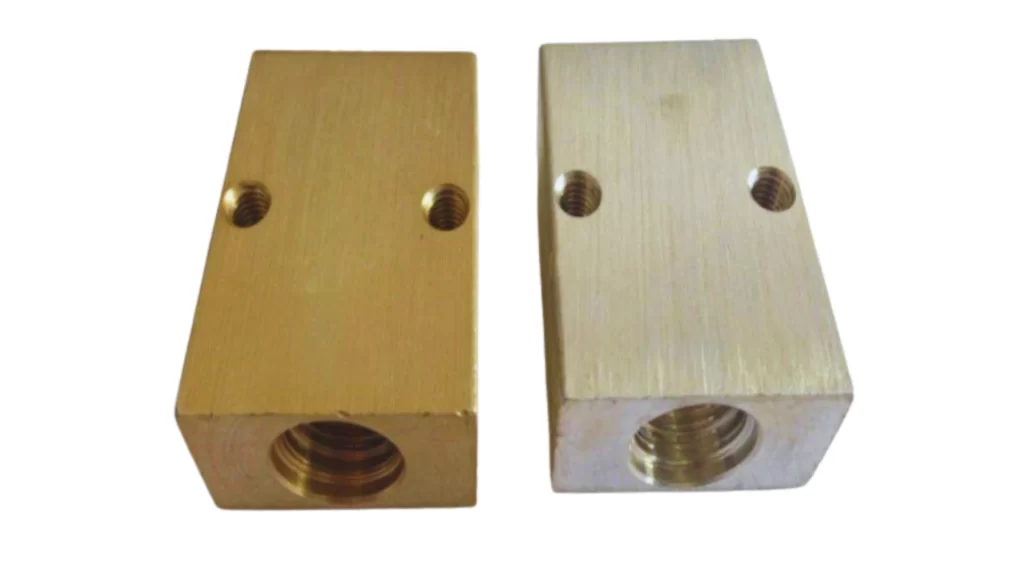
Alodine coating
Alodine (also called chromate conversion coatings) is a chemical surface treatment. It is often used on aluminium parts and their alloys, as well as on other materials such as steel, magnesium, and copper. Alodine typically uses a chromic acid-based solution.
When the chromic acid solution is applied to the metal, it reacts with the metal’s surface to form a very thin layer of corrosion-resistant material, which will protect against further oxidation. Alodine is widely used in the aerospace, defence, and electronics industry, where both corrosion resistance and a uniform surface finish are critical.
Final Thoughts!
Chemical conversion coating provides a strong, protective layer on metal parts. It prevents corrosion, improves paint or powder adhesion, and maintains component precision in demanding environments, including aerospace, defence, and industrial applications.
At Prolean MFG, surface finishing services are applied based on material type, operating conditions, and performance needs. Chromate, phosphate, and black oxide coatings are carefully selected, and process conditions such as bath concentration, temperature, and immersion time are closely monitored to ensure consistent, high-quality results.
Each coated part undergoes inspection for thickness, adhesion, and corrosion resistance. This ensures parts stay reliable, last longer, and meet technical standards.
Contact us today to get an instant quote for your parts.
0 Comments